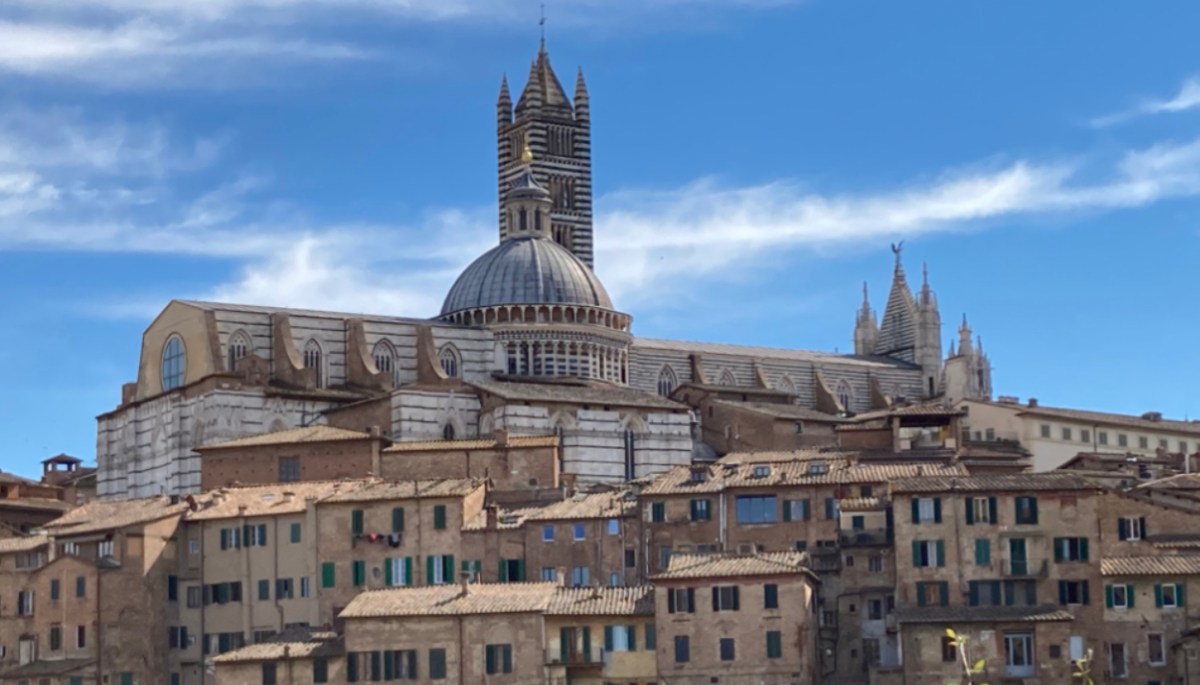
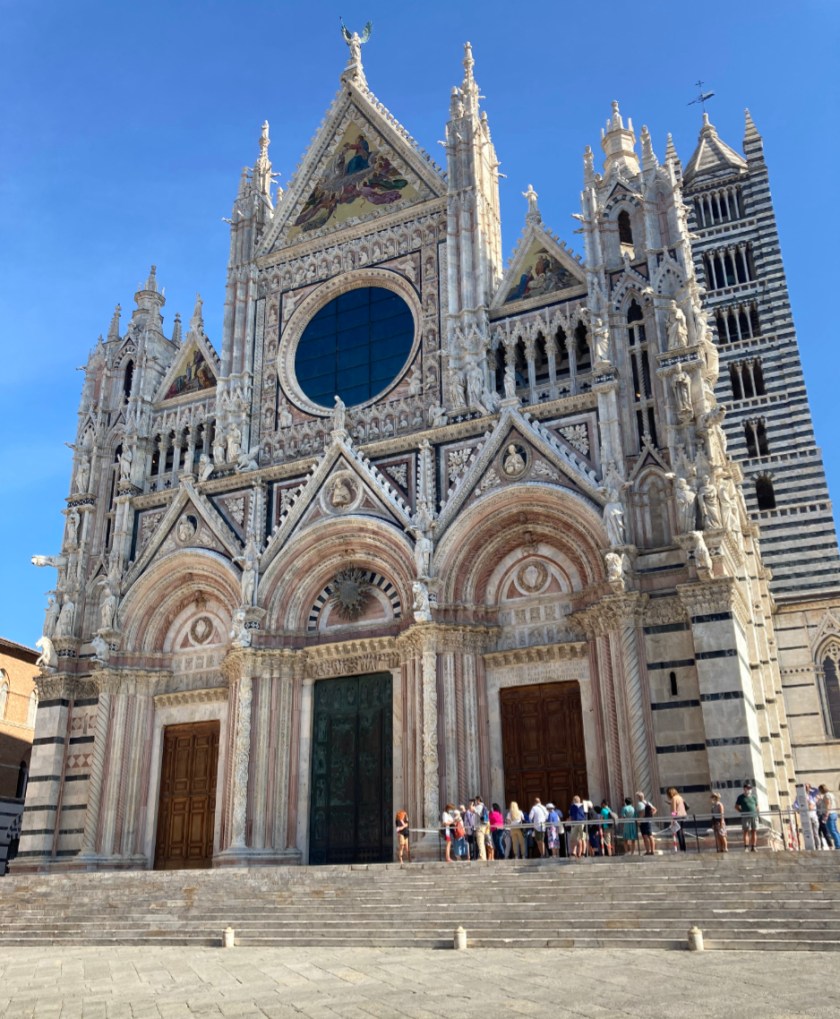
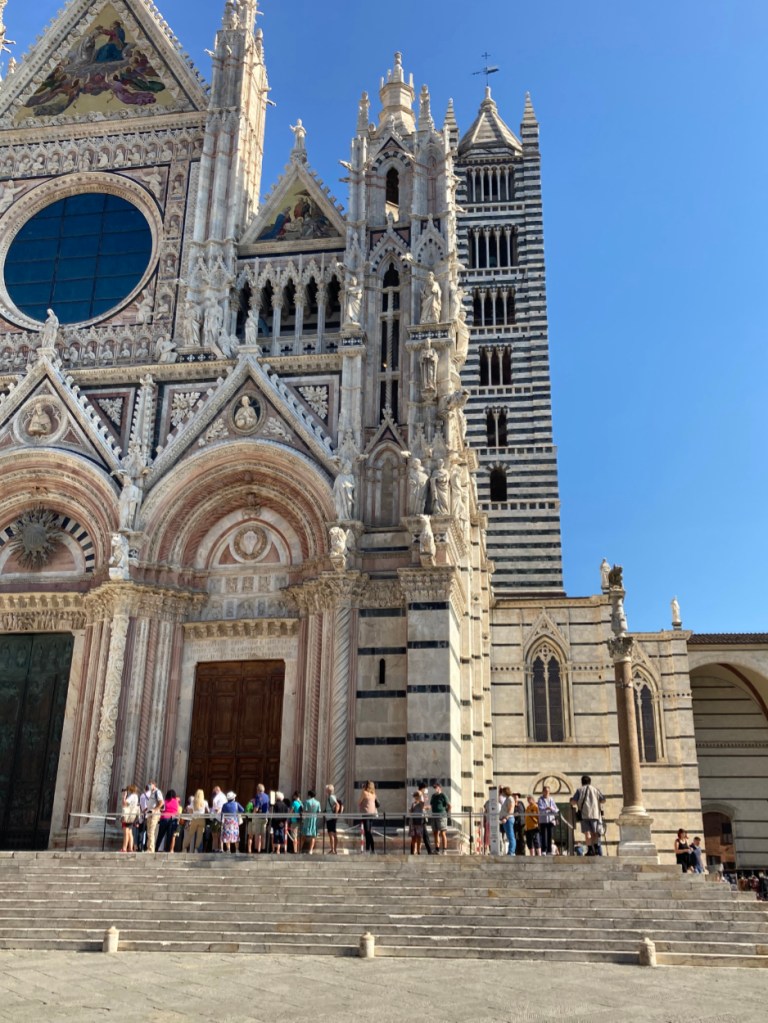
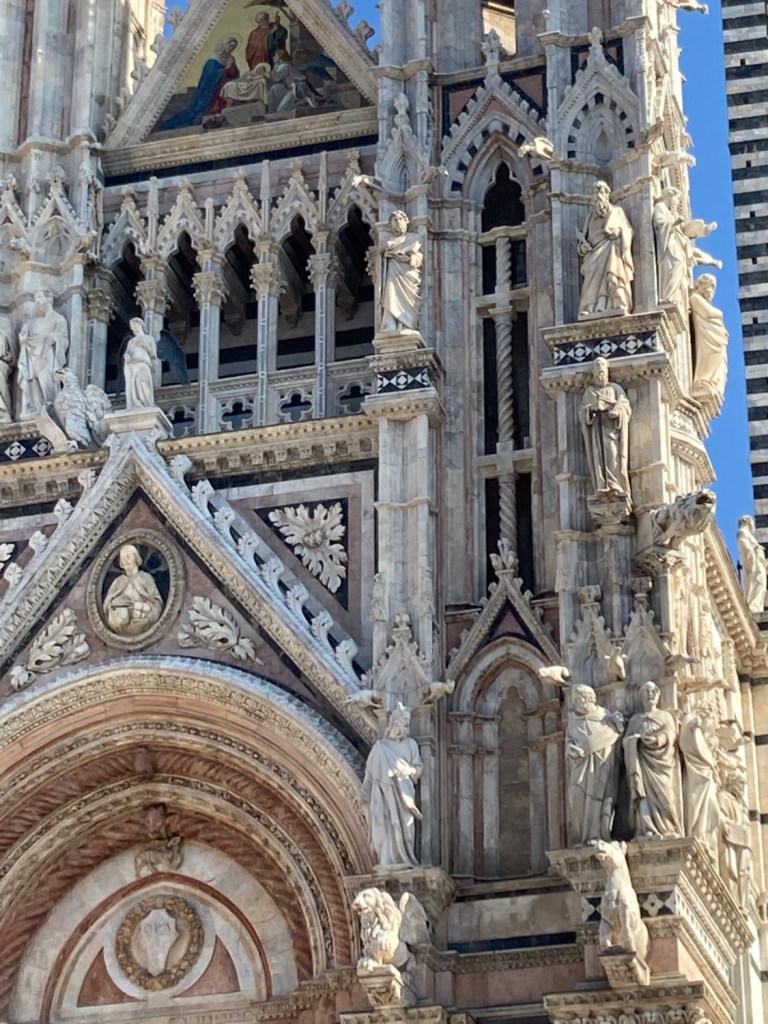
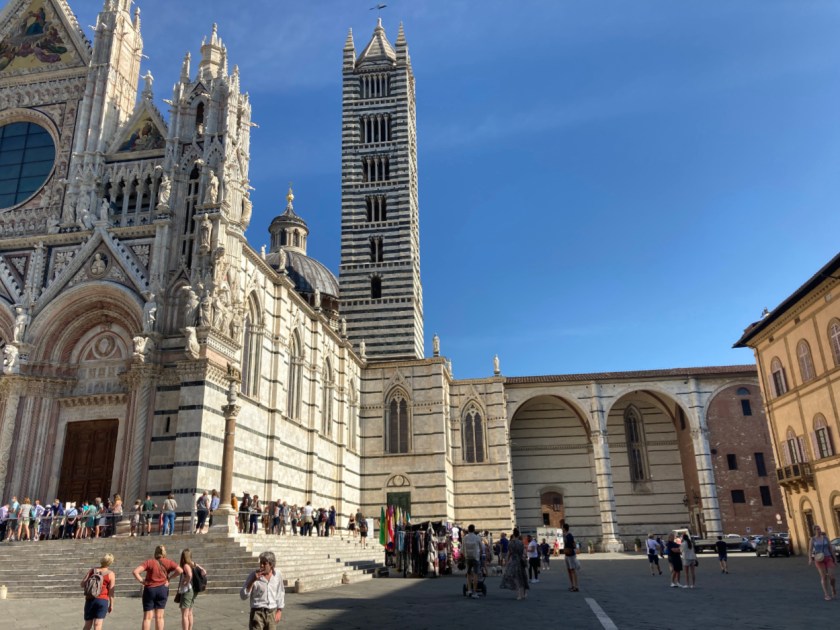
Duomo di Siena. You can always turn to the World Wide Web if you need more information. Here are some highlights. Design and construction began around 1220 CE. The dome was completed in 1346. The church is dedicated to the Assumption of Mary. Associating churches with Mary seems to pretty common in Tuscany. The church was built of brick, then sheathed in alternating stripes of white marble and green marble which has since oxidized to something closer to black. Several artists contributed to the facade which is covered in saints, prophets, patriarchs, gargoyles, oxen, beasts (lions with wings), and did I mention gargoyles.
The Florence Duomo is bigger. In 1296, Florence began to build a duomo that would be bigger than the Siena Duomo. As a side note, the initial design of the Florence Duomo was by Arnolfo Cambio, who is a son of Colle di Val d’Elsa (the town where Susan and I have been staying). Anyhow, Siena could not allow Florence to have the biggest Duomo. So, in 1339, Siena planned to expand their Duomo. In the next few images, I’ll try to explain how.
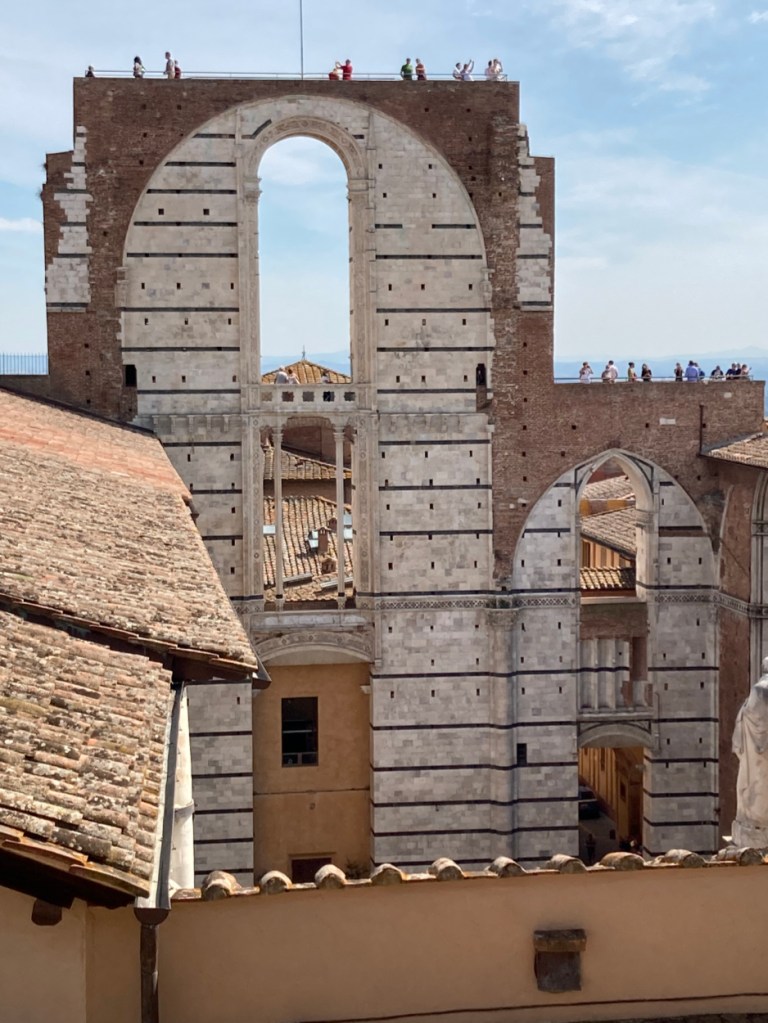
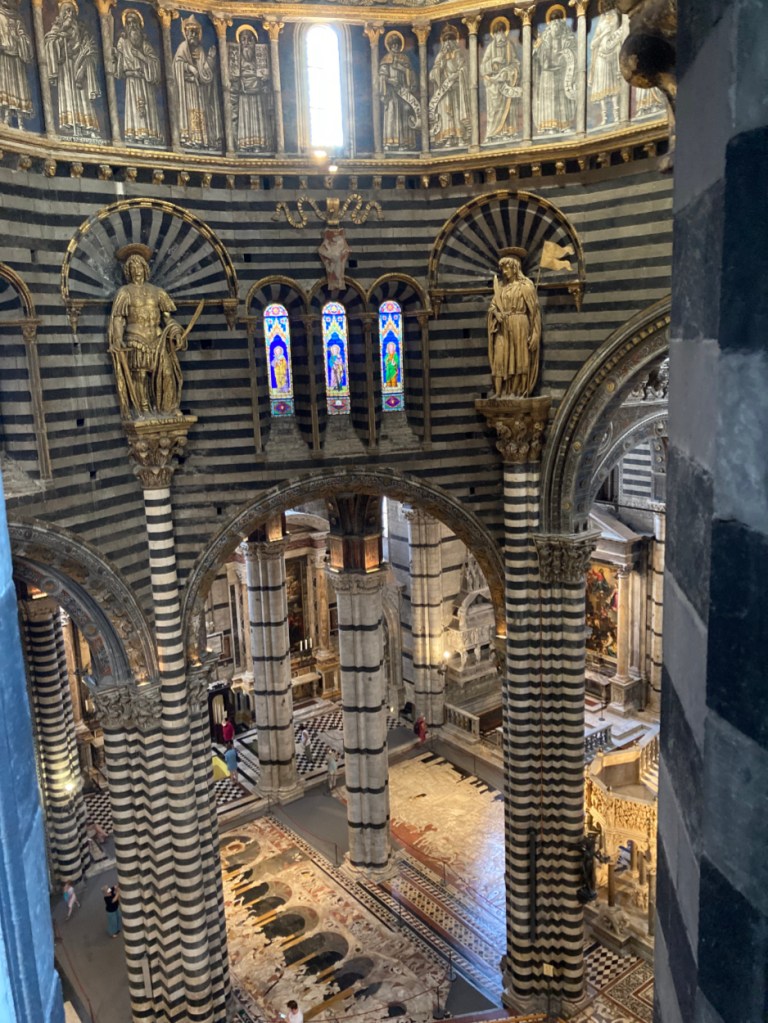
The plan was to build a central nave with an aisle on each side. This structure would be perpendicular to the existing duomo making the original church the transept of the new duomo. In the image above, the tall arches in the lower right indicate where the boundary between the central nave and right aisle would have been.
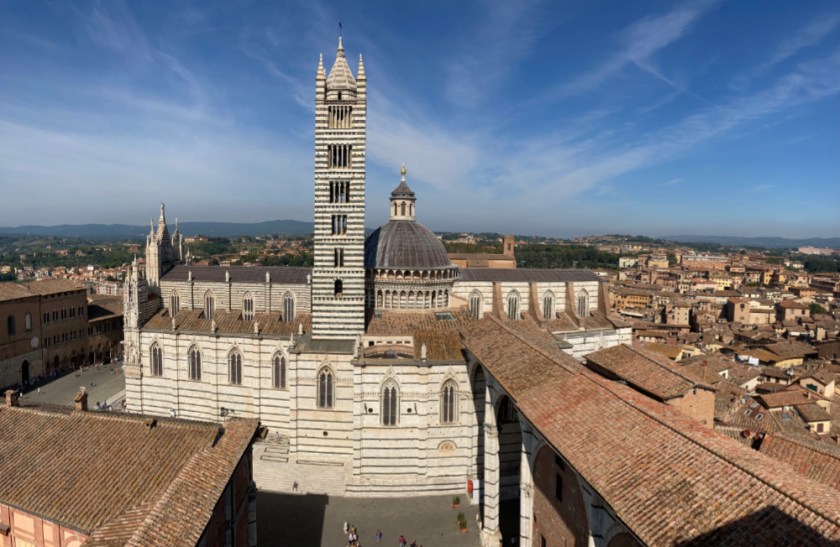
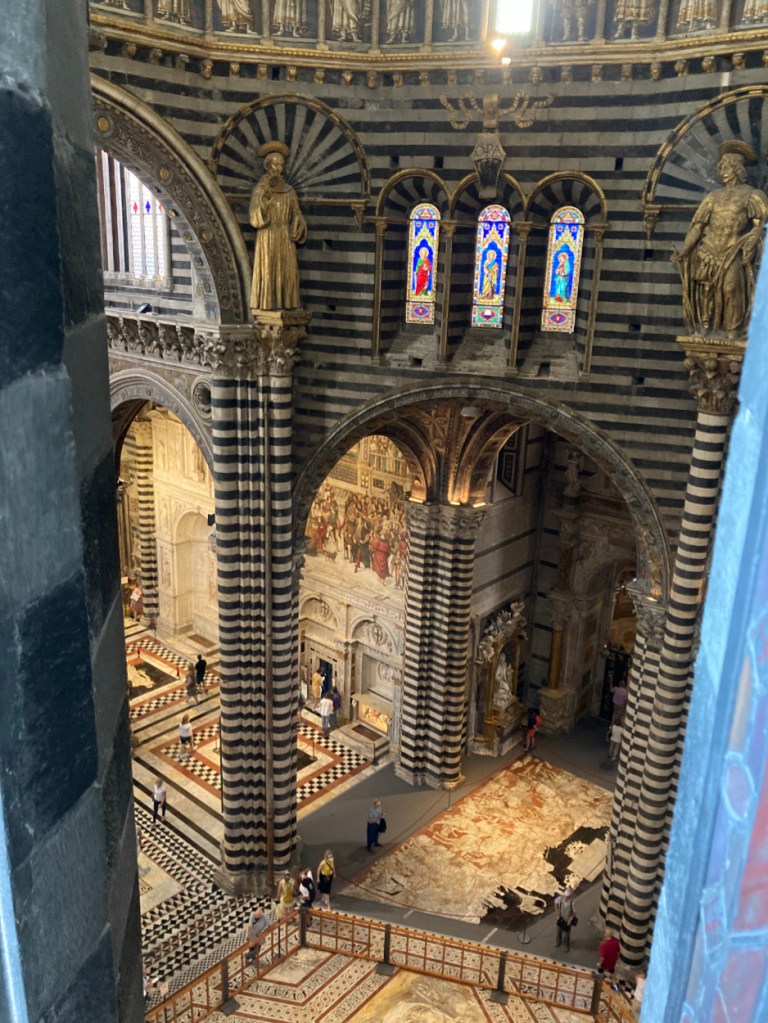
This view gives you an idea of the new duomo’s footprint and how it would dwarf the old one. Those arches in the image above are on the right under the roof. You can see that this aisle of the new duomo would have been almost as tall as the nave of the old duomo. The nave of the new duomo would have centered on the high altar beneath the dome and there would have been another aisle on the left.
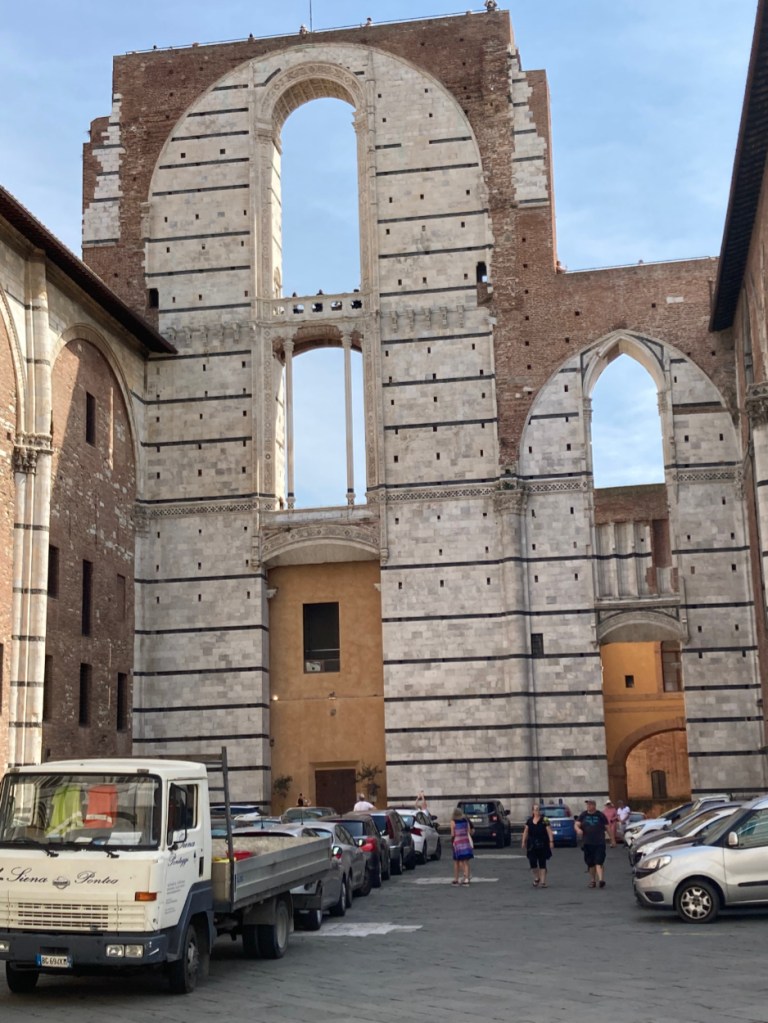
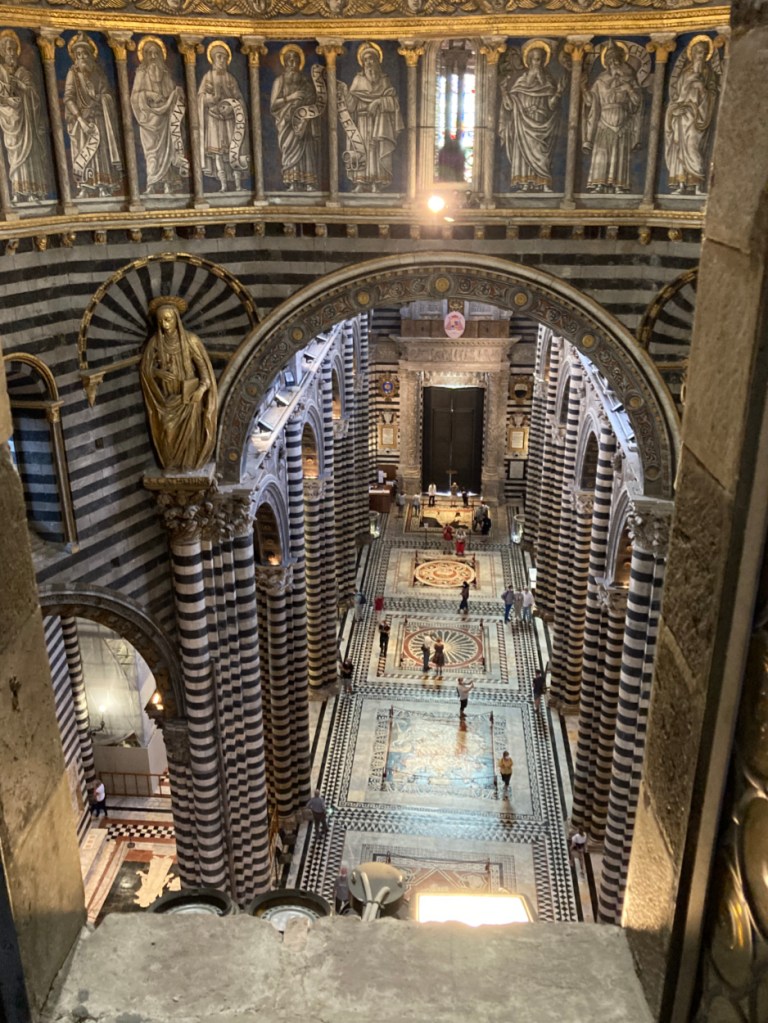
This would have been the facade (entry) of the new duomo. On the left, the arches that would have been between the right aisle and the central nave have been filled in with brick.
This, again, would have been the new facade viewed from the Dome. You can see that this cathedral would have been much higher than the existing one. In addition, the central nave of the new duomo would have been 140 meters in length (the nave of the existing duomo is 80 meters). Nave-length was everything in the Middle Ages.
So, what happened? In 1348, the Black Death (bubonic plague) happened. At least 50% of the Siena population died. Around 1355, Siena tried to resume construction but never could marshal the resources to complete the project. But the duomo they have, ain’t too bad.
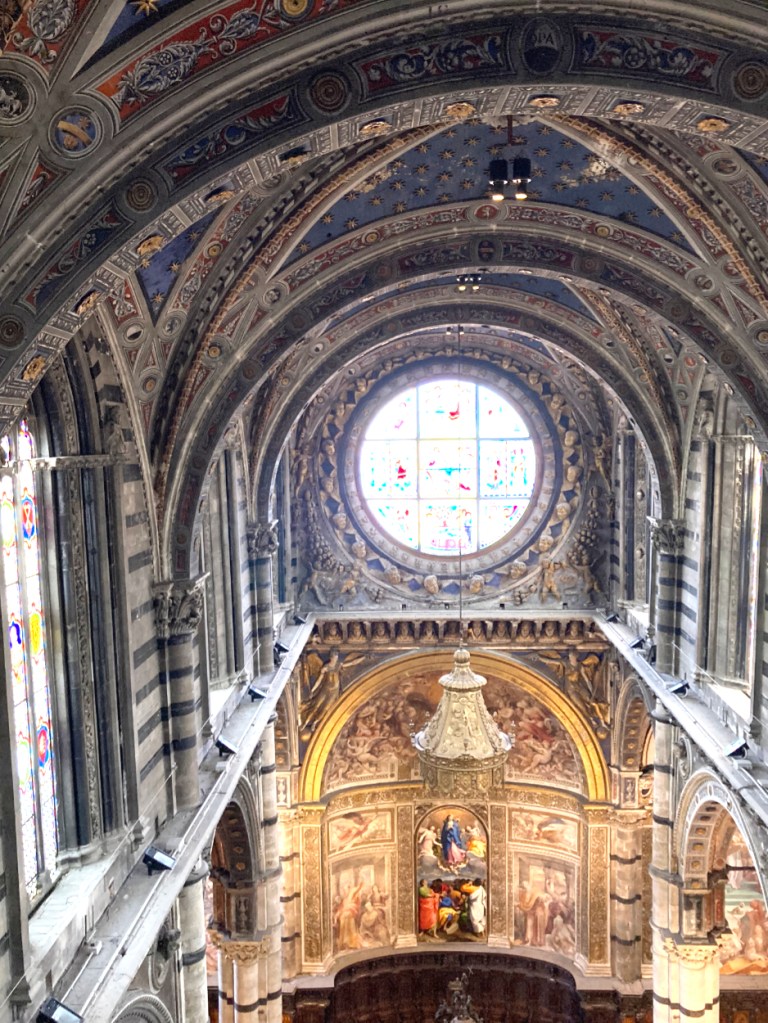
Alright, I’m impressed.
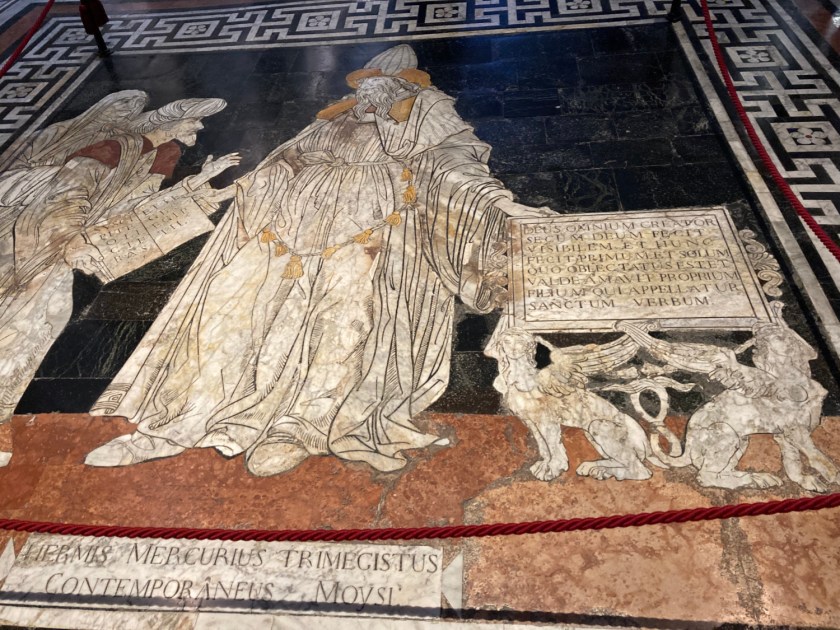
Amazing marble inlaid floors; maybe the most noteworthy art in the whole Duomo. To preserve them, you can’t walk on them and they are often covered with rugs. We were lucky but I ended up not paying much attention because my attention was continually drawn up (I think they planned it that way).
Michelangelo and Bernini.
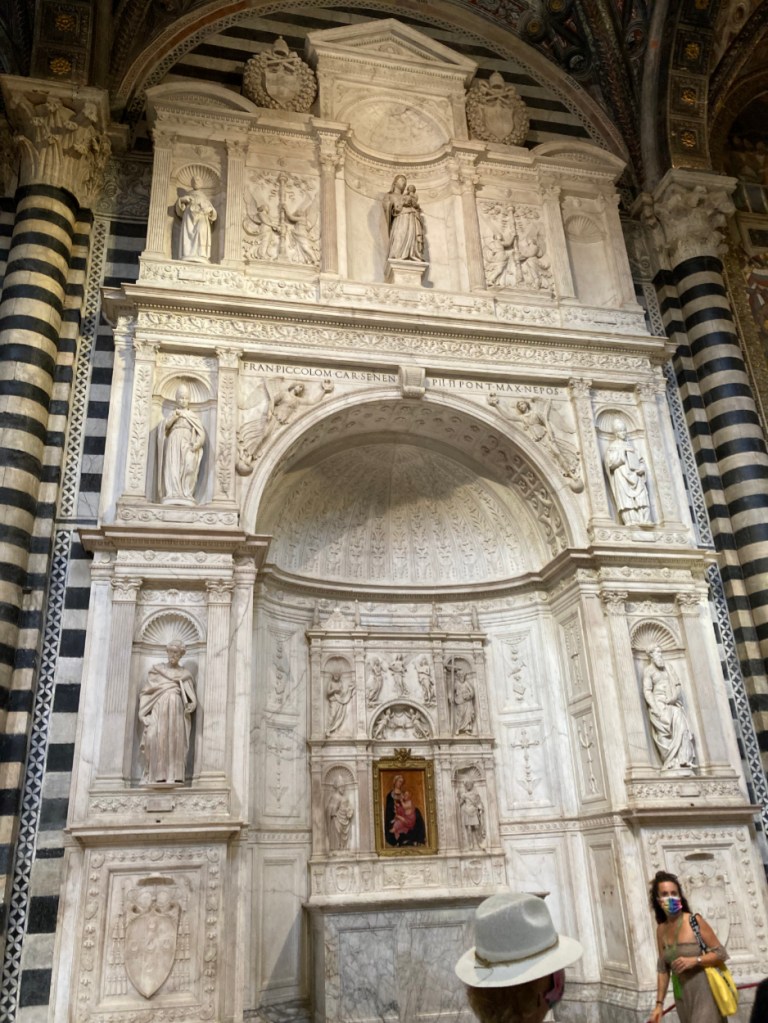
This marble altar was commissioned byFrancesco Todeschini Piccolomini who became Pope Pius III (died after 26 days as Pope). Michelangelo’s shop eventually got the contract to supply the 6 larger statues of family-favorite saints. They only supplied 5; by then, Pope Pius III had died, the family lost interest and the contract was voided.
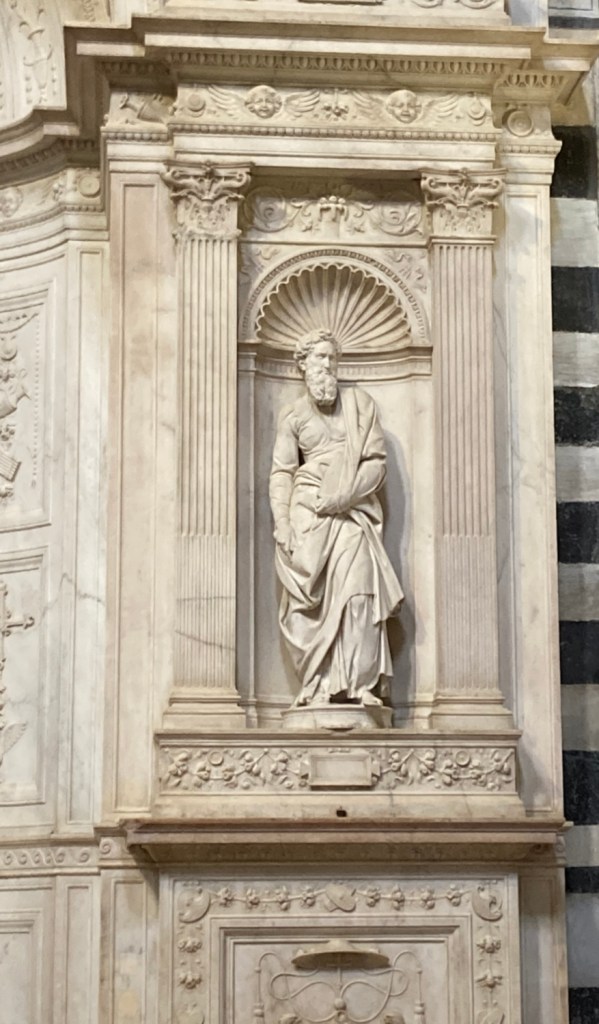
St. Paul. Rick Steves says this is the only statue actually completed by Michelangelo. Students in his shop executed the other statues. Other references, however say he did 4 of the 5 (with some help) and one reference said this statue of St. Paul might be a self-portrait of Michelangelo.
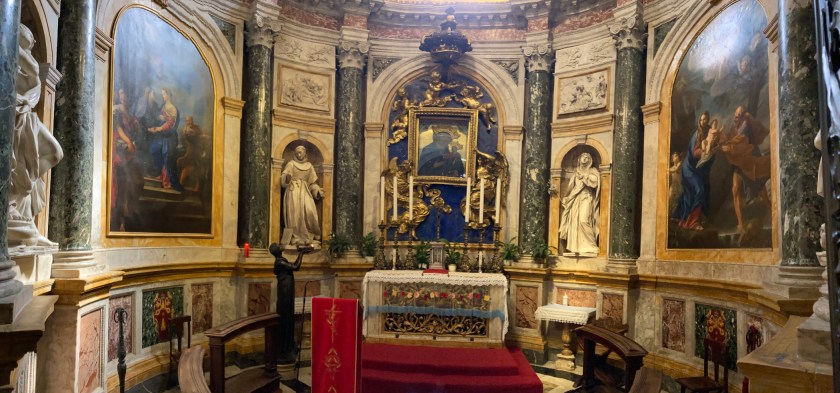
Bernini and the Chigi Chapel. Bernini (widely regarded as the greatest sculptor of the Baroque period) has 2 pieces (Mary Magdalene and St. Jerome) in the Duomo di Siena on either side of the entrance to the Chigi Chapel. Unfortunately, we weren’t allowed far enough into the Chigi Chapel to see them (one of them is partially visible on the left side). The 2 sculptures you can see are by artists’ from Bernin’s shop.
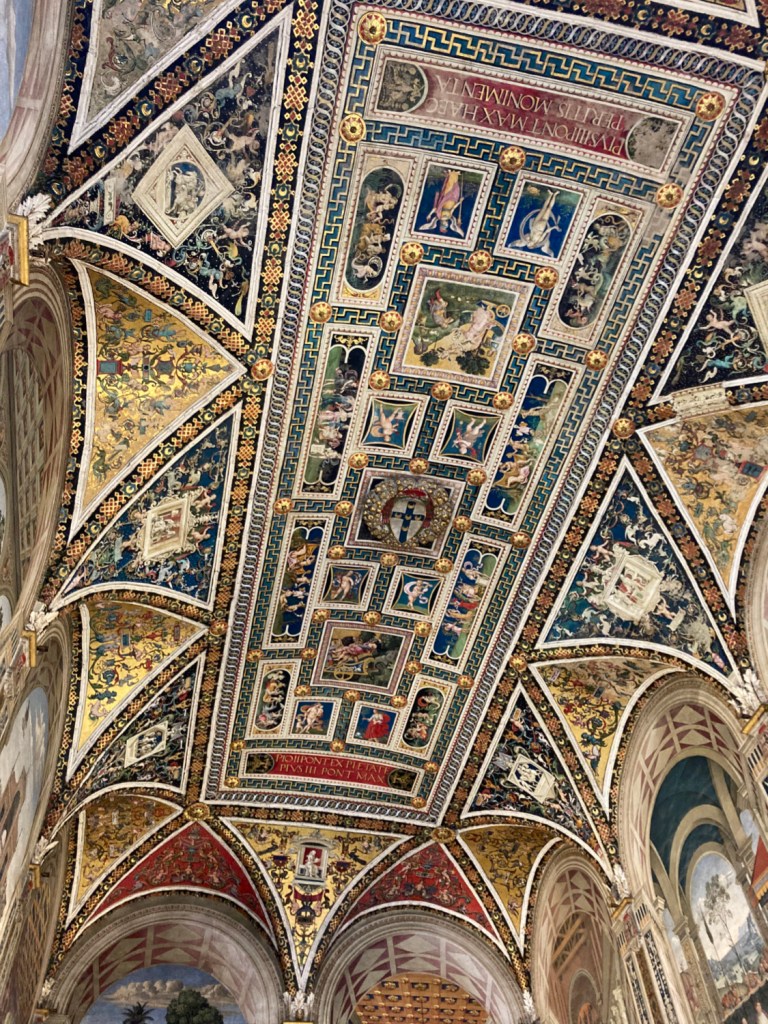
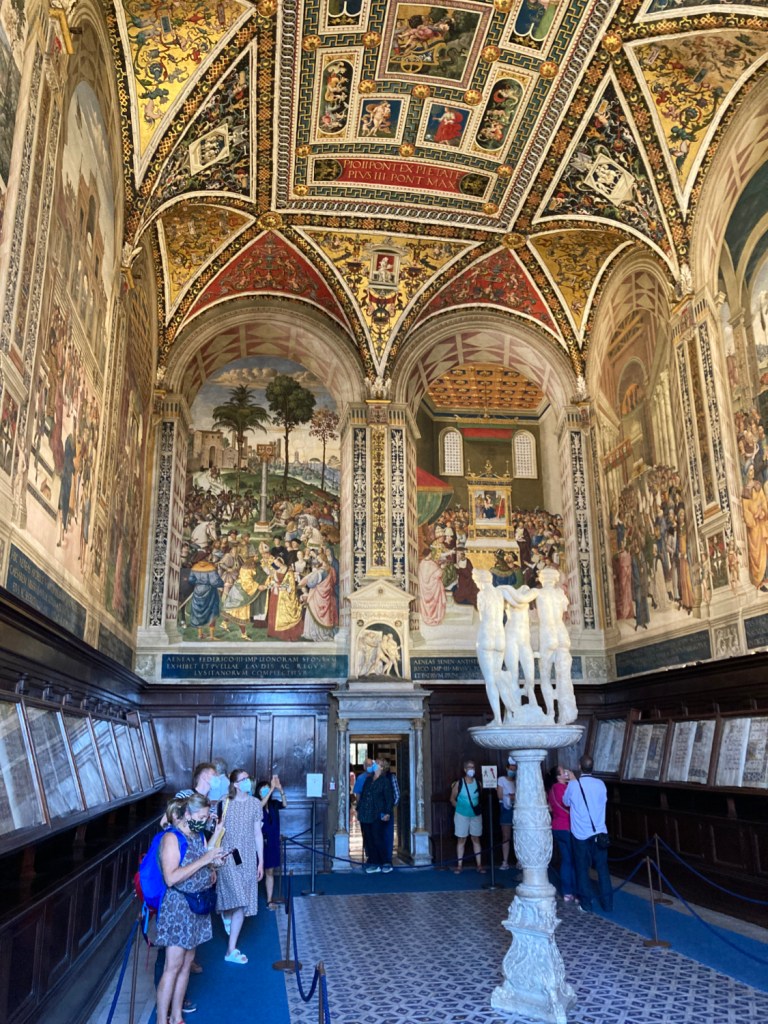
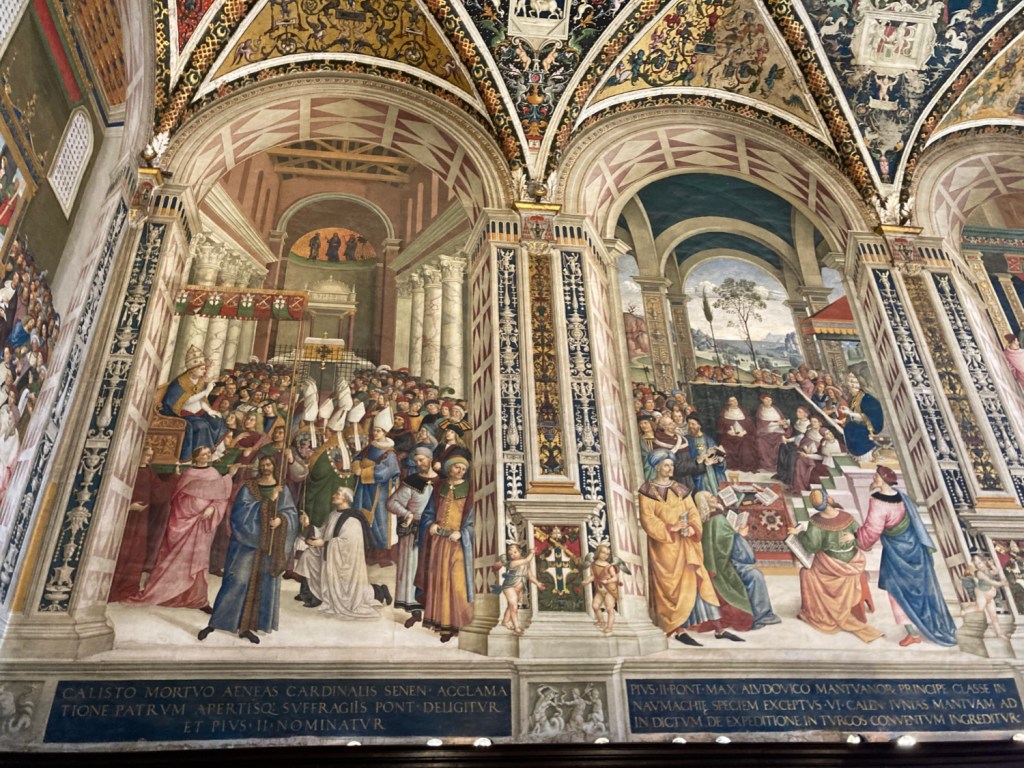
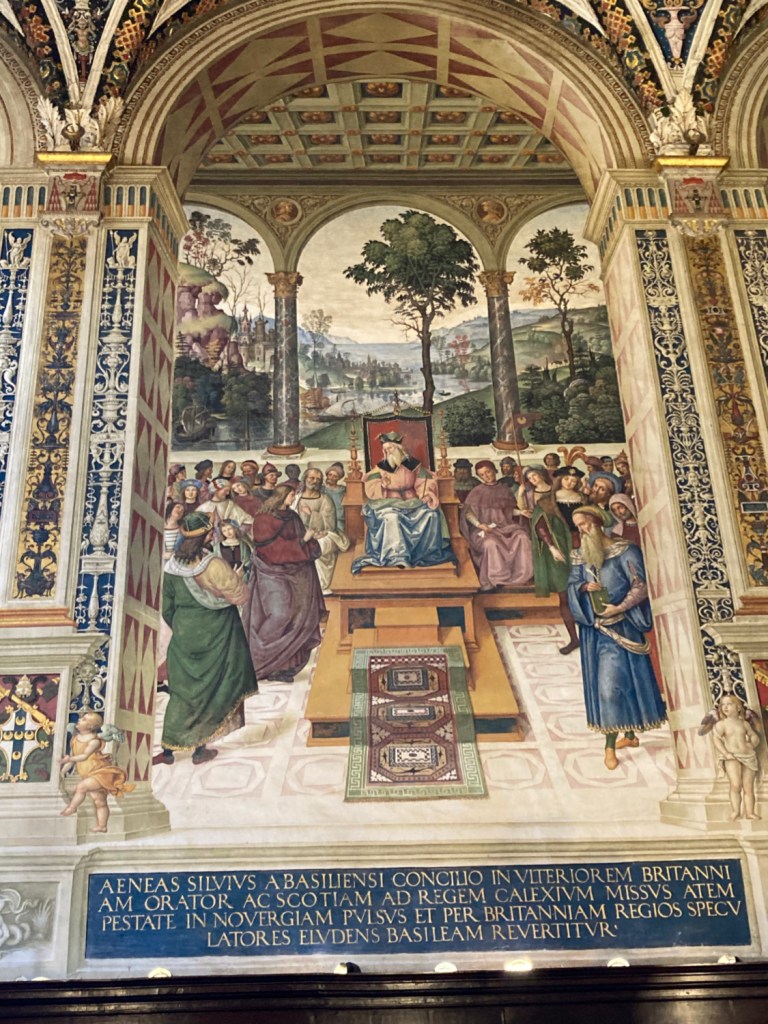
Piccolomini Library. Francesco Todeschini Piccolomini (Pope Pius III) endowed the construction of a library to honor his uncle, Enea Silvio Piccolimini (Pope Pius II). The library is off the nave and covered in frescoes that portray the accomplishments of and the offices held by E. S. Piccolomini. The frescoes are by Pinturicchio and his workshop which, at the time, included Raphael.
No words.
This room, the Piccolimini Library, is like a dessert for the eyes that’s just too rich.
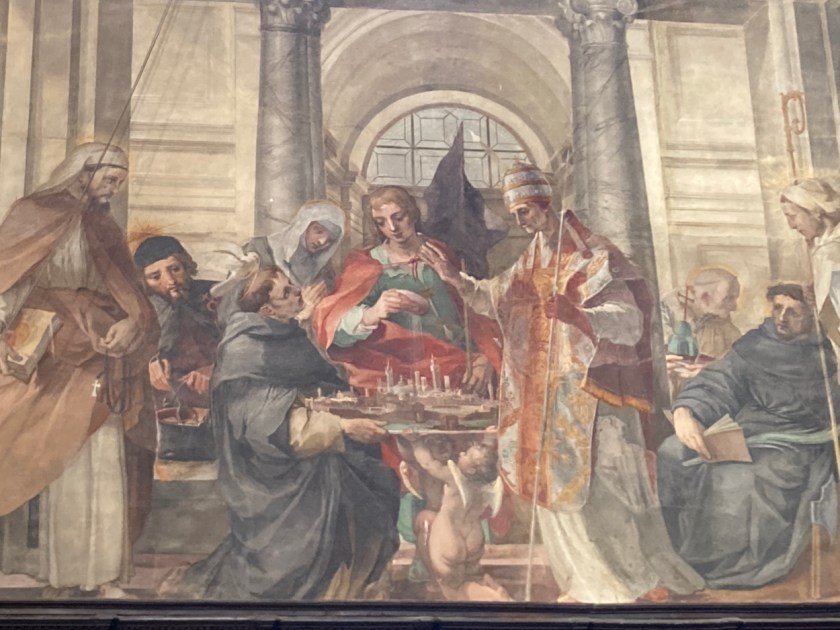
I don’t know who all the characters are but this is a common motif in Medieval Tuscan imagery- some holy person presenting their city (in this case, Siena) for protection by another Holy person or an even higher authority.
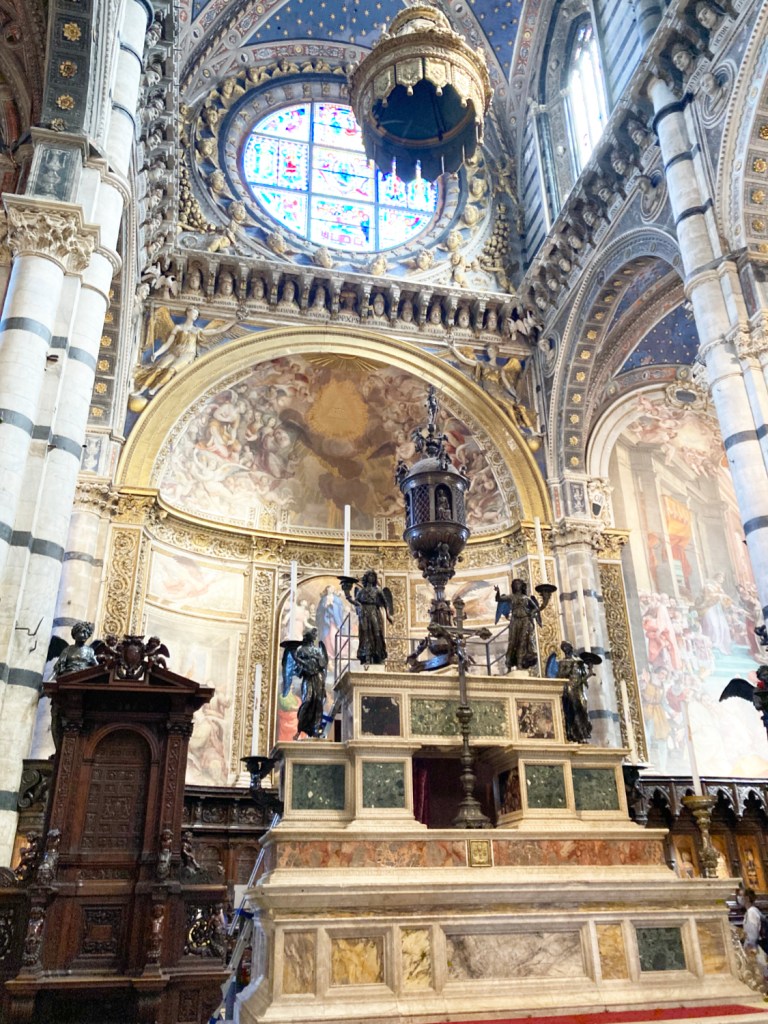
High altar.
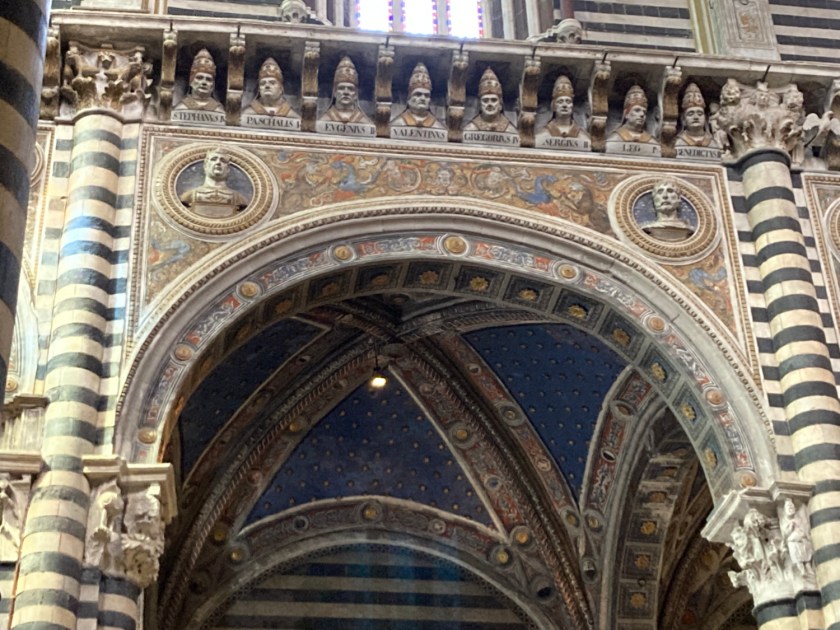
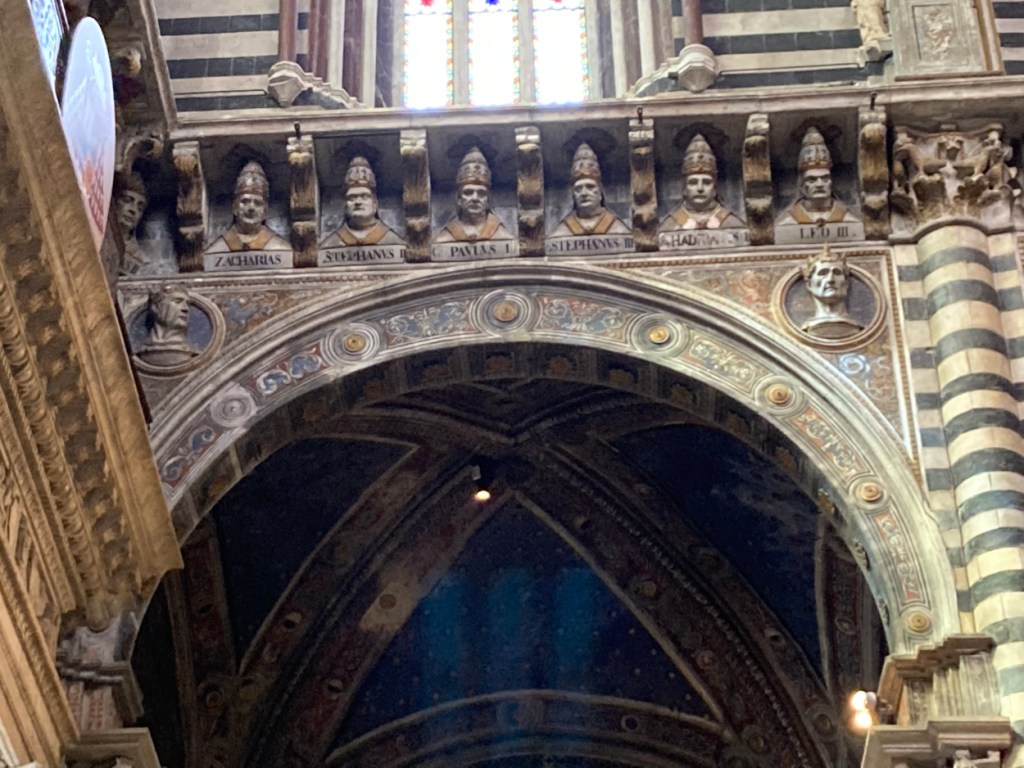
A few of my favorite popes.
A few more of my favorite popes.
I’m not sure but I think that you can just see Heaven up above the popes.




 John and Susan's Excellent Adventure