San Gimignano (san jim-in-yawn-o) began as an Etruscan town in the 3rd century BCE. In the 1st century BCE, it was know to the Romans as Silvia and became San Gimignano in 450 CE when Saint Geminianus posthumously intervened to protect it from Attila the Hun. Today, San Gimignano is famous for the number of surviving medieval towers that give it the skyline of a 20th century city. The web reports two explanations for the construction of these towers by medieval patrician families. First, the towers show wealth and power (‘my tower is taller than your tower’). Second, competition between these patrician families could be intense and the towers were potential refuges when a rivalry escalated to violence. Most Medieval towns had these dramatic skylines. For several reasons, San Gimignano has retained the most towers (14 out of the original 72). It is a spectacular Tuscan hill town.
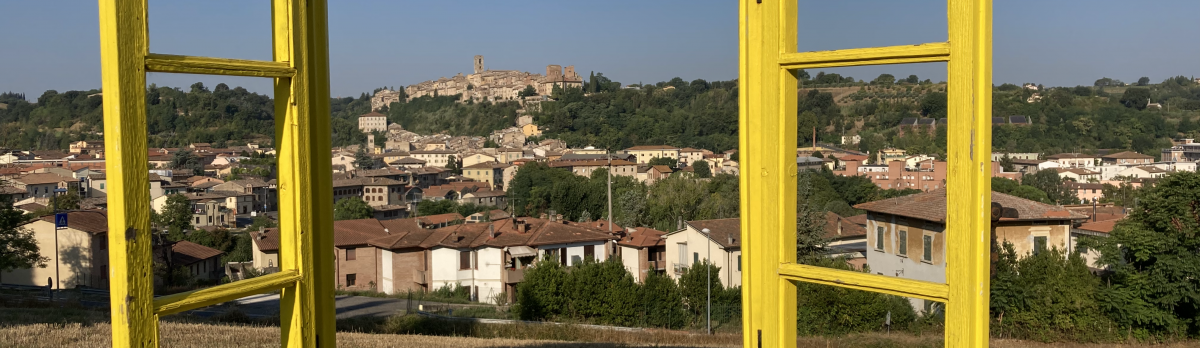
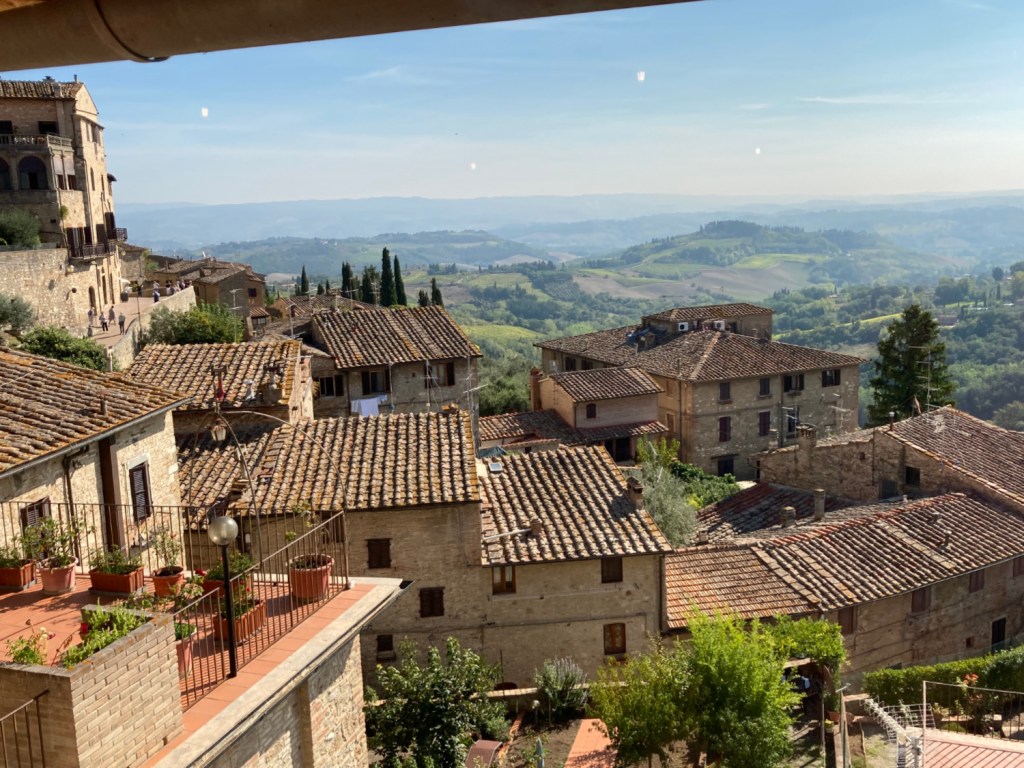
Sept. 28, 2021– Tuscan countryside just outside the main gate.
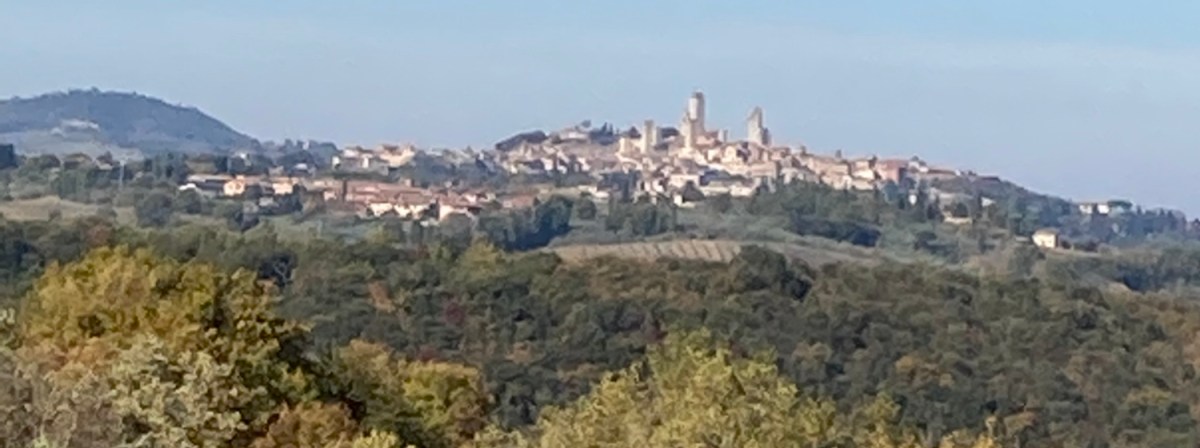
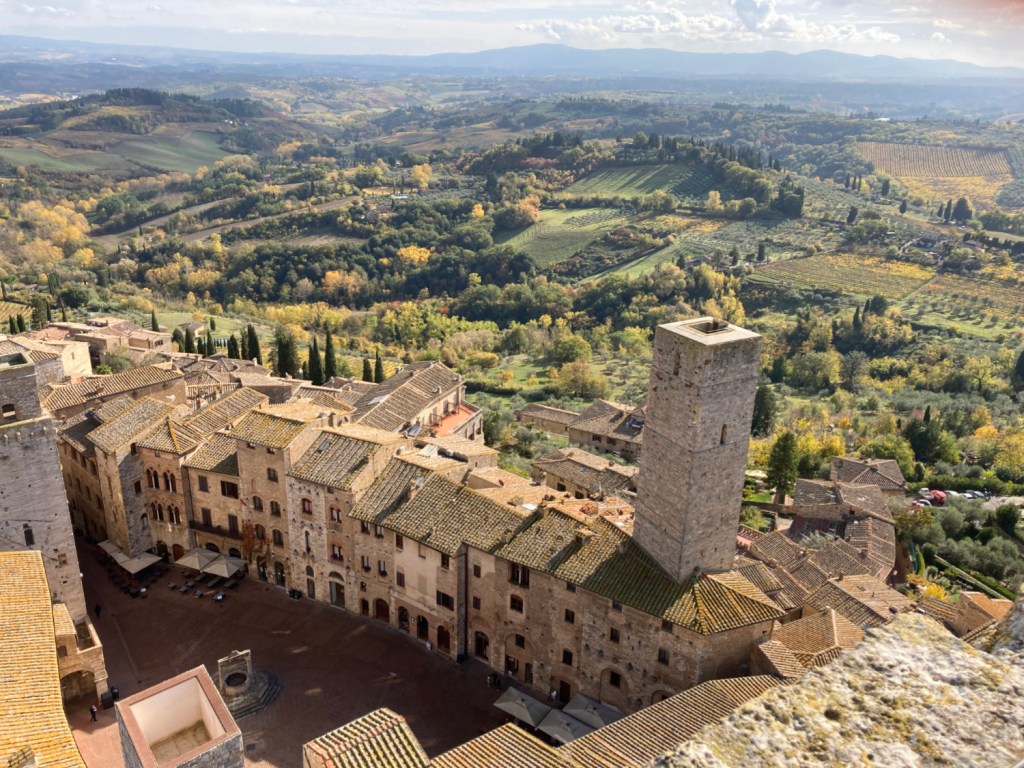
Oct. 28, 2021– the areas turning yellow are mostly vineyards.
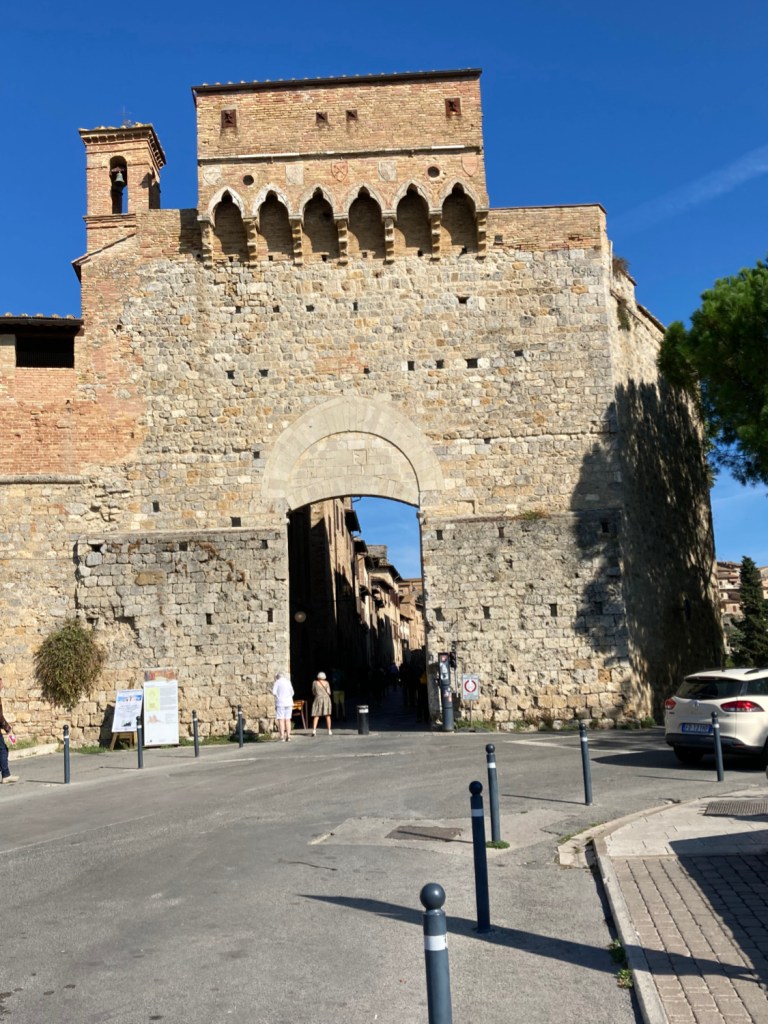
Porta San Giovanni
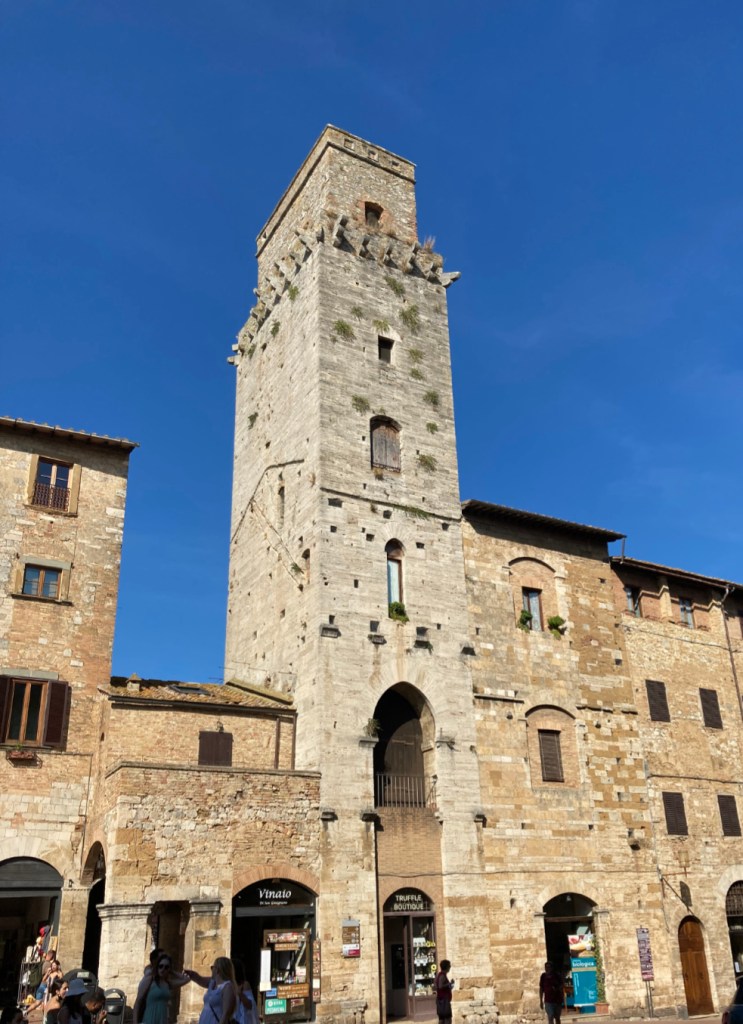
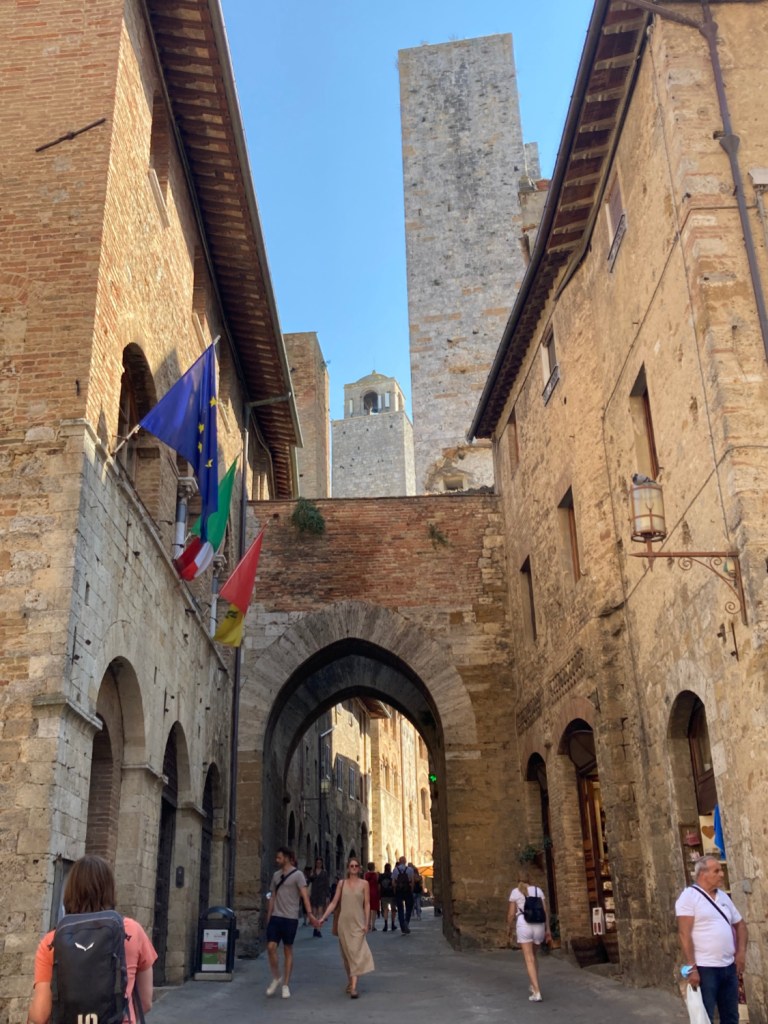
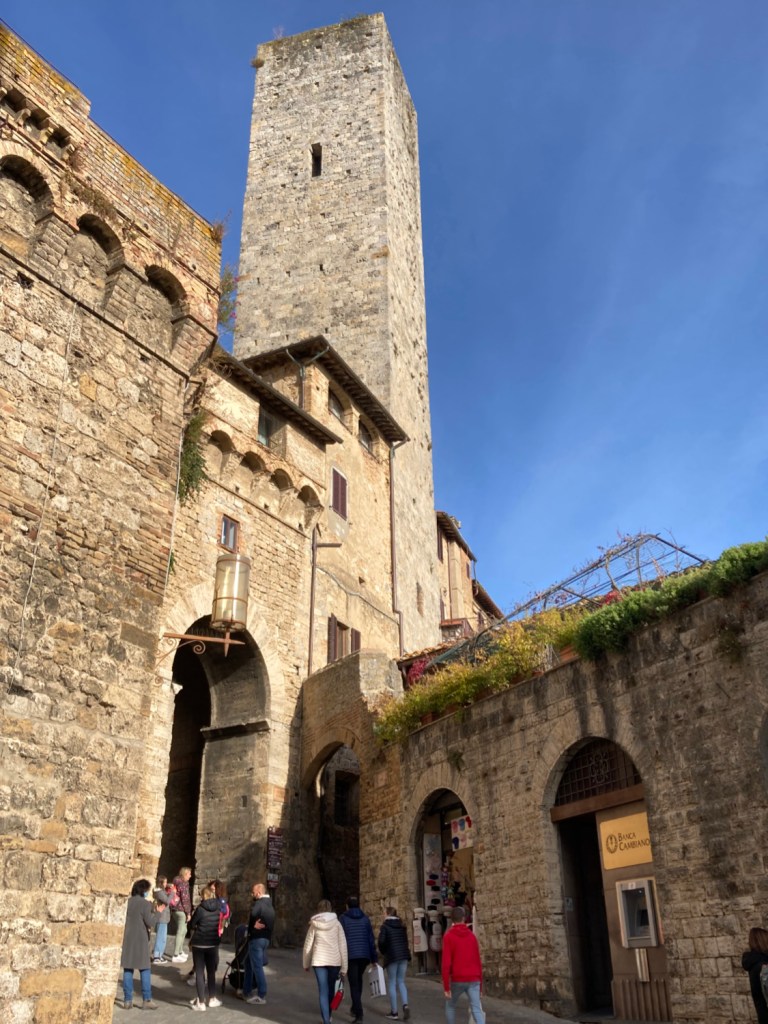
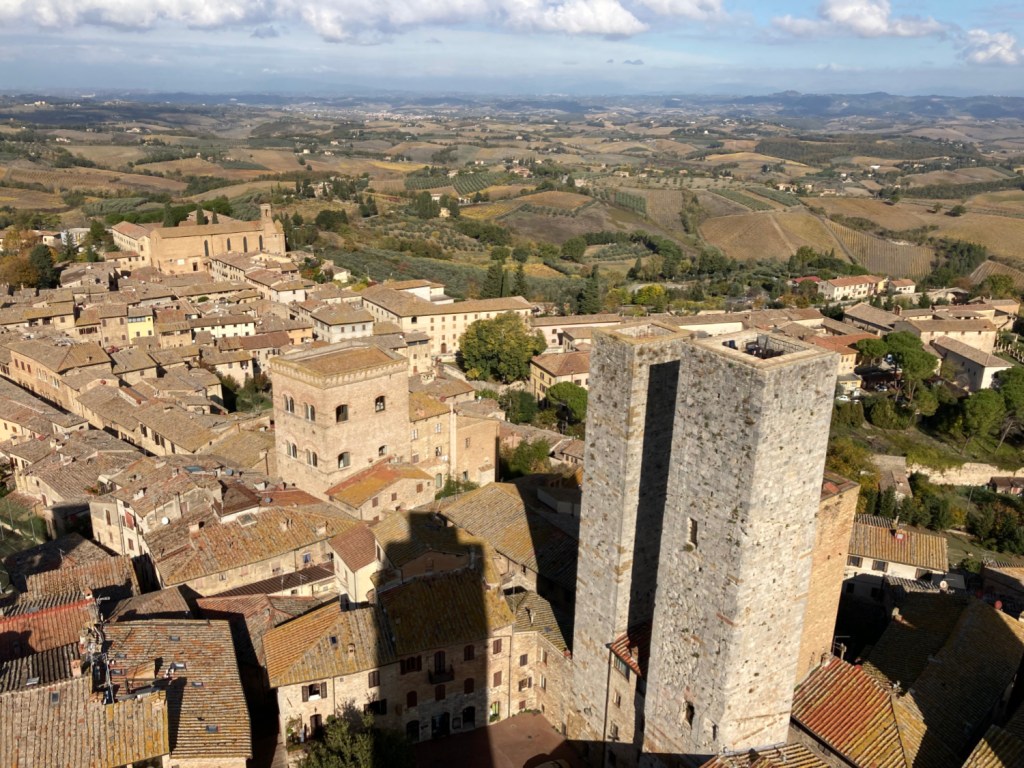
The towers are the stars of the show in San Gimignano.
Notice the dark holes and what appear to be doors leading to nowhere in the upper floors of this tower. In 1300 CE, timbers extending from the holes would have supported cantilevered balconies or even entire rooms off the side of the tower.
A defensive wall was built around San Gimignano in 1207. By 1251, San Gimignano had grown beyond the existing wall and a new wall was built that encompassed the expanding city (1251-1262 CE). In some places inside the city, you can see remnants of the original wall. This is a gate from the 1207 wall.
Another gate in the first city wall.
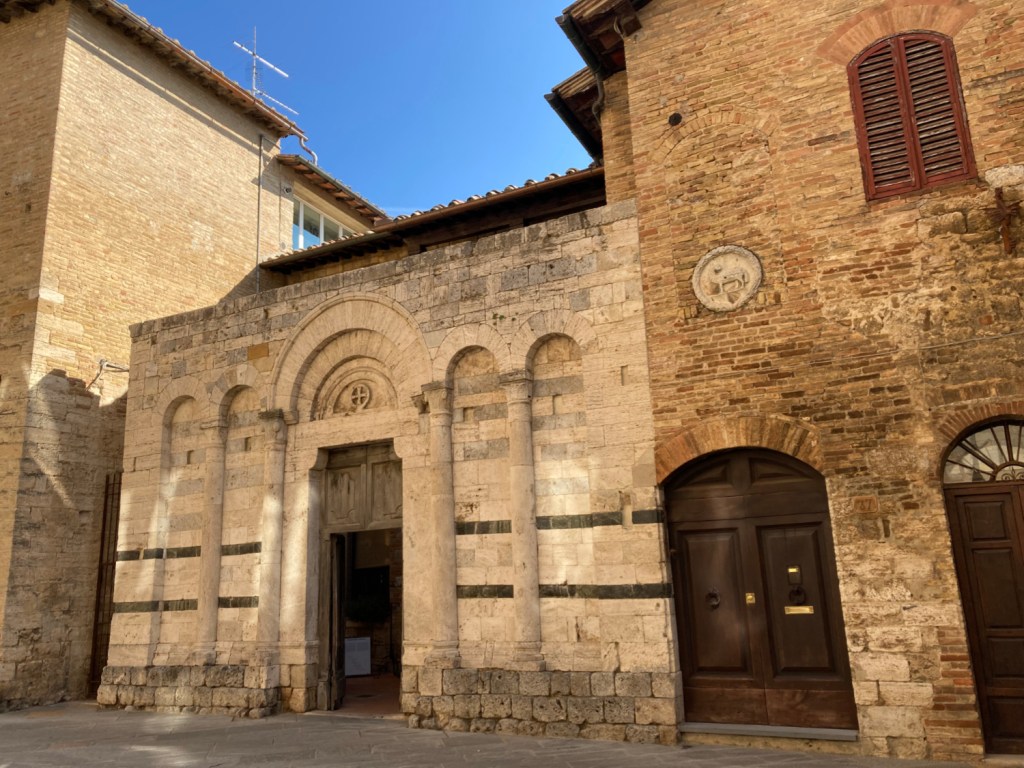
12th century CE pilgrim shelter run by the Knights of Malta. Only the facade remains.
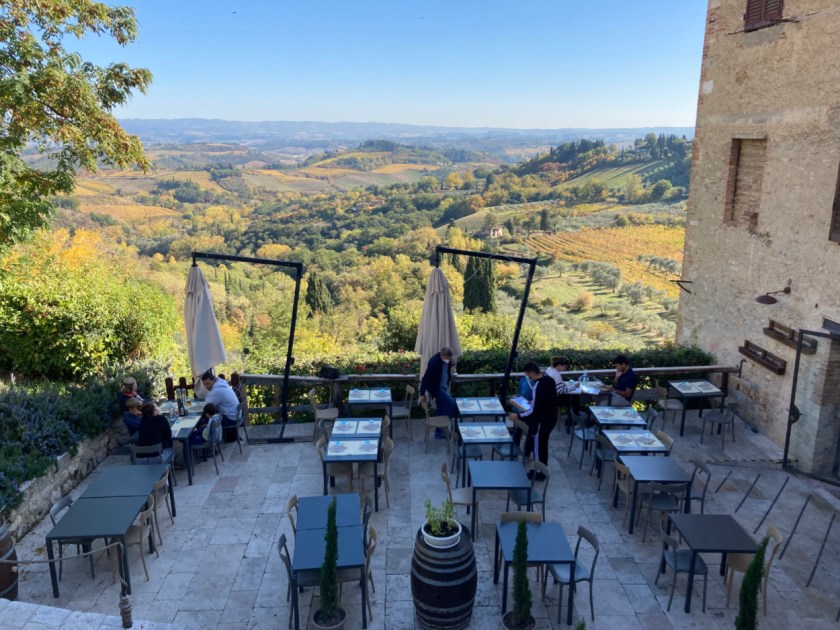
Panoramic viewpoint
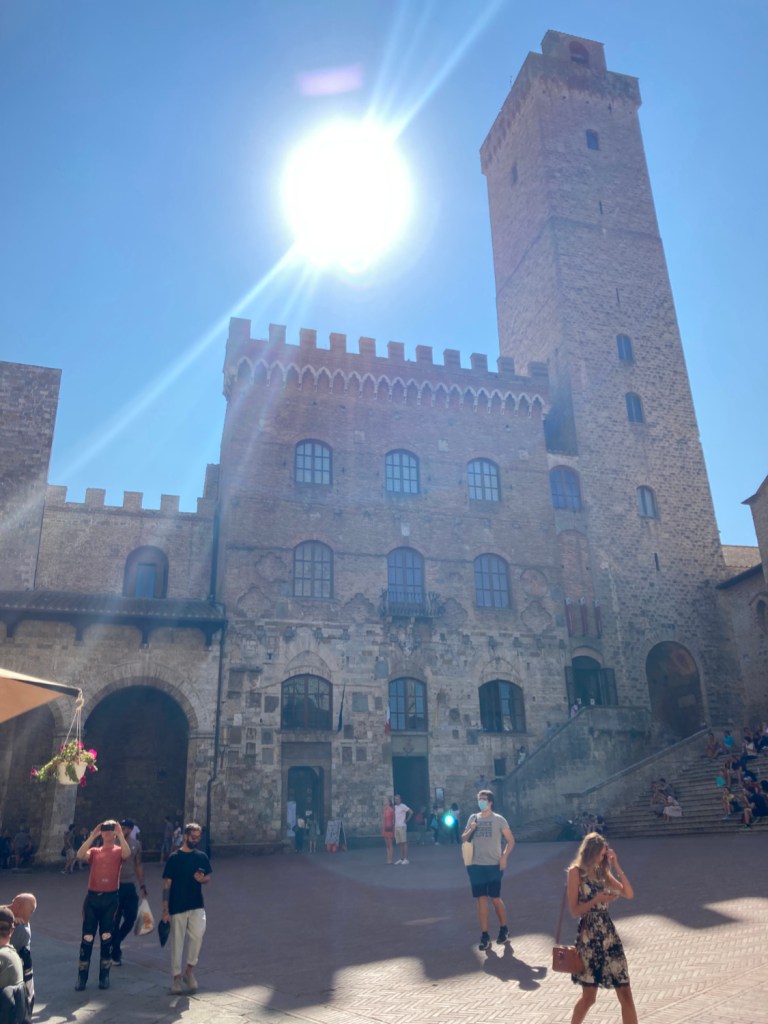
Palazzo Comunale. This was “city hall.” Today, it has the only tower you can climb and see…
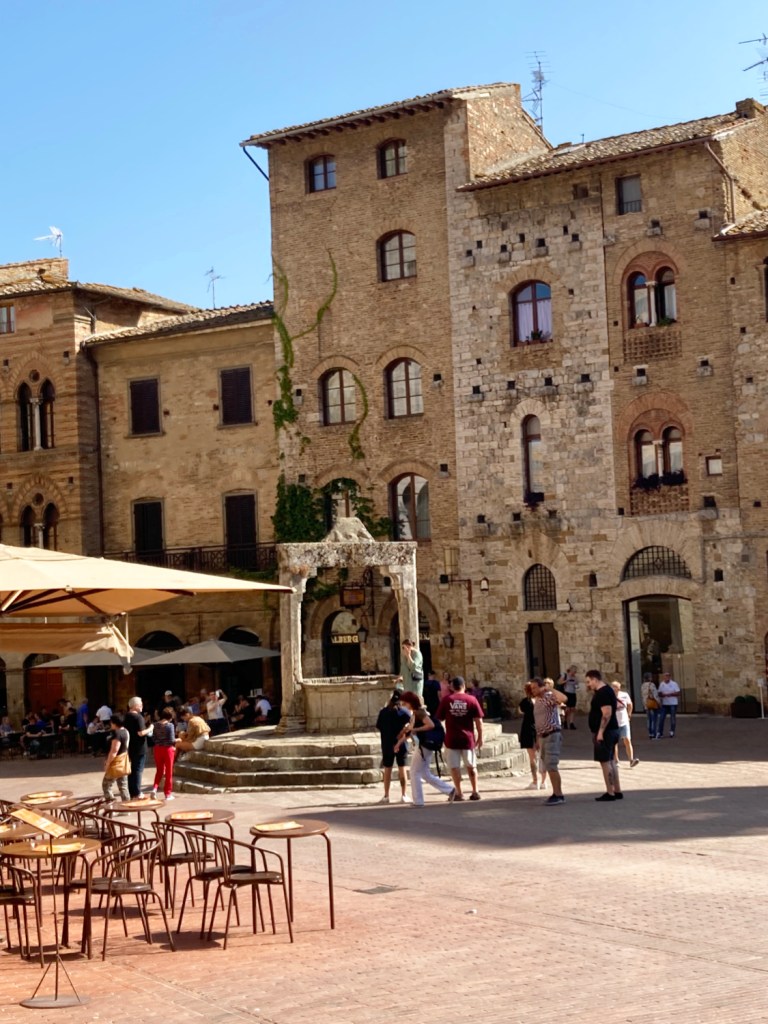
Piazza della Cisterna. A giant cistern is beneath the entire piazza. A system of pipes collects rainwater from nearby rooftops and deposits it in the cistern. The sides of the well are lined with grooves on the top, presumably from a few hundred hears of hauling up buckets filled with water.
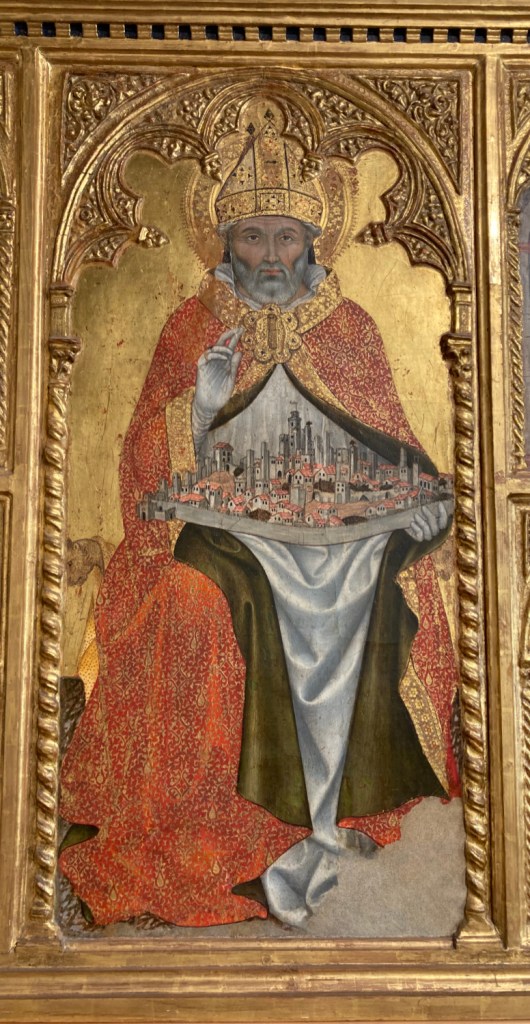
Sanctus Geminianus holding and protecting the city of San Gimignano in his lap. This from an altarpiece done around 1391 by Taddio Barolo.




 John and Susan's Excellent Adventure