The San Gimignano Collegiate Church of the Assumption of Mary
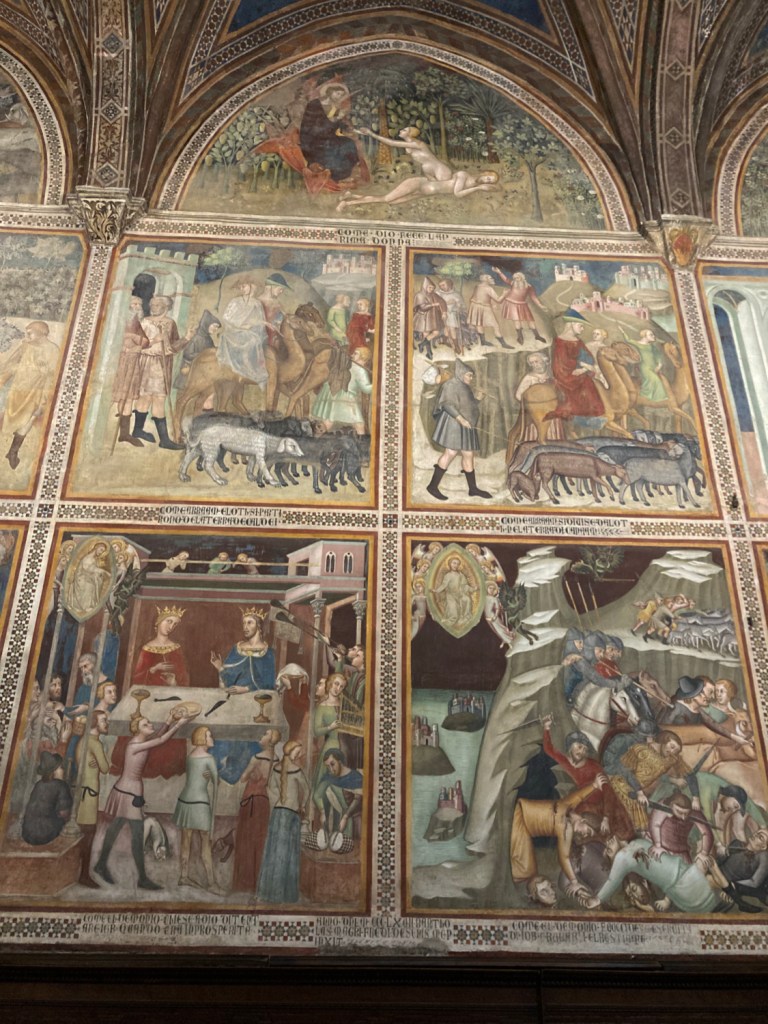
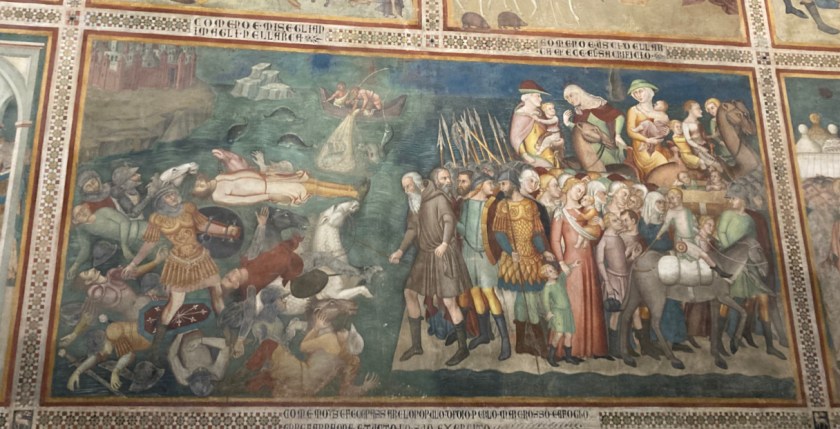
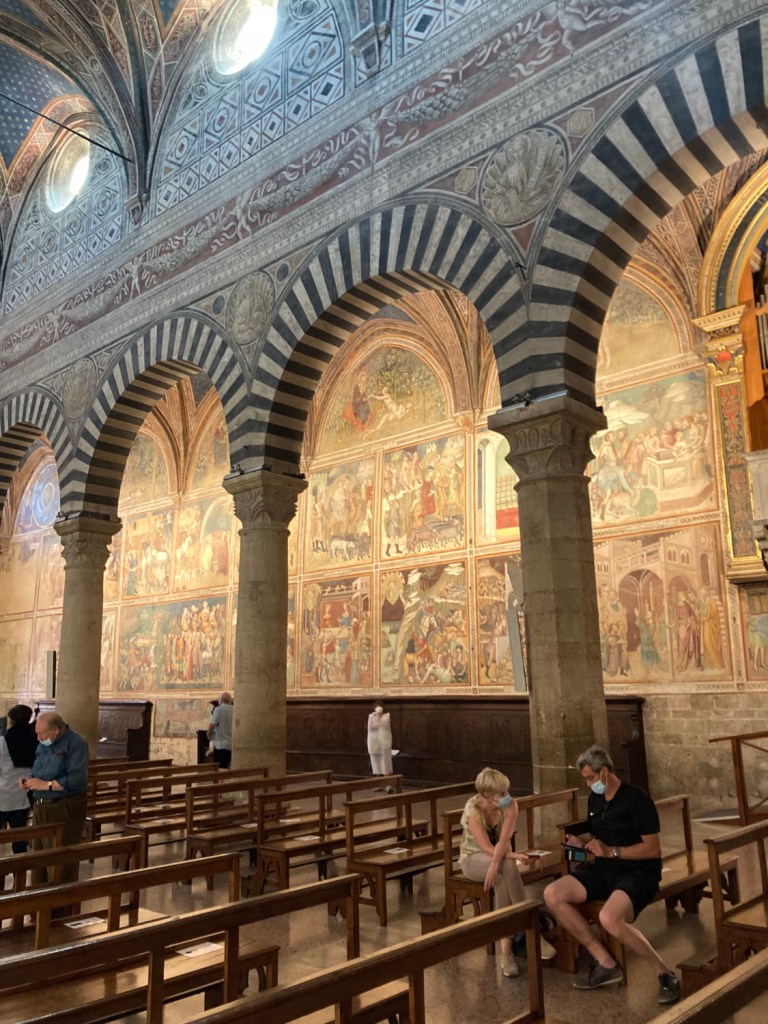
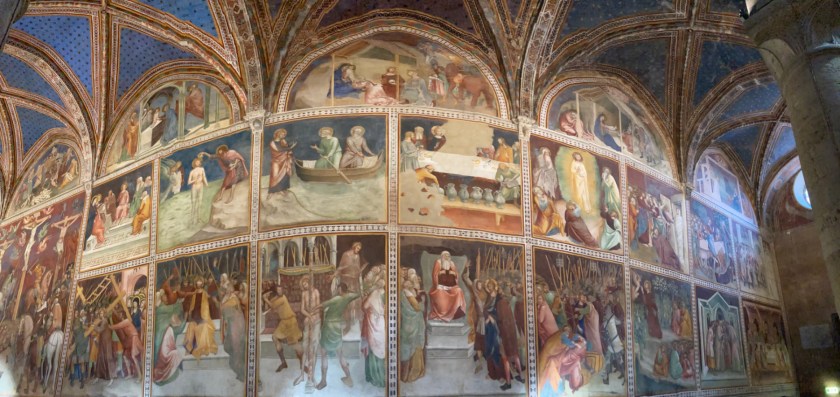
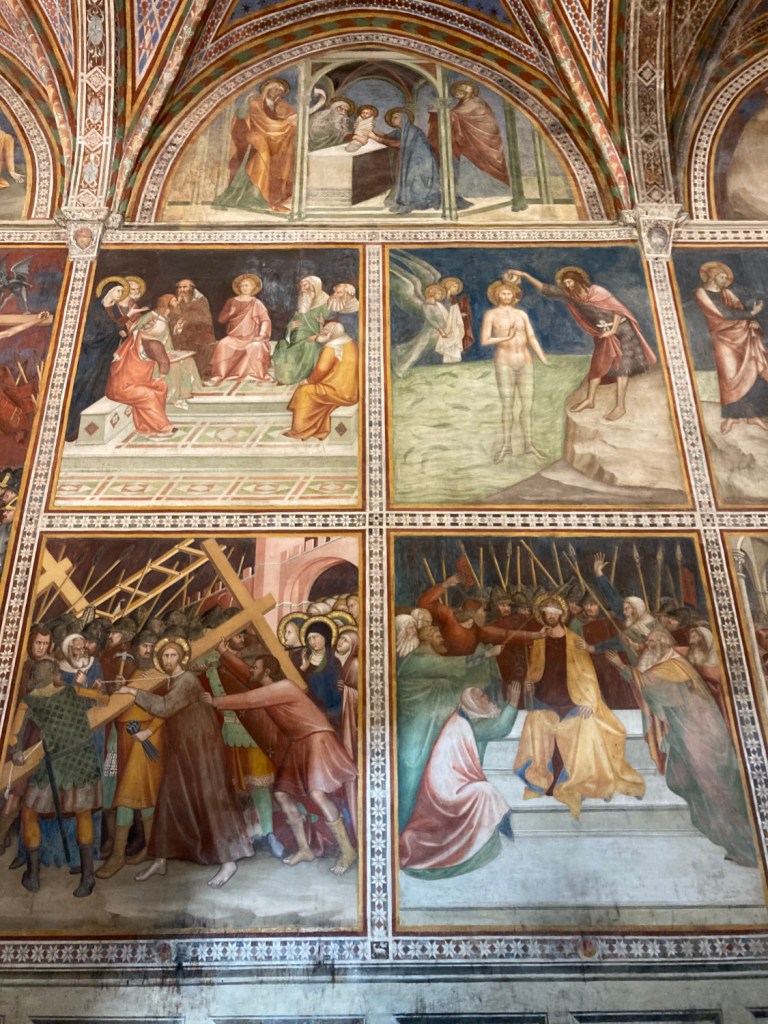
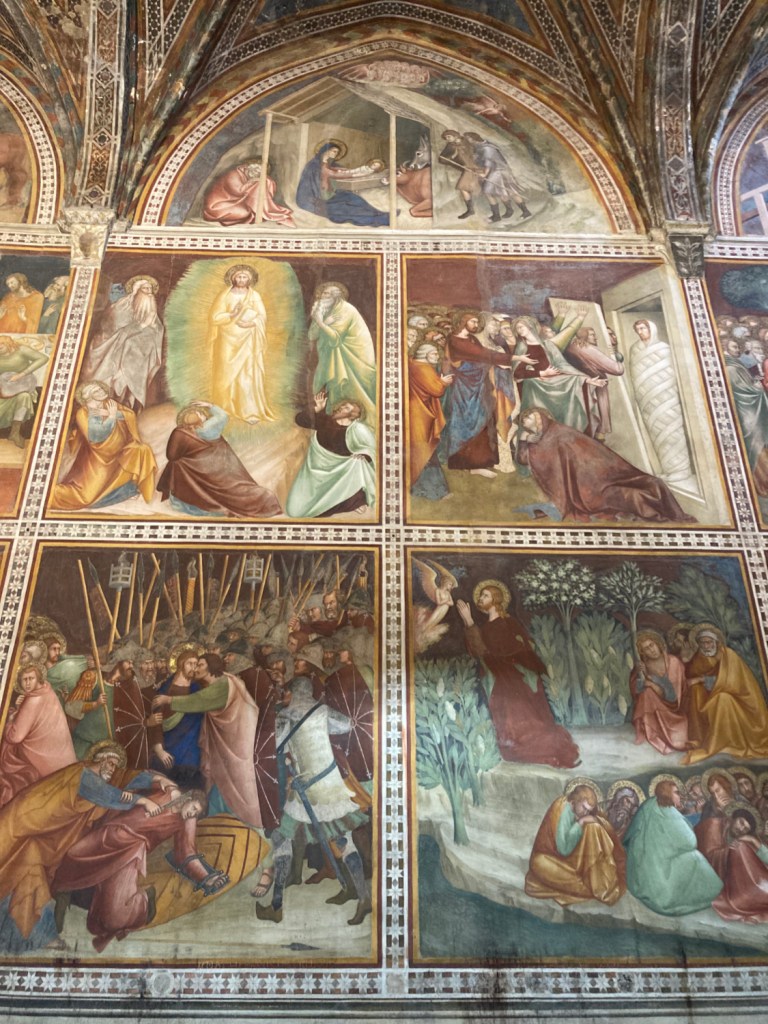
So far, this has been my favorite Catholic Church. I have developed a fascination with frescoes and this church is loaded. Frescoes are painted on damp plaster; after the plaster dries, they’re part of the building. As roofs tend to leak after a couple of hundred years and brick walls with plaster are notoriously difficult to move, the years usually take more of a toll on frescoes than paintings on canvas or sheets of wood. Fortunately, the roof of this church seems to have withstood the elements better than most and the frescoes, from entrance to altar, are in pretty good condition. There are four notable groups of frescoes. Scenes from the Old Testament decorate the left wall (when facing the altar). Scenes from the life of Christ are on the right. There is an incredible chapel dedicated to a local girl who became a saint (St. Fina or Serafina). Frescoes of St. Sebastian as well as Paradise and Hell are at the back of the church.
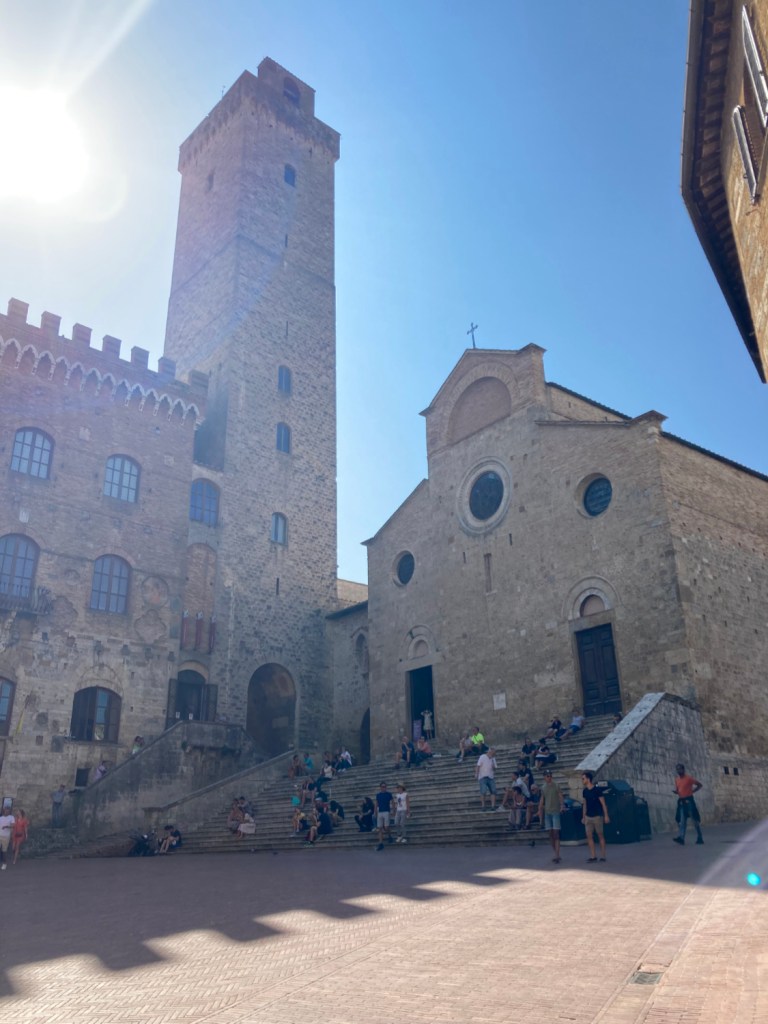
The Collegiate Church of the Assumption of Mary. Don’t judge this church by it’s plain facade.
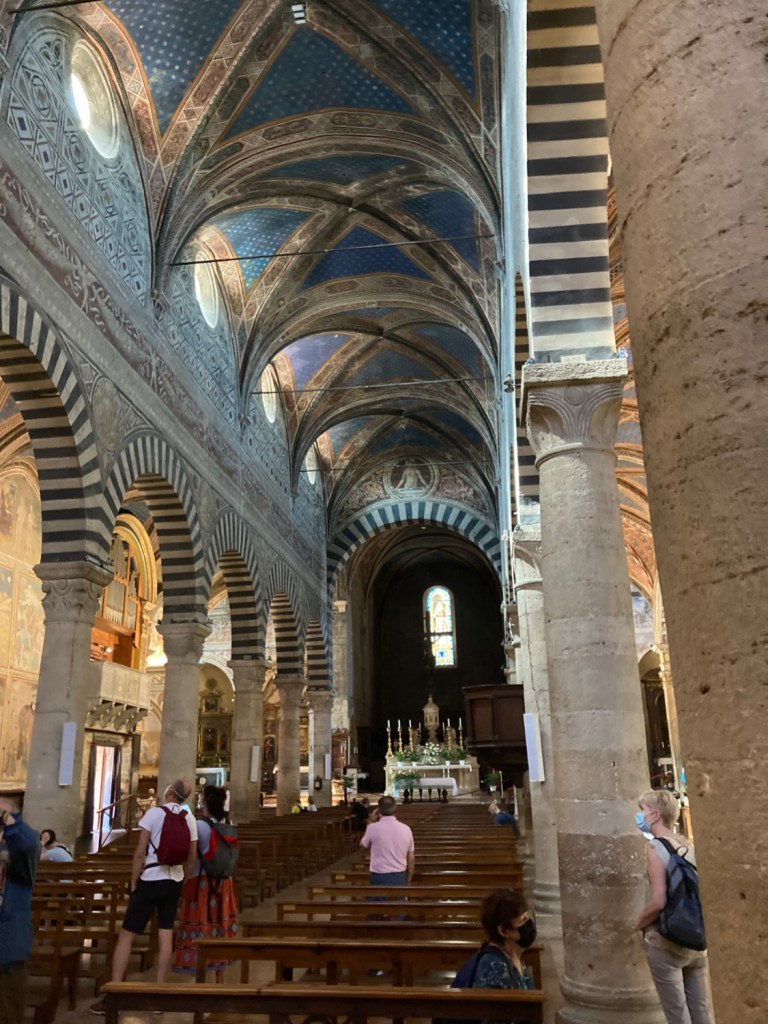
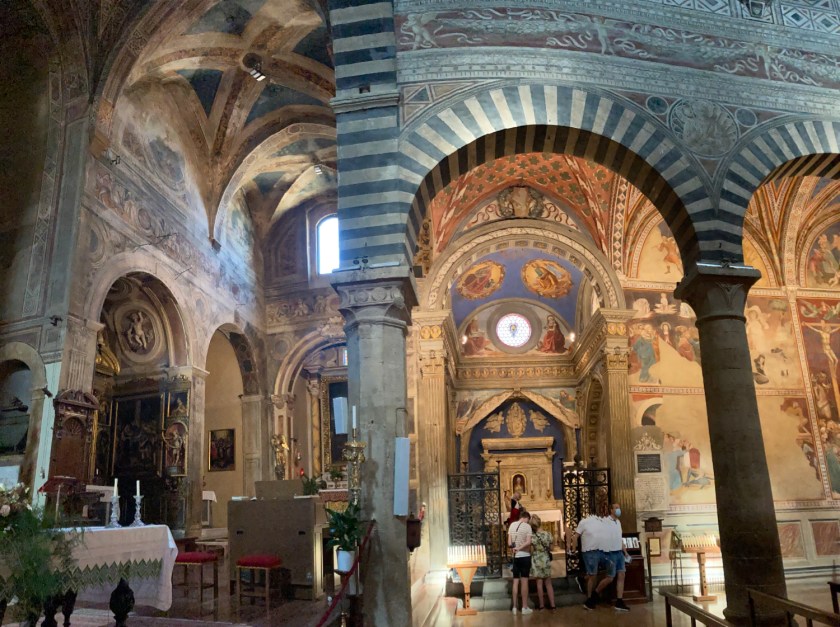
Looking towards the altar. Old Testament scenes on left and New Testament scenes on right.
Frescoed from front to back and floor to ceiling.
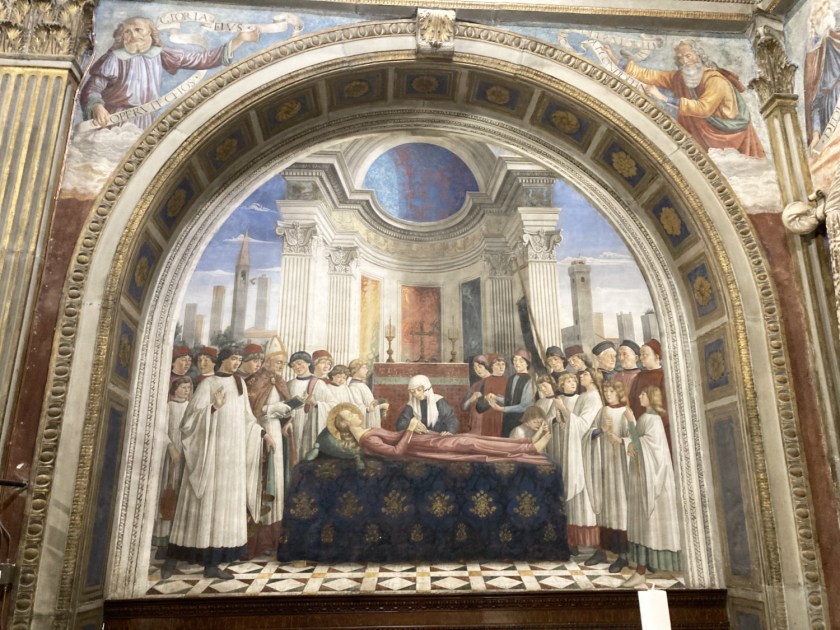
Chapel of St. Fina by Dominico Ghirlandaio
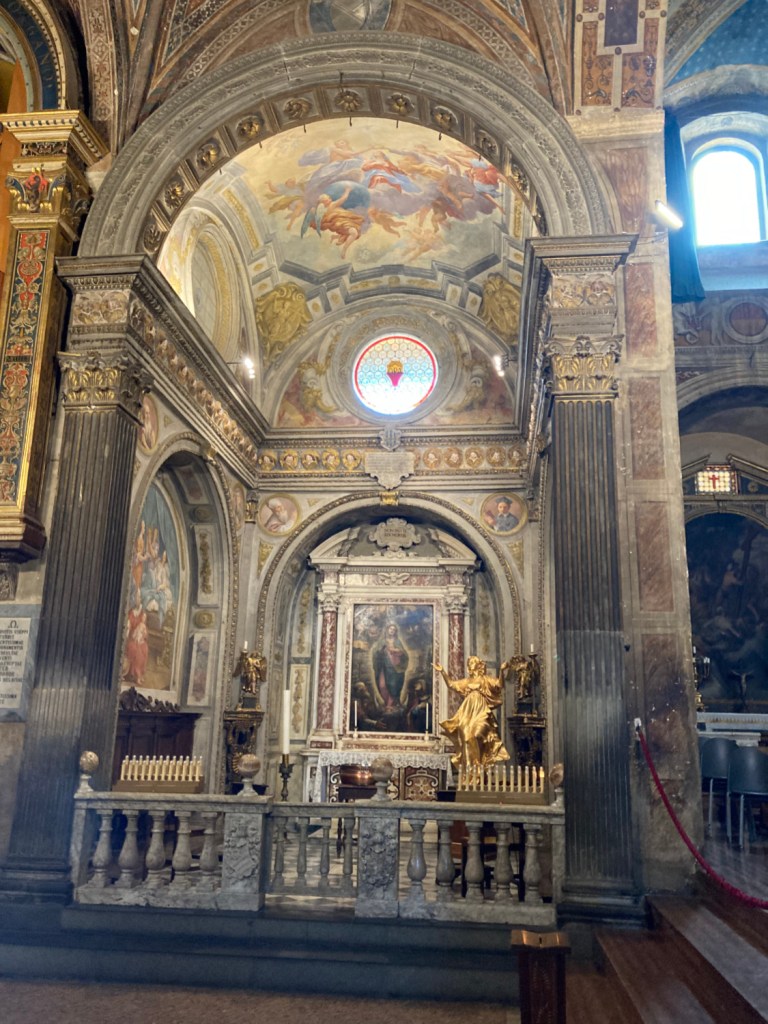
.Chapel of St. Fina (beyond the middle arch). St. Fina (1238-1253 CE) fell ill and became paralyzed at age 10. She bore her suffering and pain with grace and patience.
Ceiling of St. Fina’s chapel decorated with frescoes of Matthew, Mark, Luke, and John. The frescoes in this chapel are by Dominico Ghirlandaio and are his first major works. Ghirlandaio is also remembered for his school/workshop which is where Michelangelo received his first formal training.
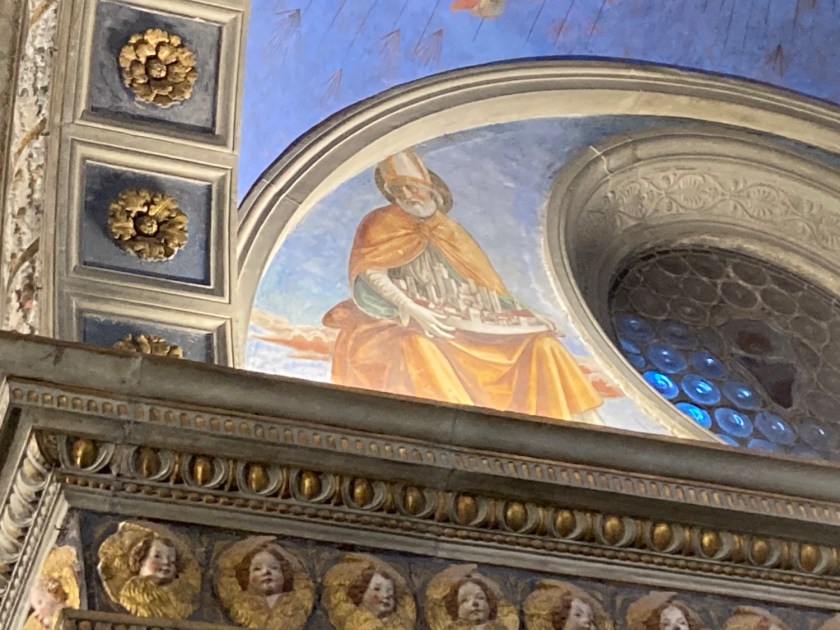
Another portrait of Sanctus Geminianus holding and protecting the town of San Gimignano.
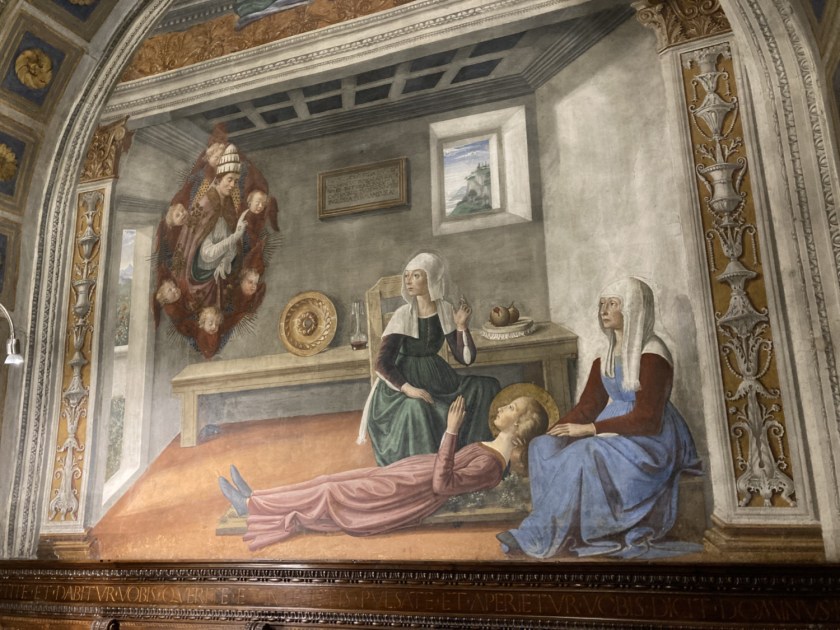
St. Pope Gregory the Great (assisted by disembodied cherub heads) telling Serafina that she was being called to heaven. Note the attendant in red on the right supporting Fina’s head.
Fina became a saint because of her posthumous miracles. Two are shown here. First, the attendant noted above (here in the middle holding St. Fina’s hand) supported Fina’s head for so long that her hand became paralyzed. While sitting with the Fina’s body, the paralysis was cured. At St. Fina’s feet, a blind boy touches his eyes to her feet which restored his vision.
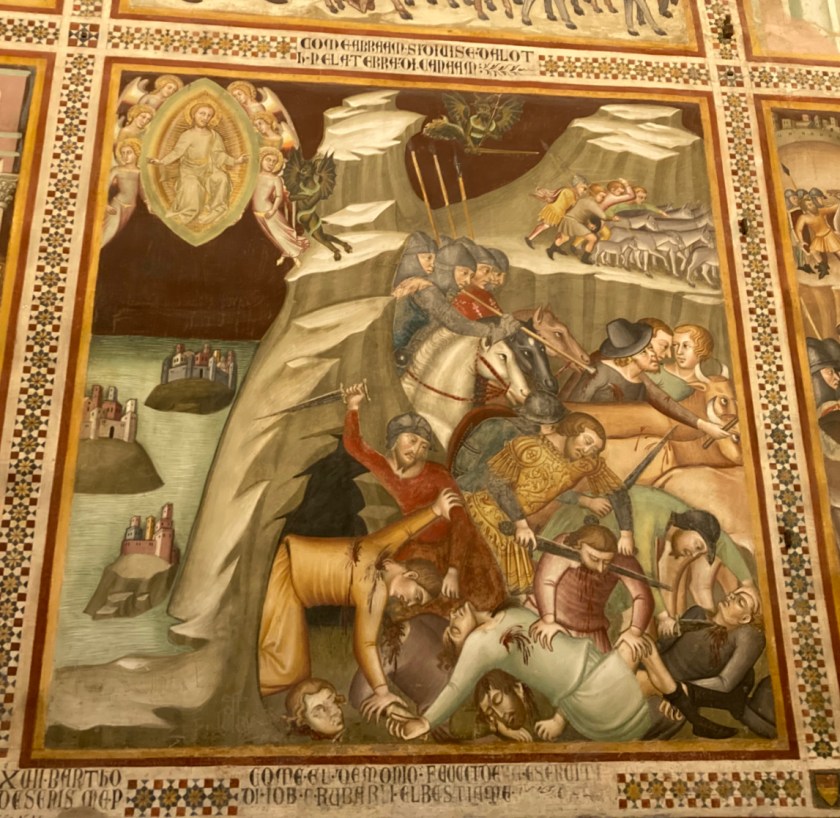
Old Testament Cycle (left aisle) by Bartolo di Fredi
Killing of Job’s servants and animals. I don’t really remember any minister or Sunday school teacher making a big deal out of this. I wouldn’t have predicted this to be a featured story from the Old Testament.
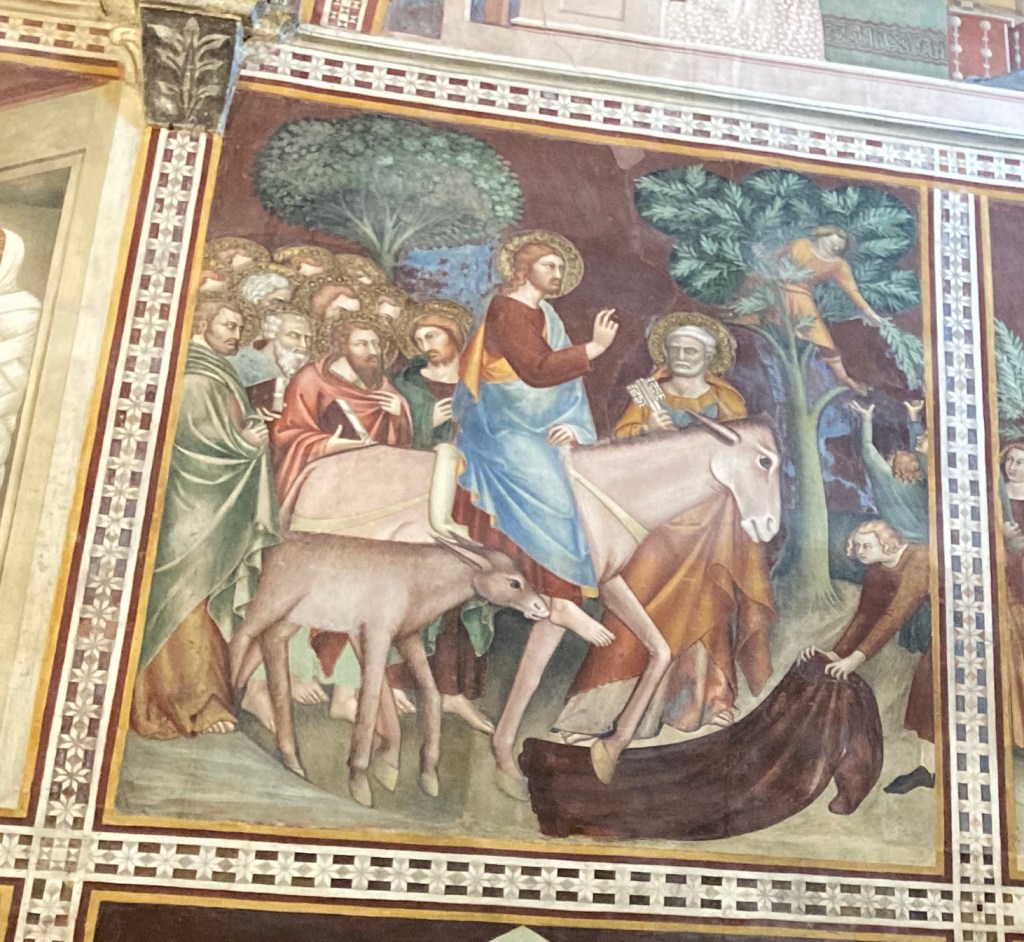
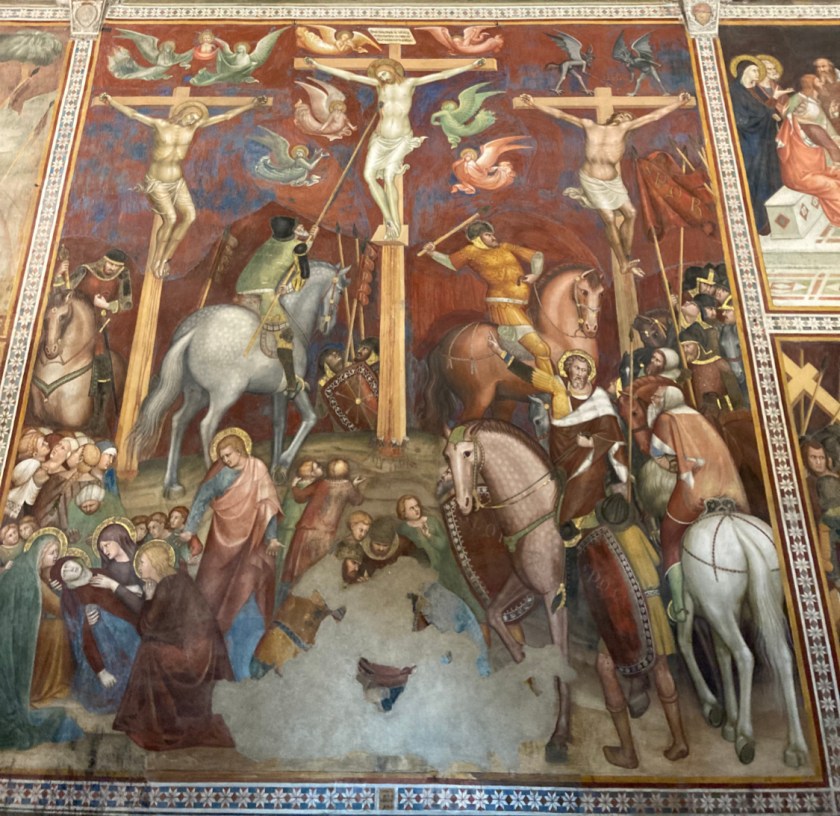
Life of Christ (right aisle) by Lippo Memmi…probably
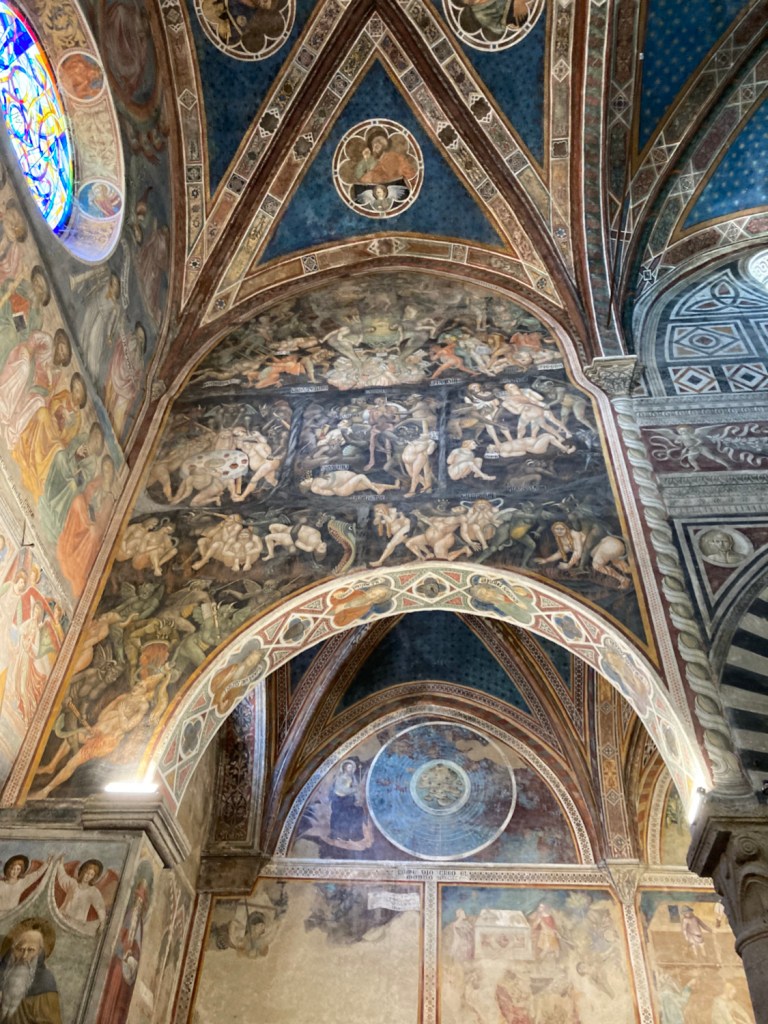
Tortures of Hell by Taddeo di Bartolo
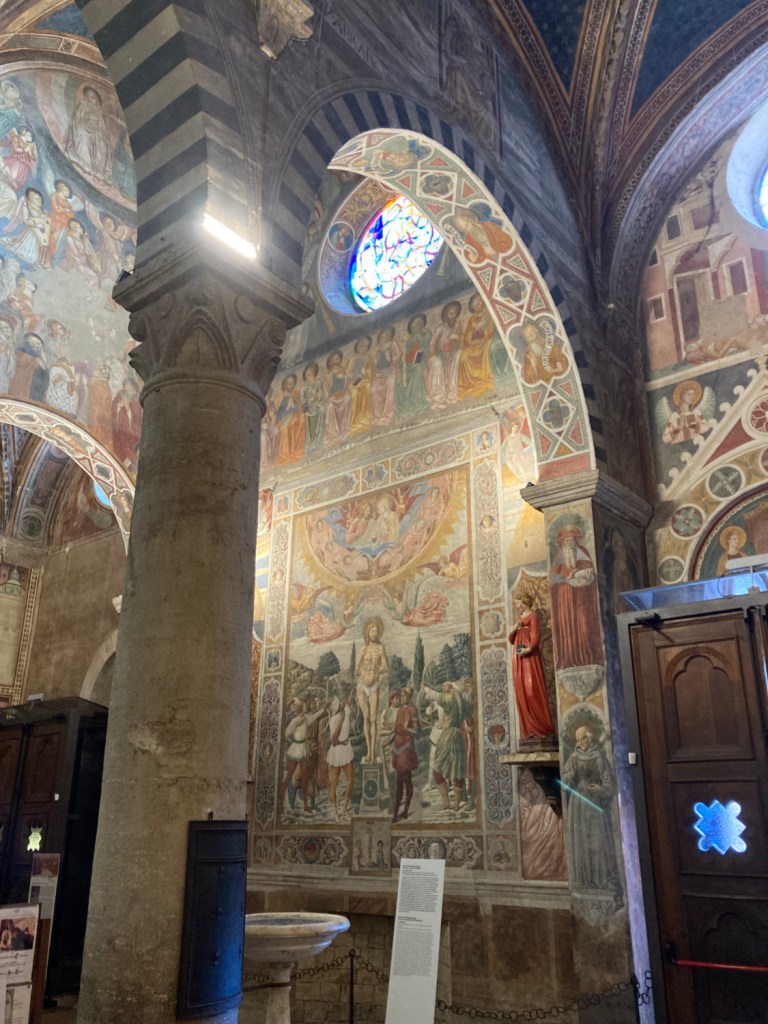
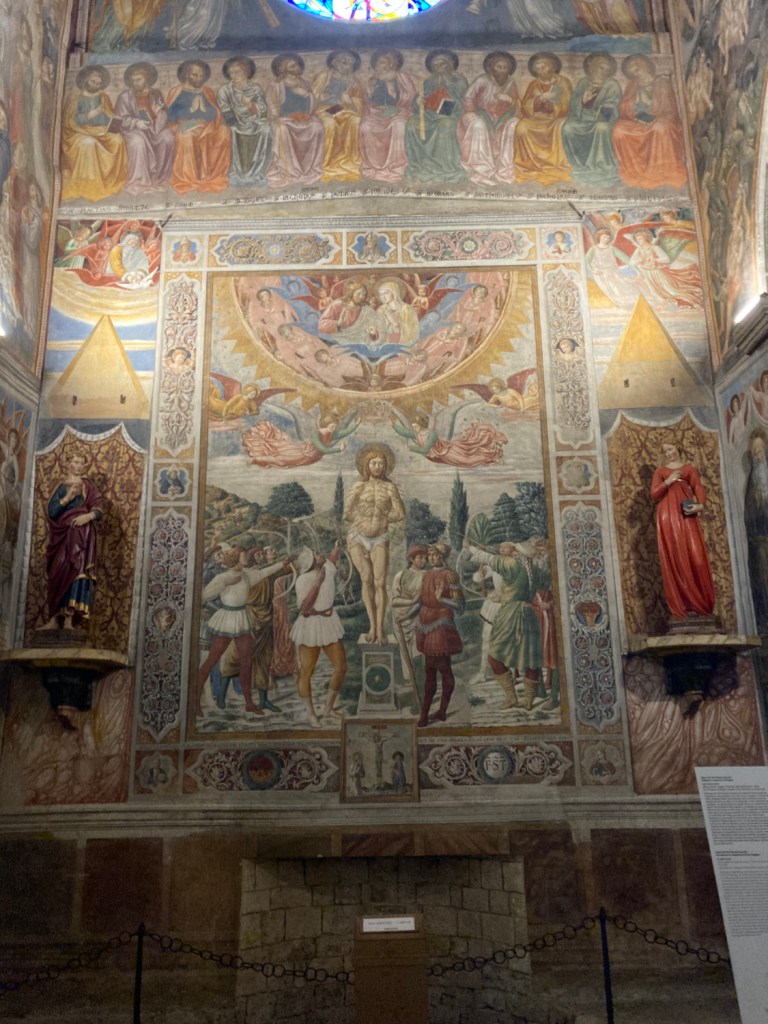
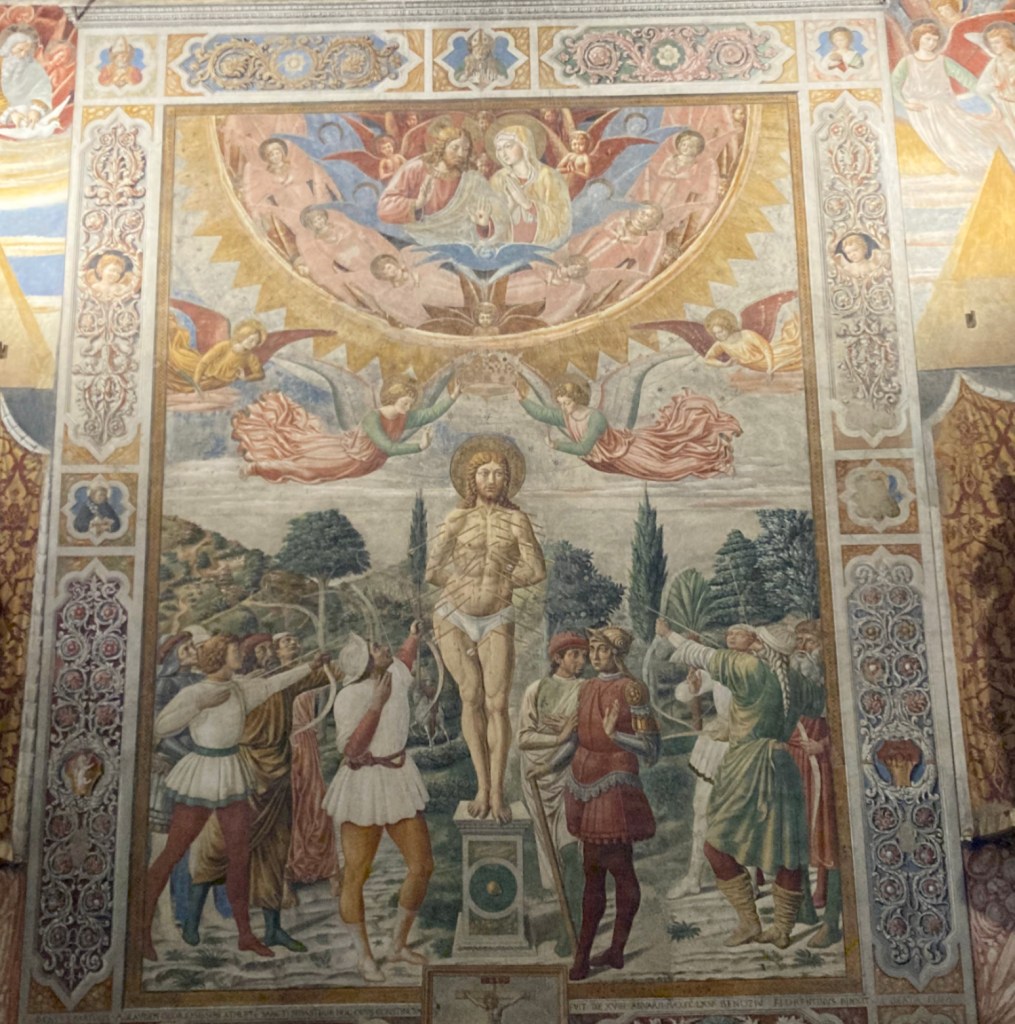
The Martyrdom of San Sebastian by Benozzo Gozzoli
I hate to be a stickler, but my reading of the World Wide Web is that Sebastian actually survived the arrows. Having recovered, he went to a parade where he heckled Roman Emperor Diocletian who had Sebastian arrested and beaten to death. So, this attempted execution by a crack team of archers is, at best, just the beginning of his journey to martyrdom.
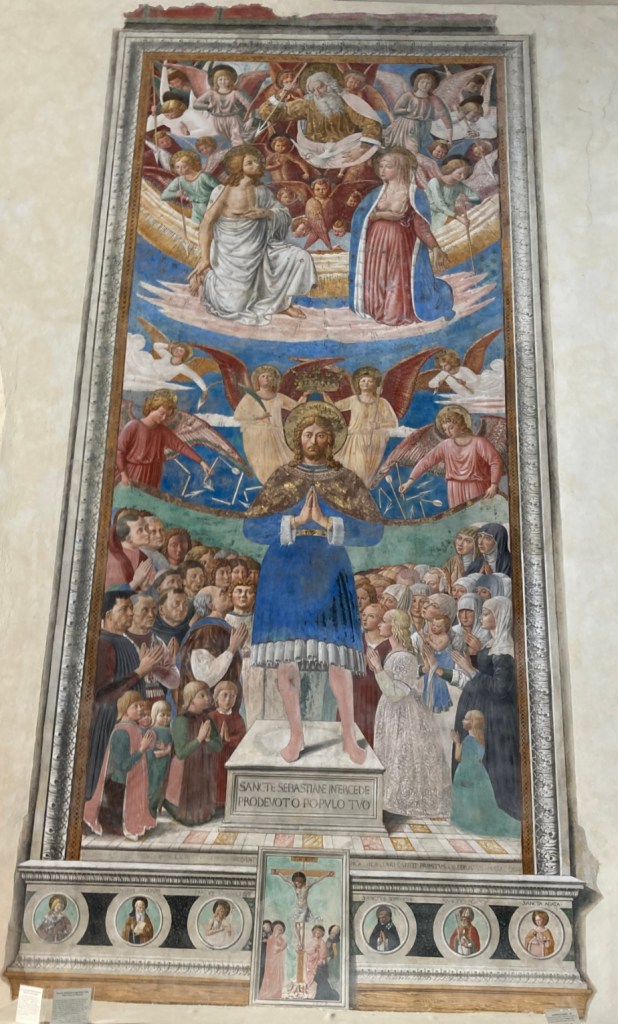
This fresco by Gozzoli in the Chiesa Sant’Agostino (also in San Gimignano) illustrates San Sebastian’s Medieval association with protection from the plague. Angels spread his blue cape over the people of San Gimignano protecting them from the “Black Death,” represented by the arrows breaking on the outspread cape.



 John and Susan's Excellent Adventure