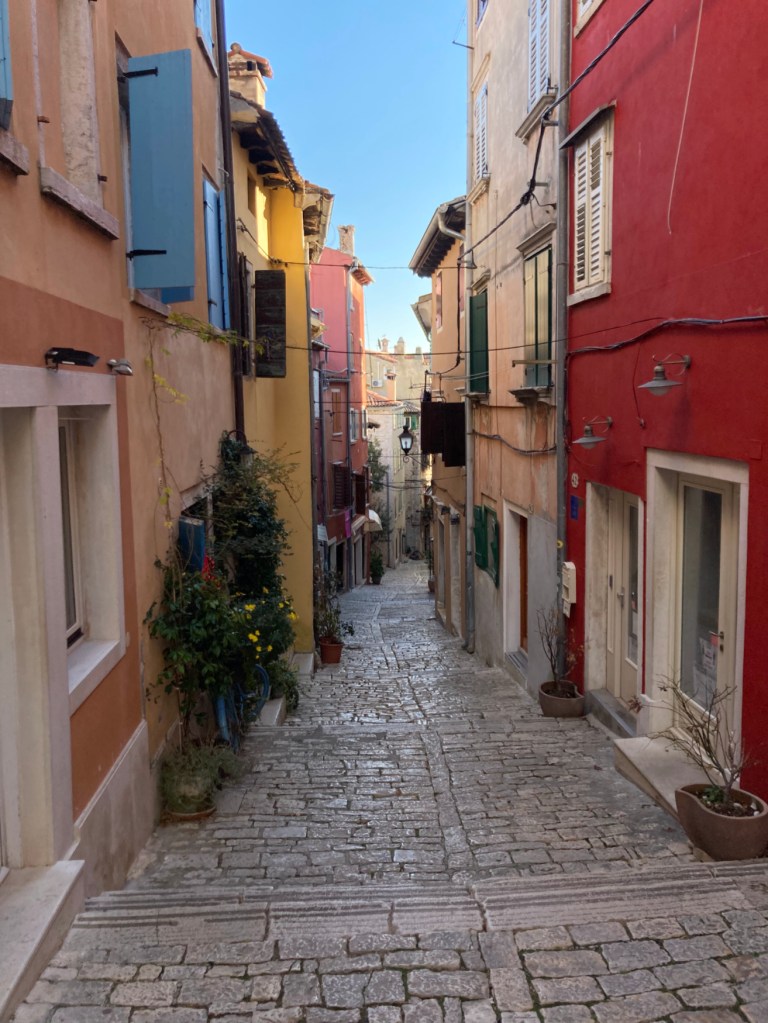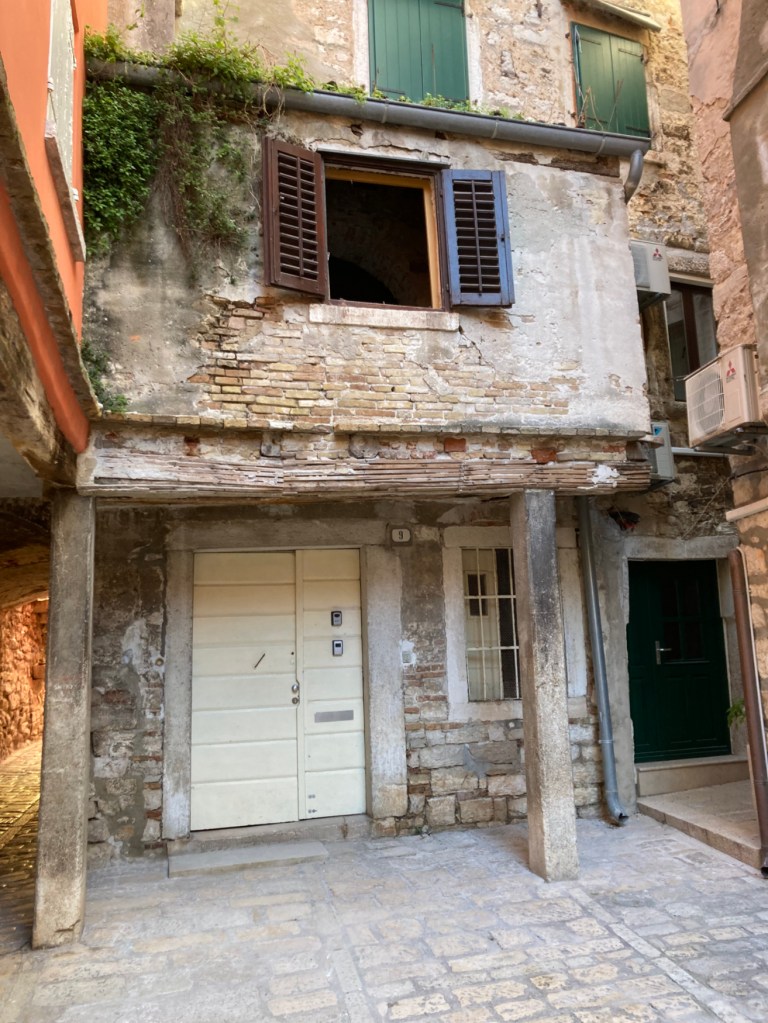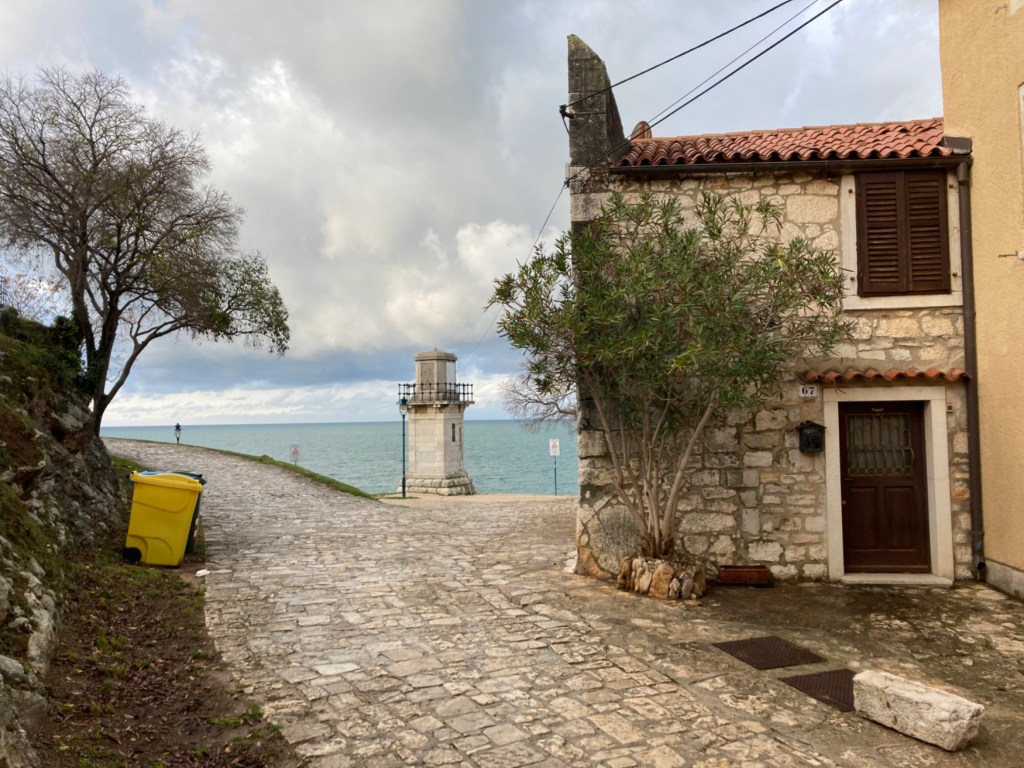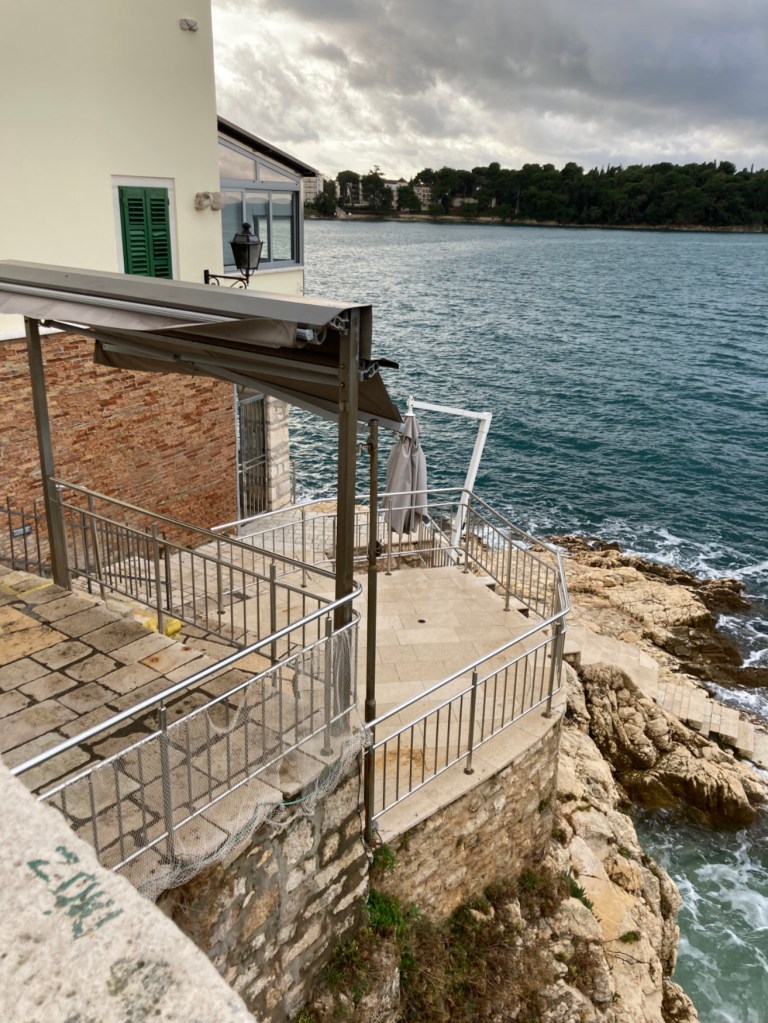
Rovinj, Croatia

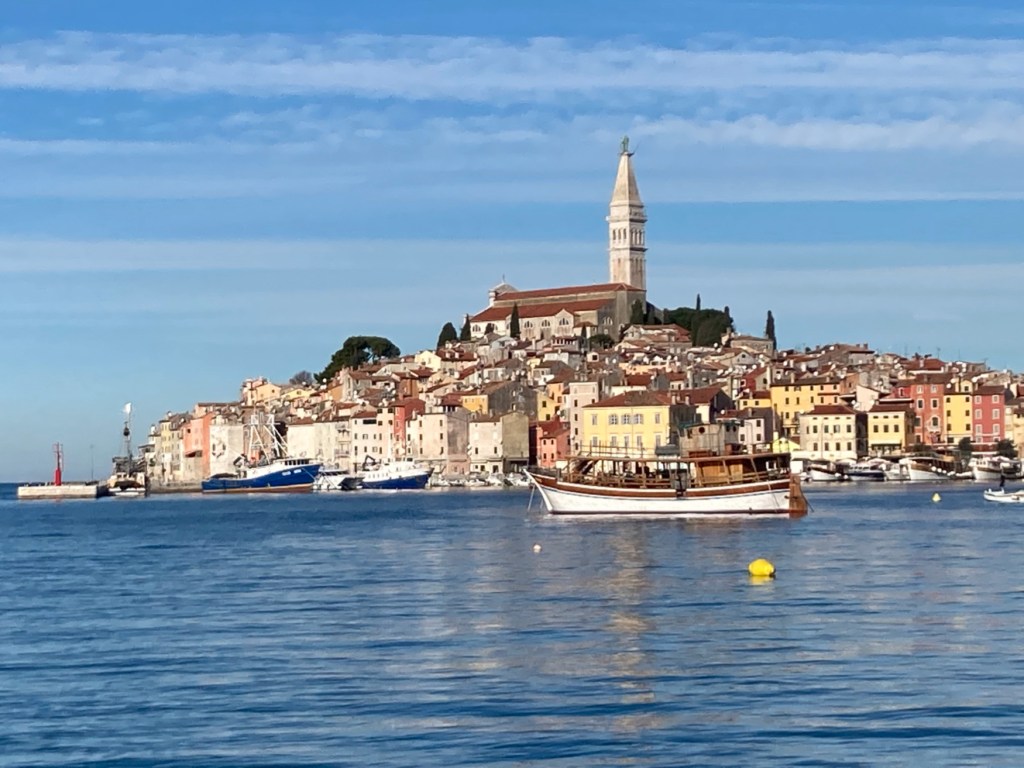
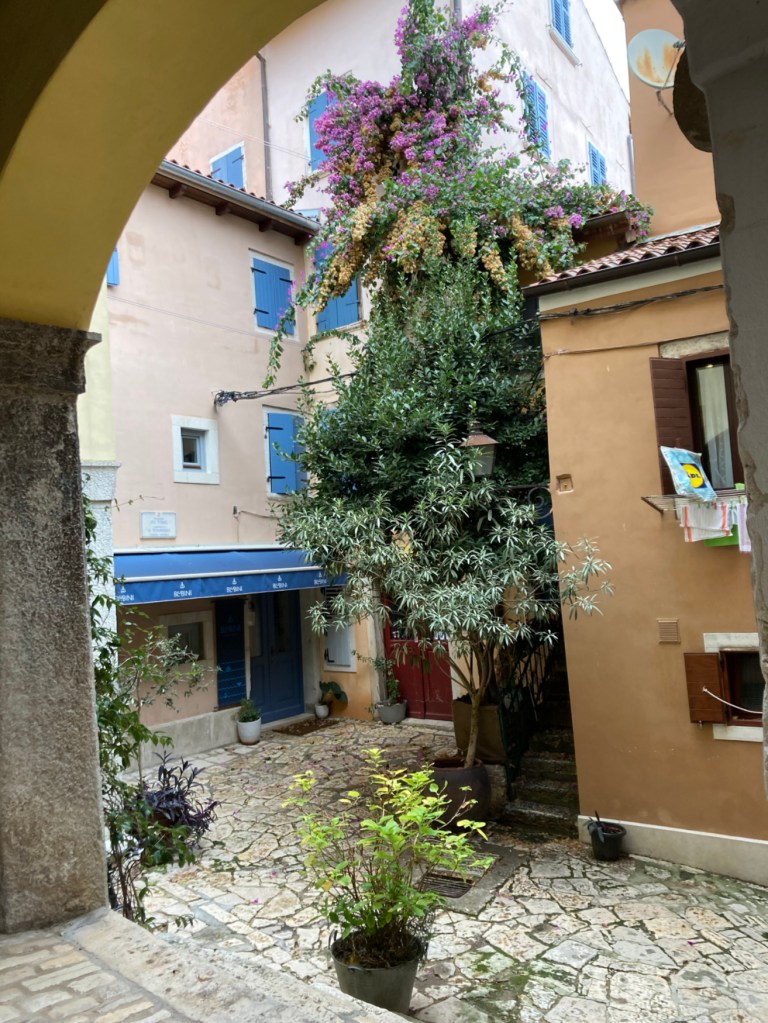
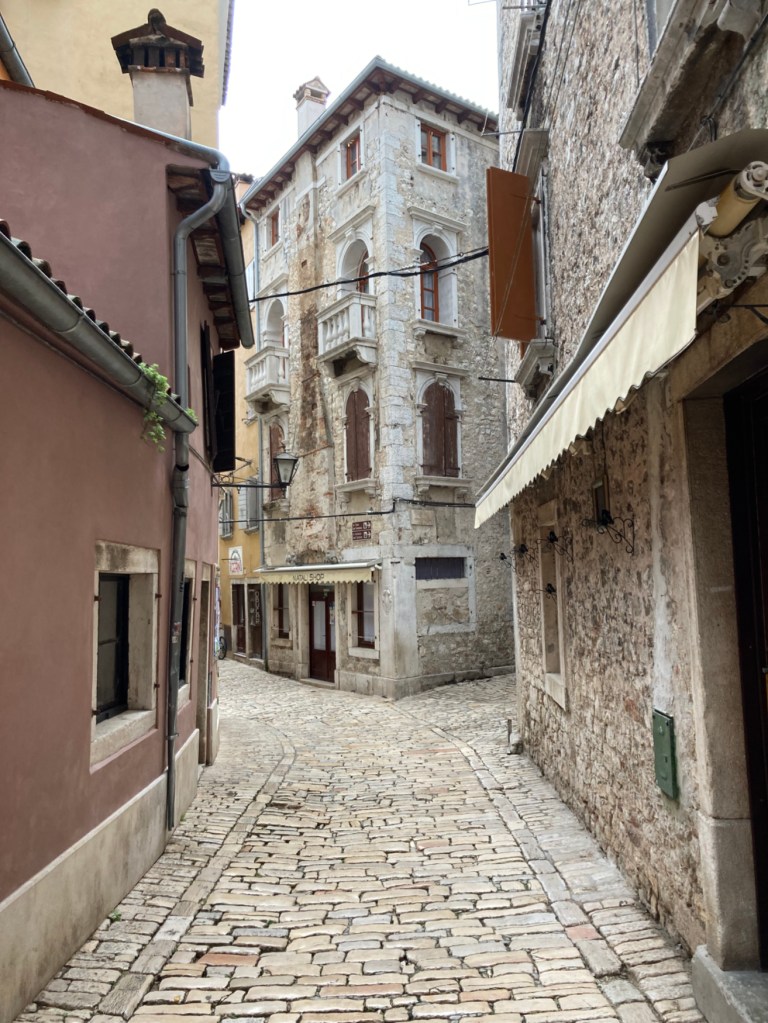
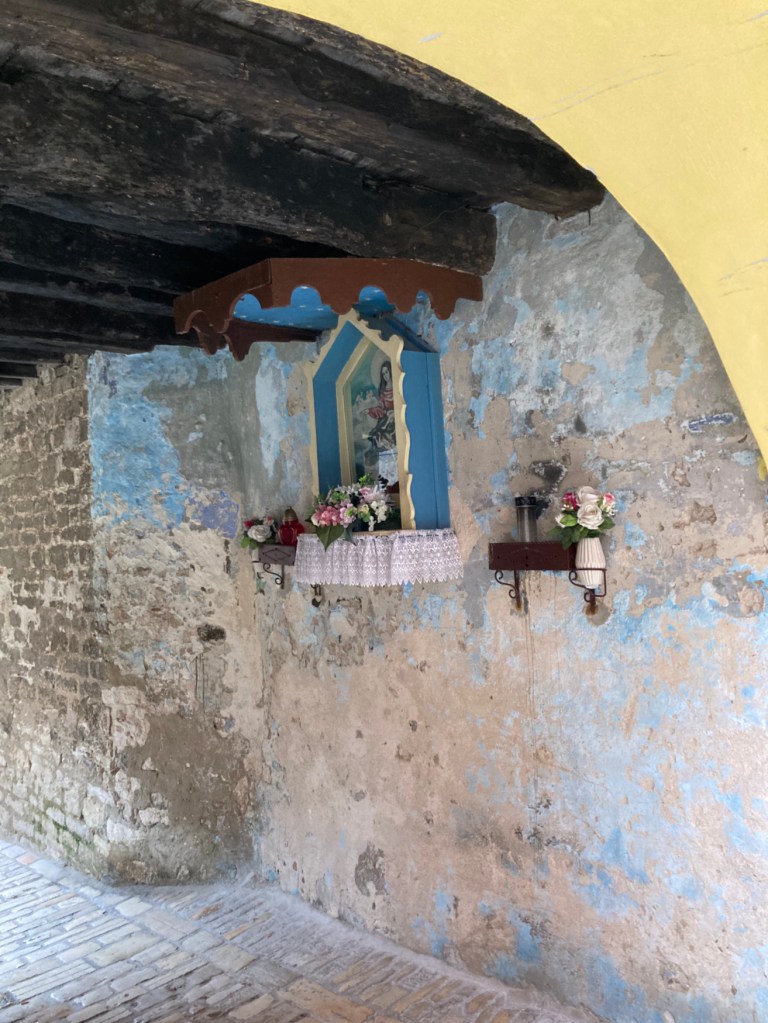
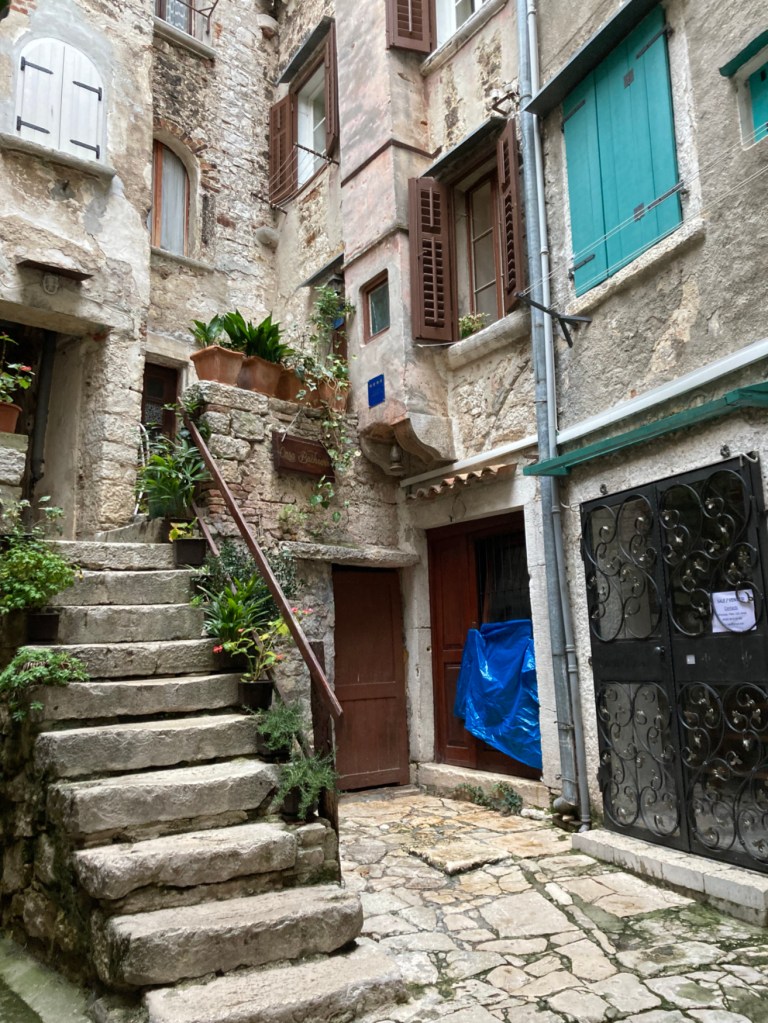
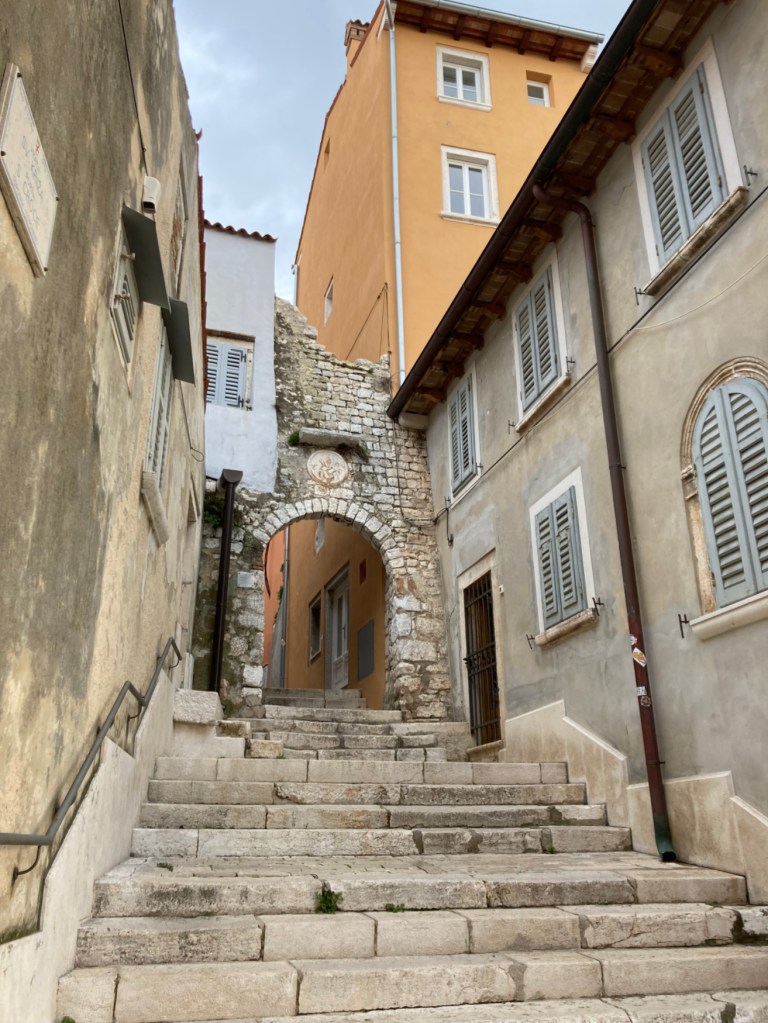
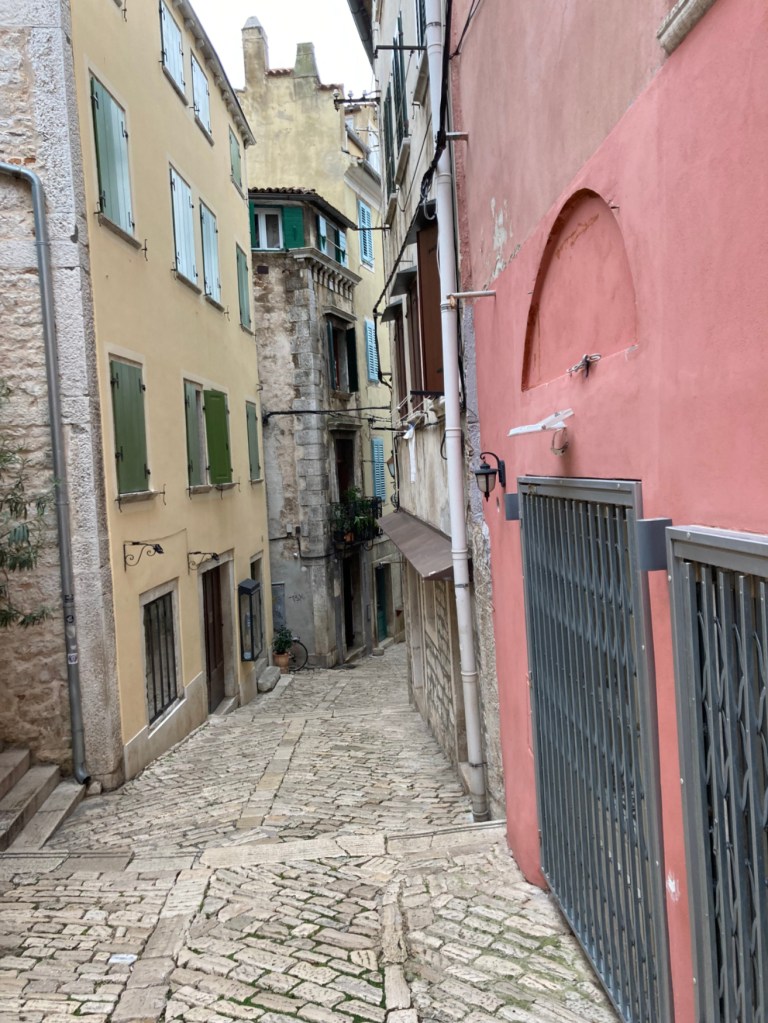
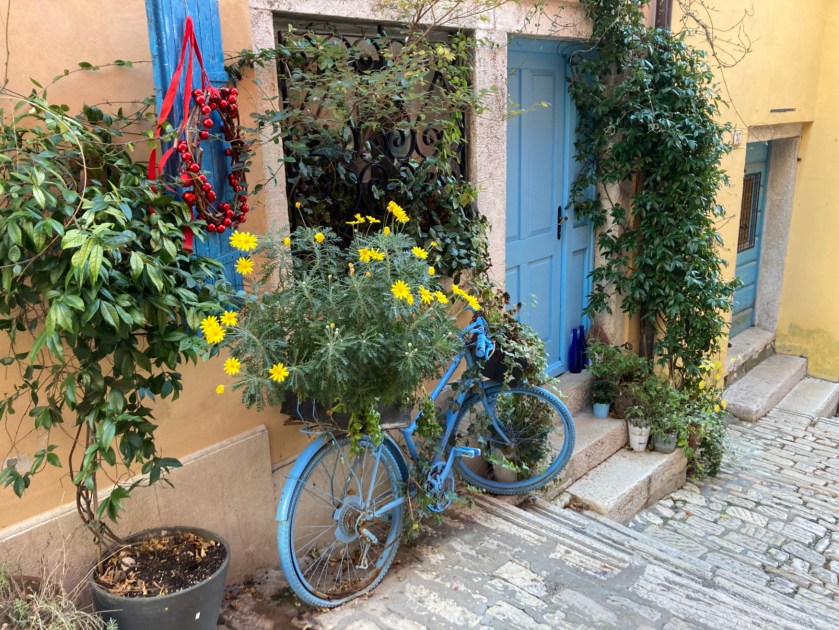
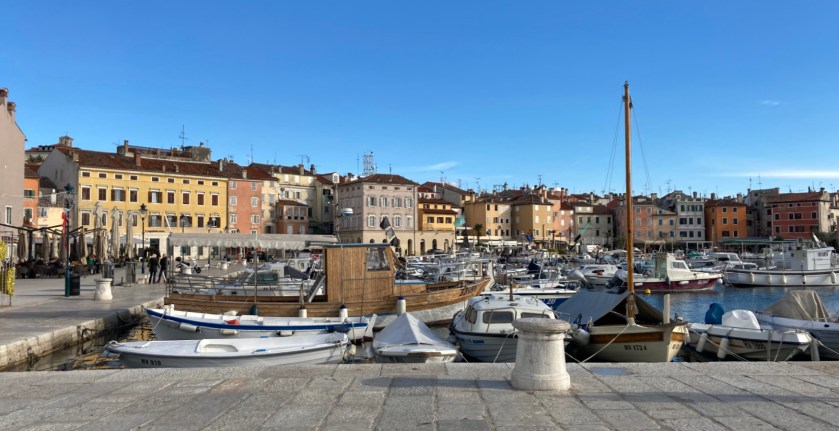
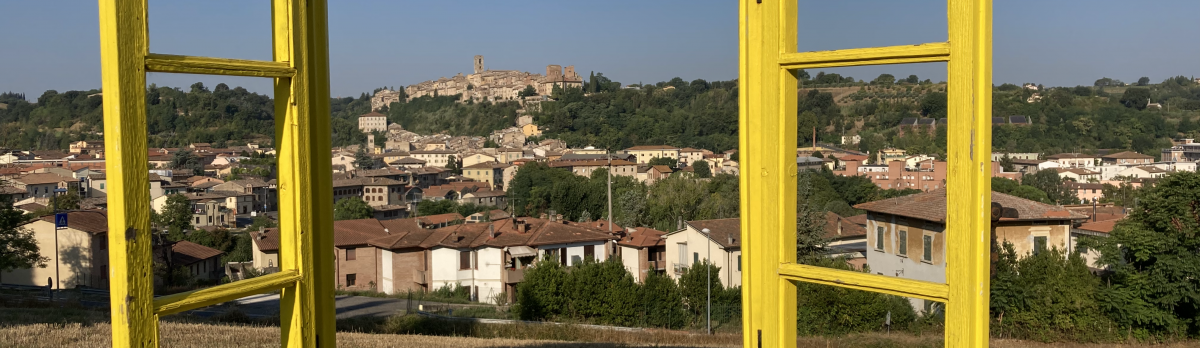
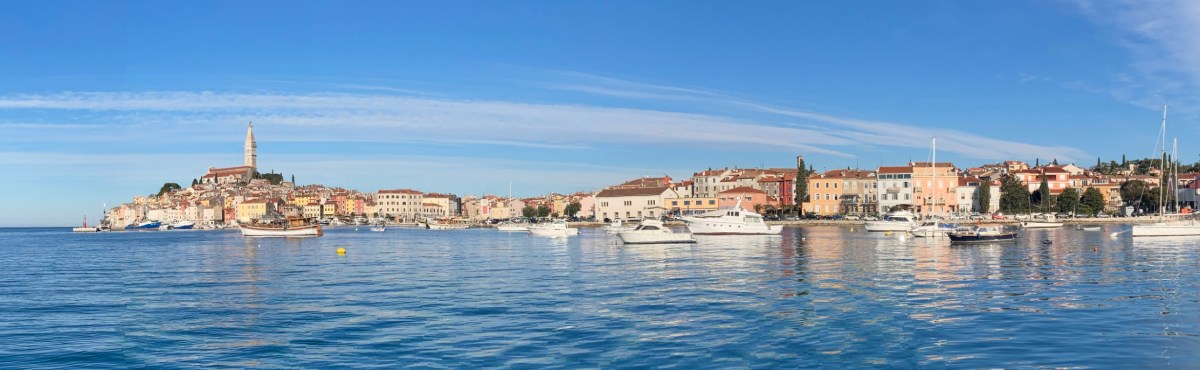
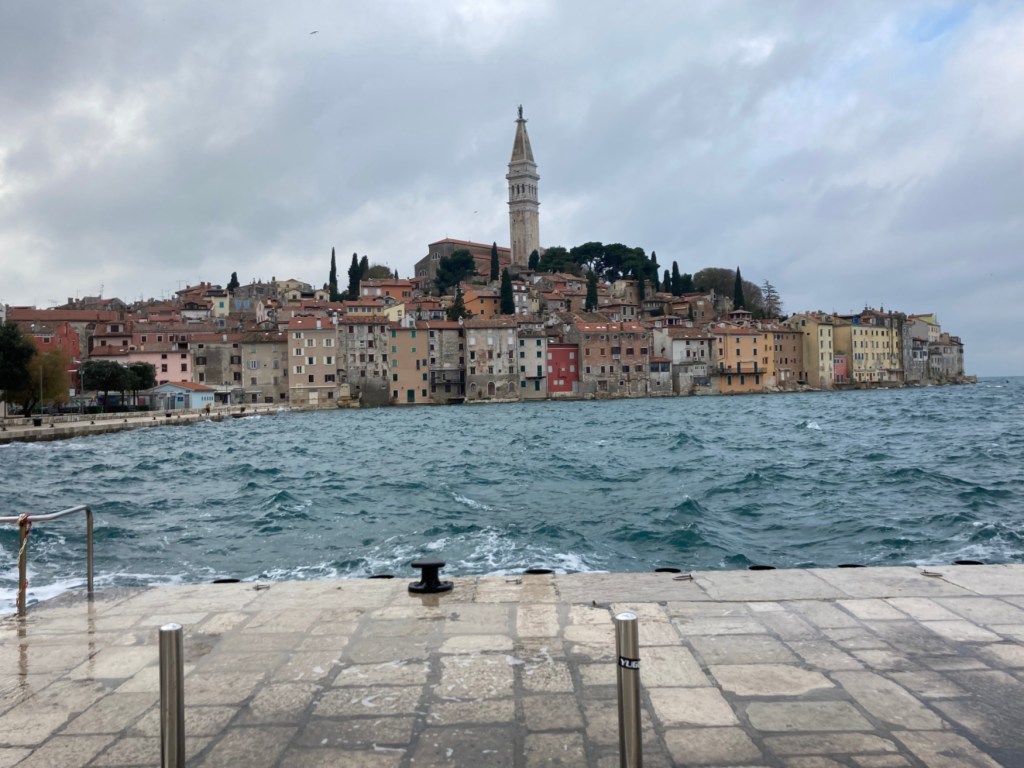
We’re in now in Rovinj, Croatia, a fishing village on the Istria peninsula. I still have some things from Italy, but I’ll have to get back to those later. Although there seems to be lots of fishing, the main economic driver here is tourism. We’ve been told it gets pretty crazy in the summer. We’re here in Dec. and most restaurants and bars are closed. The ones that are open, though, are excellent. It doesn’t matter, however, because Rovinj is endlessly beautiful.

City views:
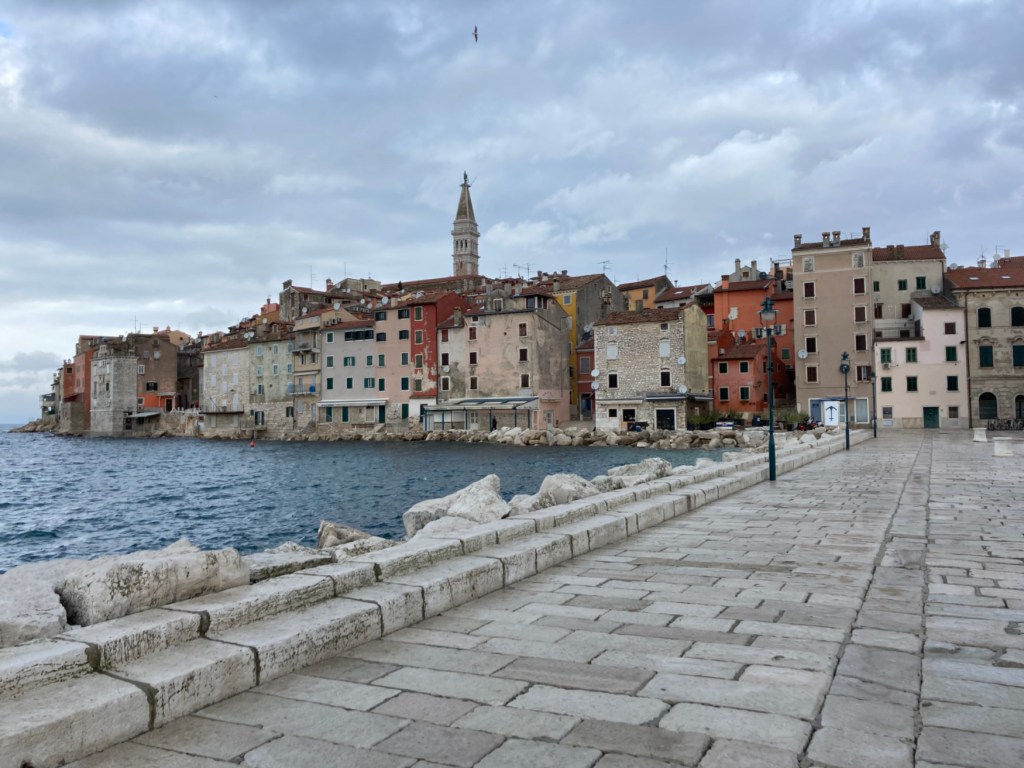
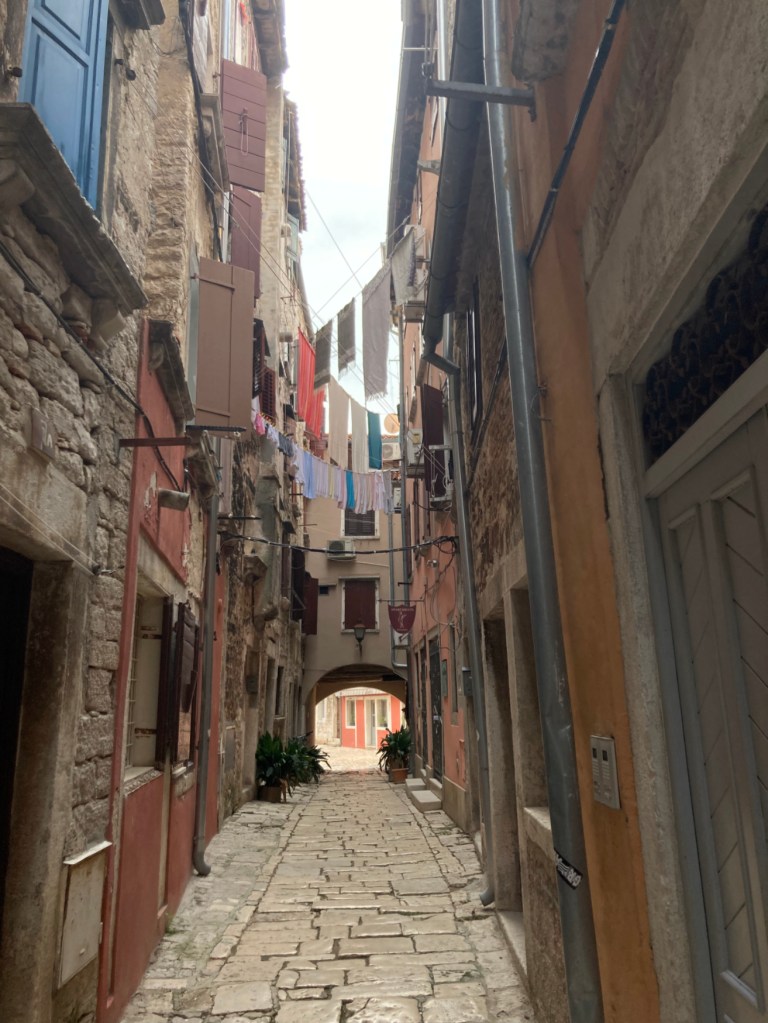
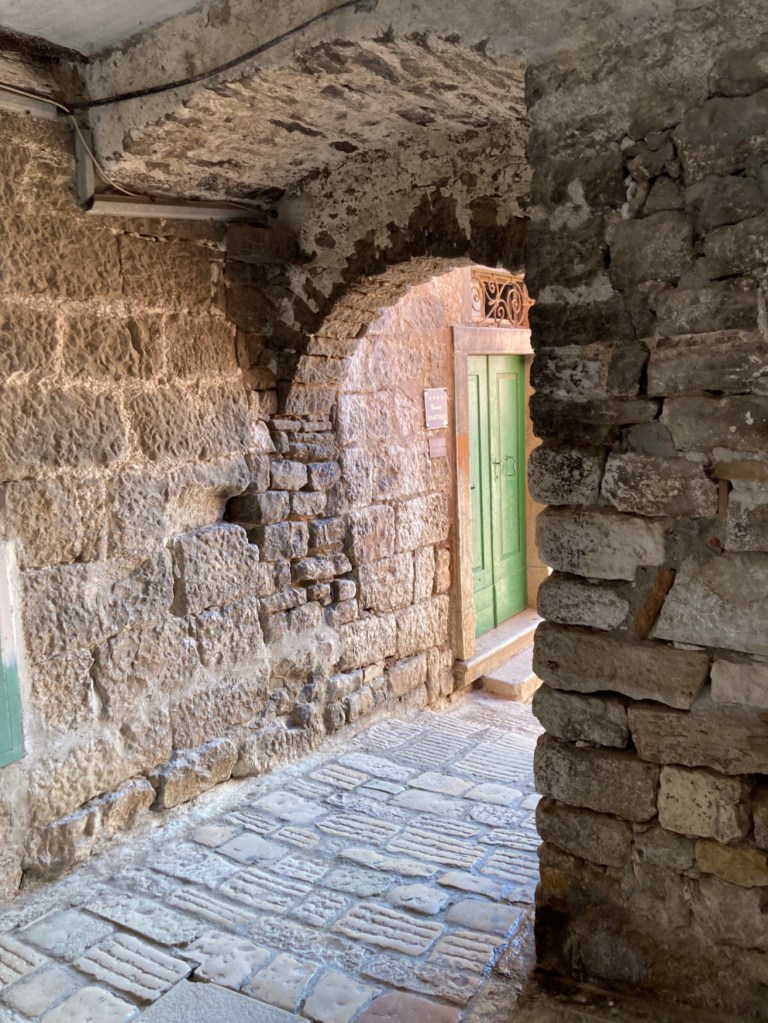
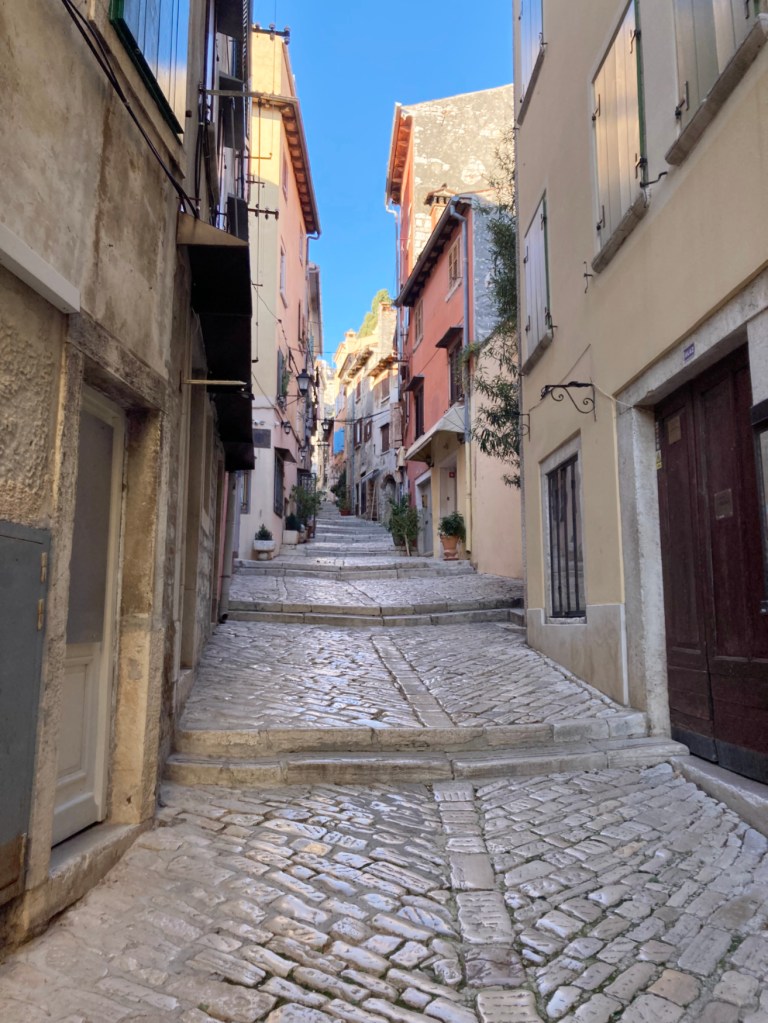
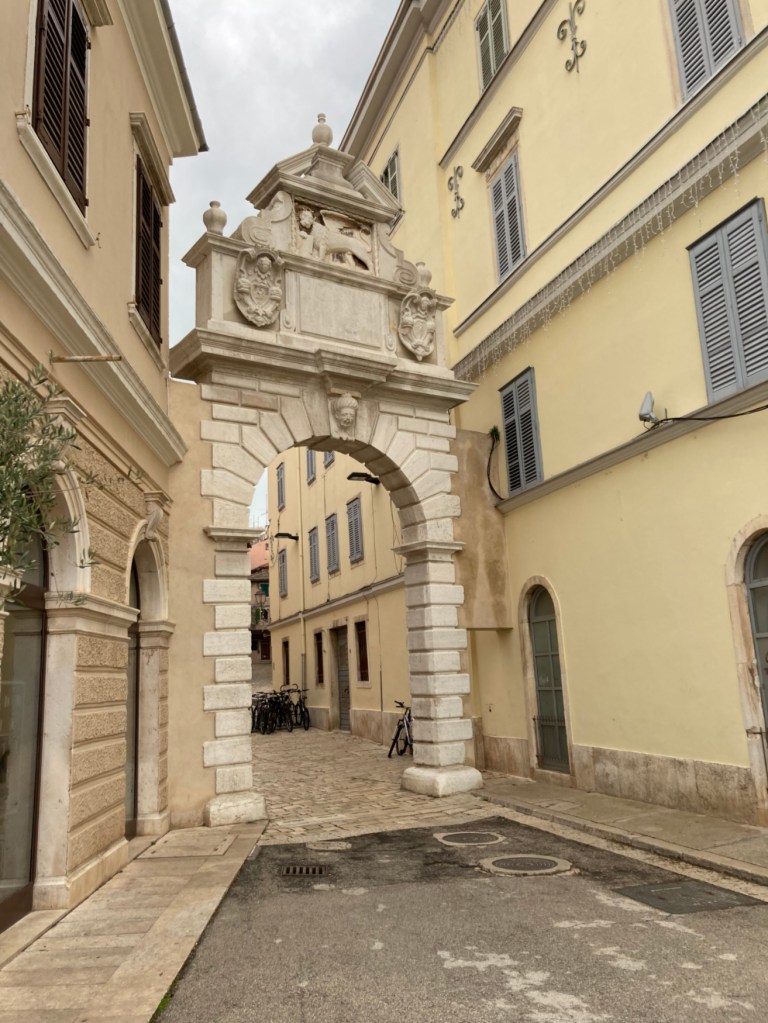
Street scenes:
Harbor:

Masaccio, the Holy Trinity, and Linear Perspective: my introduction to Art History

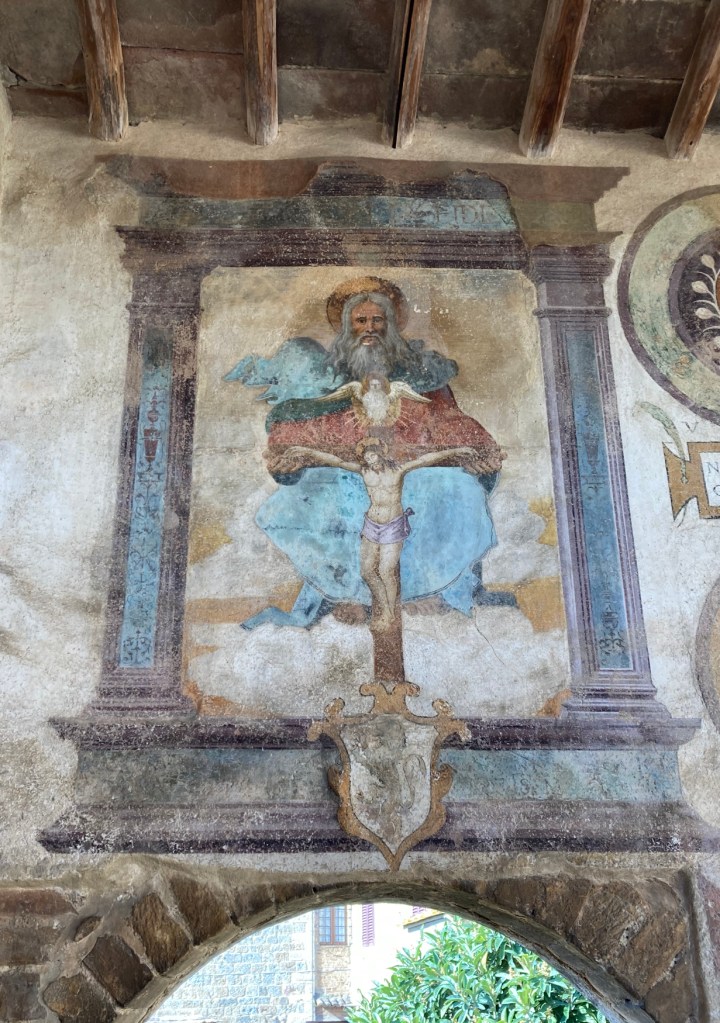
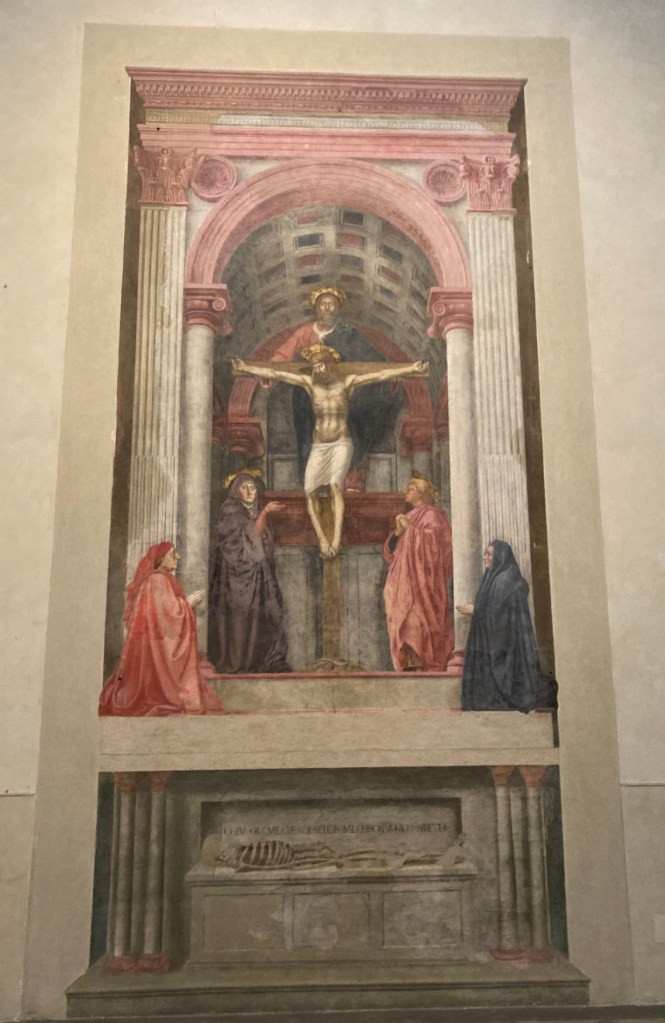
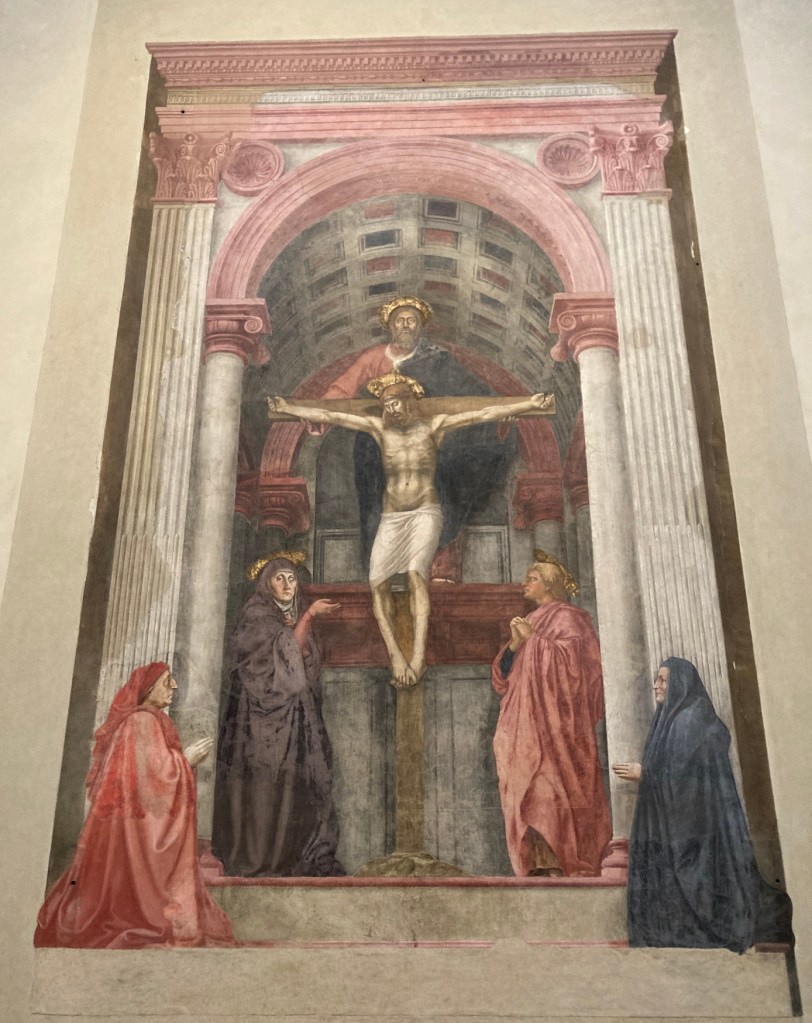
Forgive me if you already are familiar with this stuff. I think the coolest thing I’ve seen so far is Masaccio’s Holy Trinity, a fresco in the Basilica of Santa Maria Novella. In 1428 CE, it is the first time an artist used Brunelleschi’s concept of linear perspective to represent a 3-dimensional space in a 2-dimensional painting. In addition,  the composition is a kind of a motif used in many paintings- Christ on the cross in front, God the Father behind (sometimes seated on a throne), and the Holy Spirit represented as a dove near Christ’s head (see the first two paintings below). In case you (like me) need some remedial art history, here are a couple of websites explaining how Brunelleschi developed the concept of linear perspective and how Masaccio used it in the Holy Trinity: https://smarthistory.org/masaccio-holy-trinity/ and https://www.khanacademy.org/humanities/renaissance-reformation/early-renaissance1/beginners-renaissance-florence/v/linear-perspective-brunelleschi-s-experiement

The Palazzo Comunale in San Gimignano.
Museum of Sacred Art- San Gimignano.
Masaccios’s Holy Trinity. The quote above the skeleton says something like “As you are now, I was. As I am now, you will be.” In other words, this life is your only chance, don’t waste it.
That’s Mary and St. John on either side of the Cross. The donors who commissioned this work are the man and woman kneeling in contemplation.

Convento di San Marco, Fra Angelico, and more frescoes in Florence.

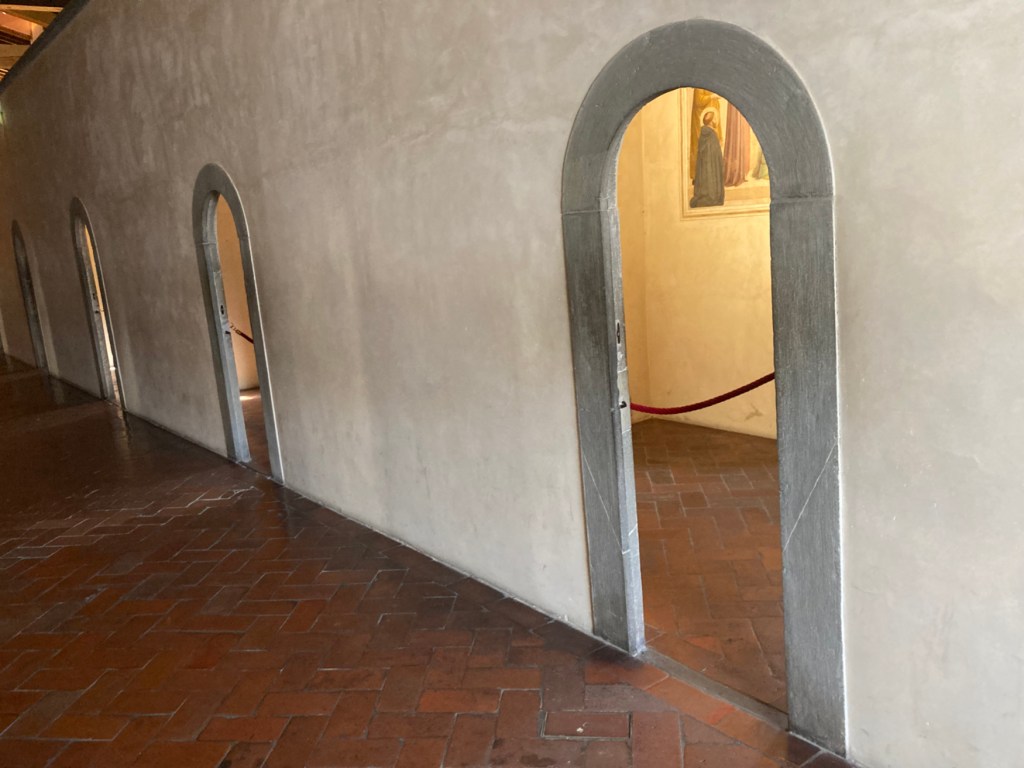
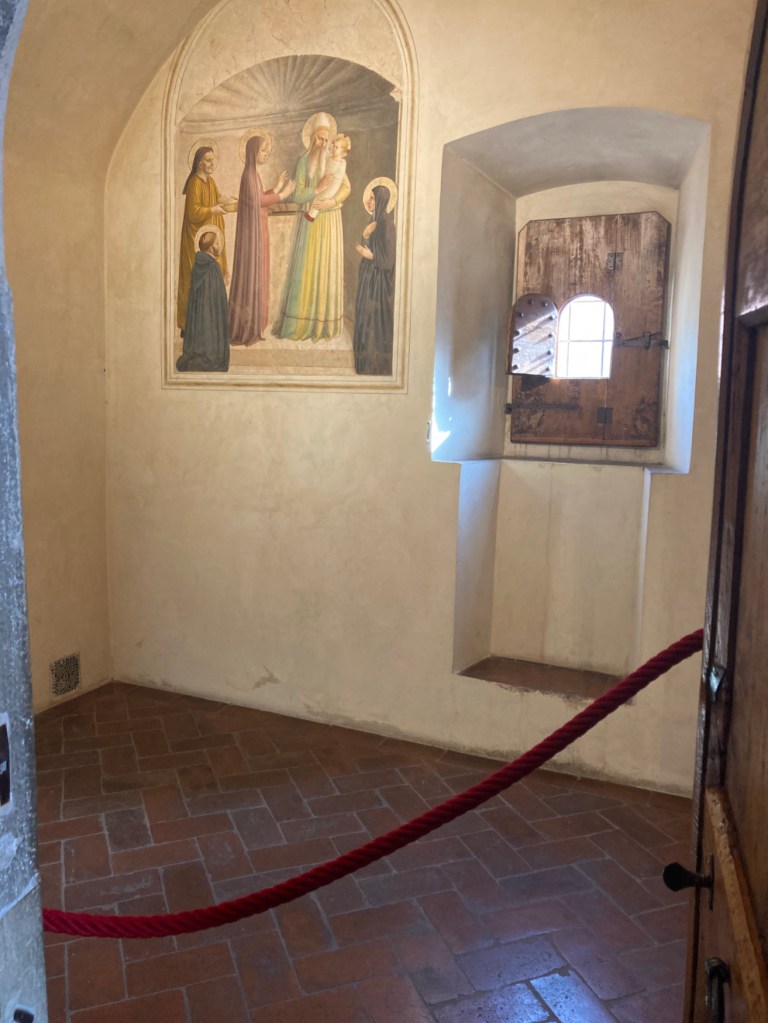
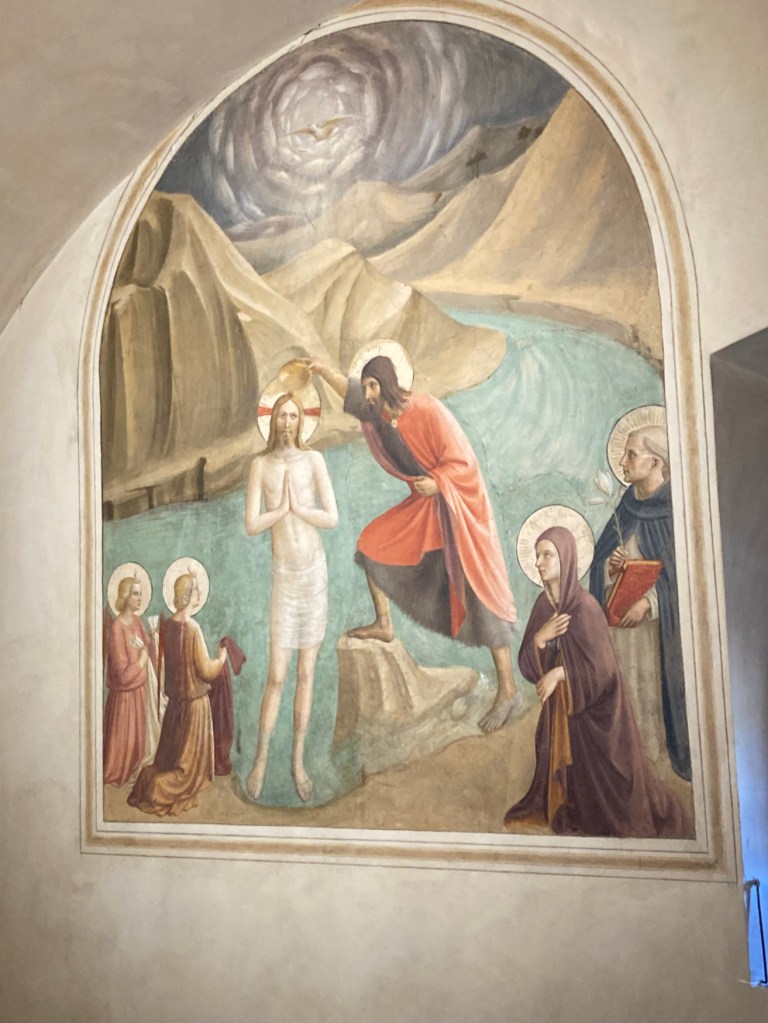
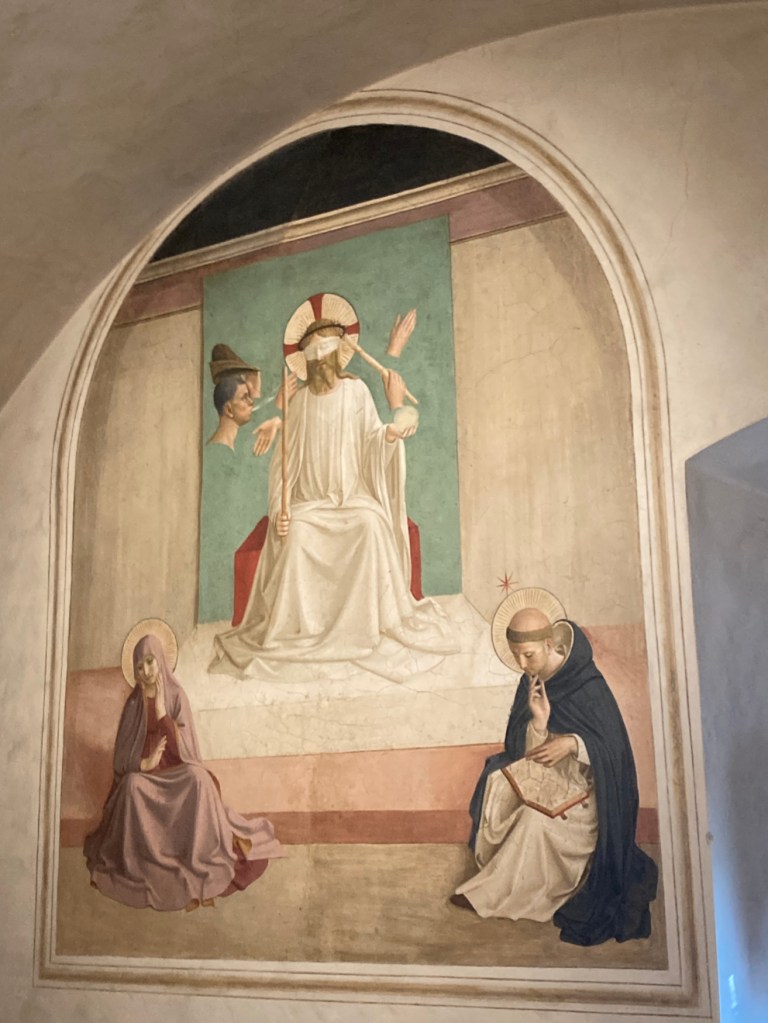
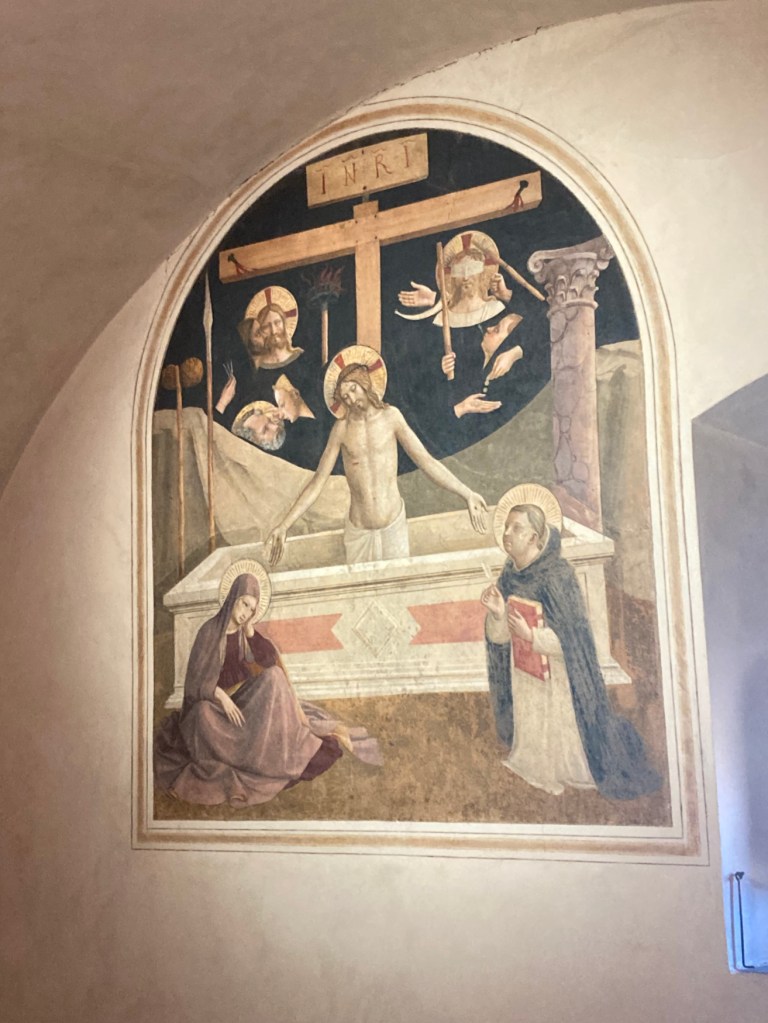
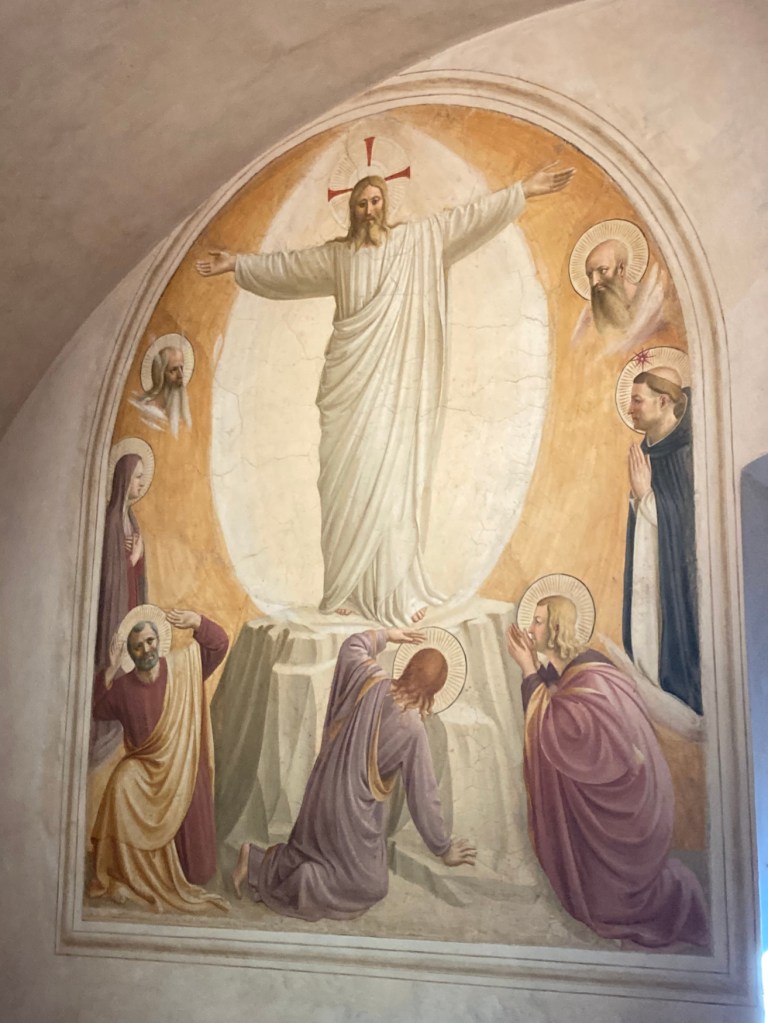
First, use of the term “convent” to refer strictly to a community of women devoting their lives to the Catholic Church is relatively new (19th century). Earlier, convent was also used for communities of men who wanted to “convene” with fellow mendicants in devotion to Christ. In the 1400’s, the Convento di San Marco in Florence was taken from a Benedictine order of friars and given to the Dominicans. The transfer was possibly orchestrated by Cosimo (the Elder) de Medici and he immediately poured in money to redesign and rebuild the convent. One of the Dominican friars who ended up at San Marco was the friar/painter Fra Angelico, arriving just as the Renaissance was heating up (realistic settings, linear perspective, 3D). Cosimo the Elder set Fra Angelico to decorating the church and convent, where he produced altarpieces and frescoes. At San Marco, he is most noted for the frescoes he painted in the brothers’ dormitory rooms. The fresco was to help the brother focus his meditation and prayer when alone in his cell.

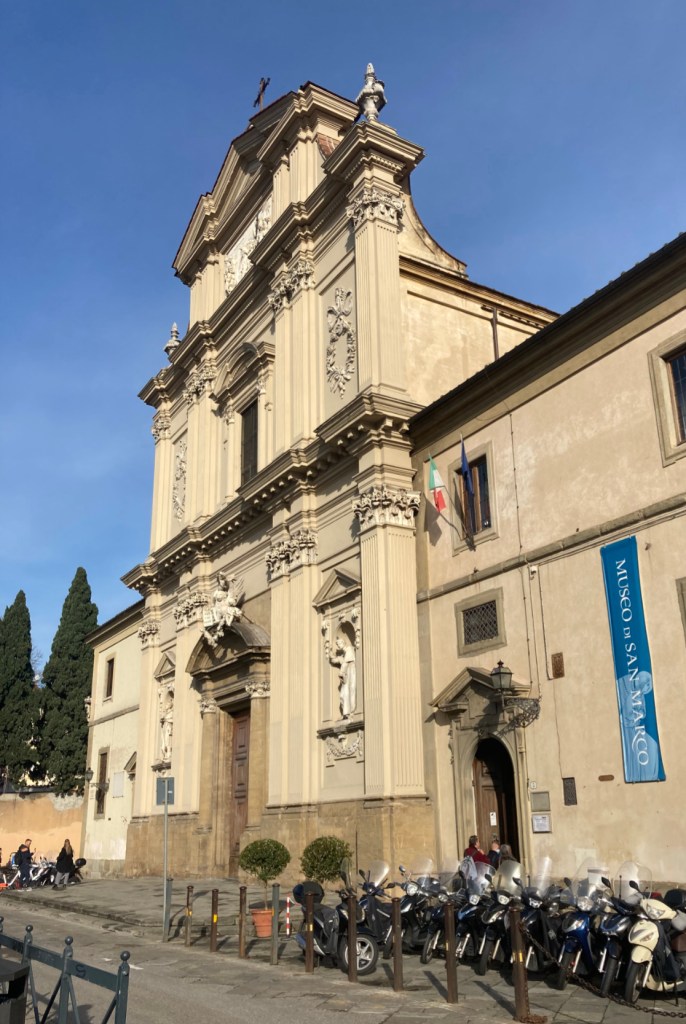
San Marco church.
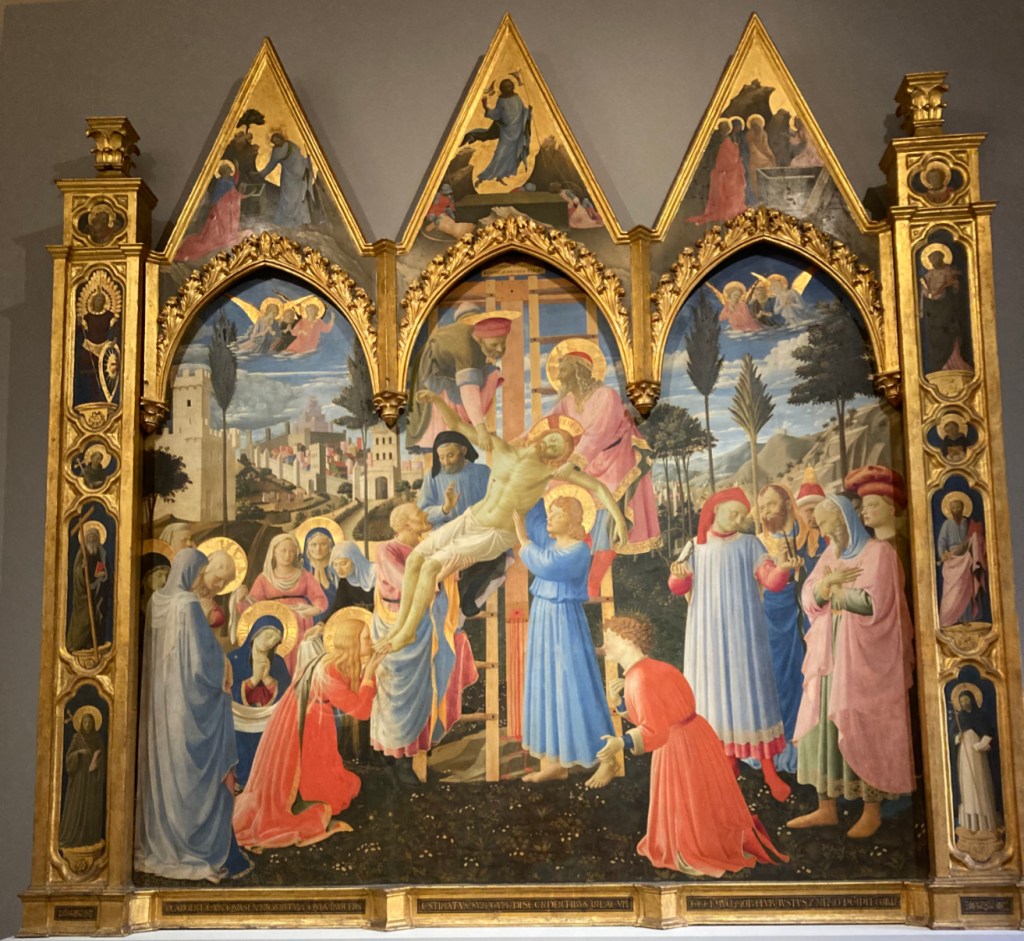
Deposition of Christ.
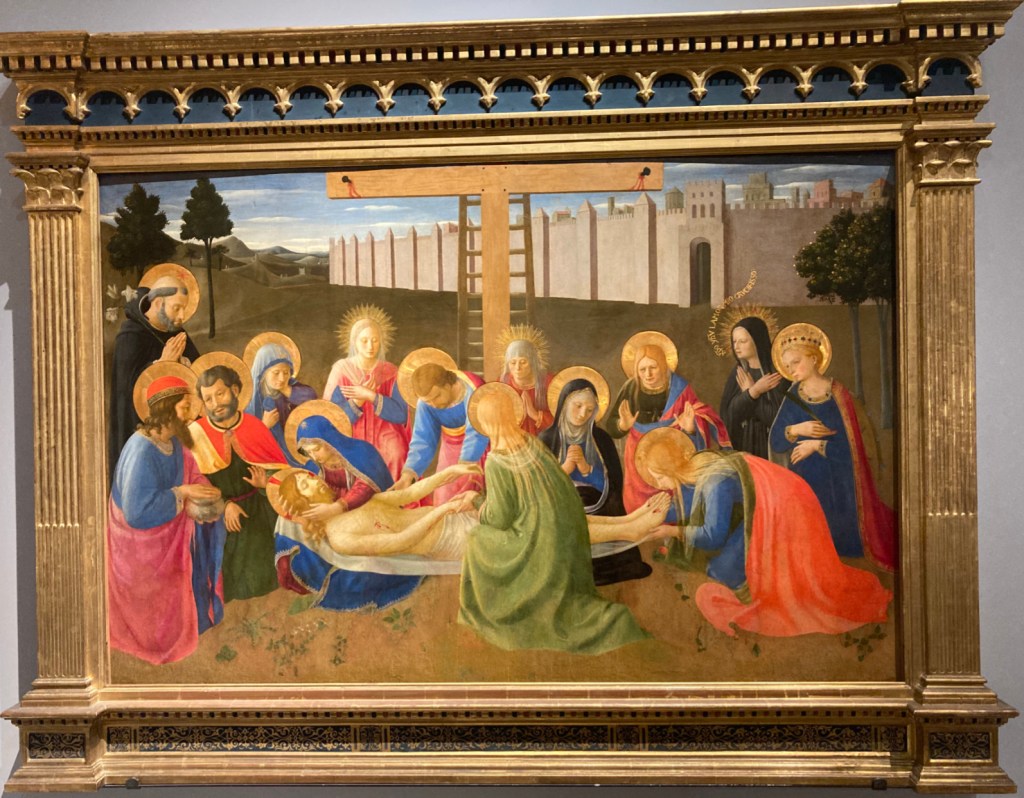
I don’t know why this one isn’t entitled the Levitation of Christ.
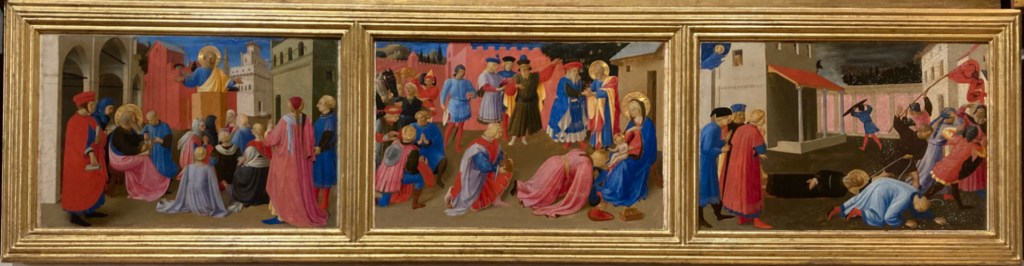
Predella (base) from an altarpiece.
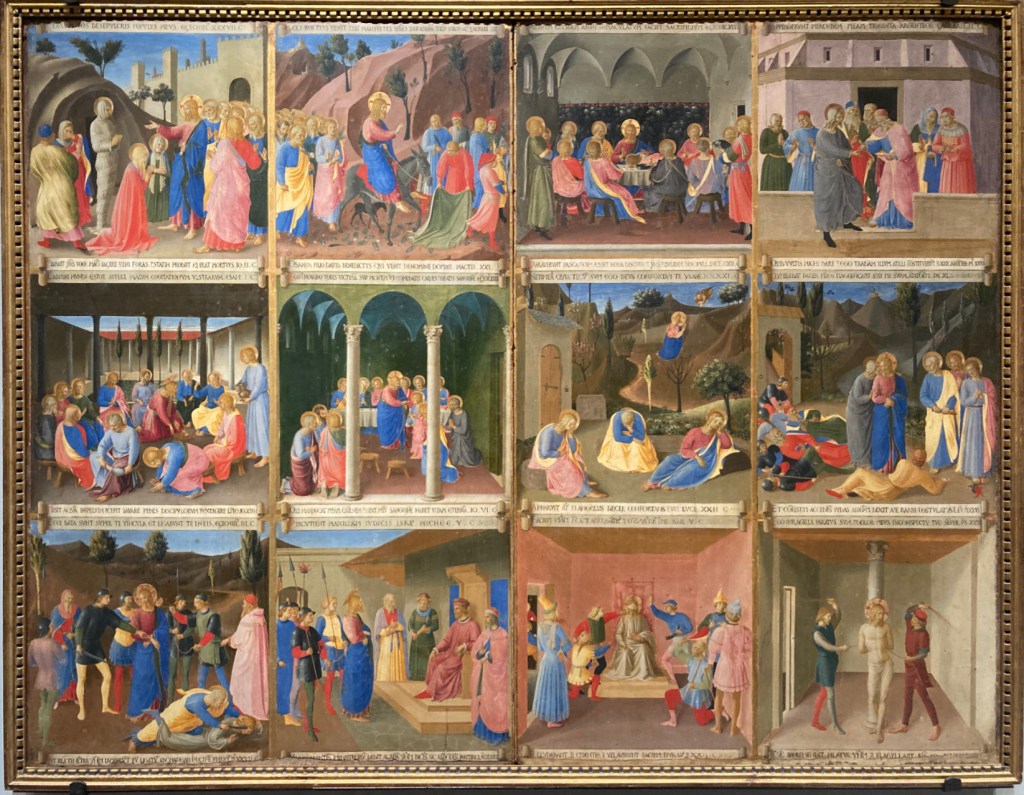
The side of a wooden chest.
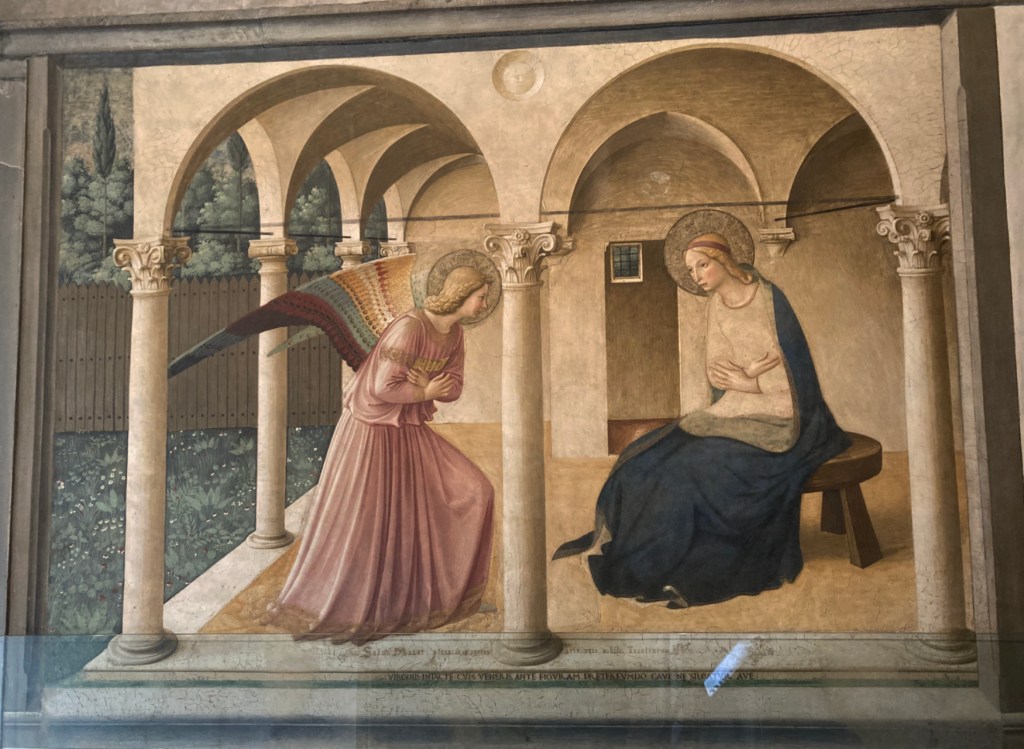
My favorite Annunciation at the entrance to the friars’ cells. Love the colors on the wings. I assume they were brighter in days past.
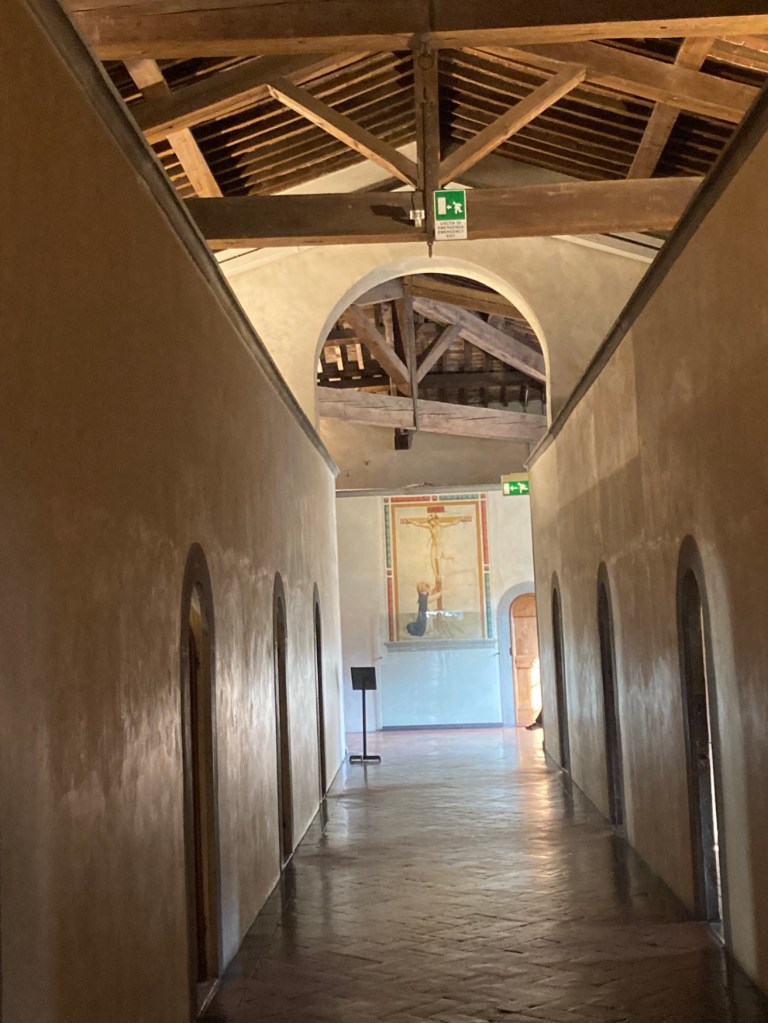
Dormitory for the Dominican friars.
A friar’s cell.
Baptism of Christ (friar’s cell).
The Mocking of Christ. Kind of Salvador-Dali-like with the disembodied hands and head. Mary and St. Domenic are in front (friar’s cell).
Resurrection (friar’s cell). More Dali…wait, Fra Angelico lived before Dali.
Transfiguration (friar’s cell).
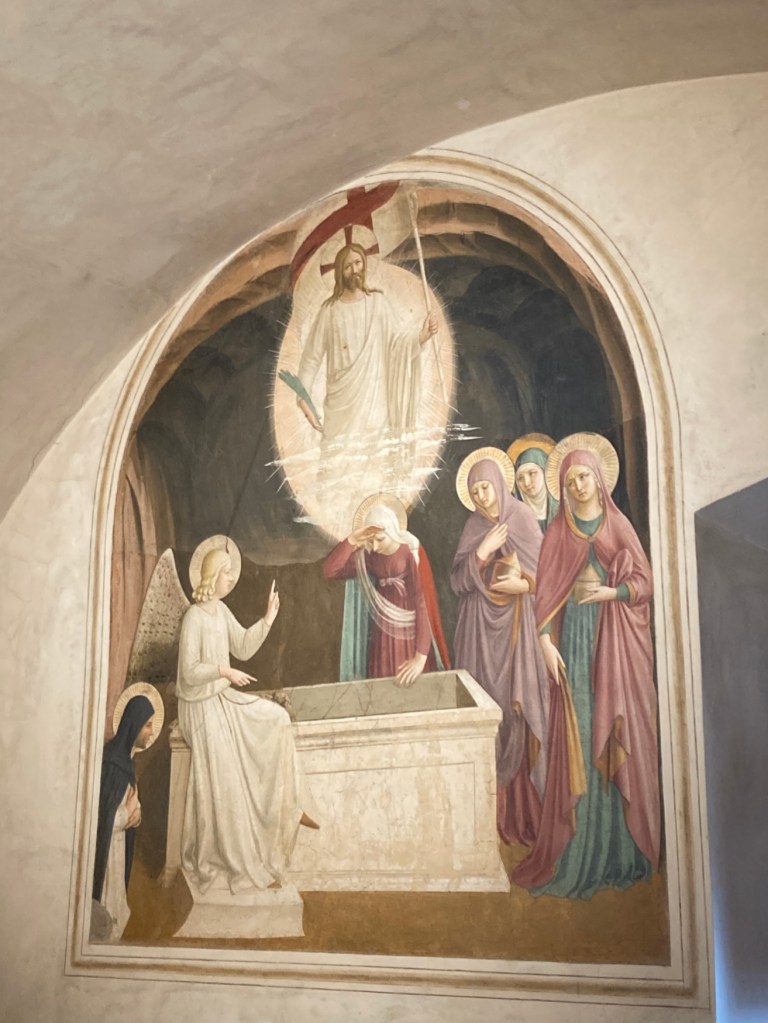
Resurrection and women at tomb (friar’s cell).
Crucifixion in the Convent of San Marco Chapter House.
Cosimo the Elder also had a cell in San Marco dormitory for when he needed downtime. Of course, his cell was much bigger with a bigger fresco (actually 2)- Adoration of the Magi and Christ, Man of Sorrows.