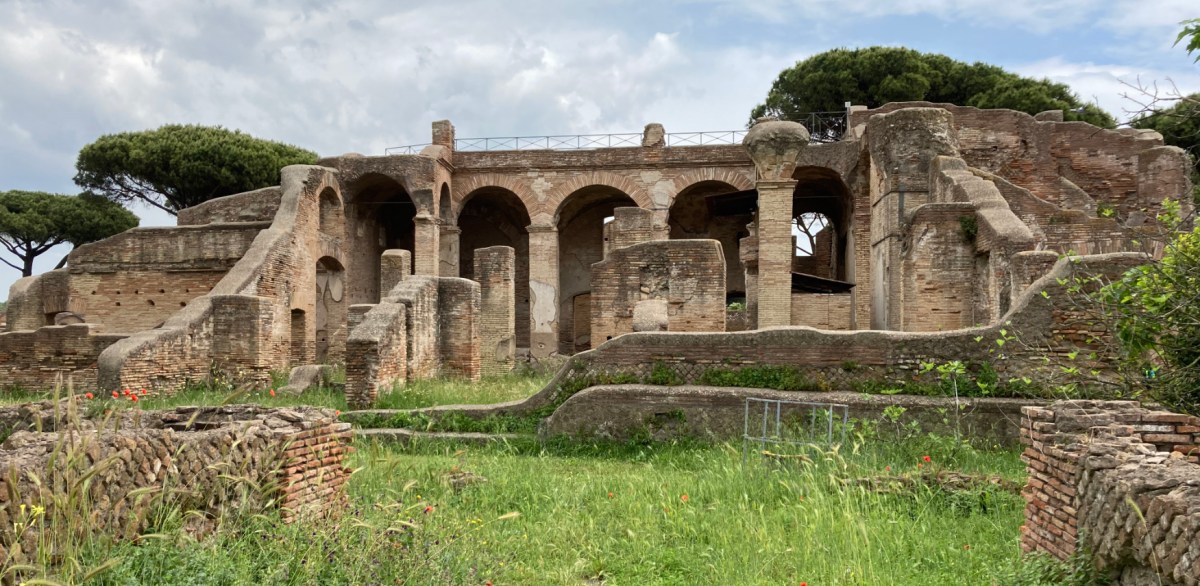
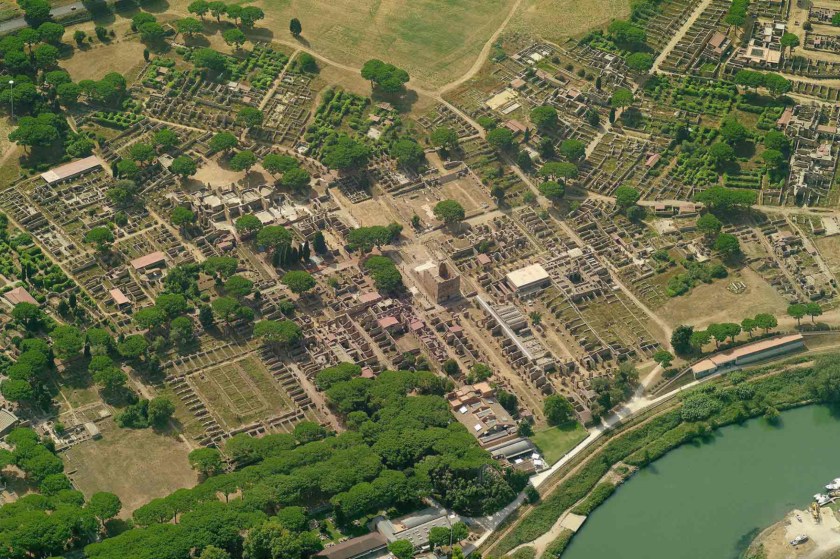
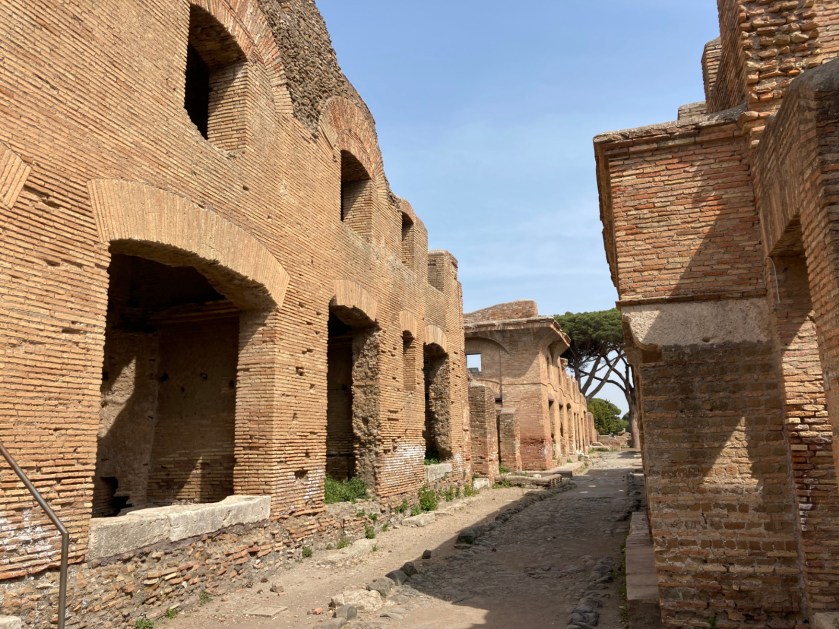
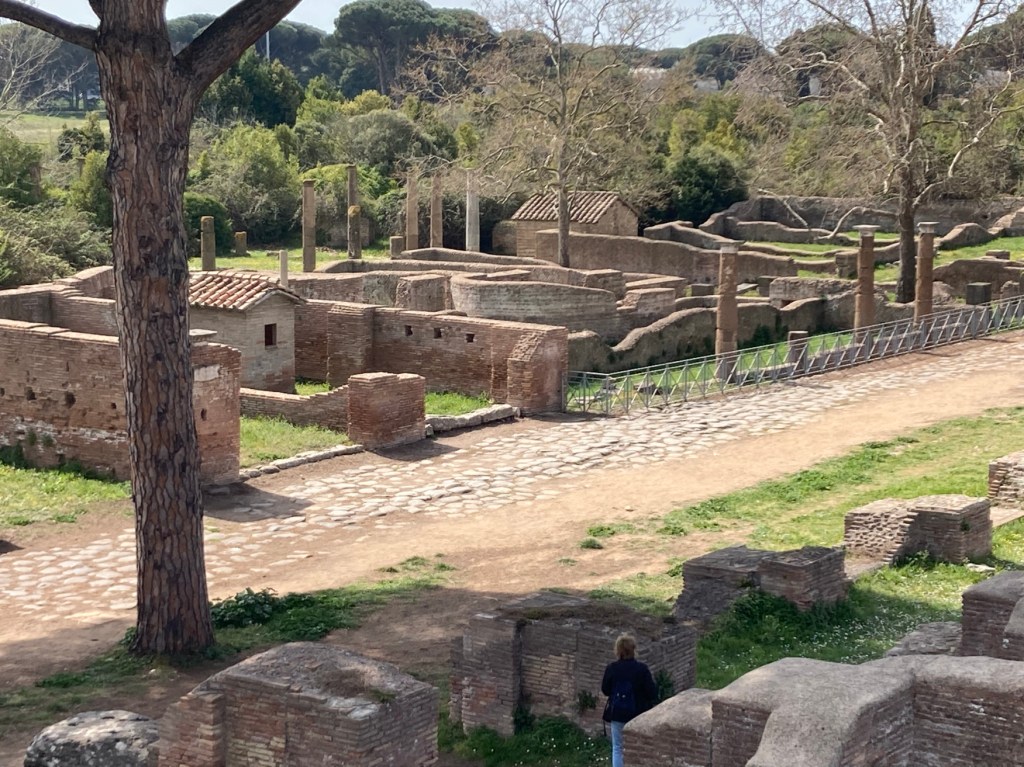
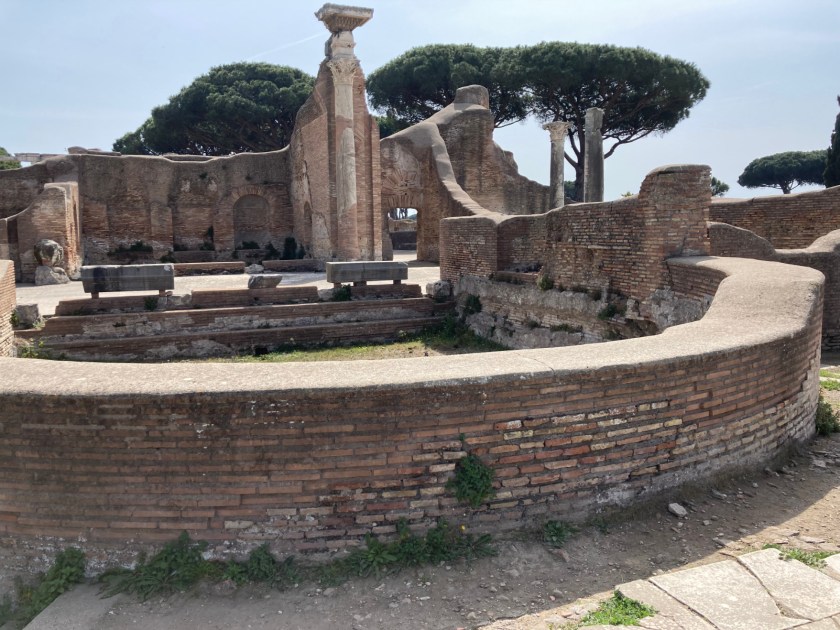
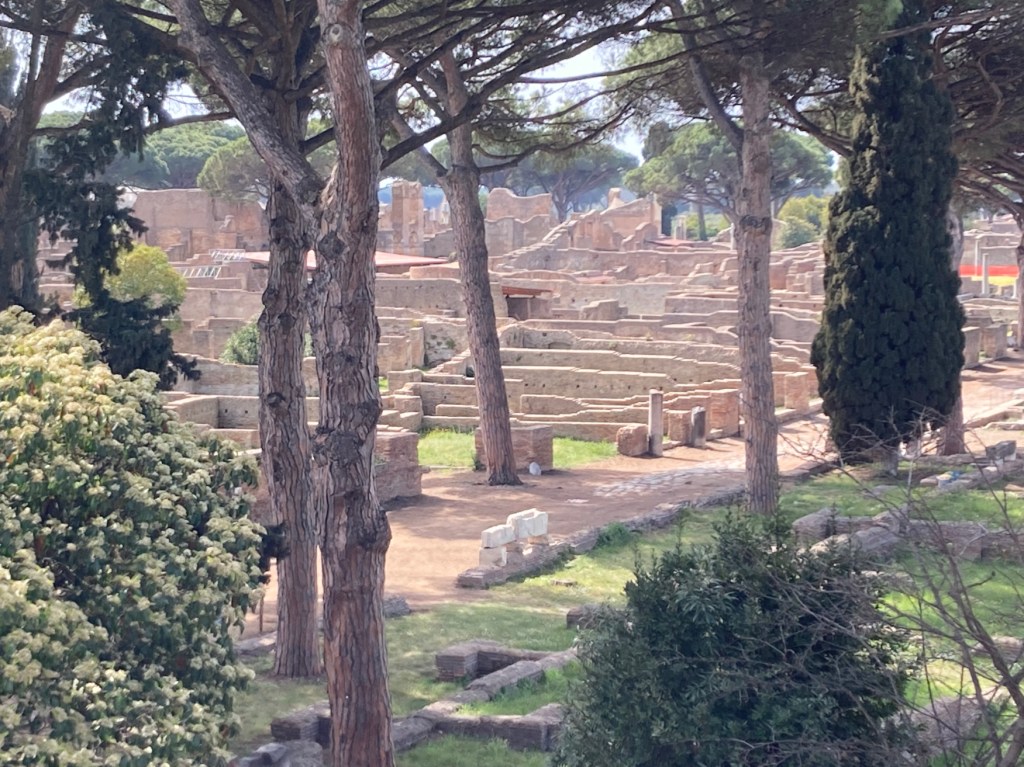
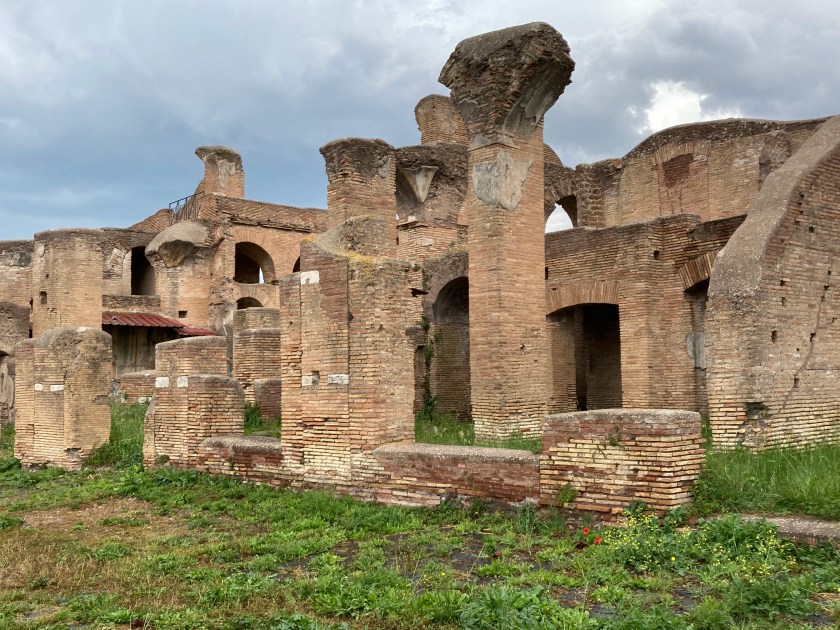
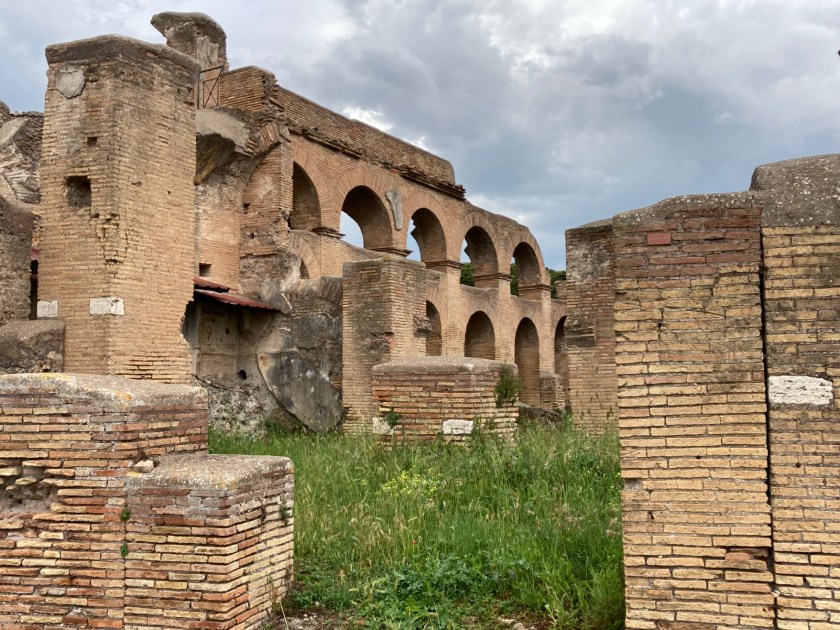
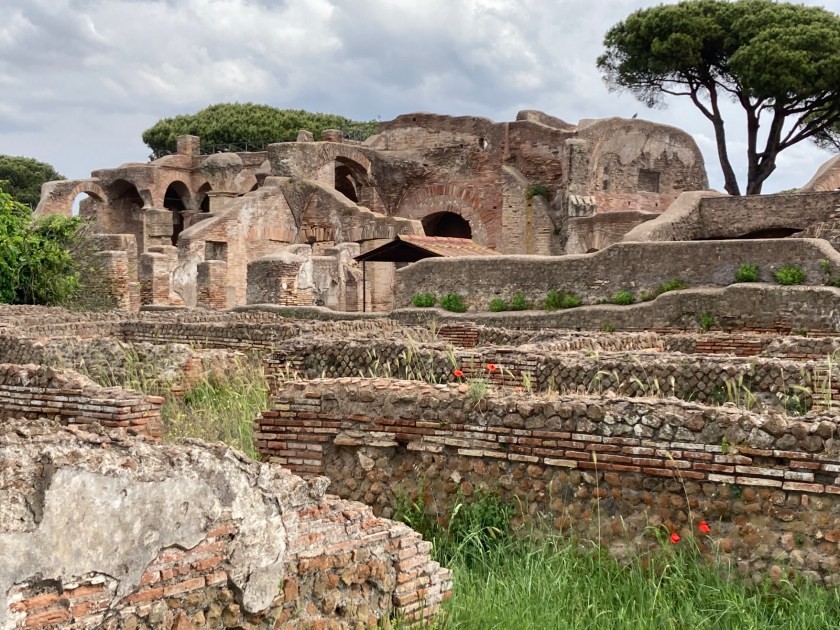
Ostia Antica is known as “Ancient Rome’s seaport.” We went there with our friends Chuck and Monica, then again with Willie and Kathryn. Like Pompeii, Ostia Antica is a snapshot of the Roman Empire. With its population declining for a few hundred years and finally abandoned in the 9th century CE, Ostia Antica was never built over. So, what you see (at least in layout) is pretty much what any Roman emperor would have seen were he to visit this city during his reign. This is what the city looks like today:
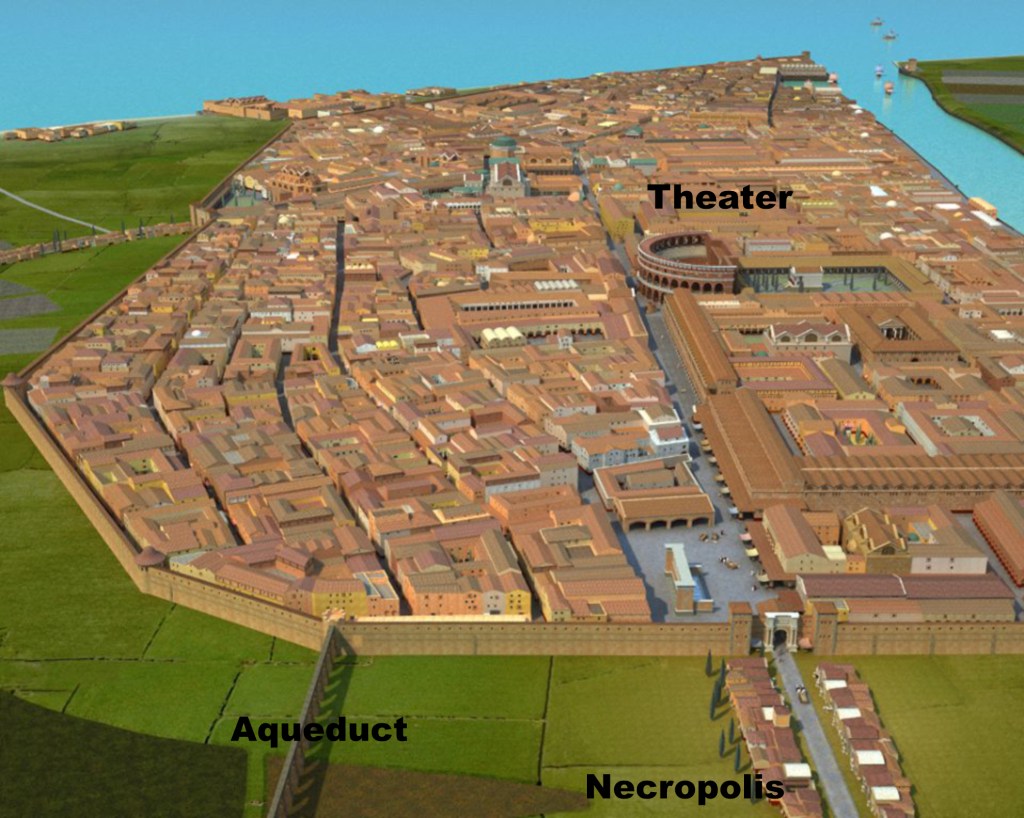
At the end of the 3rd century CE, Ostia Antica looked something like this:
In the 3rd century CE, Ostia Antica was Ostia and had been since maybe the 7th century BCE. The best supported archaeological evidence dated to the 3rd century BCE suggests Ostia began as a military encampment at the mouth (“ost” is mouth in Latin) of the Tiber River (which flows through Rome). Gradually, a center of maritime trade grew around the fort. Julius Caesar in particular developed the harbor to handle the import of massive amounts of grain that he distributed to the citizens of Rome thereby ensuring their “cooperation.” By the third century CE, the population reached maybe 100,000. Unfortunately, the Tiber dumped a lot of silt at its mouth making the harbor unnavigable and, eventually, a new port was built a few kilometers north (currently it’s beneath Fiumicino International Airport). Ostia then became a destination for rich Romans to build coastal villas. The population of Ostia began a slow, steady decline with the fall of the Roman Empire. By the 9th century CE, the city was completely abandoned. Oh, and the silt from the Tiber continued to build up until the coastline is now 3 miles west of Ostia. There’s a new beachfront community actually on the beach called Ostia. Hence, Rome’s Ostia became Ostia Antica (=Ancient Ostia).
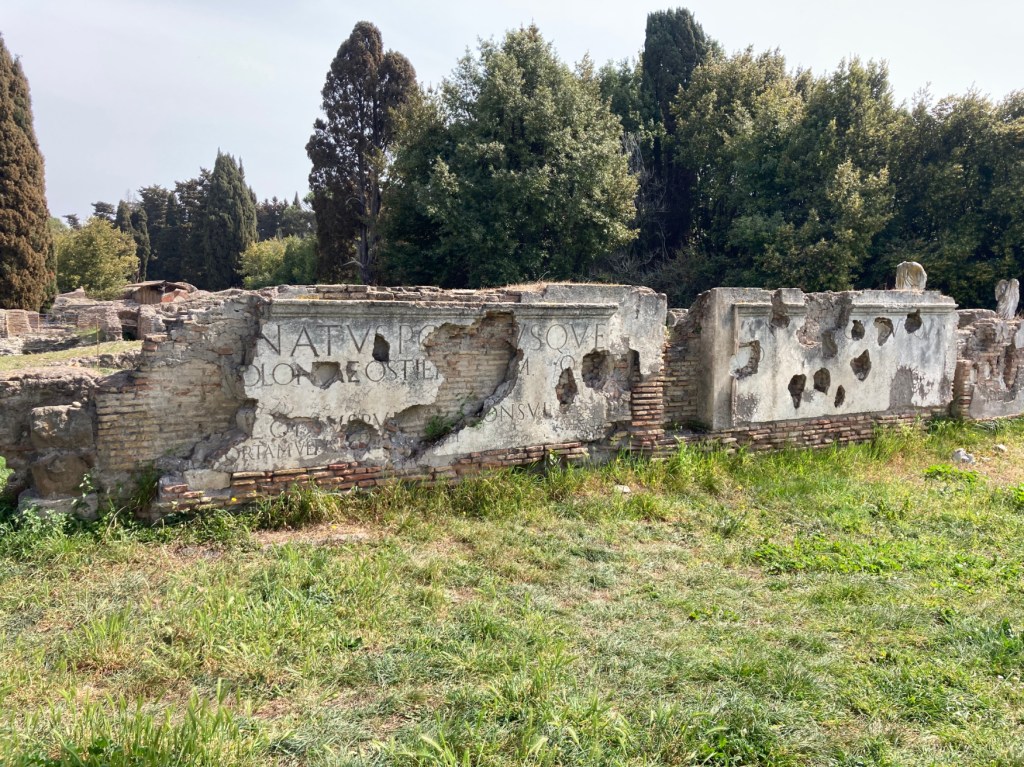
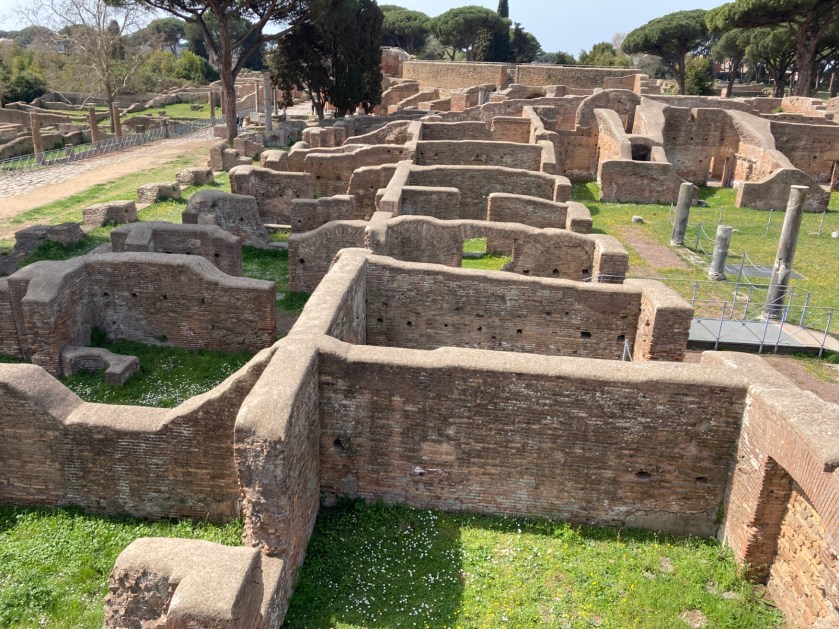
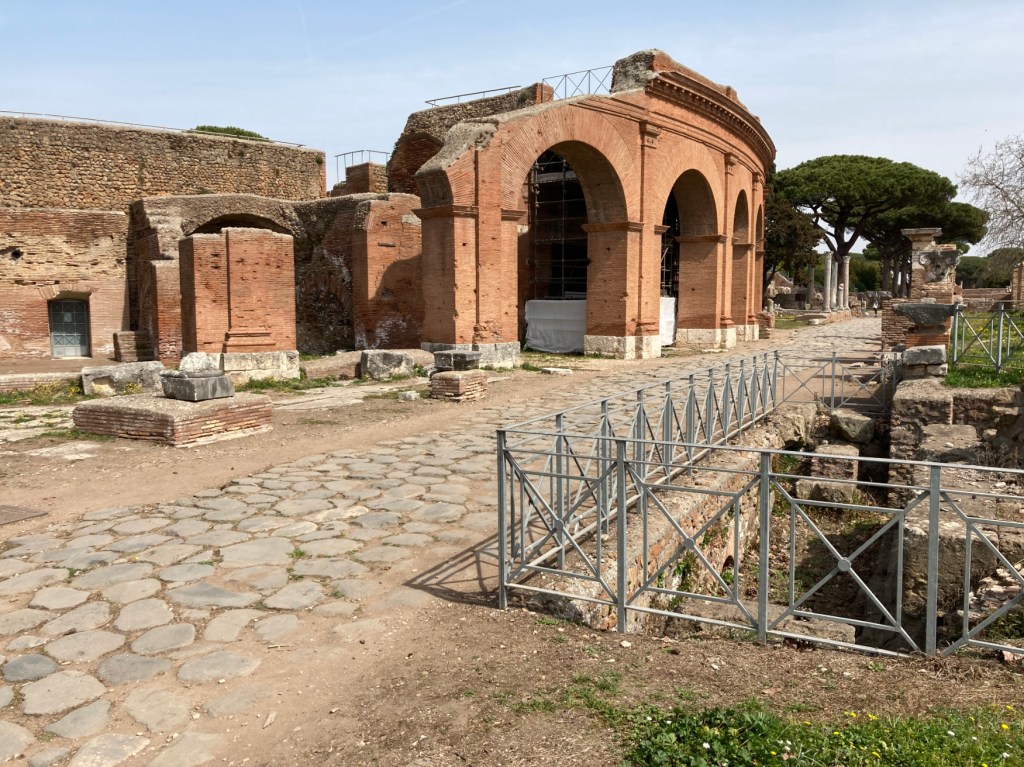
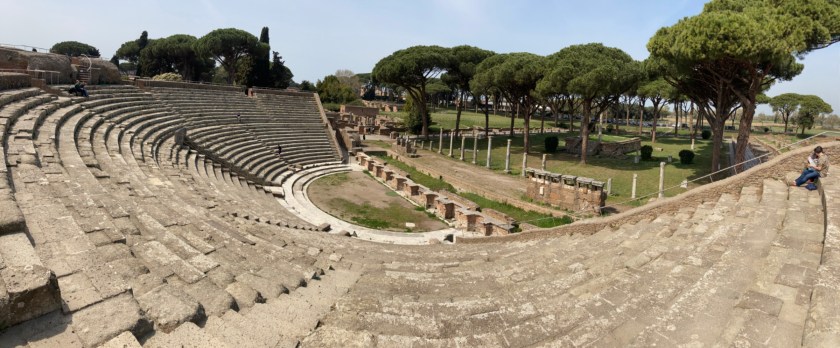
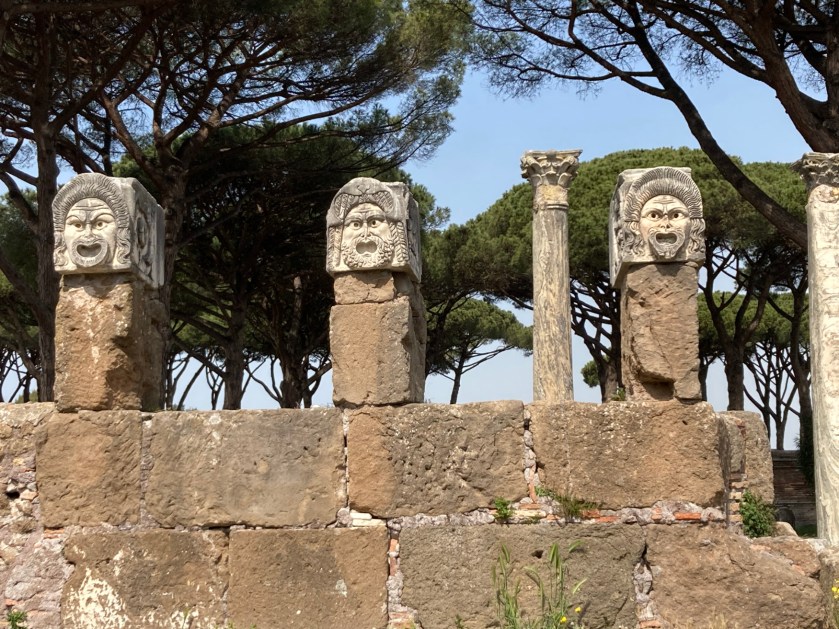
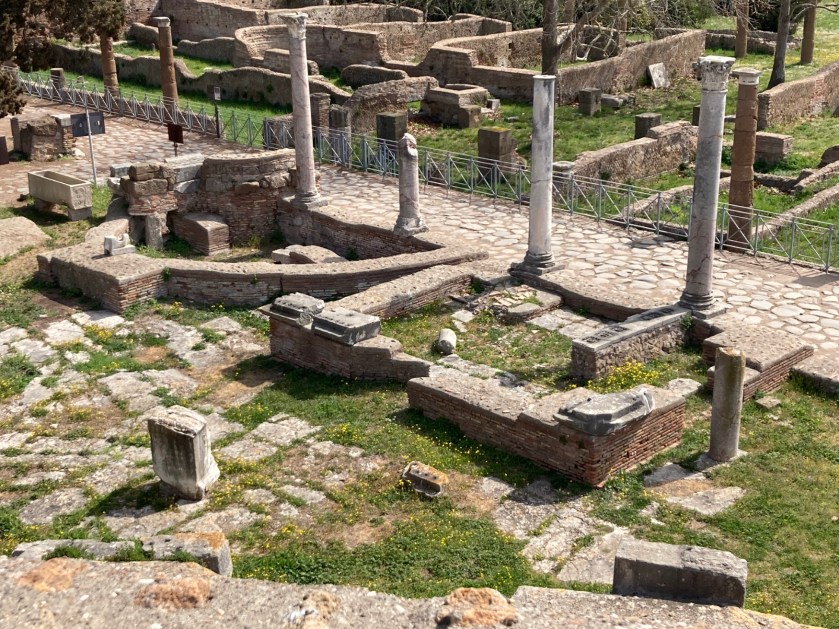
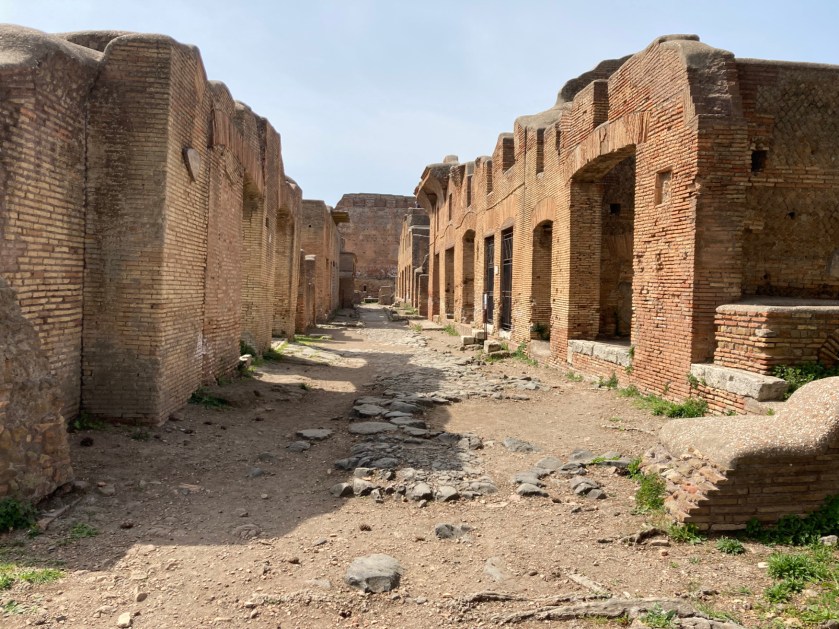
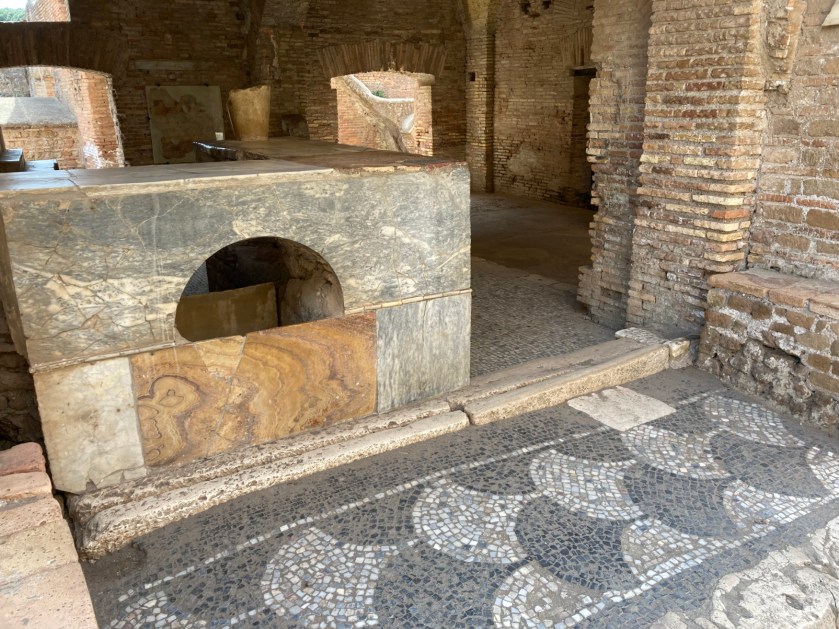
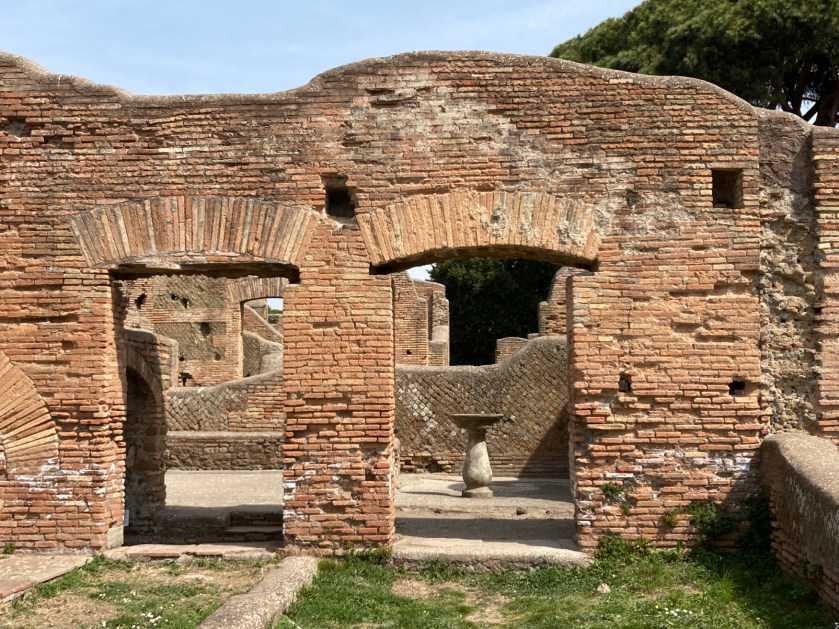
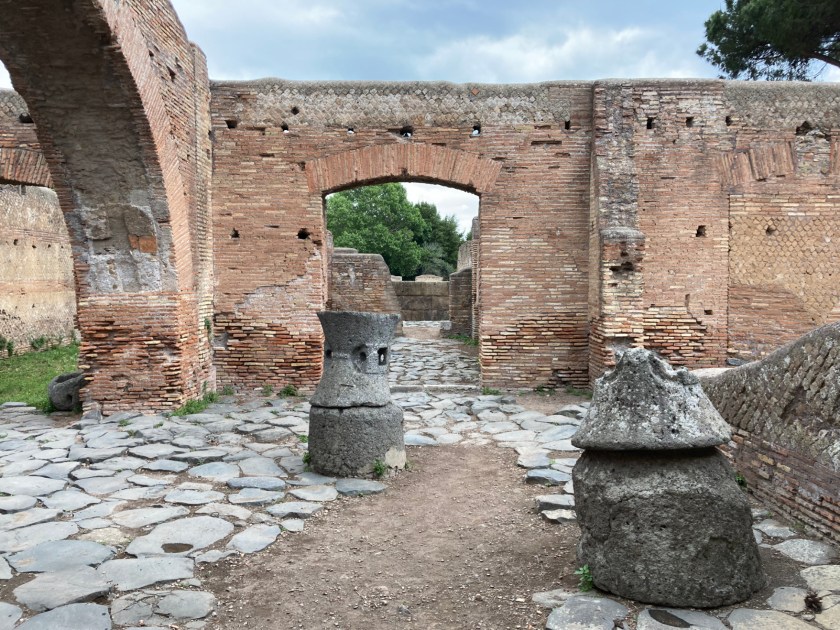
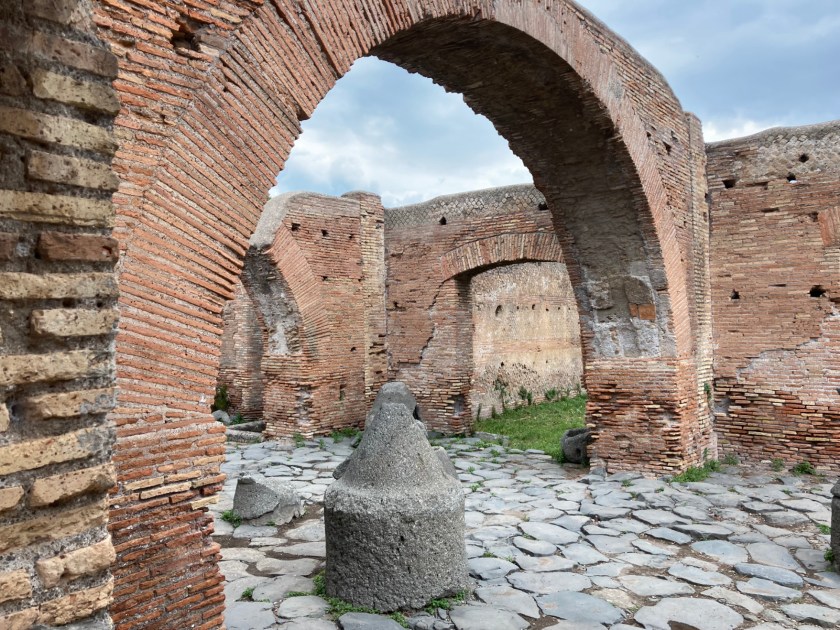
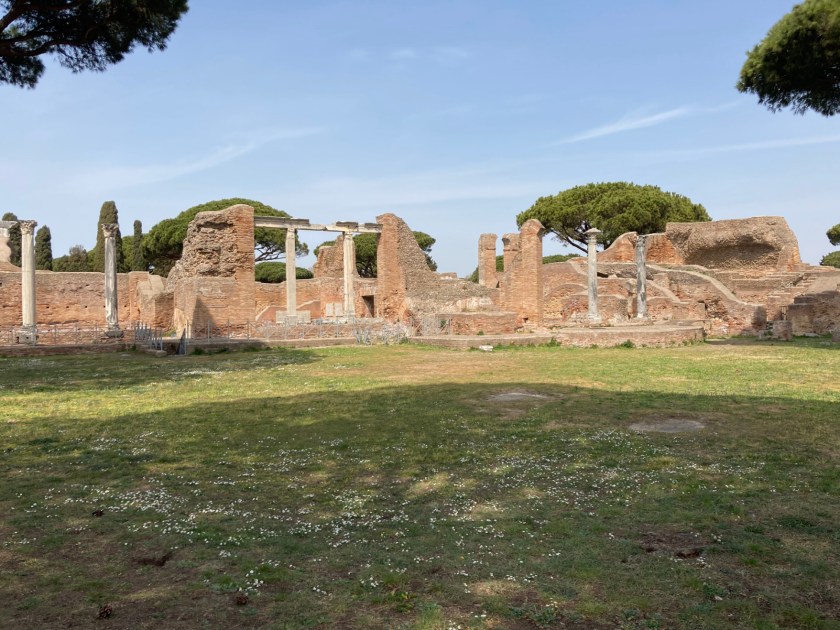
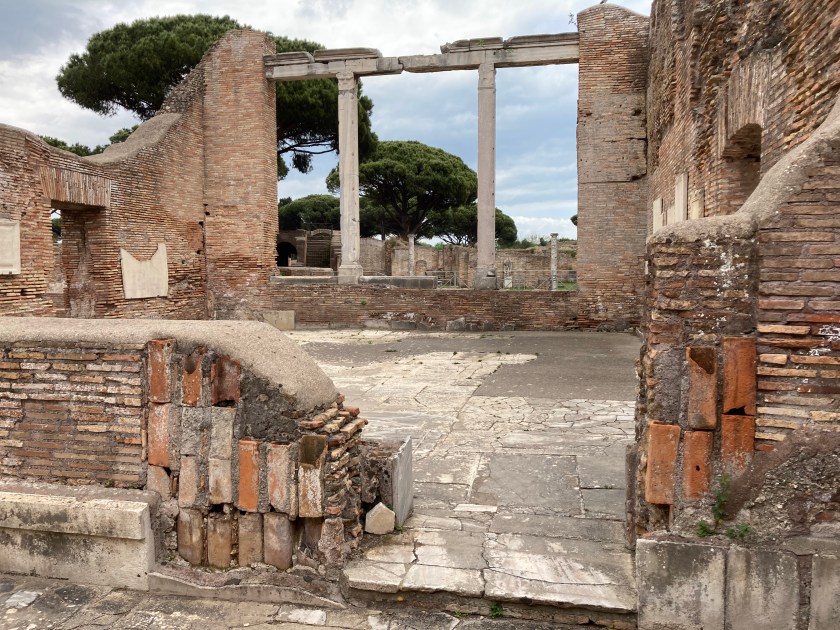
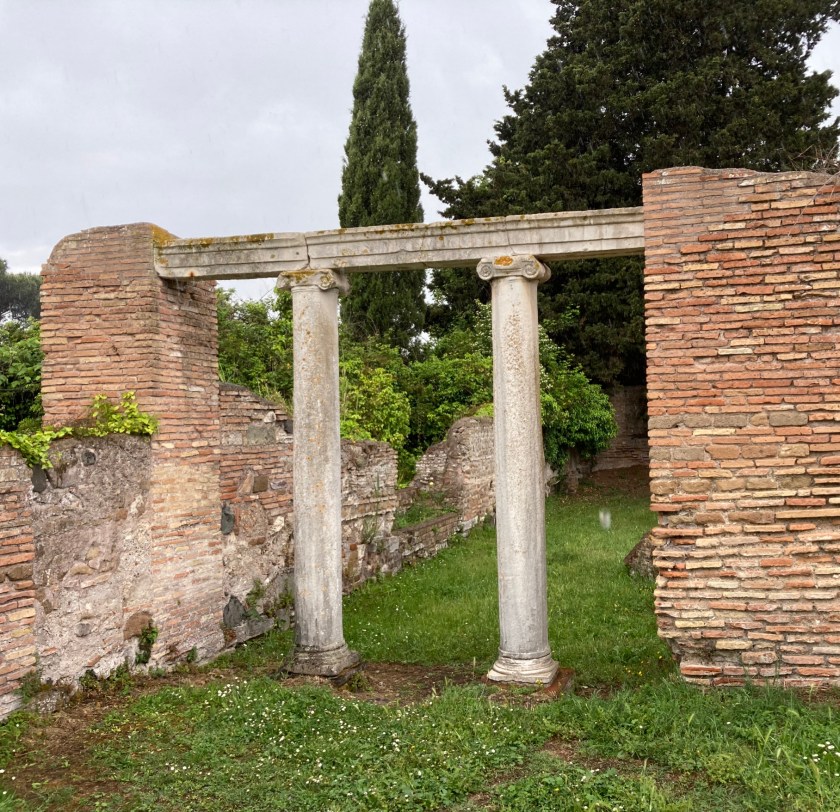
If you are in Rome and want to visit Pompeii, I would suggest Ostia Antica. Day trips to Pompeii from Rome make for a very long day (3+ hours each way). Pompeii is huge so you may not see as much as you want. Pompeii can be very crowded (again, you may not see as much as your want). Finally, Pompeii’s frescoes and mosaics have been moved to the archaeological museum in Naples. Ostia Antica is maybe an hour away. It’s small but you definitely get the idea of what a Roman city was like. It’s very uncrowded. If you’re in Rome with one day to see a preserved Roman city, I’d go to Ostia Antica. See what you think:

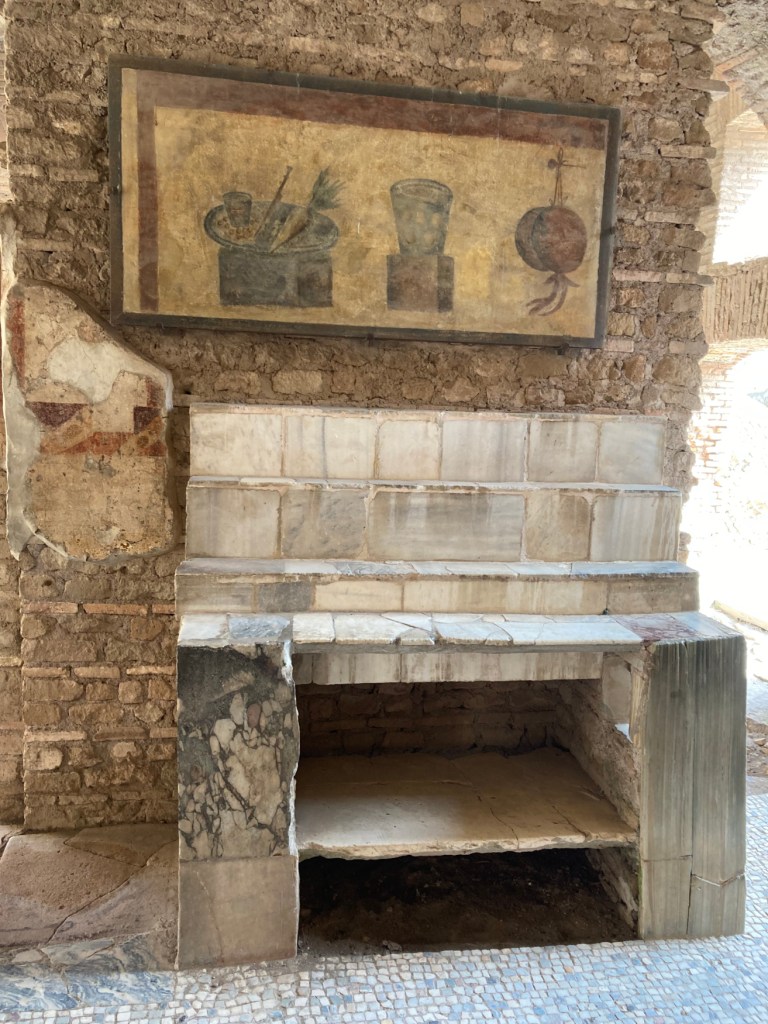
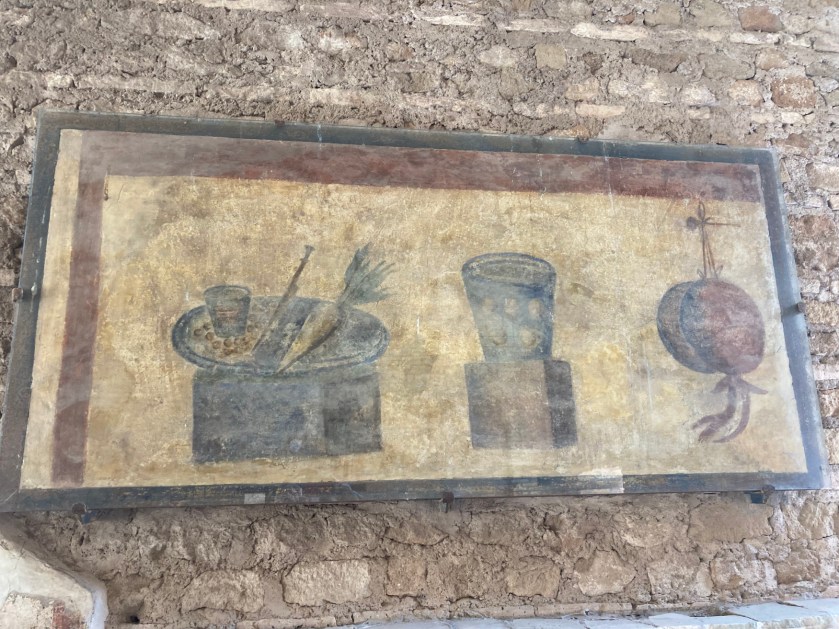
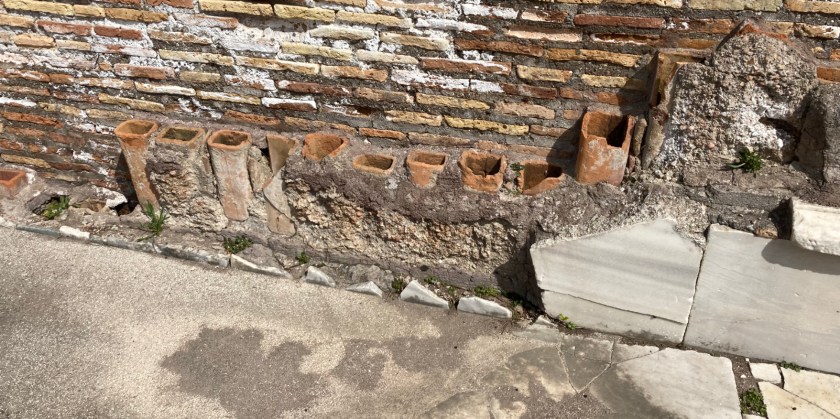
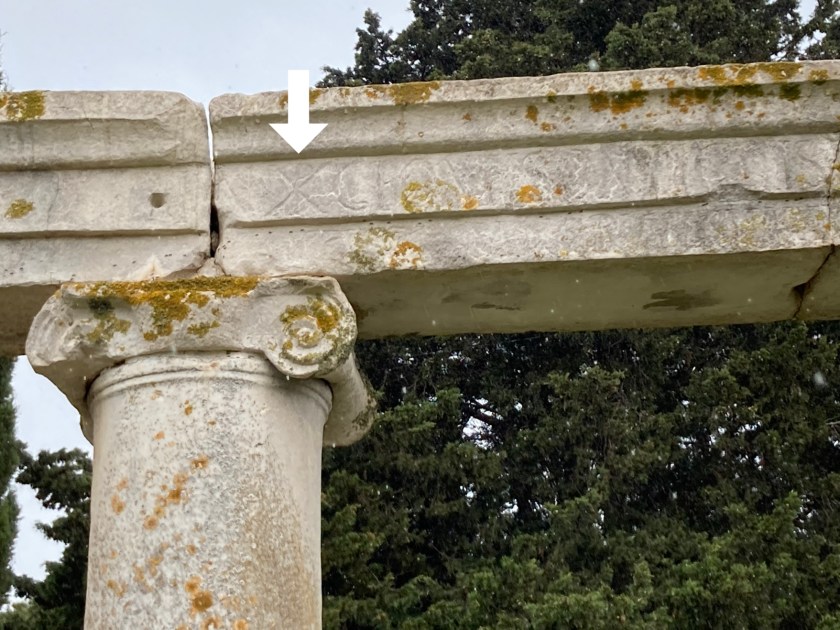
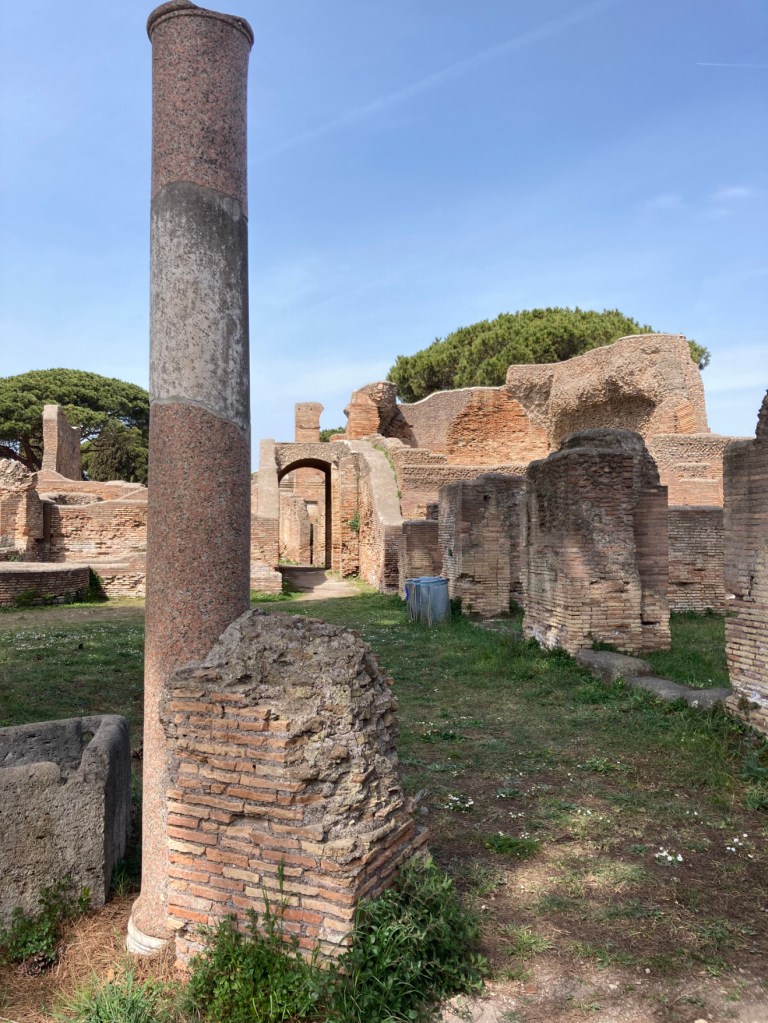
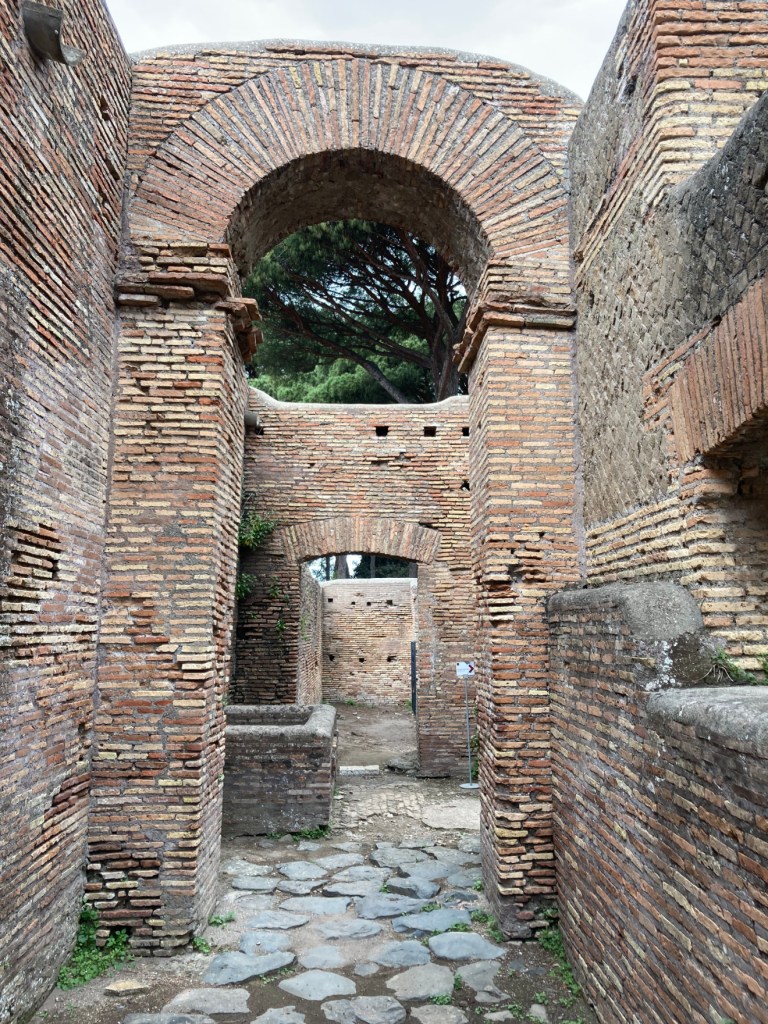
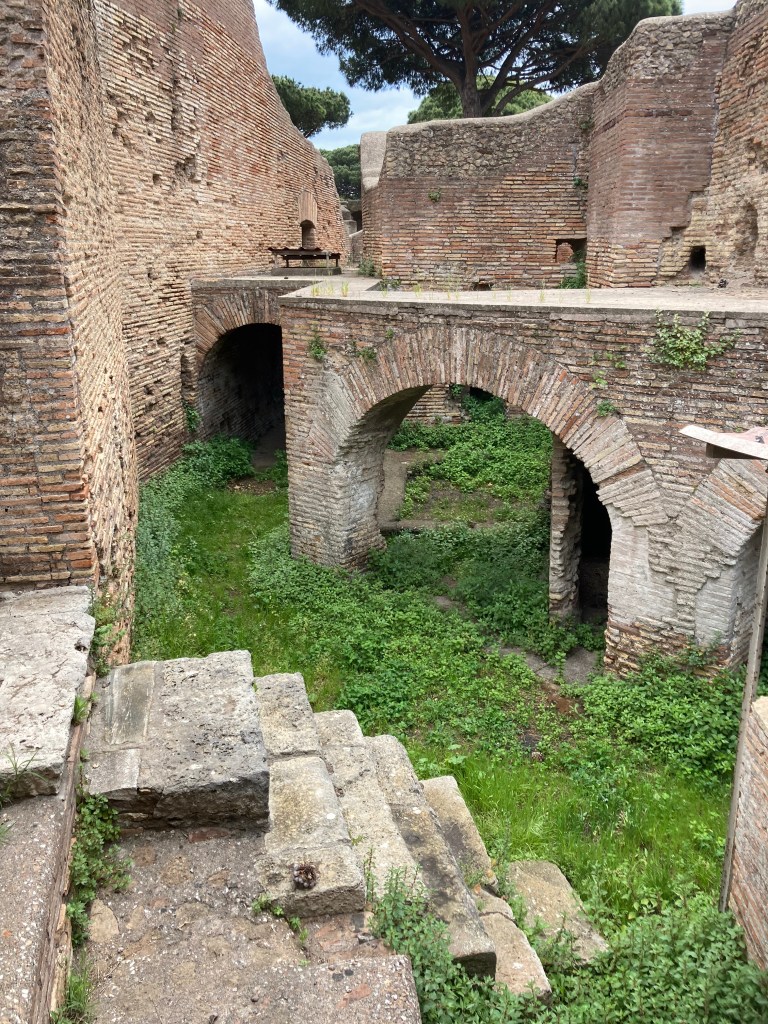
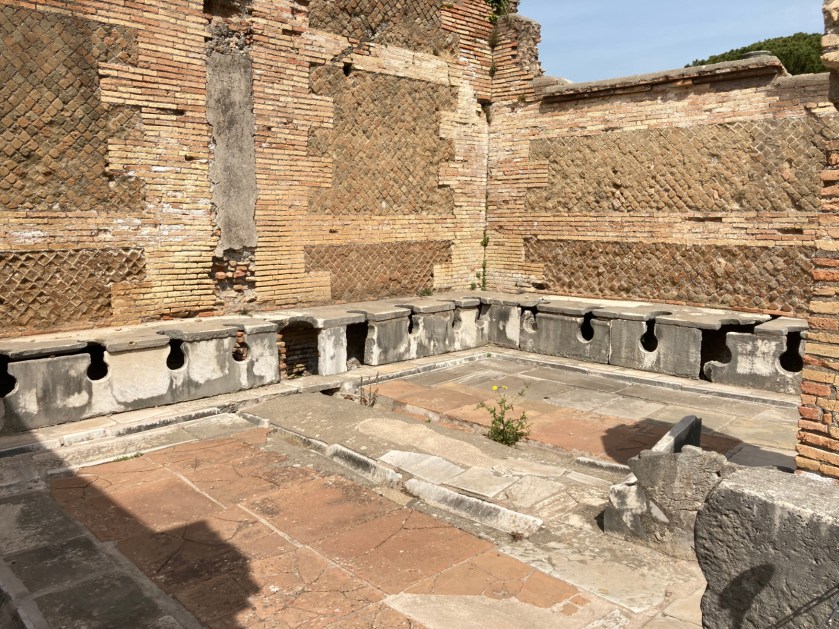
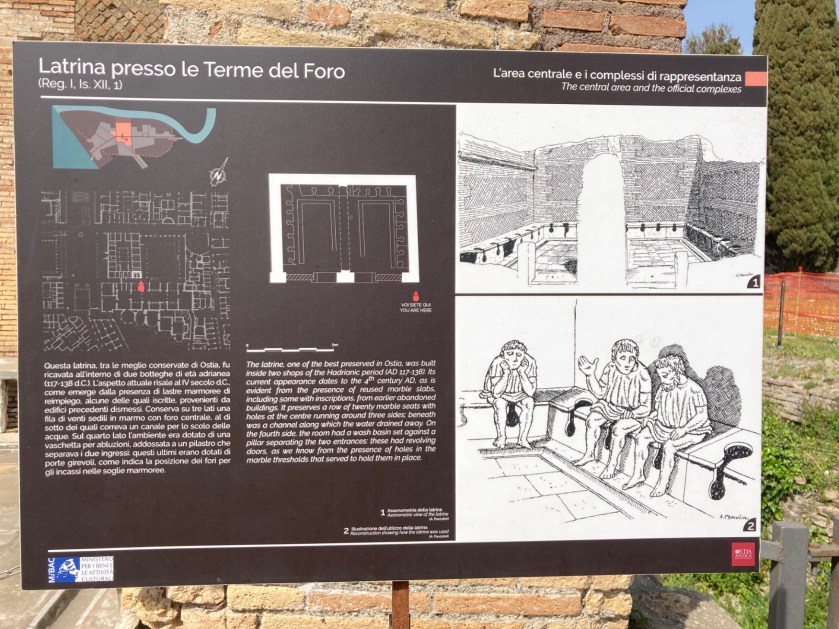
Public latrines: This is probably what everyone has been waiting for. (Didn’t see this in Pompeii).
 John and Susan's Excellent Adventure