I love frescoes and Roman mosaics. Ostia Antica has a ton of mosaics. Many of them are in museums but many are in abandoned Ostia Antica right where they were installed by craftsmen 2000 years ago. There are 3 types of mosaics- business signs, decorations in the bottom of baths, and floors in private homes.
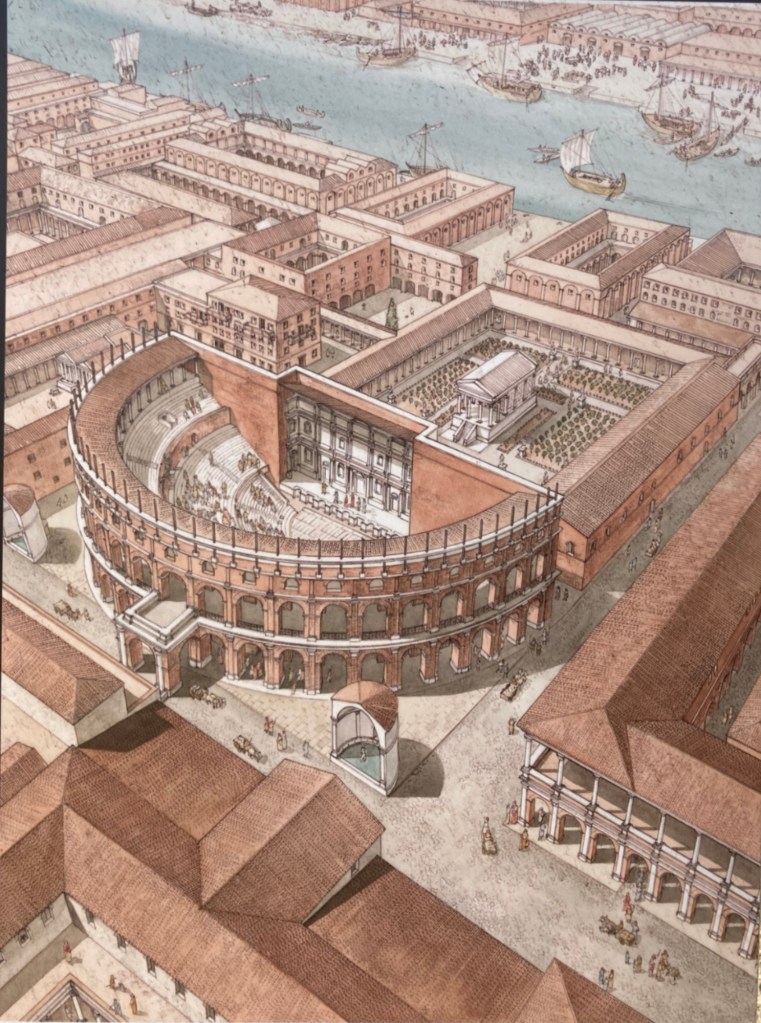
Many of the mosaics in Ostia Antica are in the theater complex (below). The theater was actually a multipurpose facility common in Roman cities. The theater is the semicircular structure. Behind it, a temple sits in the middle of a courtyard. The colonnaded building (the portico) on the 3 sides of the courtyard houses offices of the empire and local businesses. Mosaics on the sidewalk around the portico identify the services provided by the business.
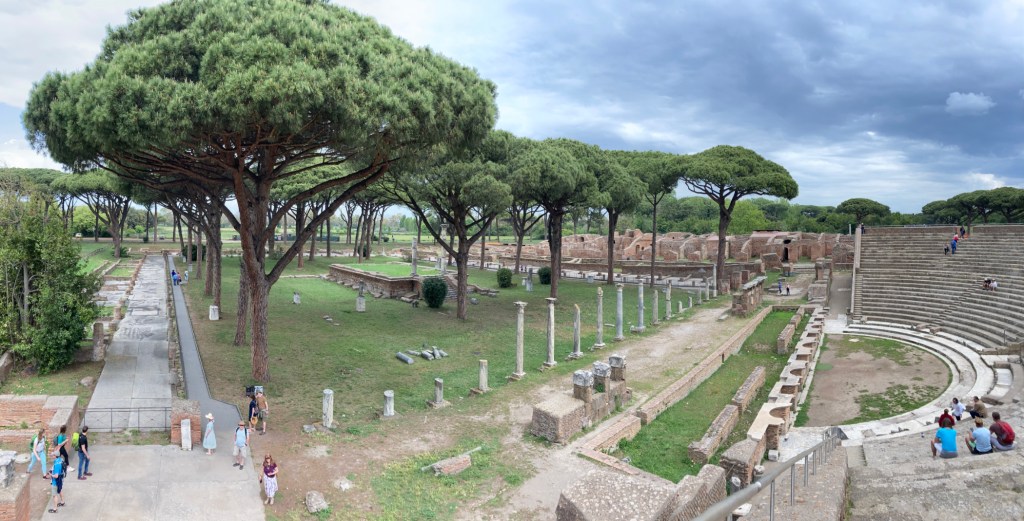
This is how it appears to day. The theater is to the right. The temple was on the platform in the middle of the trees. The mosaics are in the large gray strip you can see on the left, which goes around the back and the opposite side..
Business Mosaics:
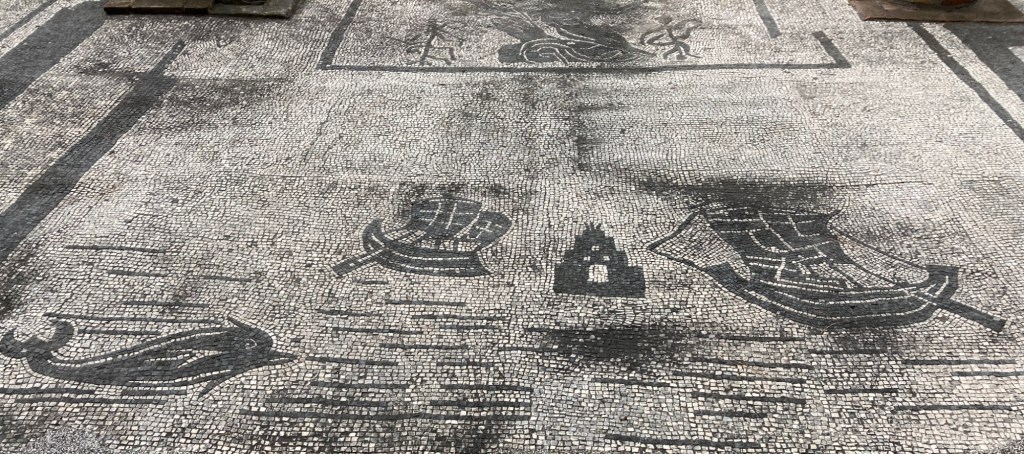
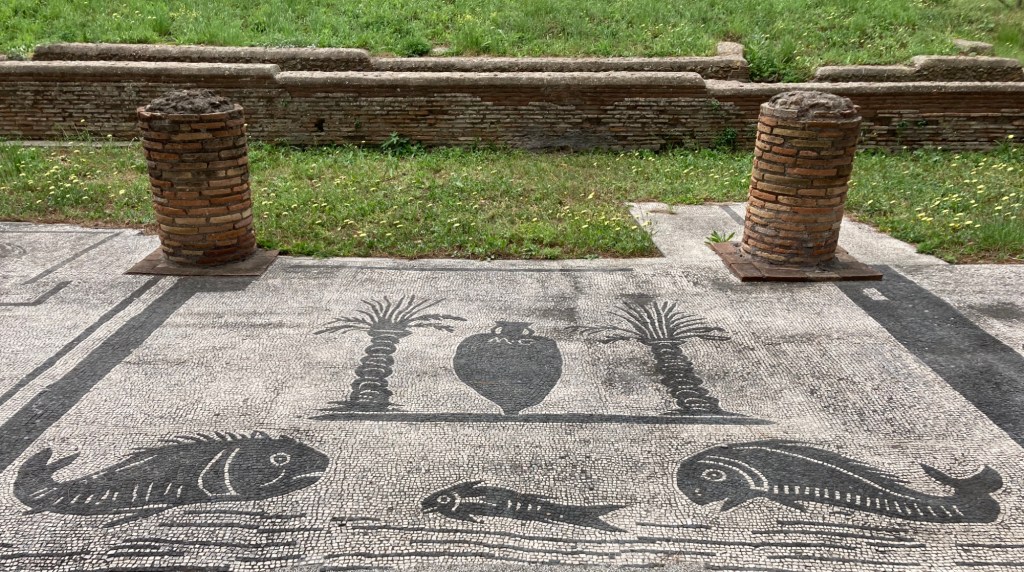
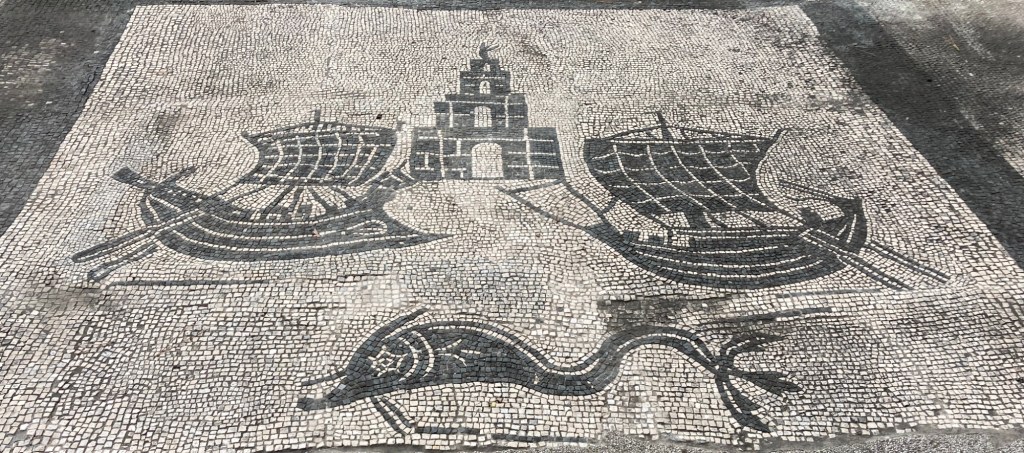
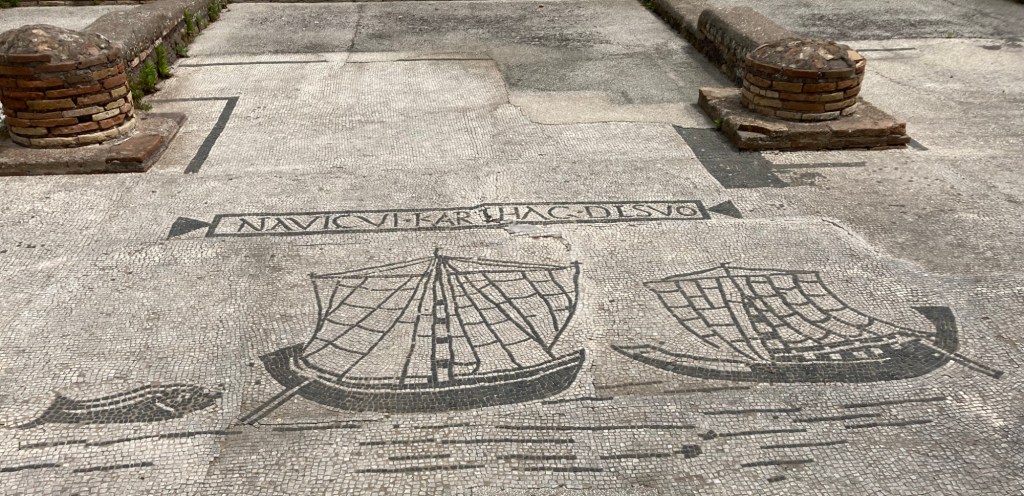
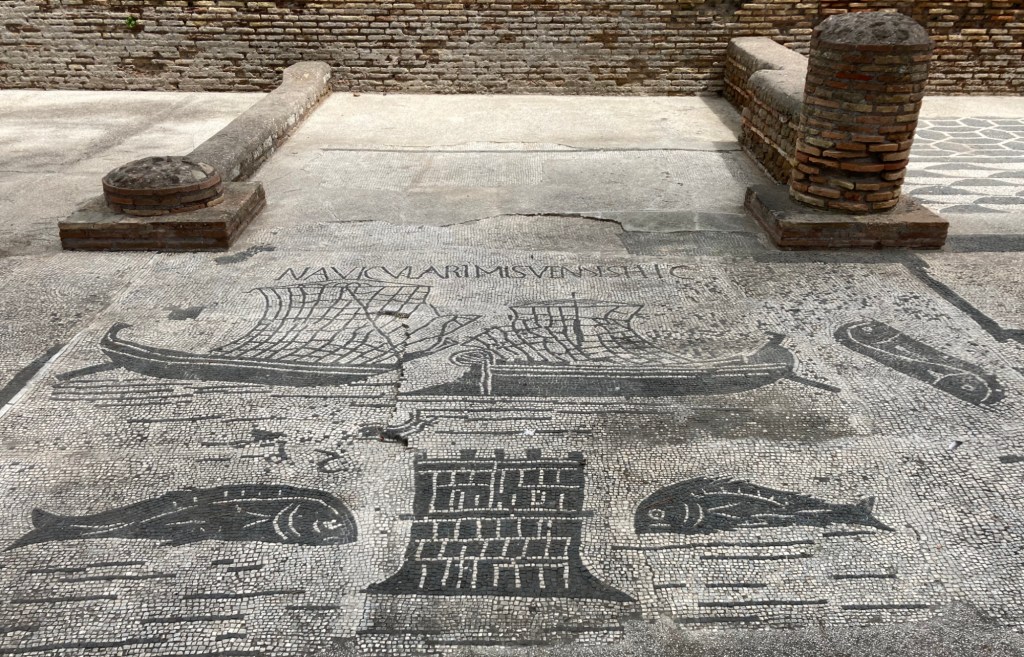
Most of the mosaics in the theater-portico depict ships. You might expect maritime related enterprises to be well represented in a port city.
The amphora (between the palm trees) was commonly used to transport commodities (fish, grapes or wine, olives or olive oil, maybe grain). So, a shipping company?
The building in the middle might be a lighthouse.
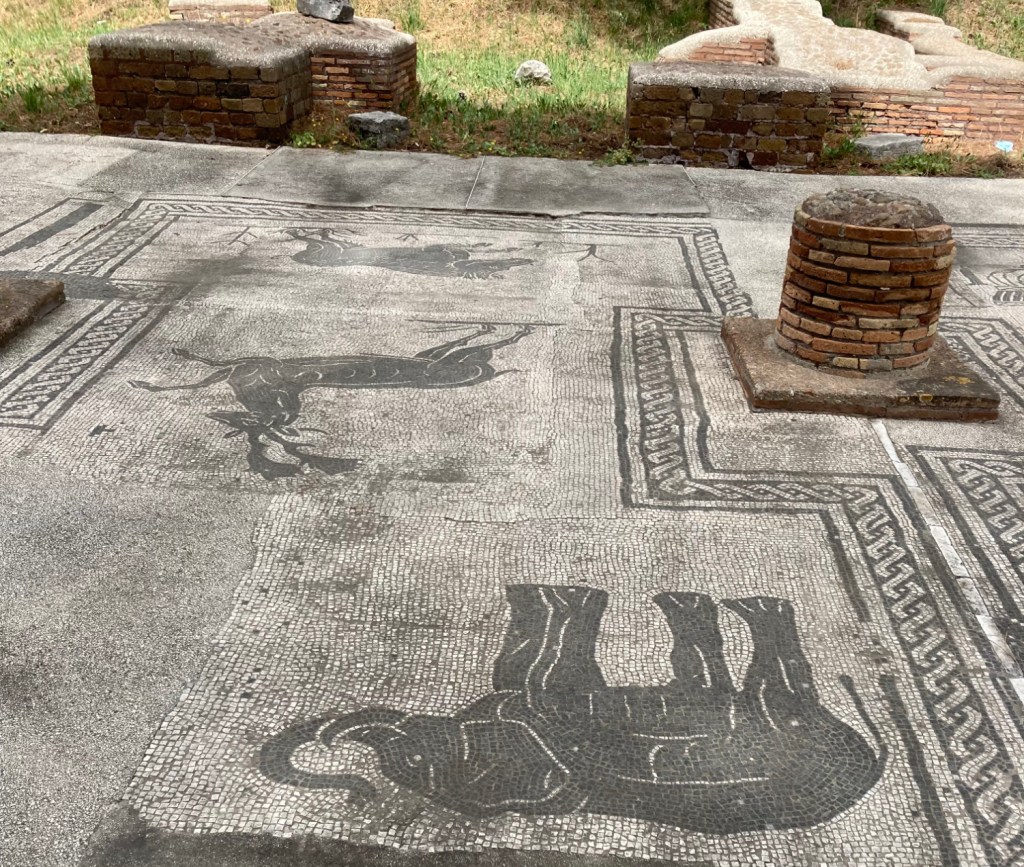
Elephants usually indicate some who imported products from Africa. What do the deer and what might be a boar indicate?
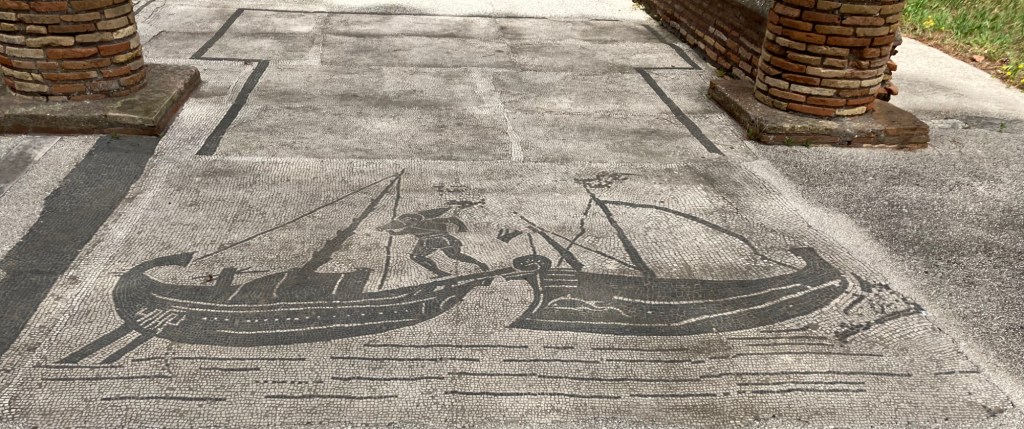
The man appears to be carrying an amphora from a galley (ocean-going) to a smaller boat (river craft?). Maybe this outfit was a middleman taking goods upstream to Rome.
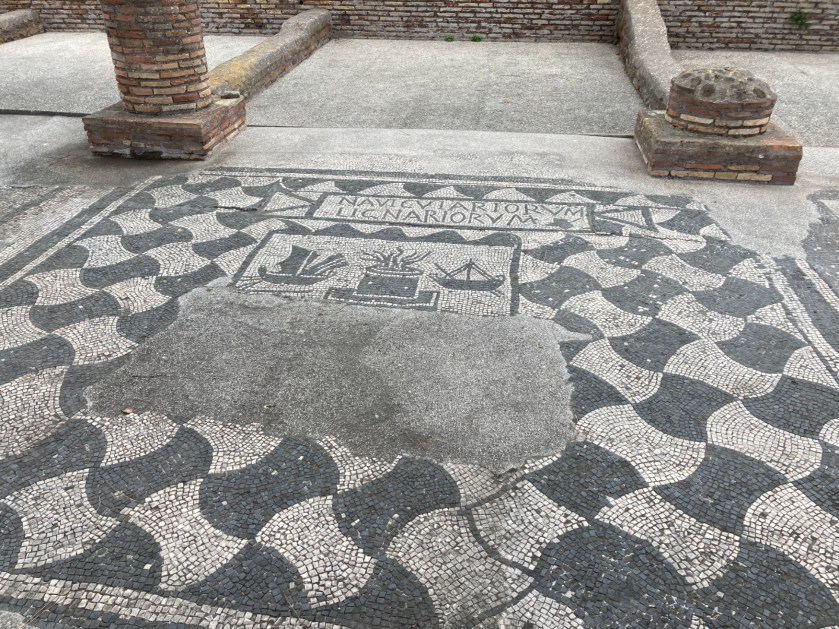
The top word (Navig…) is ship or boat or shipping. The bottom word (Lignar…) is “carpenter.” So, maybe this was a business of ship carpenters or boatwrights. The office would have been in the back between the walls marked by the columns.
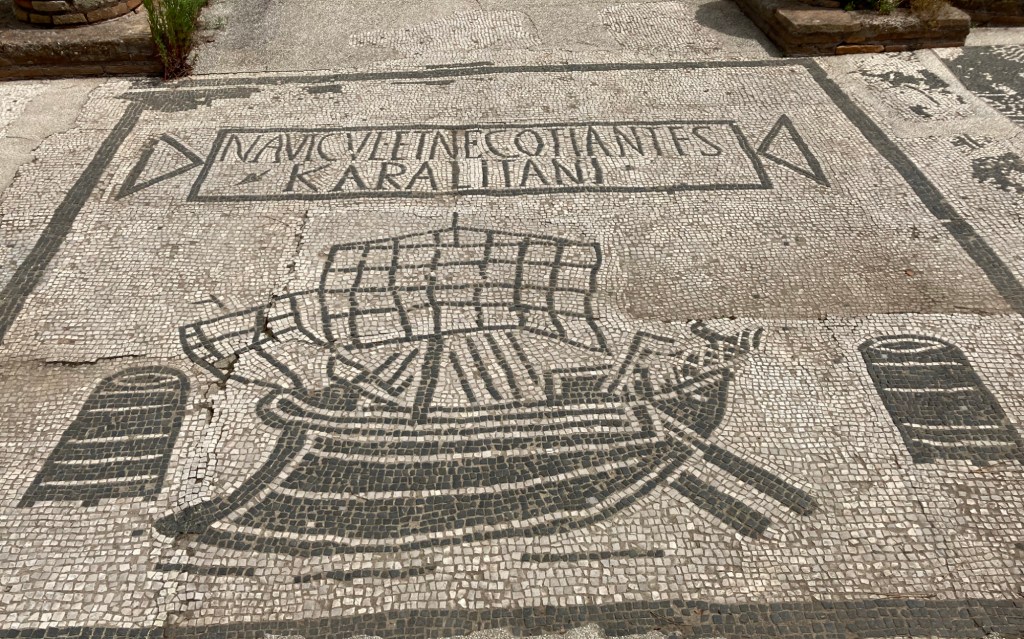
The containers on either side are for grain storage. Karalitani might indicate a city in Sardinia, known to be an exporter of grain to Rome.
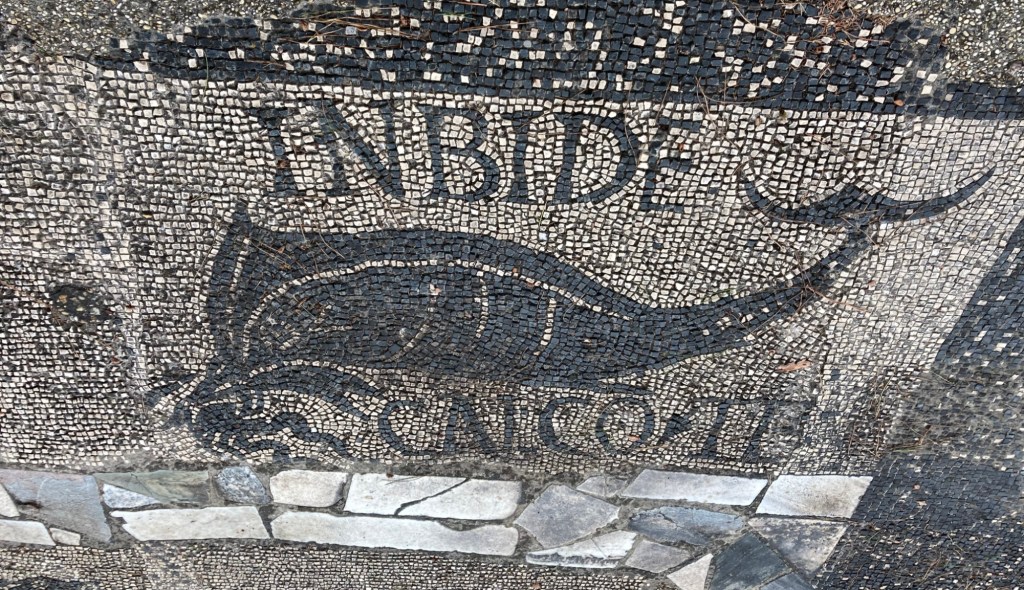
This is a dolphin eating a squid from a shop that sold fish. The Latin says something like “envious creature, I trample you.” As Roman fishermen saw themselves in competition with dolphins for squid, this is probably an epithet directed against the dolphin.
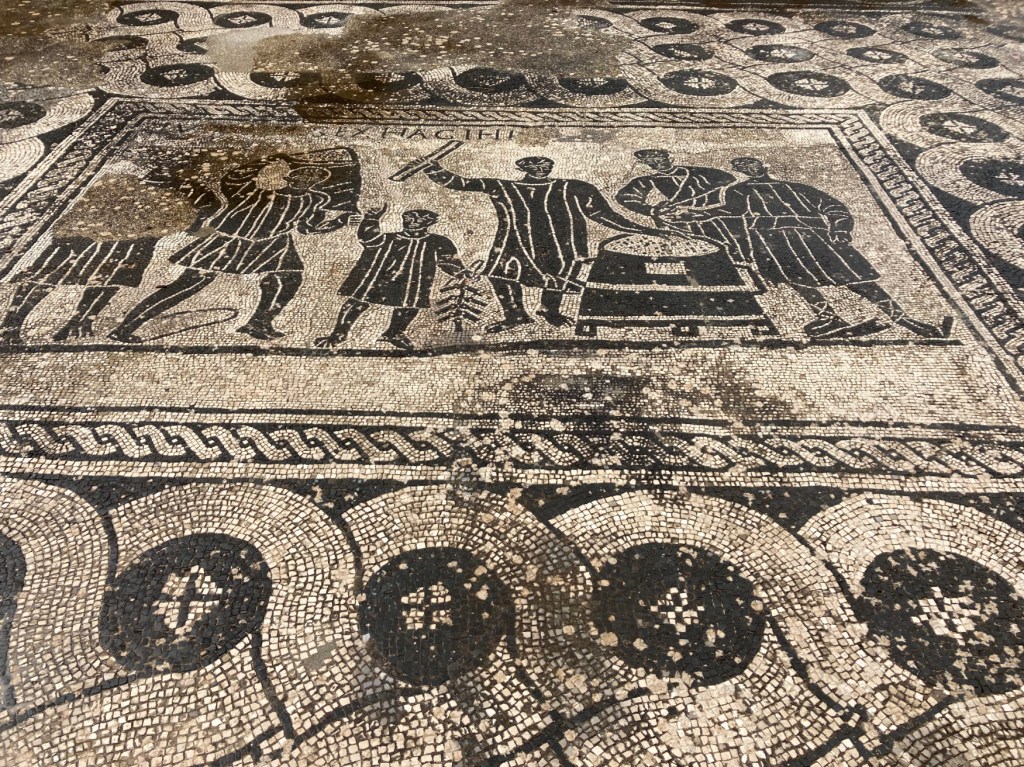
These guys, called “mentorses,” were responsible for measuring amounts and verifying amounts of grain. This was probably an important business because, to keep poor Roman citizens happy, grain such as wheat was subsidized or distributed free during the Republic and by emperors through much of Rome’s history.
Bathhouse Mosaics:
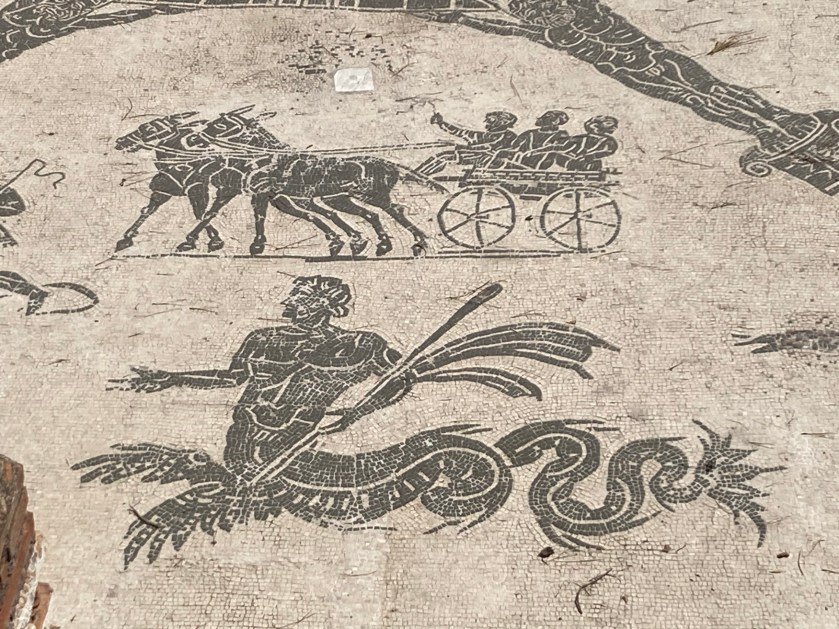
This is from the bottom of a pool in a bathhouse sponsored by cart drivers.
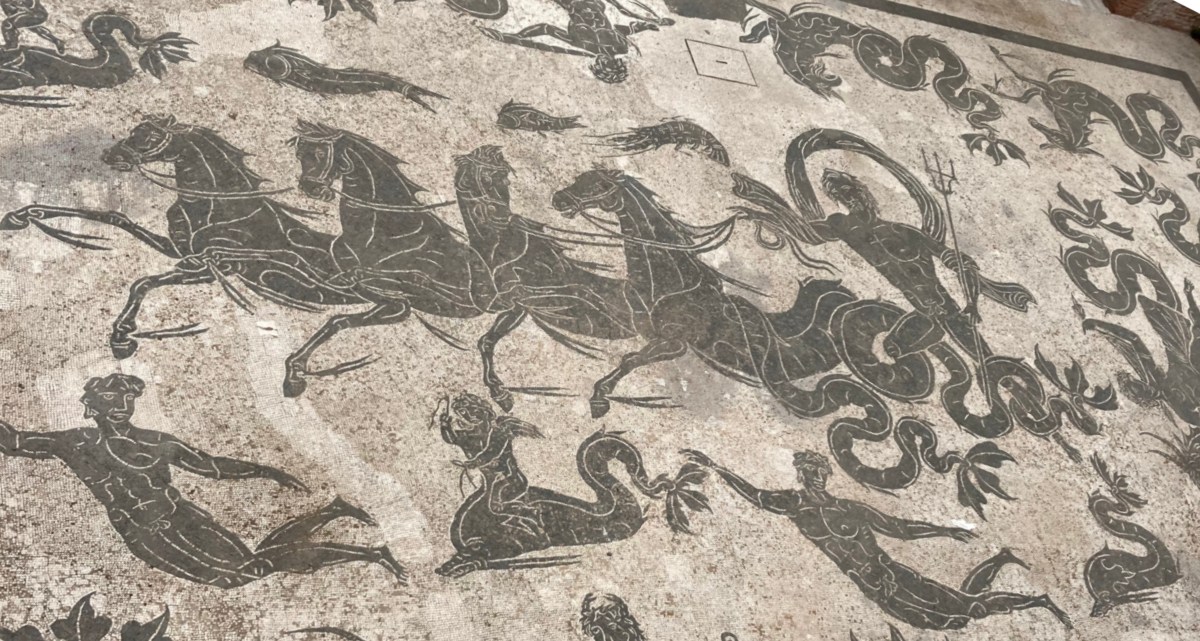
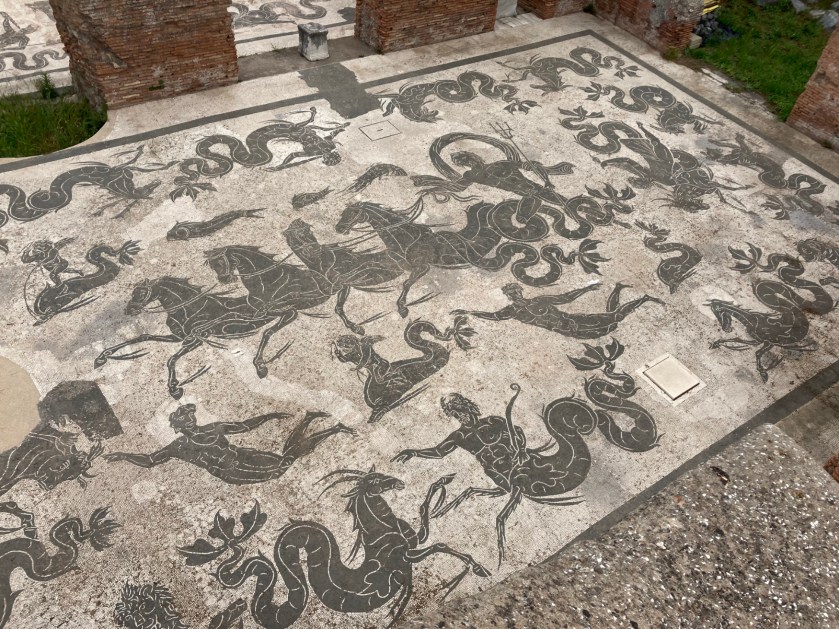
The main pool in the Neptune’s Bath House.
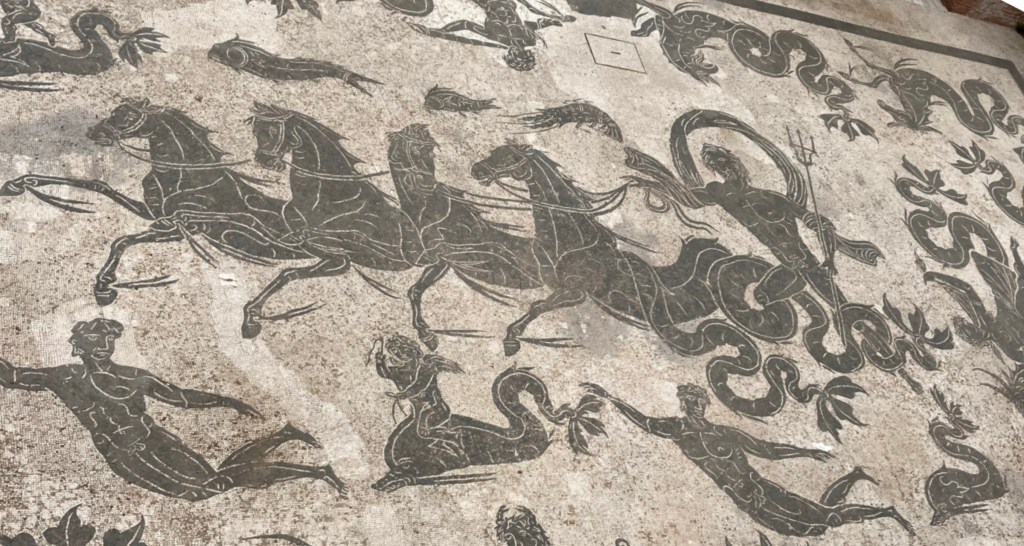
Close up.
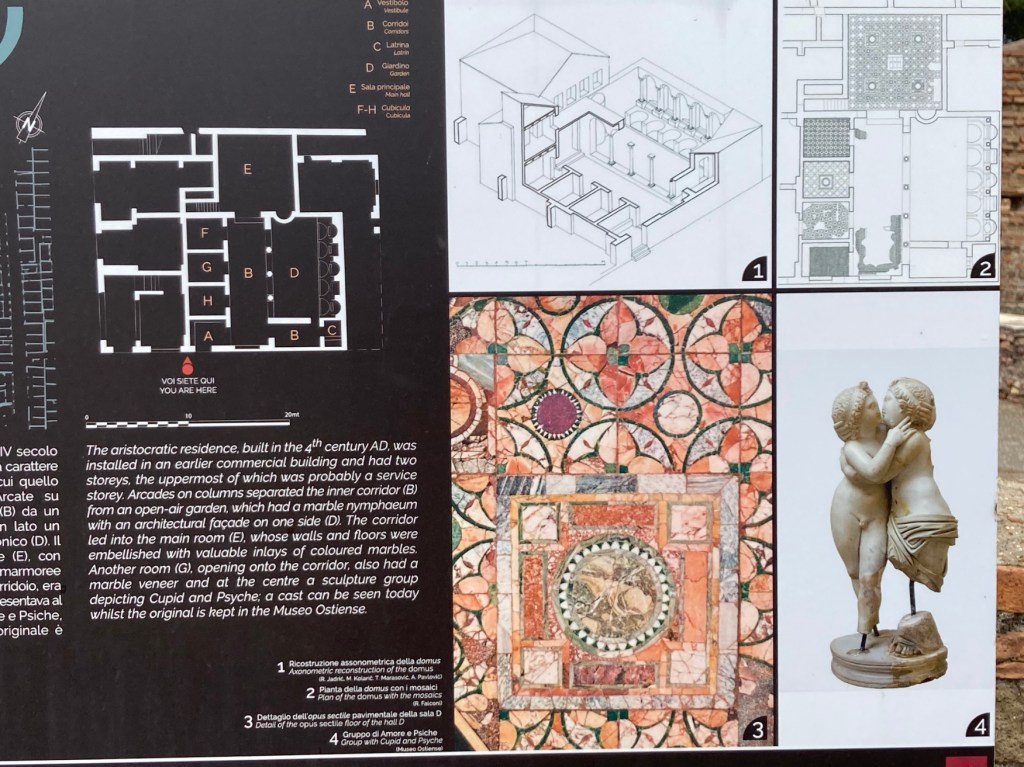
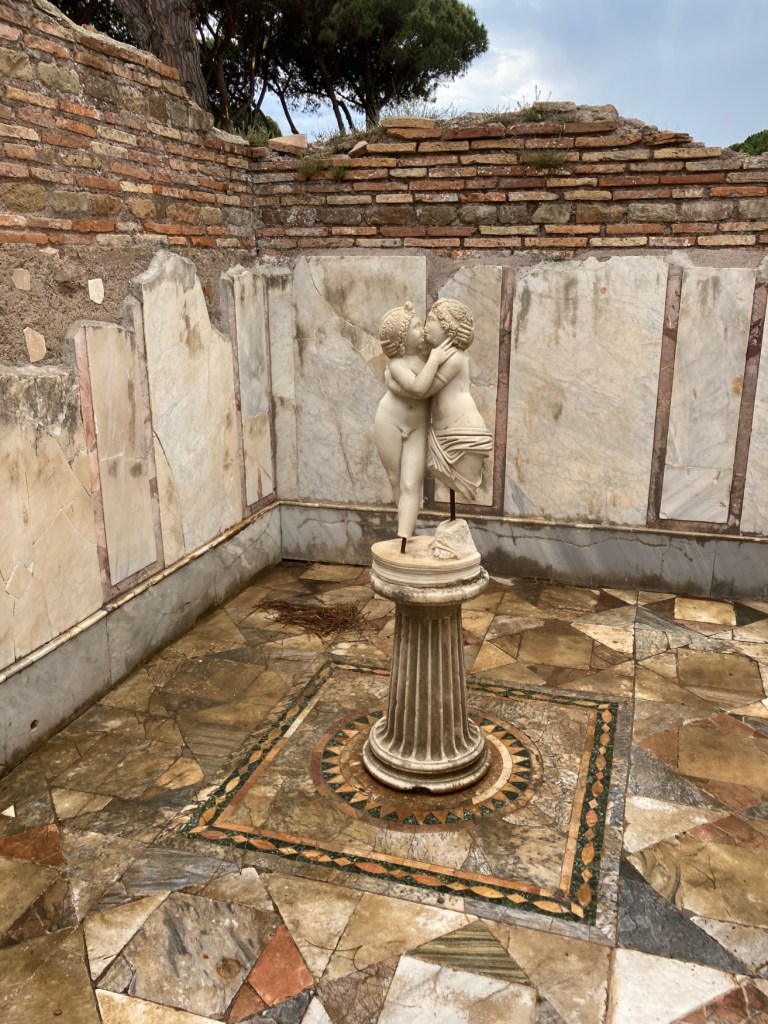
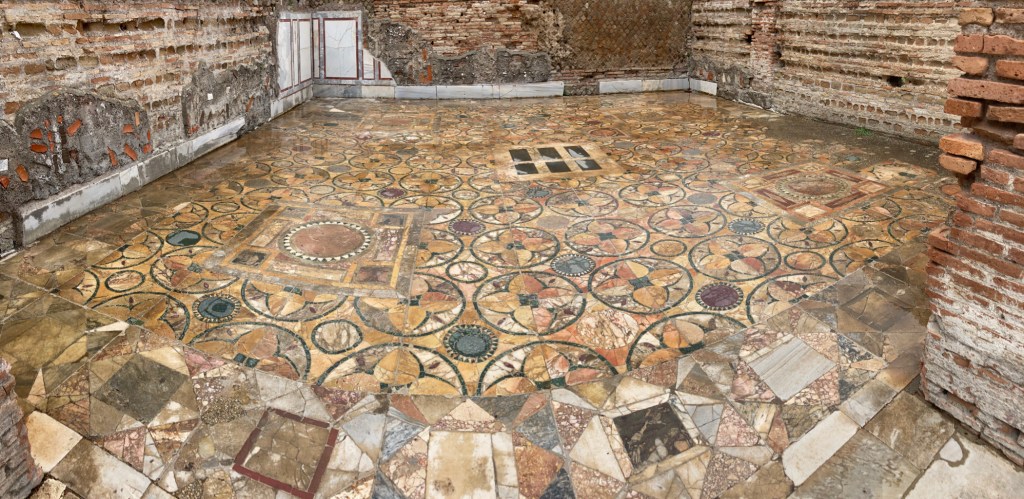
Aristocrat’s Home
One more from a Bathhouse:
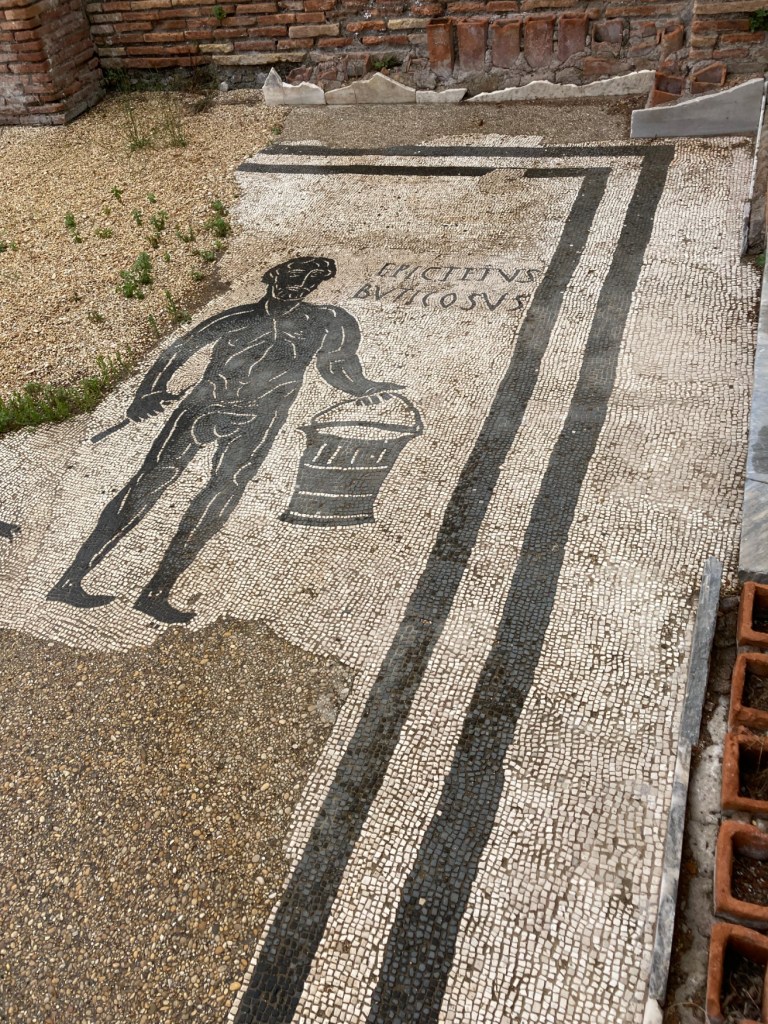
Naked man with strigil for scraping sweat, dirt, and oil from skin after exercise or bath in right hand; bucket in left hand. Maybe the man is Epictetus or Epictetus is the owner and the naked guy just indicates that you get a bucket and a strigil as part of admission to the baths. NOTE the ceramic pipes on the right that conducted hot air to heat up steam rooms.

 John and Susan's Excellent Adventure