Ara Pacis Augustae (the Altar of Peace of Augustus)
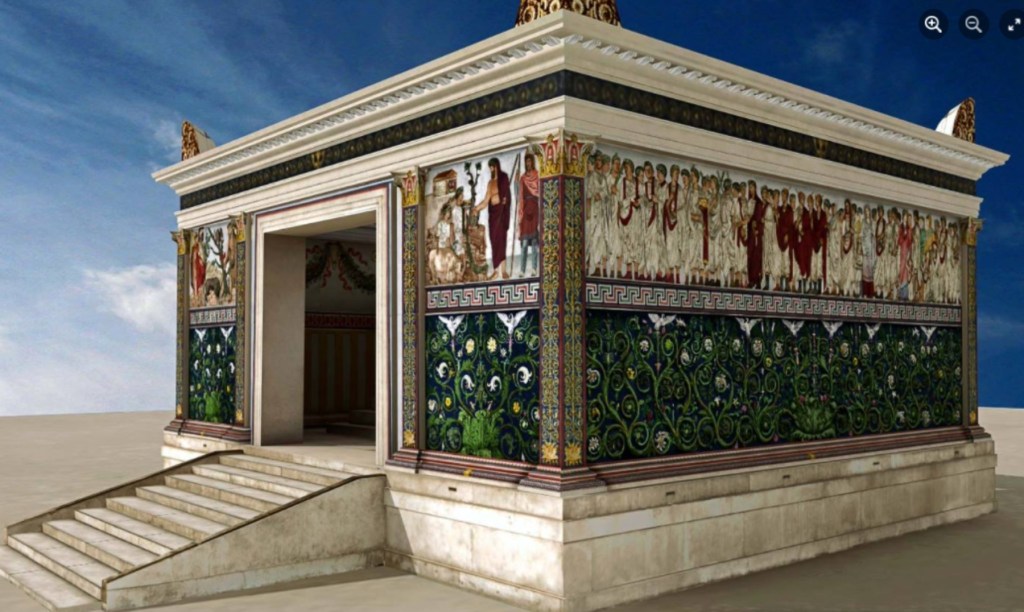
The Ara Pacis is maybe my favorite surviving structure from Ancient Rome. It is an ope air altar commissioned by the Senate of Rome and built/carved between 13 and 9BCE. It was the Senate’s gift to Caesar Augustus to commemorate his successful campaigns that expanded the Roman Empire into France and Spain. I think we’re lucky to have it. Built on a flood plain, over the millennia after the fall of Rome, it slowly sank into the mud. Pieces of it occasionally surfaced and were claimed by the Catholic Church or private collectors. In 1903, Friedrich von Duhm, a German archaeologist, figured out that these pieces came from the Ara Pacis (noted in the memoirs of Augustus). von Duhm initiated the excavation and reconstruction.
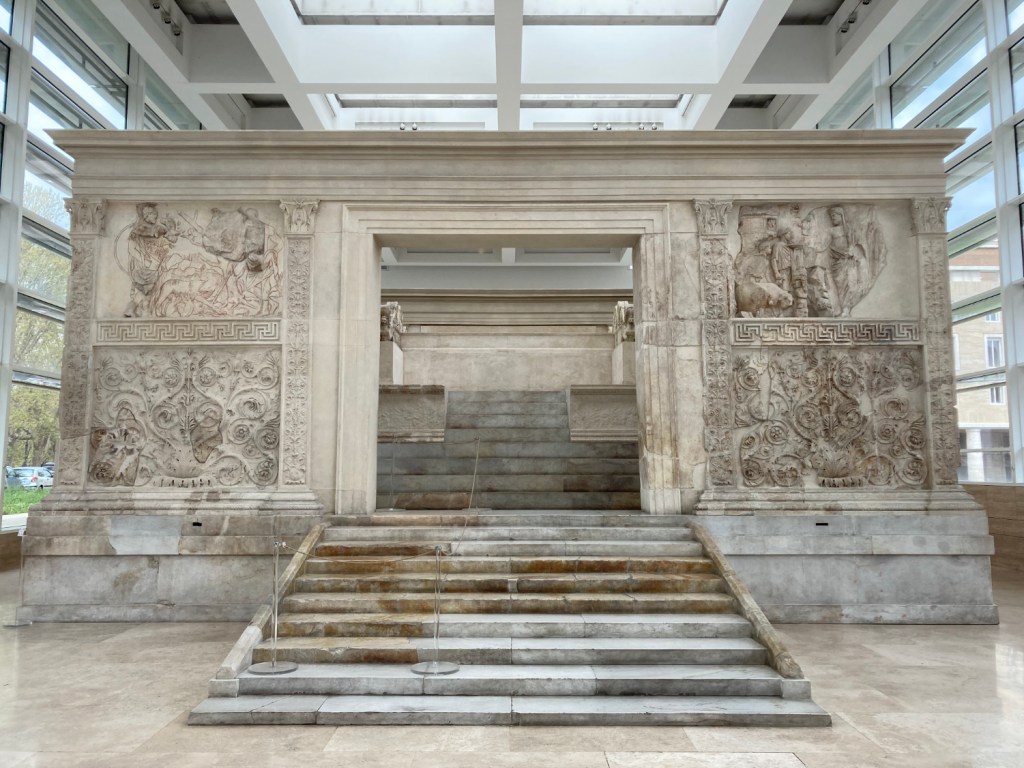
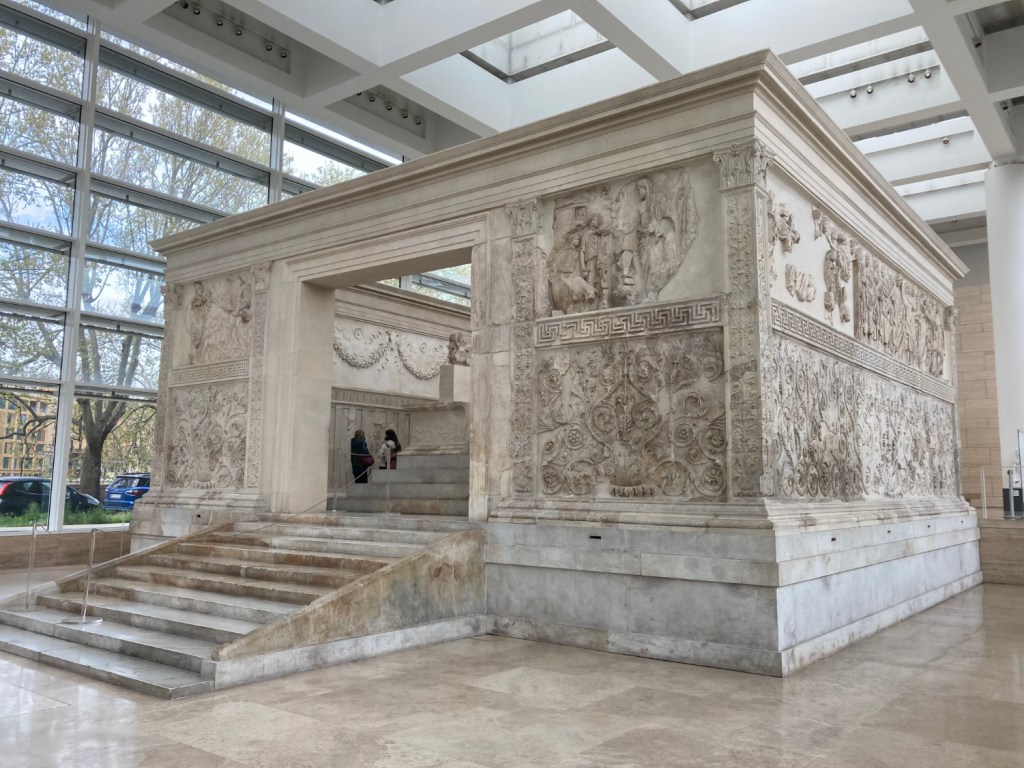
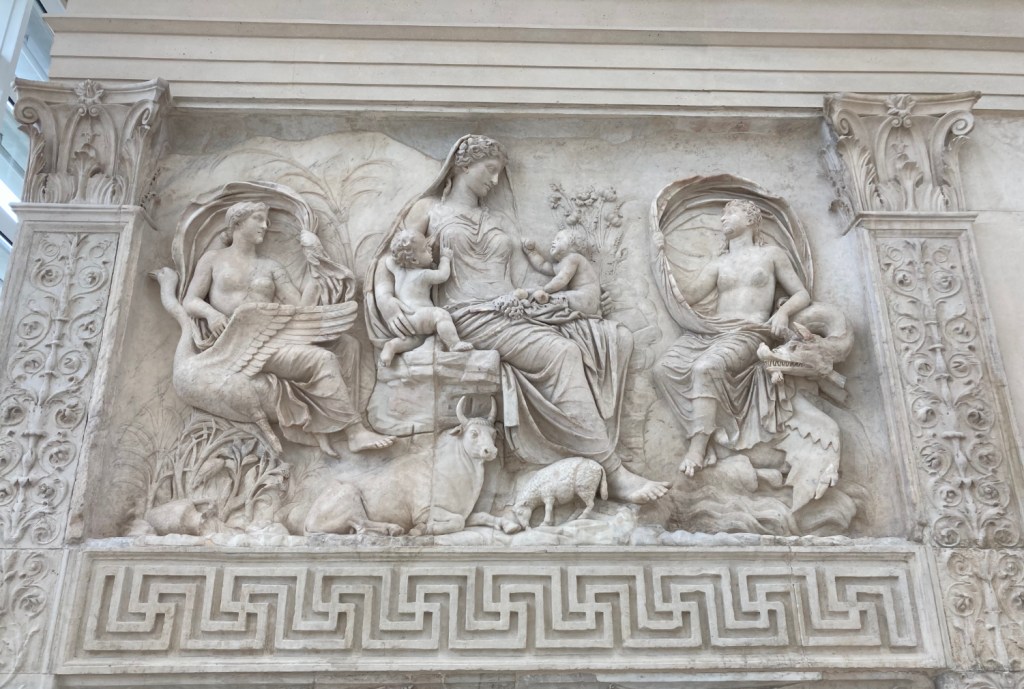
The purpose of the altar was propaganda. The sculpted friezes that decorate inner and outer walls celebrate the founding of Rome, its religious traditions, and the “peaceful,” “agricultural” nature of Roman culture (the benefits of which they were bringing to barbarians at the point of sword or spear). Nonetheless, the sculptures are beautiful and the impact of the altar is breathtaking.
 John and Susan's Excellent Adventure