Ara Pacis Augustae (the Altar of Peace of Augustus)
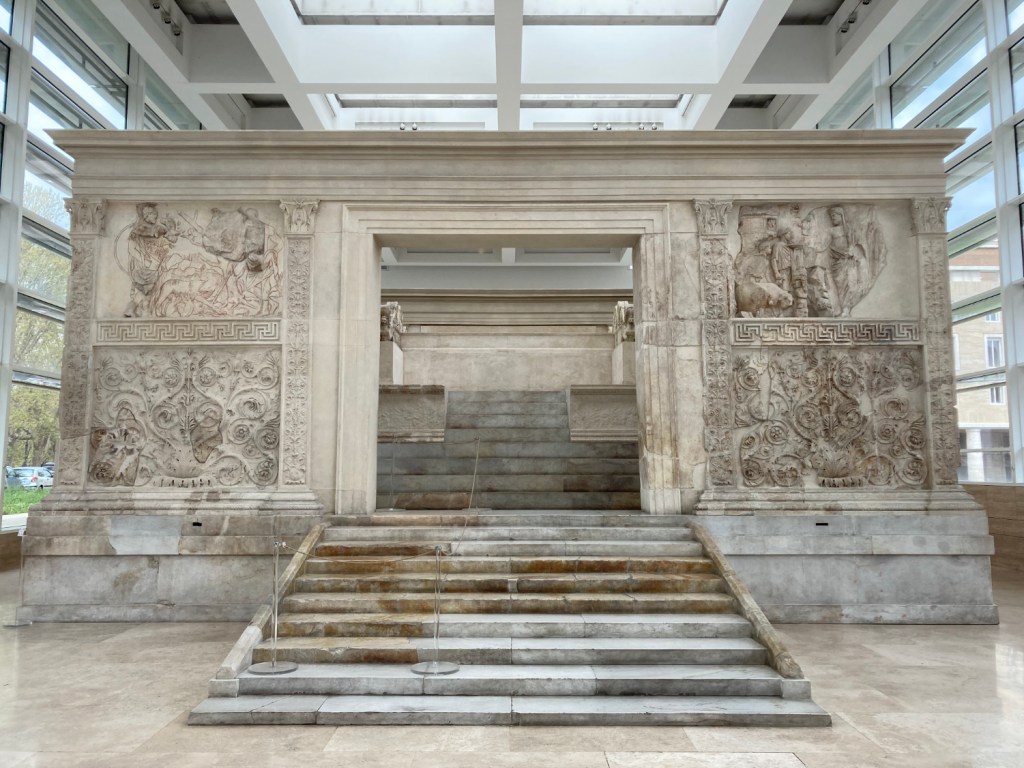
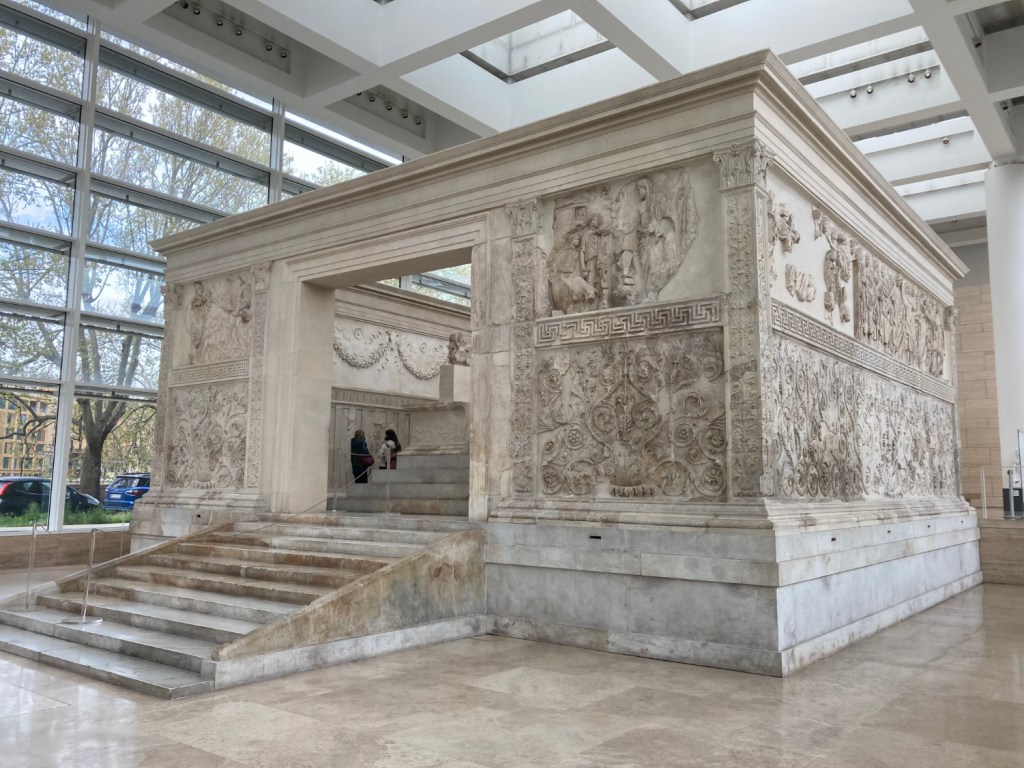
The Ara Pacis is maybe my favorite surviving structure from Ancient Rome. It is an ope air altar commissioned by the Senate of Rome and built/carved between 13 and 9BCE. It was the Senate’s gift to Caesar Augustus to commemorate his successful campaigns that expanded the Roman Empire into France and Spain. I think we’re lucky to have it. Built on a flood plain, over the millennia after the fall of Rome, it slowly sank into the mud. Pieces of it occasionally surfaced and were claimed by the Catholic Church or private collectors. In 1903, Friedrich von Duhm, a German archaeologist, figured out that these pieces came from the Ara Pacis (noted in the memoirs of Augustus). von Duhm initiated the excavation and reconstruction.
The purpose of the altar was propaganda. The sculpted friezes that decorate inner and outer walls celebrate the founding of Rome, its religious traditions, and the “peaceful,” “agricultural” nature of Roman culture (the benefits of which they were bringing to barbarians at the point of sword or spear). Nonetheless, the sculptures are beautiful and the impact of the altar is breathtaking.
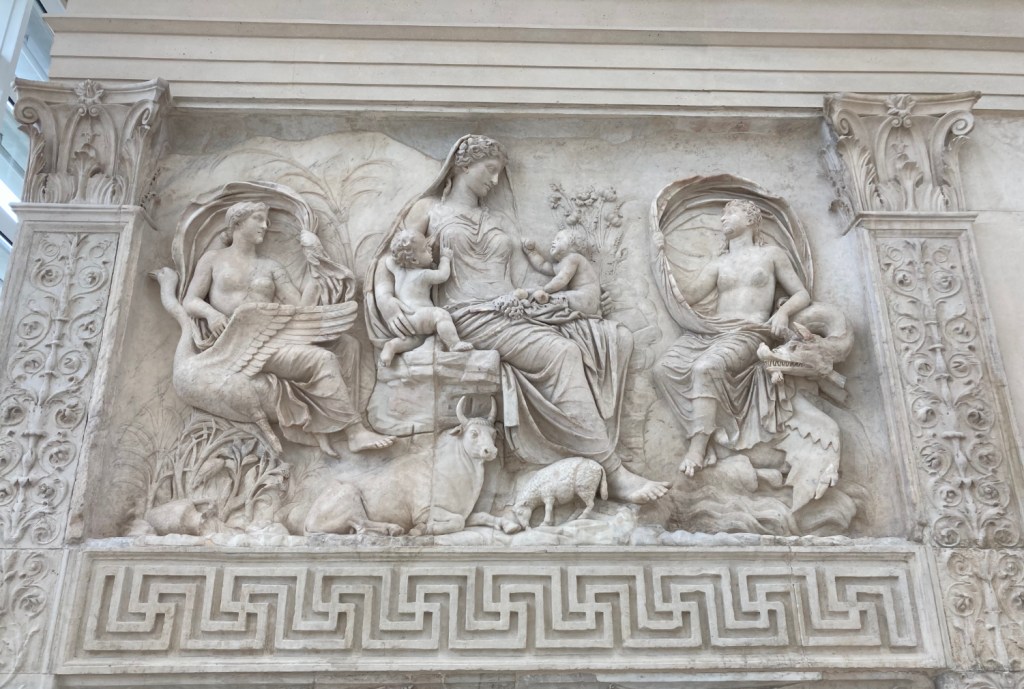
This is the so-called Tellus panel, one of the most intact. Note how idyllic life in Rome is- babies, farm animals, swans, abundant edible plants, goddesses- what’s not to like.
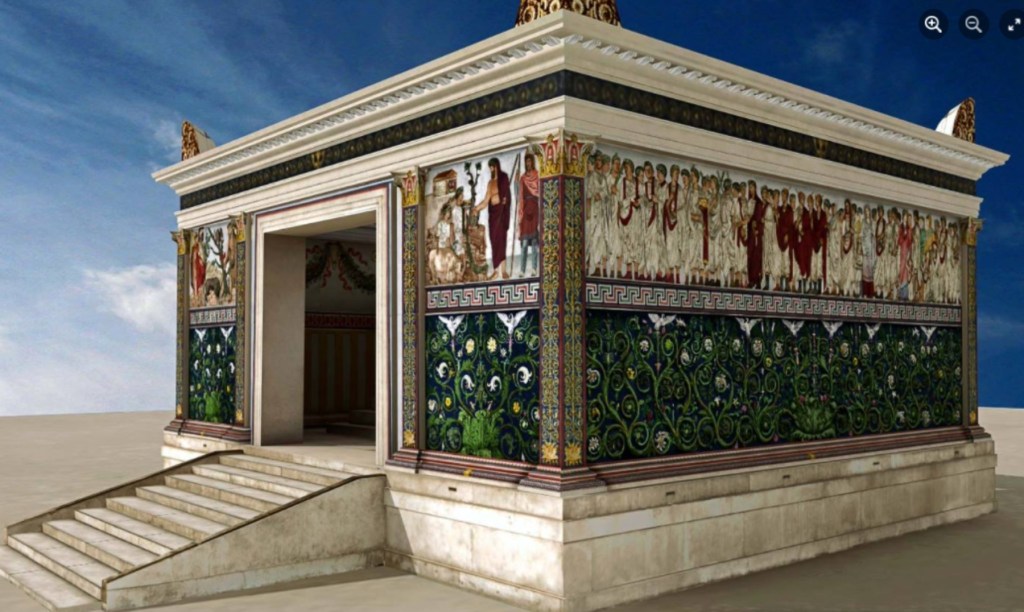
Of course back in the day (about 9BCE), the altar would have been painted. I think the marble is spectacular but the Romans thought it should be painted. The procession in the top panel on the left includes depictions of Caesar Augustus, his family, and political allies. It is thought that this panel was to get Roman citizens accustomed to the idea that the traditions of Rome include rule by a single person, the Caesar, rather than the Senate; Caesar Augustus would get Rome back on track by resurrecting autocratic rule.
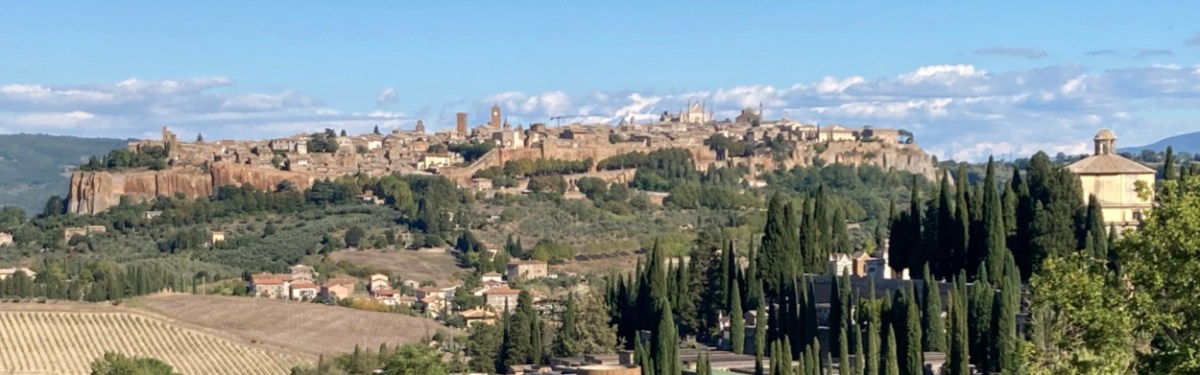
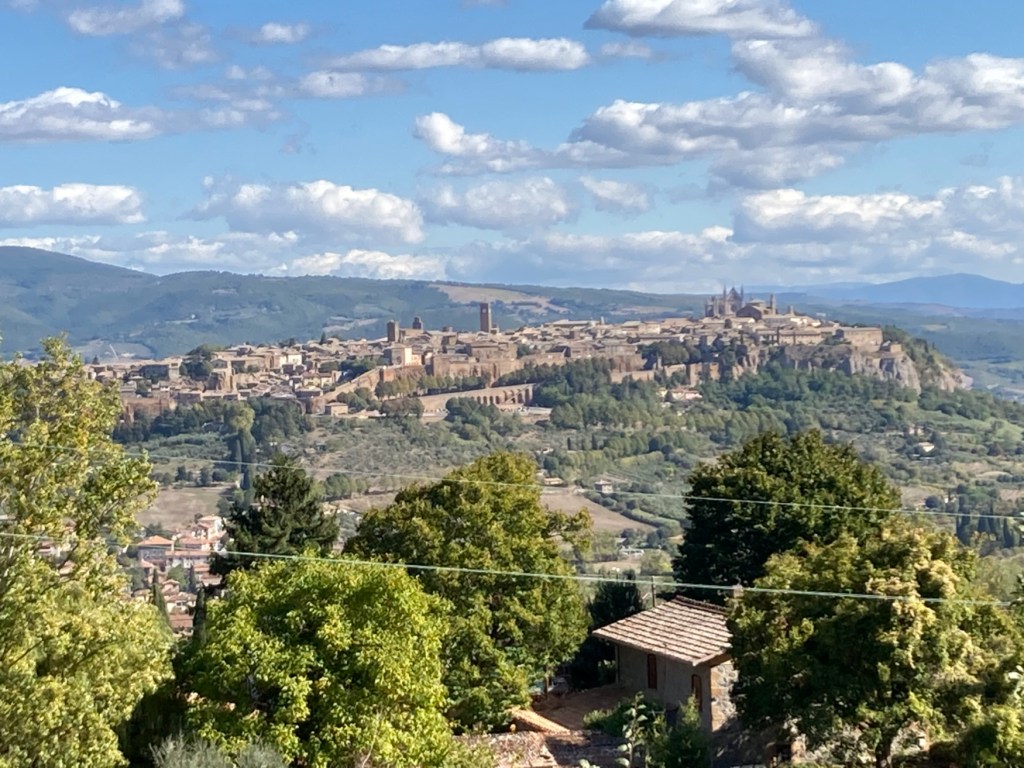
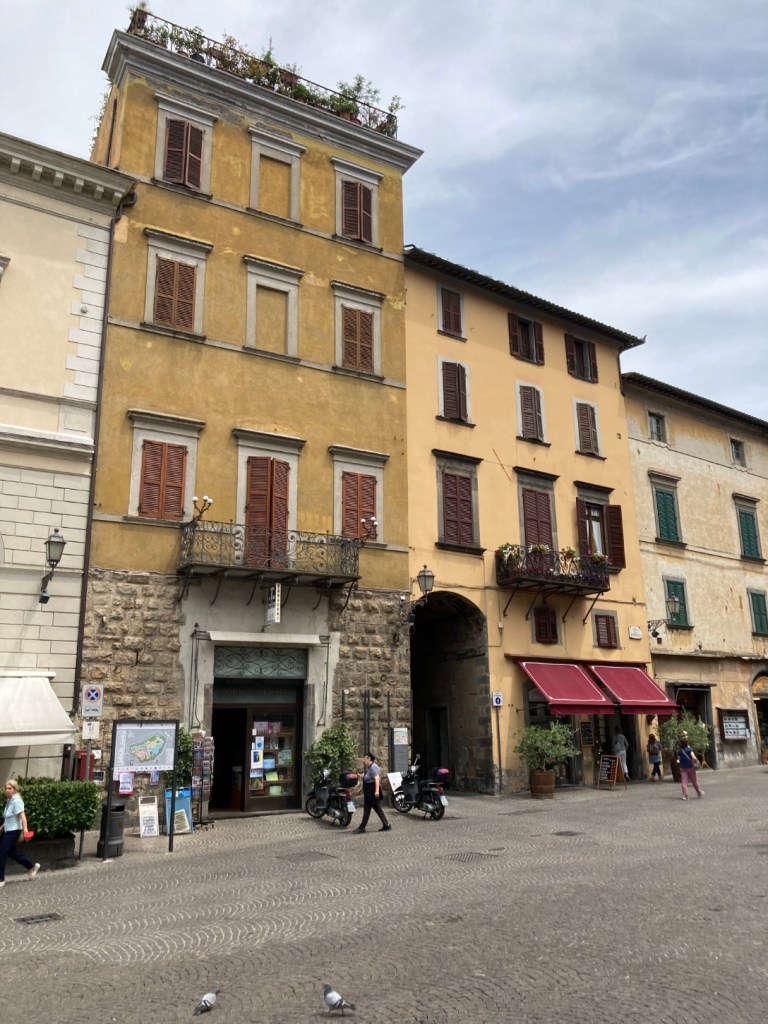
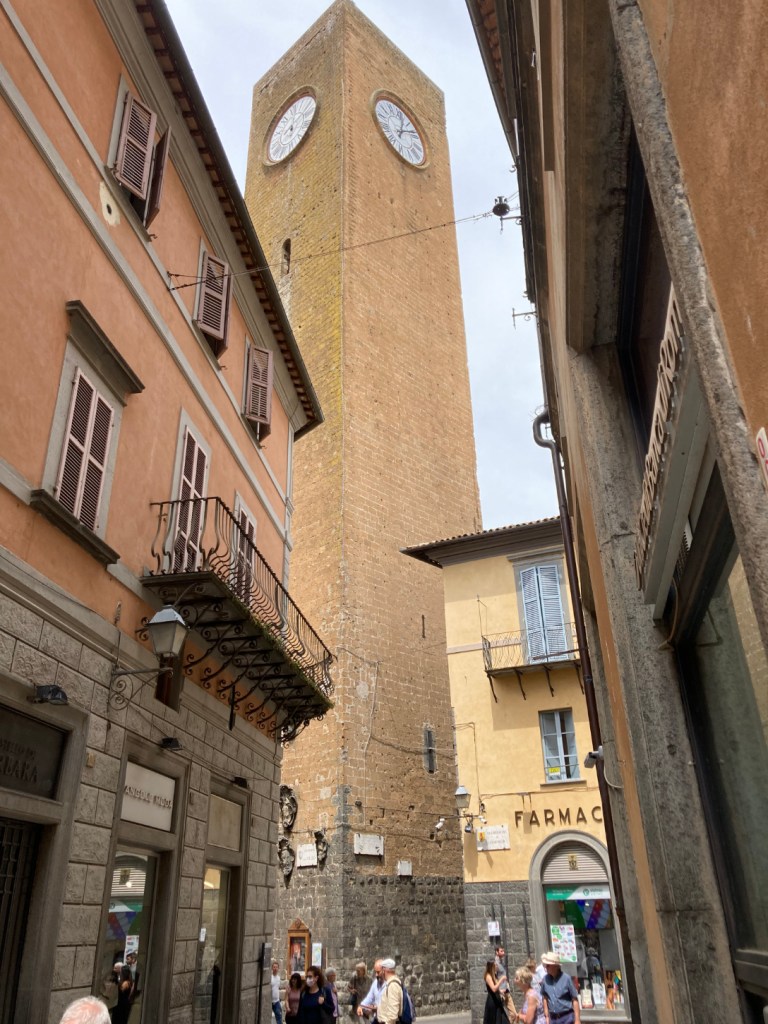
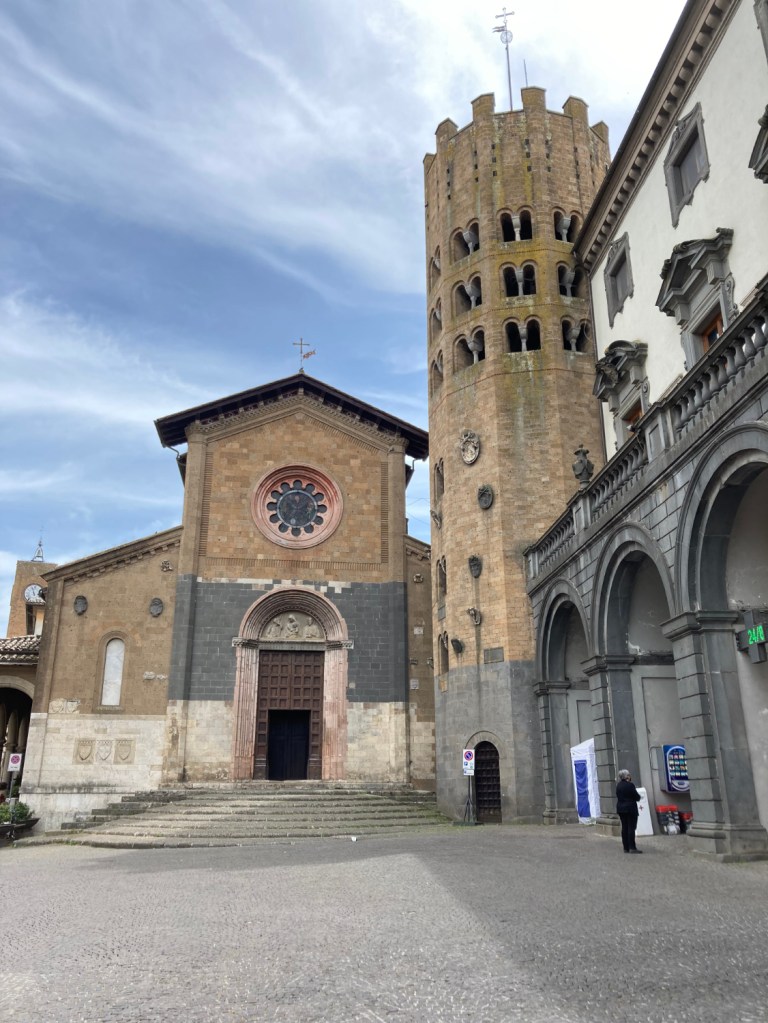
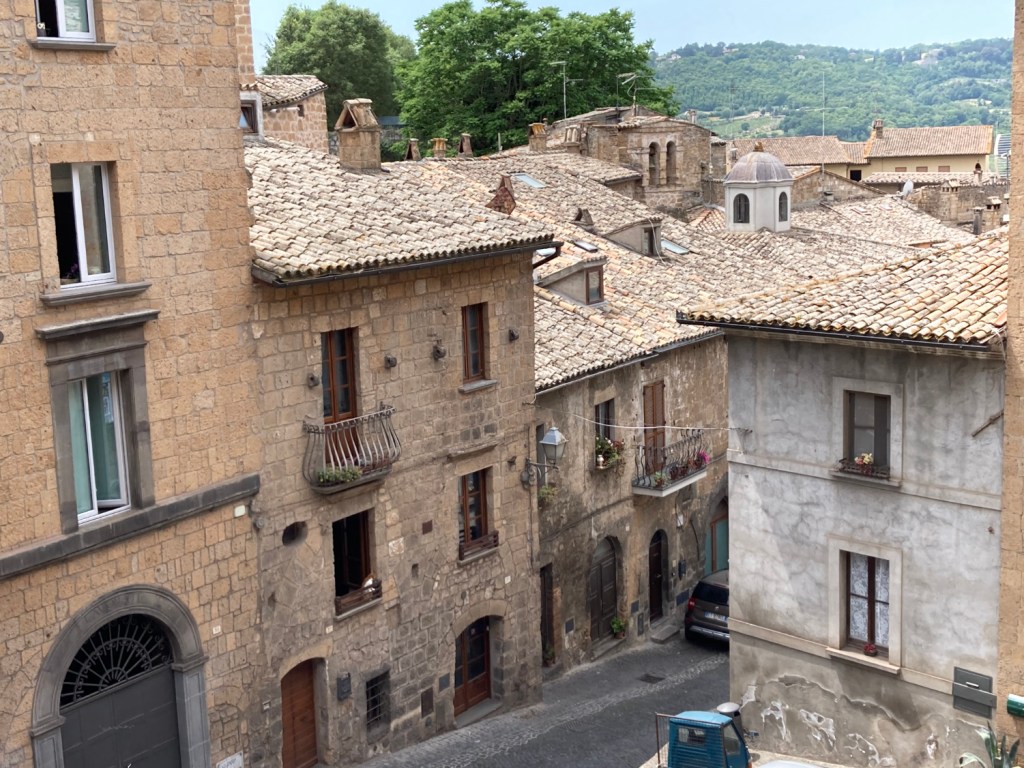
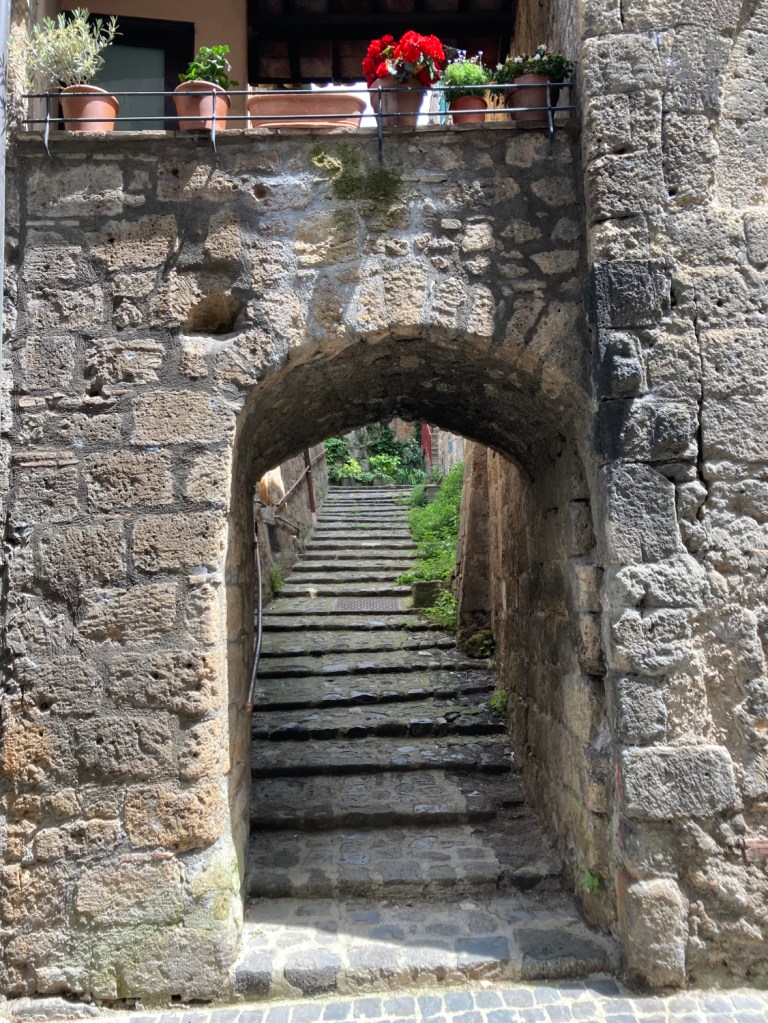
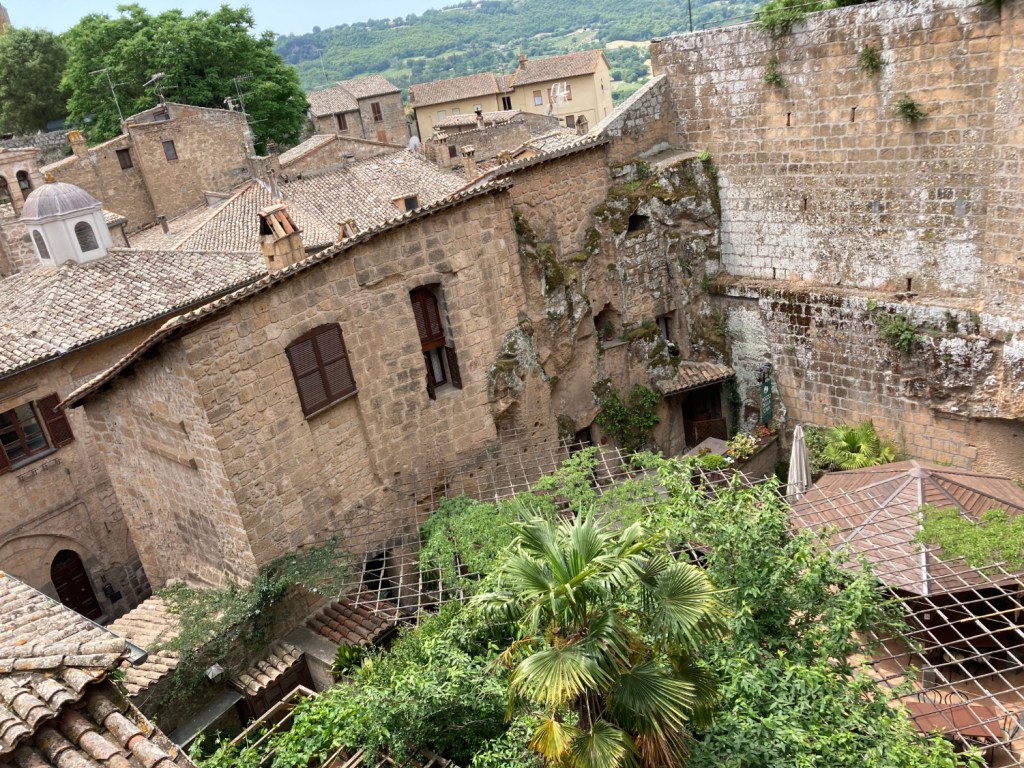
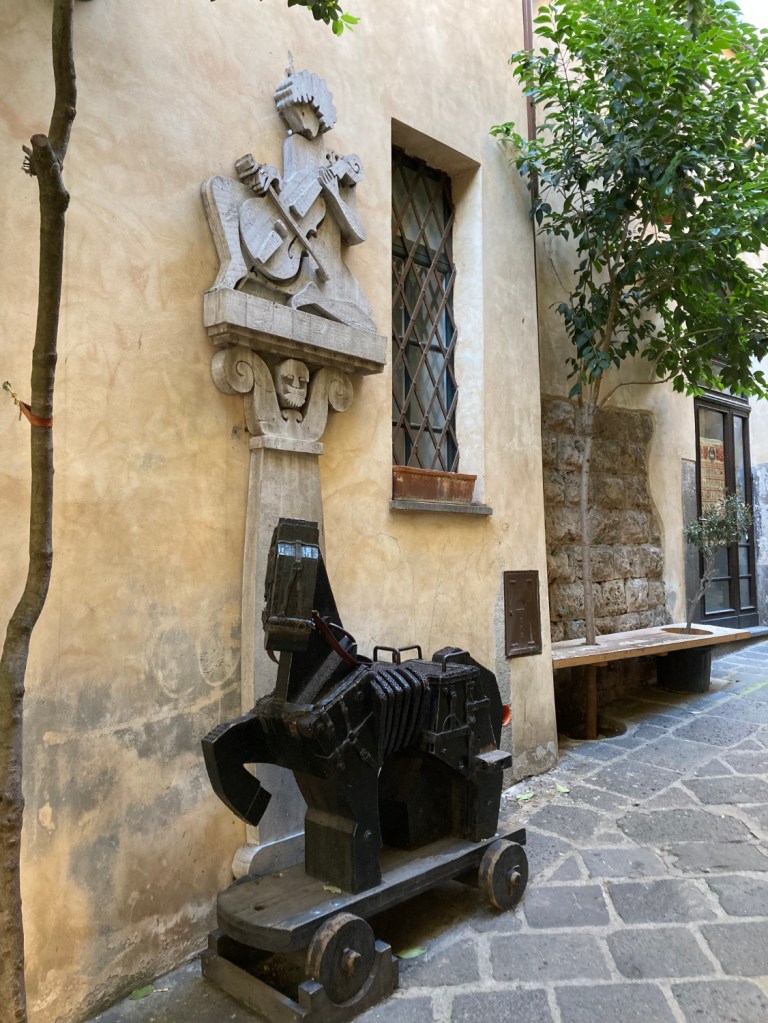
About 90 minutes north of Rome, Orvieto is one of Italy’s most classic “hill towns.” Panoramic views. Great Duomo. Classic white wine. Put it on your list.
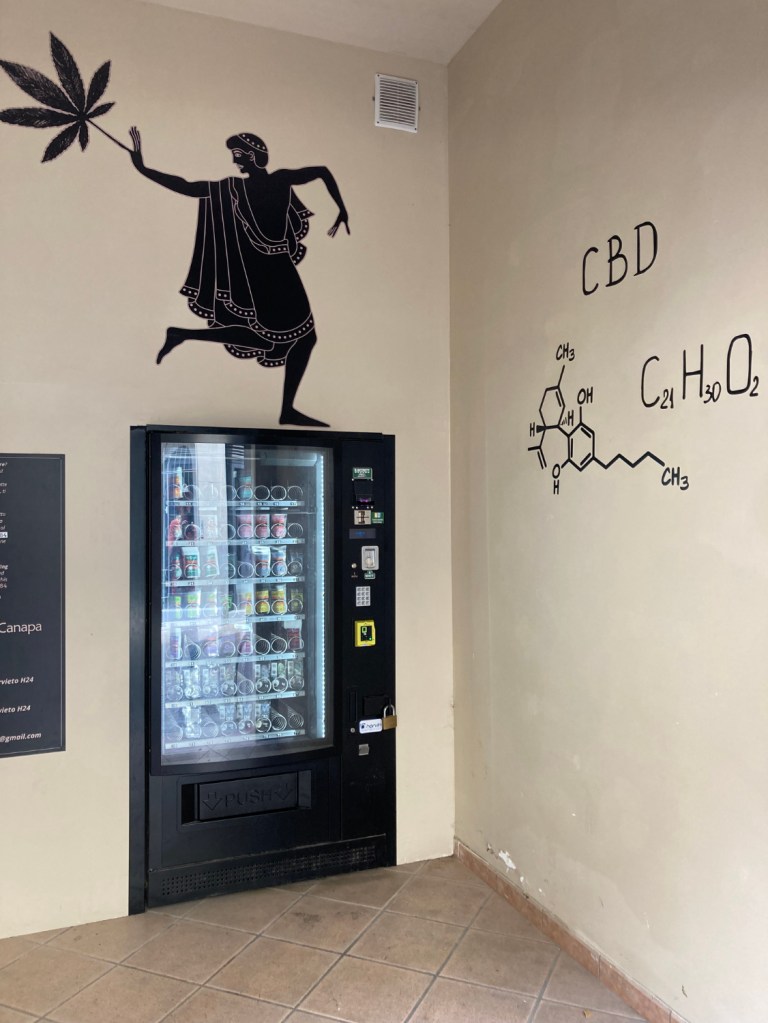
I love Orvieto’s public education program to teach chemical structures…and then purchase.
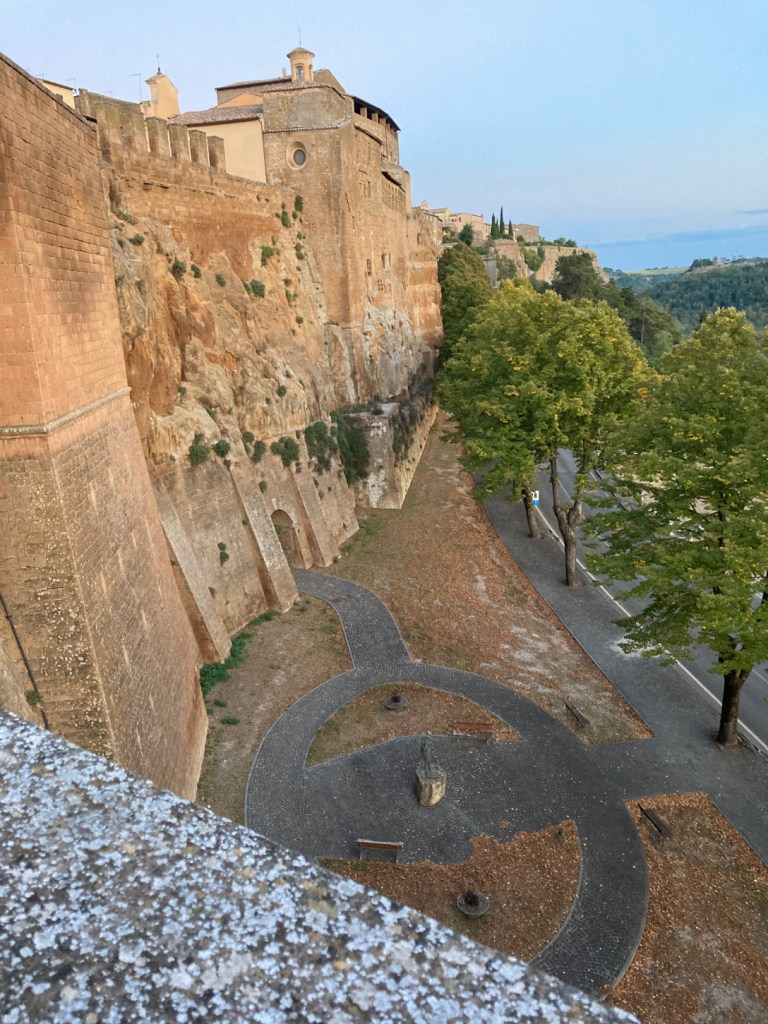
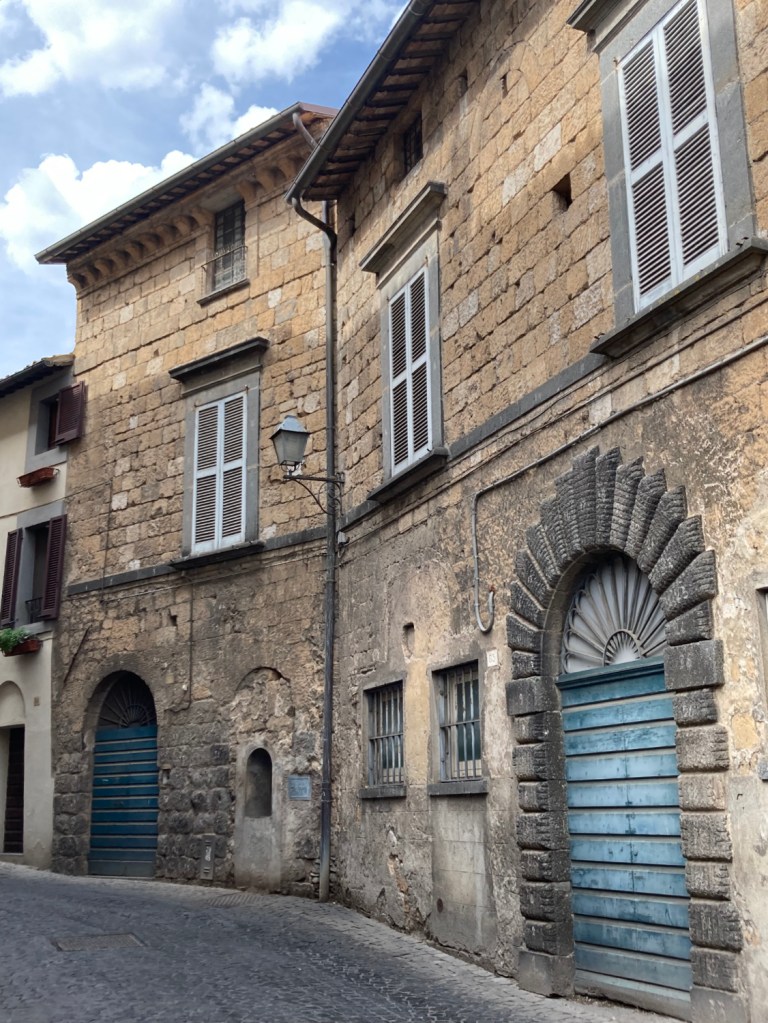
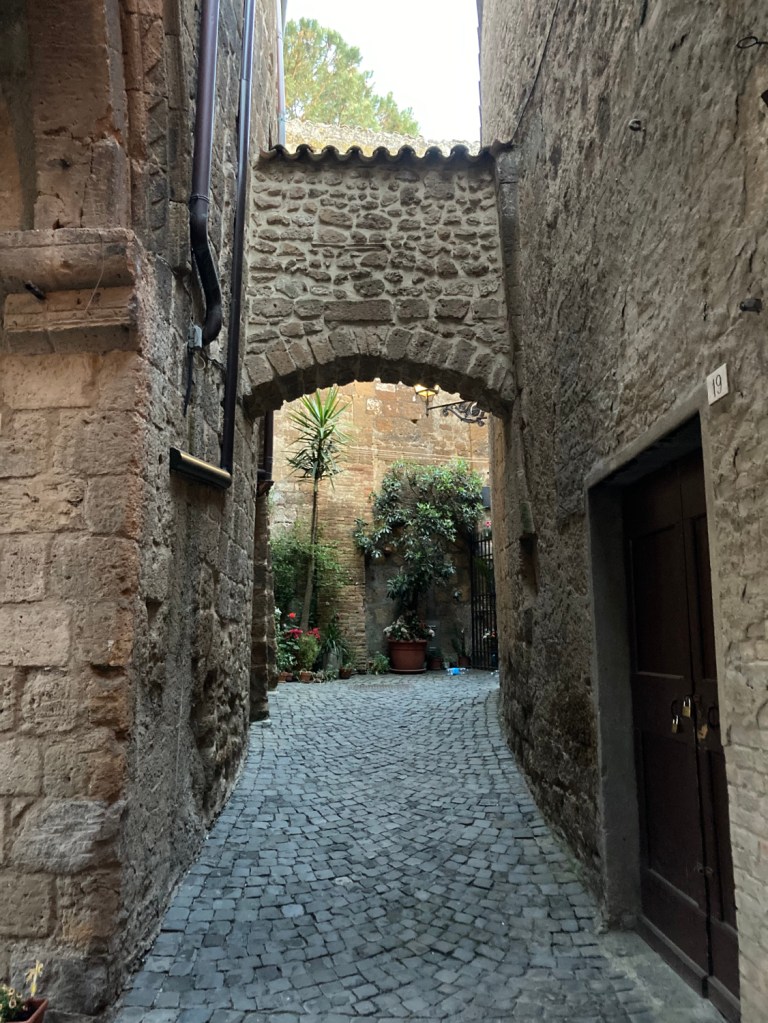
Great walls.
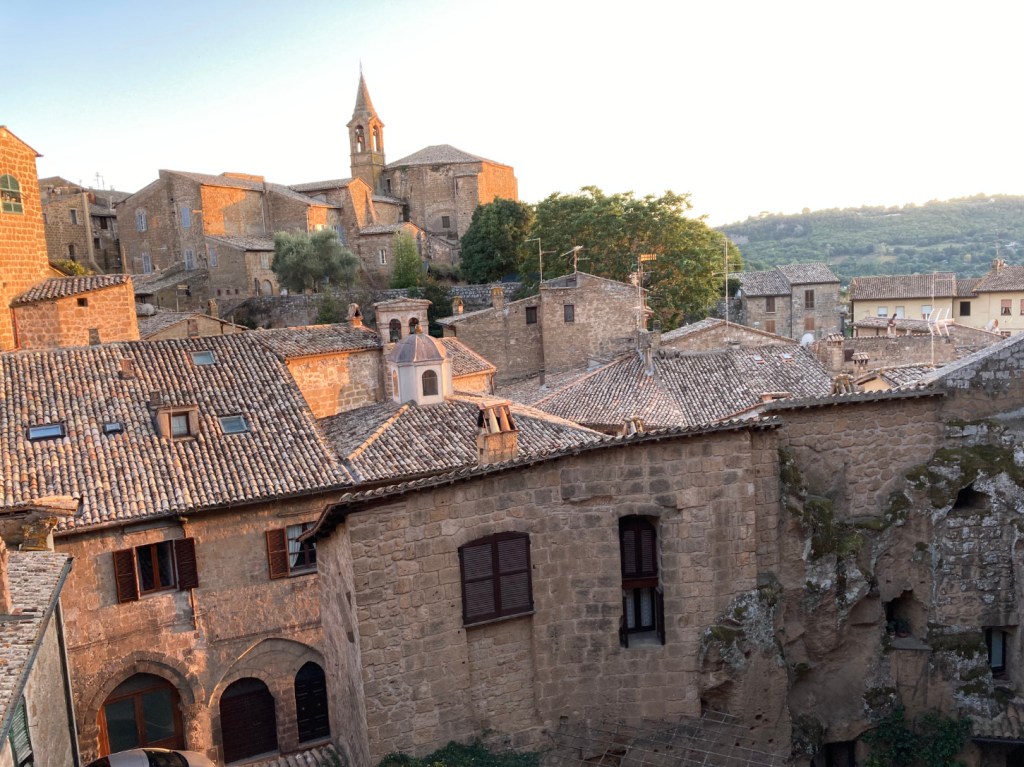
Tower envy.
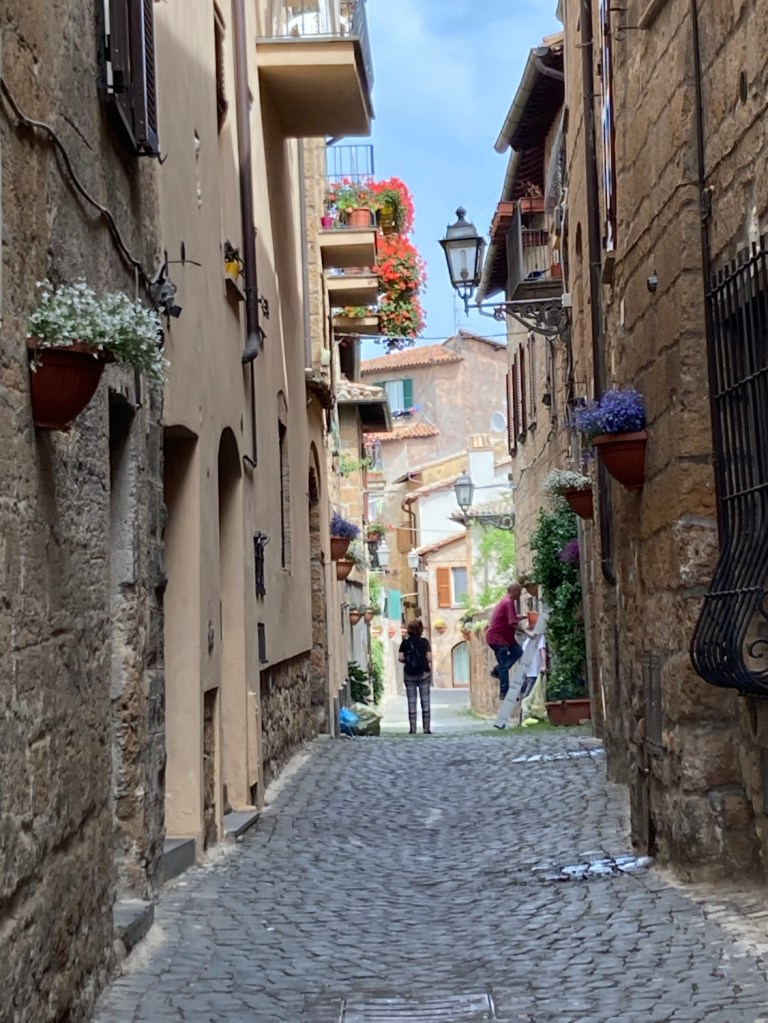
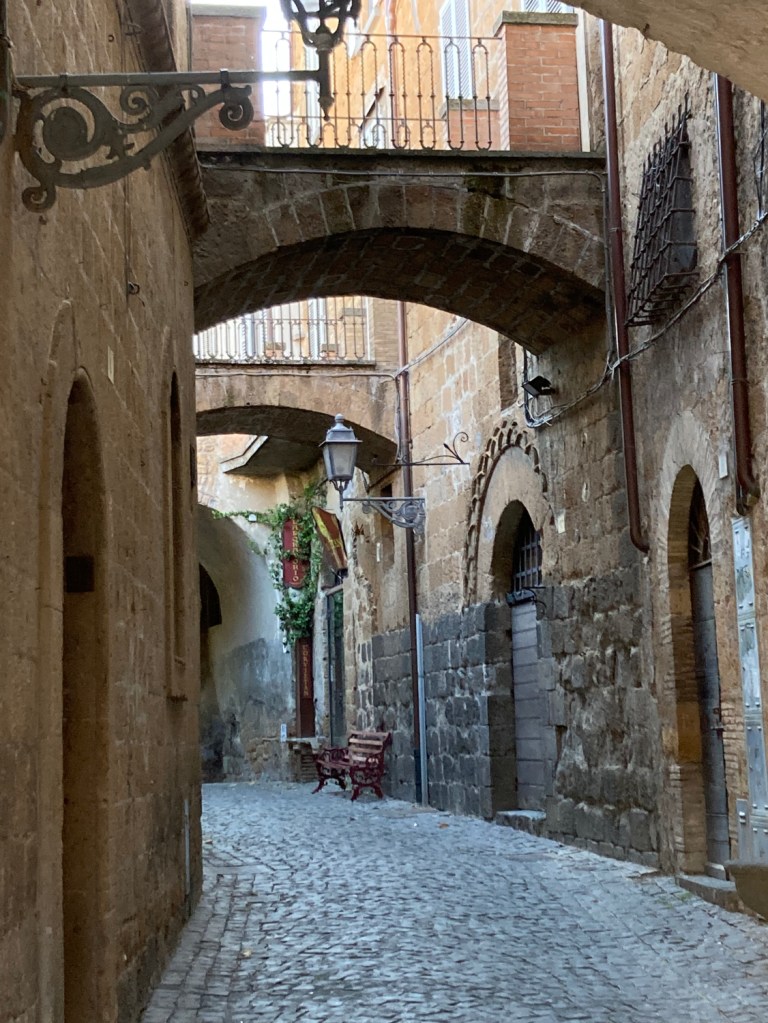
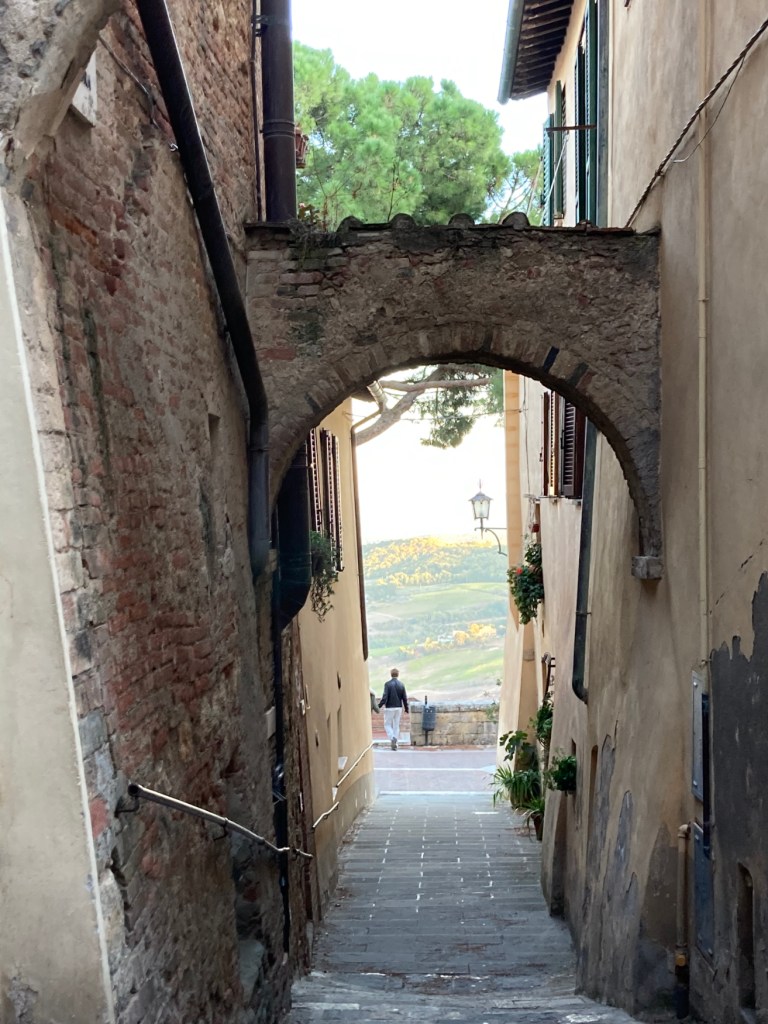
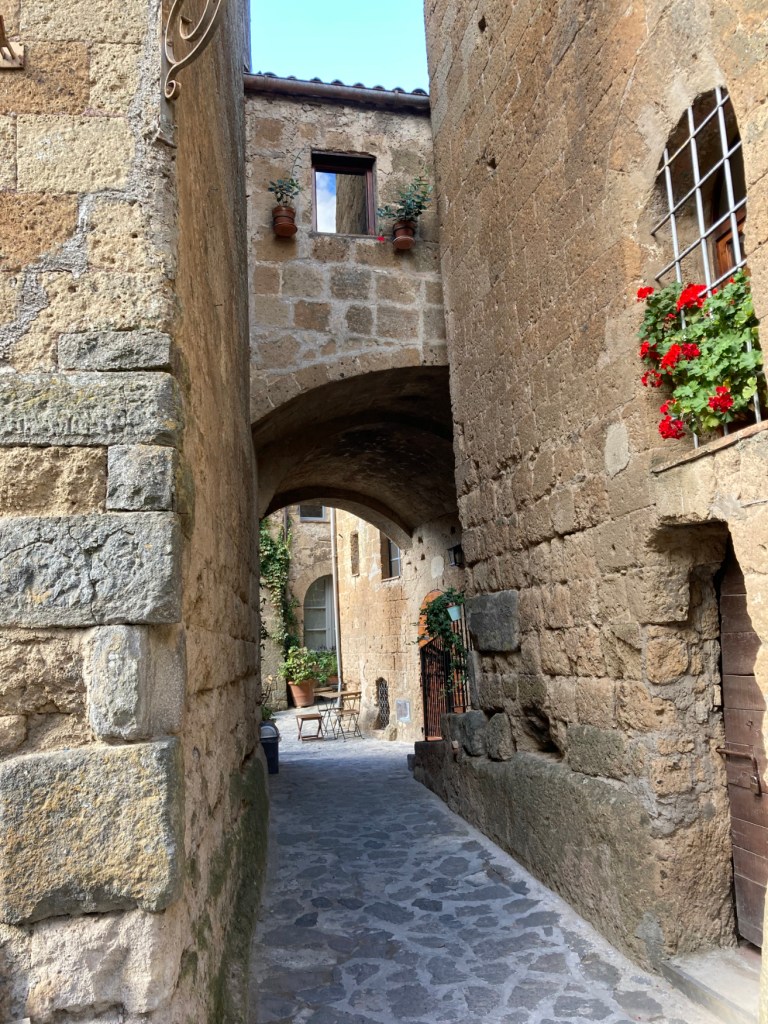
This street slopes down because, in Etruscan times, it was a quarry. So much rock was removed that it created a hole, eventually incorporated into the Medieval town.
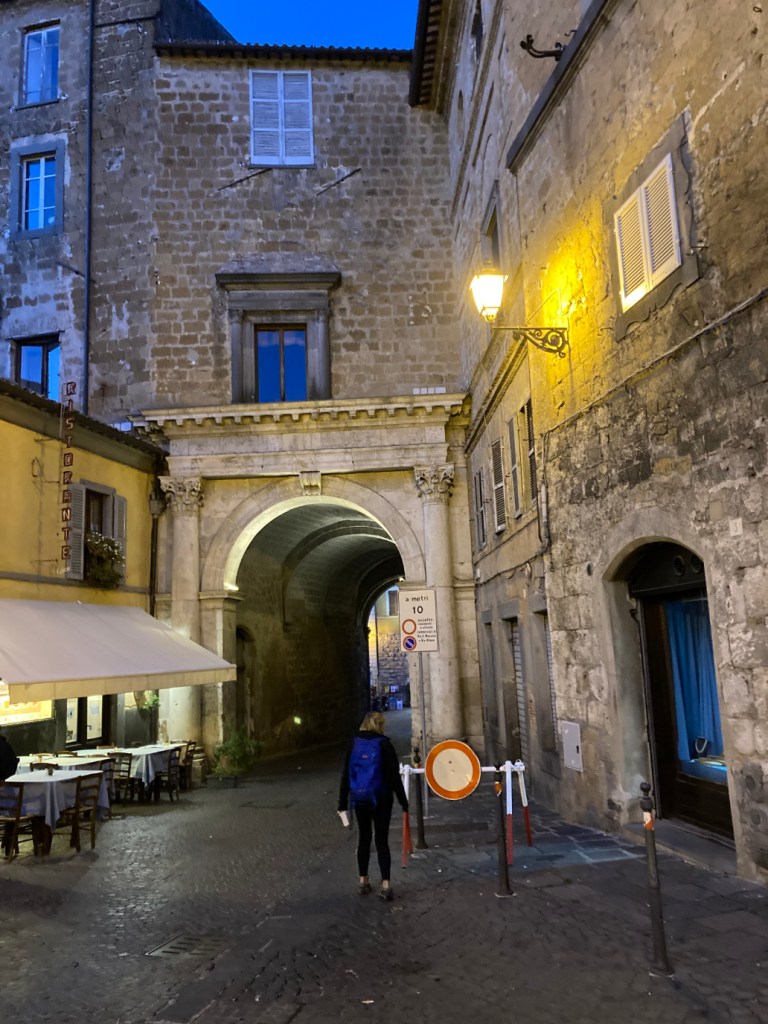
Buona notte, Orvieto.
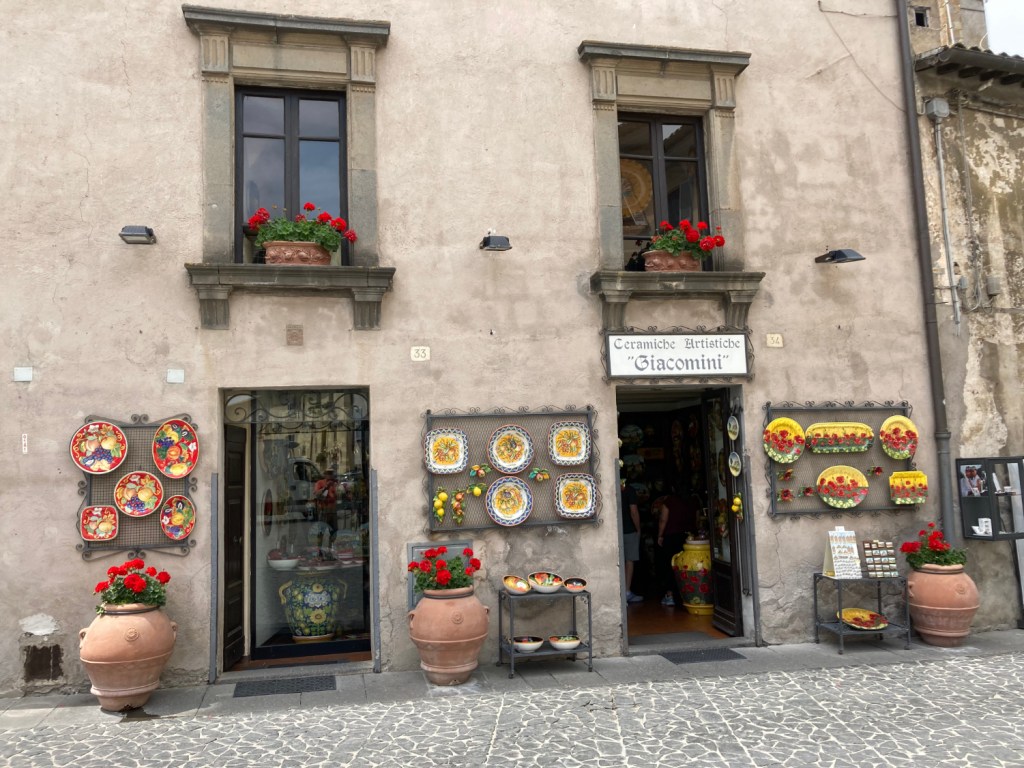
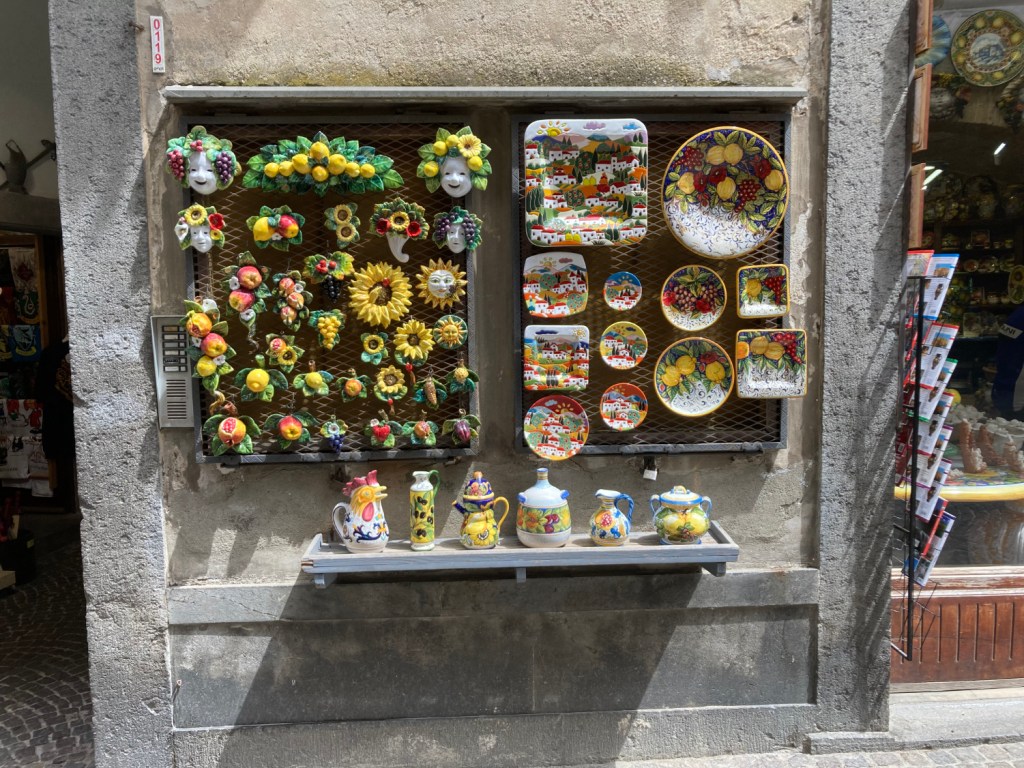
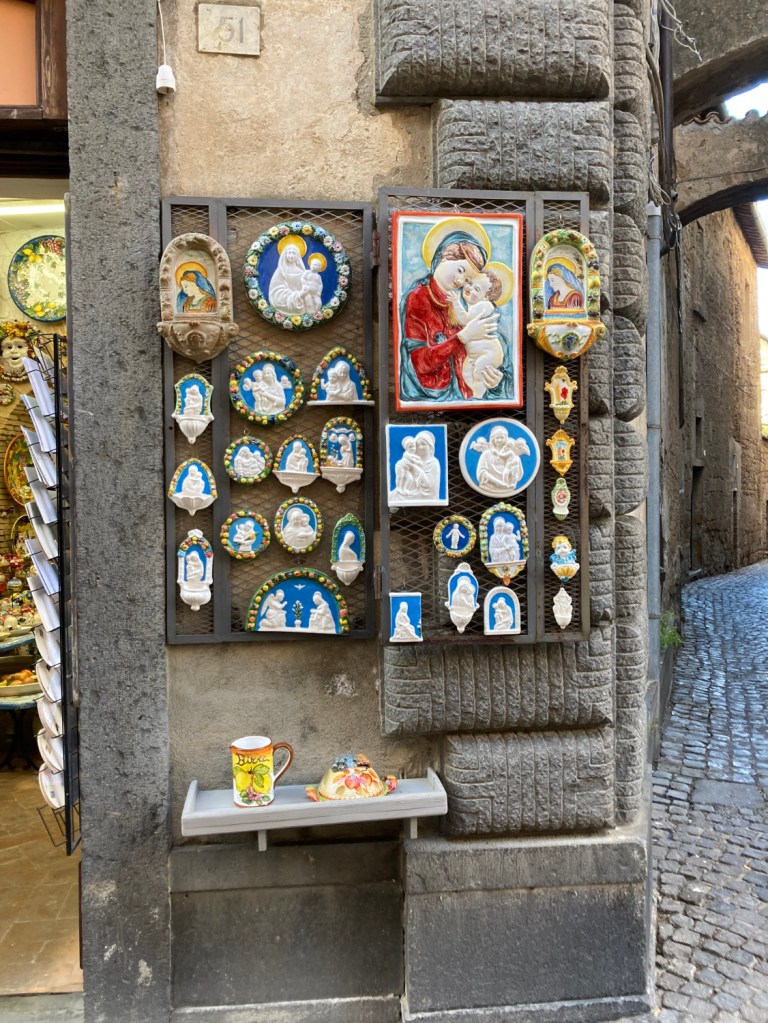
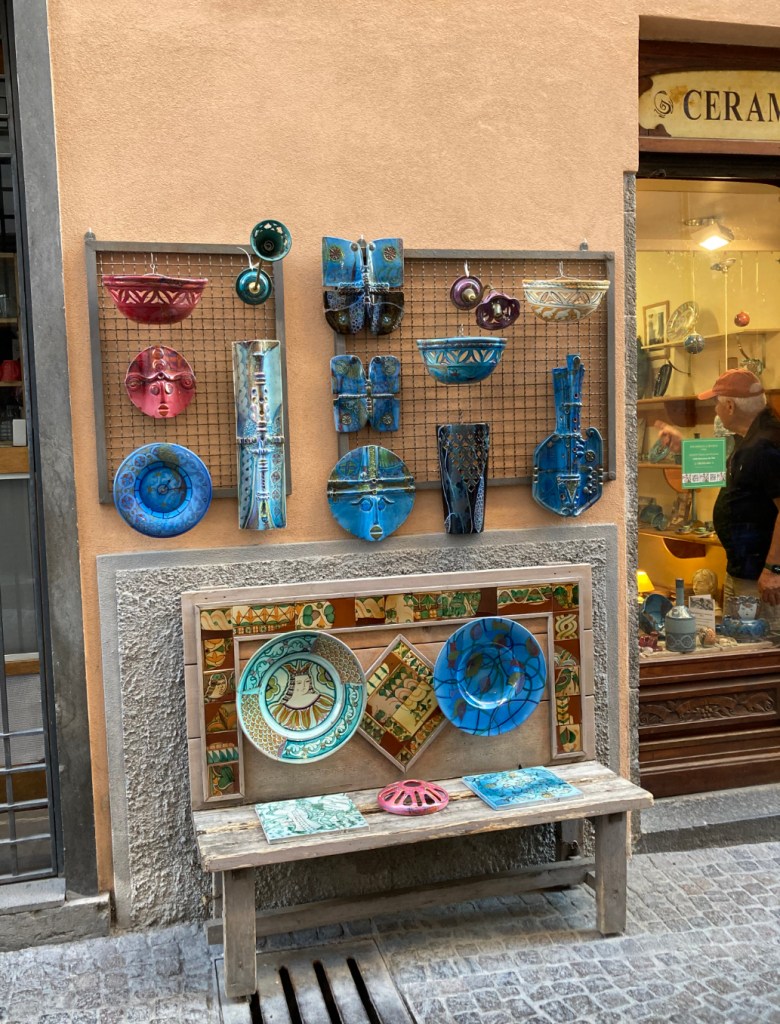
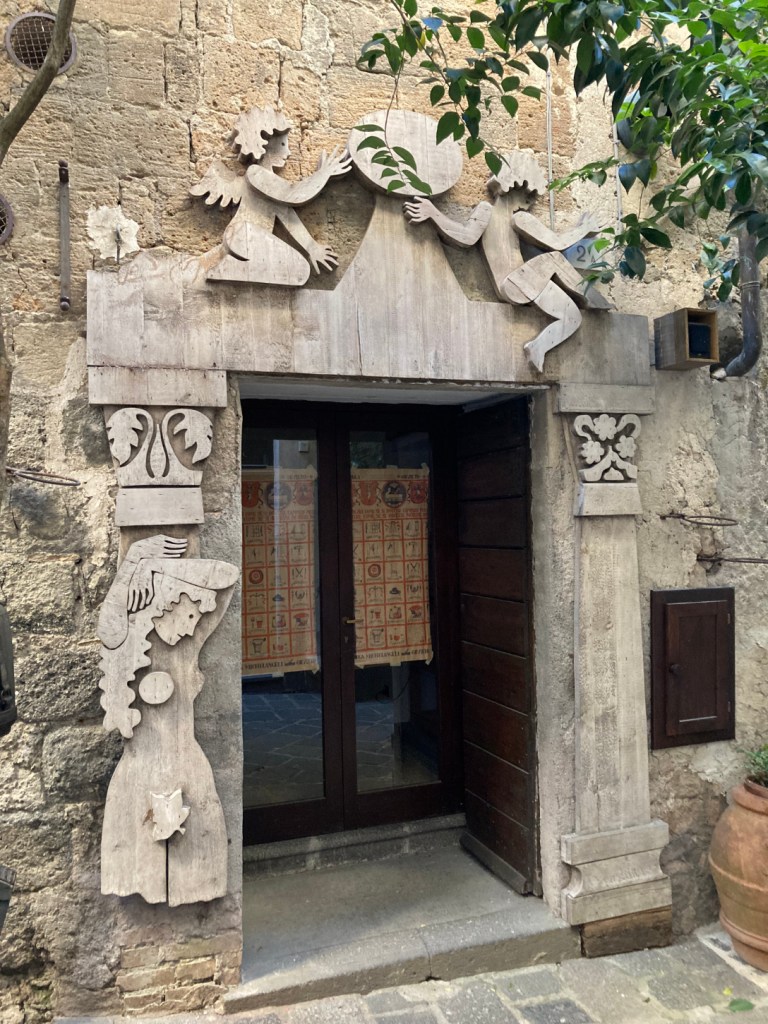
Ceramics and art:
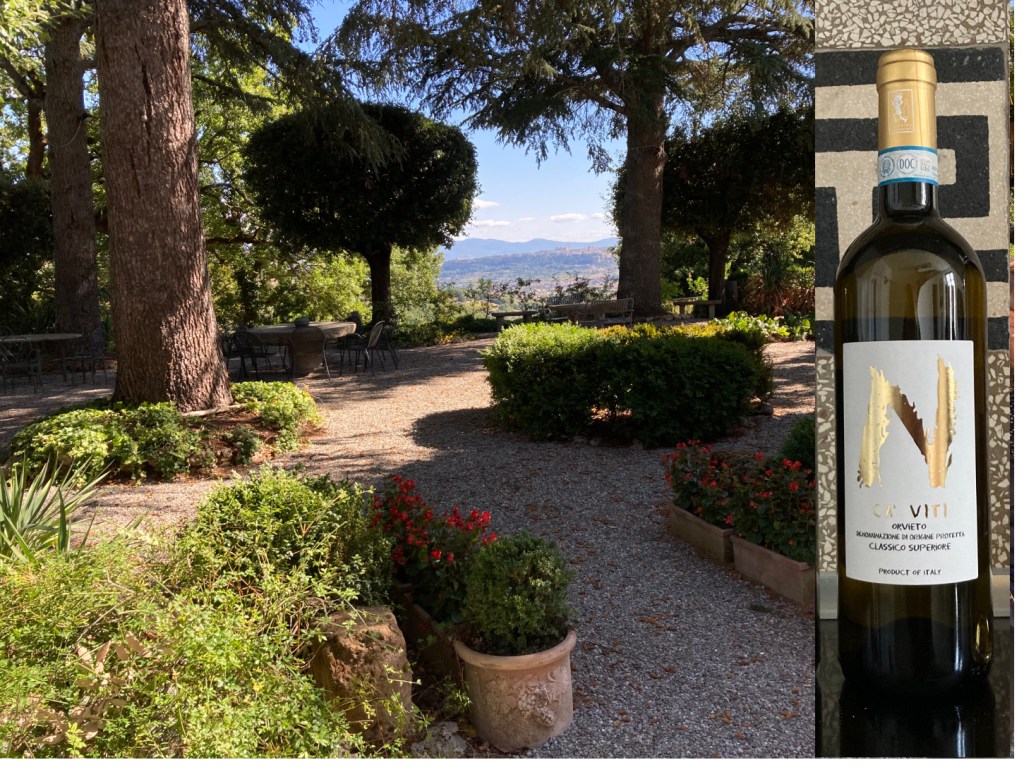
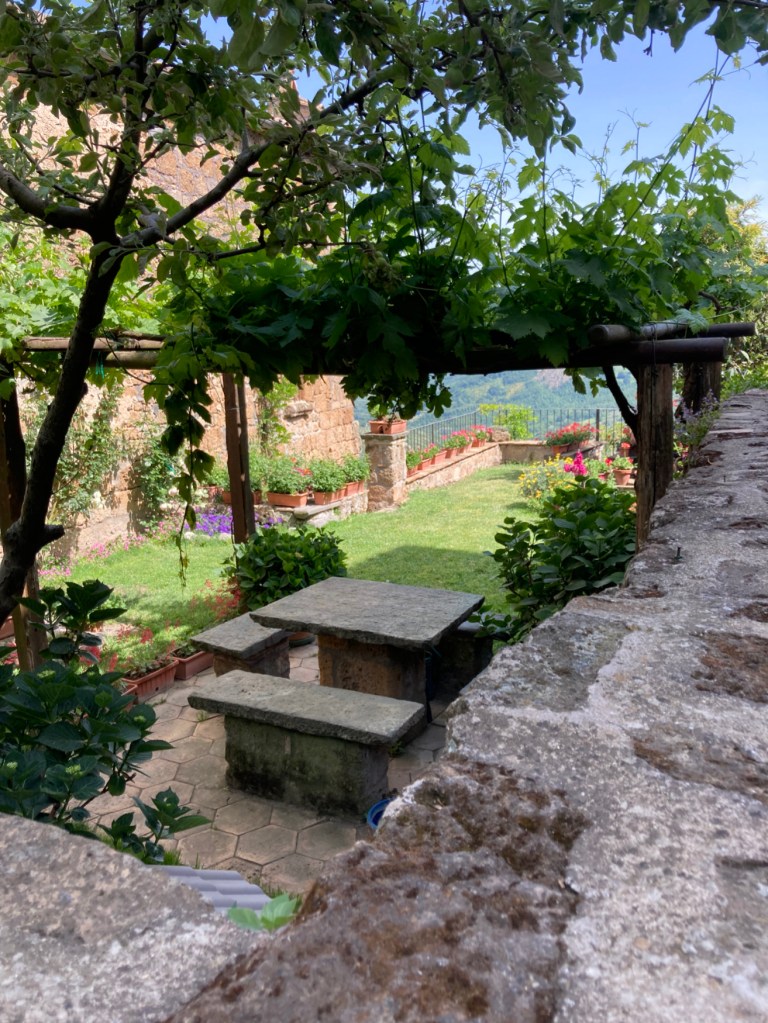
Cantine Neri. This is the garden of the winery Cantine Neri. That’s Orvieto in the distance. Wineries in this area make a white wine blend called OrvietoClassico. Each winery has it’s own proprietary mix but DOC regulations require that it contain at least 60% Grechetto and Procanico varieties.
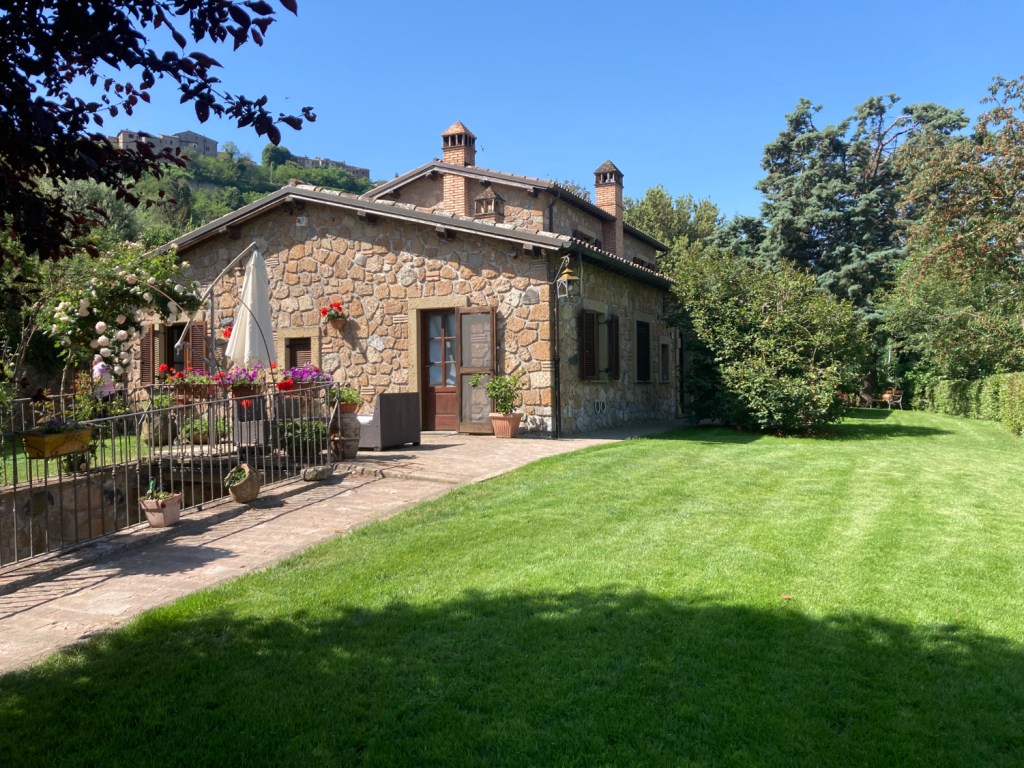
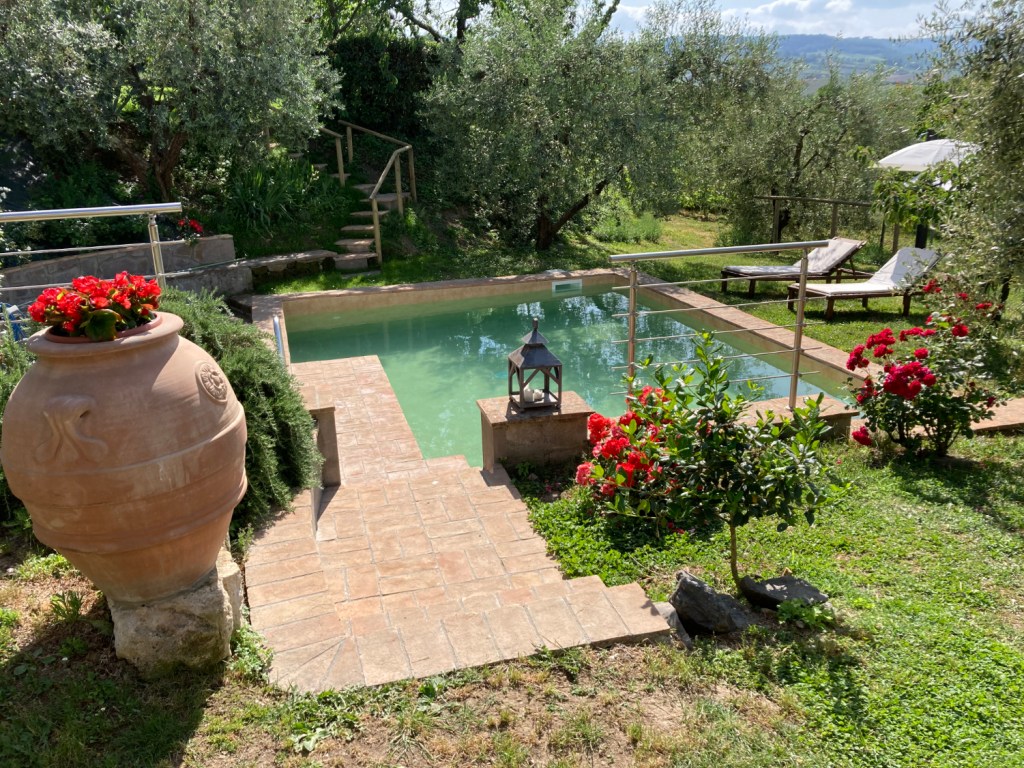
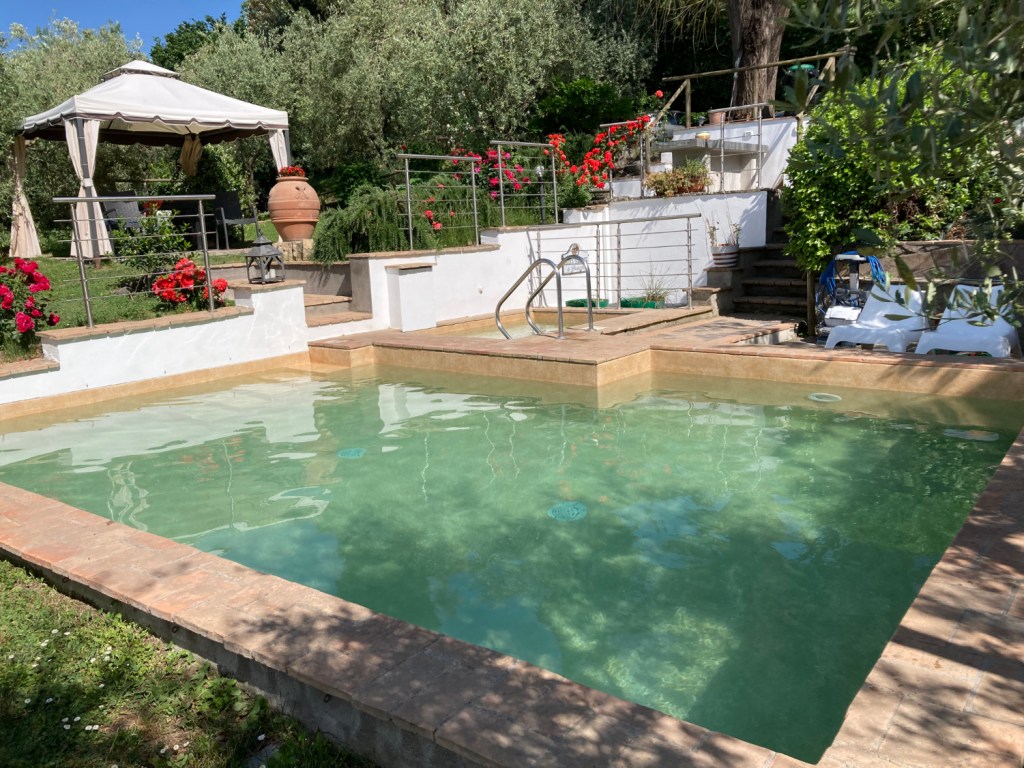
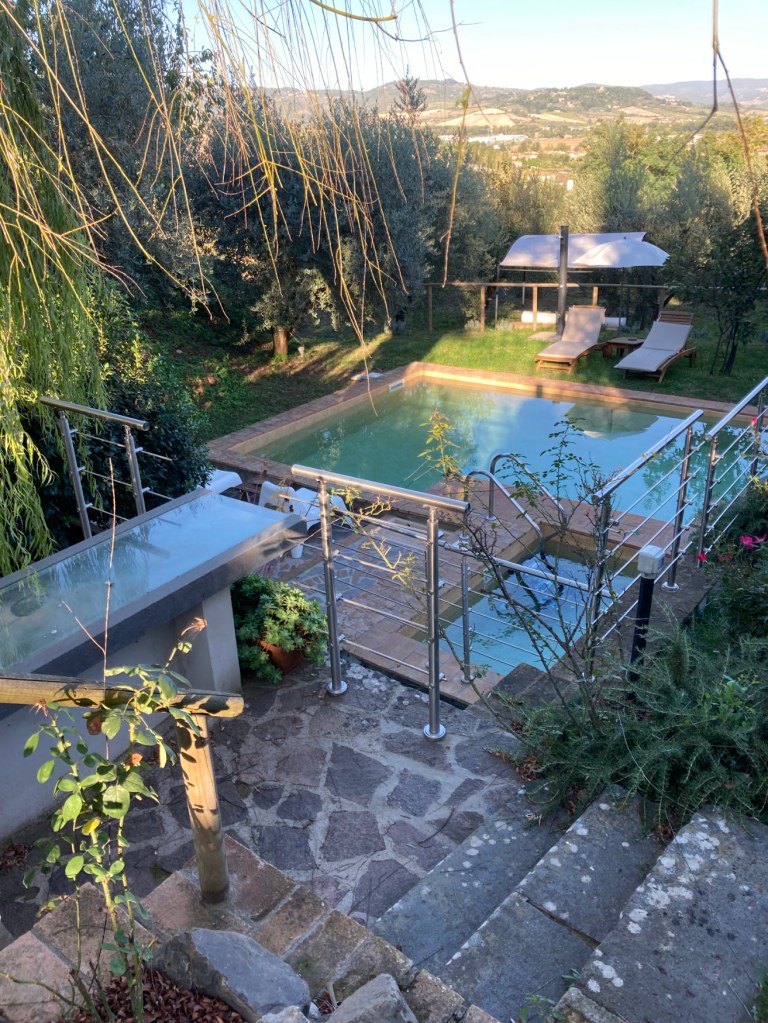
Podere Pescara. We stayed at an agriturismo just down the hill from Orvieto. It is a working an olive farm called Podere Pescara. Beautiful grounds. Great views. Excellent breakfast. We highly recommend it.
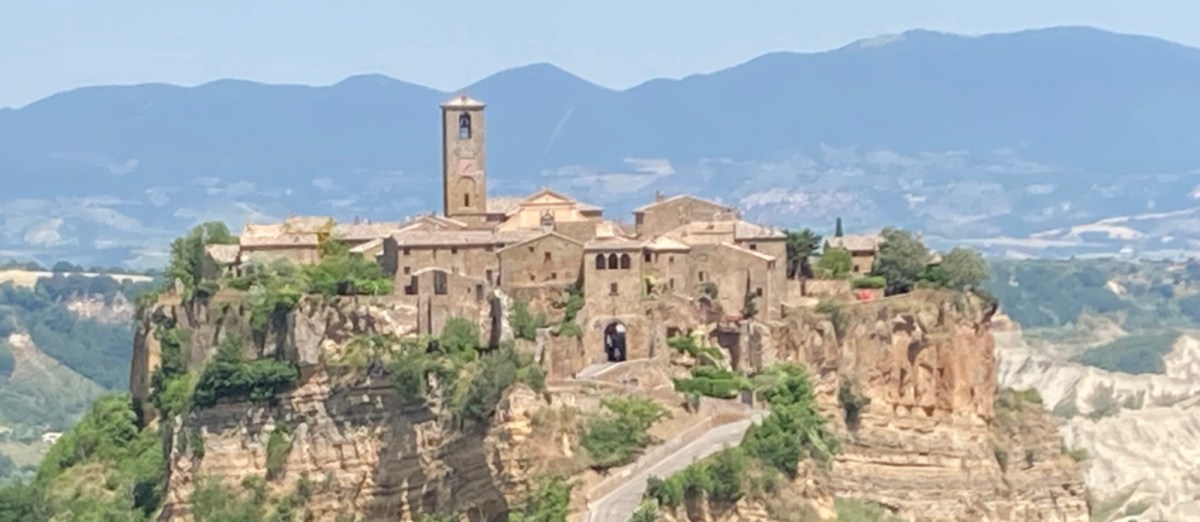
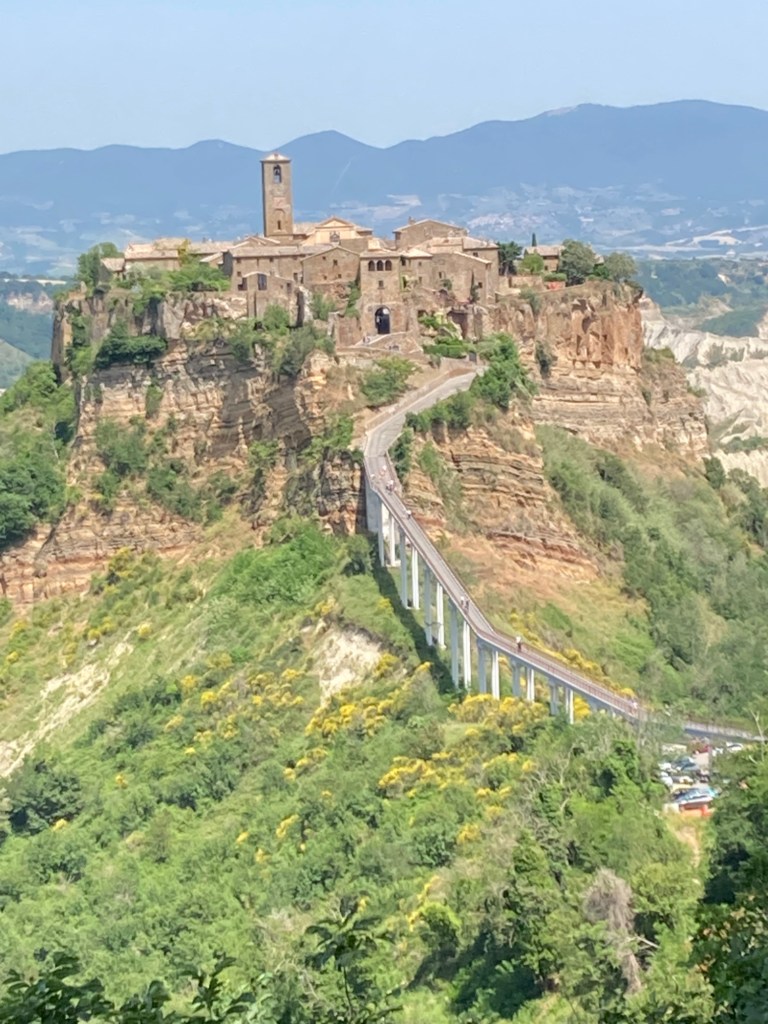
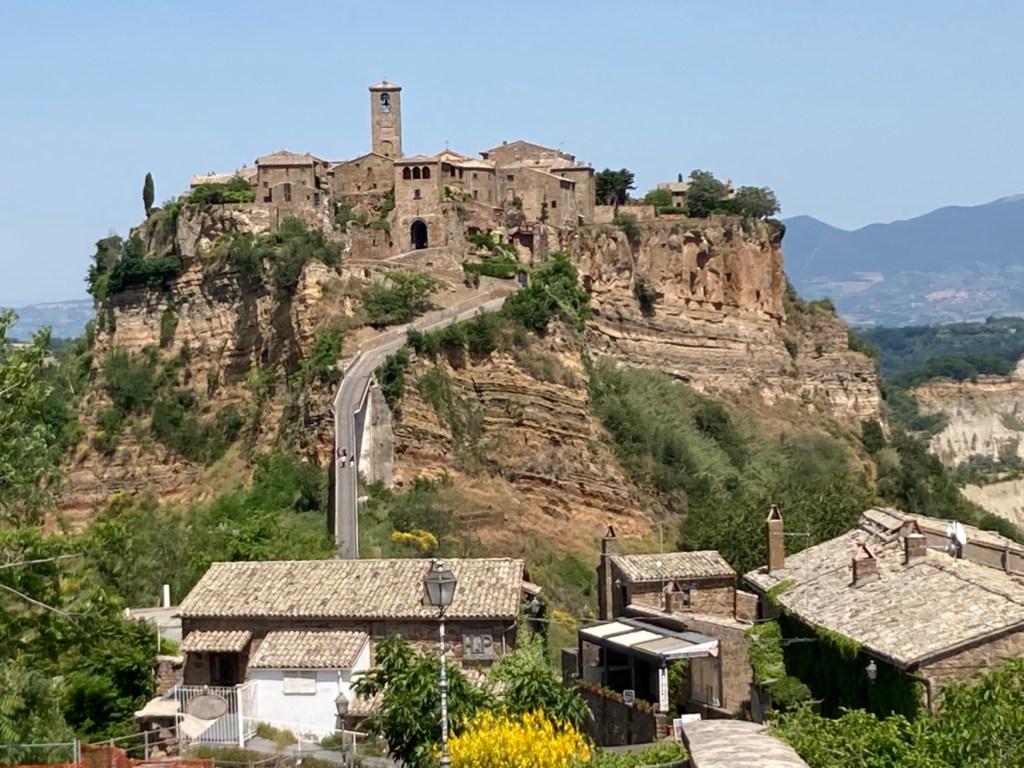
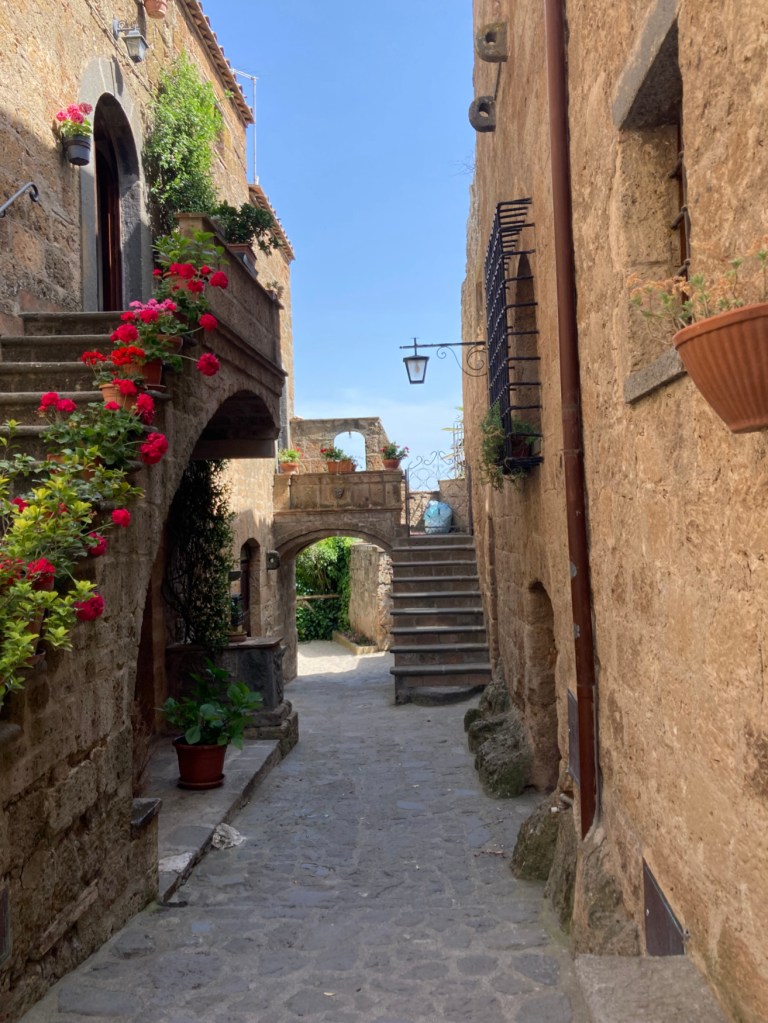
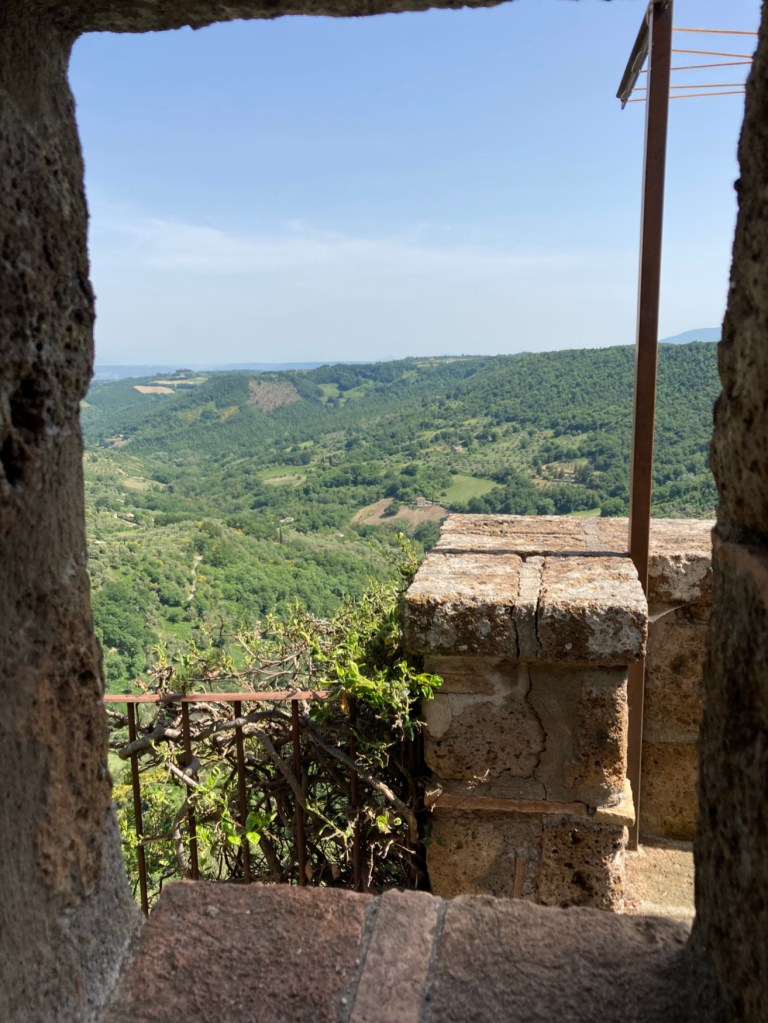
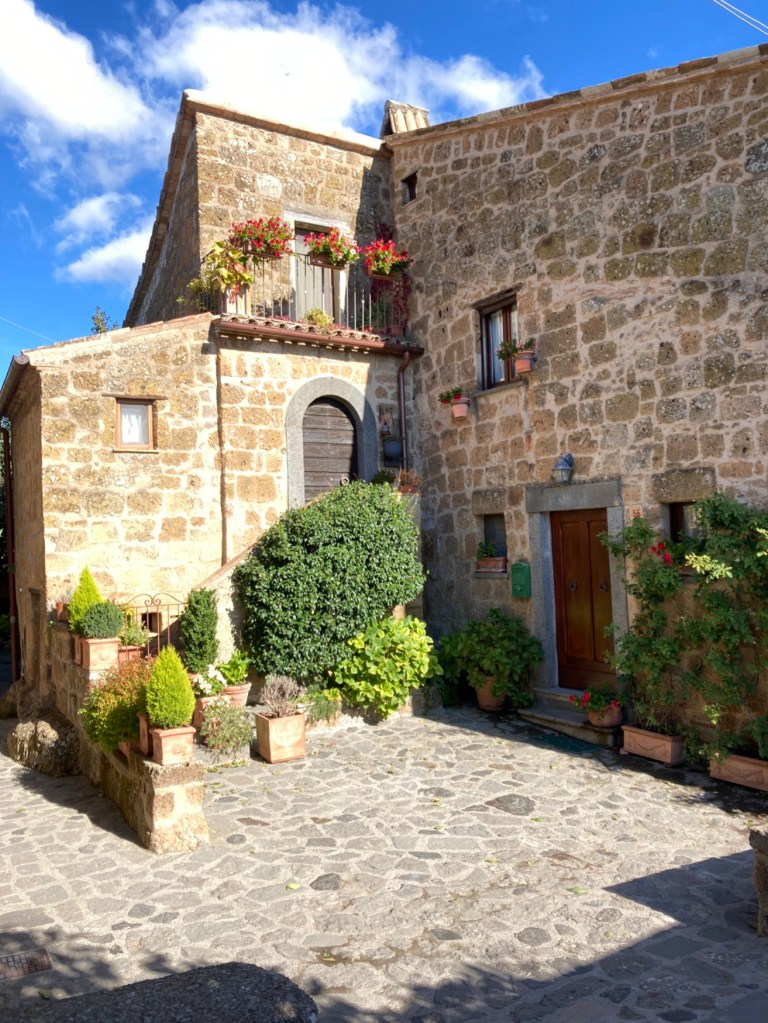
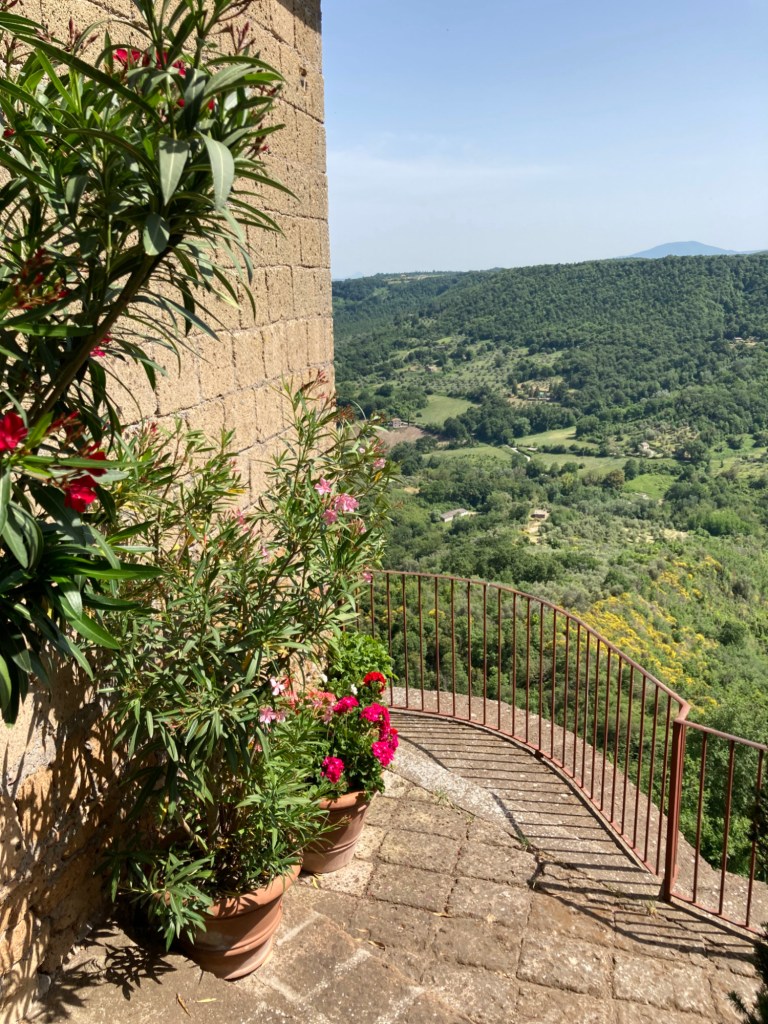
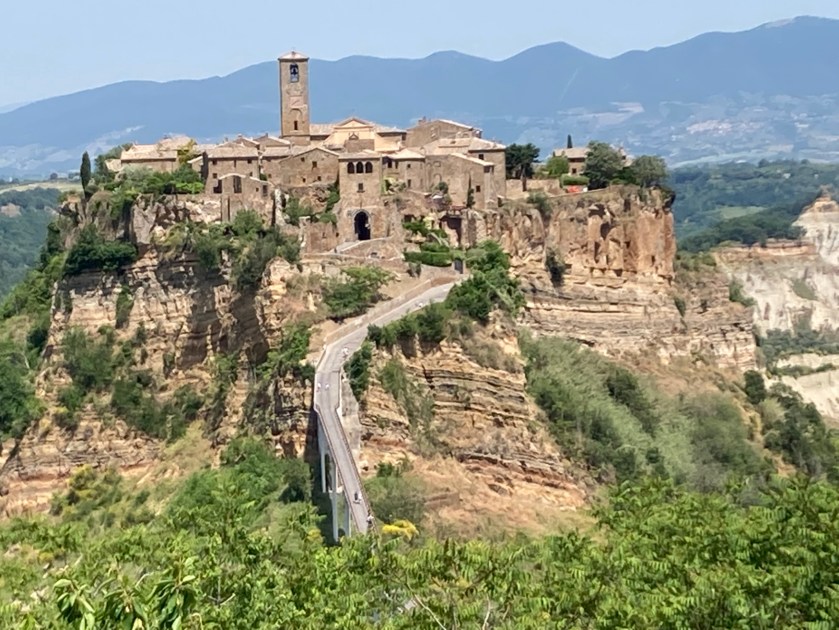
Civita de Bagnoregio is maybe the most unique hill town in Italy. Like many of theses hill towns in Italy, it began as an Etruscan town. There are Etruscan burial vaults beneath the city. It then was taken over by the Romans. After the fall of the Roman Empire, it eventually grew into a medieval city. Civita de Bagnoregio sits atop a plateau of volcanic tuff which is what makes it so unique. The plateau has been eroding for a long time with the cliffs around the periphery collapsing often taking buildings for a ride into the valley below. The city that remains appears to be almost an island (when surrounded by fog, it appears to be floating in the clouds). Civita de Bagnoregio is the birthplace of Saint Bonaventure.
This footbridge is the only access to Civita de Bagnoregio.
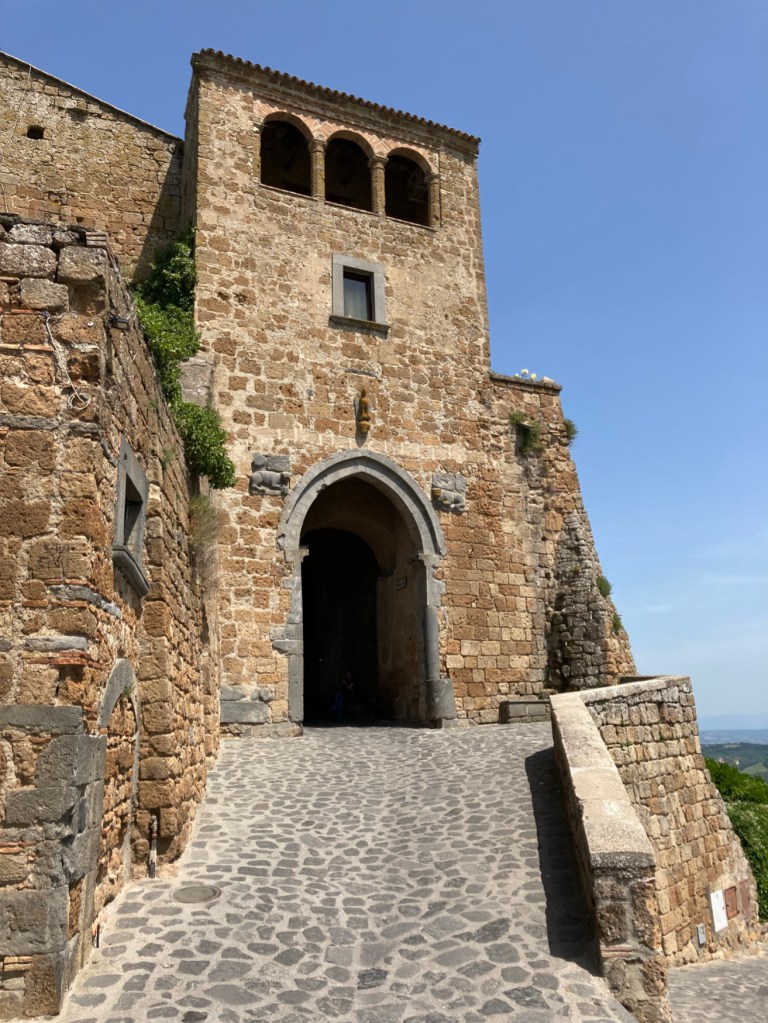
The original Etruscan gate.
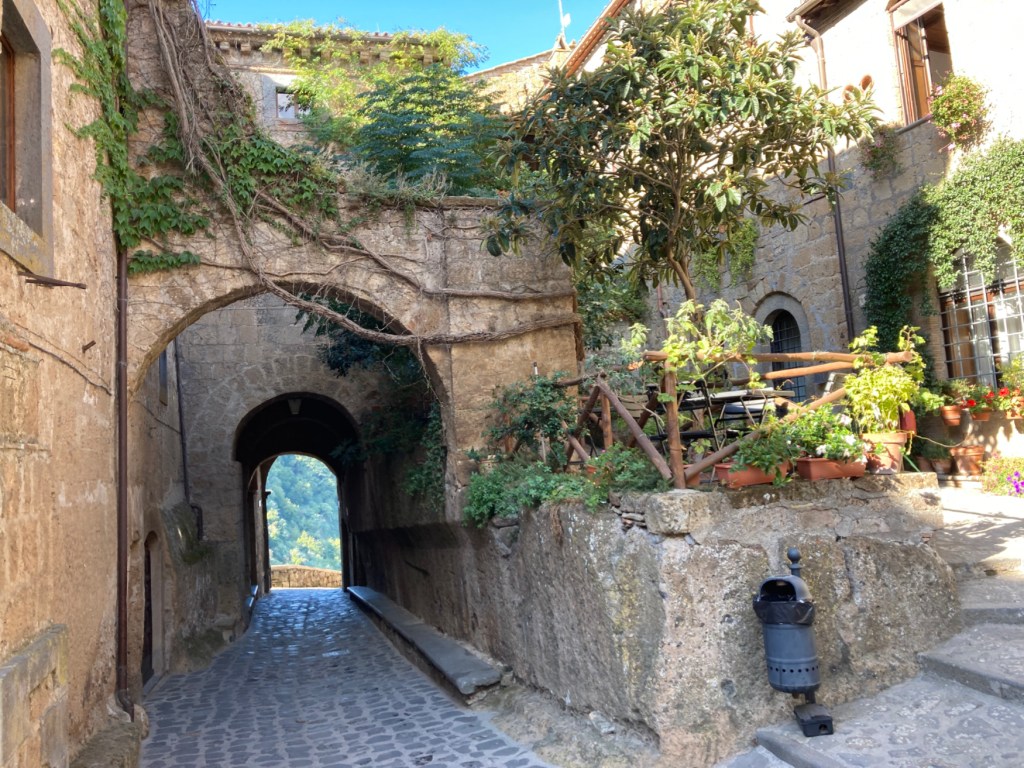
The Etruscan gate from the inside.
Look carefully. You can see blue sky through the transom above the door to the left and and the two upper windows. The back of this part of the building fell away when the cliff supporting it collapsed.
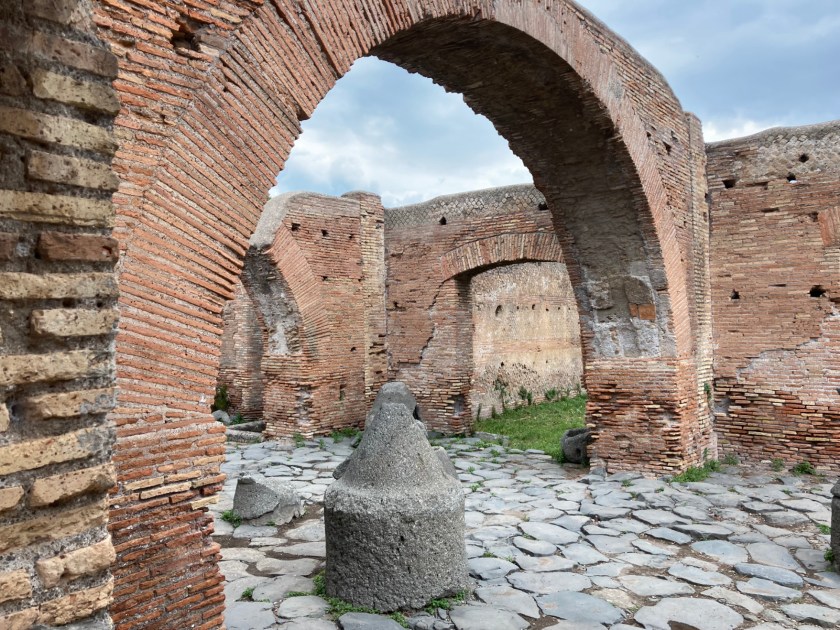
In the Middle Ages, donkeys would live their entire lives in here turning this stone wheel to press olives into olive oil.
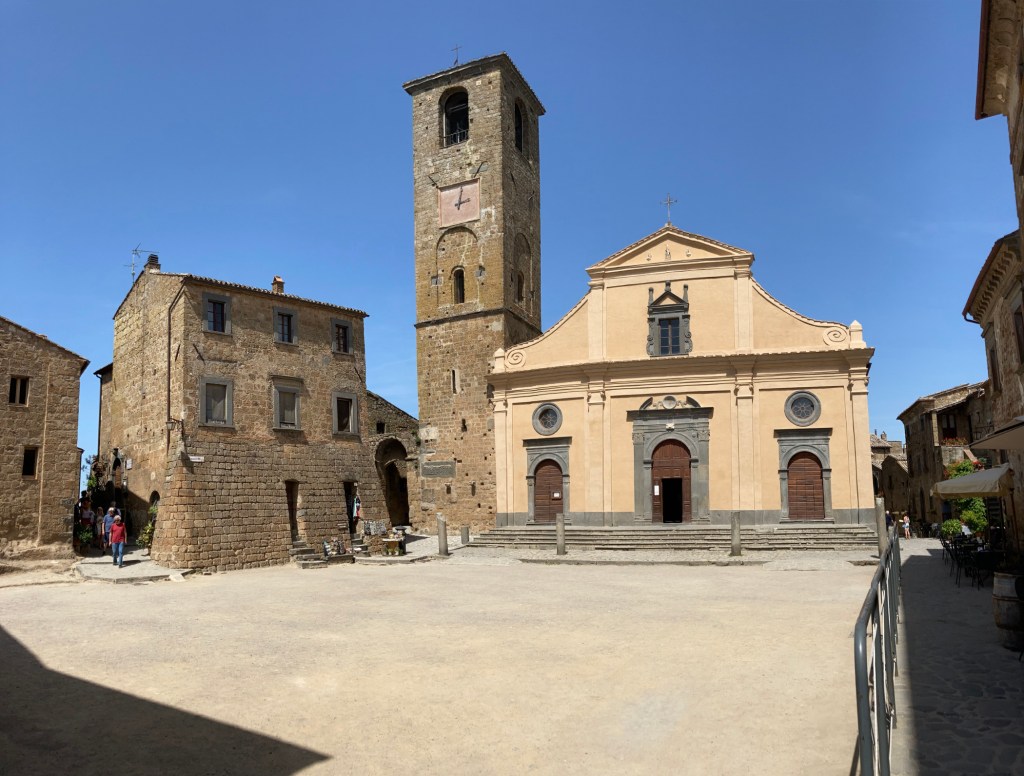
The Church of San Donato. Notice the building to the left. The walls of the first story are thicker at the bottom- Medieval Earthquake Retrofitting.
I love frescoes and Roman mosaics. Ostia Antica has a ton of mosaics. Many of them are in museums but many are in abandoned Ostia Antica right where they were installed by craftsmen 2000 years ago. There are 3 types of mosaics- business signs, decorations in the bottom of baths, and floors in private homes.
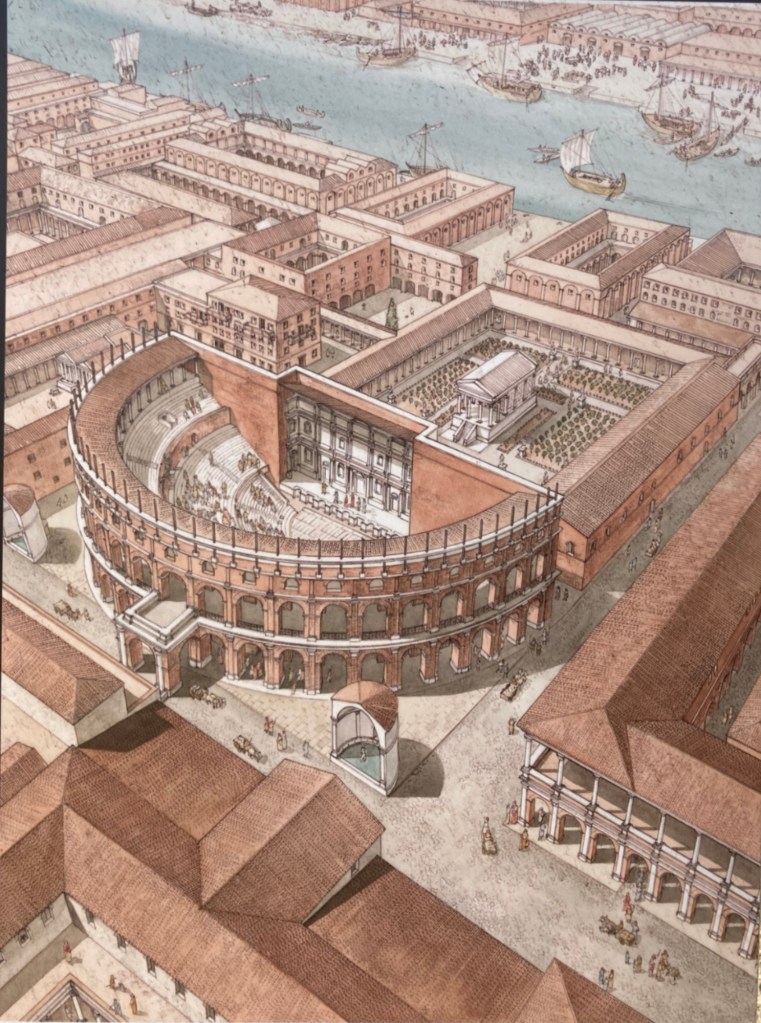
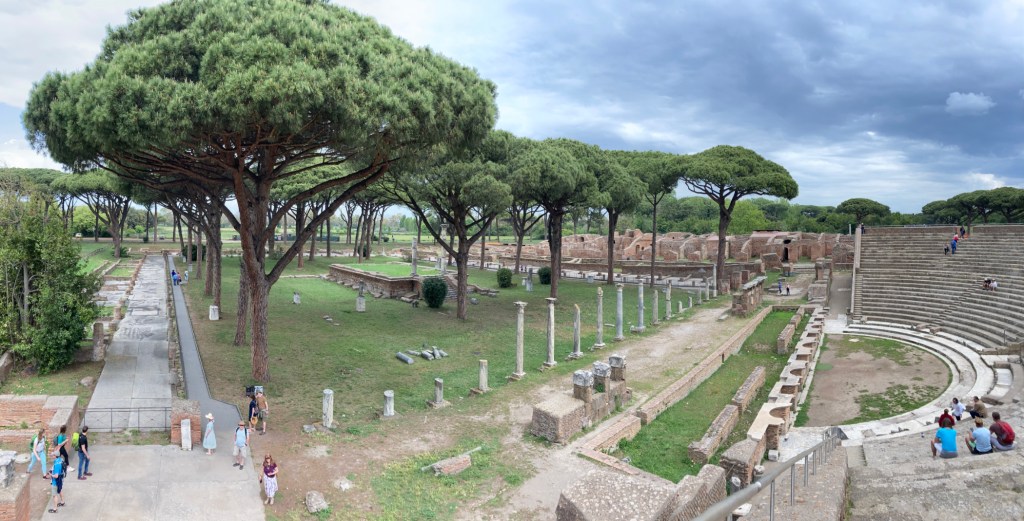
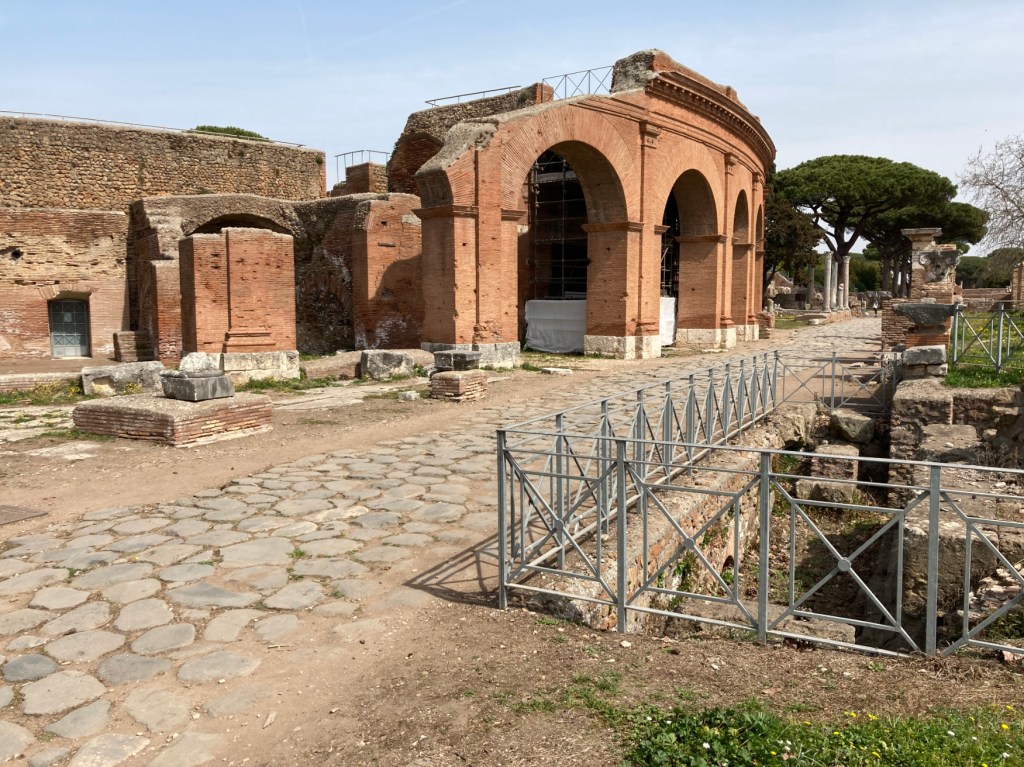
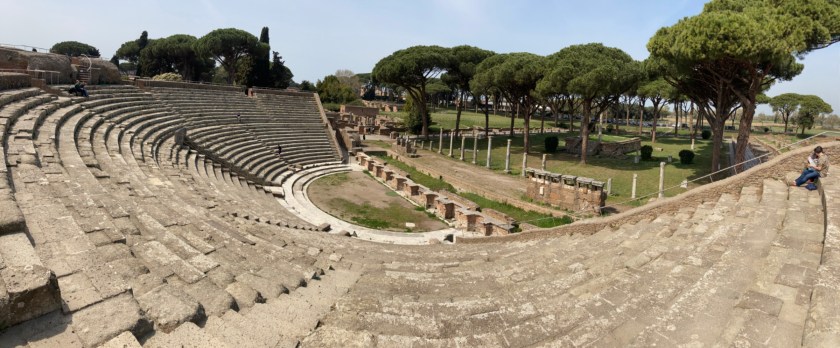
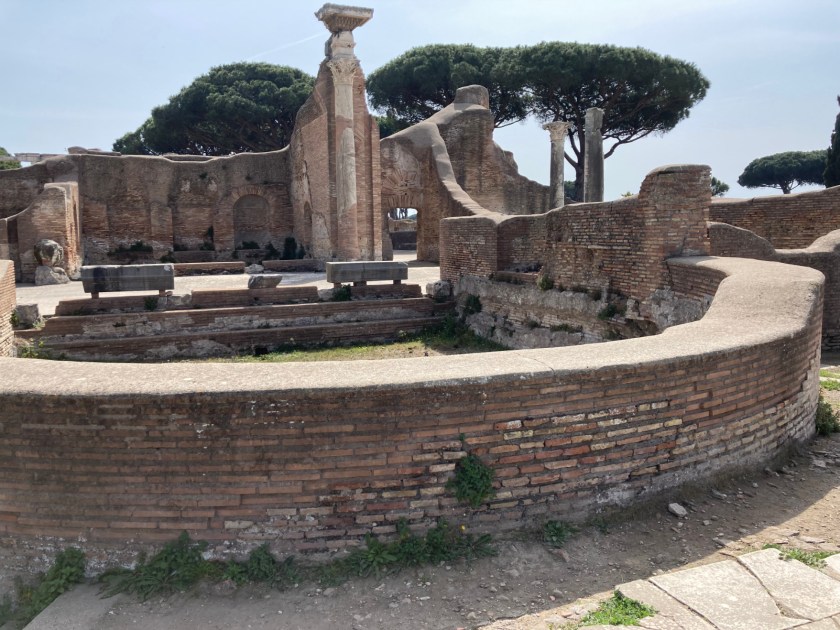
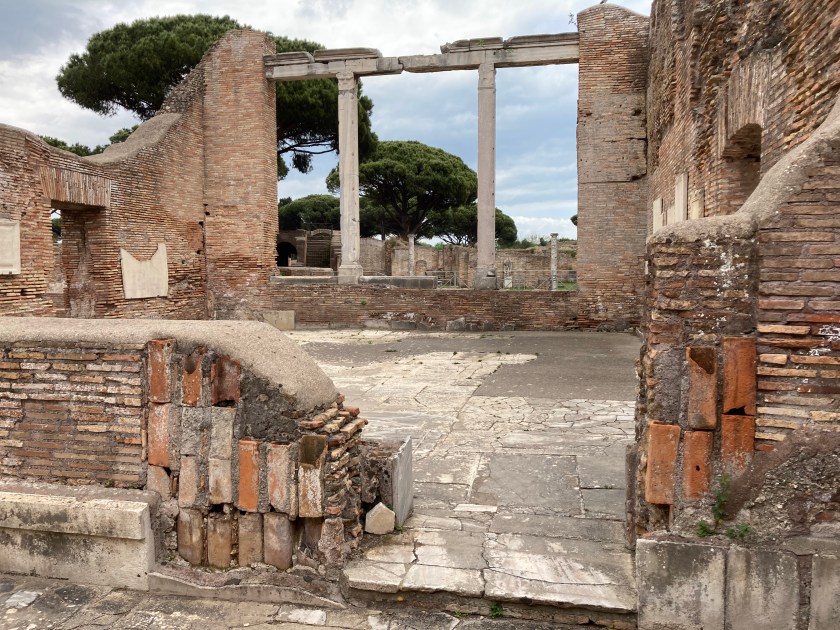
Many of the mosaics in Ostia Antica are in the theater complex (below). The theater was actually a multipurpose facility common in Roman cities. The theater is the semicircular structure. Behind it, a temple sits in the middle of a courtyard. The colonnaded building (the portico) on the 3 sides of the courtyard houses offices of the empire and local businesses. Mosaics on the sidewalk around the portico identify the services provided by the business.
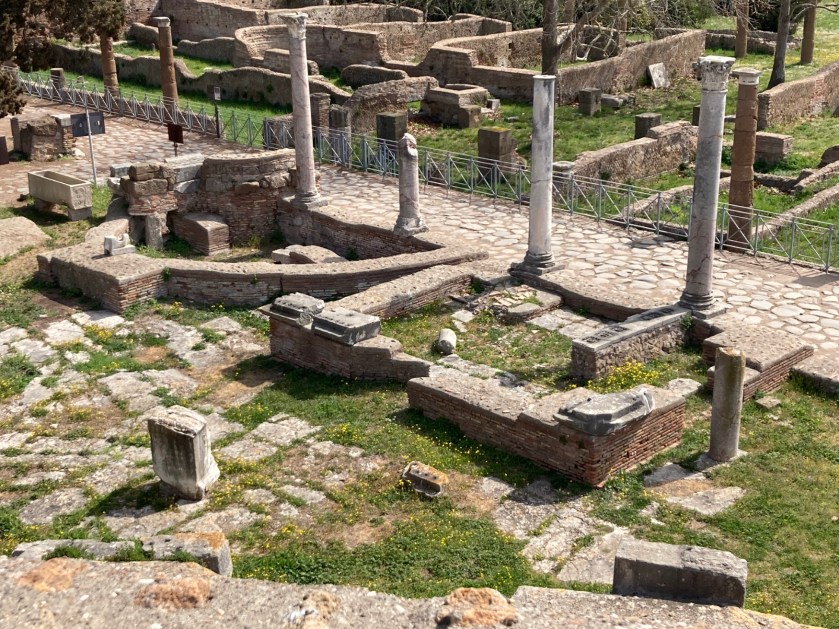
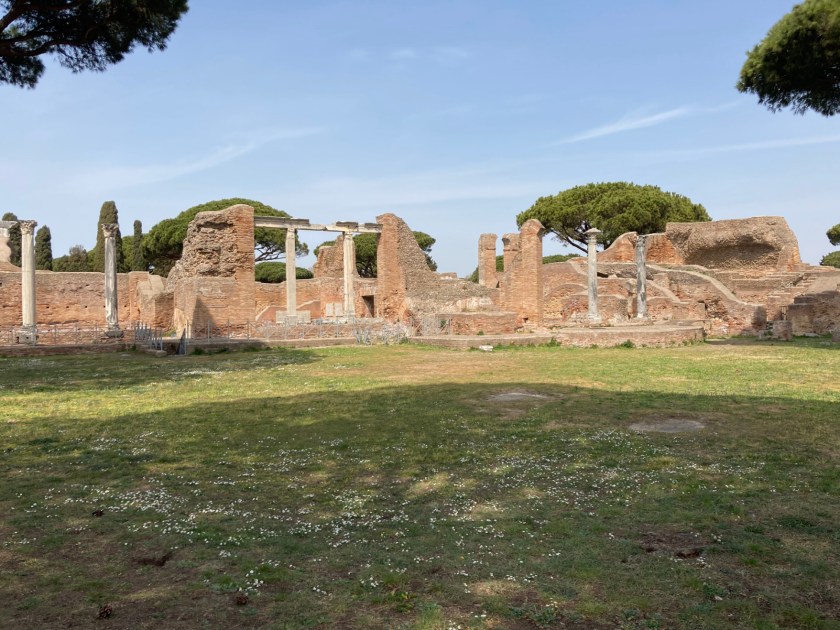
This is how it appears to day. The theater is to the right. The temple was on the platform in the middle of the trees. The mosaics are in the large gray strip you can see on the left, which goes around the back and the opposite side..
Business Mosaics:
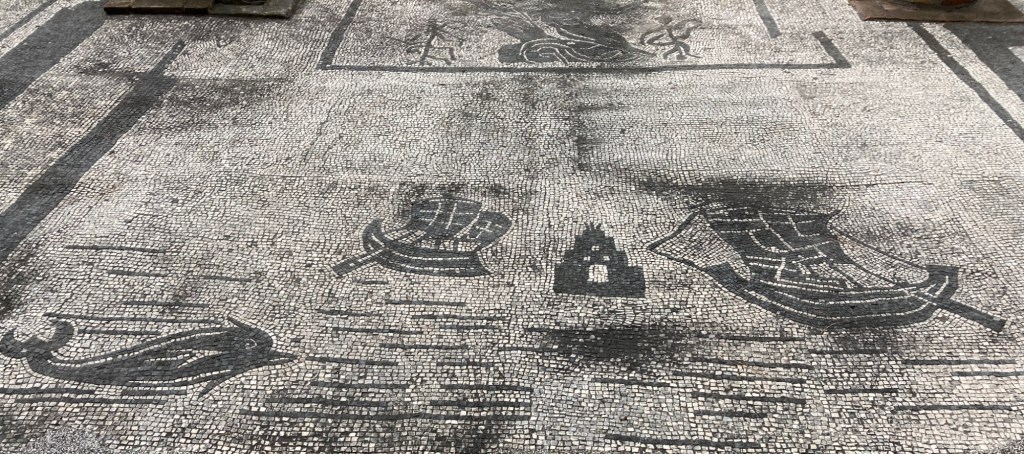
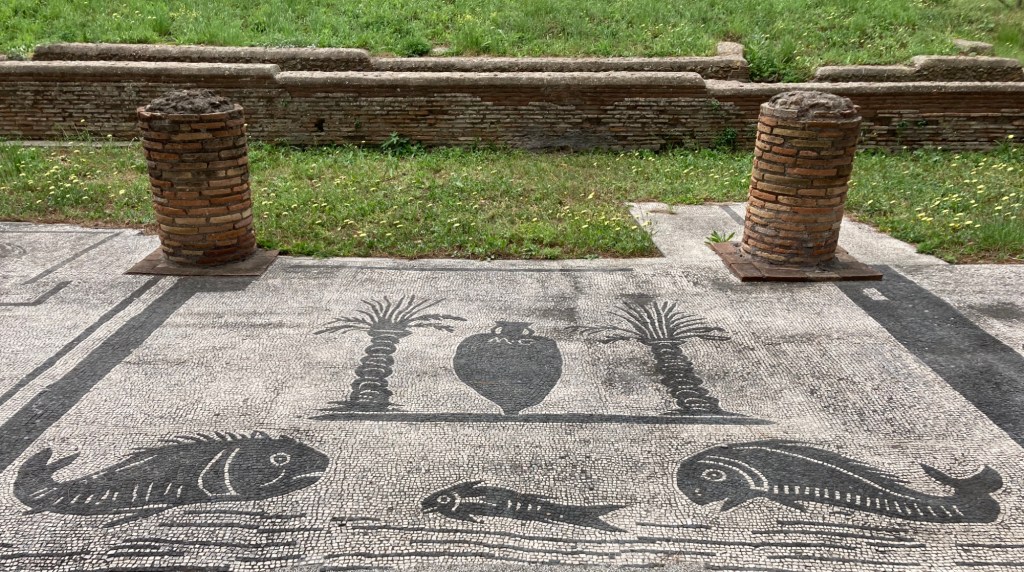
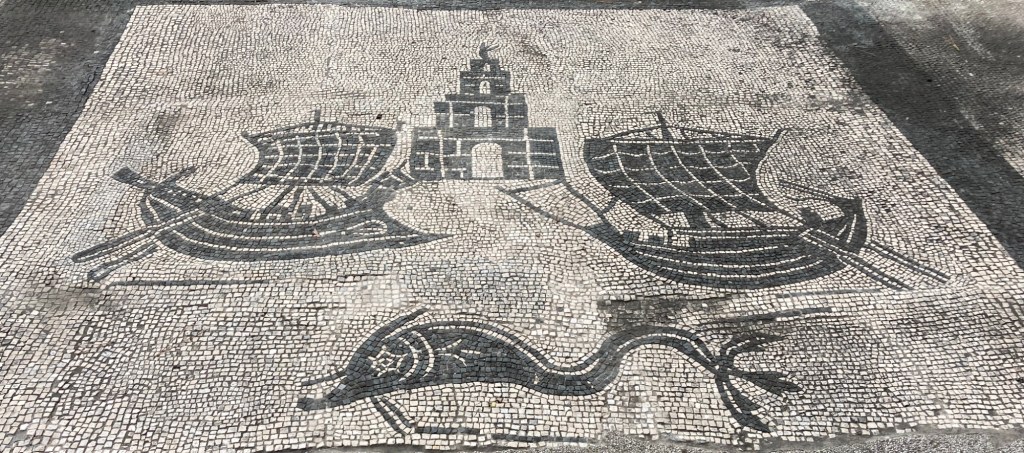
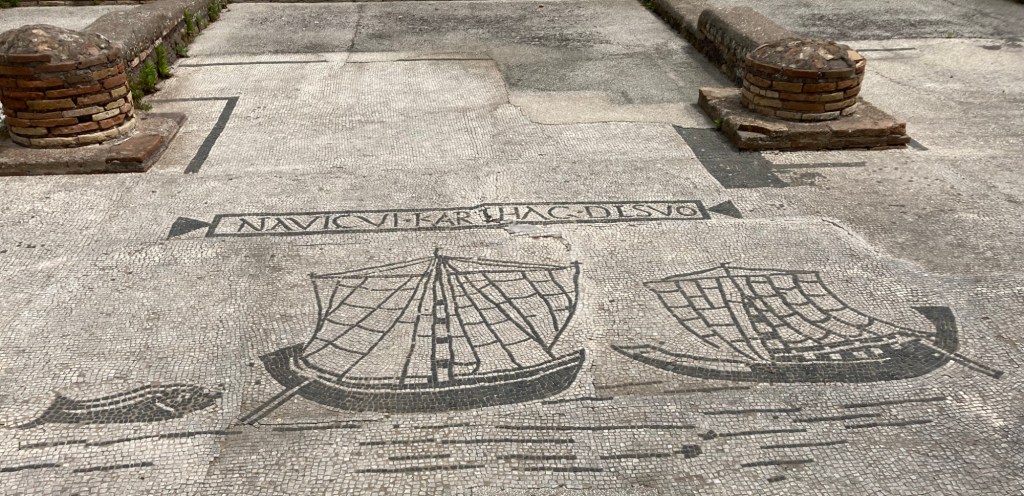
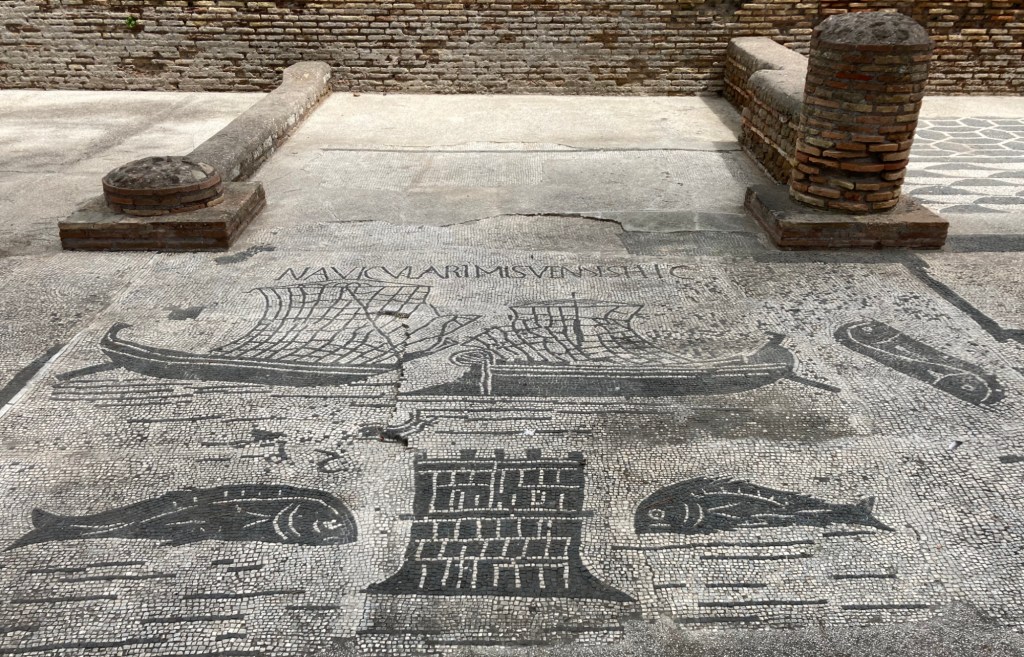
Most of the mosaics in the theater-portico depict ships. You might expect maritime related enterprises to be well represented in a port city.
The amphora (between the palm trees) was commonly used to transport commodities (fish, grapes or wine, olives or olive oil, maybe grain). So, a shipping company?
The building in the middle might be a lighthouse.
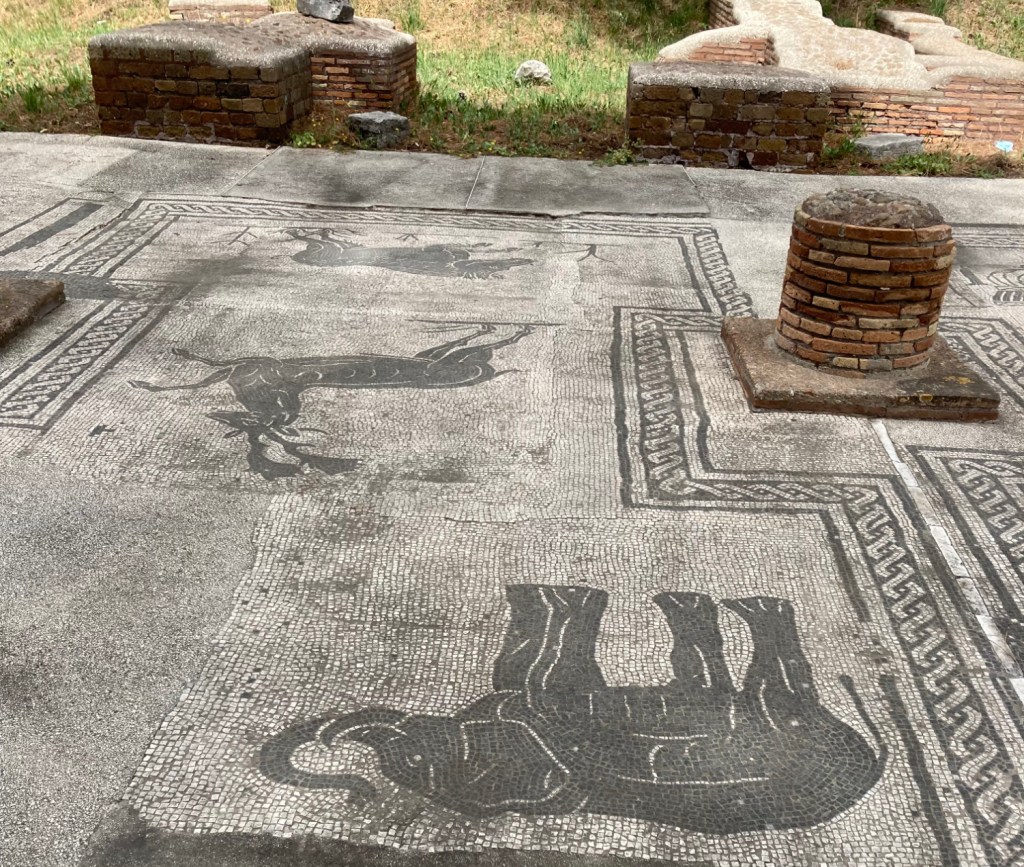
Elephants usually indicate some who imported products from Africa. What do the deer and what might be a boar indicate?
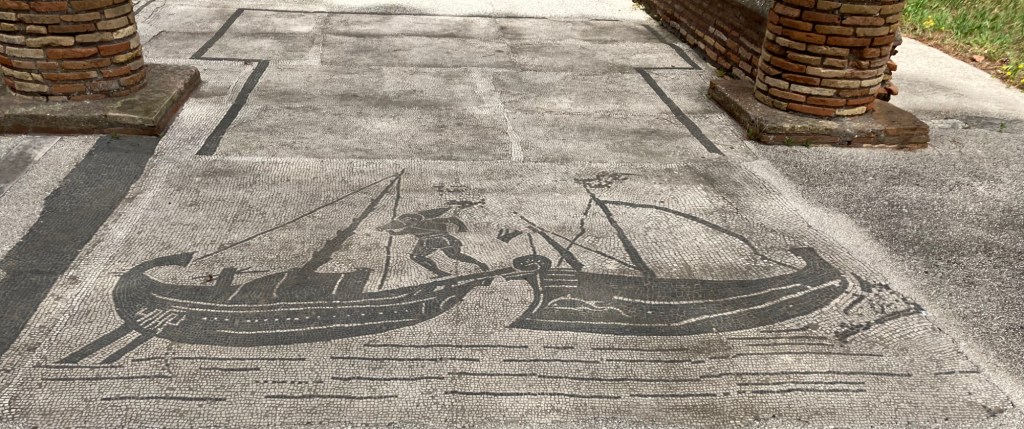
The man appears to be carrying an amphora from a galley (ocean-going) to a smaller boat (river craft?). Maybe this outfit was a middleman taking goods upstream to Rome.
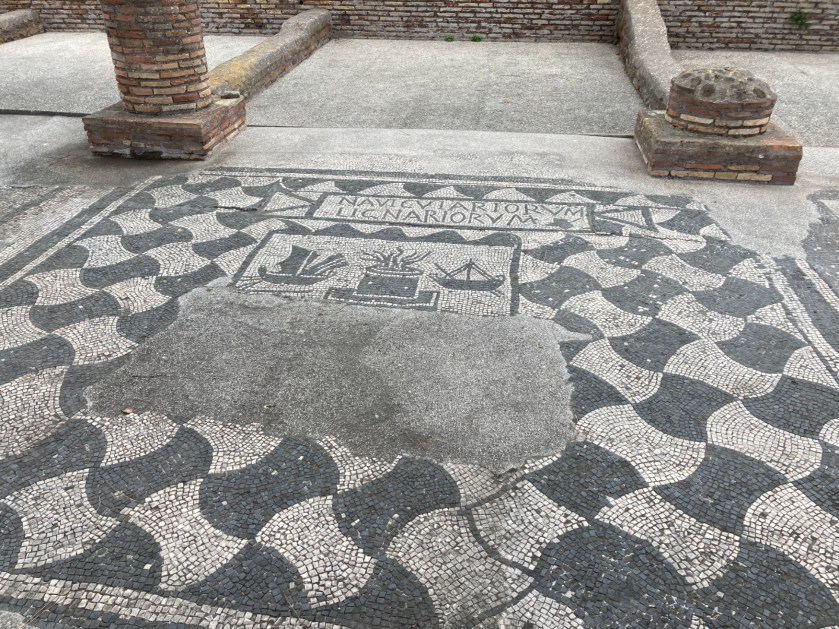
The top word (Navig…) is ship or boat or shipping. The bottom word (Lignar…) is “carpenter.” So, maybe this was a business of ship carpenters or boatwrights. The office would have been in the back between the walls marked by the columns.
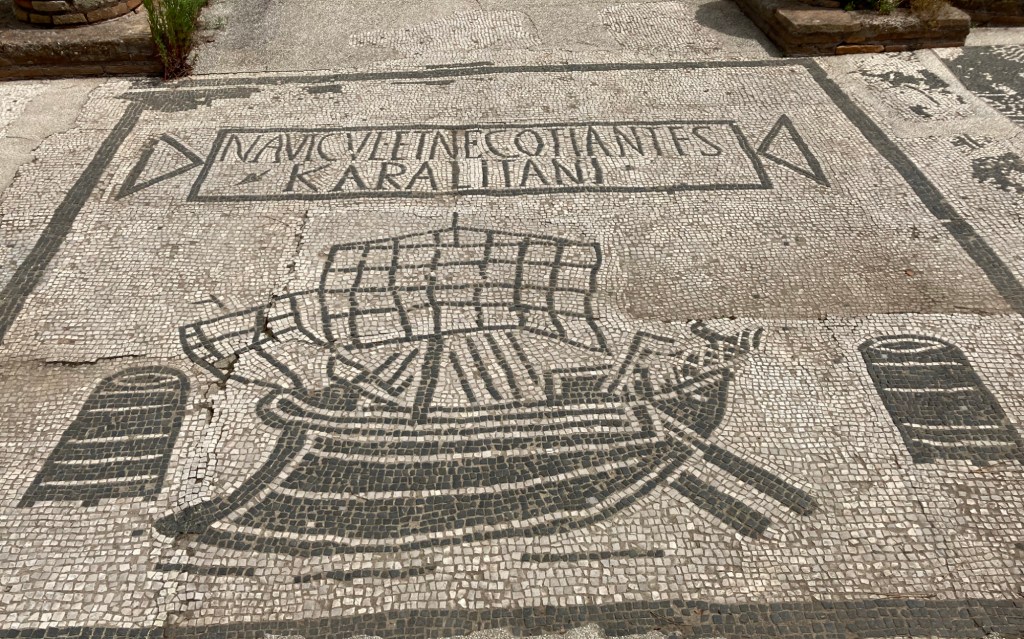
The containers on either side are for grain storage. Karalitani might indicate a city in Sardinia, known to be an exporter of grain to Rome.
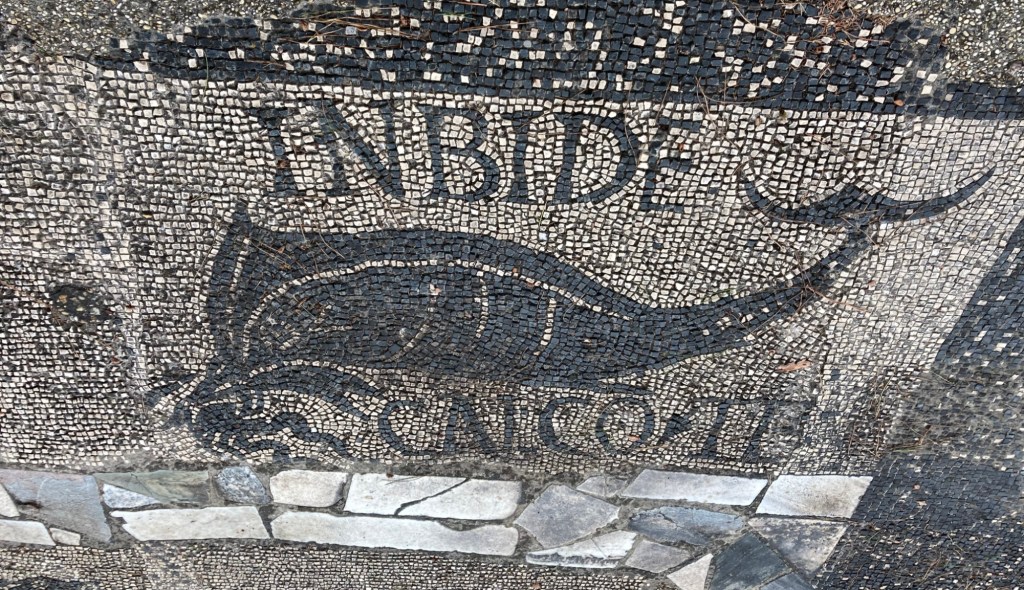
This is a dolphin eating a squid from a shop that sold fish. The Latin says something like “envious creature, I trample you.” As Roman fishermen saw themselves in competition with dolphins for squid, this is probably an epithet directed against the dolphin.
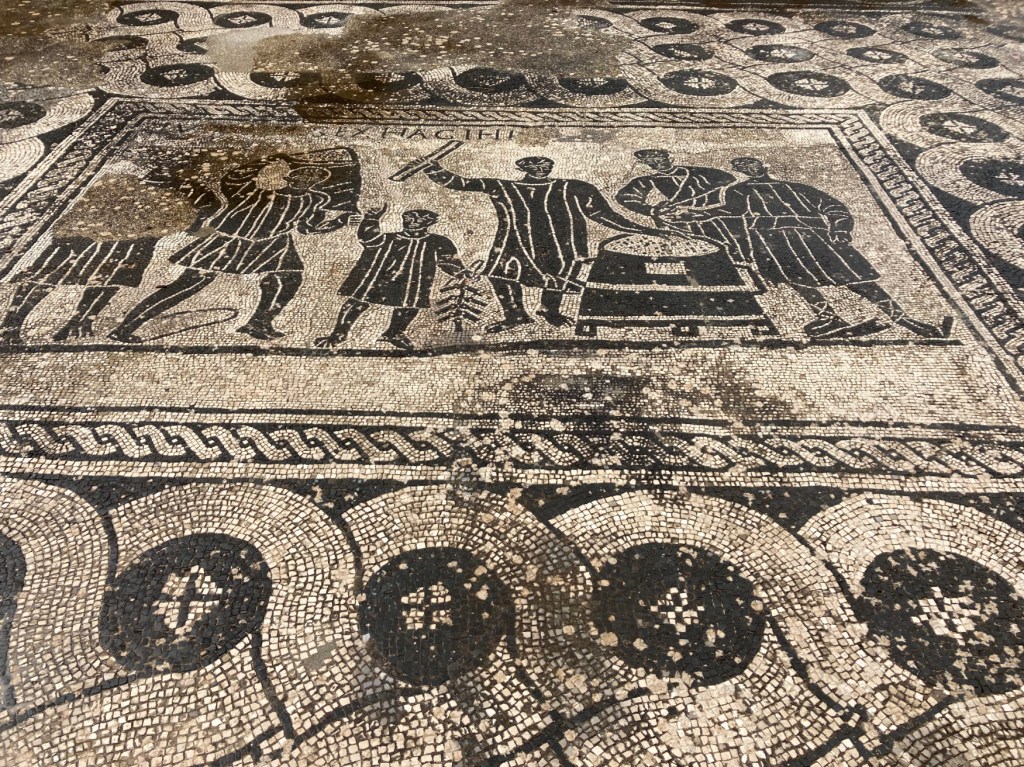
These guys, called “mentorses,” were responsible for measuring amounts and verifying amounts of grain. This was probably an important business because, to keep poor Roman citizens happy, grain such as wheat was subsidized or distributed free during the Republic and by emperors through much of Rome’s history.
Bathhouse Mosaics:
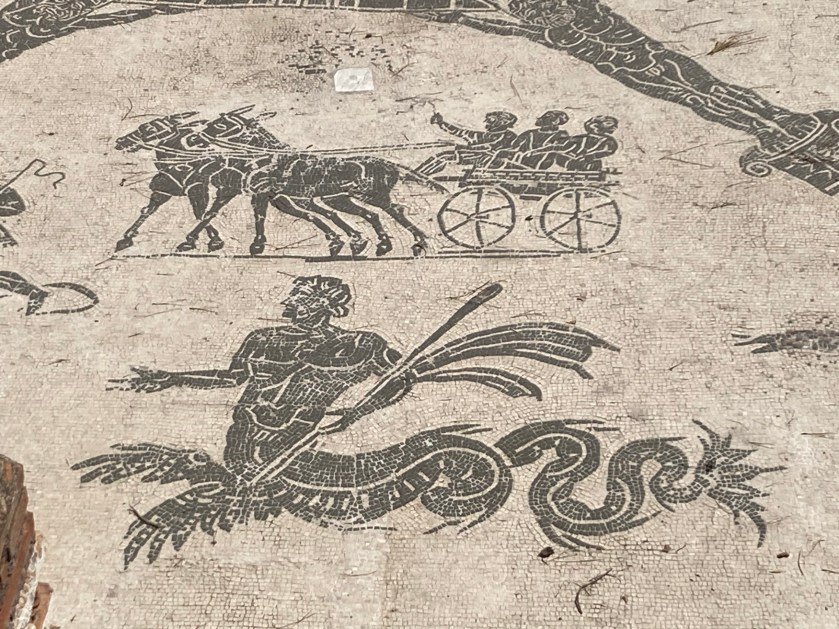
This is from the bottom of a pool in a bathhouse sponsored by cart drivers.
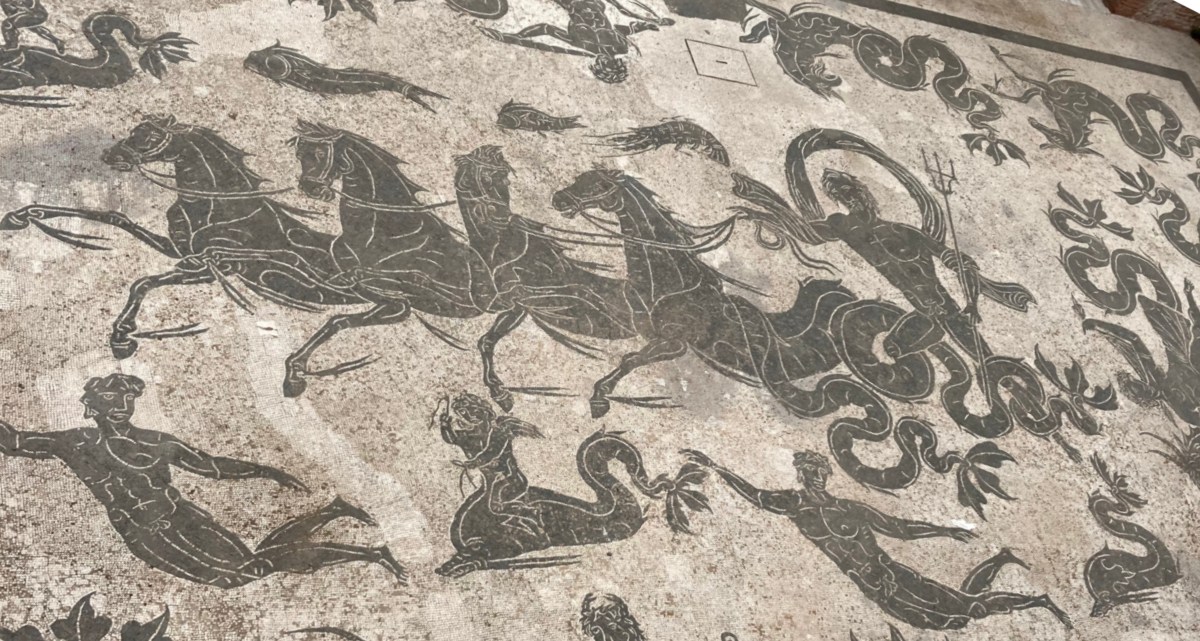
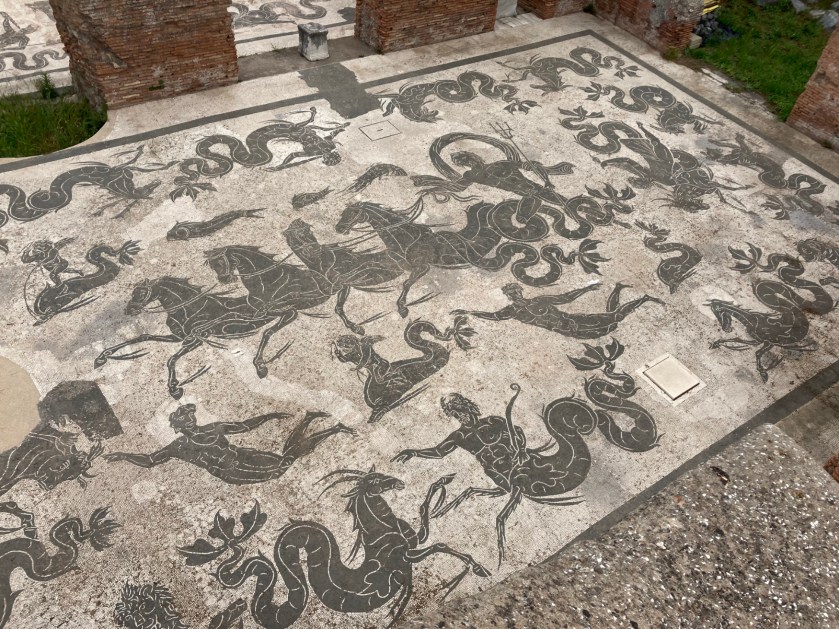
The main pool in the Neptune’s Bath House.
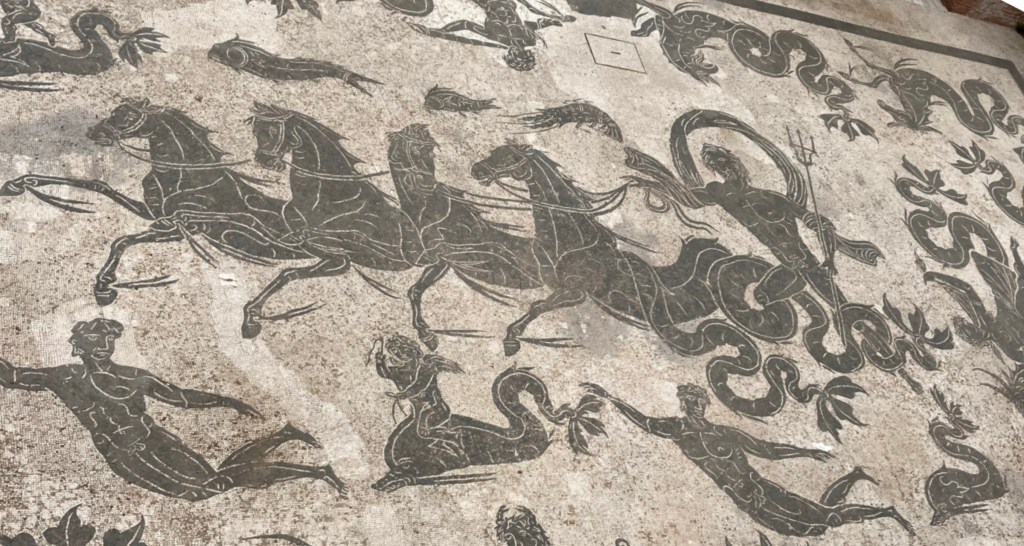
Close up.
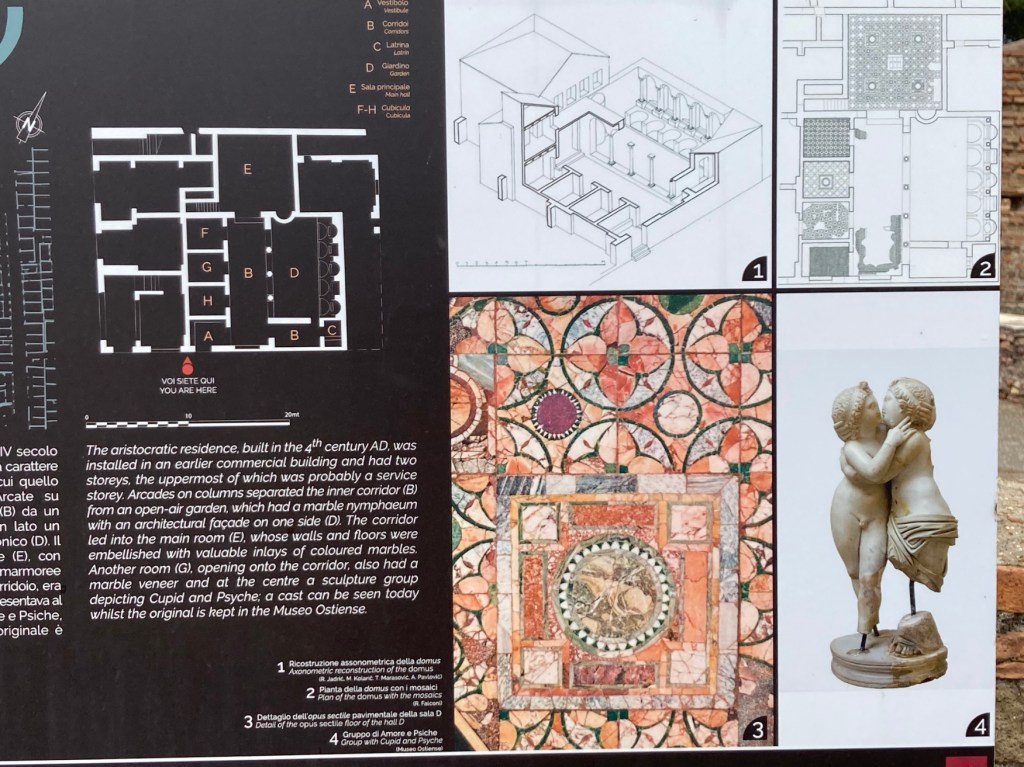
Aristocrat’s Home
One more from a Bathhouse:
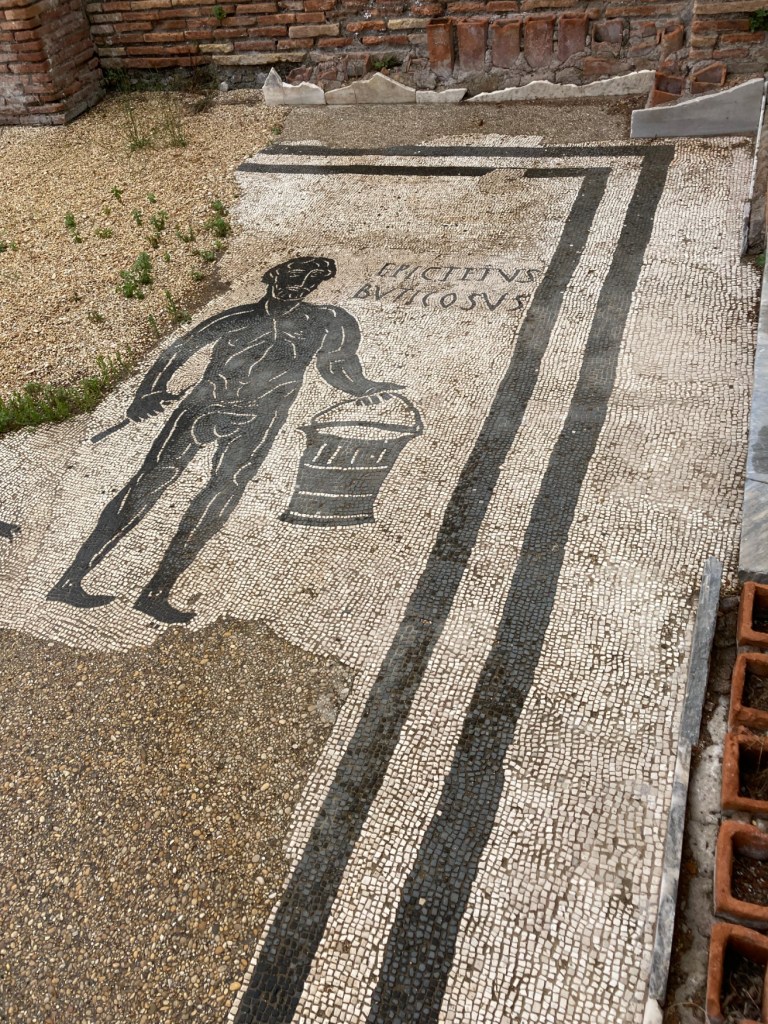
Naked man with strigil for scraping sweat, dirt, and oil from skin after exercise or bath in right hand; bucket in left hand. Maybe the man is Epictetus or Epictetus is the owner and the naked guy just indicates that you get a bucket and a strigil as part of admission to the baths. NOTE the ceramic pipes on the right that conducted hot air to heat up steam rooms.
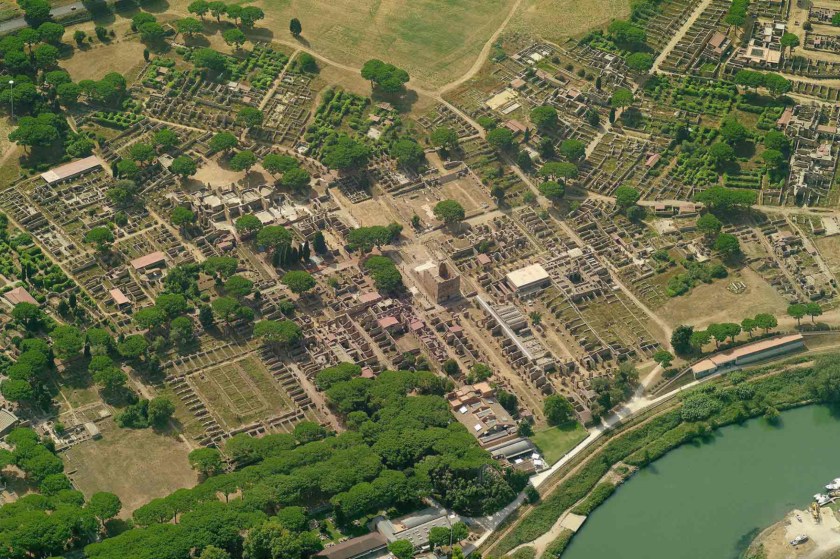
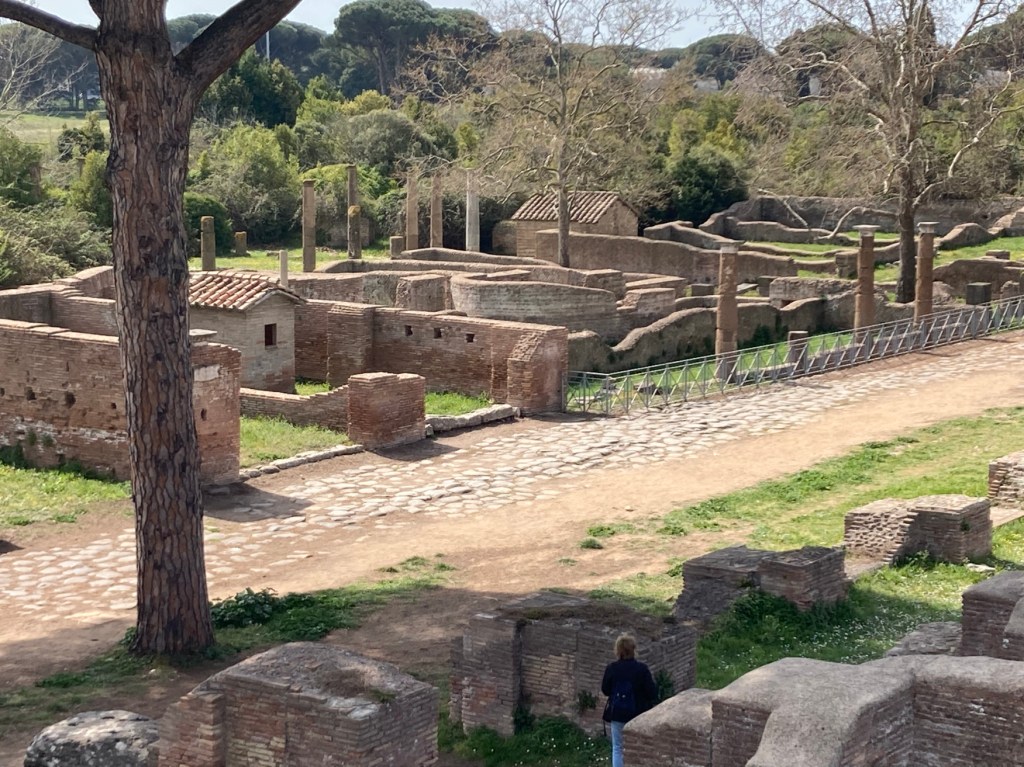
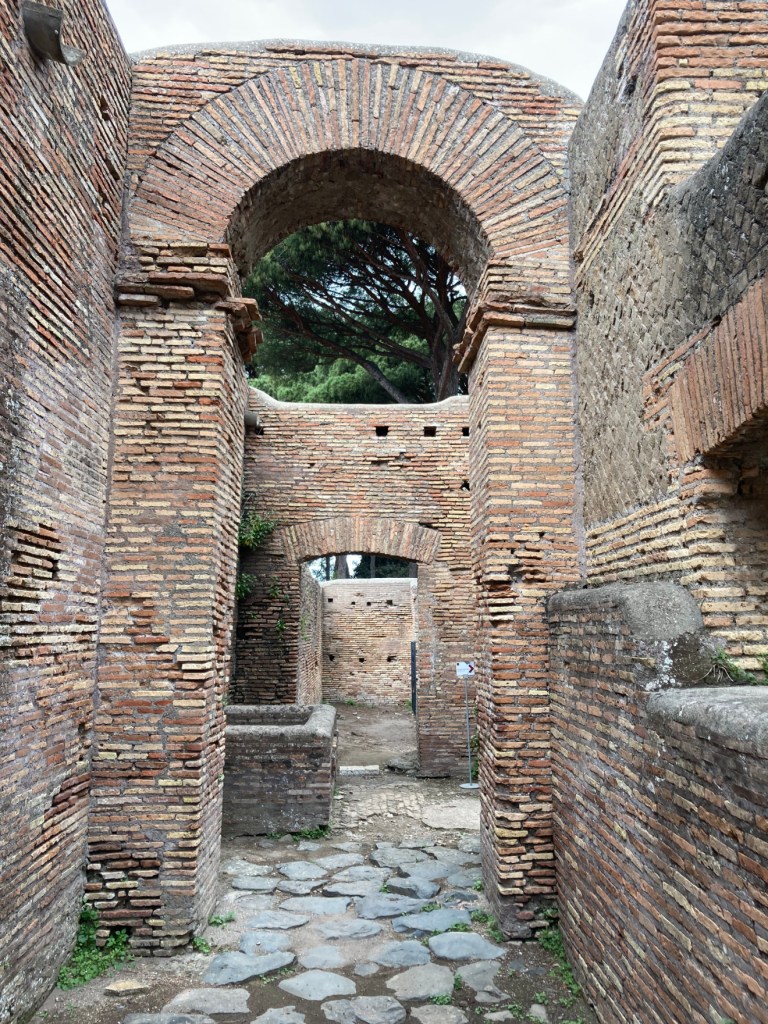
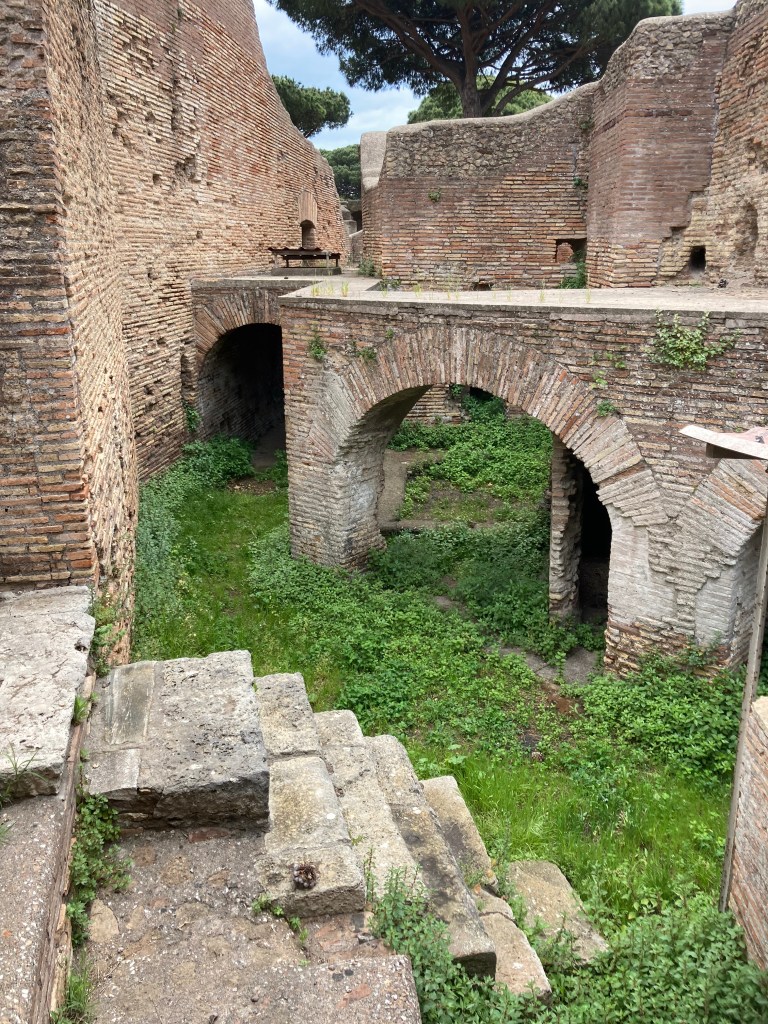
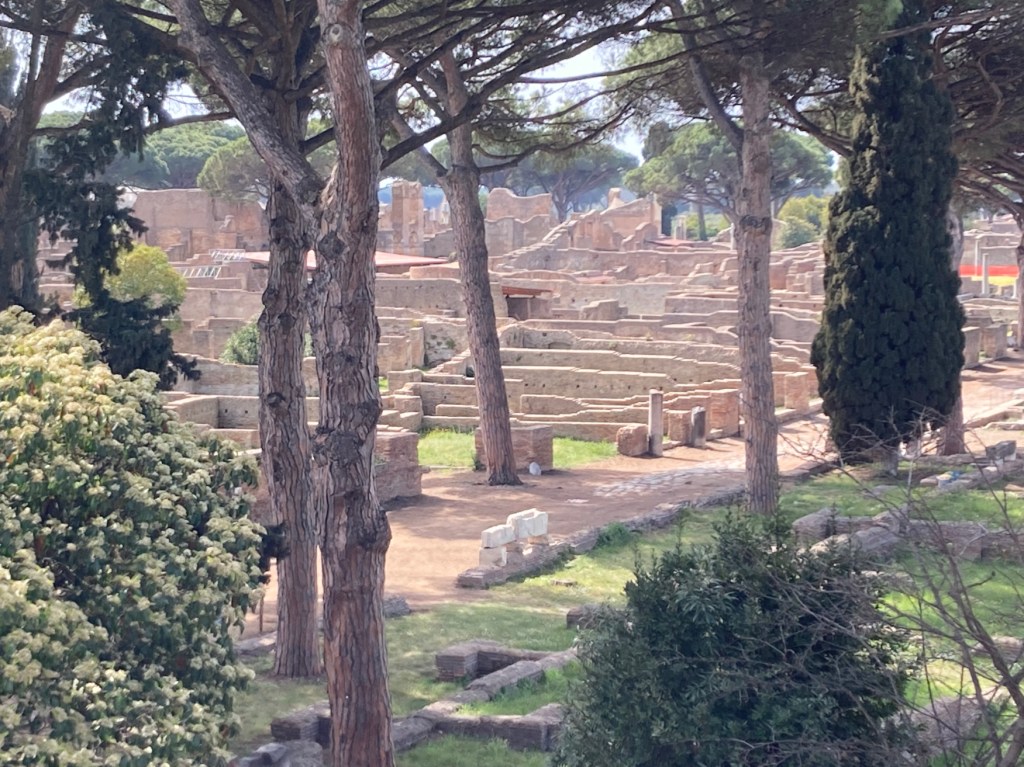
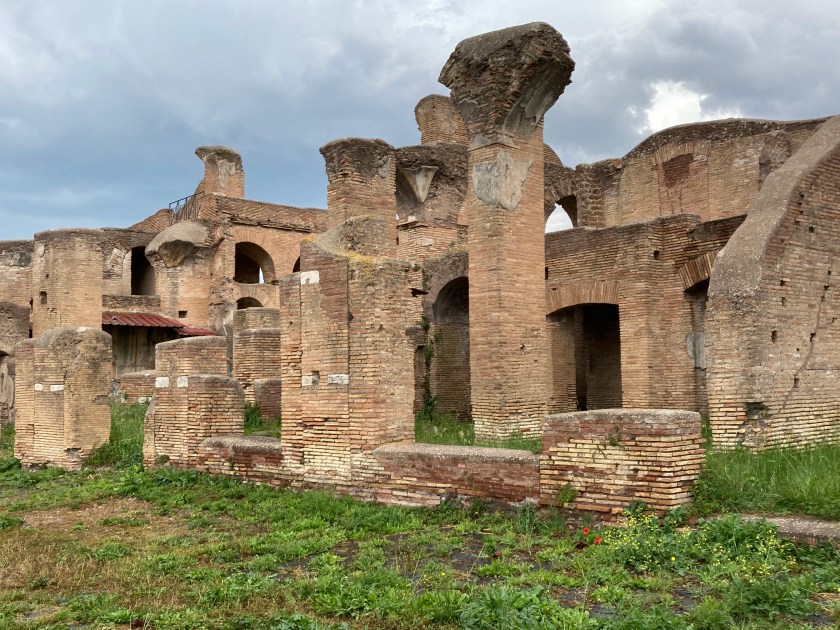
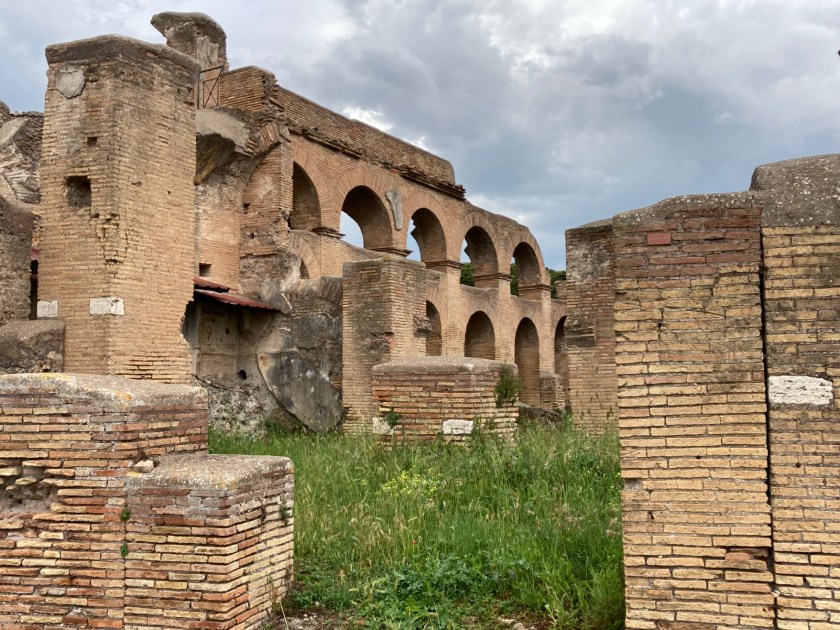
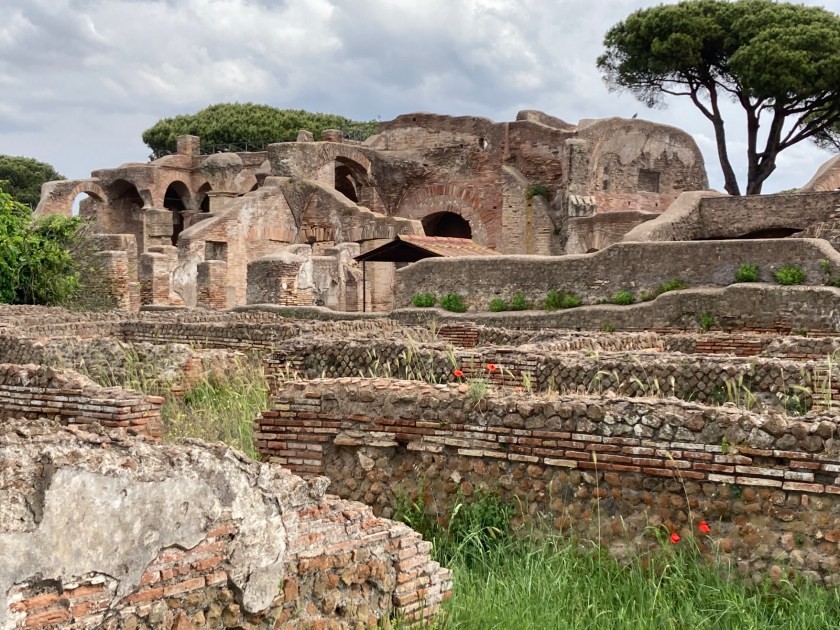
Ostia Antica is known as “Ancient Rome’s seaport.” We went there with our friends Chuck and Monica, then again with Willie and Kathryn. Like Pompeii, Ostia Antica is a snapshot of the Roman Empire. With its population declining for a few hundred years and finally abandoned in the 9th century CE, Ostia Antica was never built over. So, what you see (at least in layout) is pretty much what any Roman emperor would have seen were he to visit this city during his reign. This is what the city looks like today:
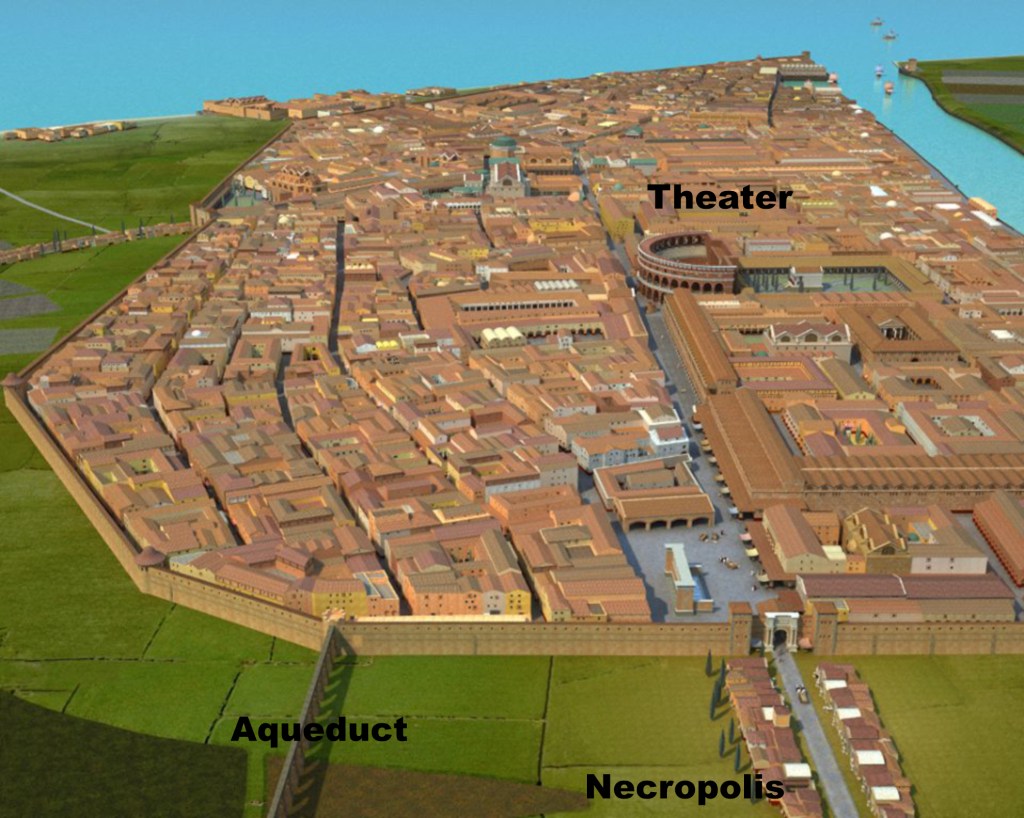
At the end of the 3rd century CE, Ostia Antica looked something like this:
In the 3rd century CE, Ostia Antica was Ostia and had been since maybe the 7th century BCE. The best supported archaeological evidence dated to the 3rd century BCE suggests Ostia began as a military encampment at the mouth (“ost” is mouth in Latin) of the Tiber River (which flows through Rome). Gradually, a center of maritime trade grew around the fort. Julius Caesar in particular developed the harbor to handle the import of massive amounts of grain that he distributed to the citizens of Rome thereby ensuring their “cooperation.” By the third century CE, the population reached maybe 100,000. Unfortunately, the Tiber dumped a lot of silt at its mouth making the harbor unnavigable and, eventually, a new port was built a few kilometers north (currently it’s beneath Fiumicino International Airport). Ostia then became a destination for rich Romans to build coastal villas. The population of Ostia began a slow, steady decline with the fall of the Roman Empire. By the 9th century CE, the city was completely abandoned. Oh, and the silt from the Tiber continued to build up until the coastline is now 3 miles west of Ostia. There’s a new beachfront community actually on the beach called Ostia. Hence, Rome’s Ostia became Ostia Antica (=Ancient Ostia).
If you are in Rome and want to visit Pompeii, I would suggest Ostia Antica. Day trips to Pompeii from Rome make for a very long day (3+ hours each way). Pompeii is huge so you may not see as much as you want. Pompeii can be very crowded (again, you may not see as much as your want). Finally, Pompeii’s frescoes and mosaics have been moved to the archaeological museum in Naples. Ostia Antica is maybe an hour away. It’s small but you definitely get the idea of what a Roman city was like. It’s very uncrowded. If you’re in Rome with one day to see a preserved Roman city, I’d go to Ostia Antica. See what you think:
The road into the east gate of Ostia Antica goes through a necropolis or cemetery. This is a a family mausoleum. There would have been a roof and the niches would have contained urns with ashes.
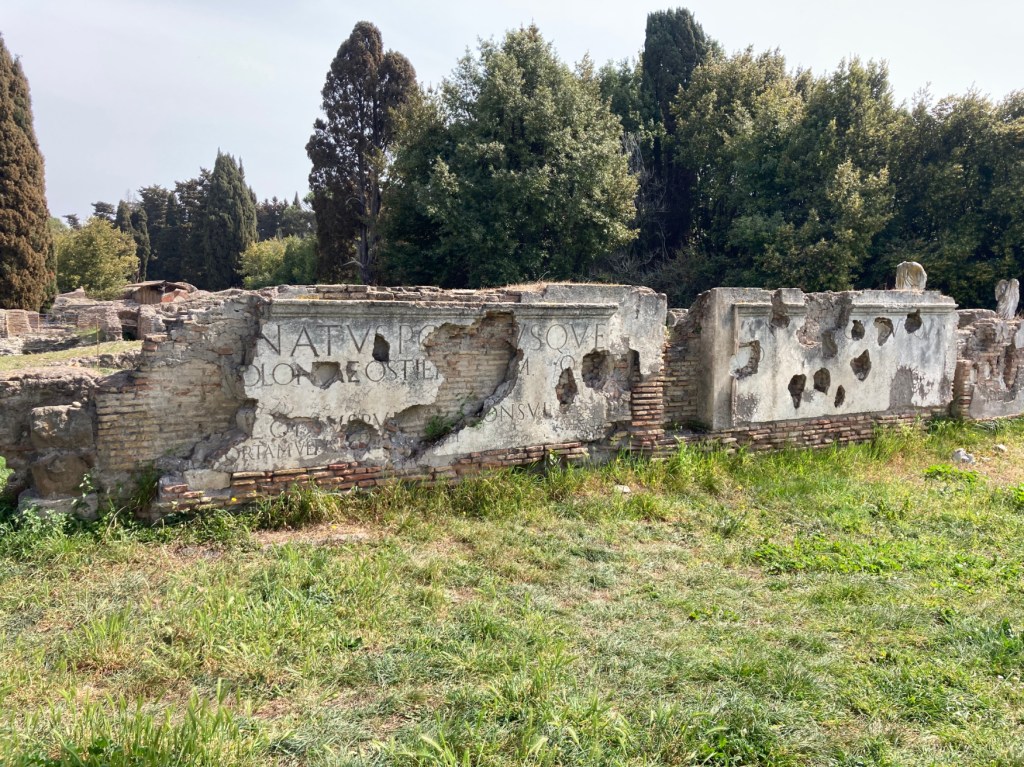
This sign hung over the Porta Romana Gate (east gate into Ostia) proclaiming “THE SENATE AND THE PEOPLE OF THE COLONY OF OSTIA CONSTRUCTED THE WALLS.”
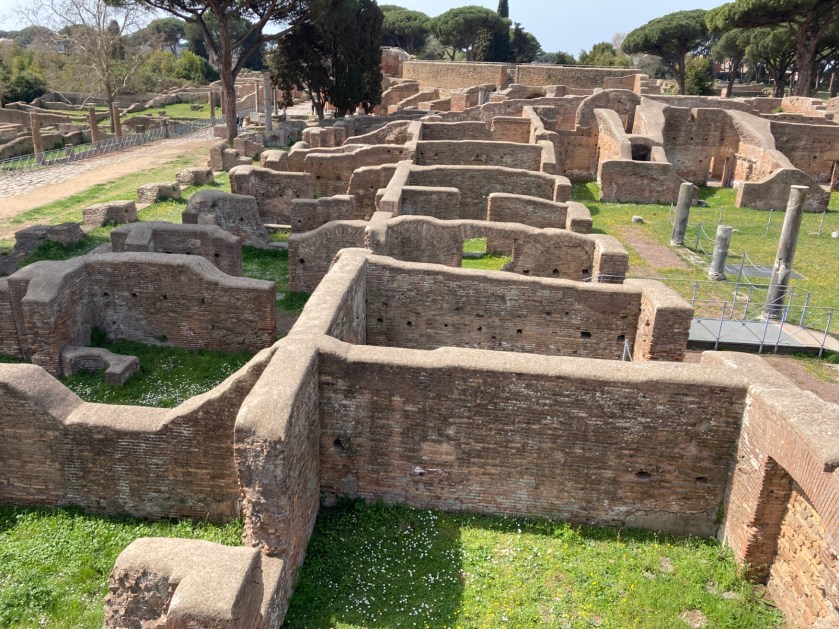
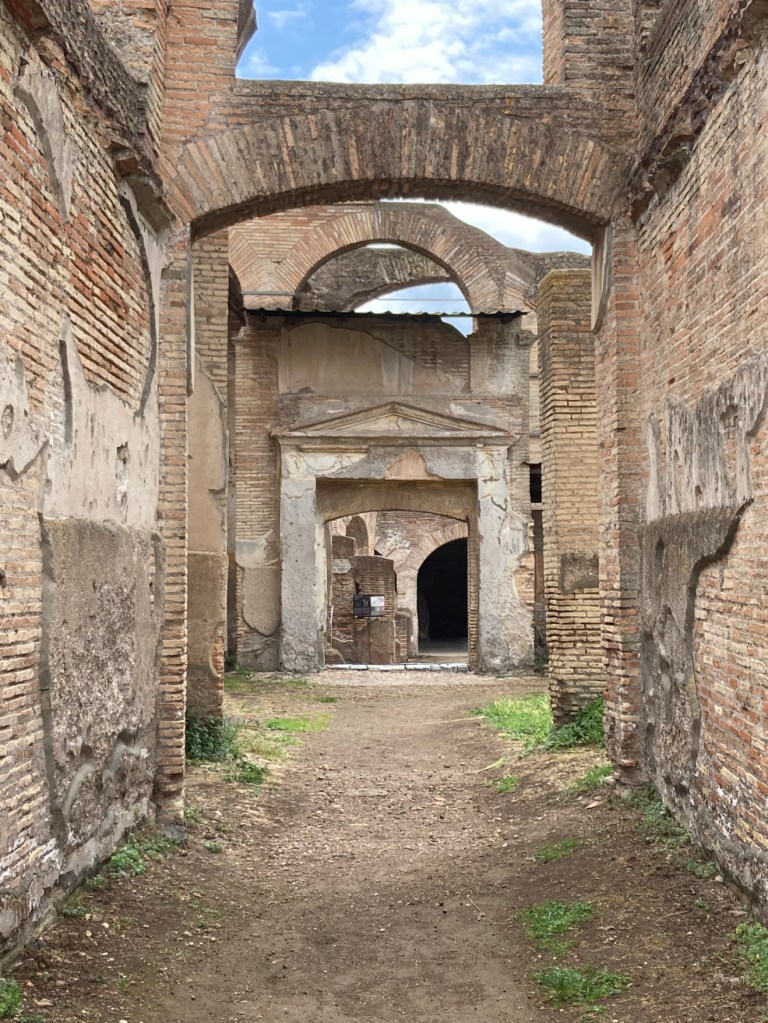
Stores and warehouses.
Theater exterior.
Theater.
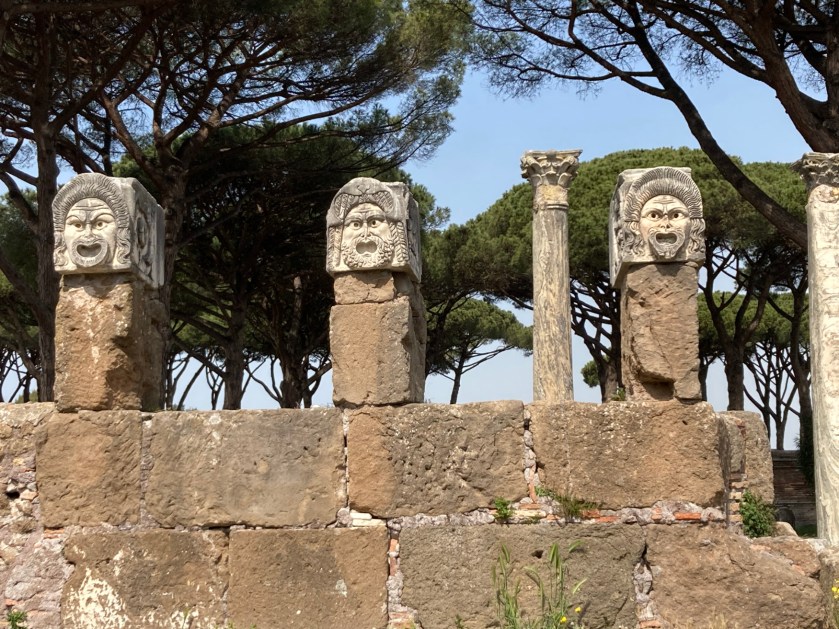
Theater decoration.
Road to theater.
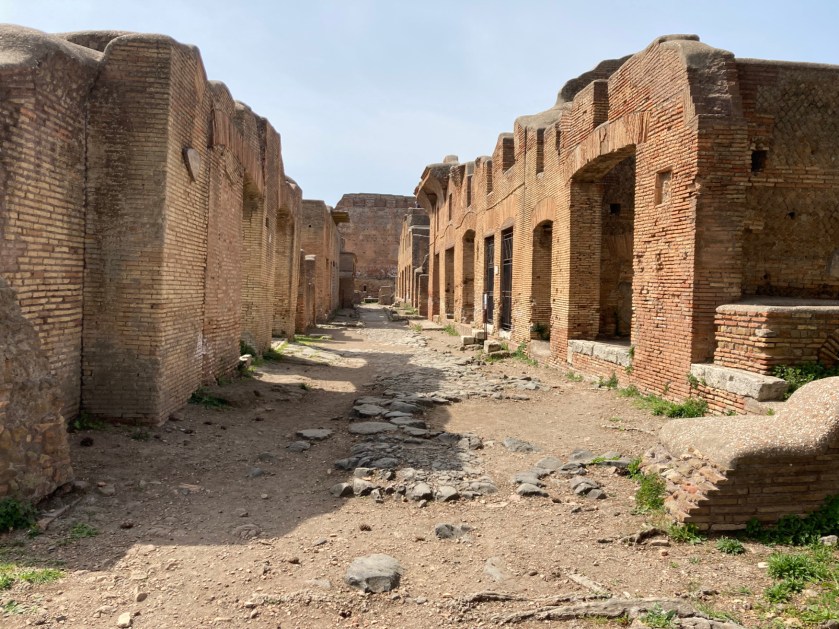
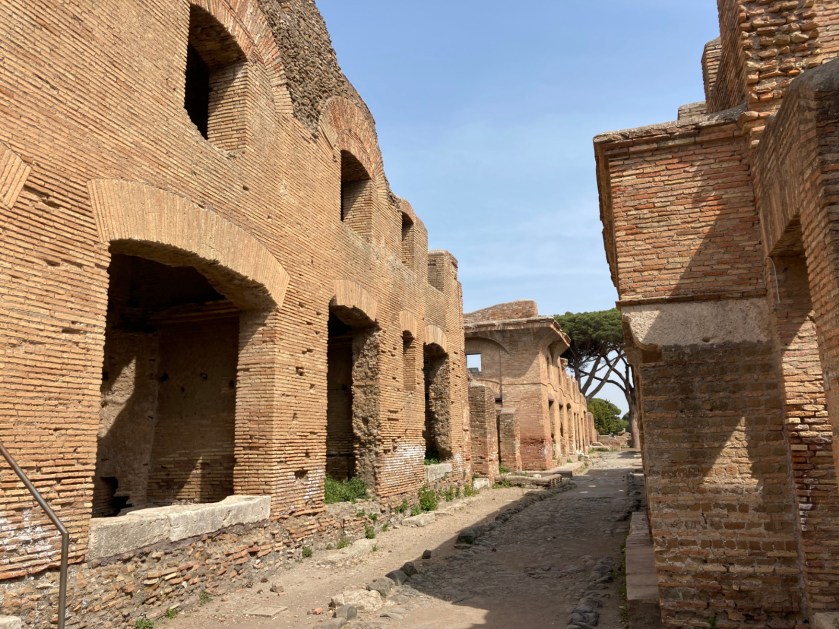
Residential street with apartments above; stores, bars, and thermopolia (fast food joints) at street level.
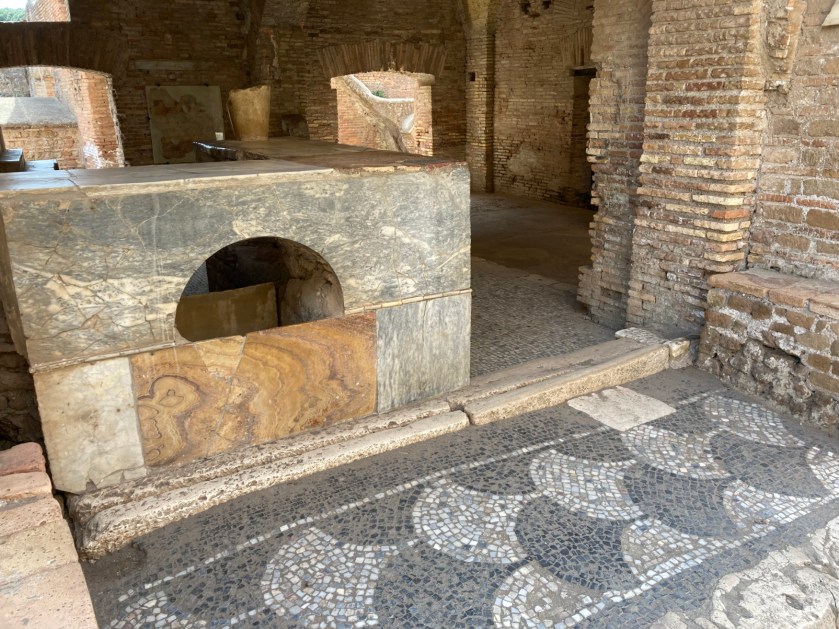
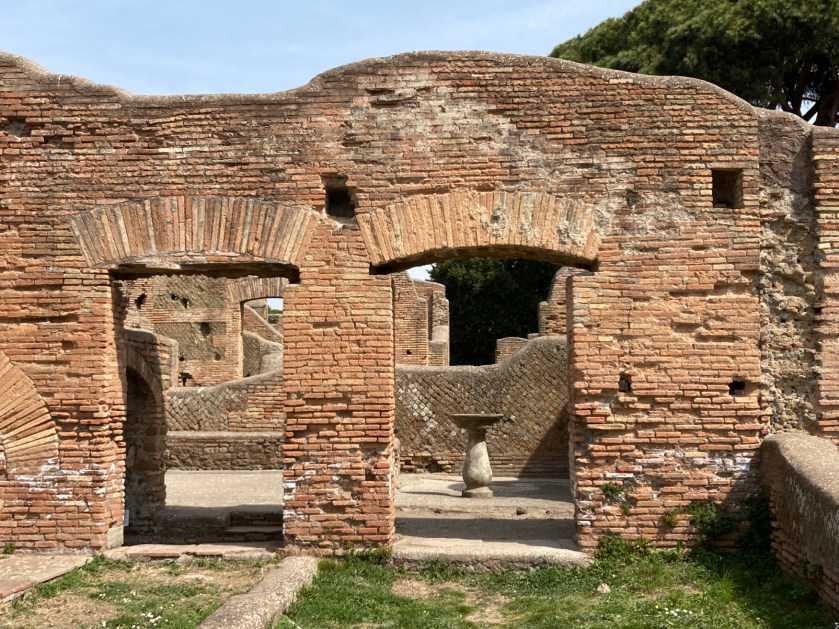
Thermopolium.
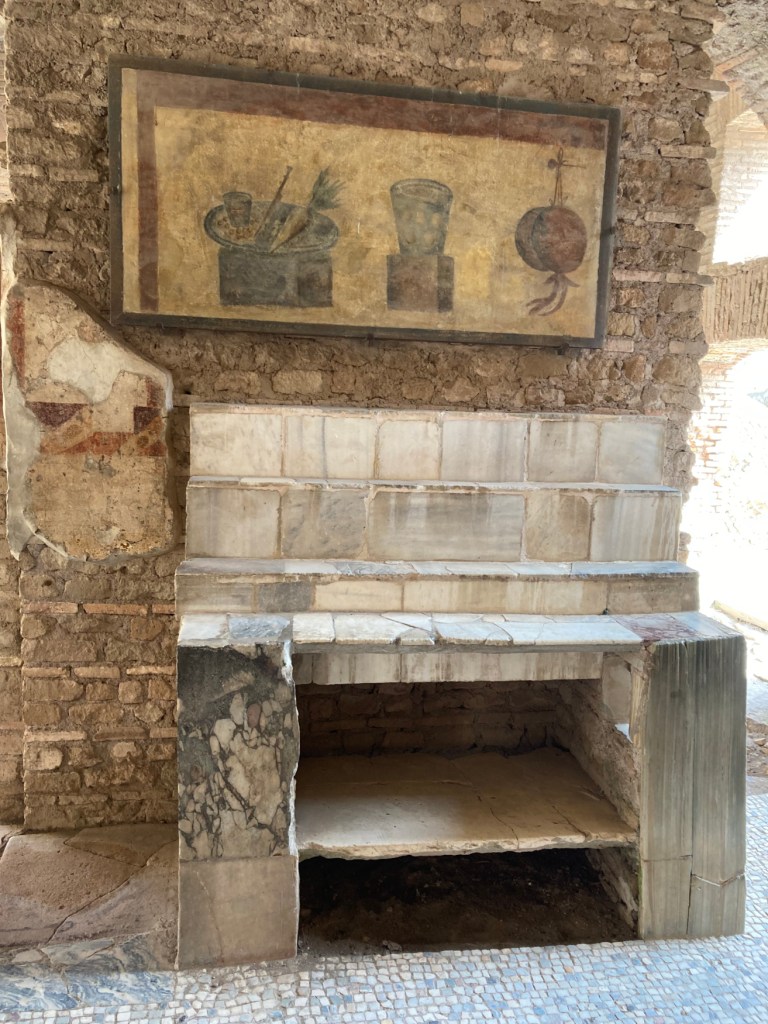
What’s for sale today?
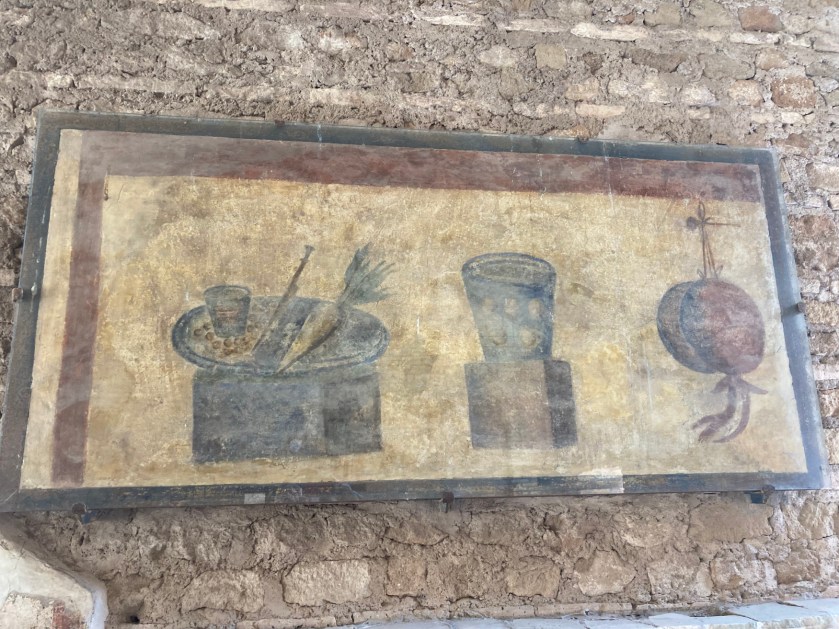
Close-up of what is being sold today.
Residential street.
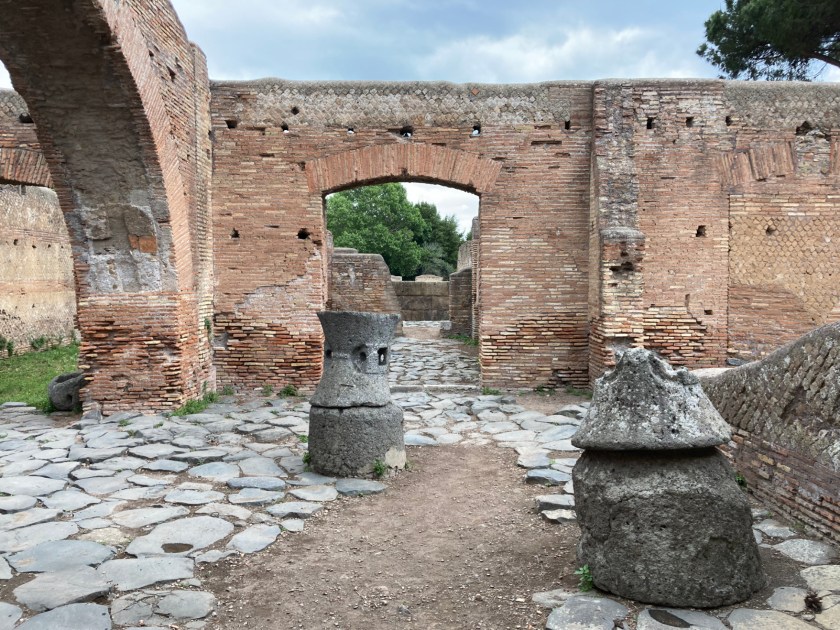
Bread bakery- wheat goes in the top, slaves or donkeys push wooden beams in the holes to turn upper rock, and flour comes out at the bottom of the upper rock.
Public baths.
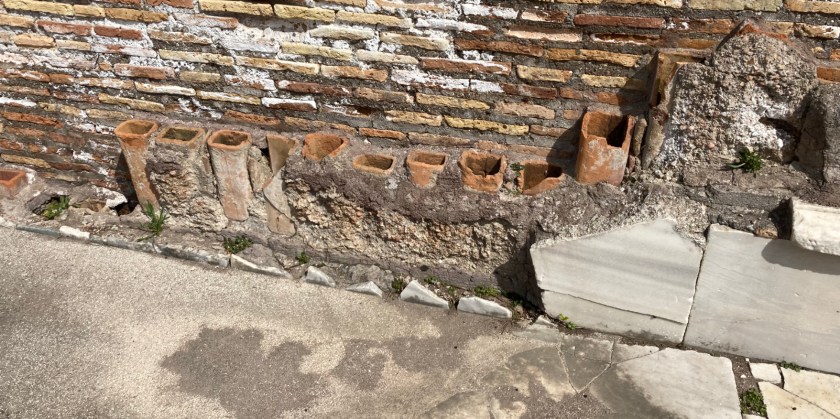
The hot room (caldarium) at a bath was heated by circulating fire-heated air through these ducts made from clay pipes.
Heating ducts.
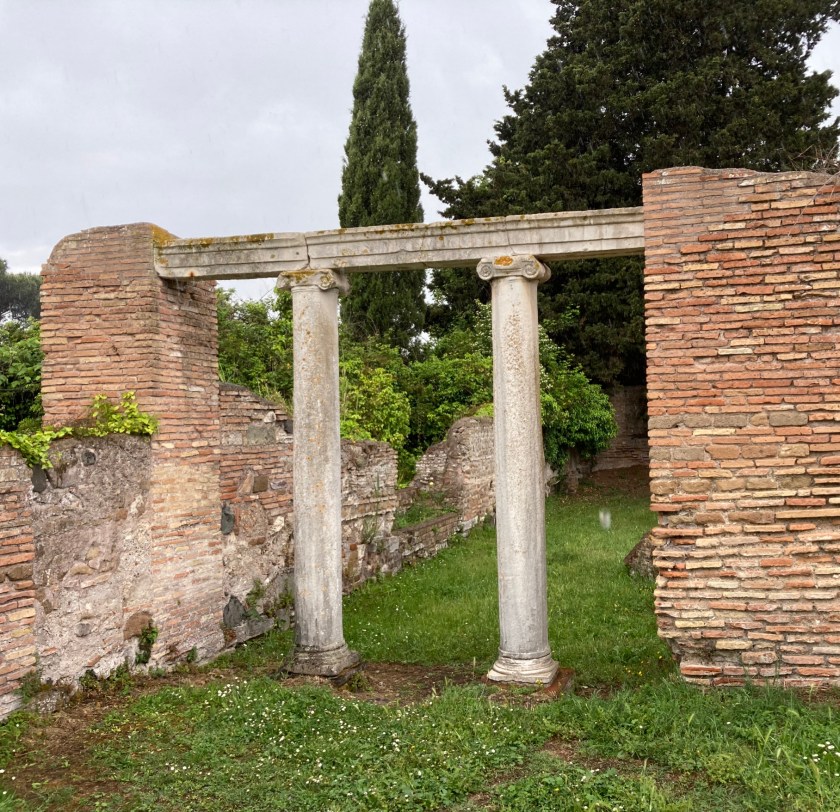
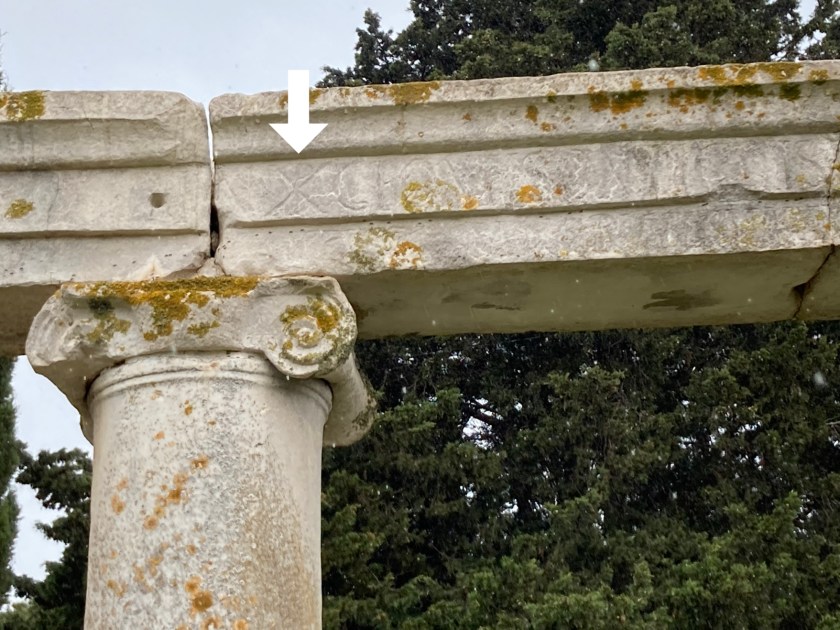
This was the house of an early Christian family. How do we know? If you look at the lintel over the column on the left you see…
…what appears to be a “X” over and “P.” These are the Greek letters Chi and Rho, the first 2 letters in CHRISTOS (Greek for Christ). Superimposed, these letters form an early symbol that identified followers of the Christian faith.
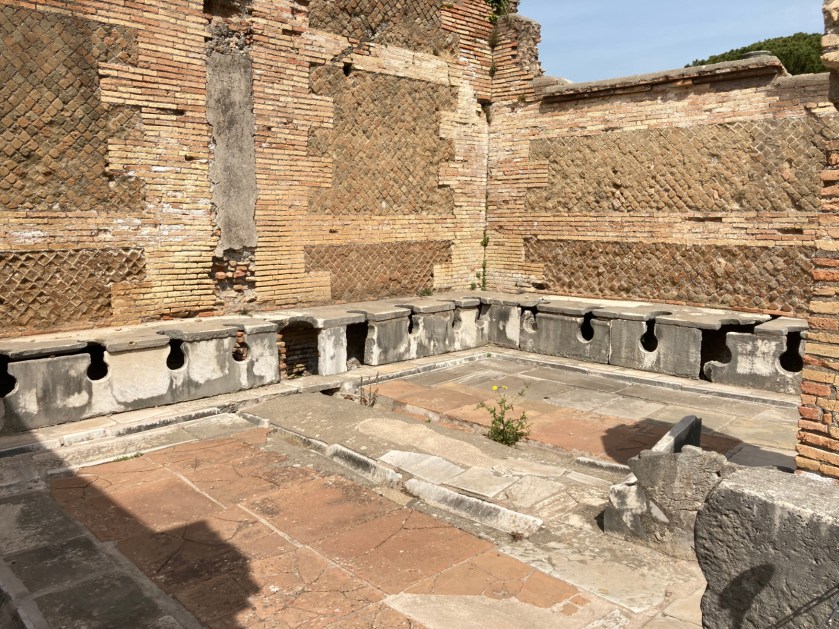
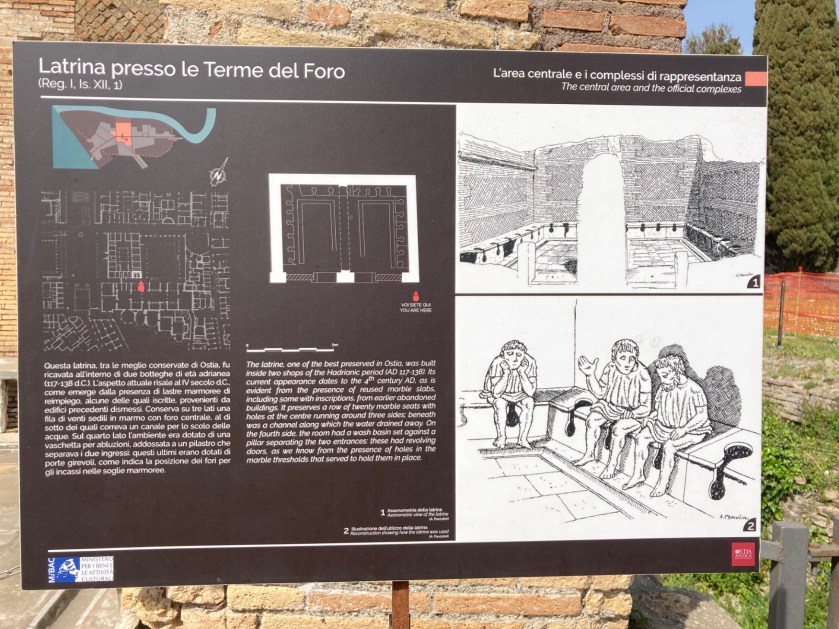
Public latrines: This is probably what everyone has been waiting for. (Didn’t see this in Pompeii).
On entry, you got a piece of sponge on a stick for clean-up afterwards.
You can go to museums in Rome to see the masters and their masterpieces. Or you can go for a pleasant stroll through the narrow, winding streets of Rome and see great art (paintings, statues, frescoes, etc.) for free, usually in churches. Statues by Michelangelo and Bernini and paintings by Caravaggio can be seen for free in these small churches scattered around Rome. By the way, you should still find time to go the museums.
Basilica of St. Peter in Chains (Basilica di San Pietro in Vincoli)
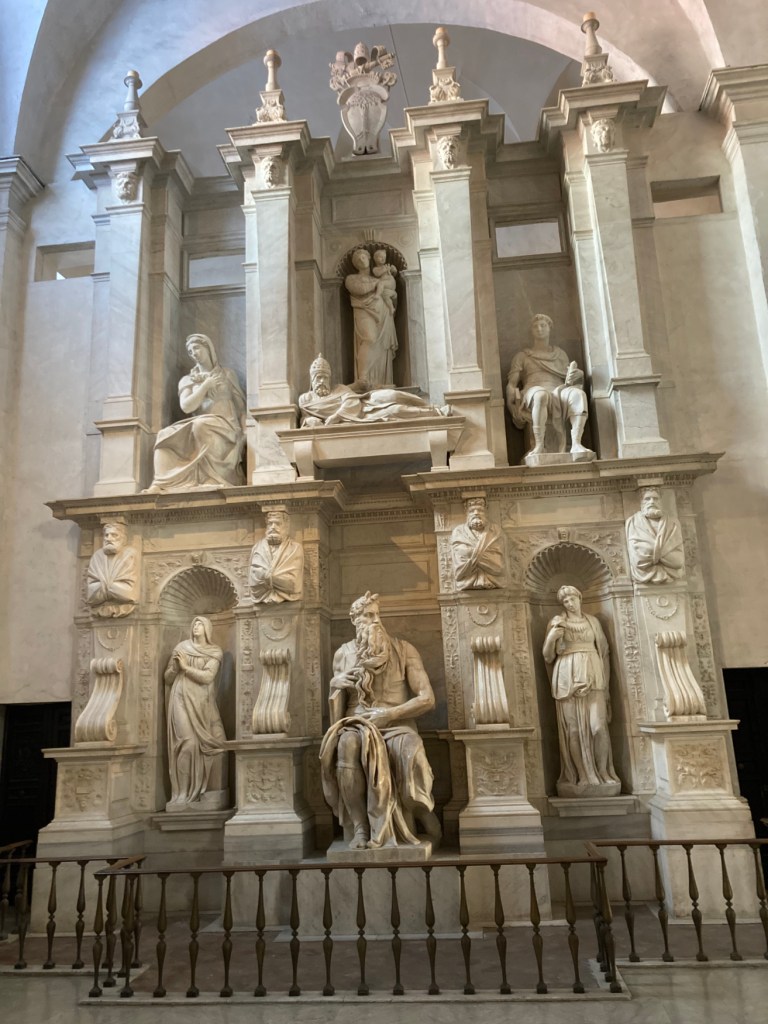
The Basilica of St. Peter in Chains is the repository for the chains that bound St. Peter when he was arrested. These chains are a fusion of the chains that confined St. Peter in prison in Jerusalem and the chains that bound him int the Mamertine Prison in Rome.I’m not commenting on the accuracy of this claim, just that it is the origin of the church’s name. It also has a statue of Moses carved by Michelangelo.
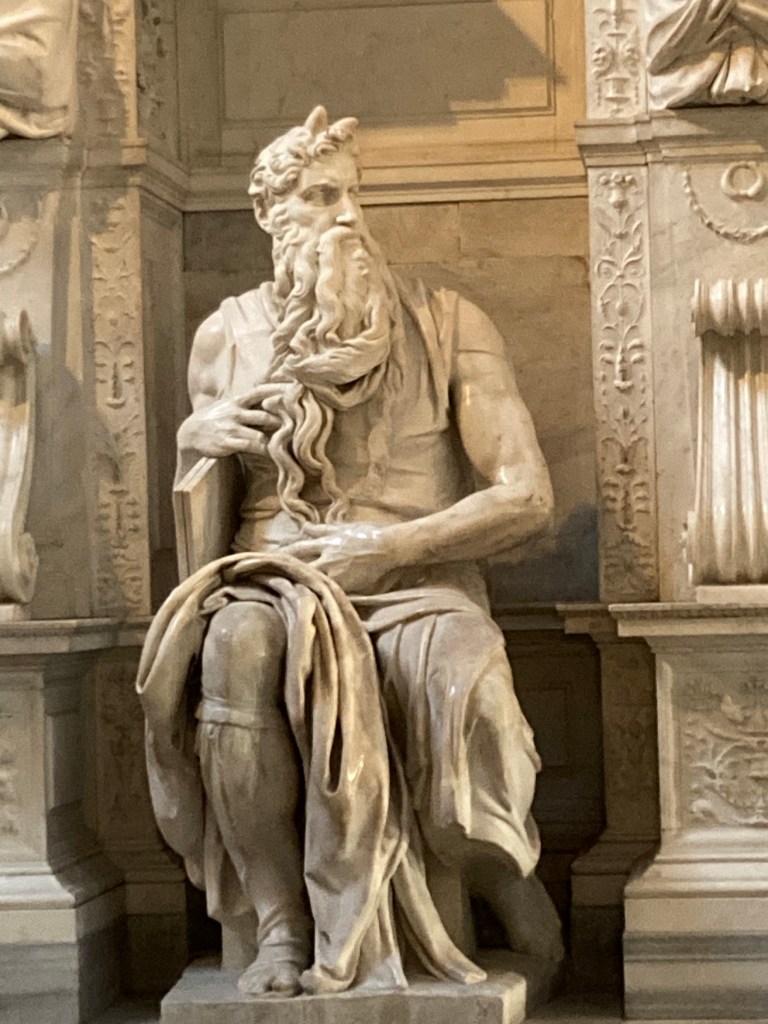
Moses. This was supposed to decorate the tomb of Pope Julius II in St. Peter’s Basilica. Michelangelo’s original design was intended to display 40 of his statues. Julius II, however, pulled Michelangelo off the tomb project to paint the Sistine Chapel and this wall “panel” was the only tomb-piece that was completed. Funding for the project dried up when Julius died; his family moved what was finished to the Basilica of St. Peter in Chains where Julius II had been a cardinal. Julius II is buried in St. Peter’s.
Moses
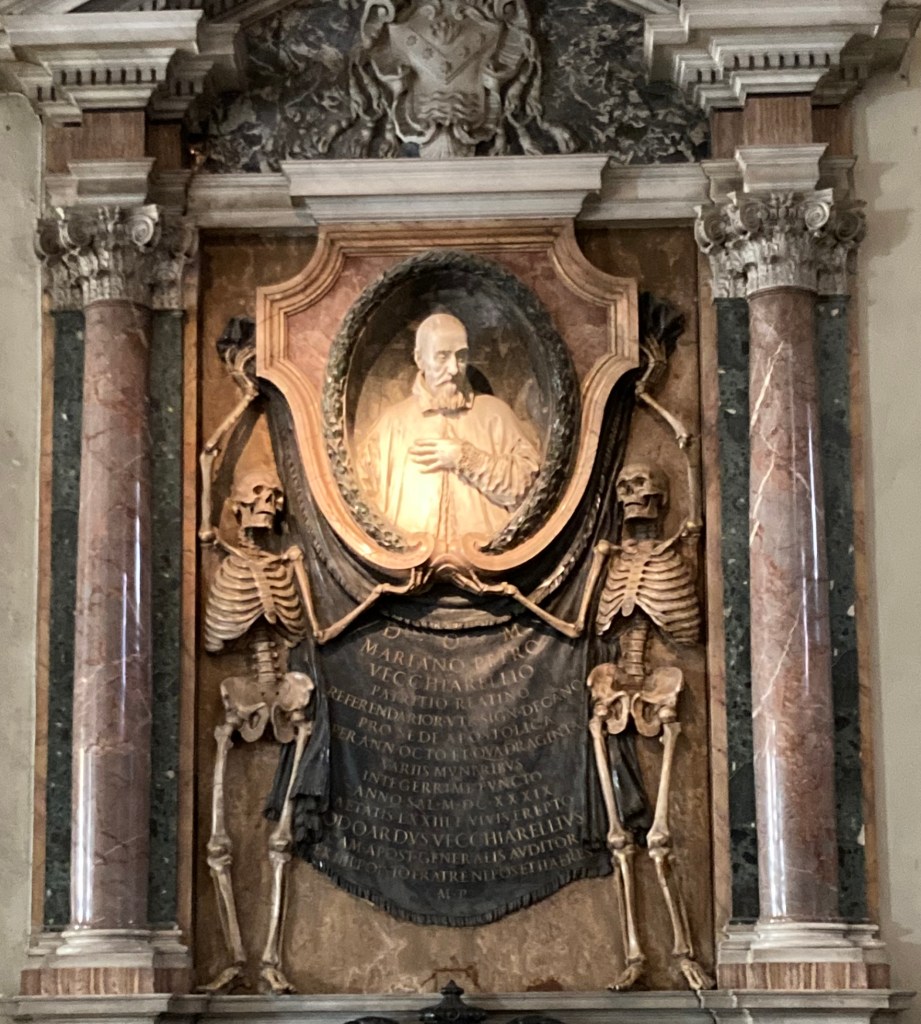
There were a couple of simpler tombs in this church. I think they have their own “unique” charm.
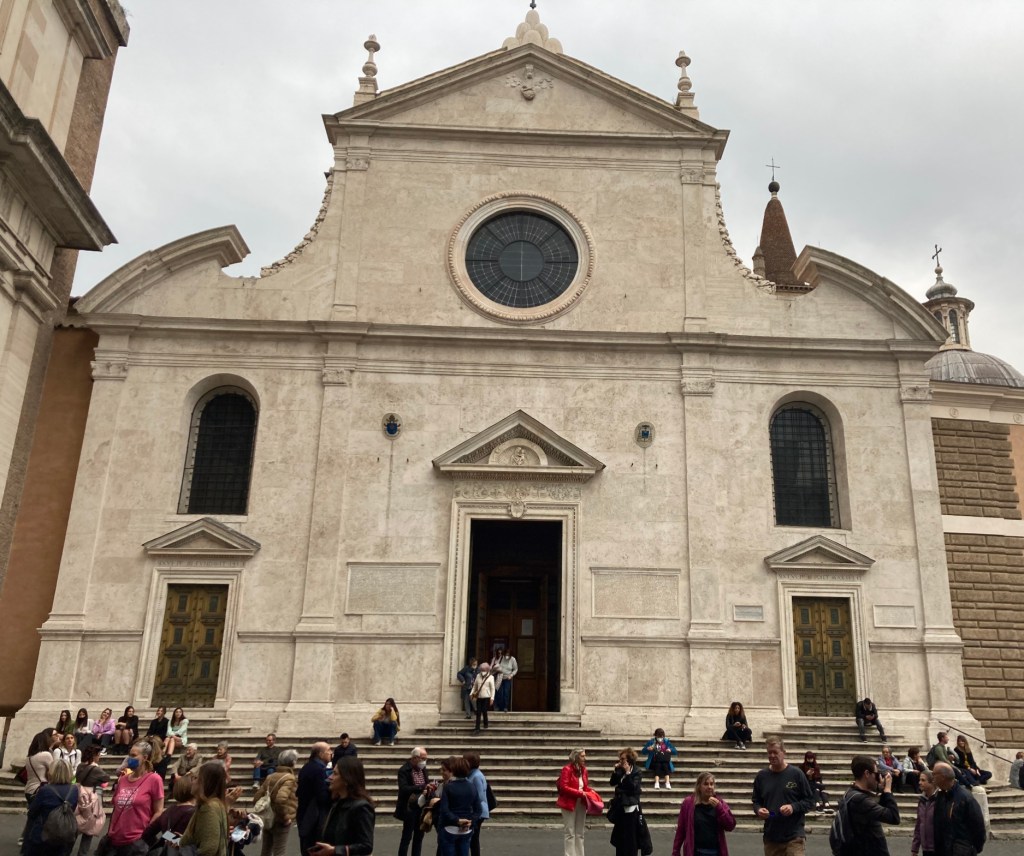
Parish Basilica of Santa Maria del Popolo (Basilica Parrocchiale Santa Maria del Popolo)
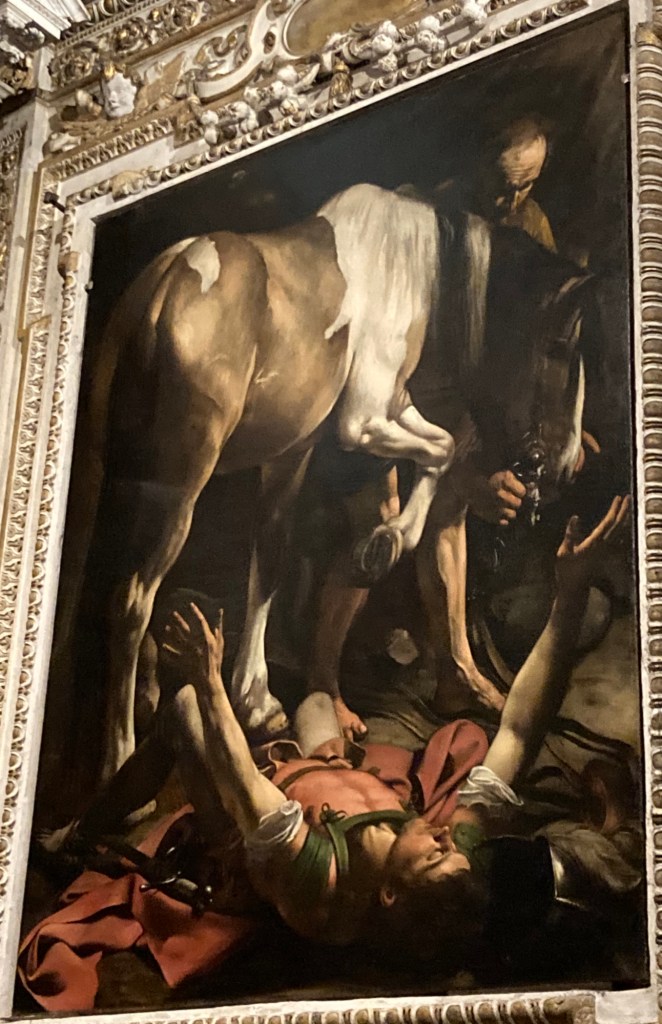
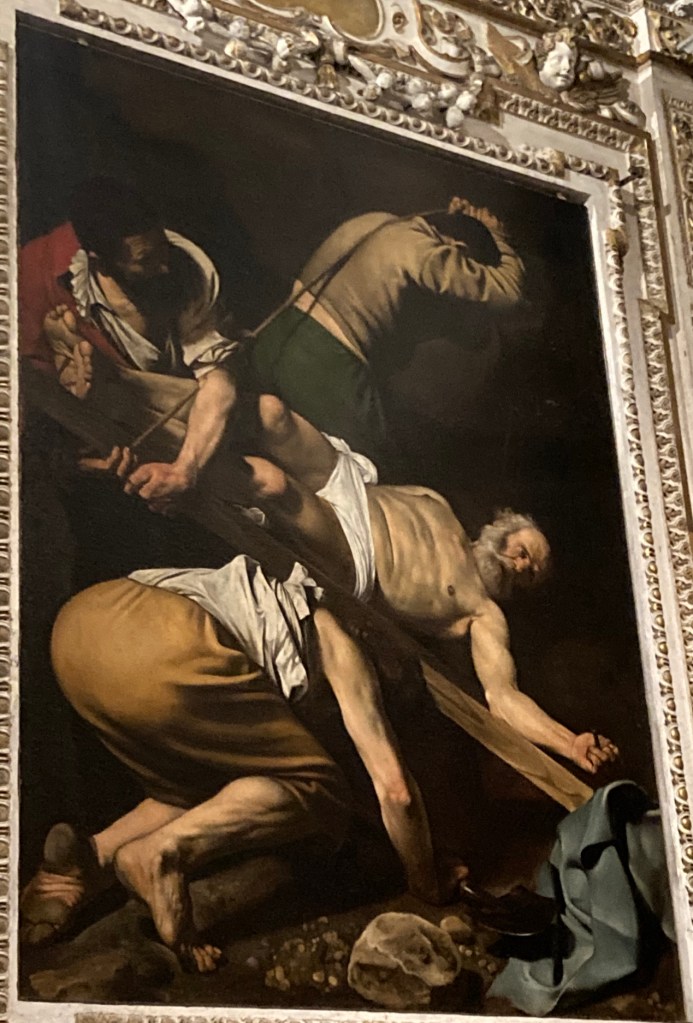
This basilica is the home to two paintings by Caravaggio and a couple of Bernini sculptures.
Conversion of St. Paul
Crucifixion of St. Peter
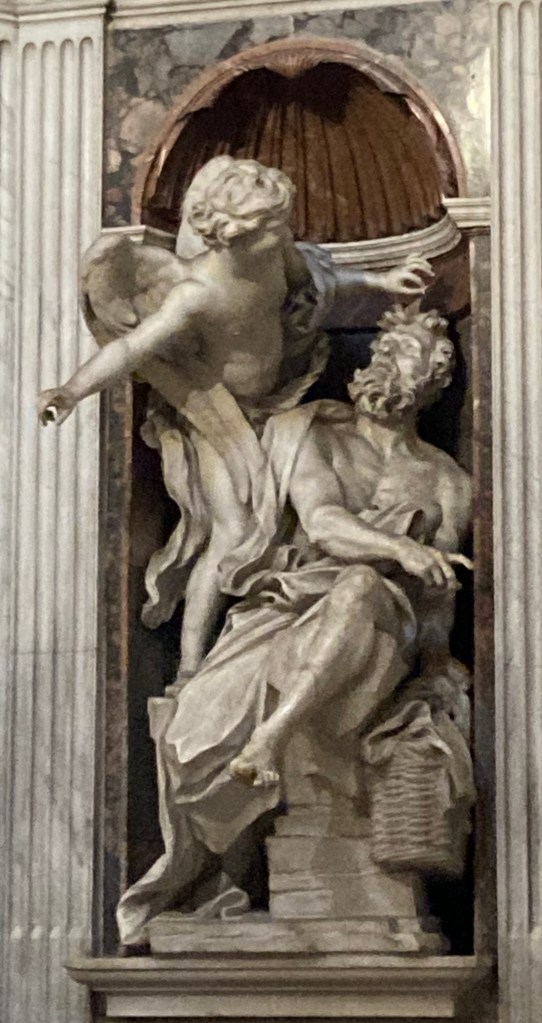
Habbakuk and the Angel by Bernini in the Chigi Chapel. There is another Bernini sculpture in this chapel- it cannot be seen from the entrance to the chapel.
Basilica of Saint Augustine. (Basilica di Sant’Agostino)
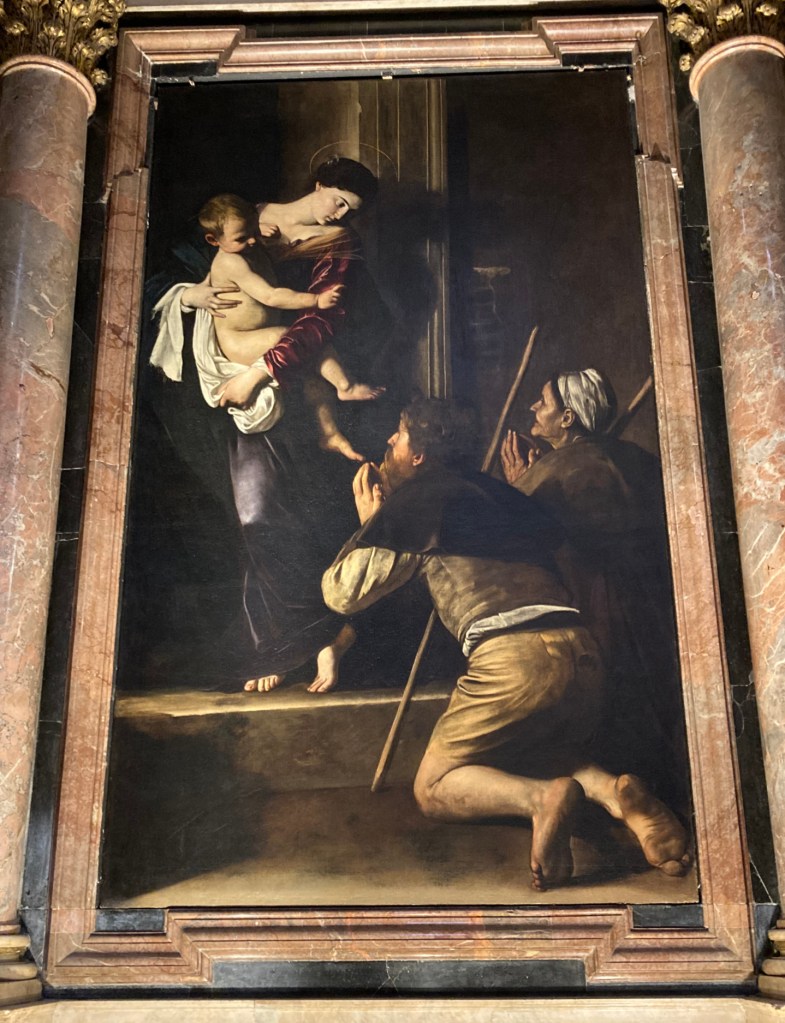
Madonna of Loreto (Madonna di Loreto) or Pilgrims’ Madonna (Madonna dei Pellegrini) by Caravaggio
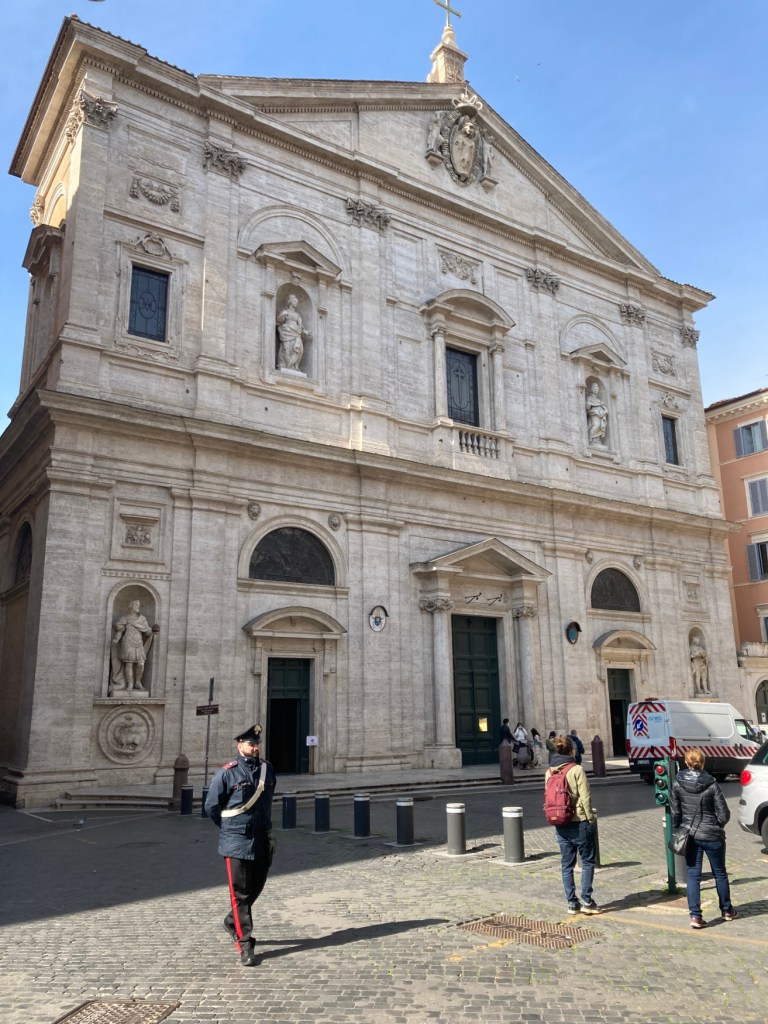
Church of Saint Louis of the French (Chiesa di San Luigi dei Francesi)
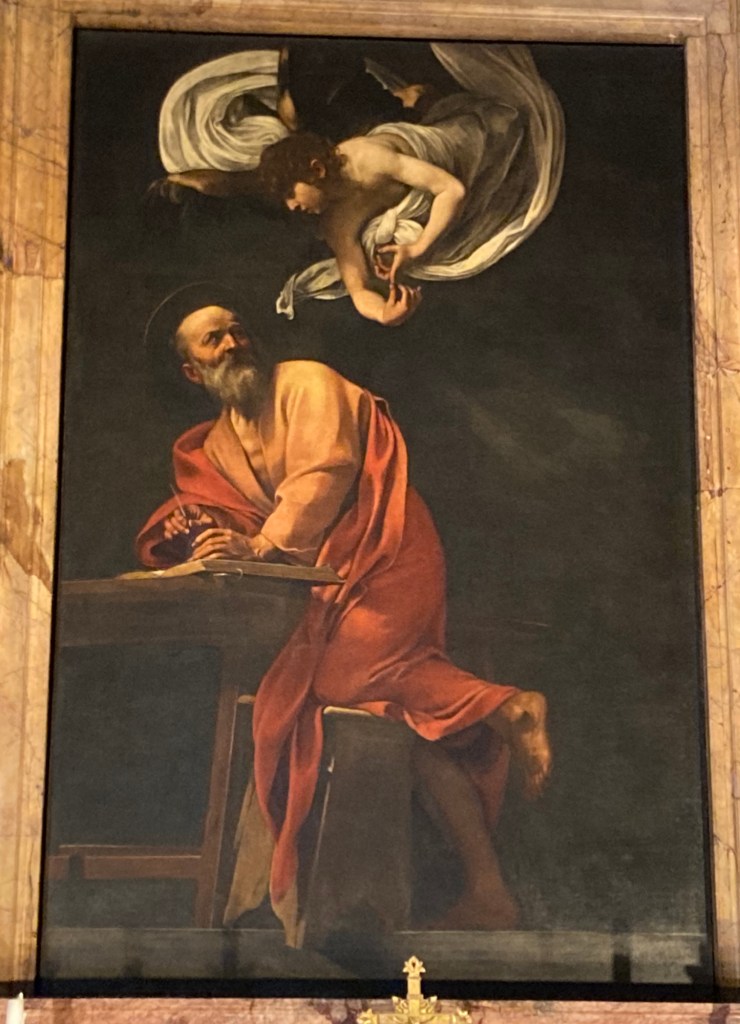
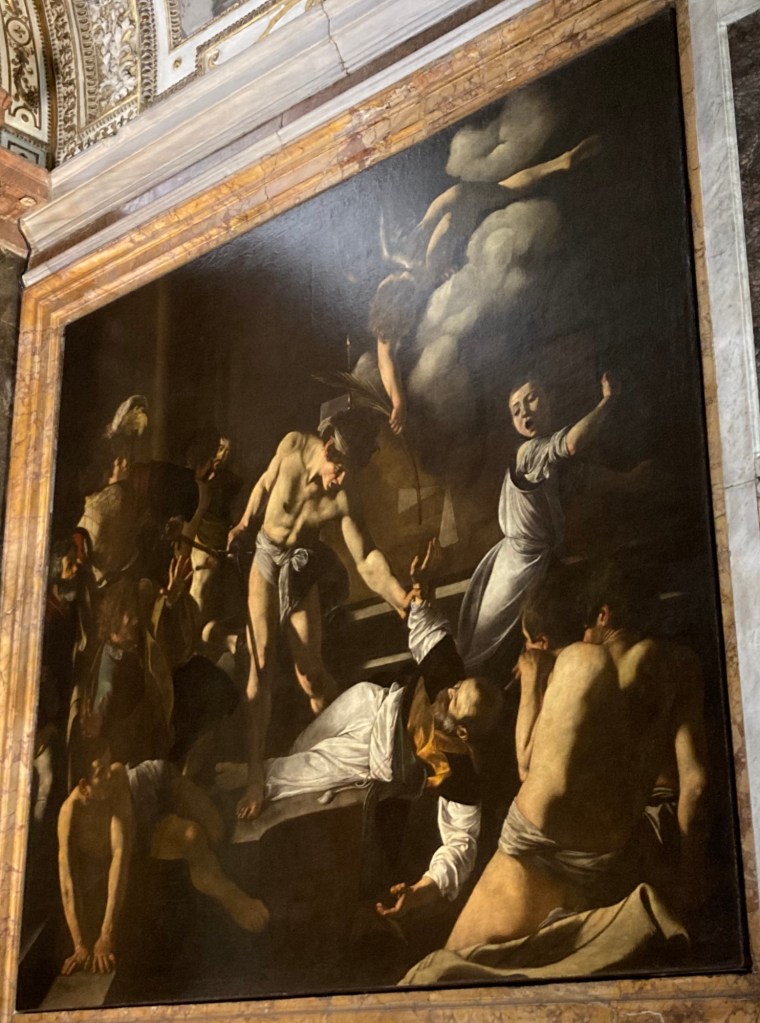
There are 3 paintings by Caravaggio in the Chapel of St. Matthew depicting scenes from his life.
The Calling of St. Matthew
The Inspiration of St. Matthew
The Martyrdom of St. Matthew
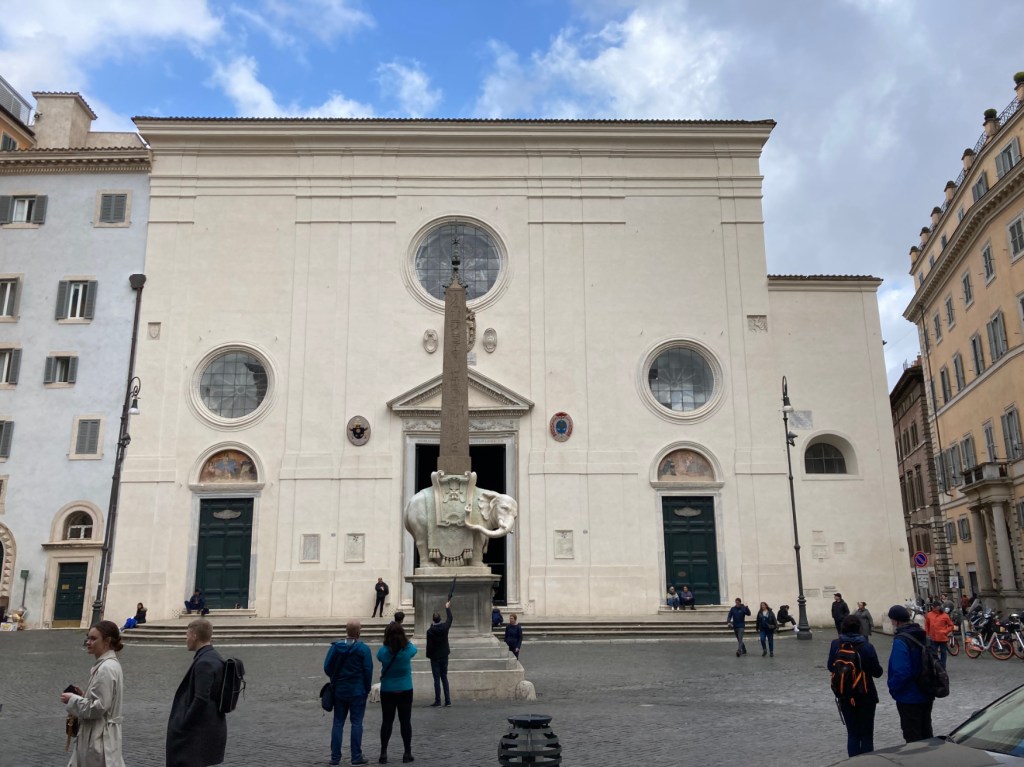
Basilica of Saint Mary above Minerva(Basilica di Santa Maria sopra Minerva)
In front of the basilica, that’s a Bernini statue (1667 CE) supporting an obelisk (580 BC), taken from Egypt in the 1st century CE.
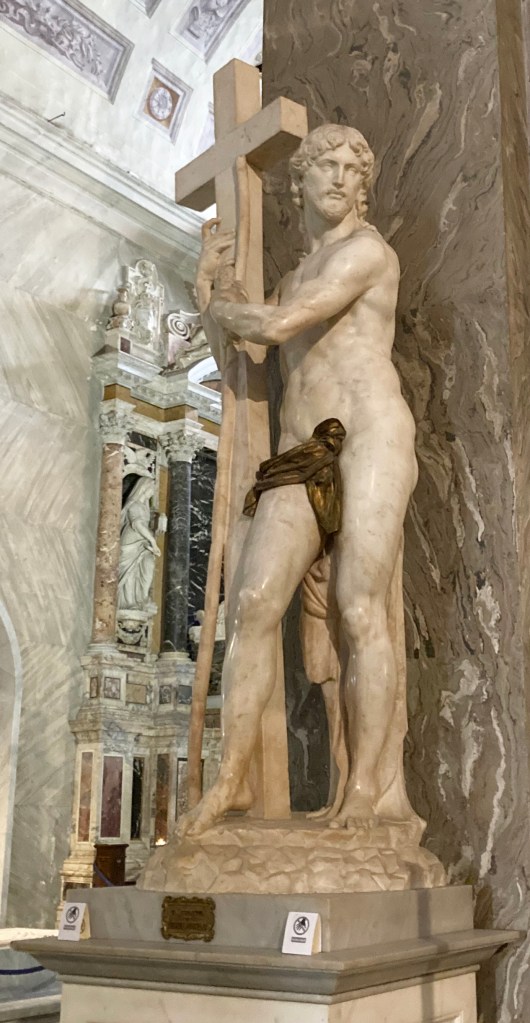
The Risen Christ or Christ the Redeemer or Christ Carrying the Cross. by Michelangelo. The bronze loincloth was added later (not by Michelangelo).
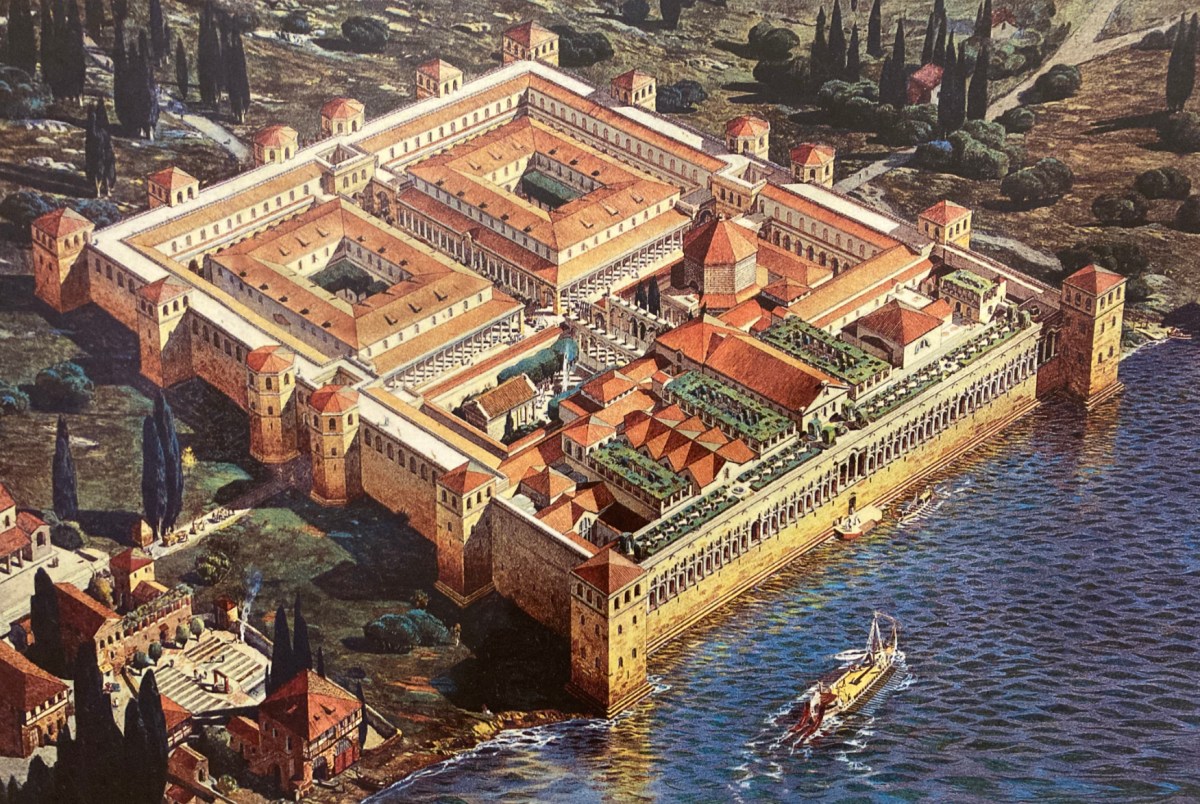
Croatia’s second city, Split, began life as the retirement palace for the Roman emperor Diocletian. Diocletian was born and grew up in the Roman colony of Salona, just a few kilometers from where he built this palace. Diocletian joined the Roman army and rose through the ranks. Eventually, his troops installed him as the Emperor and he served from 284-305CE. After 20 years, along with severe health problems, Diocletian decided to give it up and became the first Roman emperor to abdicate the position voluntarily. He moved to his palace and lived there tending his vegetable garden until his death in 311CE. He was approximately 65 years old.
Orientation to Split and Diocletian’s Palace.
After Diocletian’s death, the palace became a possession of the Roman Empire. After the fall of the empire, it was abandoned. In the 7th century CE, the original Roman city of Salona was a victim of the tribal power struggles that filled the vacuum after the empire’s collapse. Some of the local population took up residence within the walls of the palace and began to modify it to suit their purposes. The transformation of the palace into an urban center has gone on ever since, incorporating, cannibalizing, tearing down and obscuring much of Diocletian’s original palace.
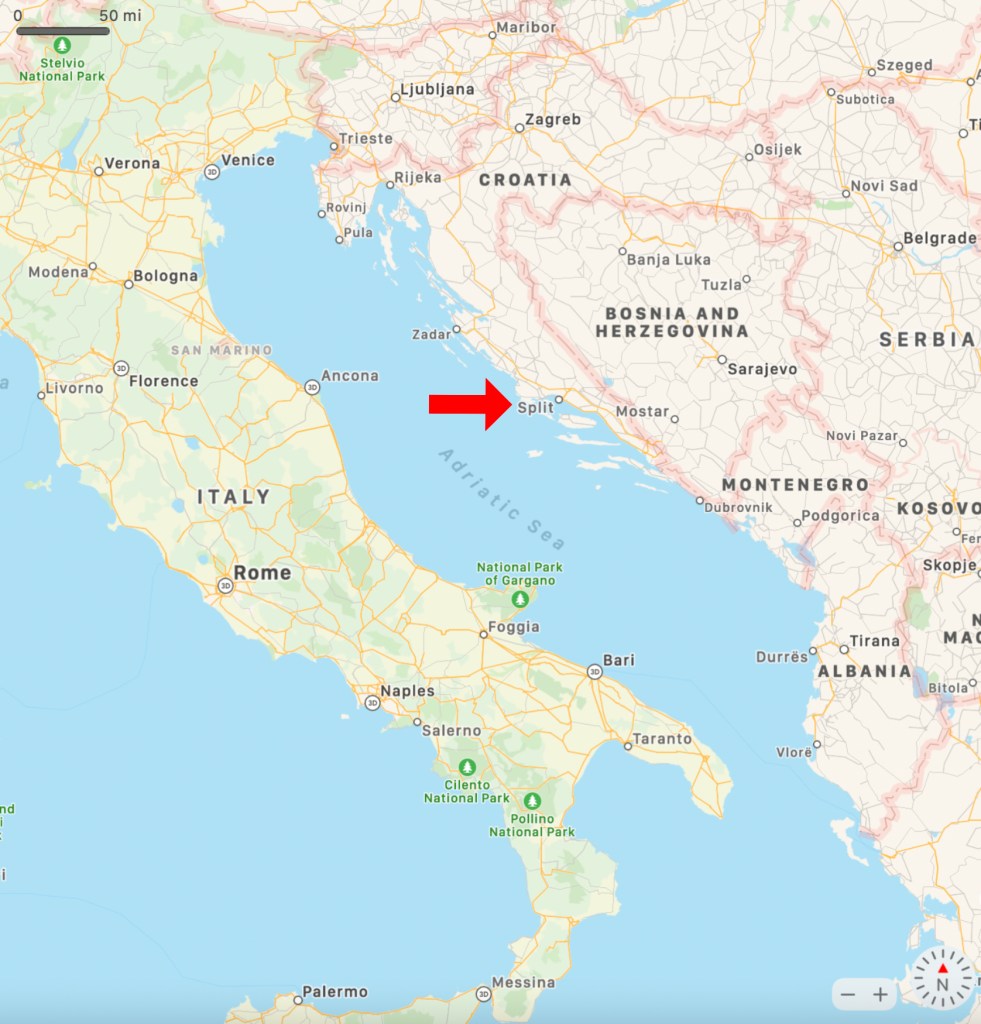
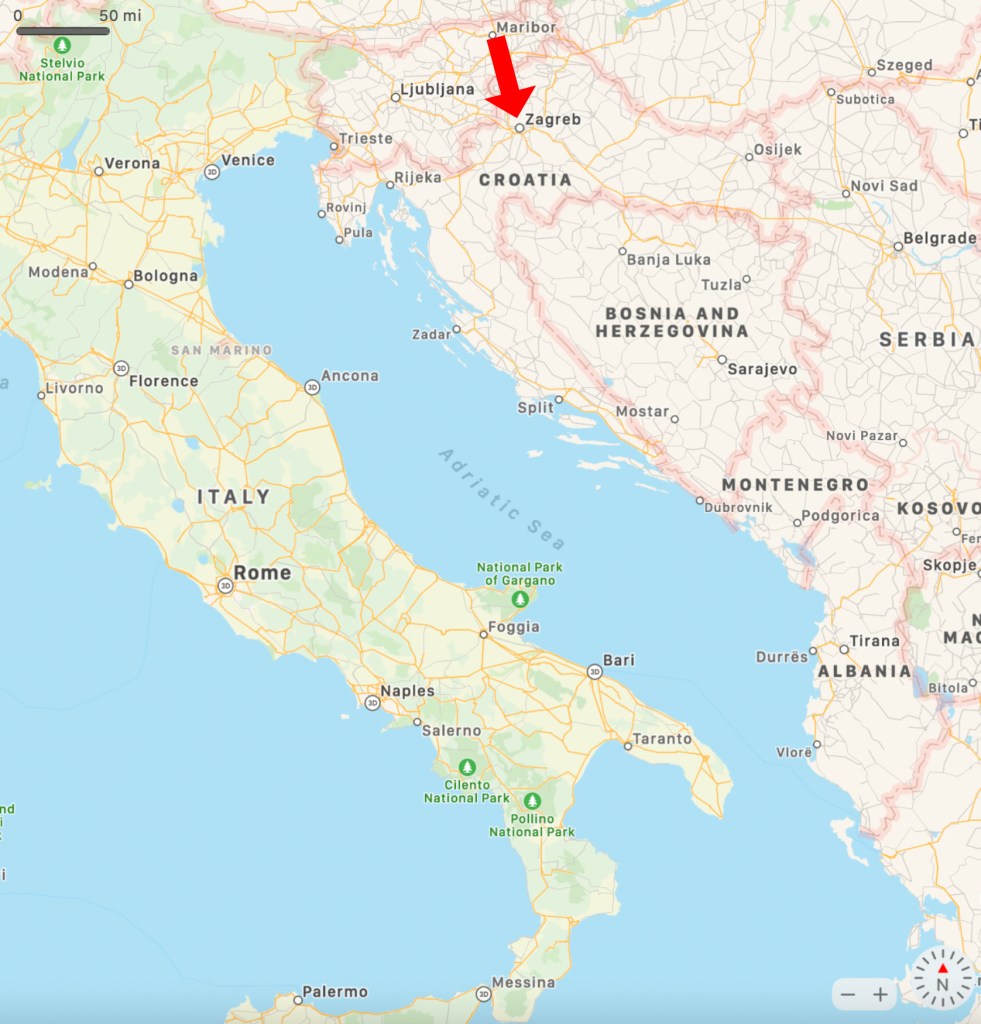
Location of Split.
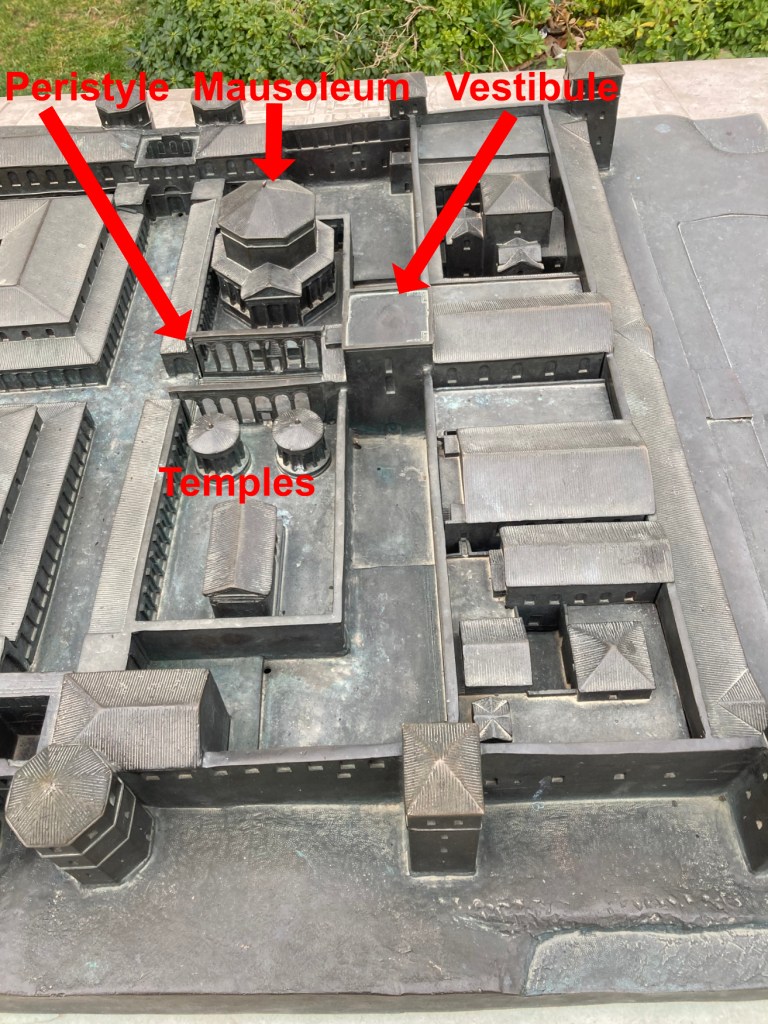
The palace was divided into 2 parts. His residence occupied the seaside half. It comprised a residential section, a temple section, and a mausoleum. The inland half contained barracks for his palace guard and offices for whatever administrative responsibilities are incumbent on a retired Roman emperor.
This is what the palace was thought to look like in 305CE. G= Gold Gate Fe= Iron Gate Br= Bronze Gate S= Silver Gate T= Temple Area P= Peristyle M= Mausoleum B= Basements
This nice bronze model of the palace is in the Riva (seaside promenade).
The Basements.
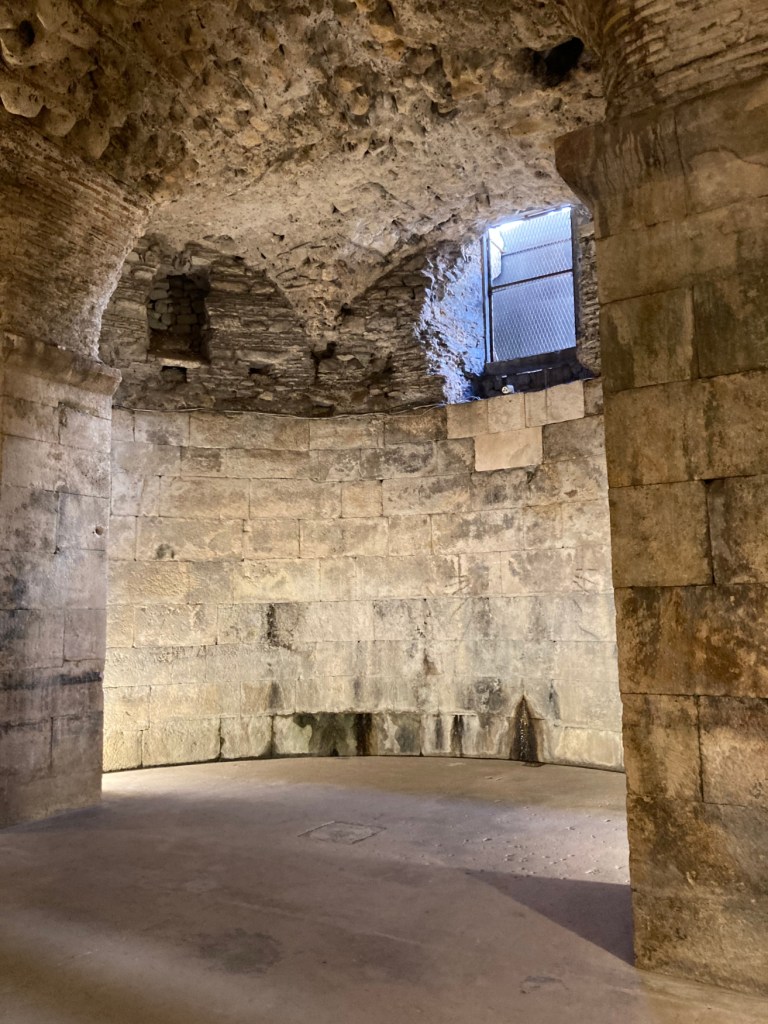
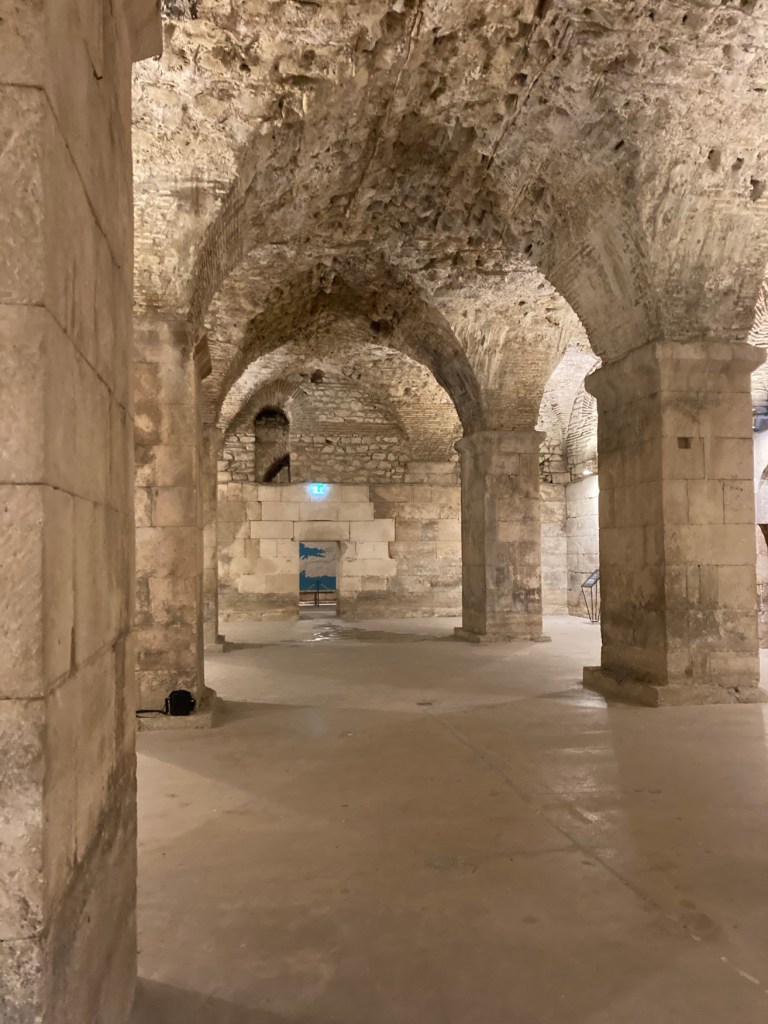
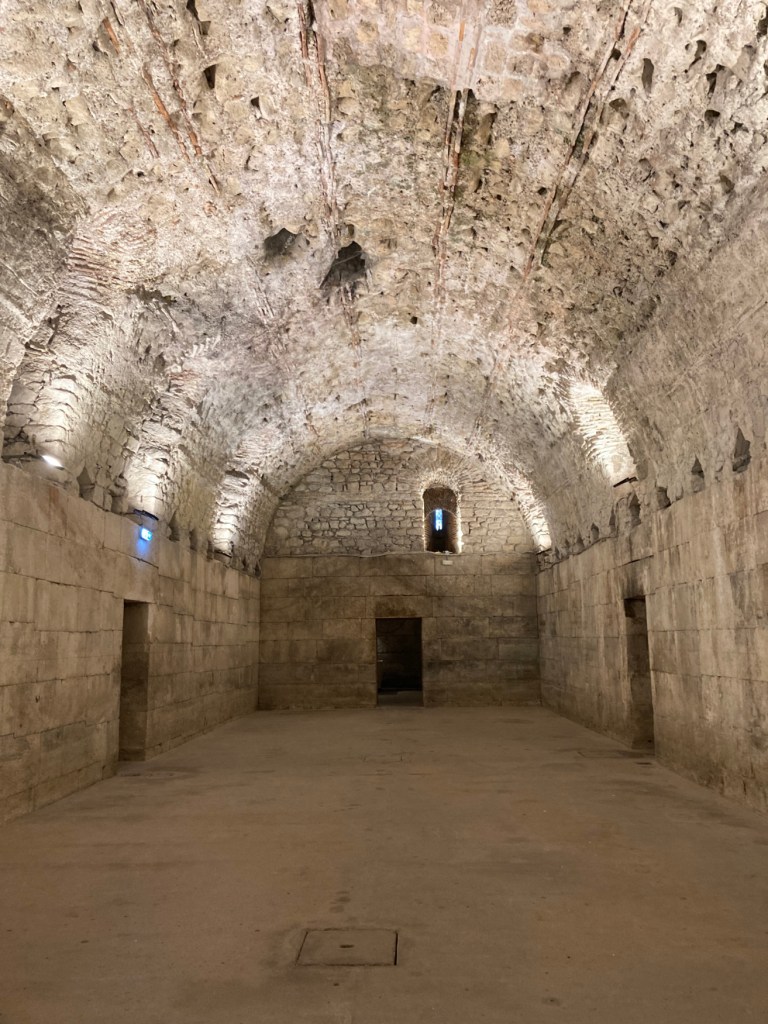
The property sloped down to the water. To keep the above ground part of the entire palace on the same elevation, the Romans had to build an elaborate and substantial “basement” to keep the residential section level with the administration section. These chambers were primarily used for storage. There might have been areas devoted to worship of the gods. There also might have been a dining room.
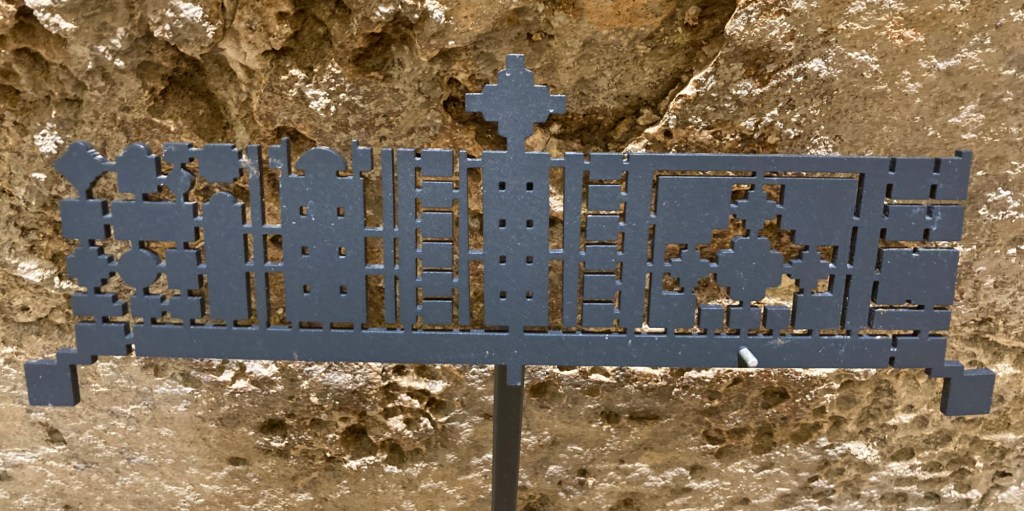
When you tour the basements, these “maps” of the basement chambers serve as guides. Your position in the hallway along the edge of the chambers is indicated by the white peg (lower right in this picture).
The scale is impressive. The chambers are 20-25 feet tall.
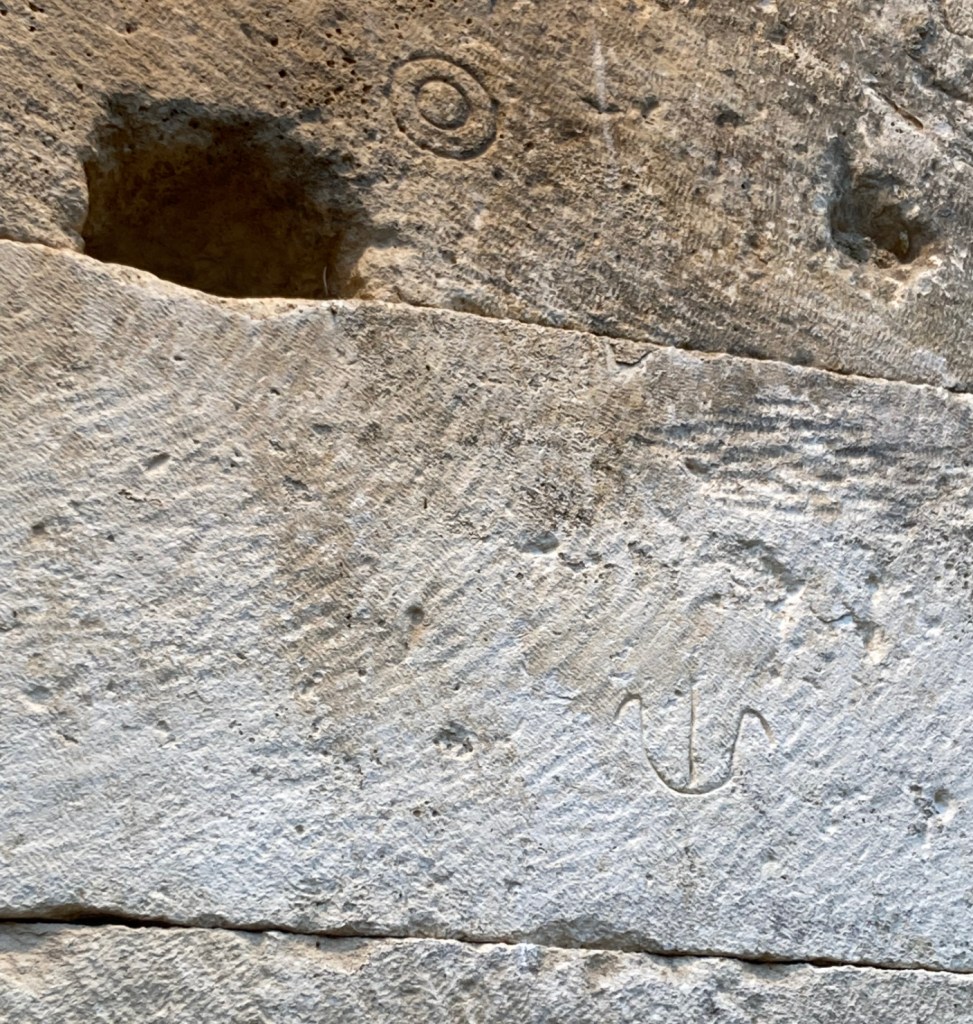
These inscriptions are thought to be notes or instructions for the masons working on the palace.
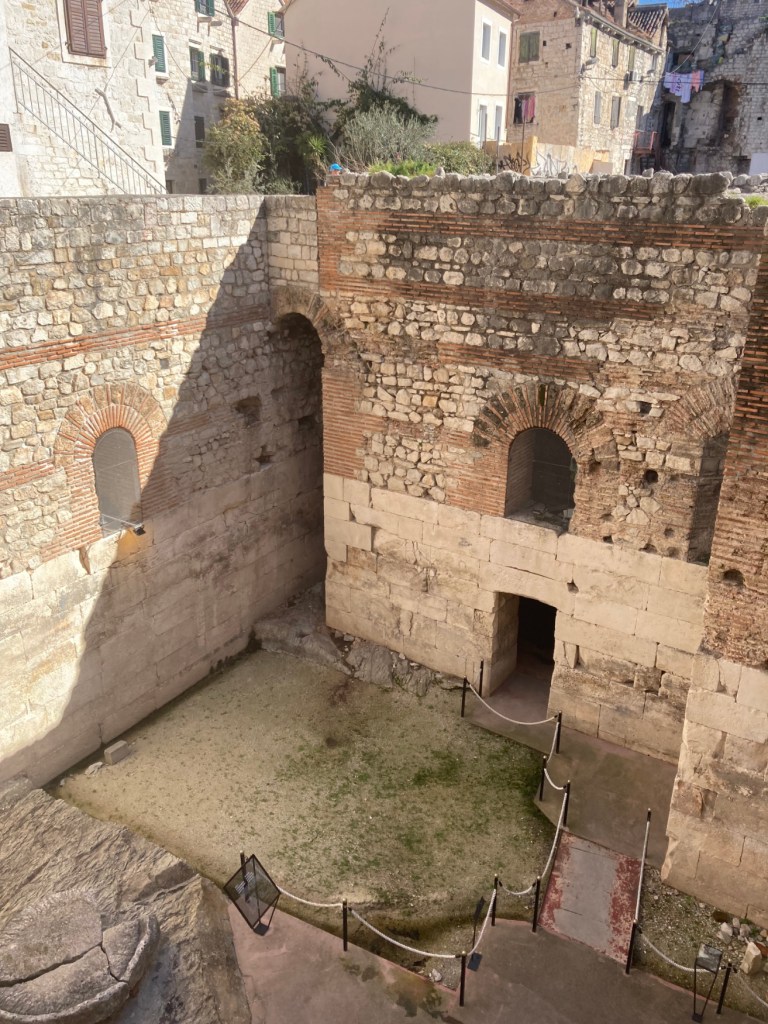
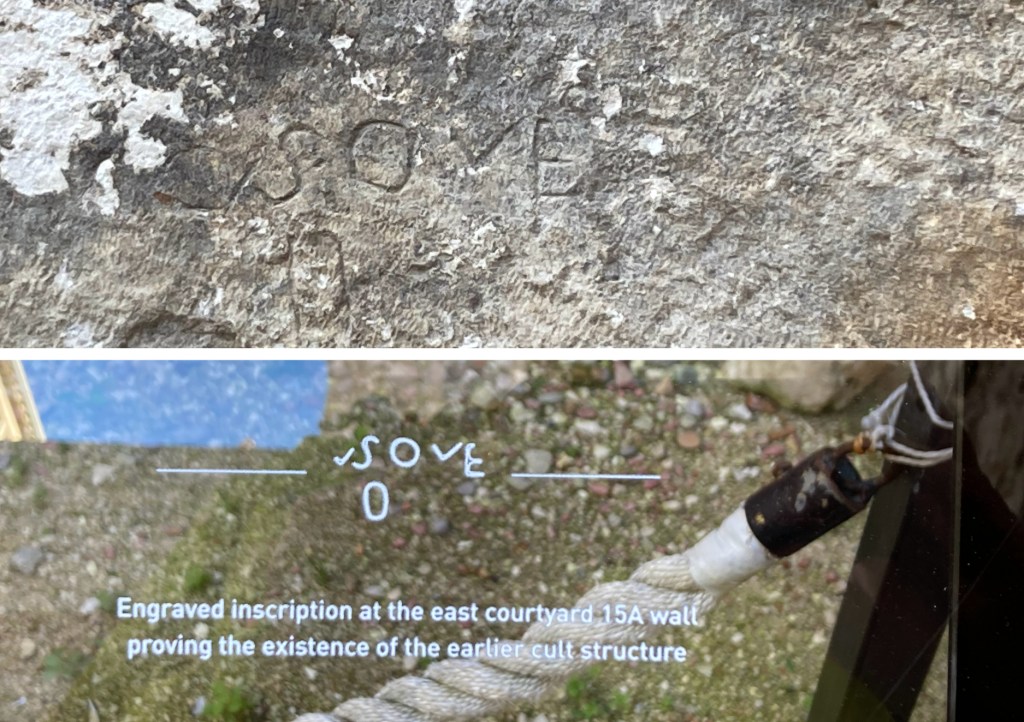
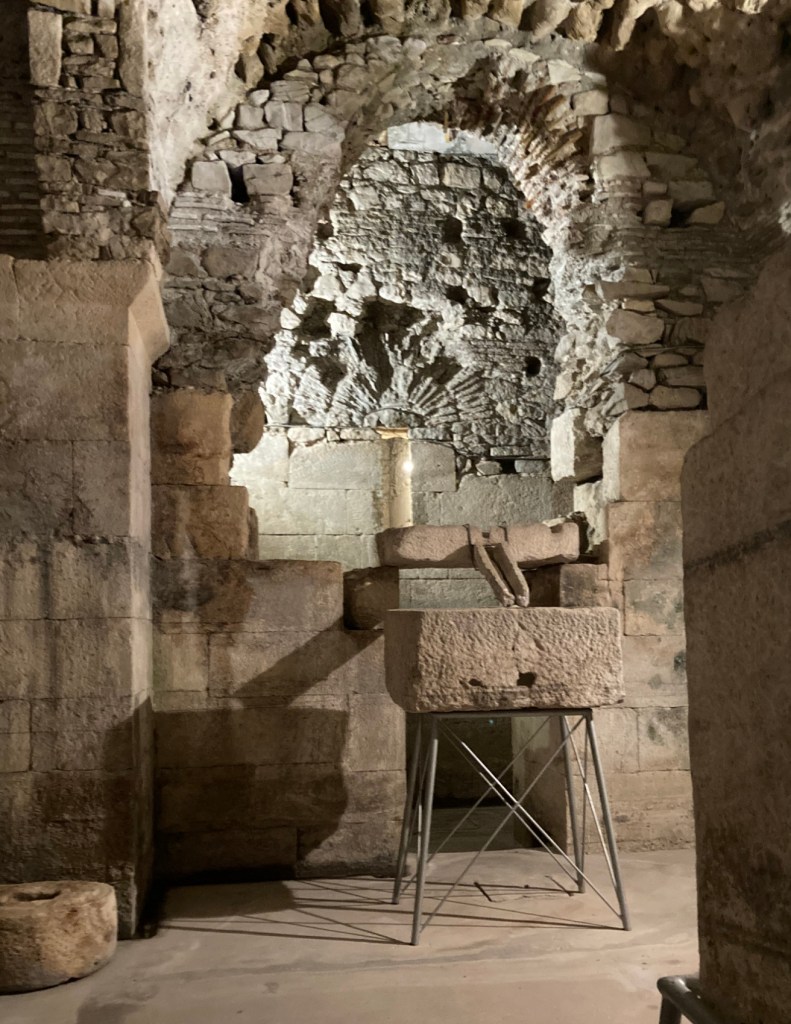
Here, the basement is exposed. An inscription on the wall to the left of the walkway suggests this room was used to make offerings in religious ceremonies.
Inscription suggesting this is where they made offerings to their deities. I don’t know why the sign says “cult.”
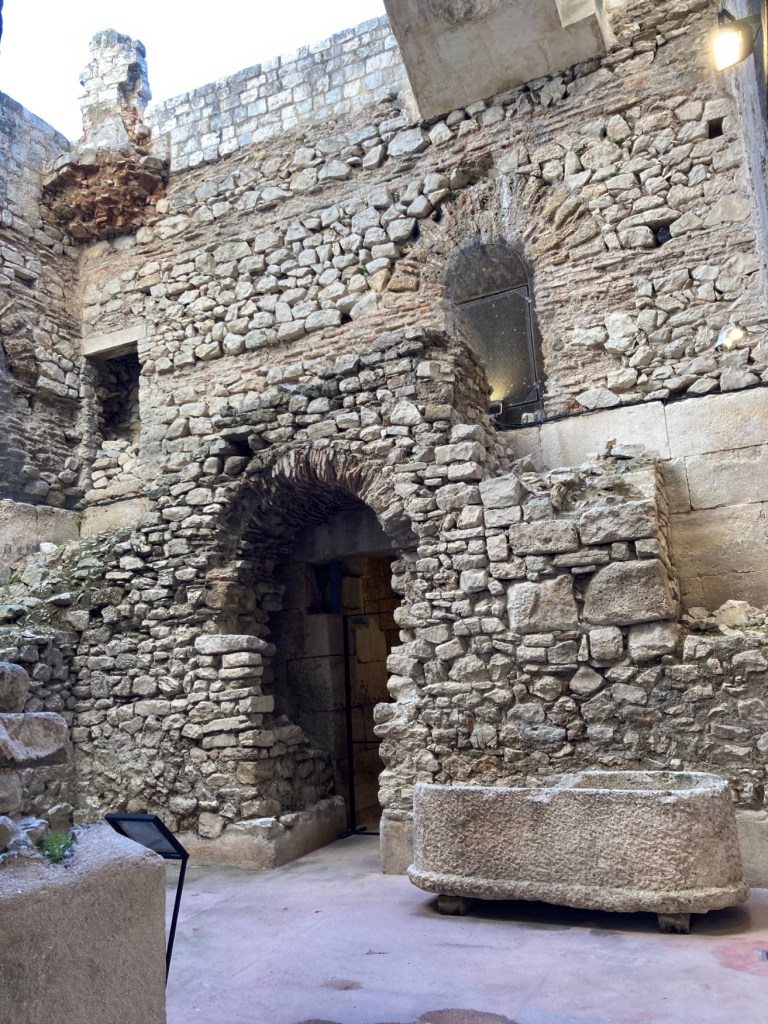
Exposed basement chamber.
In the Dark and Middle Ages, people living in the residential area cut holes in the floor to allow dumping garbage into the basement. Two of those holes can be seen in ceiling here. These basements eventually were filled with garbage..really, filled to the ceiling.
Another post-palace modification in the basements- system for pressing olive oil.
This gives you some idea of what a garbage-filled basement looks like.
Gates
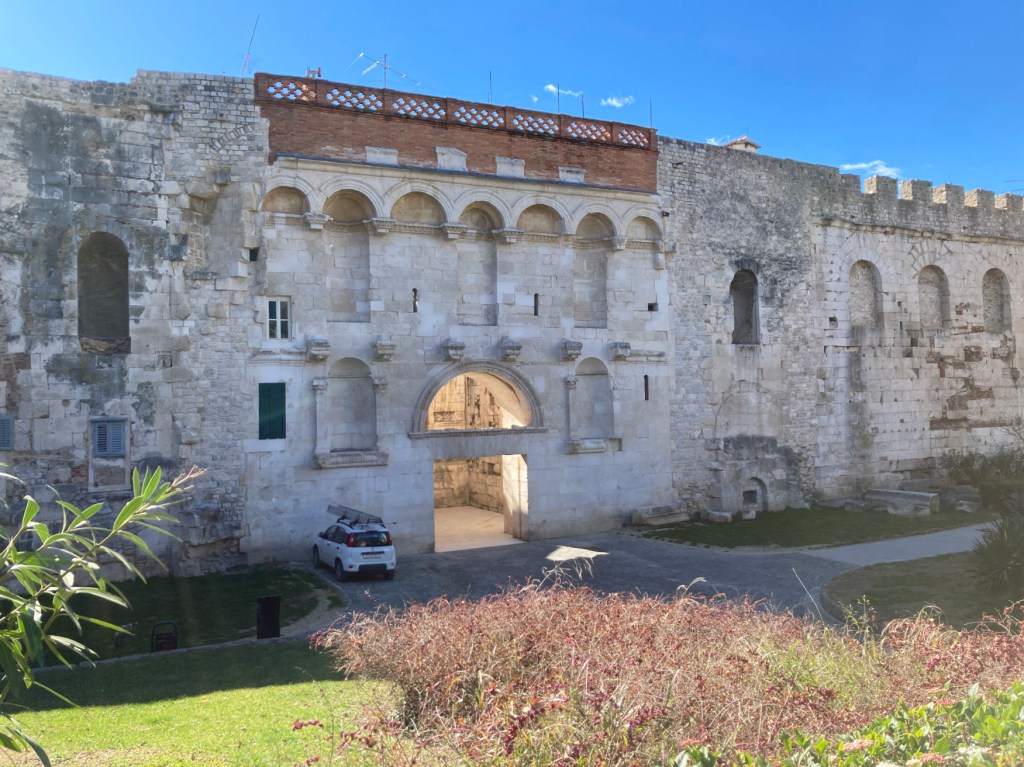
The four entrance gates each had a name. The Gold Gate was the main entrance on the land side. The Bronze Gate was the seaside gate. The Silver and Iron Gates were on the east and west sides, respectively. The Bronze and Iron gates have been pretty much obscured by 1600 years of renovation.
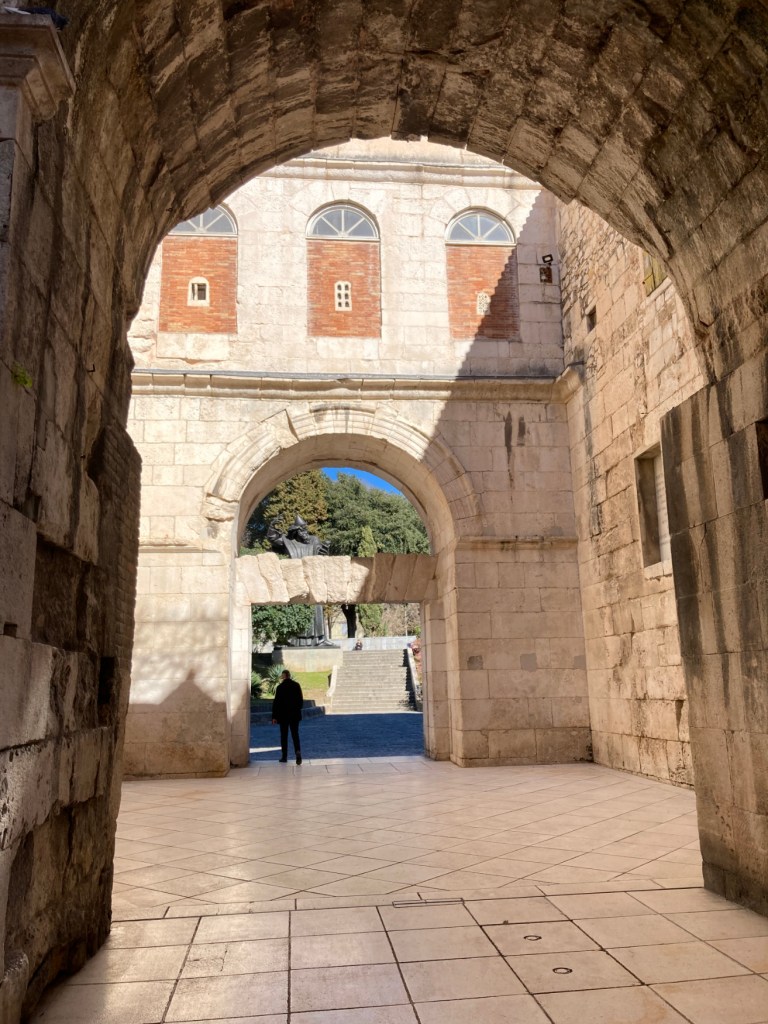
View of Gold Gate from inside the palace. This was a double gate.
Gold Gate from the oustide. You will have to use your imagination to fill the niches with statues of Casesars, mythical heroes, and gods.
Silver Gate from inside.
Approaching the Silver Gate from inside the palace.
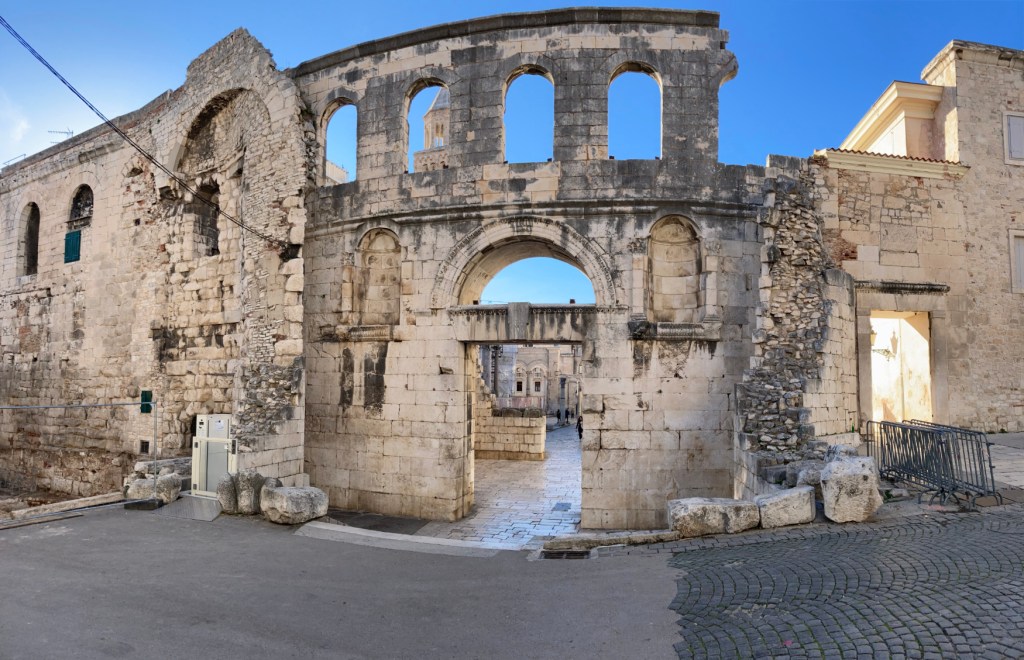
View of the Silver Gate from outside the palace. The large arch visible at the top of the wall to the left of the gate is the remnant (where it was attached to the wall) of one of the two towers that flanked the gate.
The Residence.
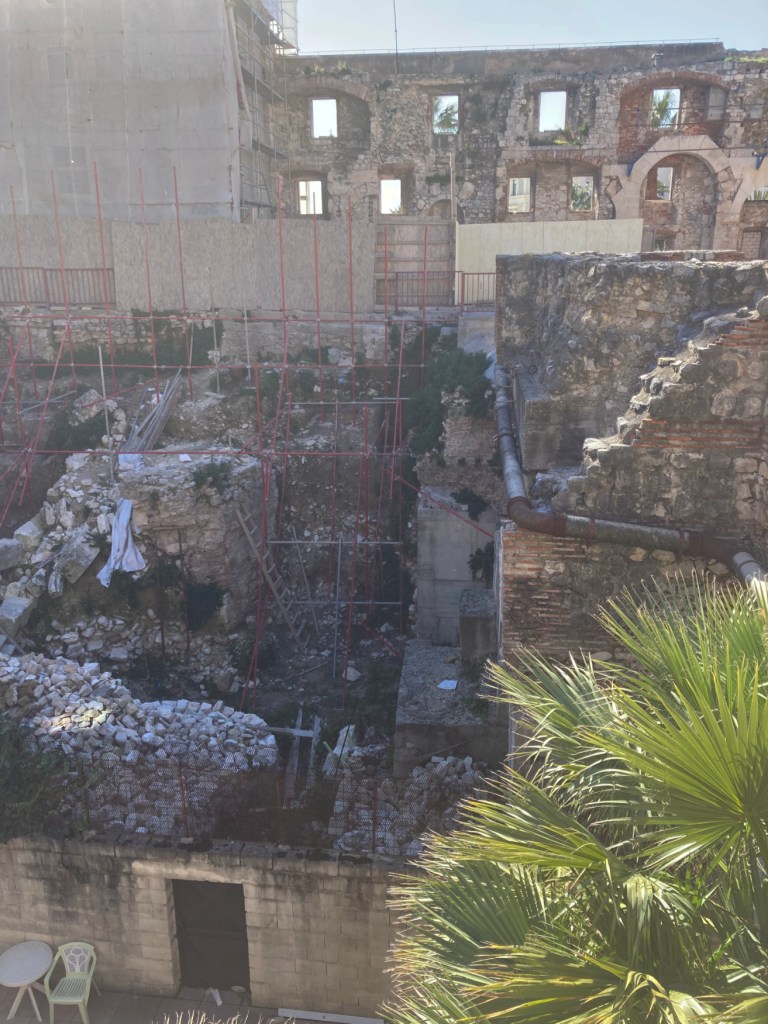
The residential side of the palace. The Adriatic would be lapping at the left wall.
The original seaside wall of the palace is visible in the upper half here. You have to imagine open arches between the columns where you could view the Adriatic as you strolled.
The Peristyle and Vestibule.
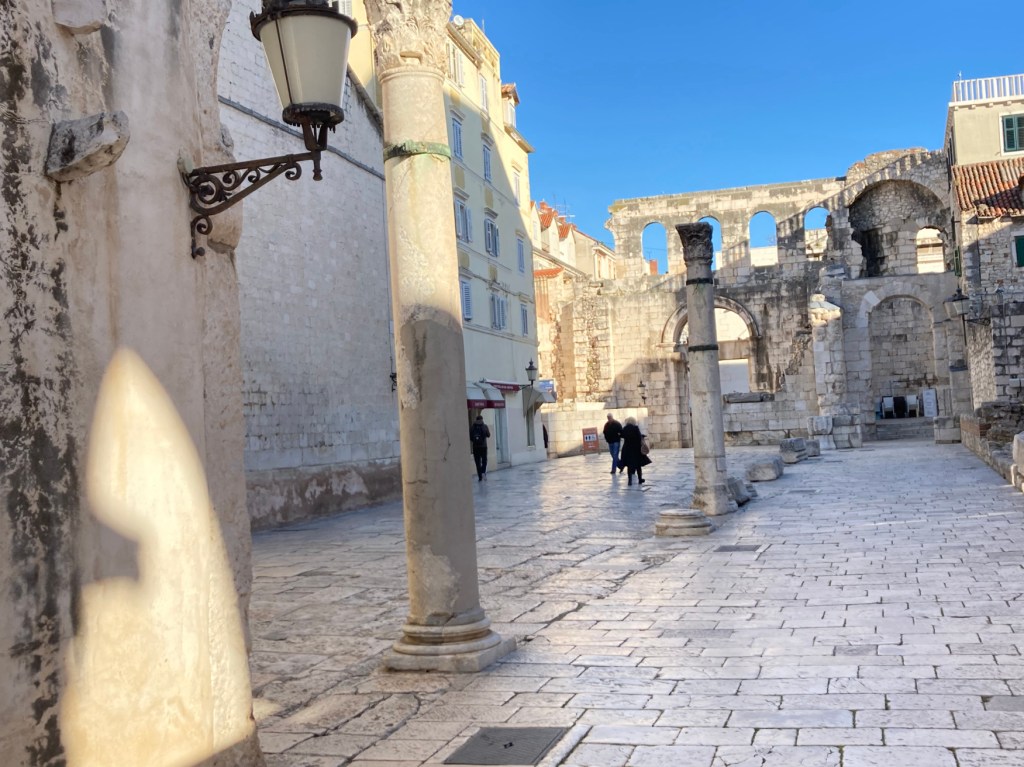
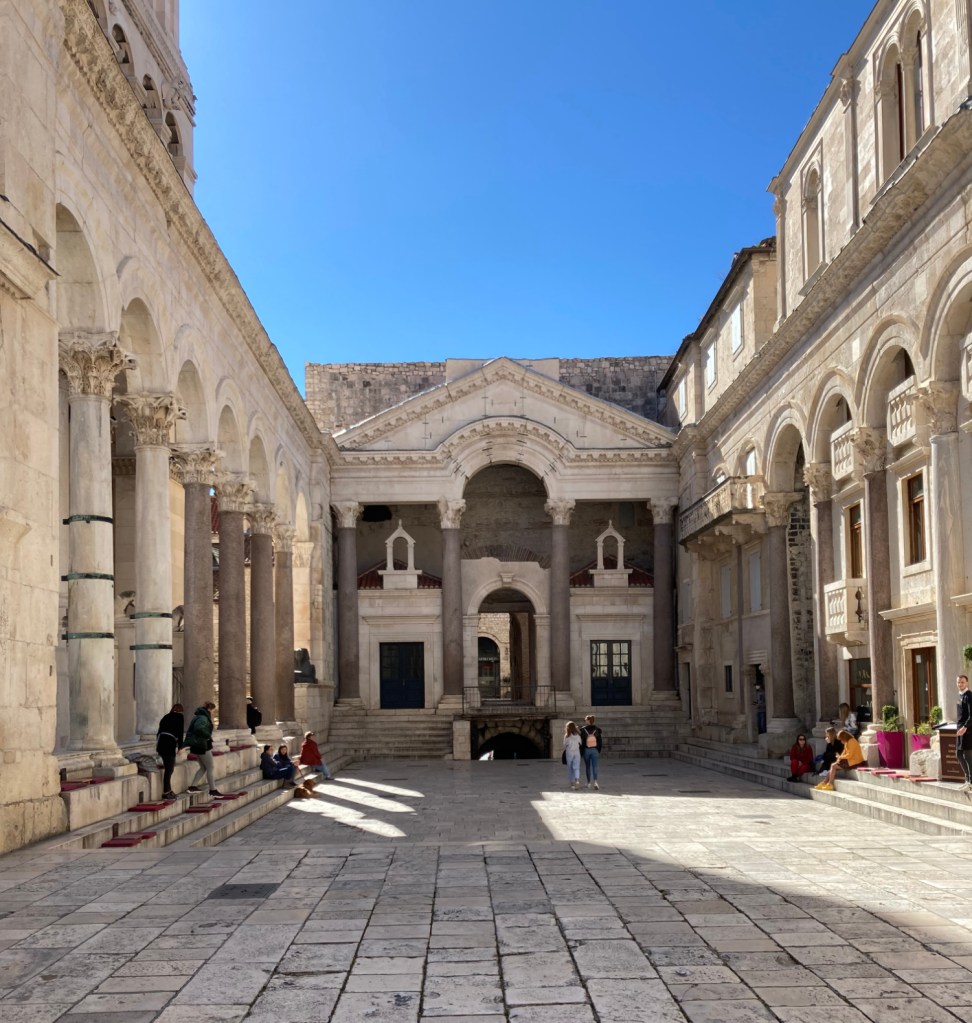
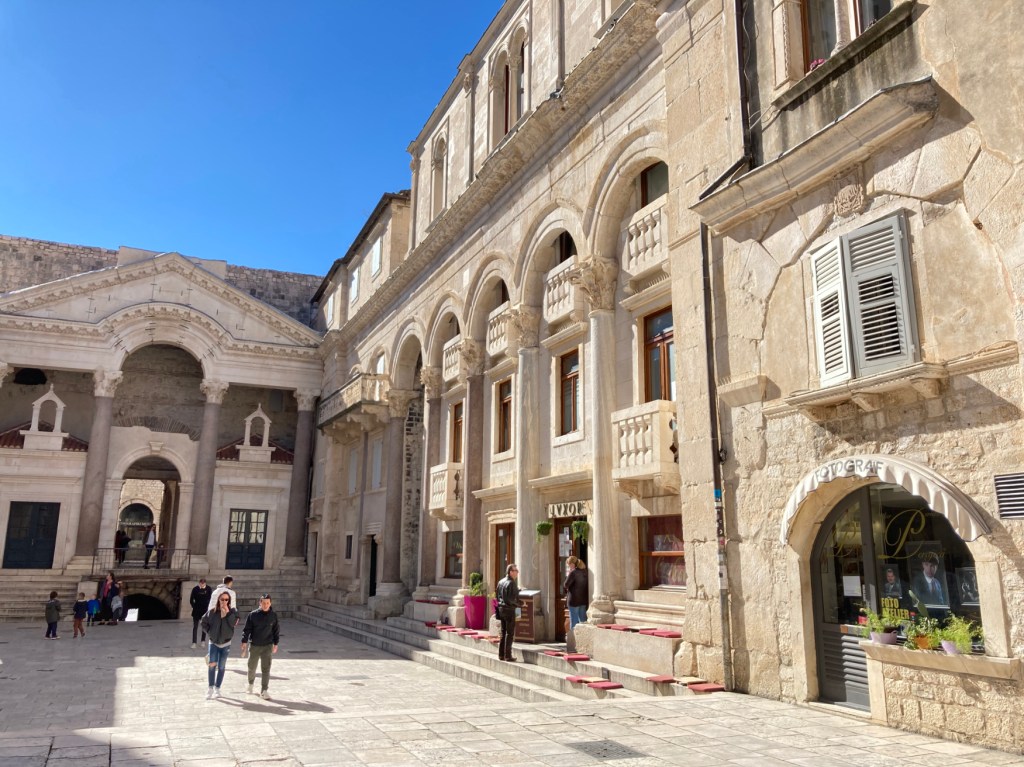
If you visited Diocletian, you would approach his residence by walking down the colonnaded Peristyle. The building at the end is the Vestibule.
The columns on this side of the Peristyle have been incorporated into Medieval buildings.
The columns on this side look more like it’s still 305CE.
Numerous 3500 year old sphinxes were taken from Egypt. Only 3 survived to the present. This one is in the peristyle next to the vestibule.
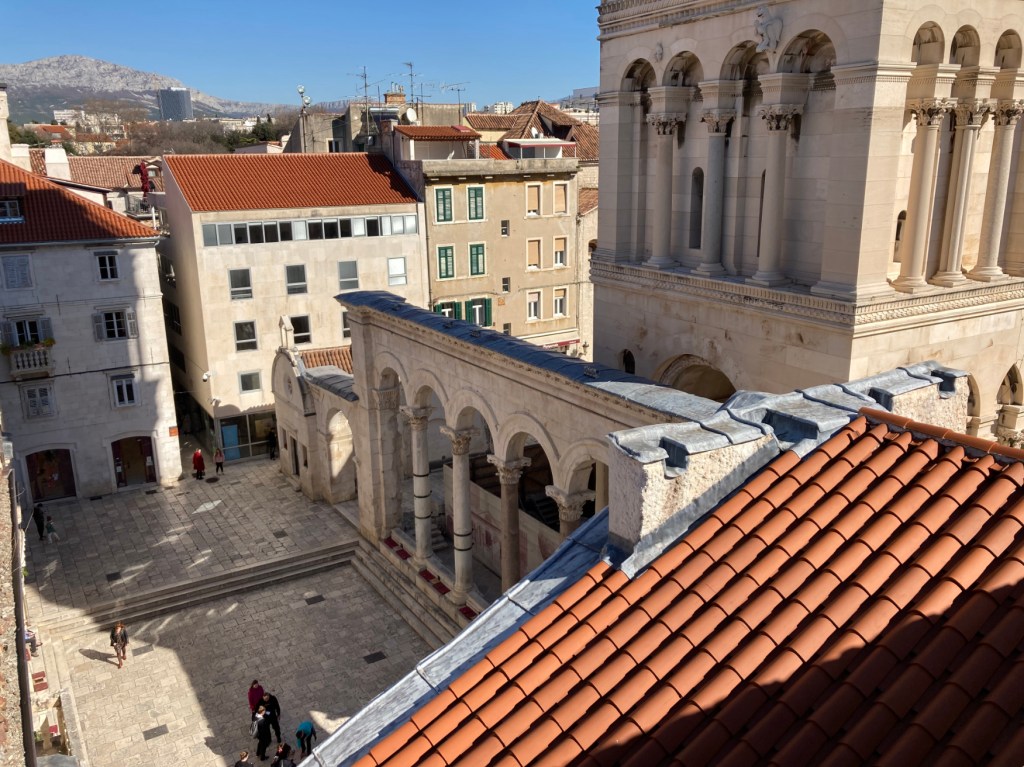
The Peristyle viewed from the roof of the Vestibule.
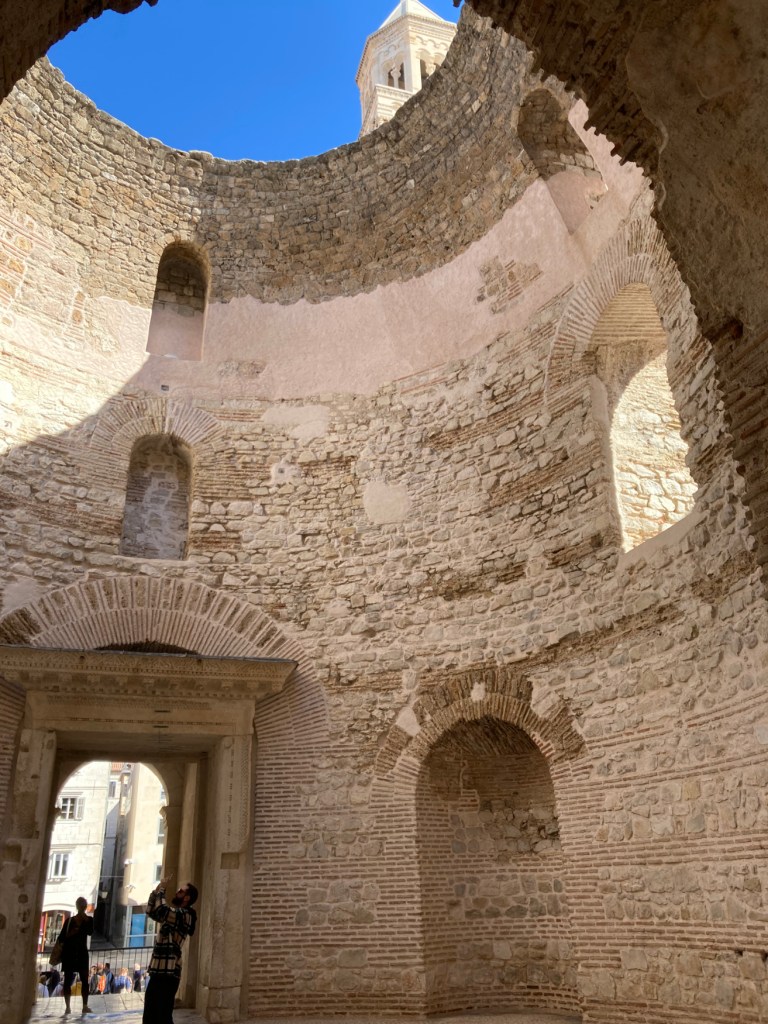
At the end of the Peristyle, you walk up the steps and Diocletian would greet you in the Vestibule where you would be impressed by the height of the domed ceiling. Again, imagine statues in the niches.
The Mausoleum.
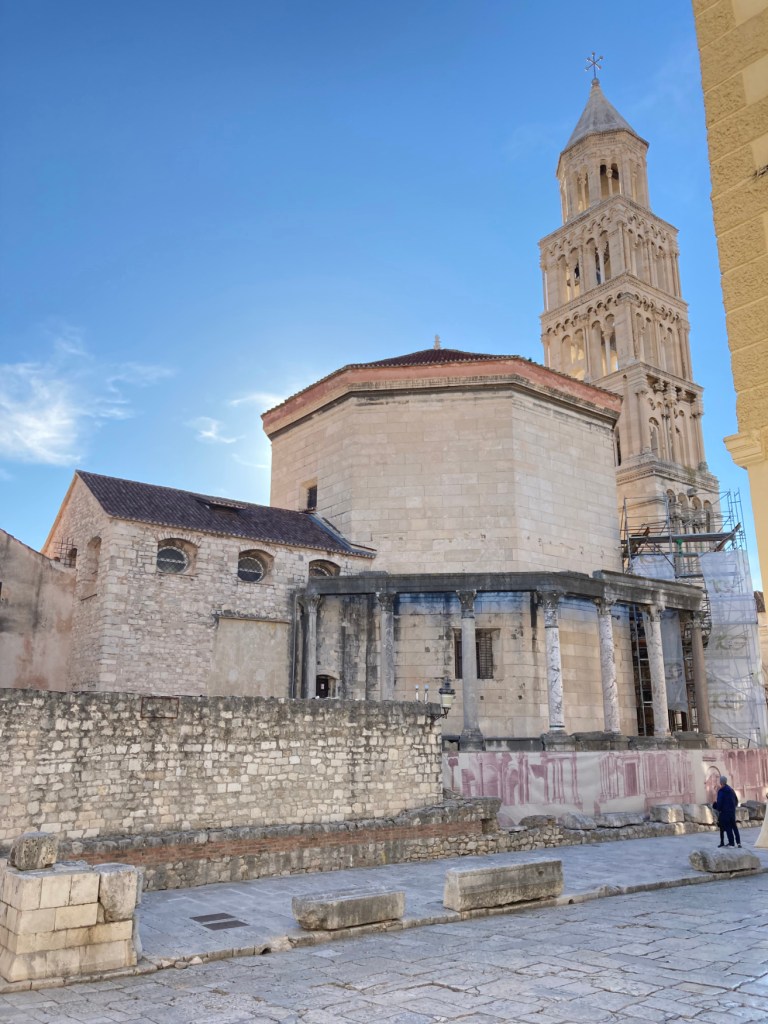
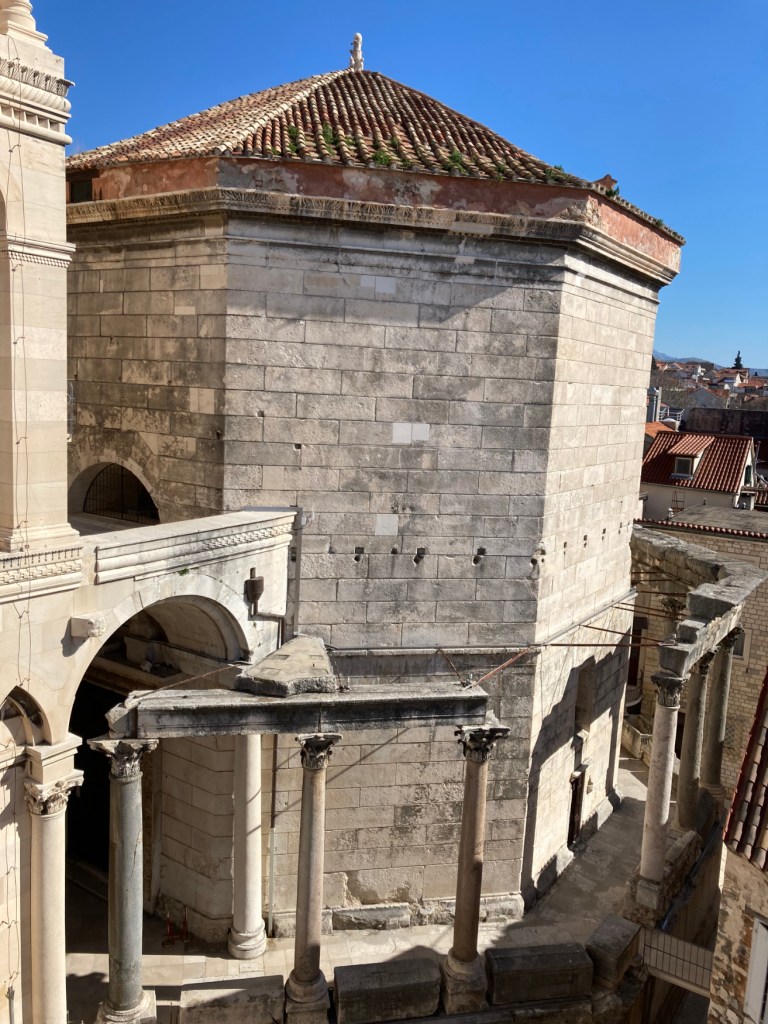
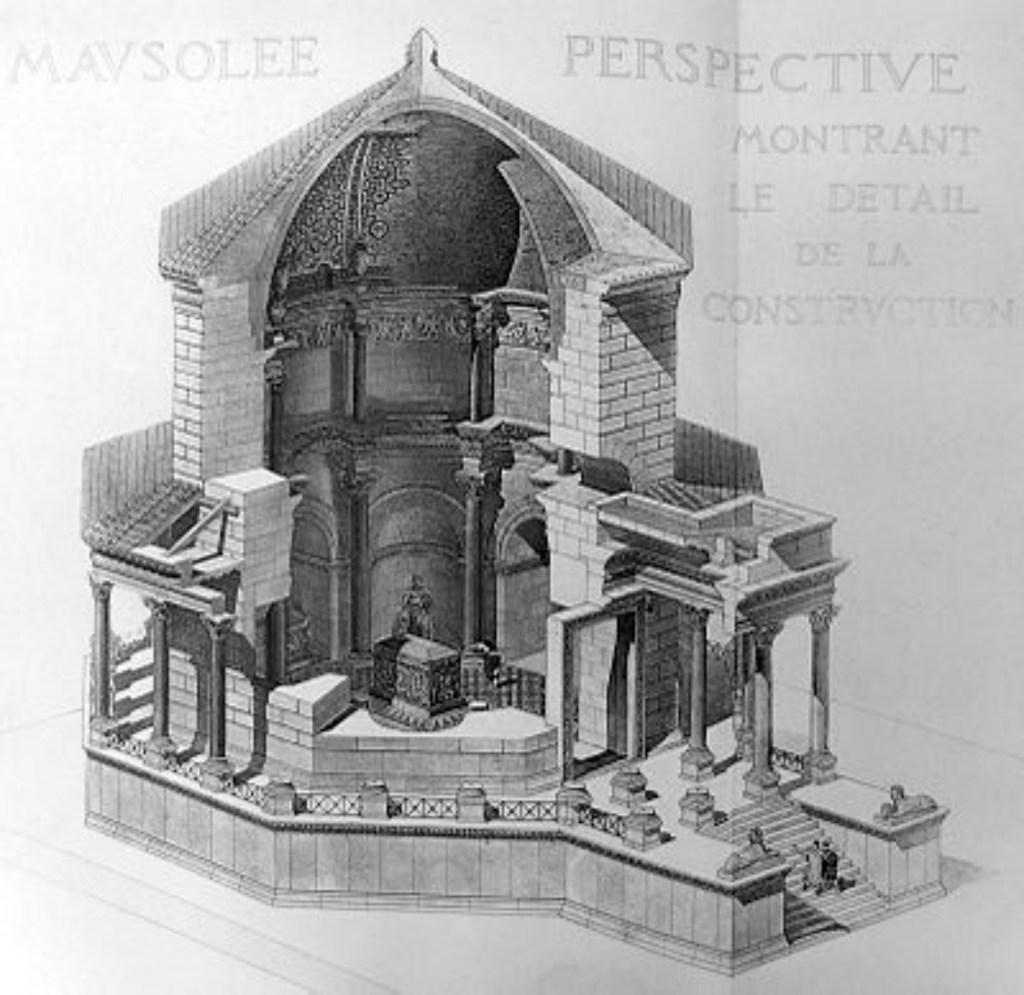
Diocletian had a 2-story, octagonal mausoleum built to house his remains. The locals who moved back in during the 7th century CE were mostly Christian. They decided the mausoleum would make a great, albeit small, cathedral and, so, they converted it.
The bell tower was added in 1101 and rebuilt in 1908
Probably violating a copyright but this is what it was thought to look like when it was Diocletian’s Mausoleum.
The columns are original and the frieze at the top depicts emperor-like activities- chariot racing, horseback riding, hunting, etc.
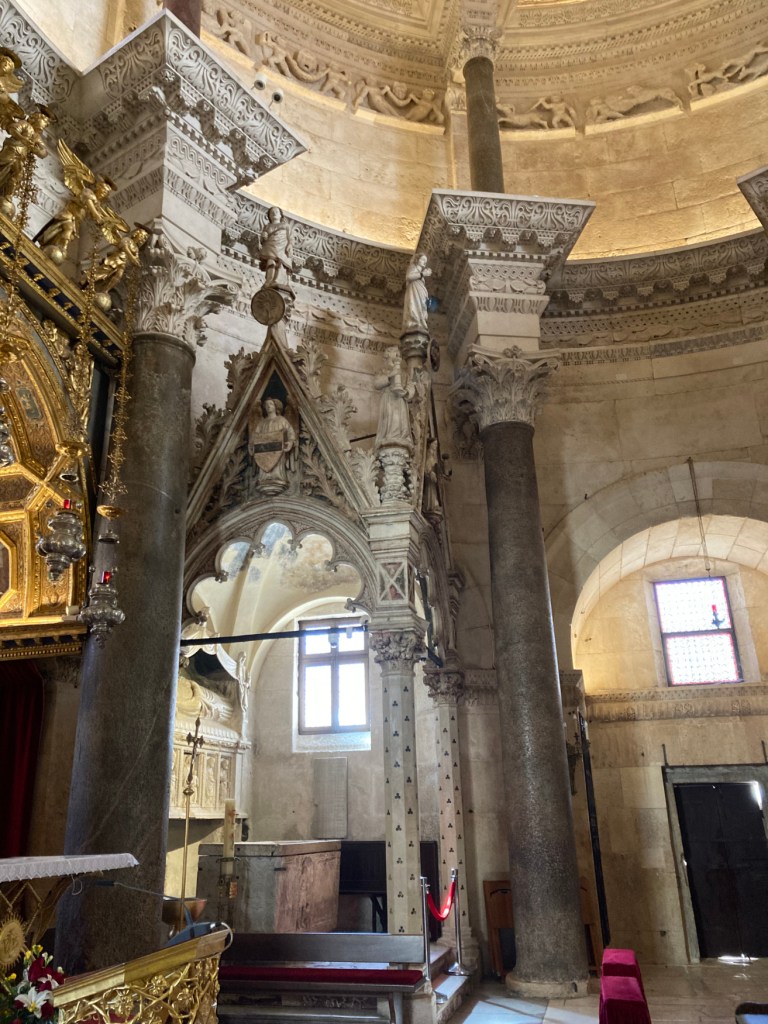
The large columns are also original to the mausoleum.
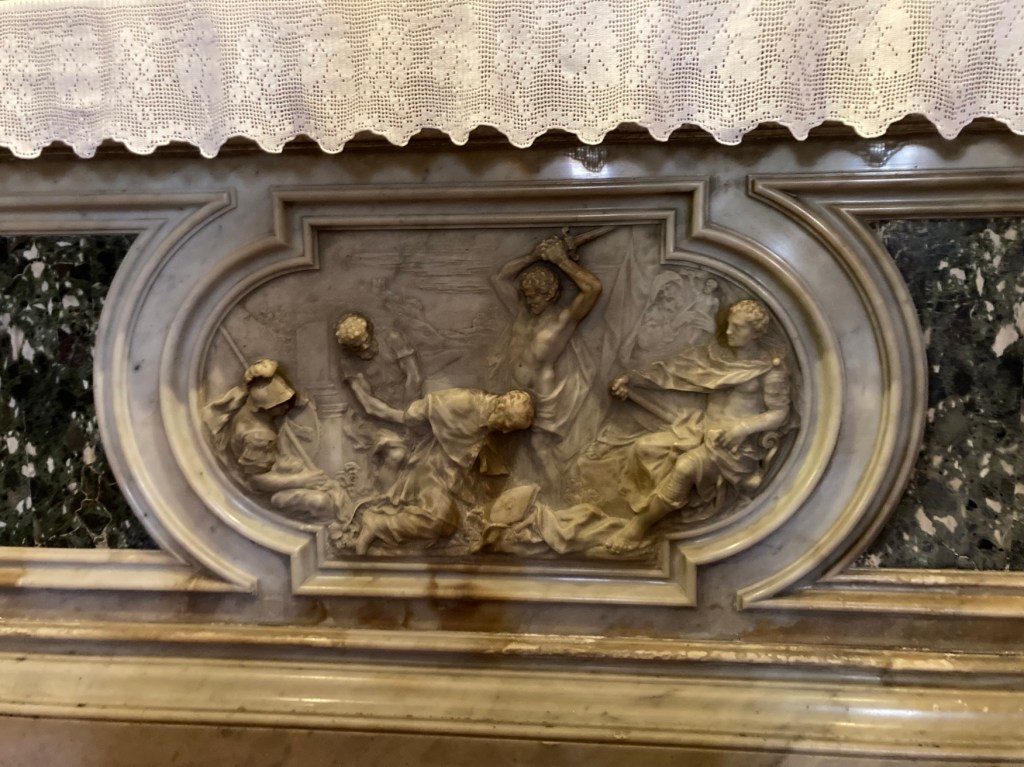
The church is the Cathedral of St. Dominus. Dominus was a 3rd cent. CE bishop whom Diocletian had beheaded (shown here).
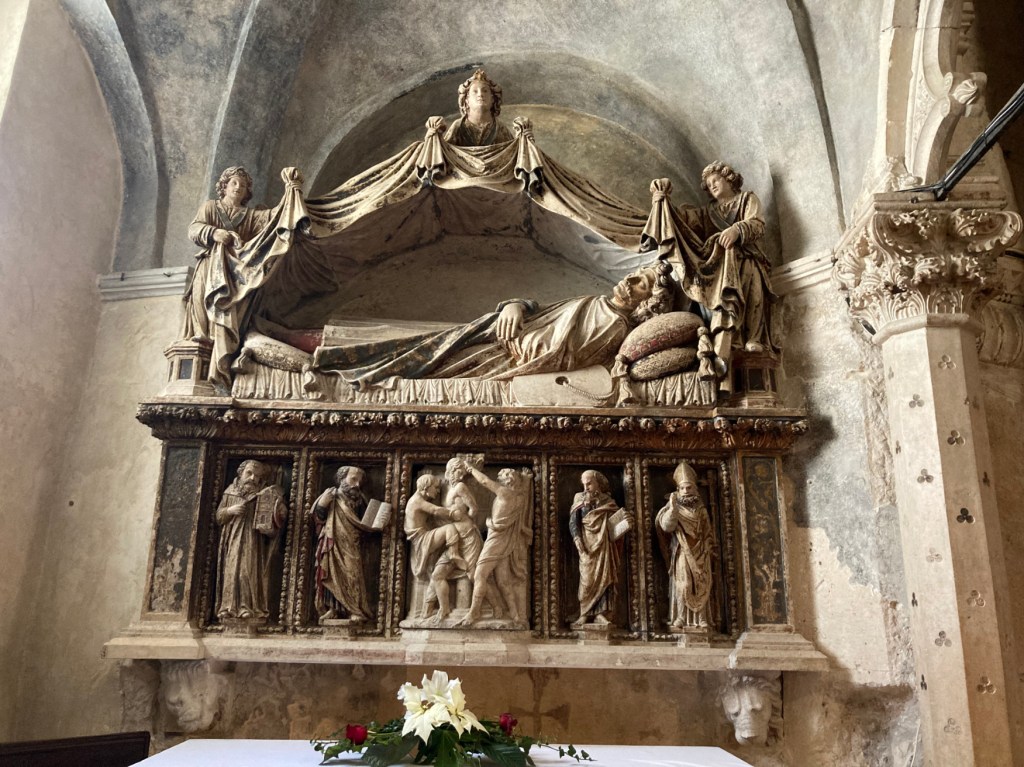
This is the tomb of Split’s second saint, St. Anastasius. He was tied to a millstone and dropped in a river. St. Anastasius lies in repose on top of that millstone with a rope passing through the hole in the middle.
Diocletian is known for all the Christian martyrs he created. Many have pointed out the irony that his remains are no longer in his mausoleum and it is now a cathedral that contains the remains of some of these martyrs.
The Temples
The two small temples are gone. The large temple to Jupiter is obscured by crowding, adjacent buildings. Jupiter’s temple was converted into a Baptistry.
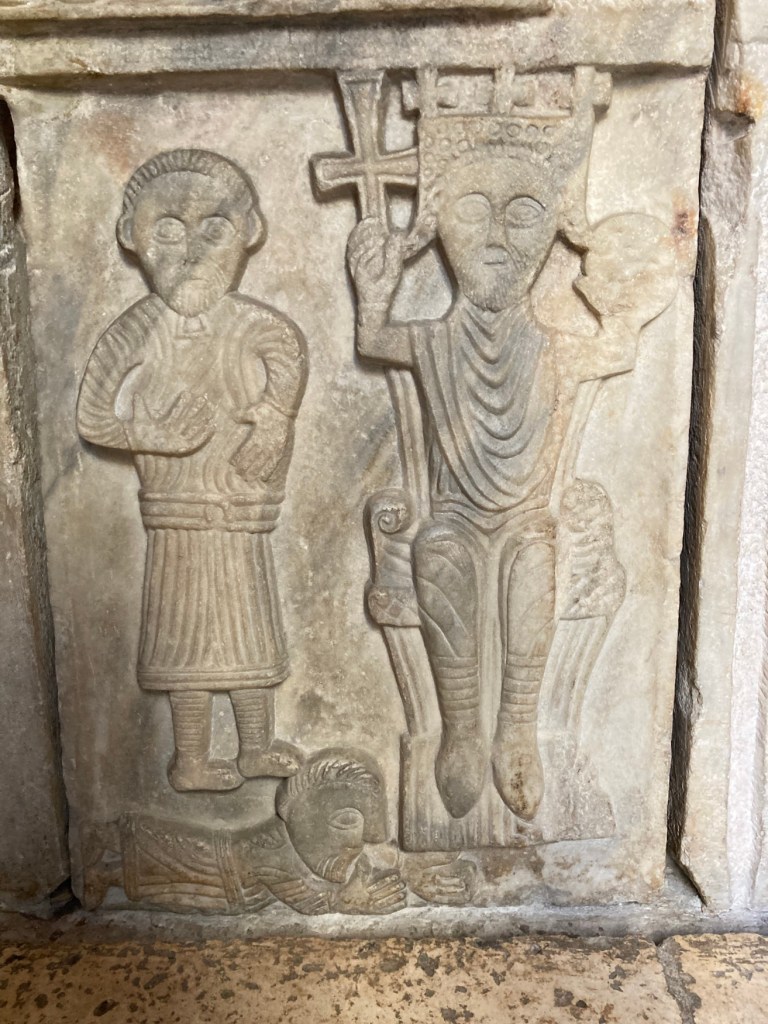
Stone panel in the Baptistry depicting life in the Middle Ages: the King sits on his throne. The priest stands along side. And both are on top of the peasant.
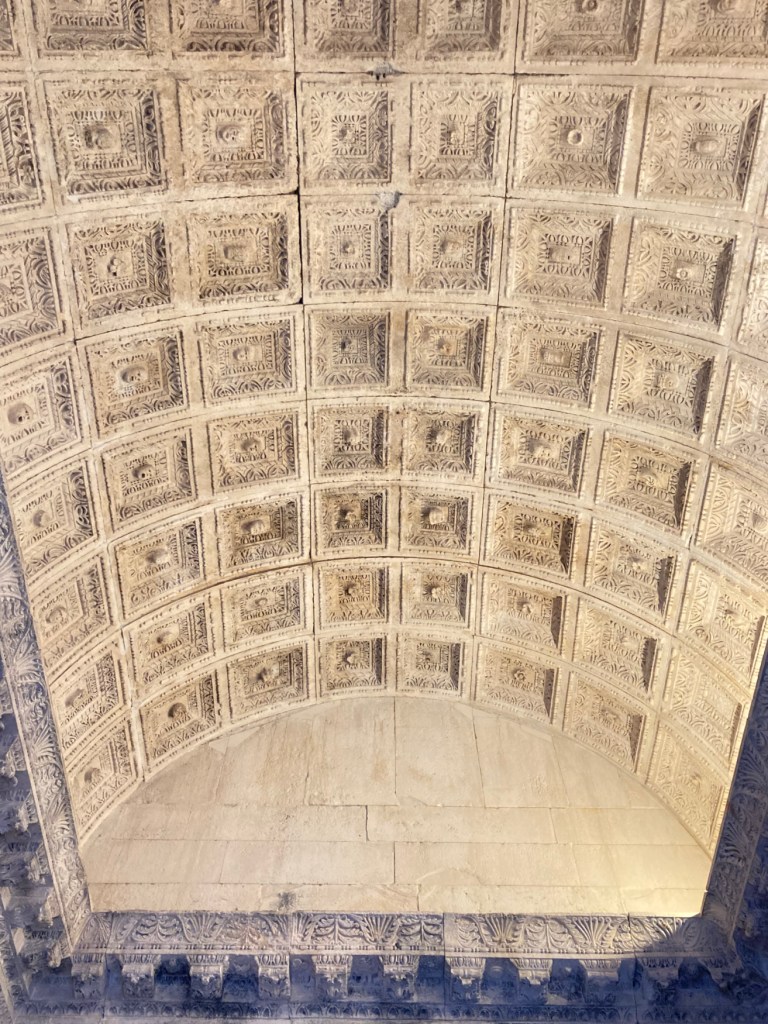
Original barrel-vault ceiling/roof from 311CE.
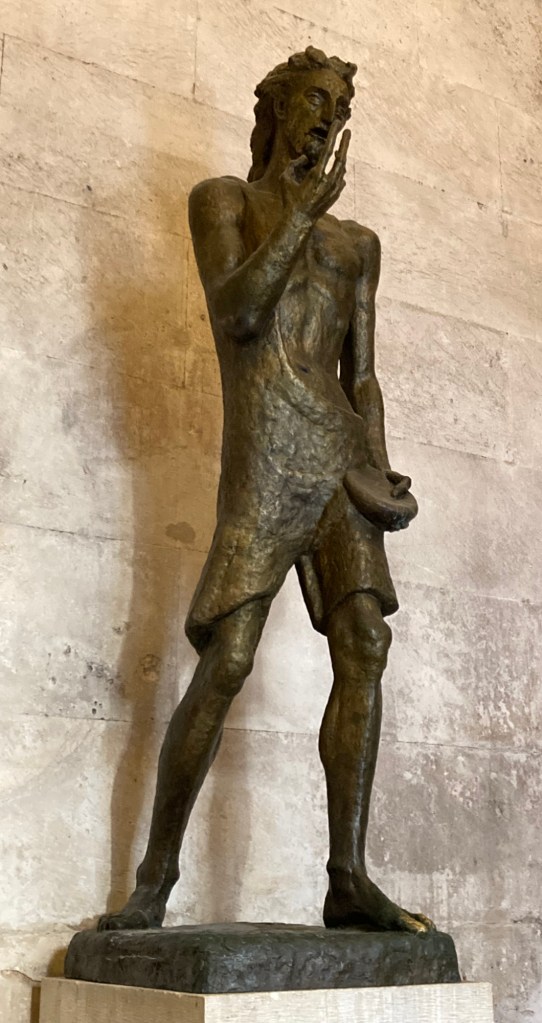
The statue of Jupiter is long gone. Eventually, Croatian sculptor Ivan Mestrovic made this bronze John-the-Baptist to signify the re=purposing of the temple.
Around the palace.
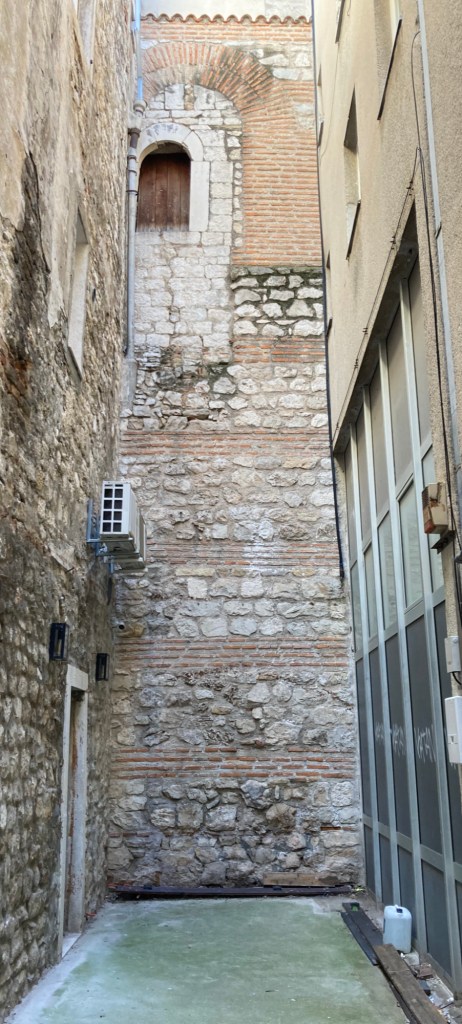
Roman Construction Techniques: Alternating layers of brick and rock were thought to improve seismic stability.
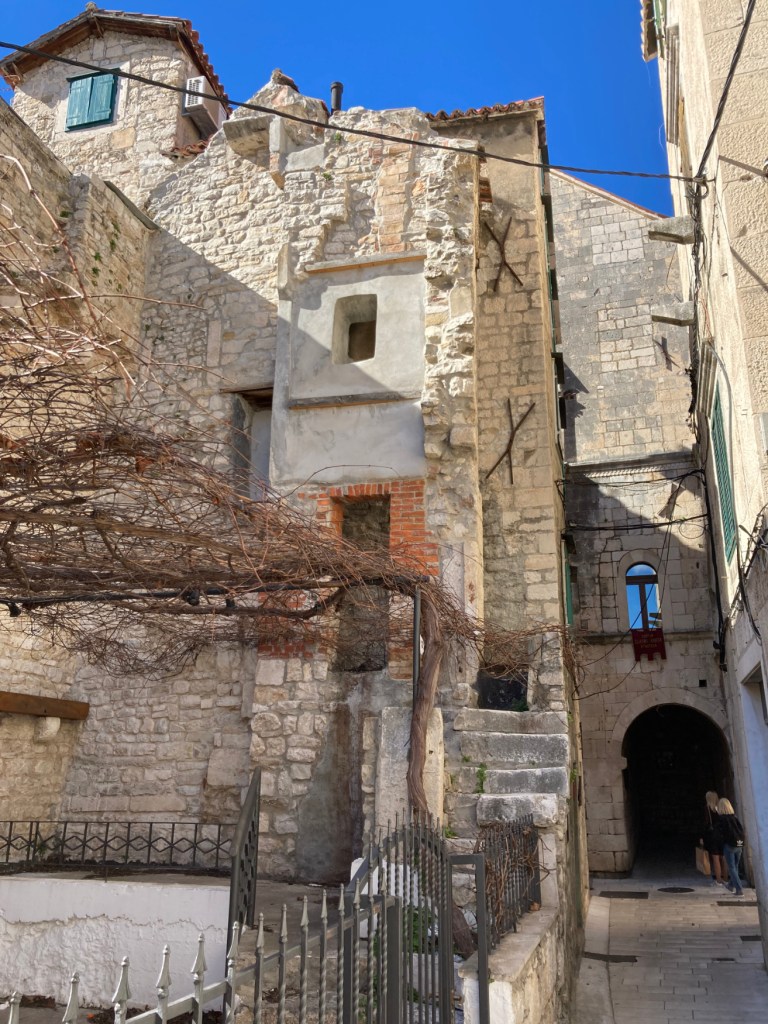
Buildings built against the North Wall (wall with Gold Gate) replaced the barracks and administrative buildings.
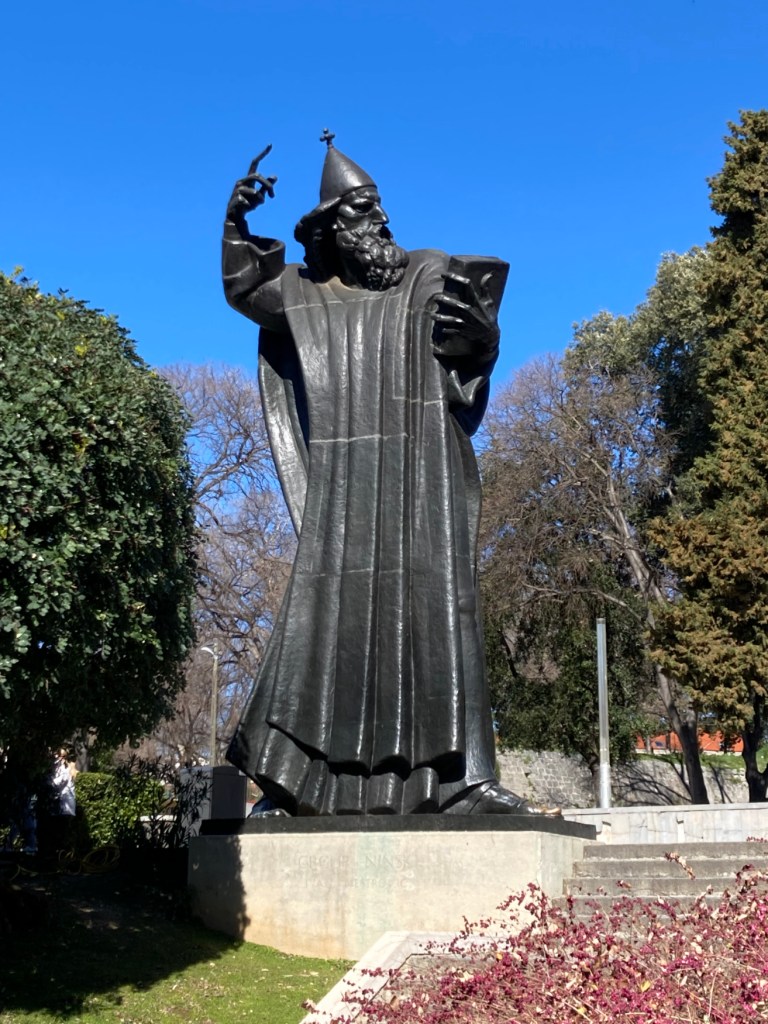
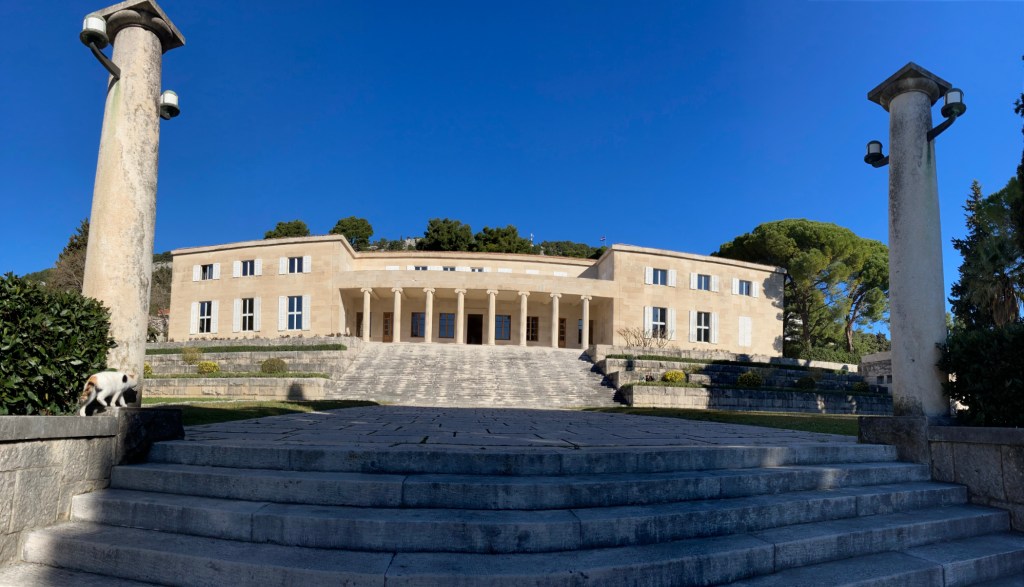
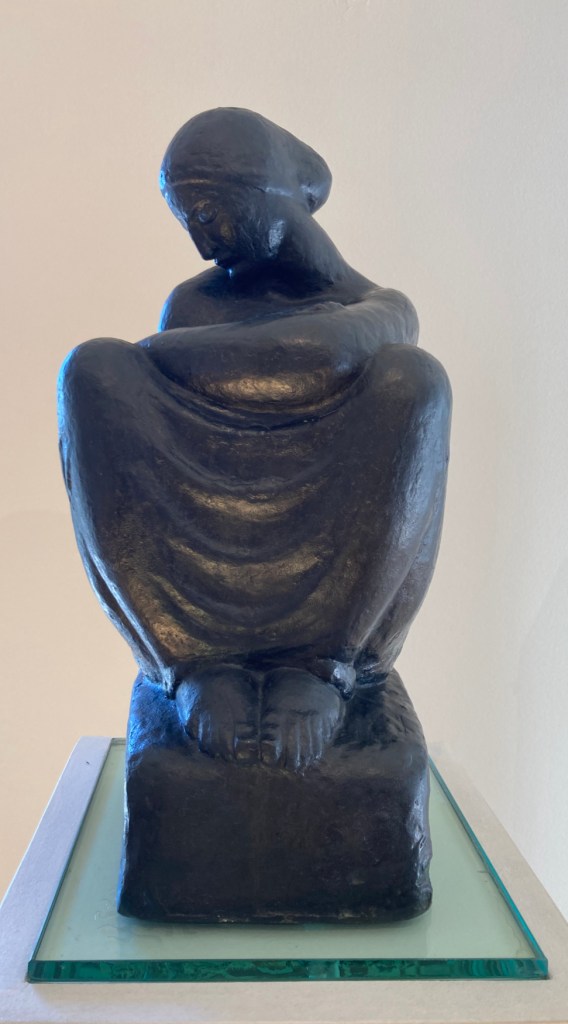
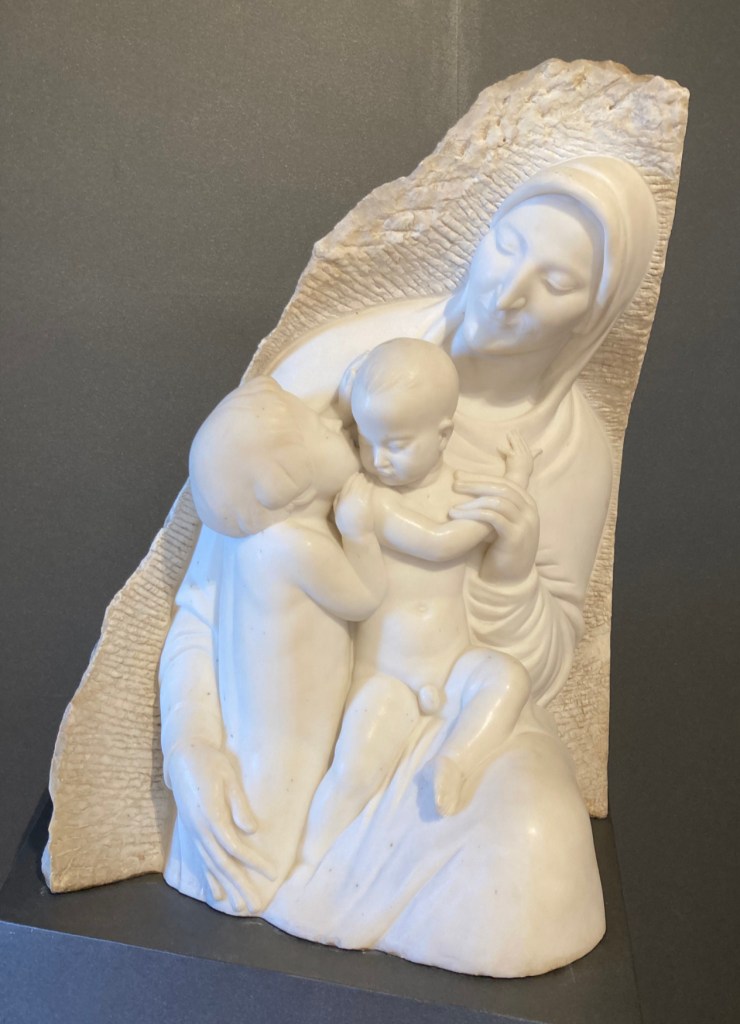
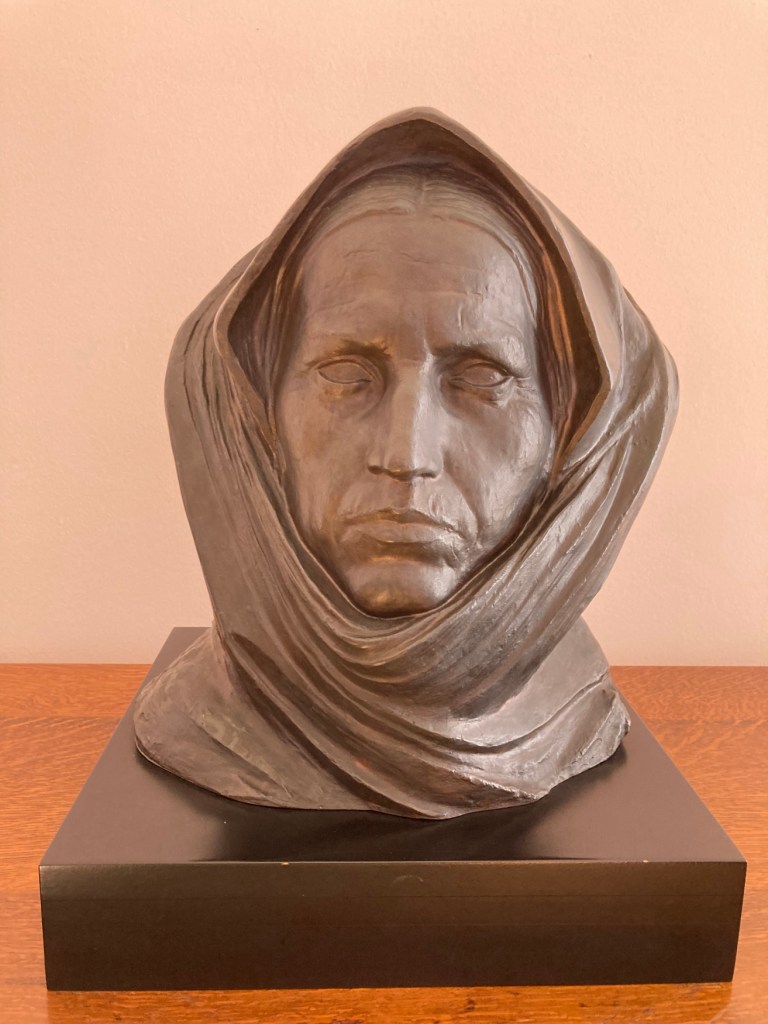
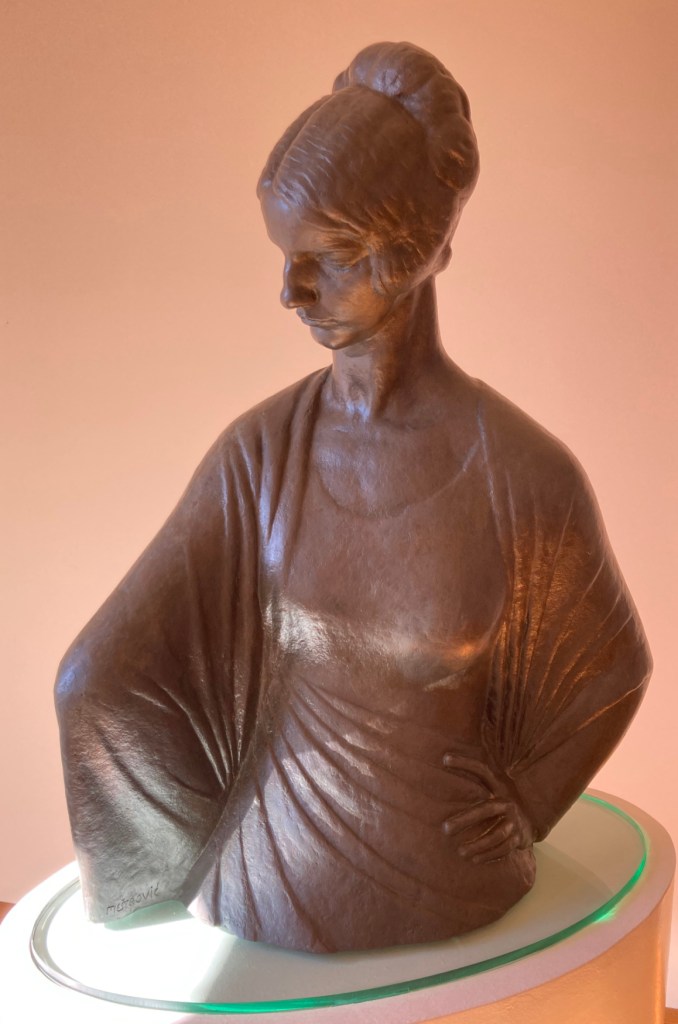
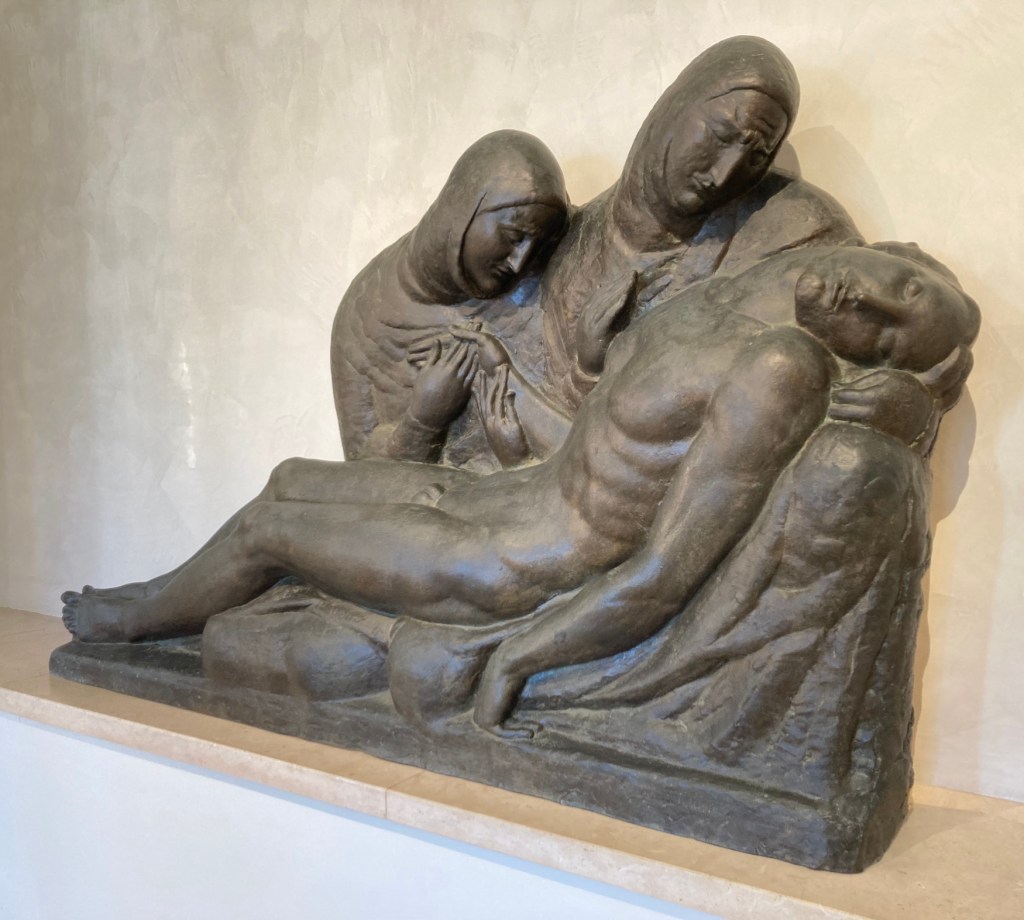
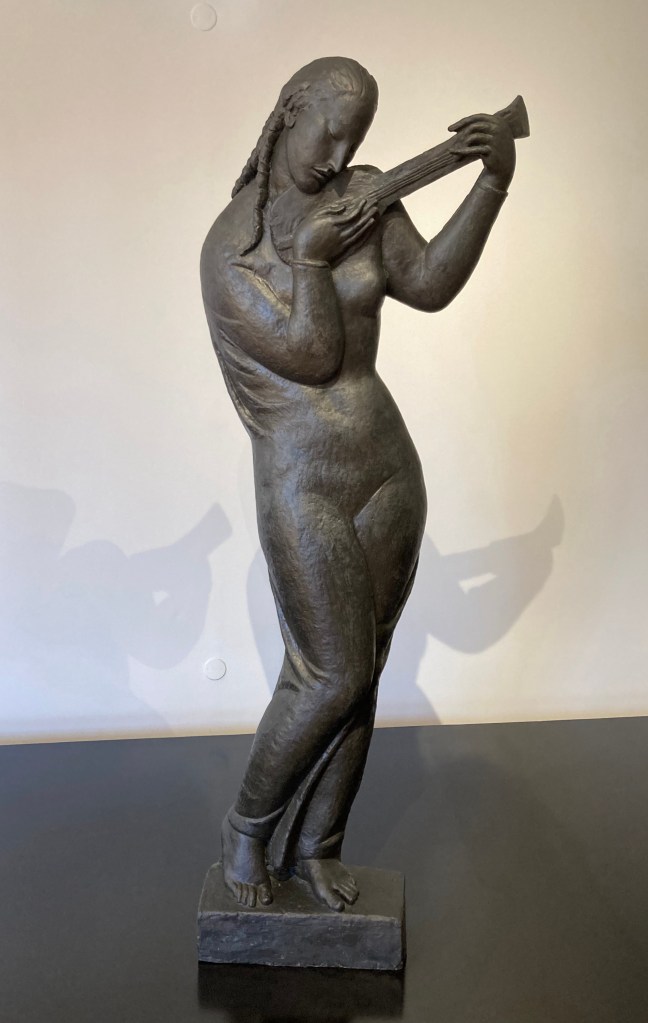
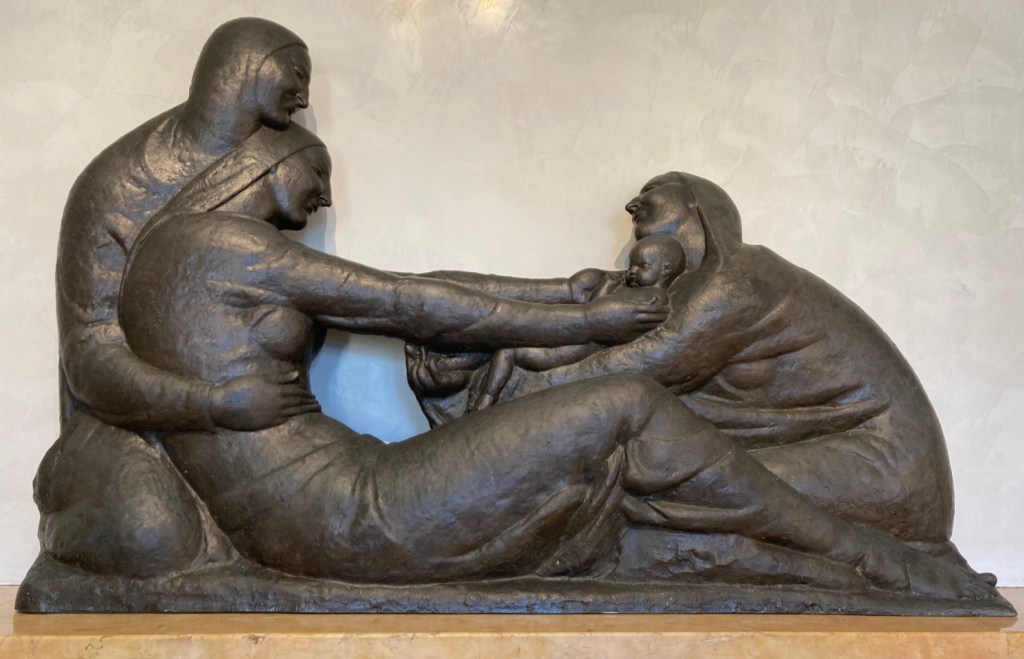
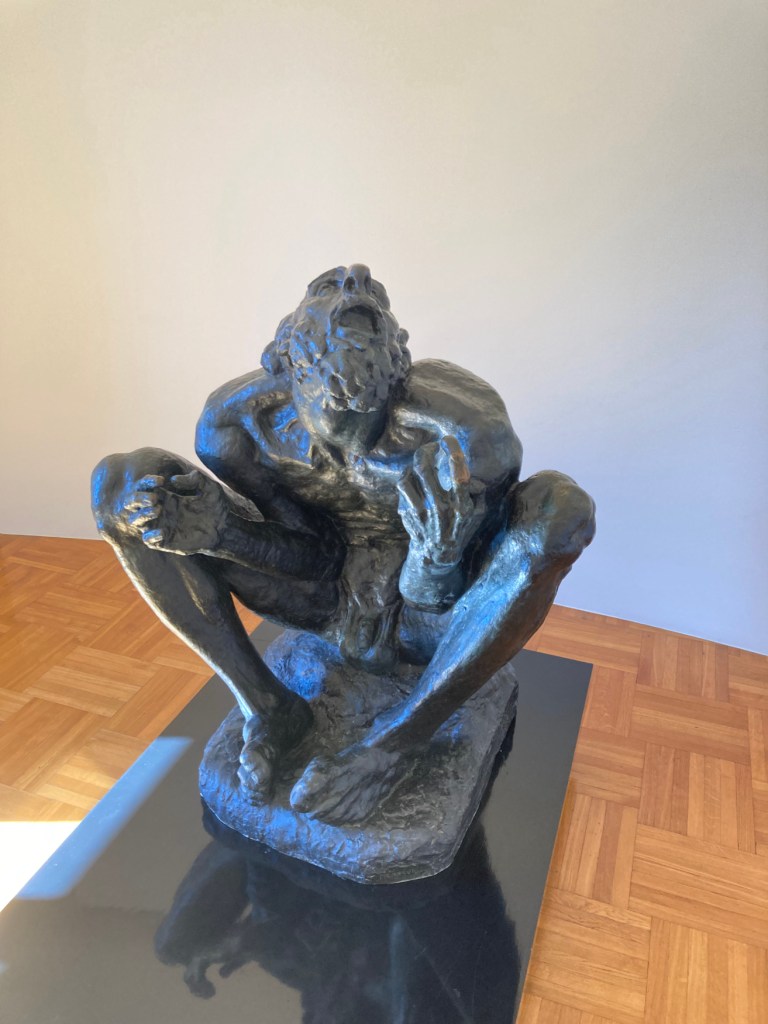
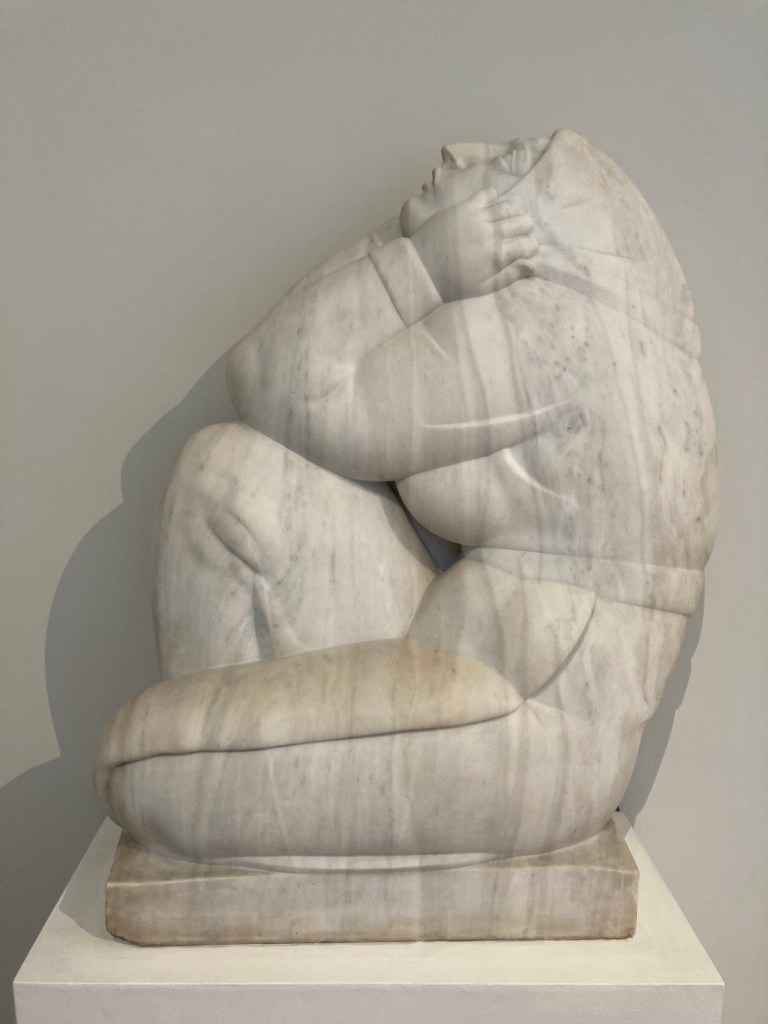
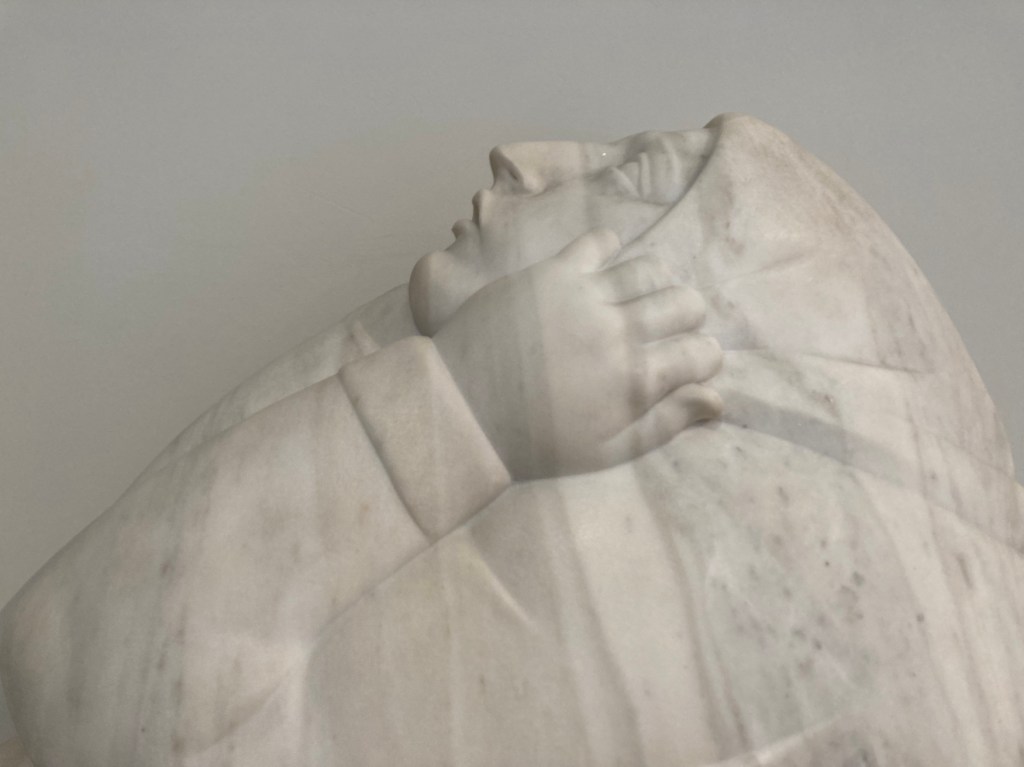
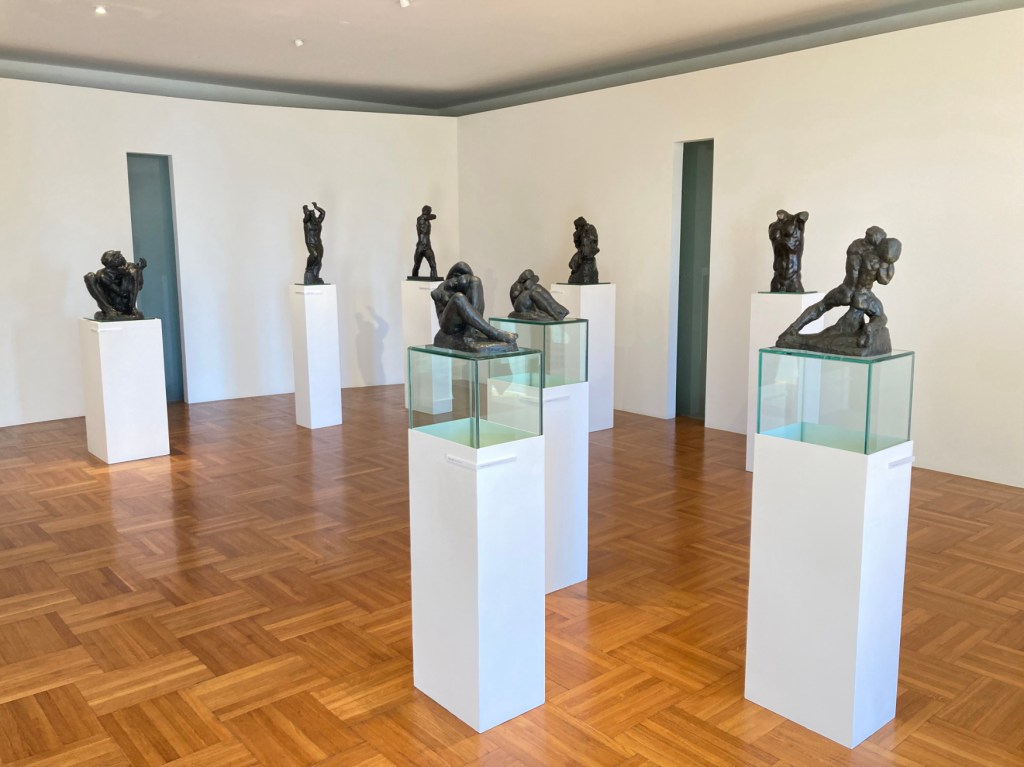
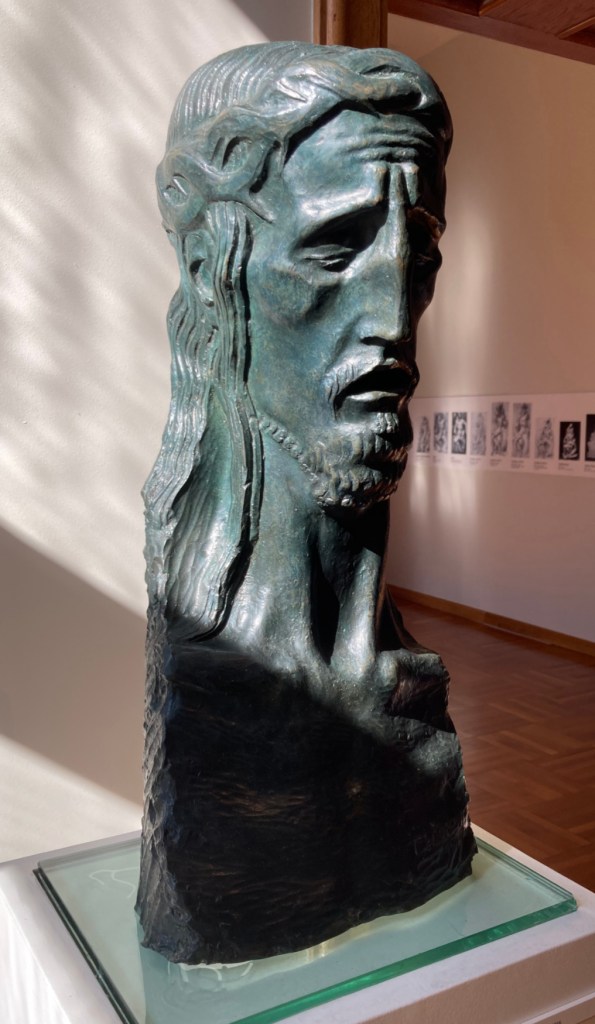
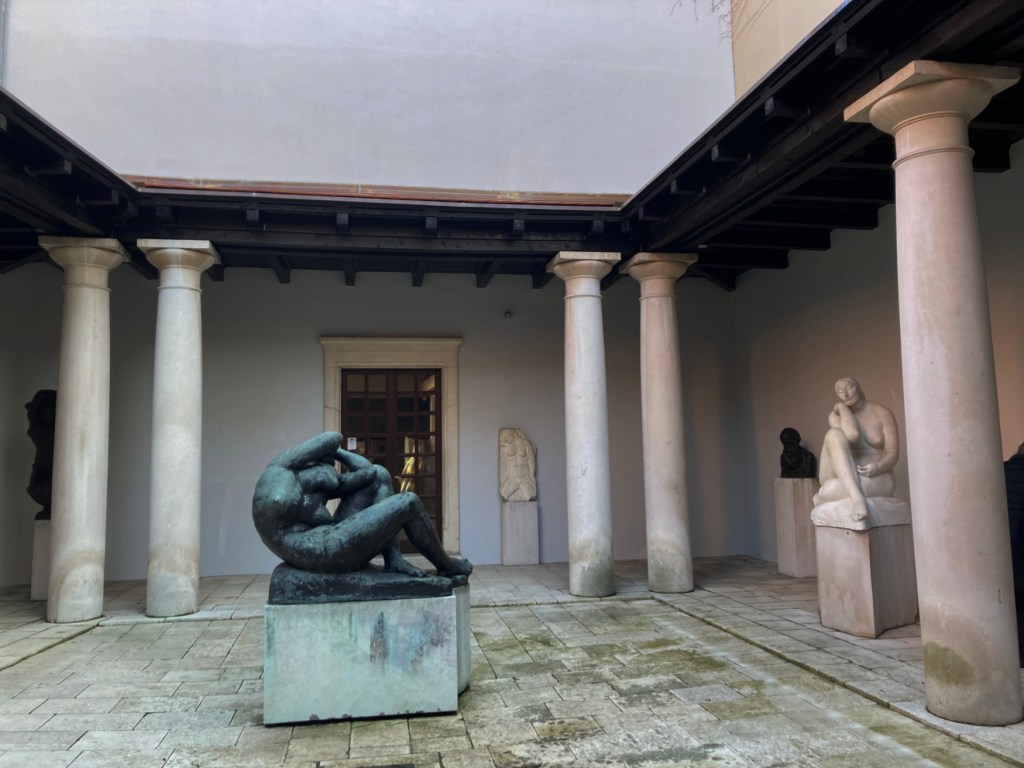
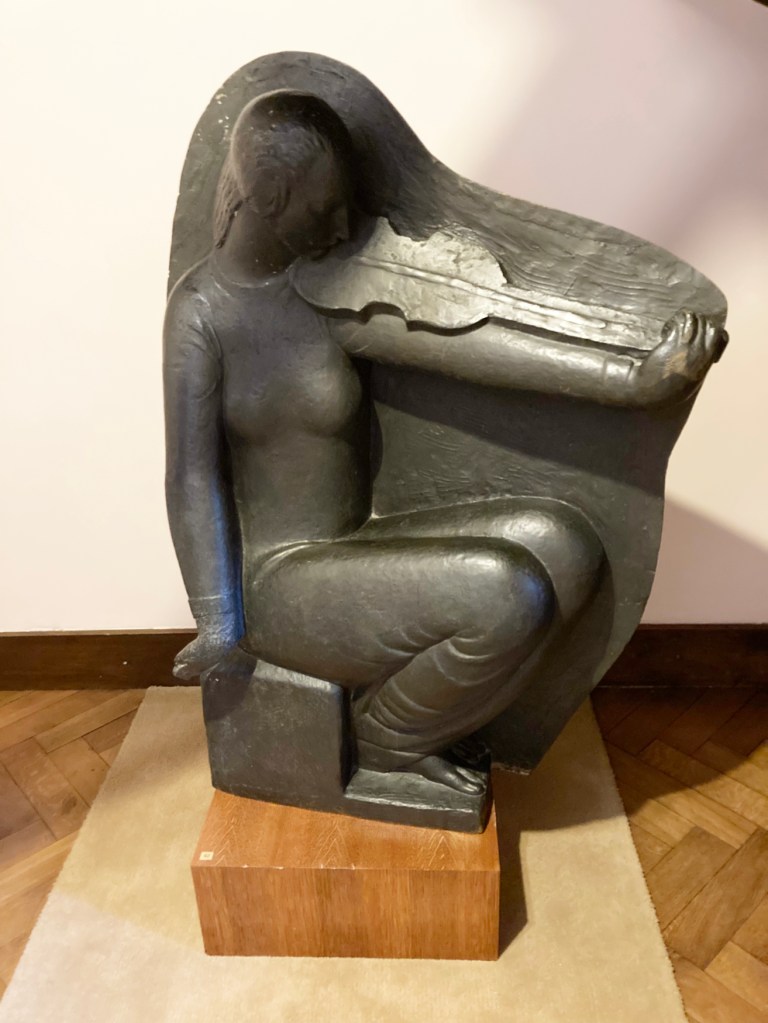
Ivan Meštrović, to whose art I was introduced in Zagreb, had a villa in Split which is now a museum filled with his work. Lest you think I am making too big a deal of his sculpture, consider that Auguste Rodin described Meštrović as ‘the greatest phenomenon in sculpture.’ With Rodin’s endorsement take a look…
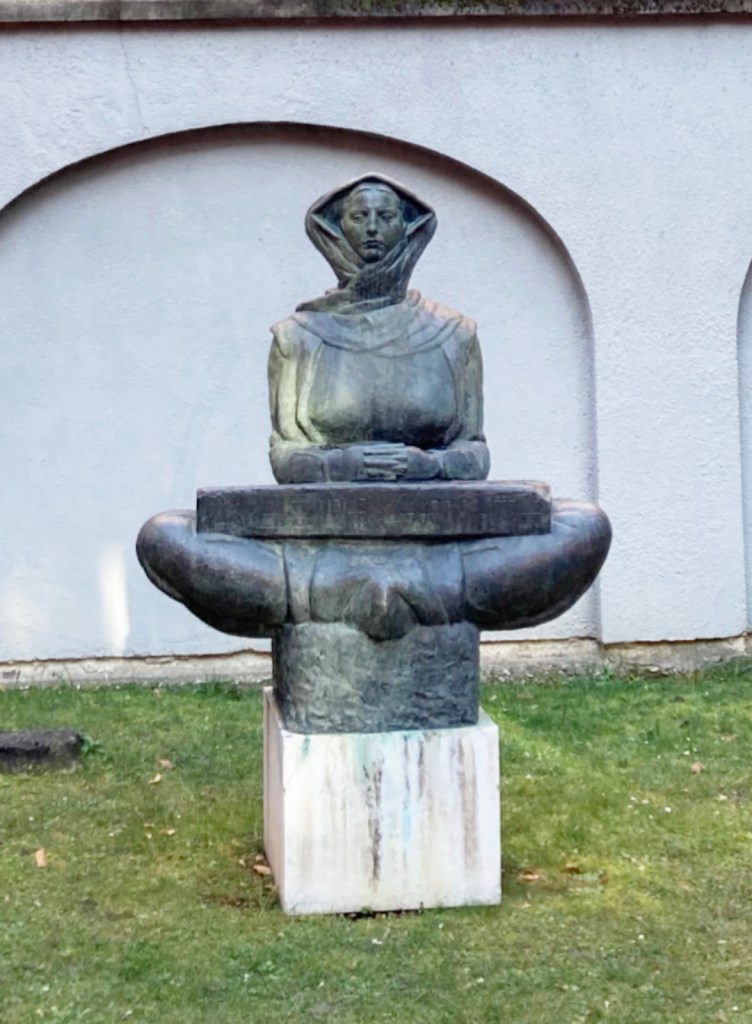
Gregor of Nin(1929) This one is actually just outside the Gold Gate of Diocletian’s Palace in Split. The statue is 28 ft. tall. Gregor of Nin was a Croatian bishop in Dalmatia who, around 925CE, tried to get the Pope to allow use of the Croatian language in the celebration of the mass.
The Villa.
The Villa.
Madonna and Children (1925) This is Meštrović’s nod to Michelangelo; note the unworked or roughly worked marble that frames the sculpture.
My Mother (1909)
Ruza Klein (1915) Meštrović’s first wife.
Vestal Virgin (1917)
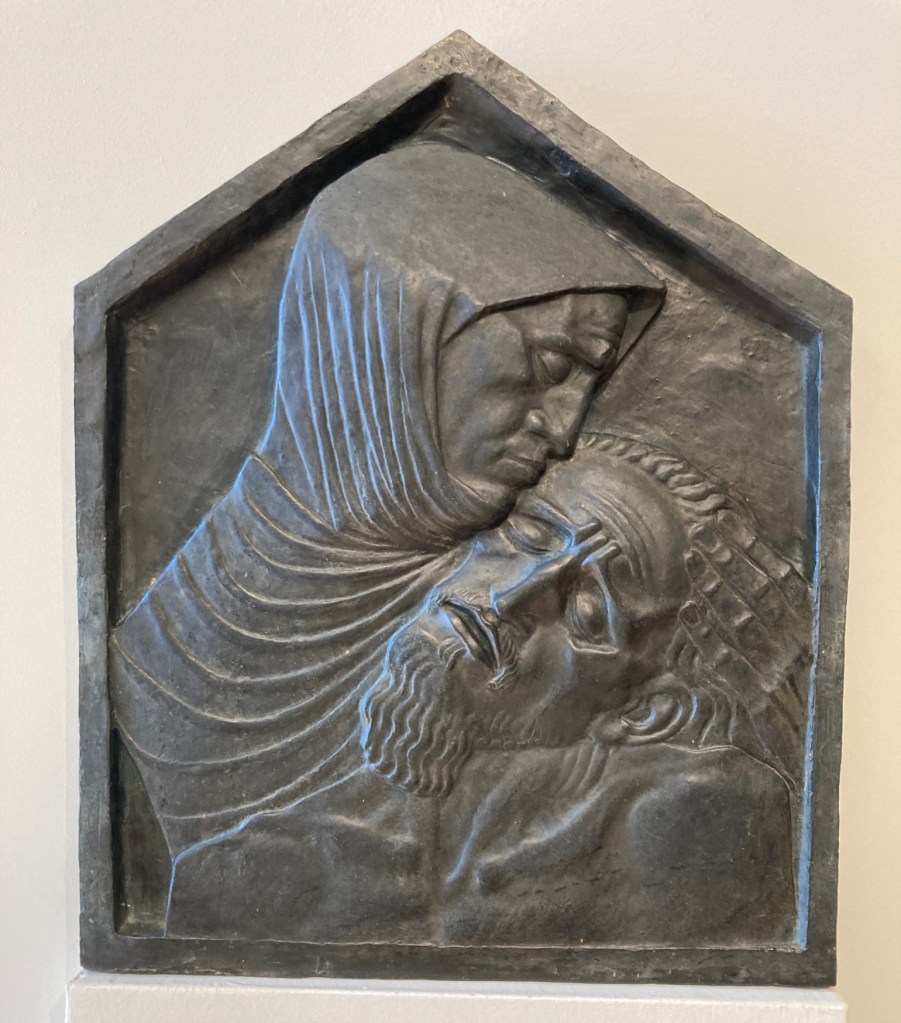
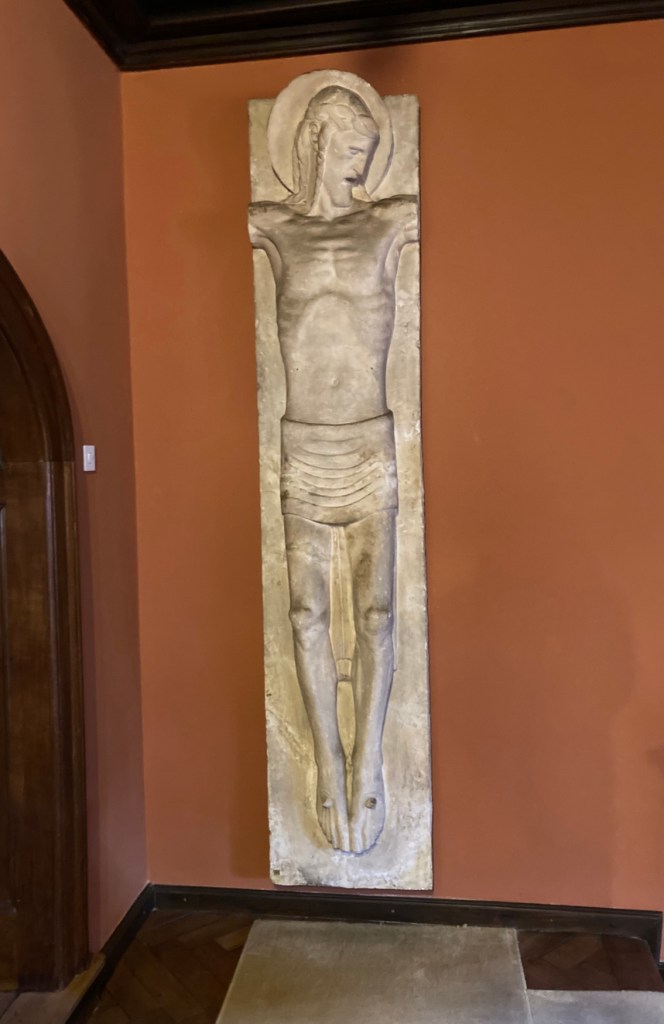
The Mourning of Christ ()
Job(1946)
In Despair (1927)
In Despair (close-up)
Meštrović made small bronze versions before producing the monumental final.
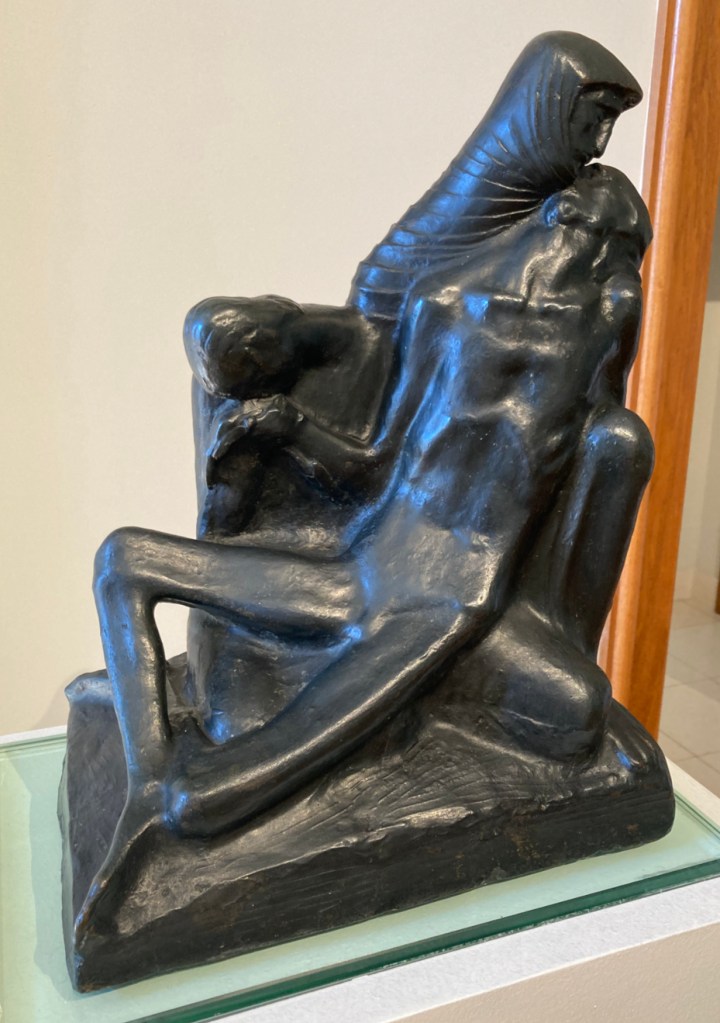
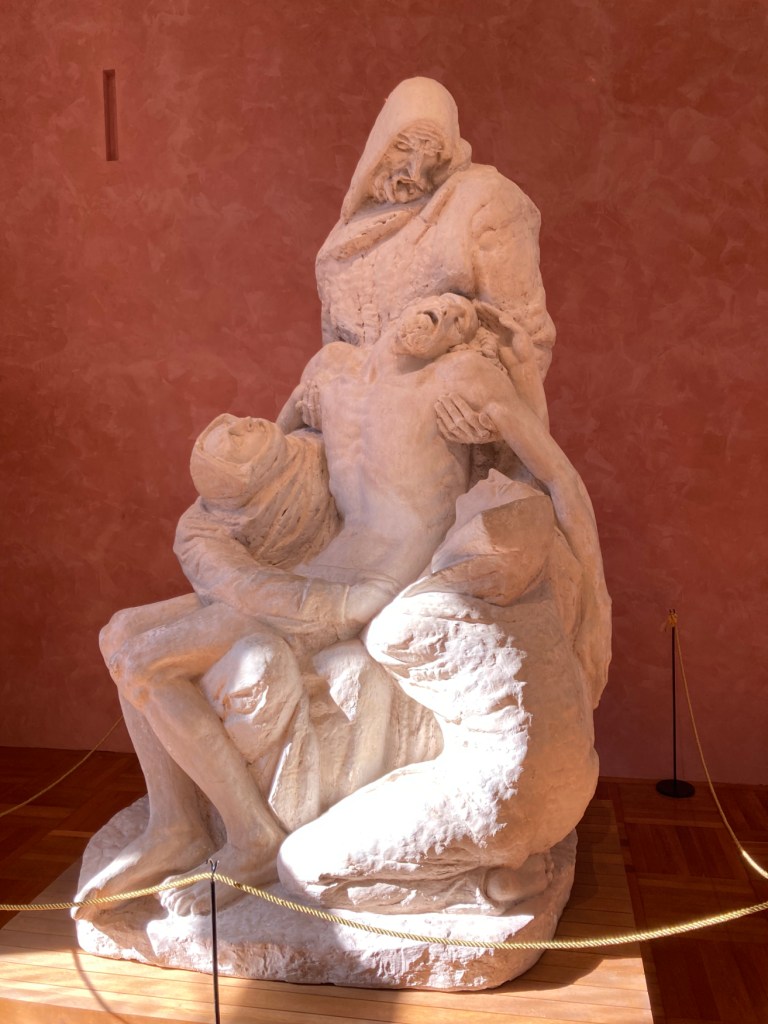
Pieta (1914)
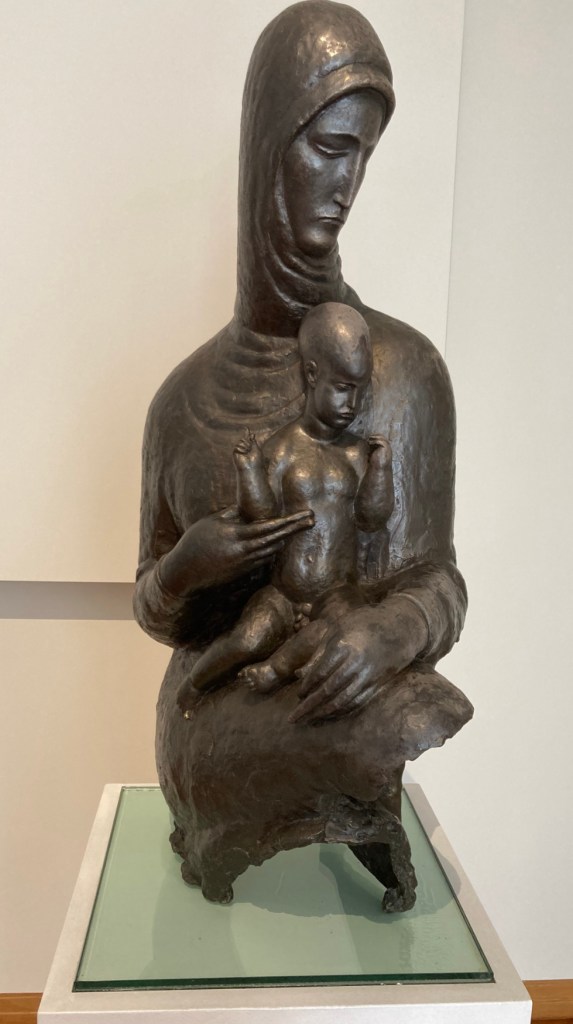
Madonna and Child
Pieta (1942-3). Plaster
Crikvine-Kastilac
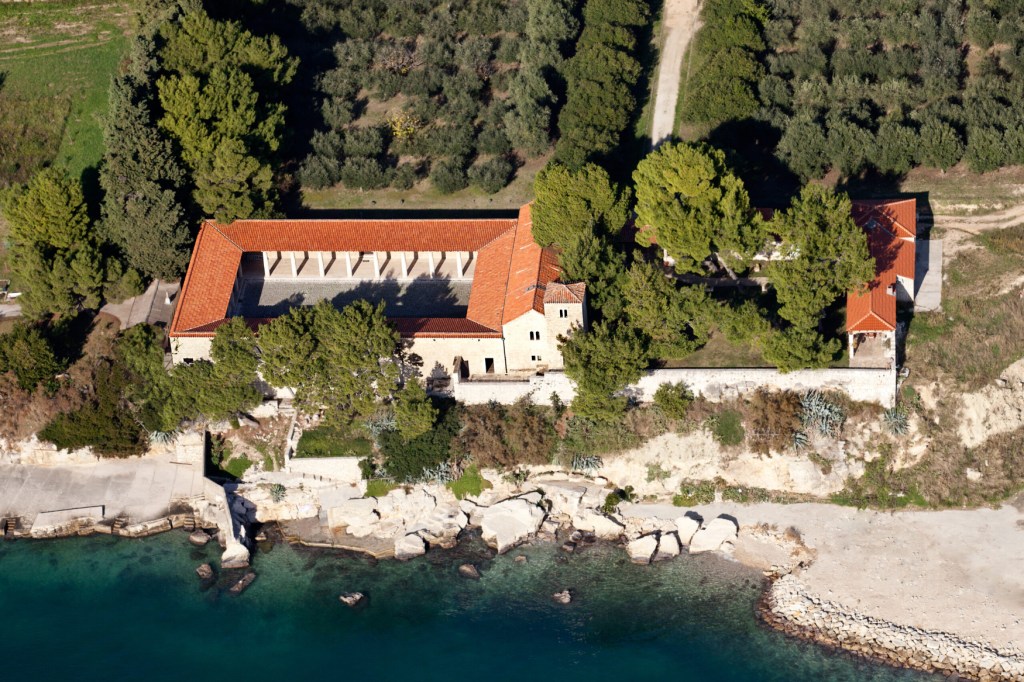
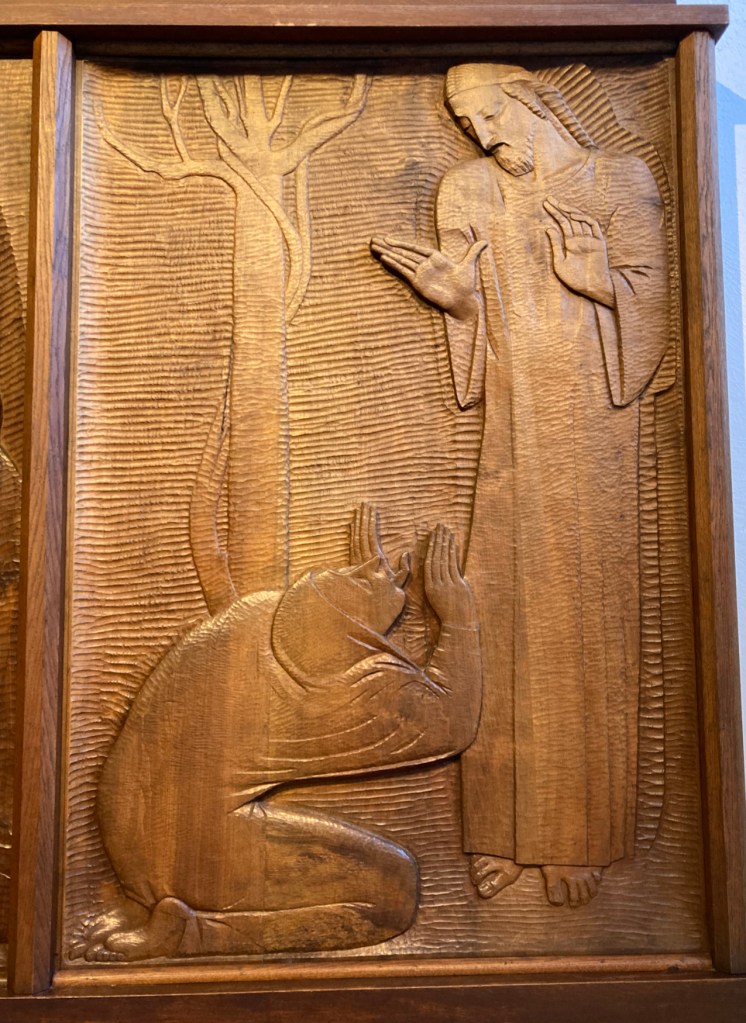
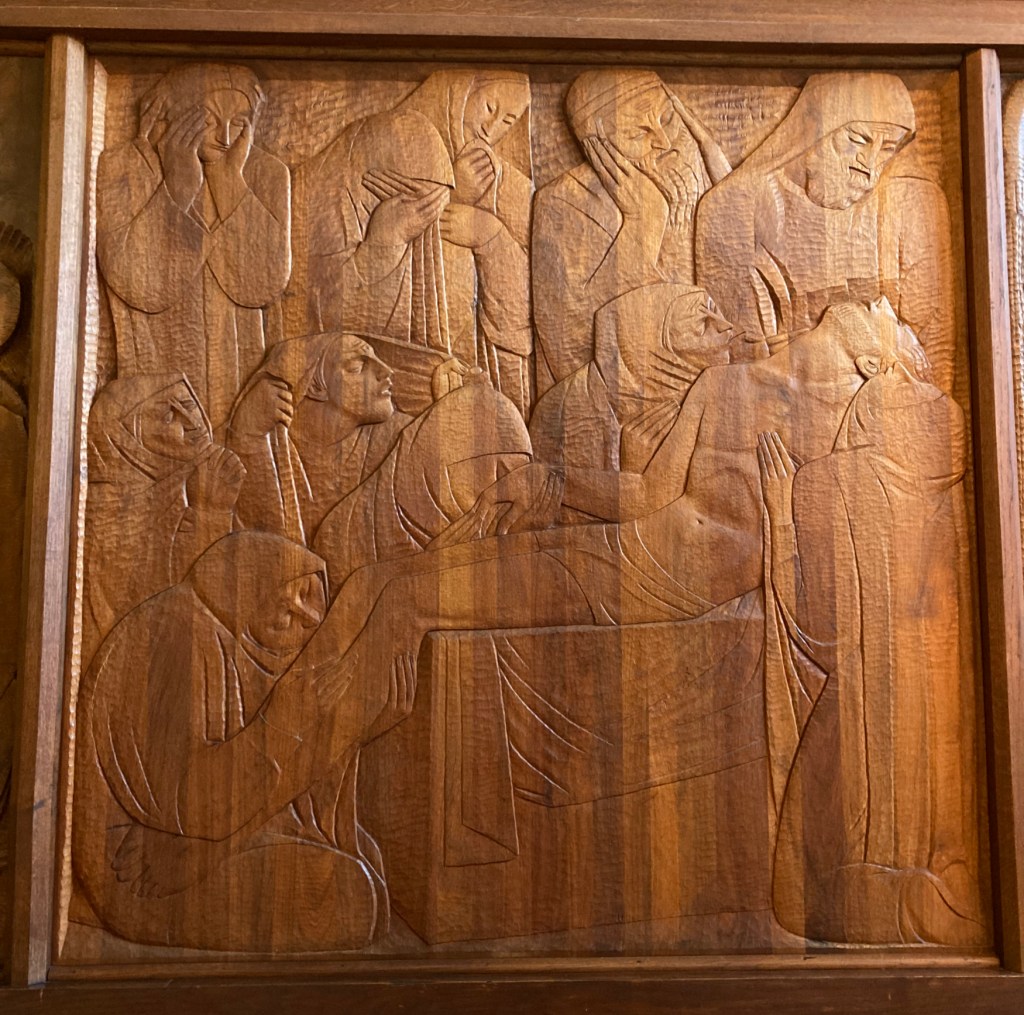
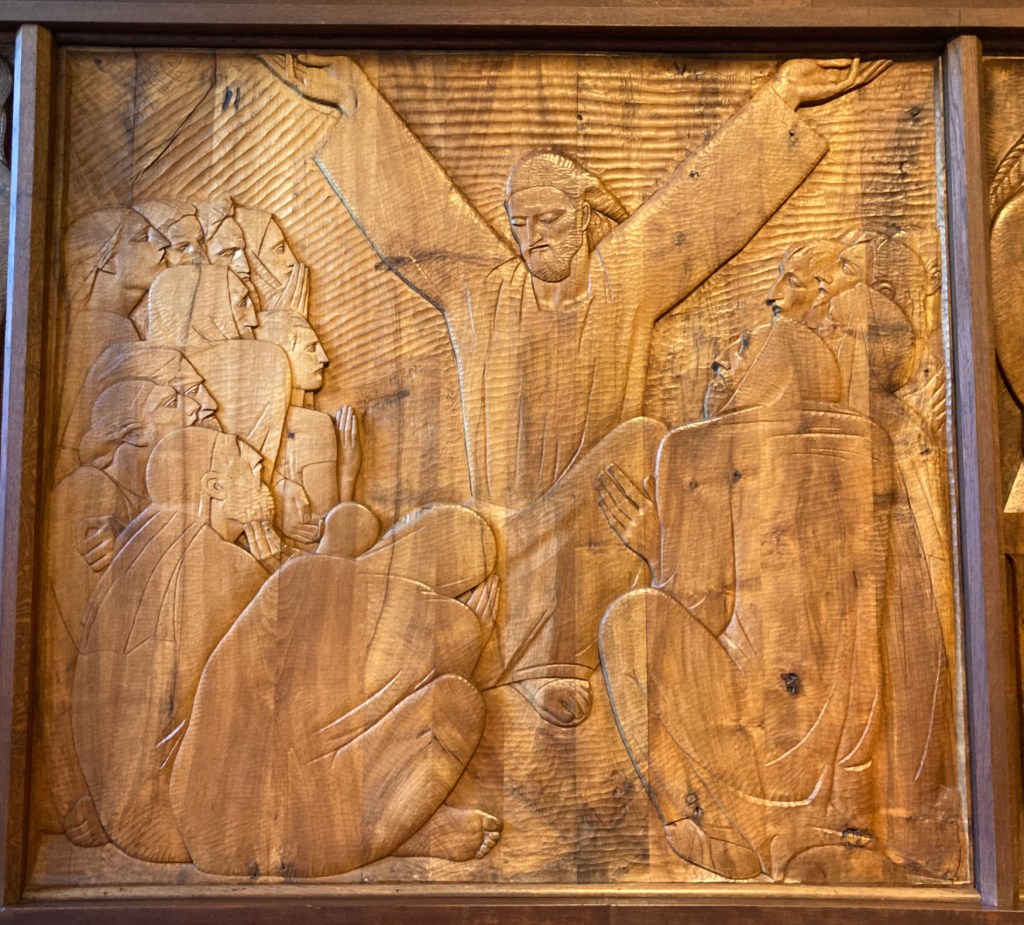
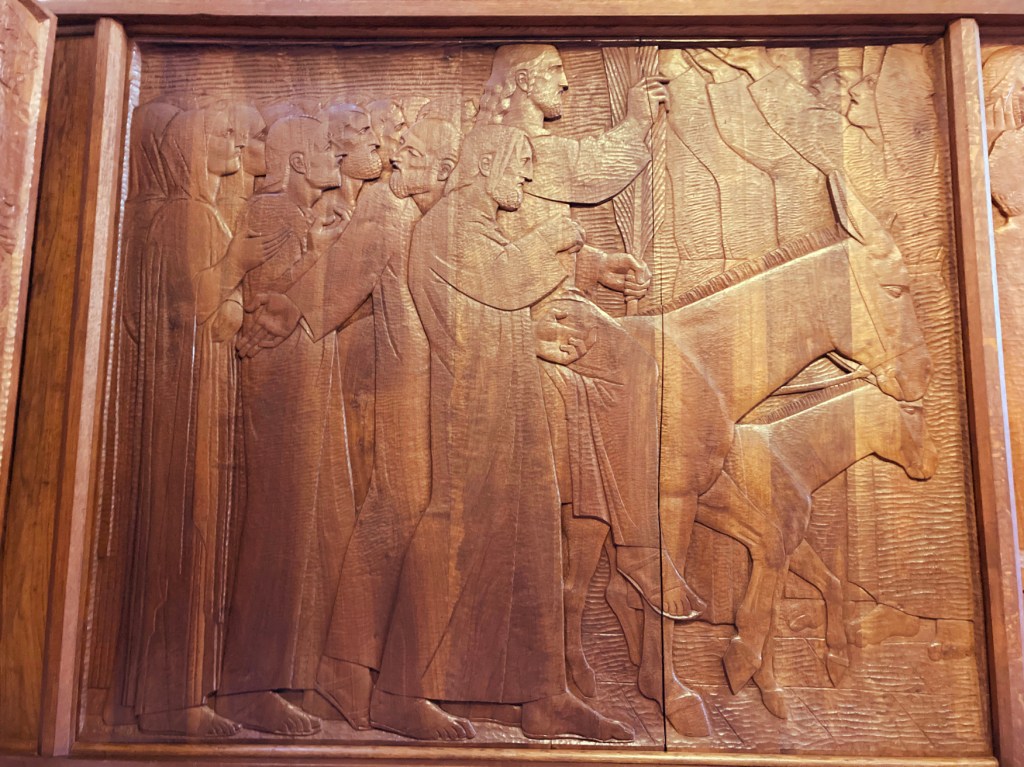
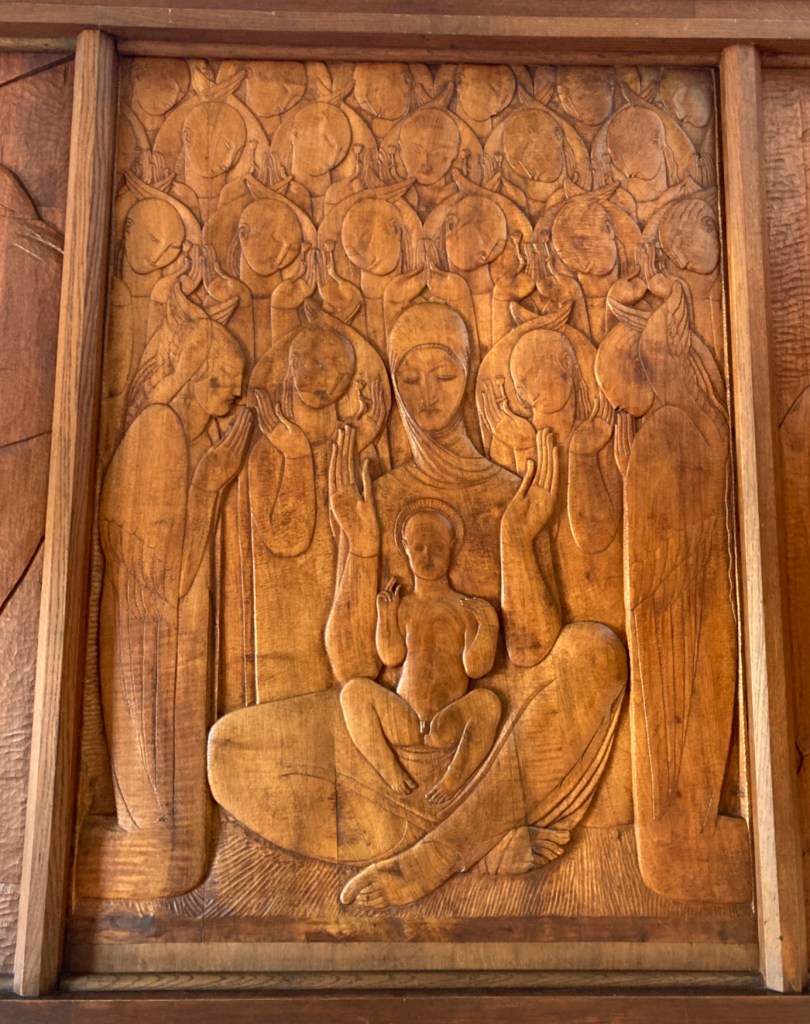
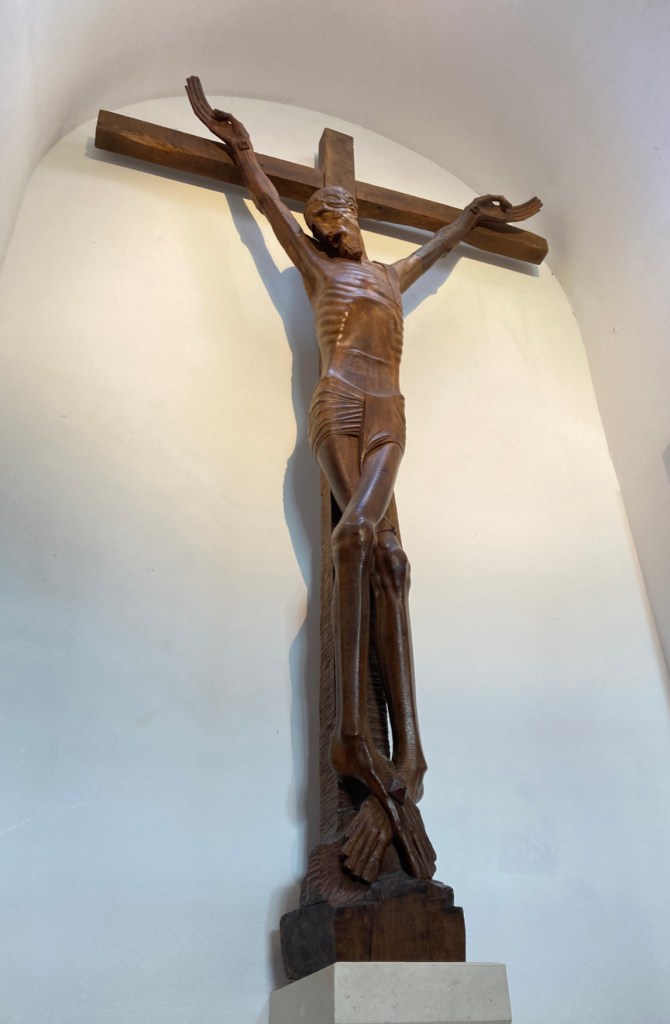
In 1939, Meštrović bought a property that was originally a fortified Renaissance estate. It’s just down the street from the villa. He chose this location to develop a vision he had for a unique religious/artistic installation- kind of an early immersive experience. For 30 years, Meštrović had been working on 28 wooden relief panels depicting scenes from the life of Christ and a Crucifix. He filled the estates chapel with these works.
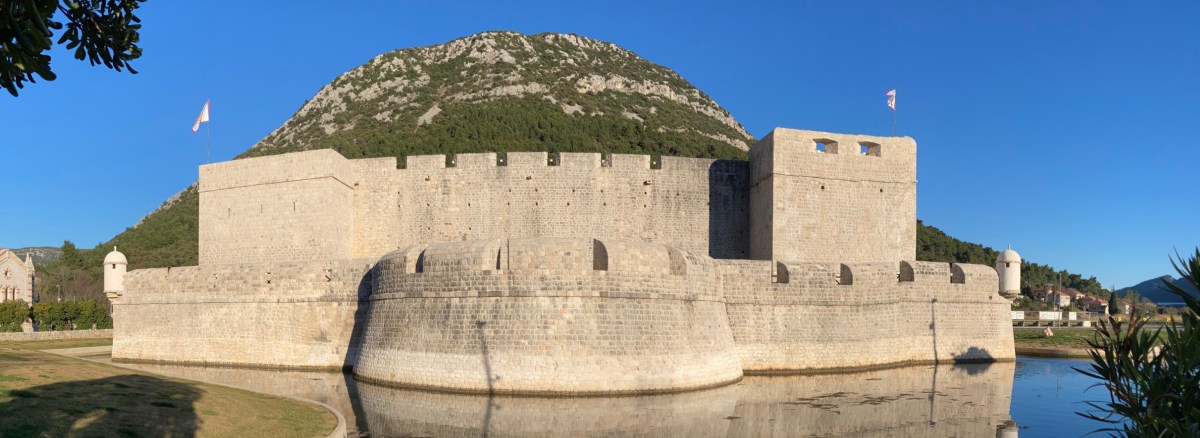
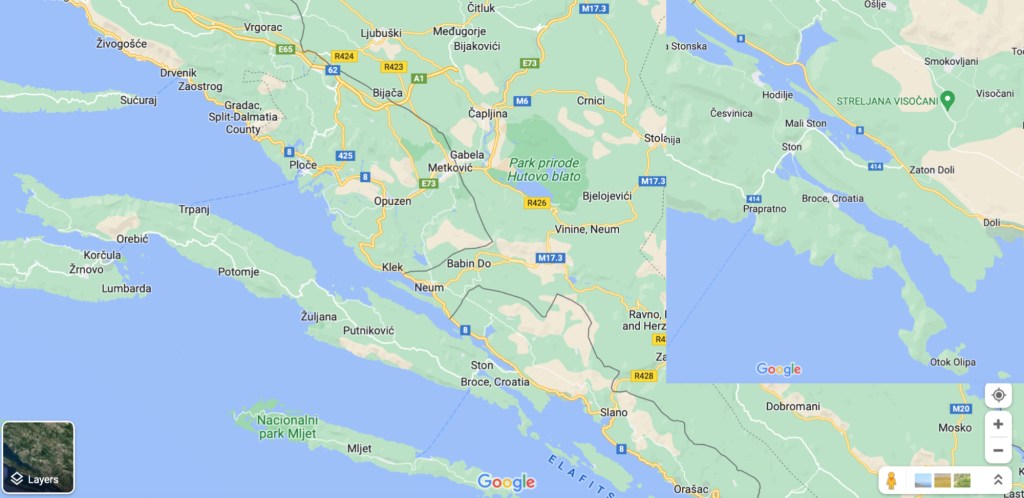
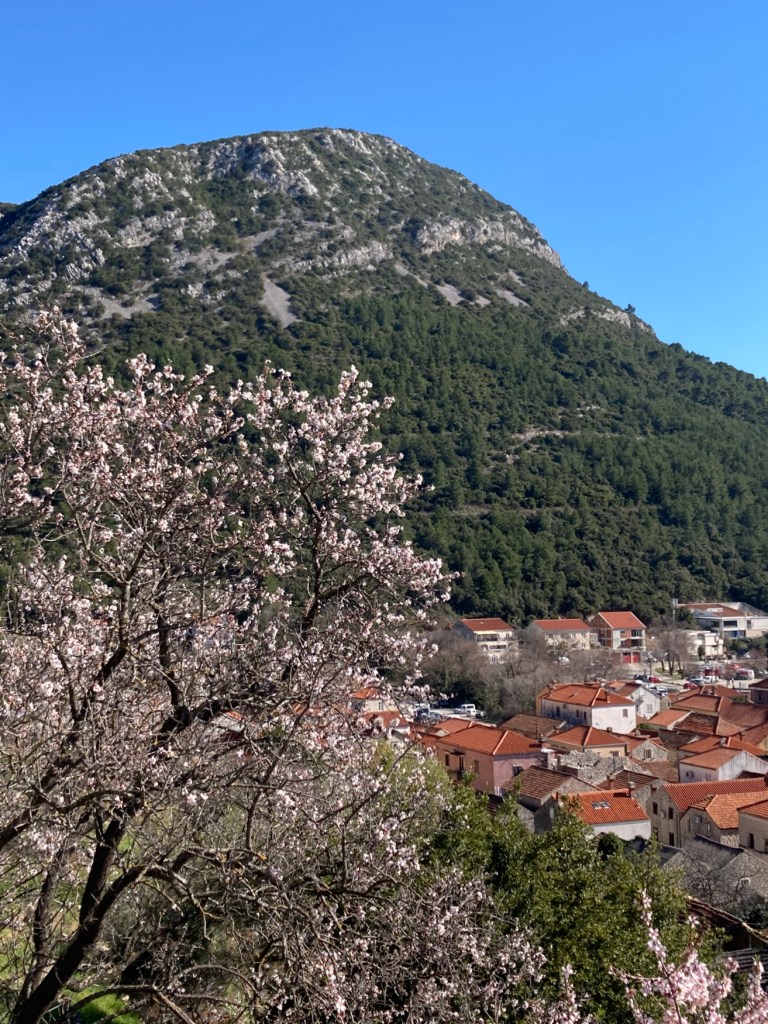
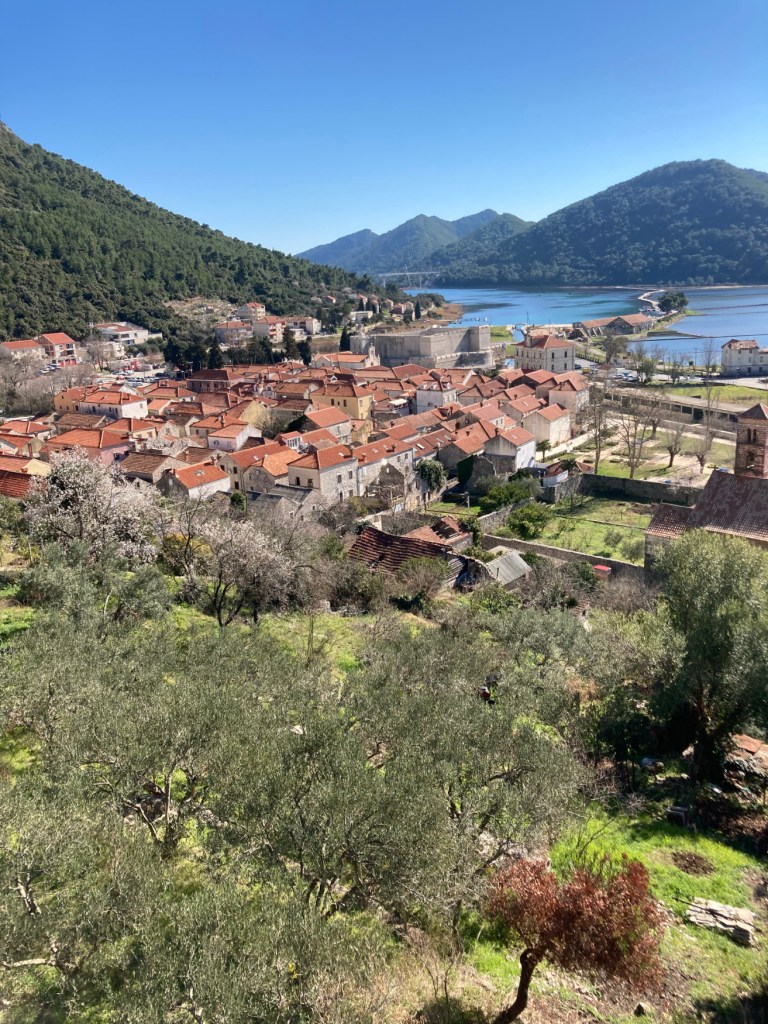
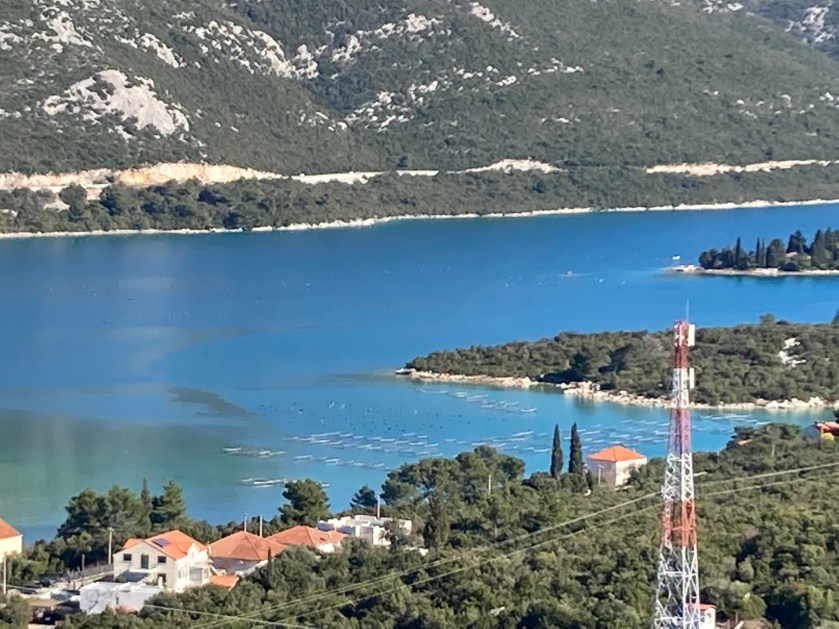
We took the #15 Libertas Bus and did an overnight trip to Ston (pronounced “stone”). Ston is at the base of the Peljesac peninsula. It’s situated at the end of a small bay on the Adriatic side of the peninsula. Peljesac is only a couple of kilometers wide at this point. The town of Mali Ston (Mali= little) is on the bay side of the narrow base of the peninsula. There are 3 reasons for the tourist to visit Ston: walls, salt, and oysters.
Salt and Walls
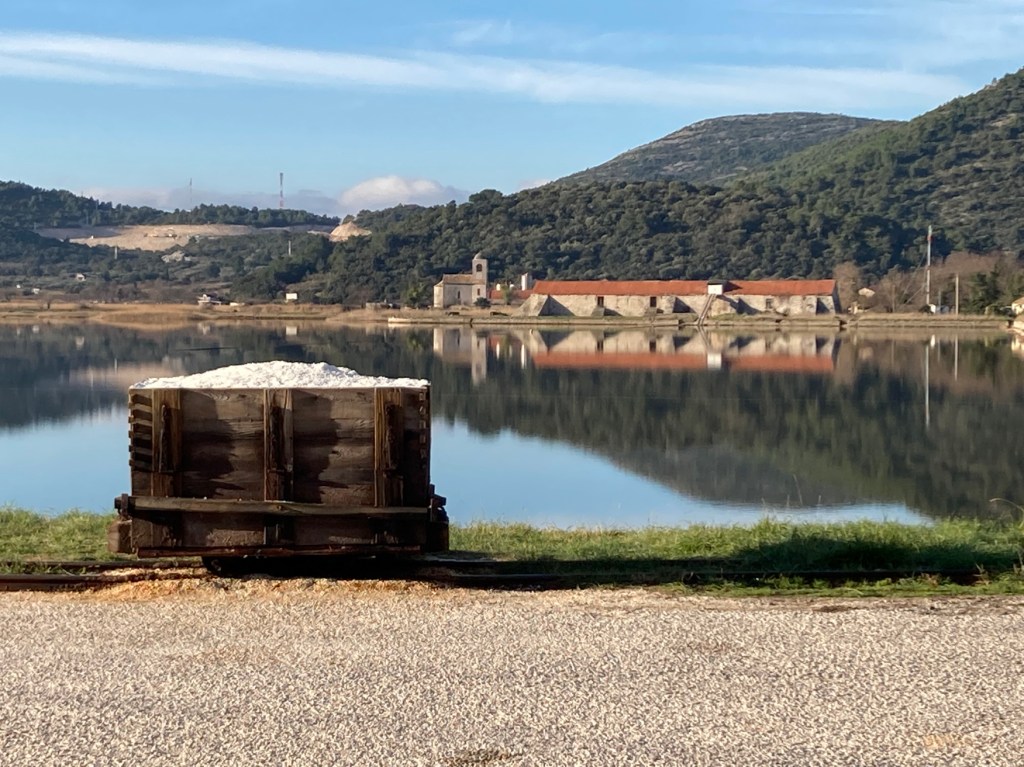
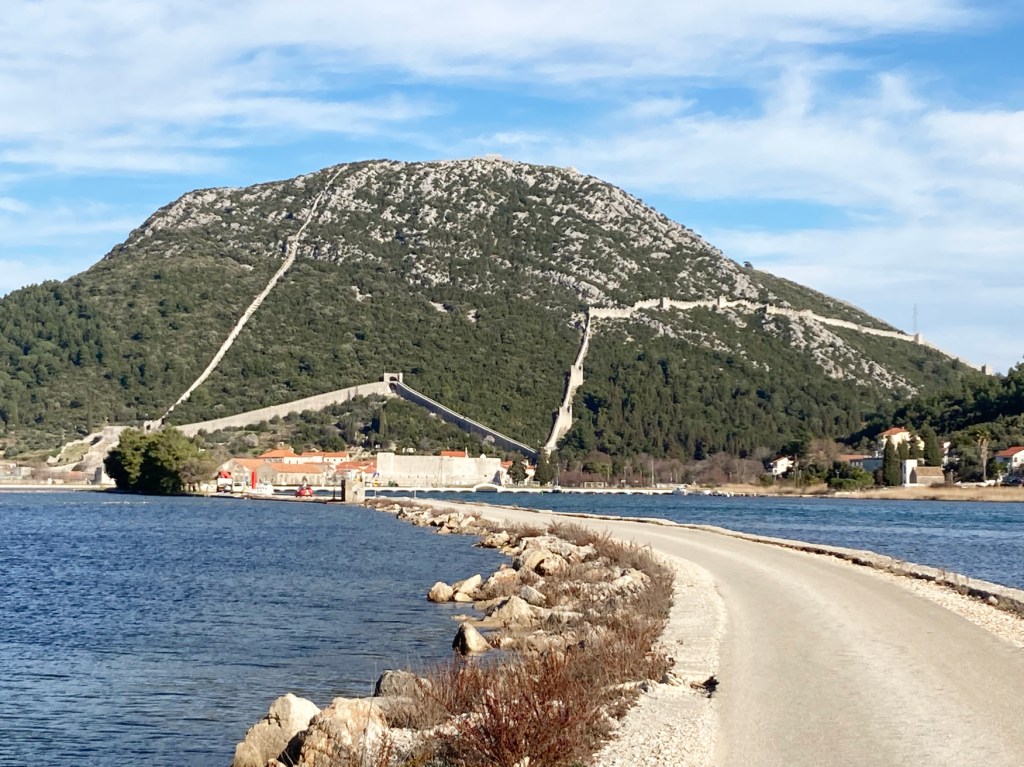
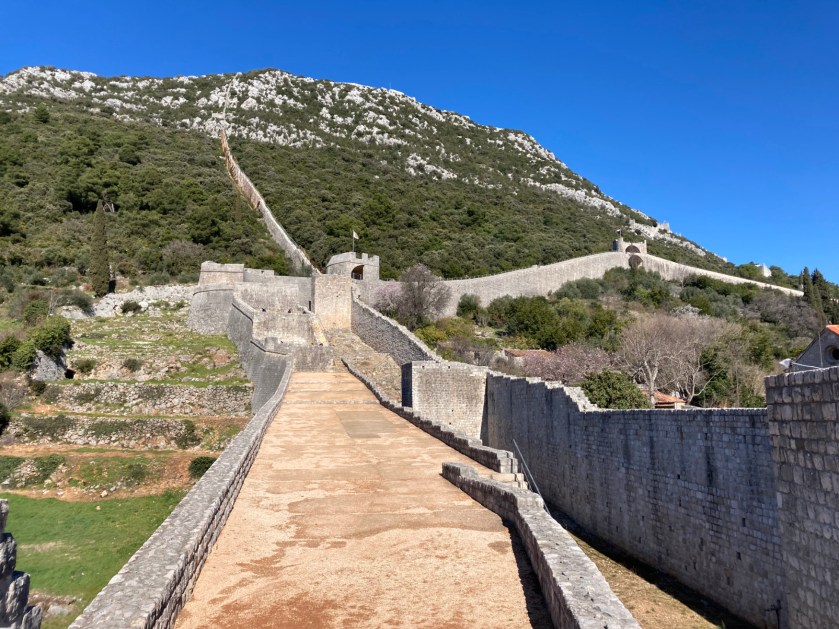
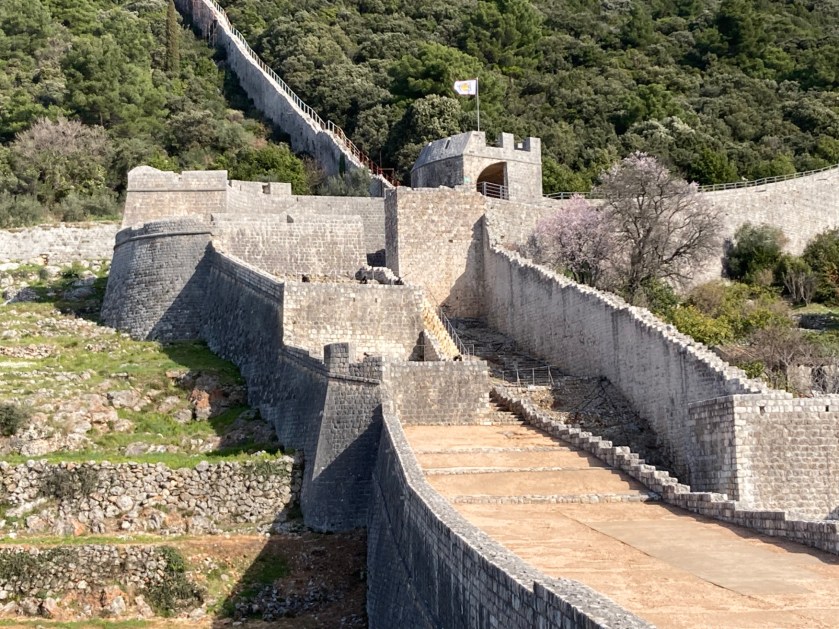
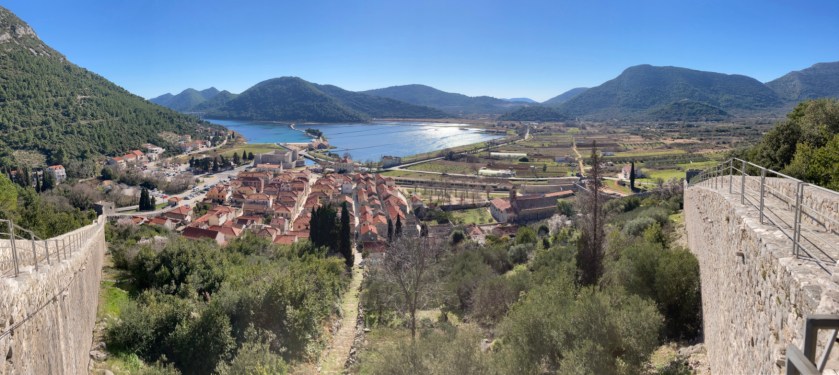
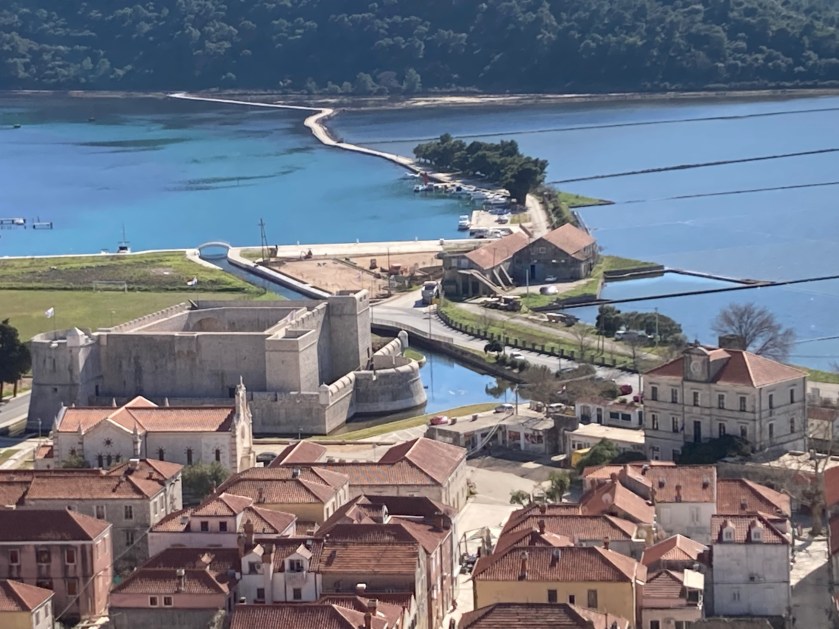
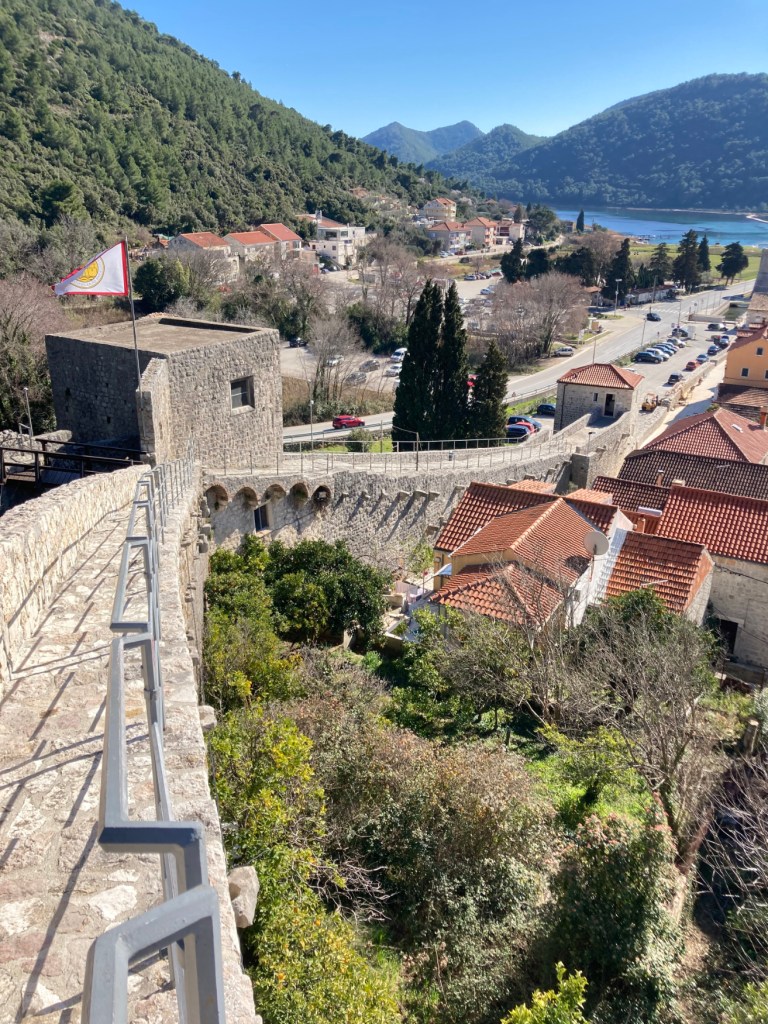
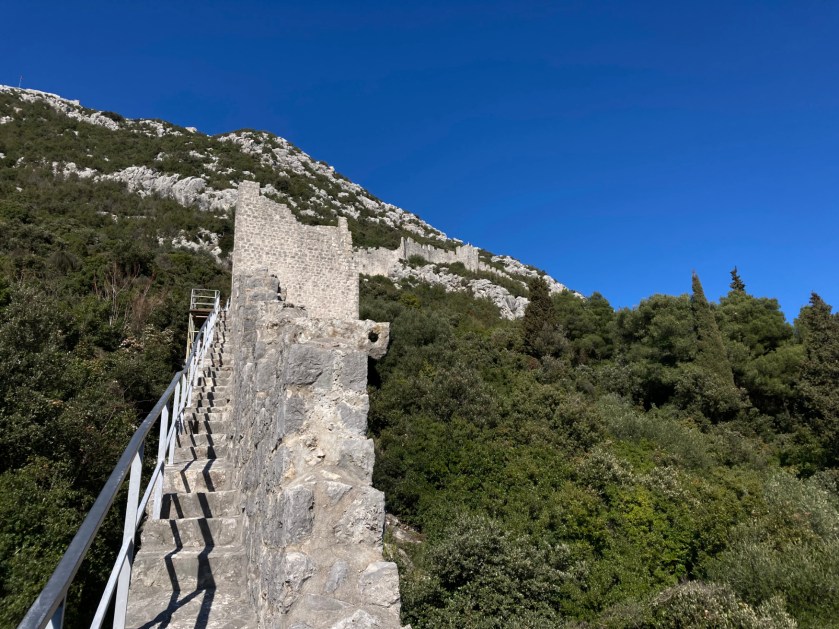
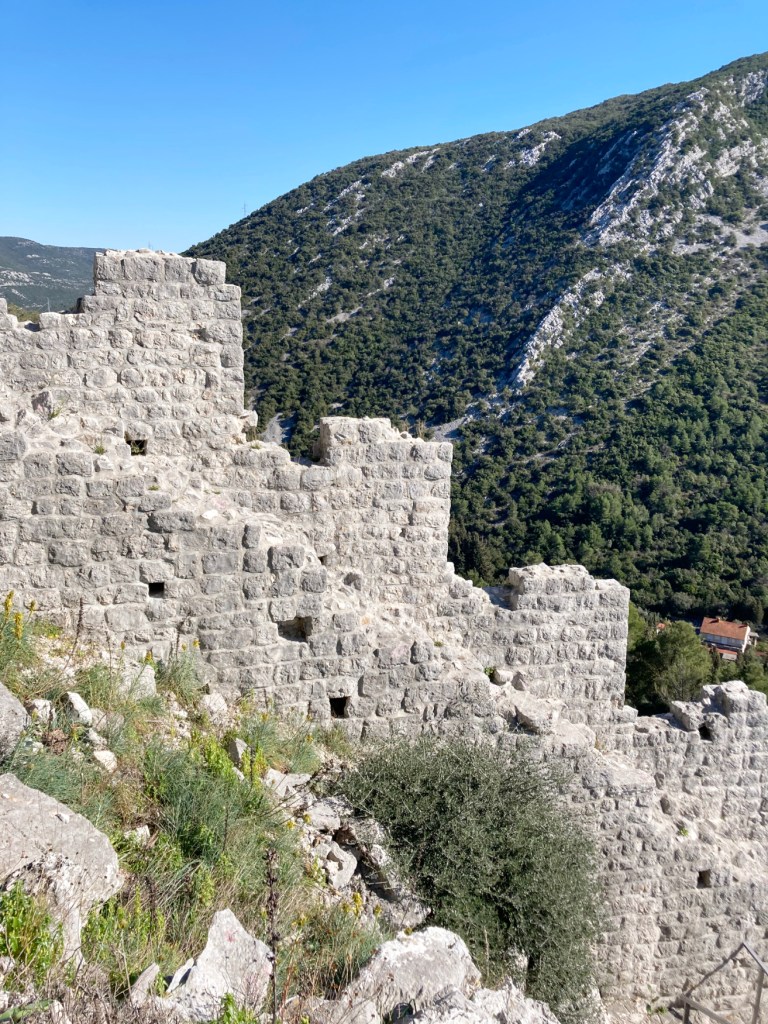
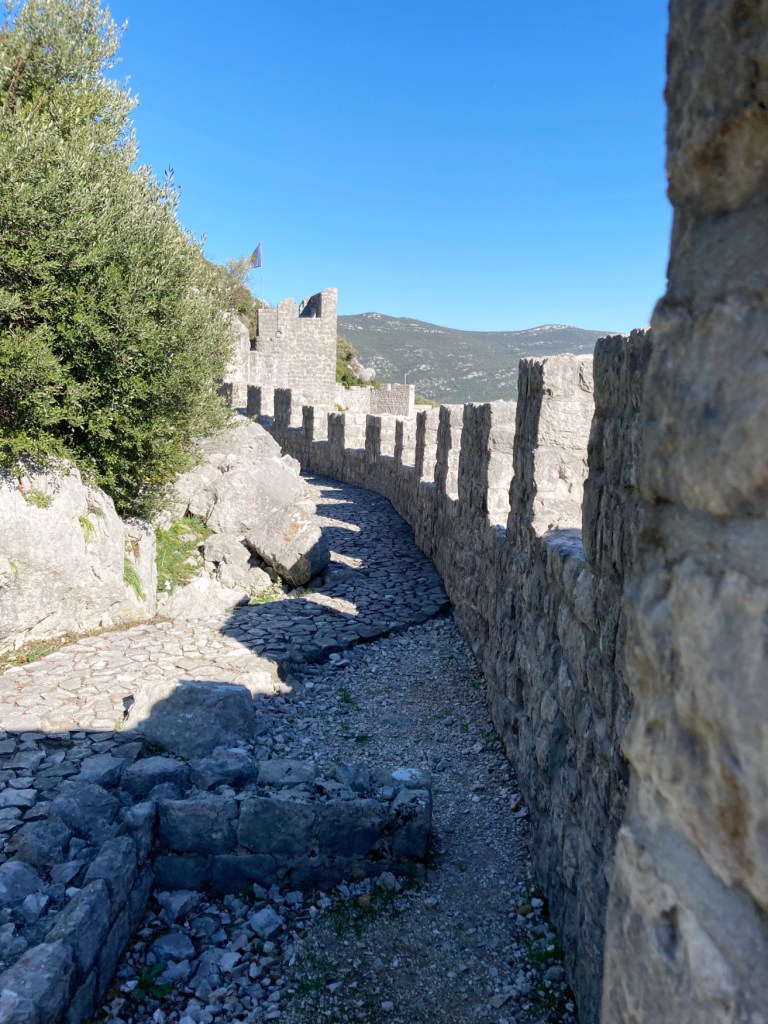
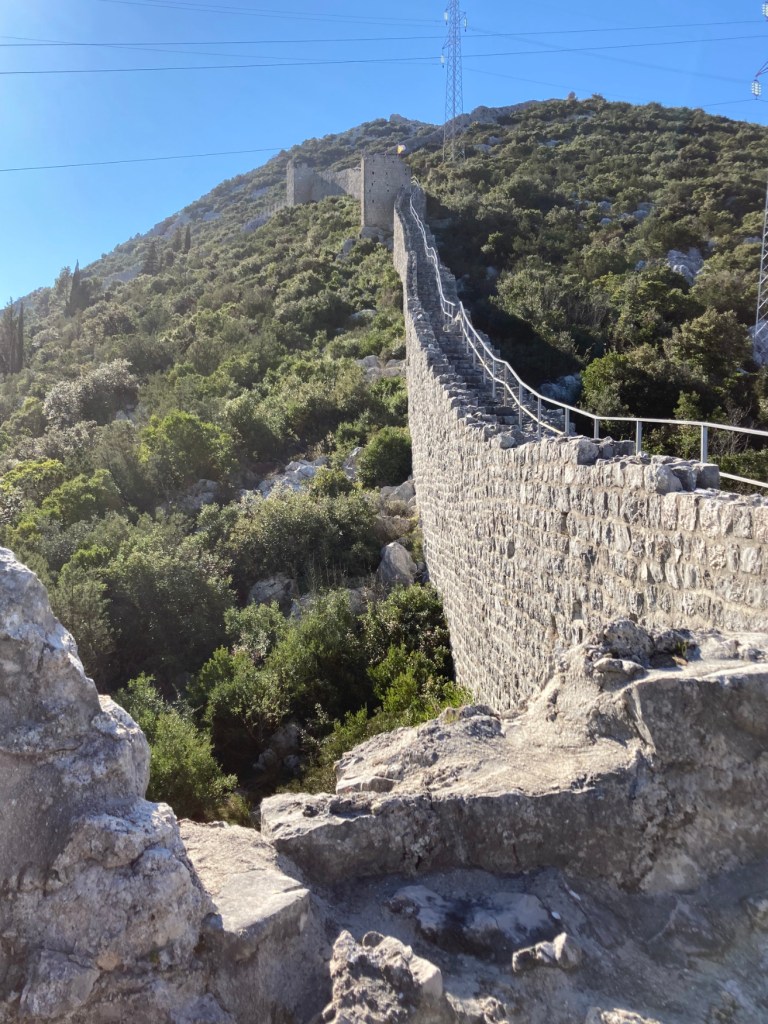
This area (like most of the Balkans) has a long and convoluted history. For our purposes, we’ll begin in 1333 when the Republic of Dubrovnik purchased the Peljesac Peninsula. This acquisition expanded the Republic in a strategically important area that was geographically better for defense. Most important, however, Ston was a site of salt production. The bay is very shallow and the local population had leveled these shallows and put in flat stones to create pans where seawater was evaporated. Salt production in this area may go back to the Romans or further. During these times, salt was nearly as valuable as gold. To protect a resource in the Middle Ages as valuable as gold, you need a wall. So the Republic of Dubrovnik built a network of walls and forts that extends from Ston to Mali Ston and exists to this day; the longest wall (5 km) in Europe.
The salt production facility is only operational when the weather is warmer and not really at an industrial scale any more; it’s kind of like a boutique salt operation.
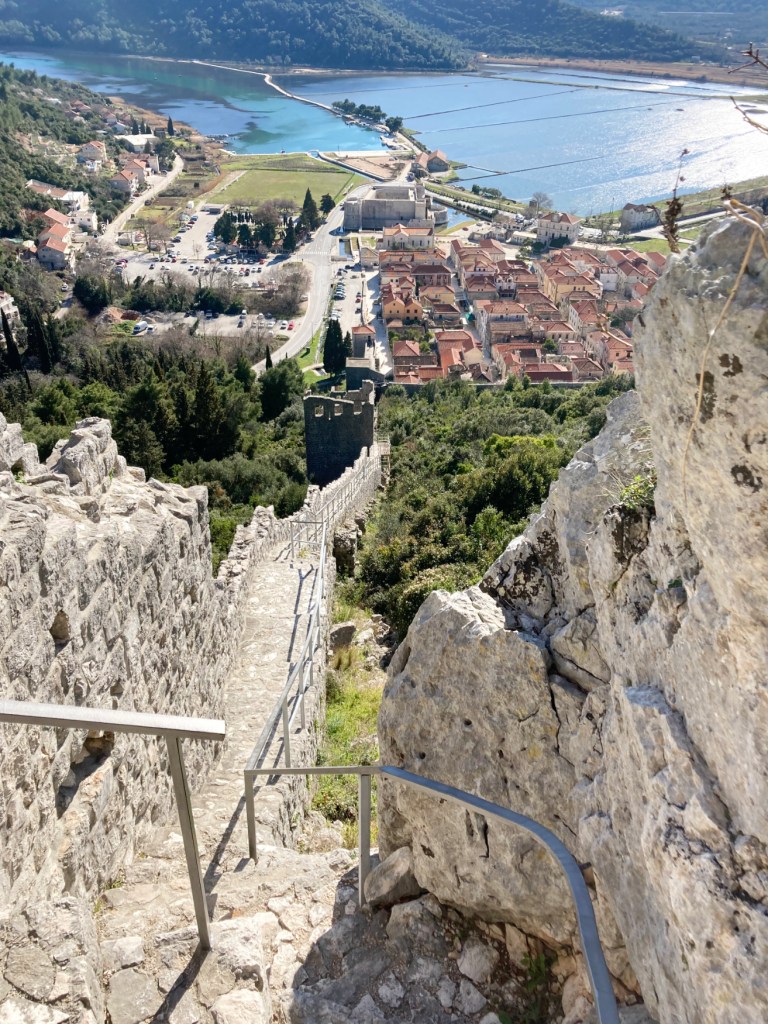
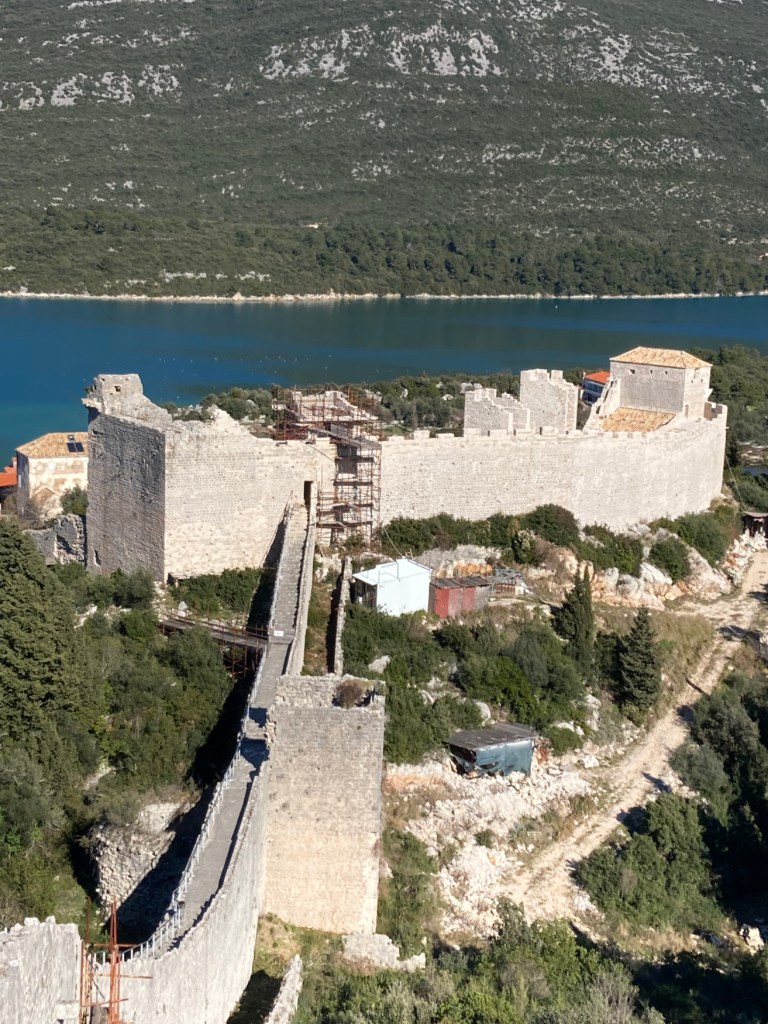
This is Ston at the base of this hill. The largest building is a fortress. The wall on the left goes to the top of the hill to another fortress. The wall on the right goes to Mali Ston and, you guessed it, another fortress.
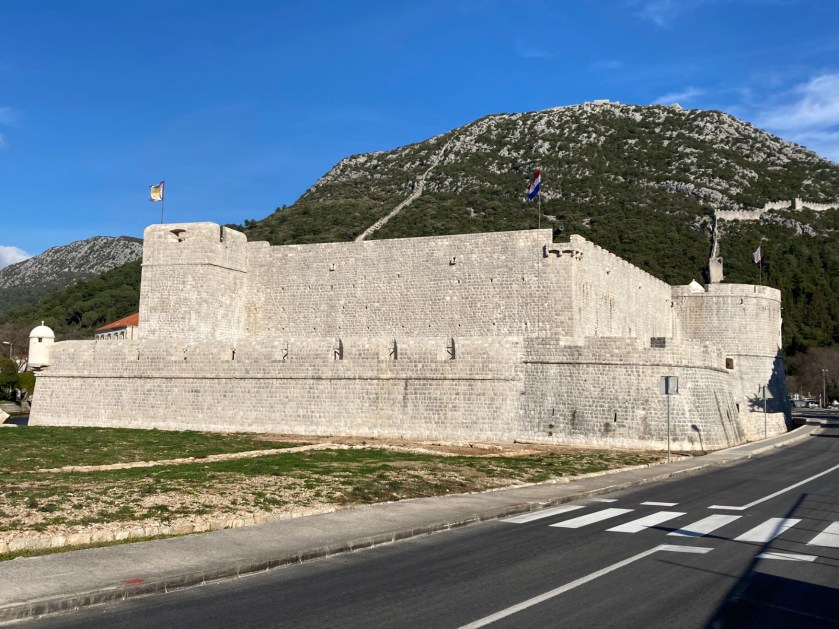
Fortress in Ston
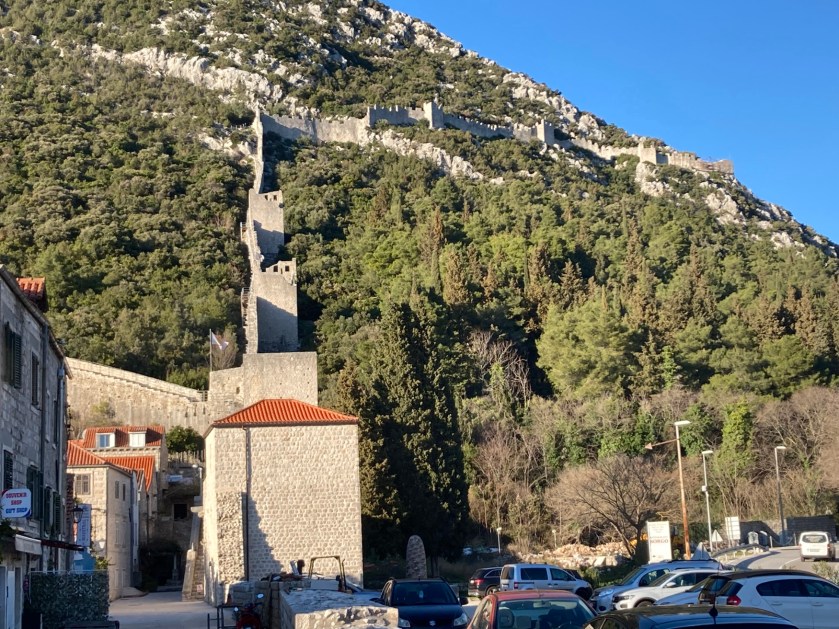
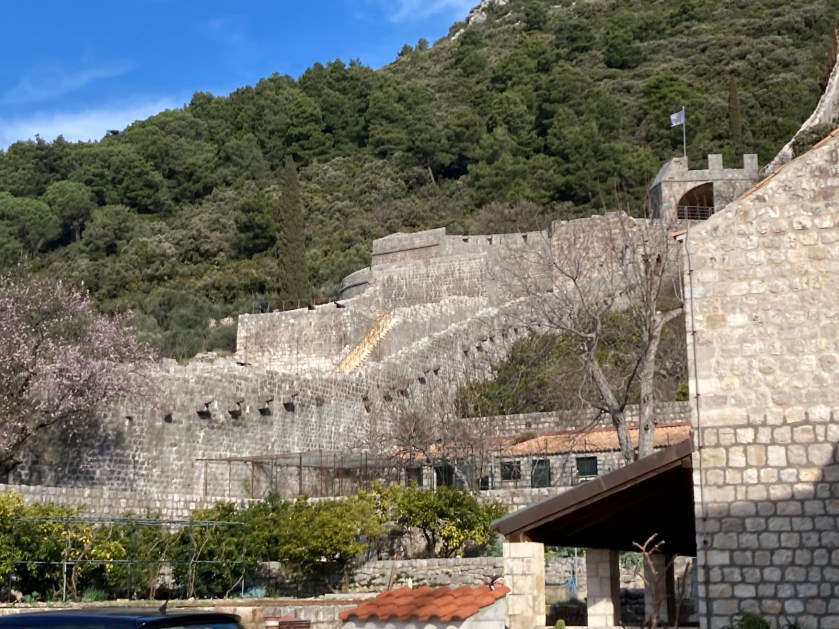
Ston wall and the wall over to Mali Ston.
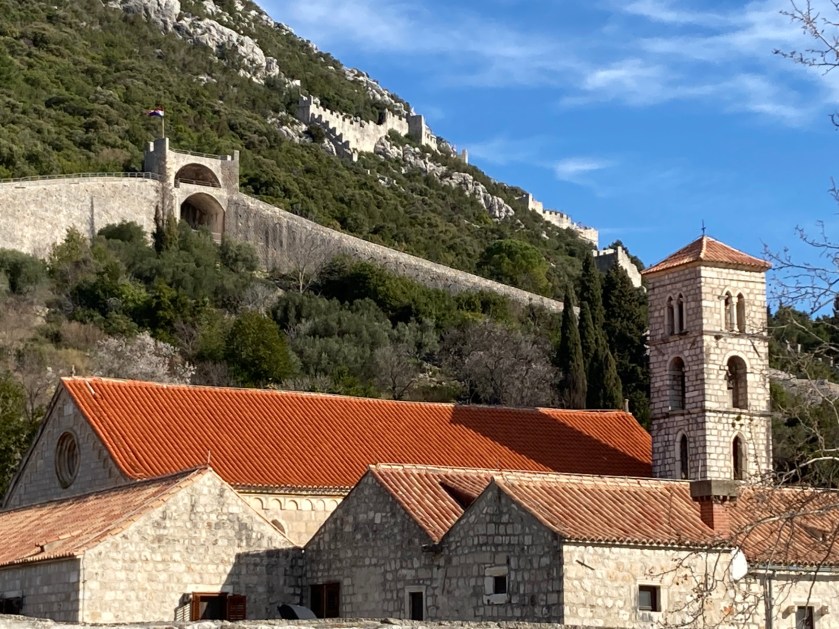
Back of the Ston wall.
You can walk the 5km wall around Ston and over to Mali Ston. So, we did. The wall up the hill goes to the fortress on top- didn’t go there.
Ston.
Fortress. Salt pans to the left. of the elevated road.
We stayed in a studio apt. in the first building you see to the right of the wall.
Almost at the top.
Looking back and down at Ston.
No more uphill but…
…the decent to Mali Ston was a killer.
Fortress in Mali Ston. My knees were killing me then and they kind of hurt now when I look at this picture. To get back to Ston, we walked along the nearly-level road.
Oysters
These days, this area is known for oysters. Some say Ston oysters are the best in the world due to a perfect storm of seawater temperature and the right amount of freshwater flowing into the bay.
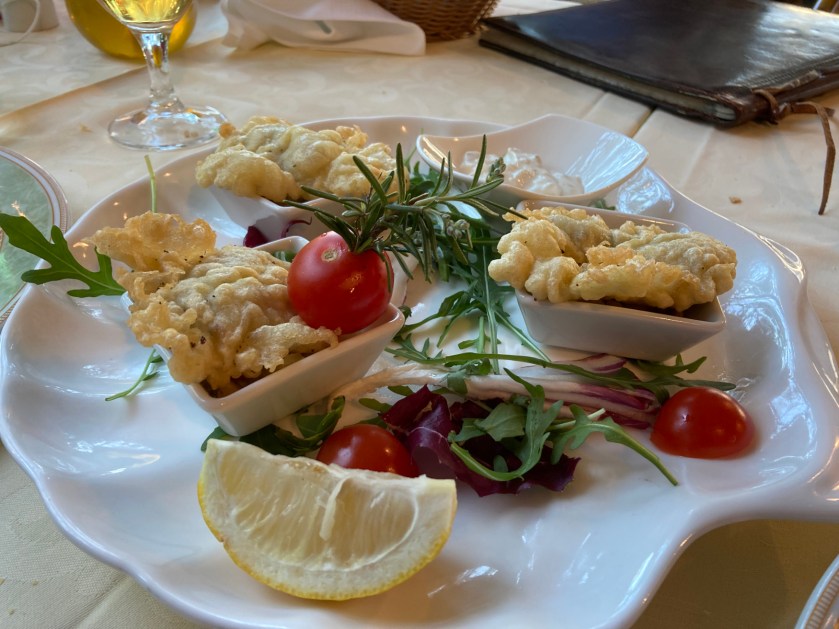
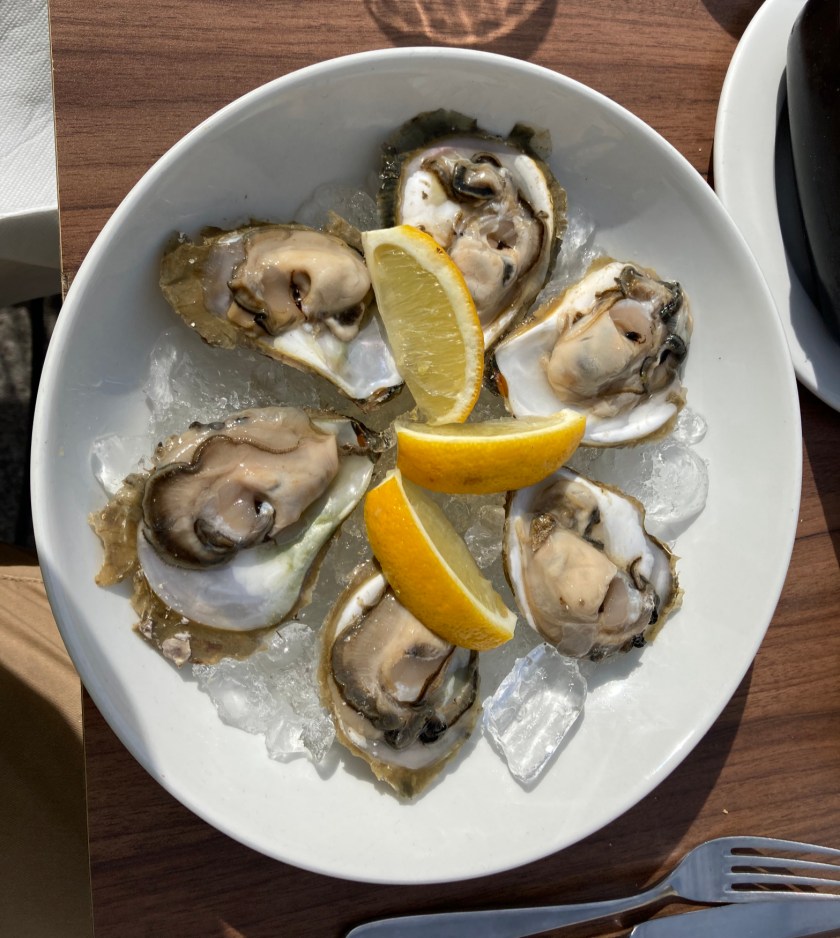
Anyhow, Susan and I got to Ston at lunch. Had oysters for lunch in Mali Ston (after walking the wall). Had oysters for dinner in Ston. The next morning, hoping to go 3 for 3, we went to a restaurant that seemed to be serving food and asked if it would be possible to get a plate of oysters. The young server said yes and we sat down. A few minutes later, he brought us our cappuccinos. Finished our cappuccinos. Waited…and waited. Finally, after about 45 minutes, the waiter comes out, apologizes, and says they didn’t have any oysters on hand and one of his colleagues had to go over to Mali Ston and find an oyster farmer to go pull our order out of Mali Ston Bay. About 30 minutes later, he brings this plate of fresh oysters and a couple of fried ones. All excellent.
I have covered almost all of what I think are the coolest things we’ve seen or done in Zagreb. The following are what’s left over. A little history. Some street scenes. A bit more Zagreb quirkiness. Sorry if it’s a little long.
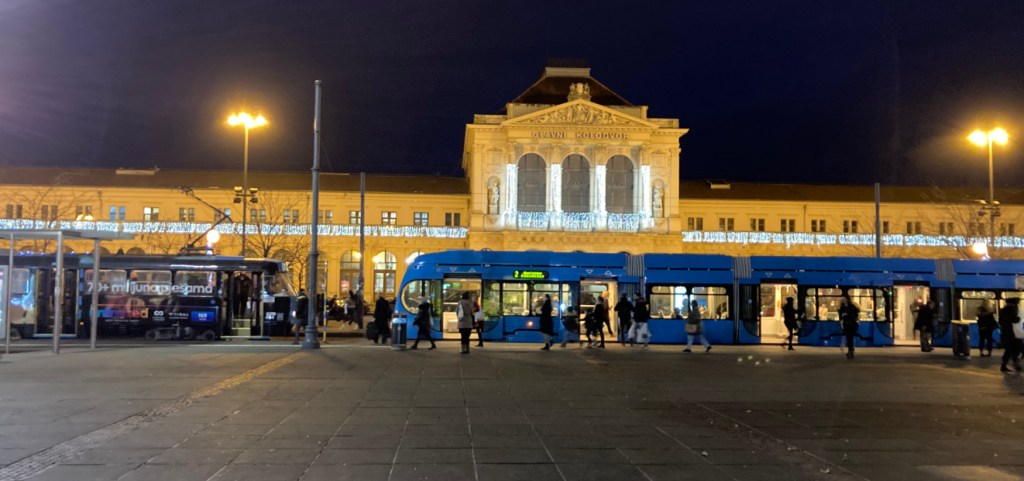
Train station (Glavni Kolodvor) in back. City tram in front.
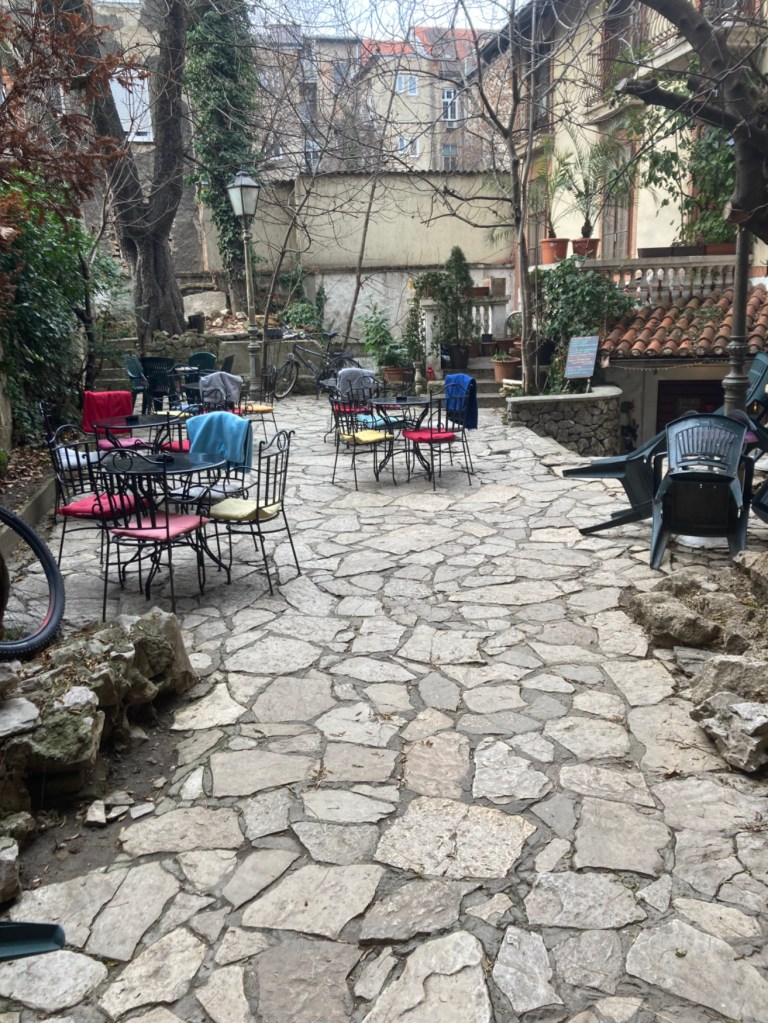
Cafe.
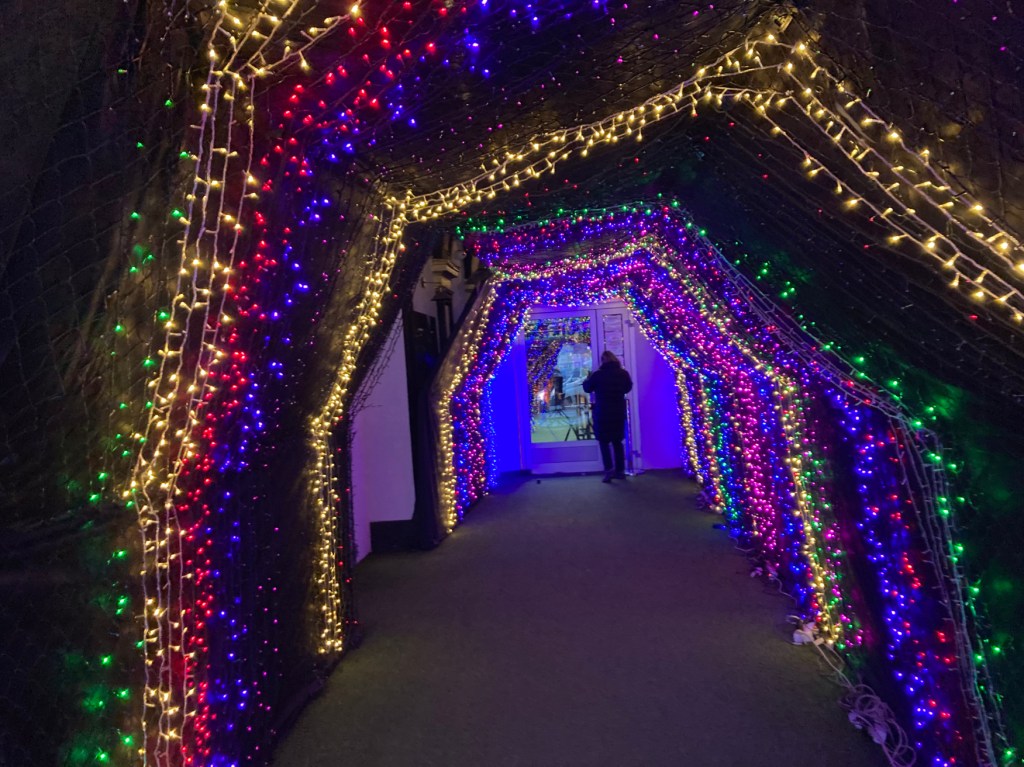
Entrance to roof top bar.
Walk along the Sava River.
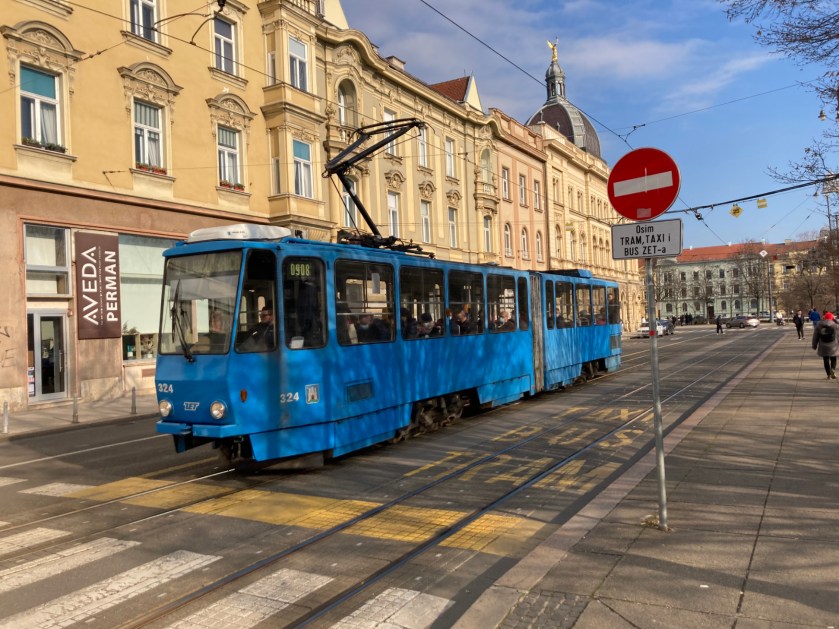
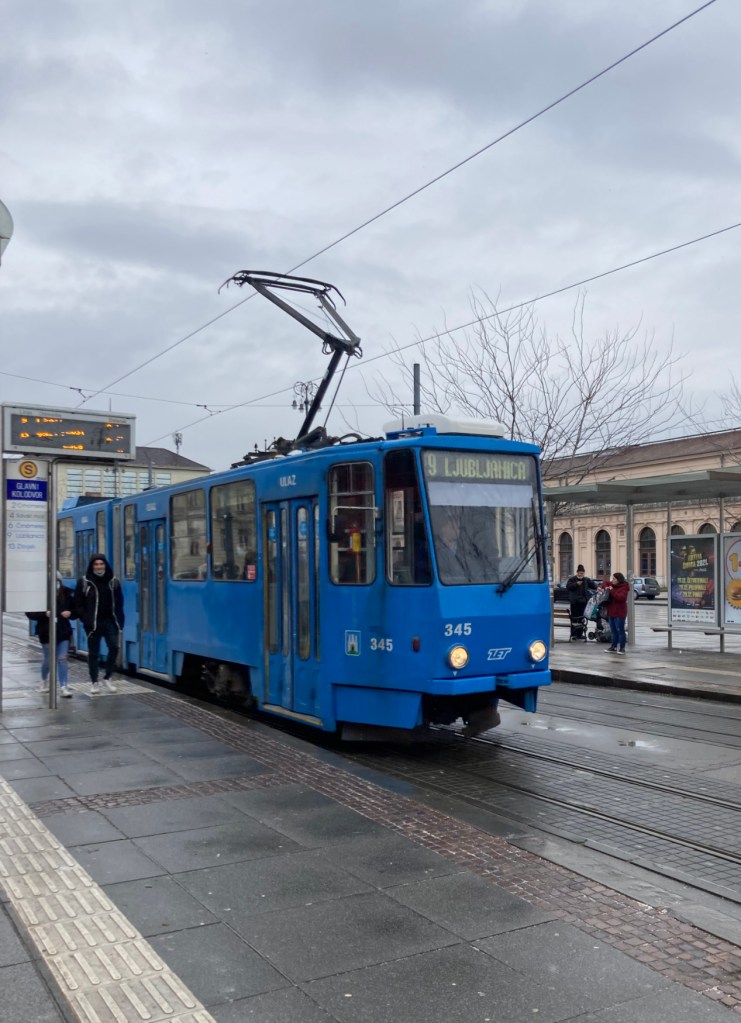
Zagreb has a great tram system. This is one of the older trams.
I like the older trams (heated seats).
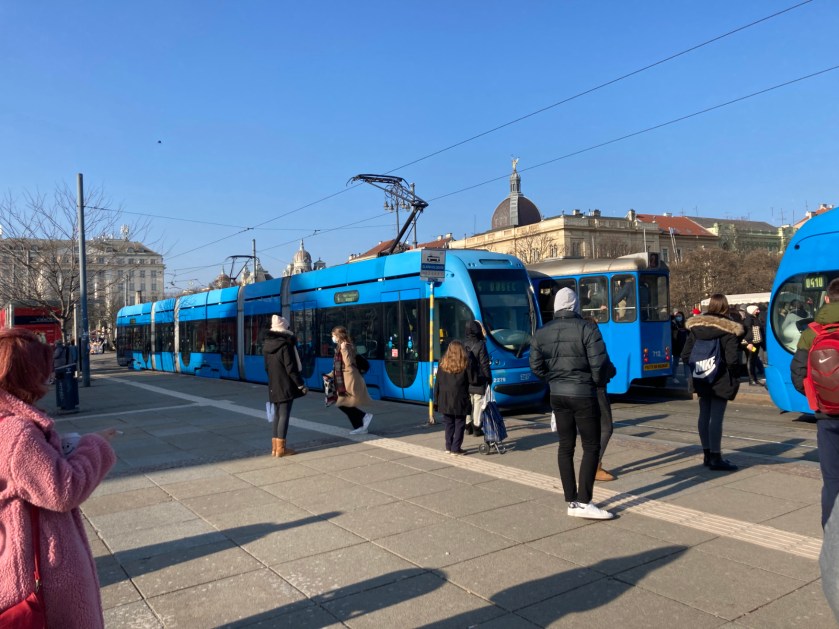
New trams. We took a couple to the end of the line, then rode them back or walked back.
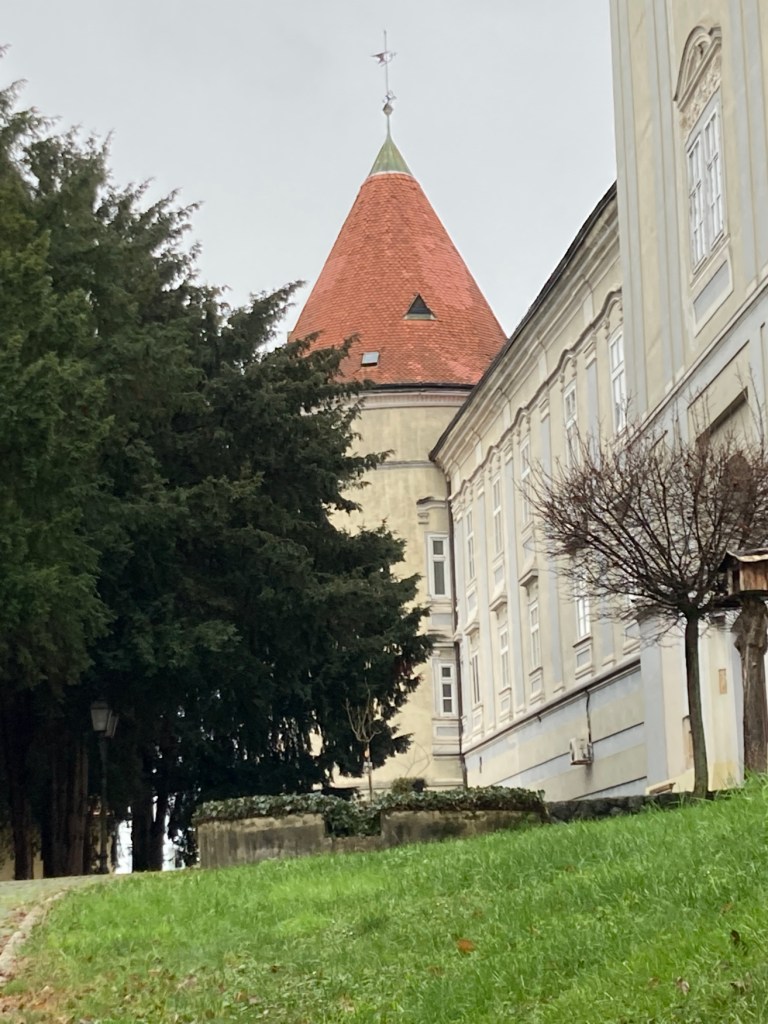
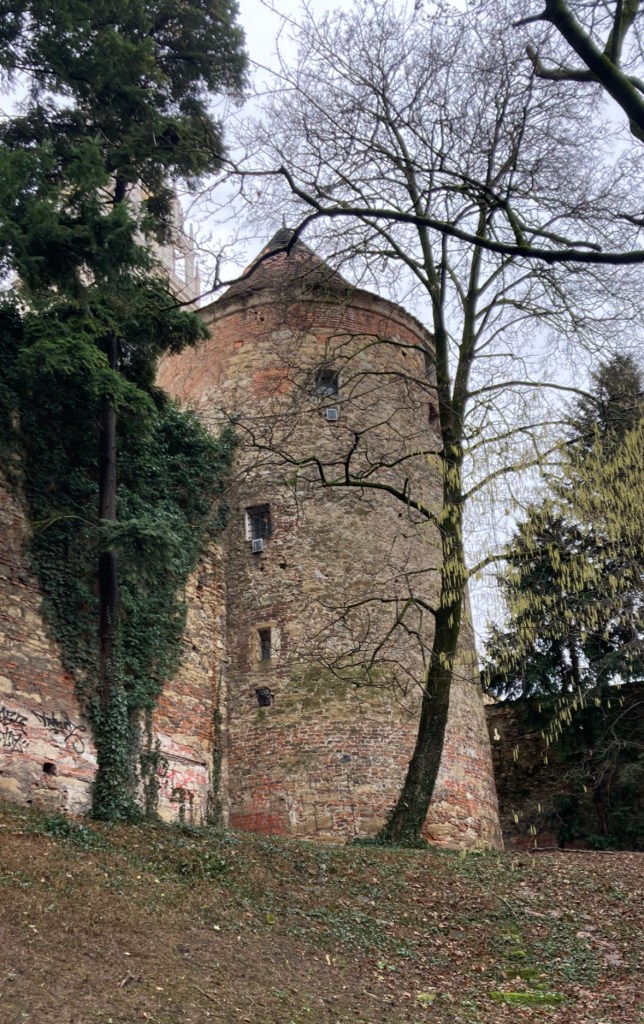
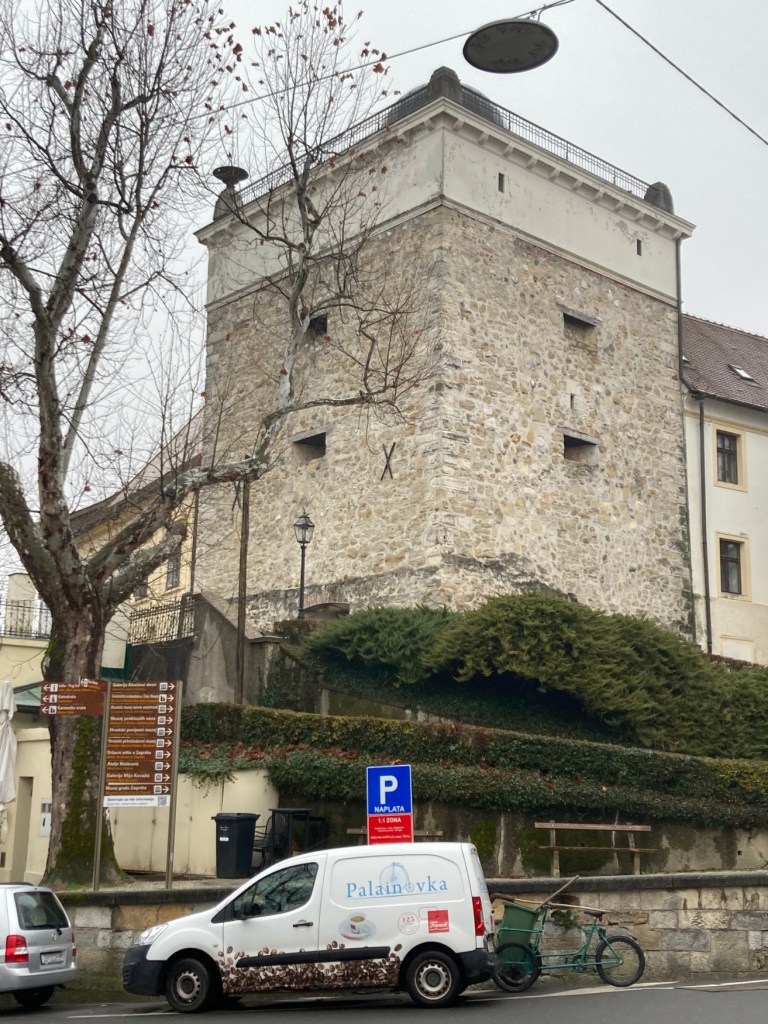
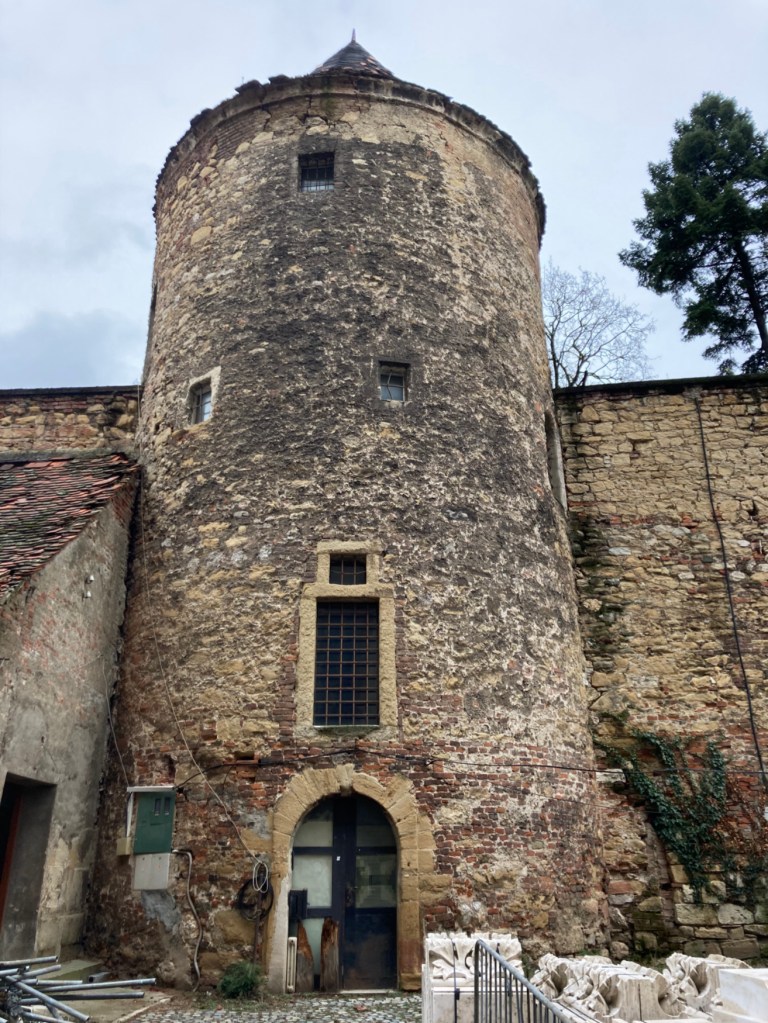
This tower is left over from the defensive walls built around the Bishop’s palace.
This tower is left over from the defensive walls built around the Cathedral.
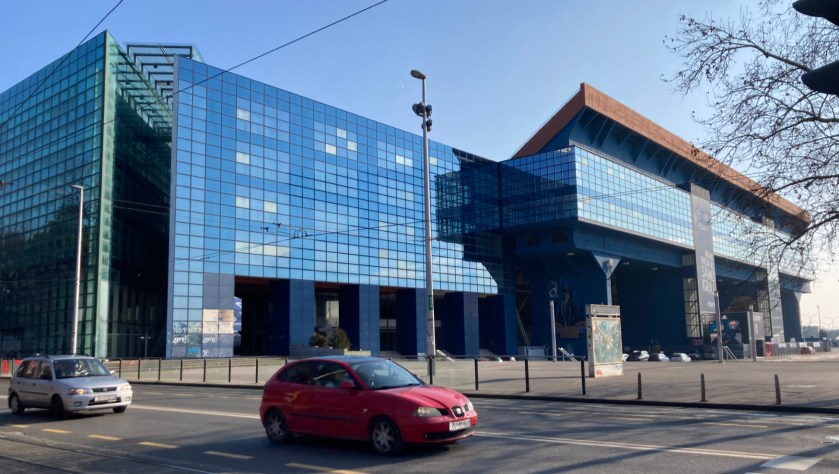
Stadium Maksimir- where GNK Dinamo Zagreb plays its home matches.
Zagreb began as 2 adjacent towns, Gradec and Kaptol, each town had its own walls. Popov Tornar (Priest’s Tower) was on the north side of Gradec.
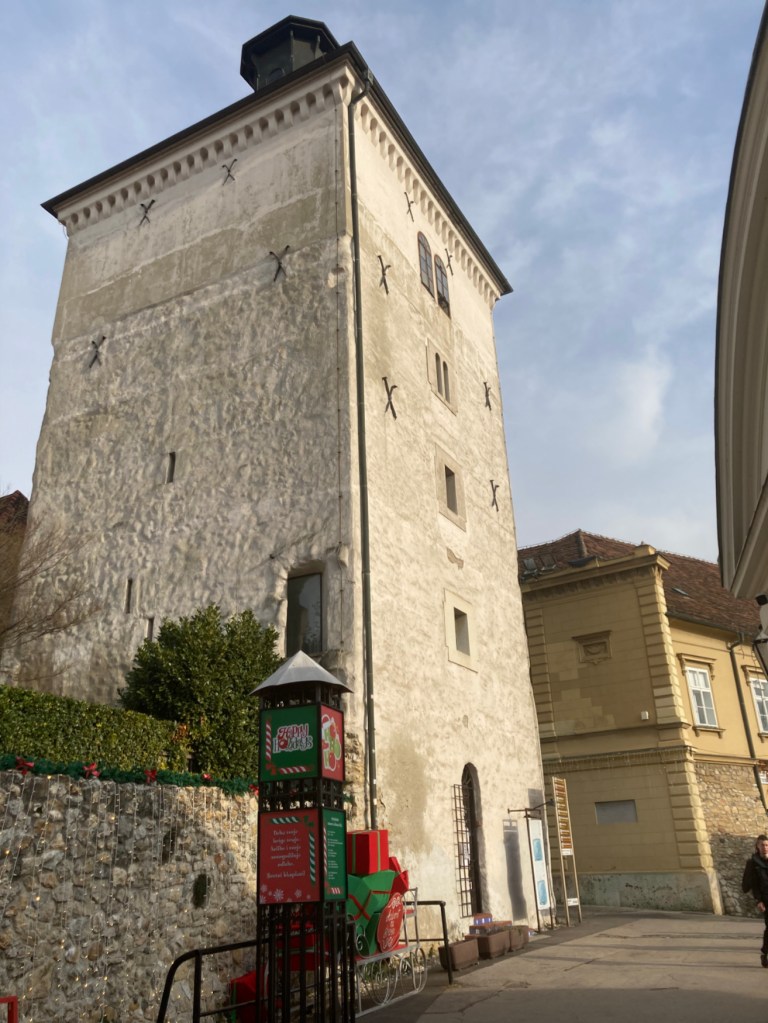
Lotrscak Tower- built in the late 1200’s to guard the southern approach to Gradec.
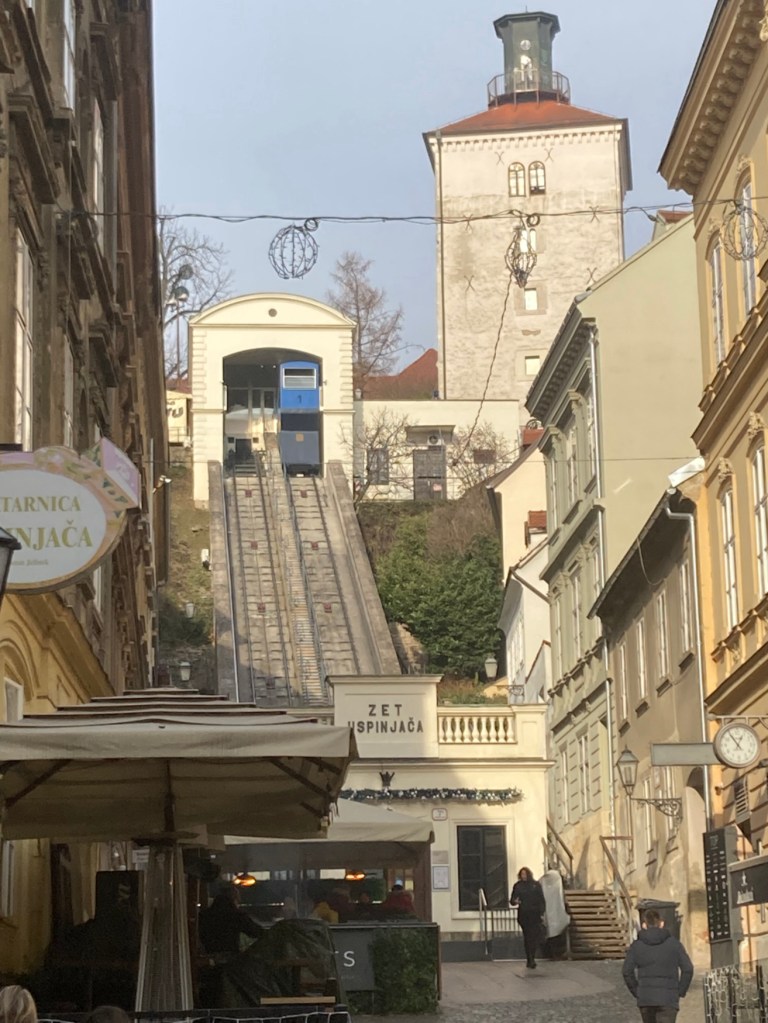
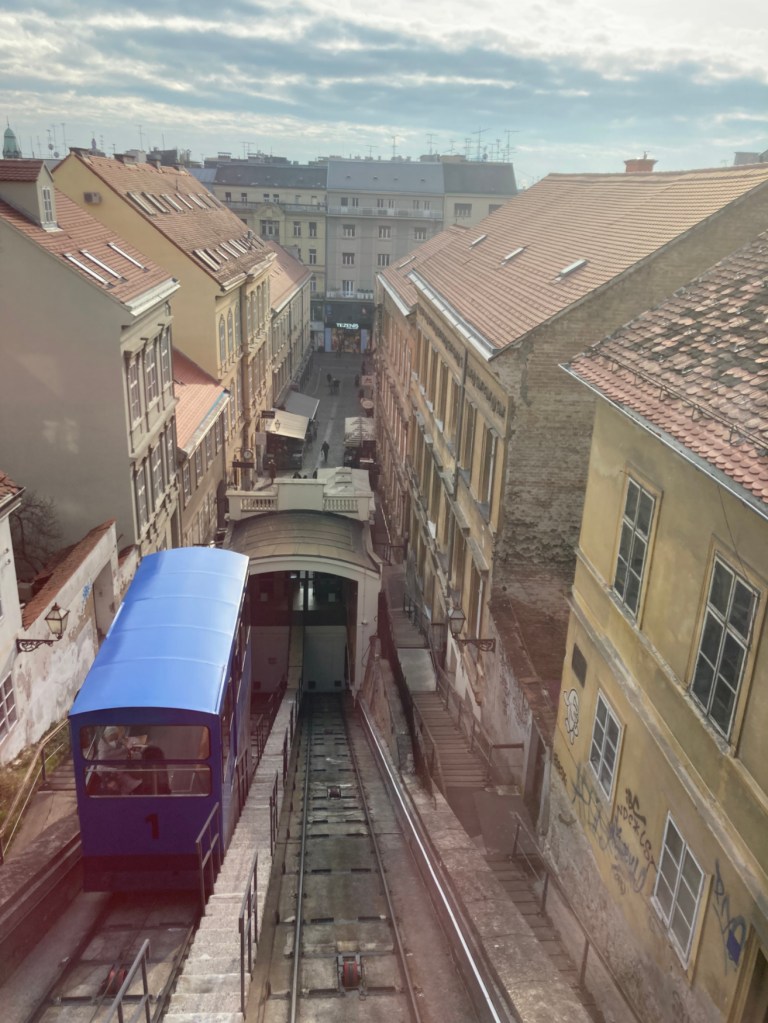
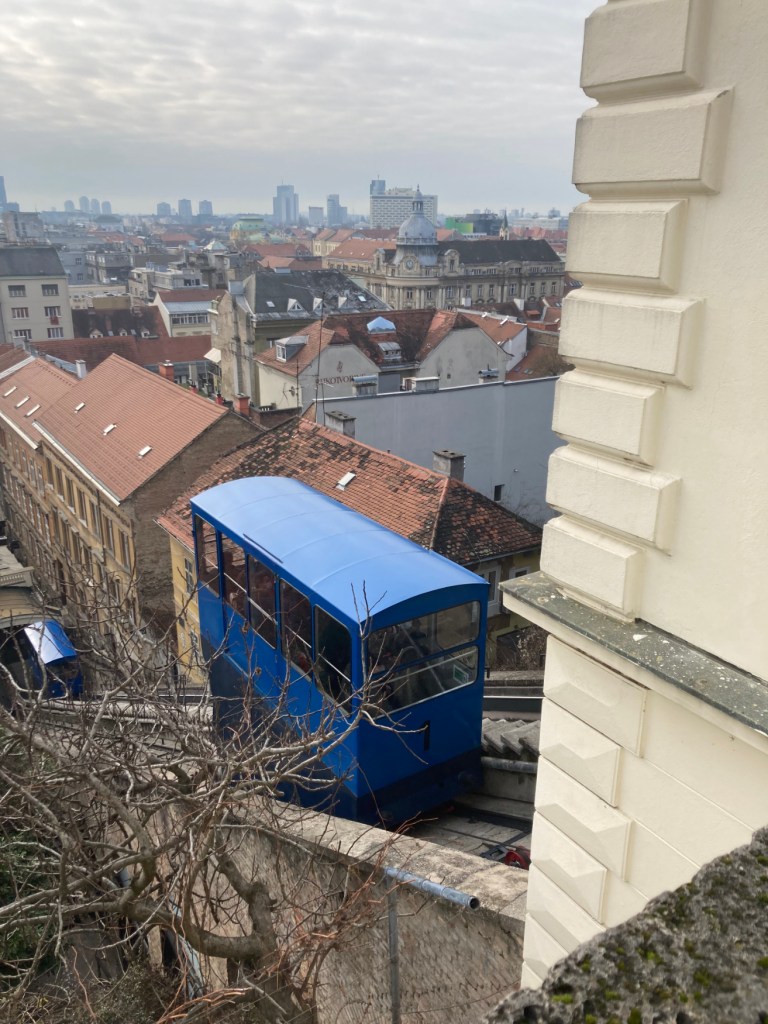
The Zagreb Funicular- the shortest funicular in the world. It’s goes up about 65 feet and takes 10 seconds. I grew up in Johnstown, PA, which also has a funicular. We call it the Inclined Plane and it is the steepest in the world. That’s Lotrscak Tower to the right.
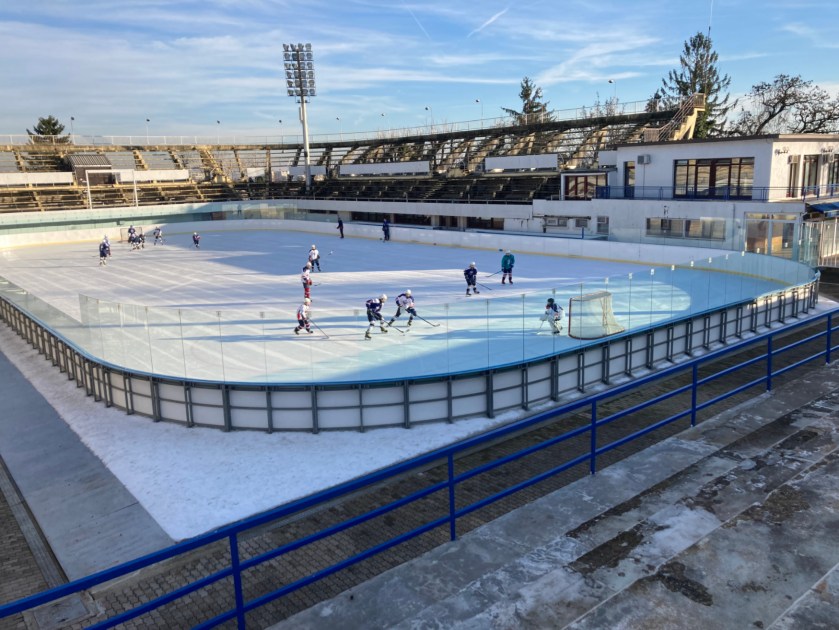
Outdoor hockey rink. There’s also tennis courts and swimming pools in this complex.
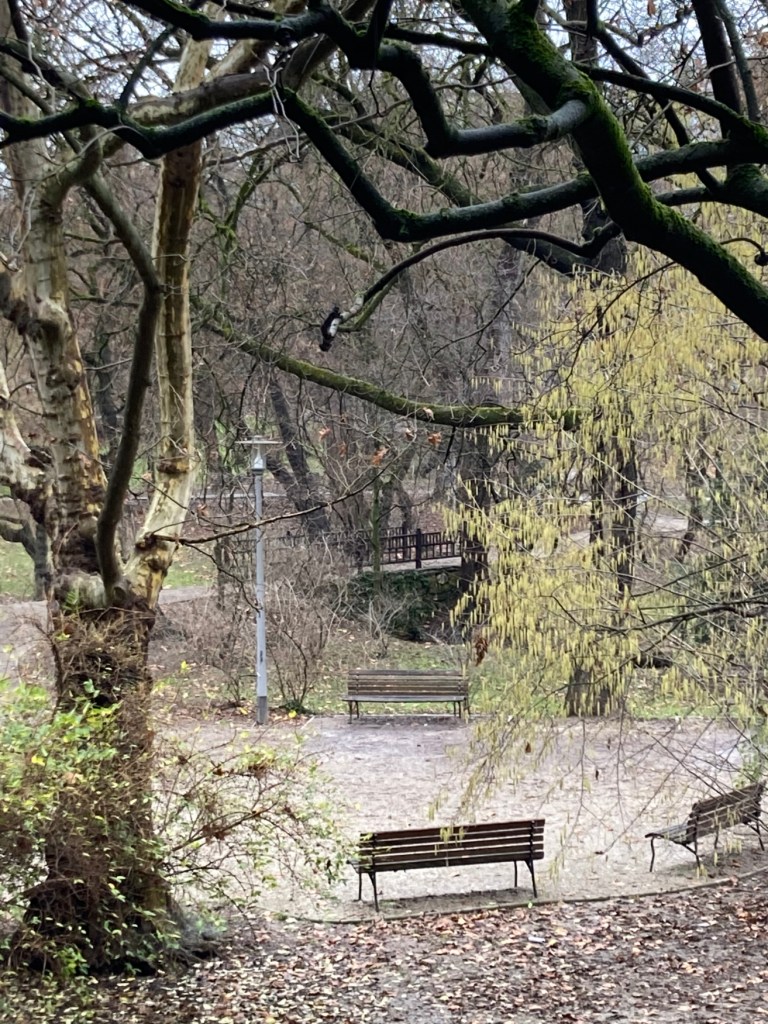
Park below the cathedral.
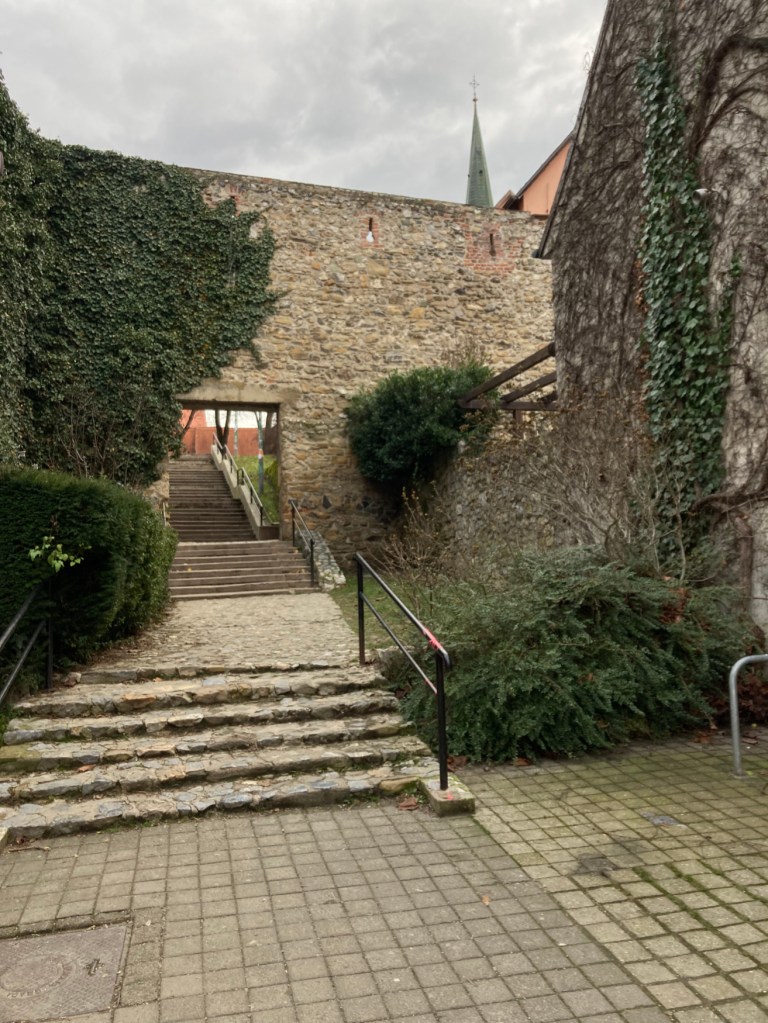
What’s left of the wall around Kaptol.
Marko Marulic– Father of Croatian Renaissance, Father of Croatian literature (take your pick). The sculptor is Vanjas Radaus.
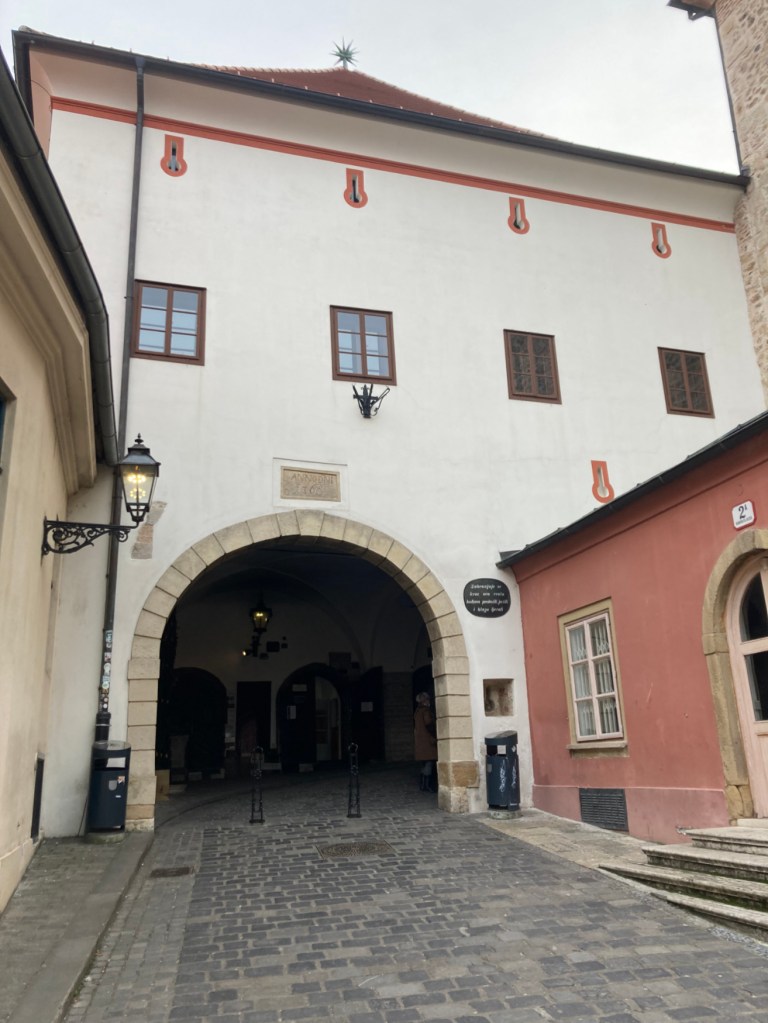
When Zagreb was 2 adjacent towns, Gradec and Kaptol, each town had its own walls. This is the the Stone Gate into Gradec, the only surviving gate for either town from that time.
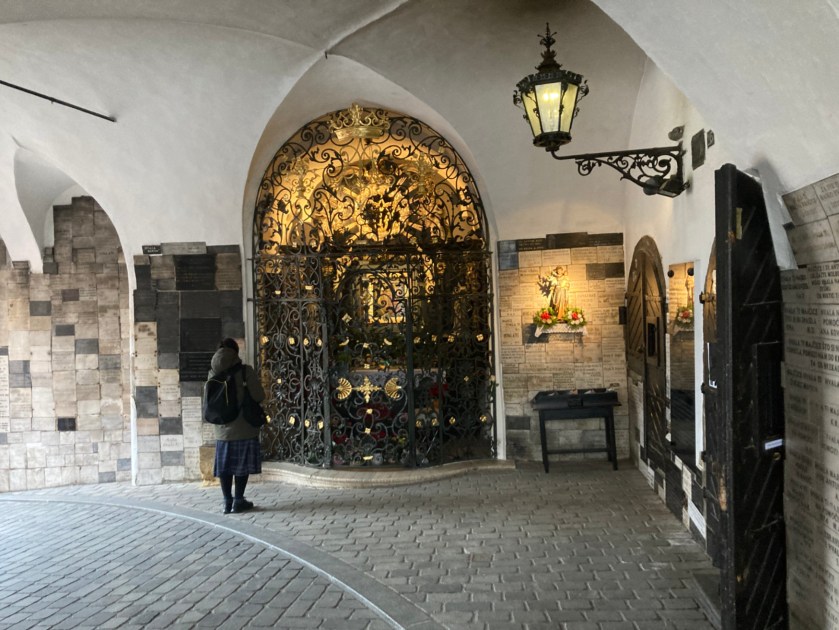
The is just inside the Stone Gate. In 1731, Zagreb experienced a devastating fire. In the ruins around the Stone Gate, they found a completely undamaged painting of Mary and Baby Jesus. The only possible explanation was that this was a miracle. So the residents built this small shrine to display the painting. There were almost always at least one person praying. You could buy candles to the right. The tiles are all painted or engraved with HVALA (thanks) for answering a prayer.
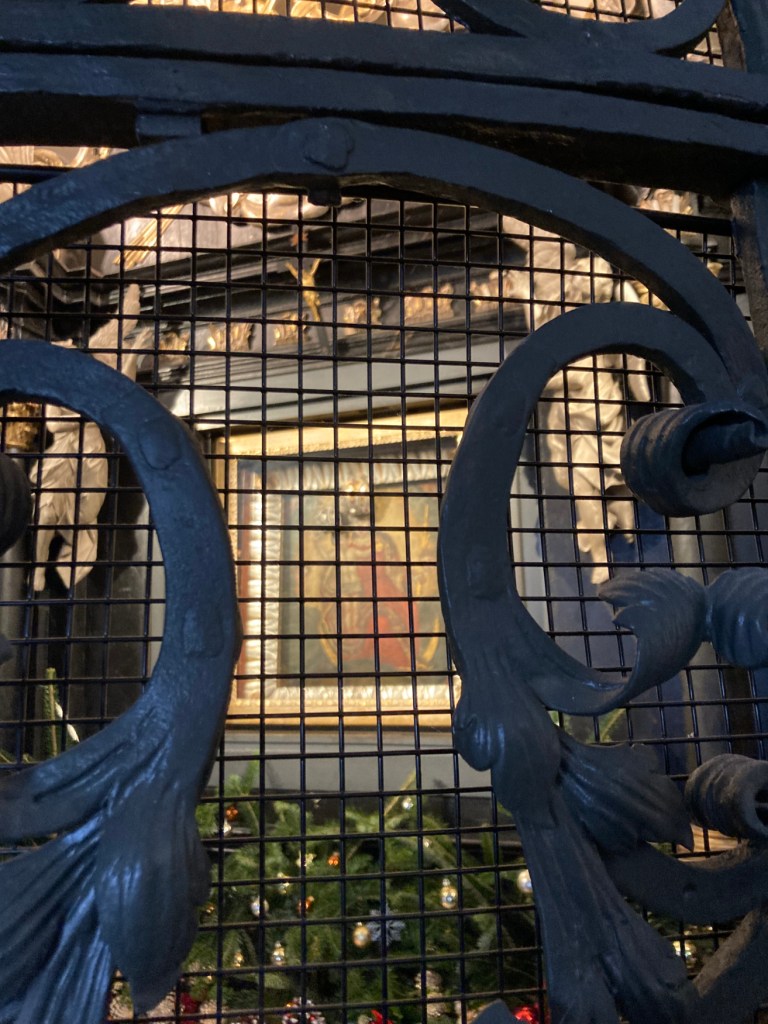
Mary and Baby Jesus.
Pretending to be an artist.
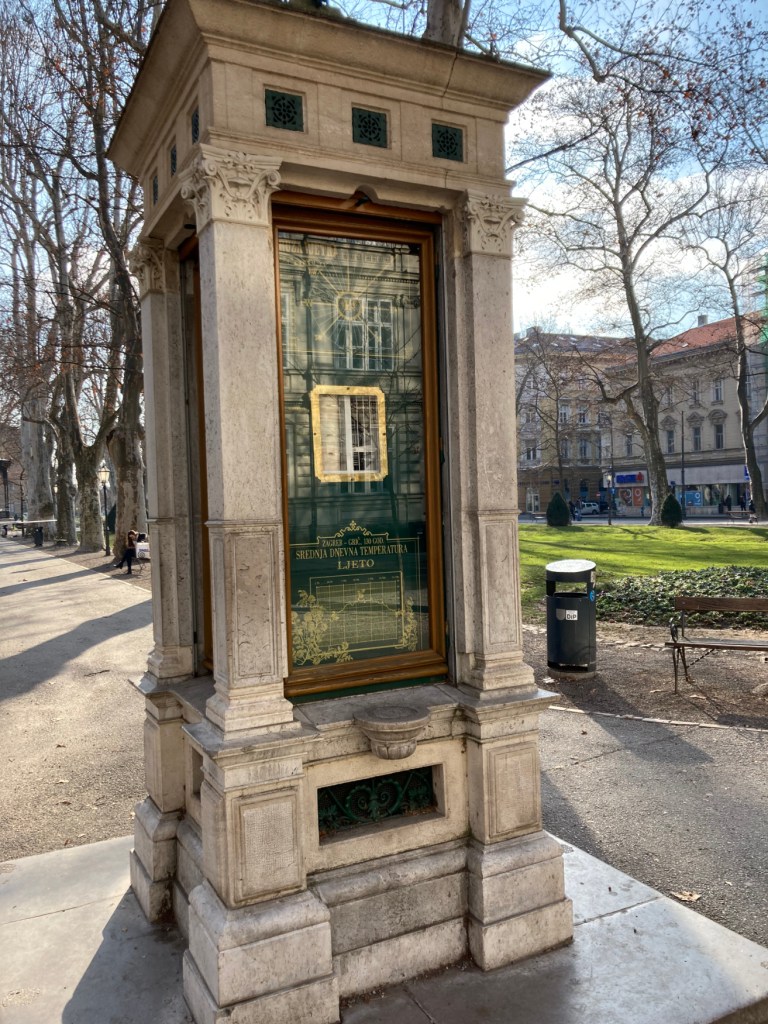
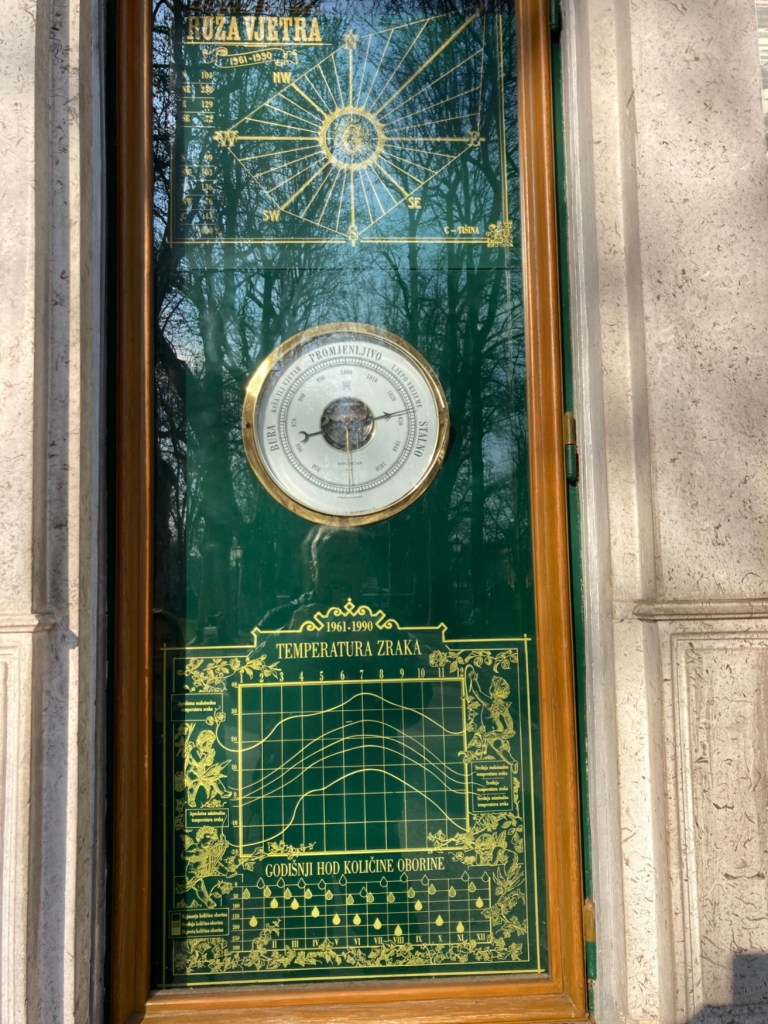
Weather Station.
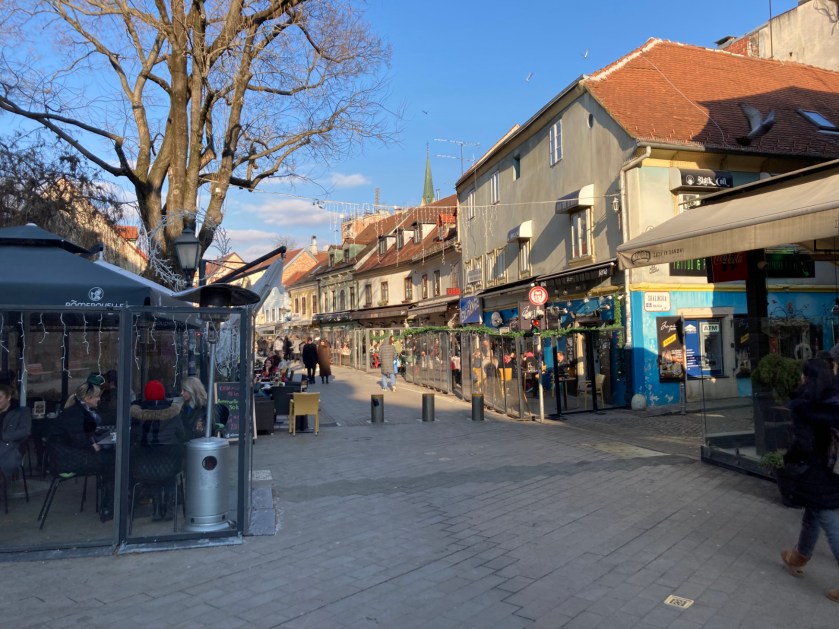
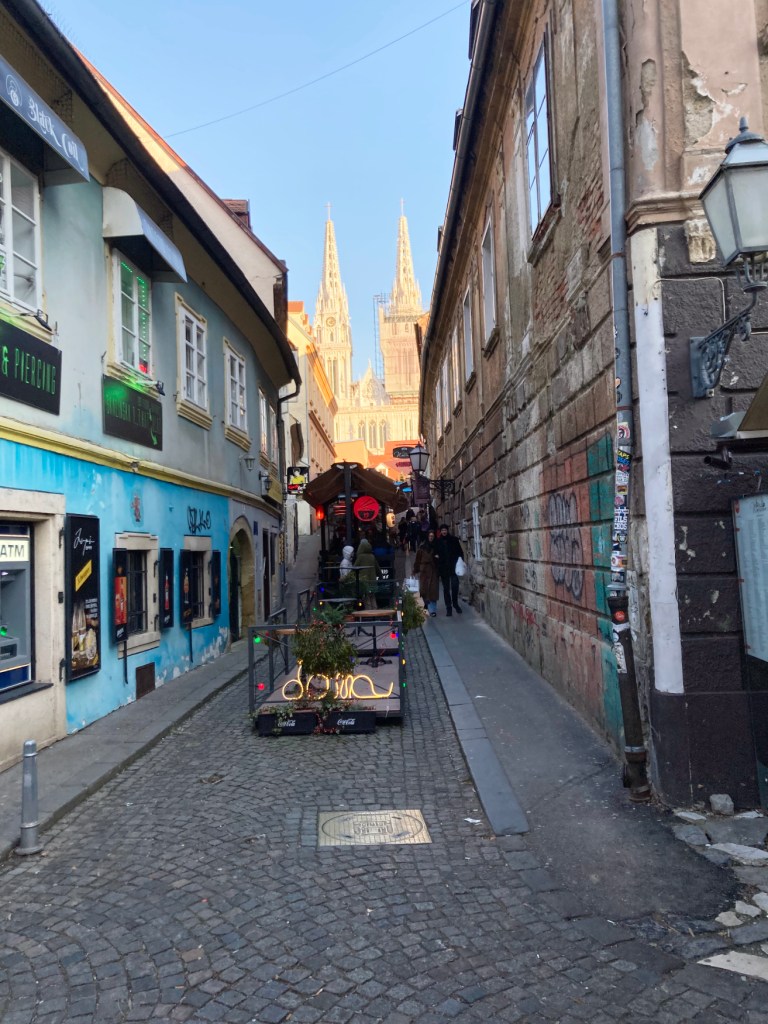
One of the main “restaurant” streets in Zagreb between Gradec and Kaptol.
Another “restaurant” street.
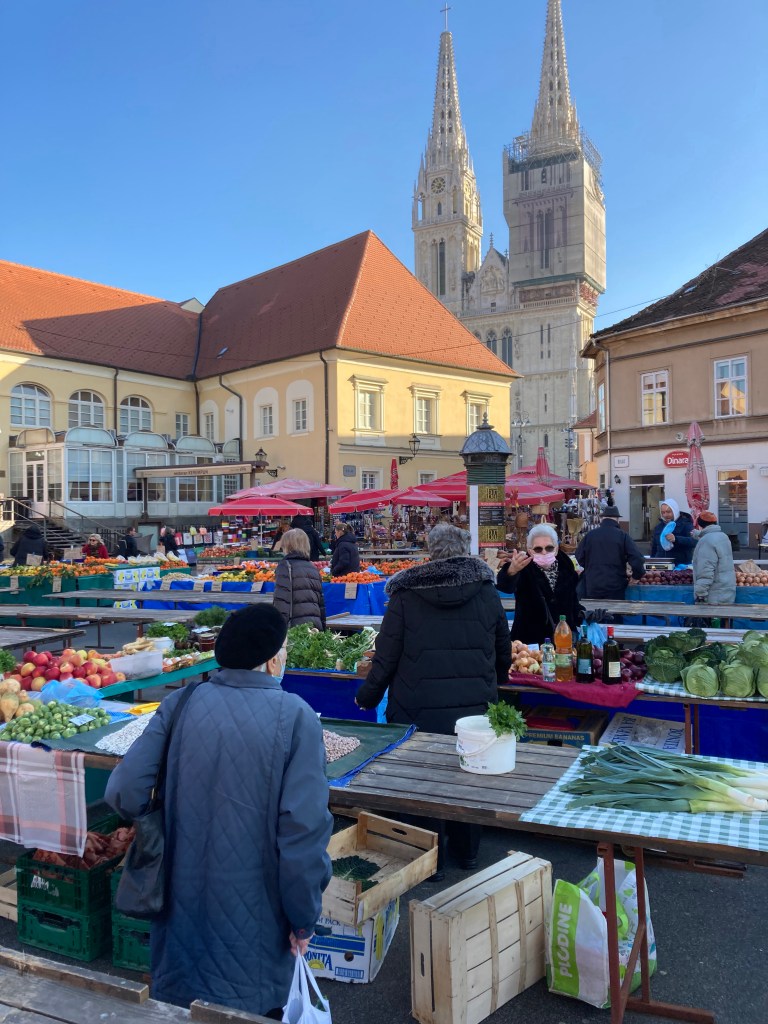
Dollar Green Market- every day.
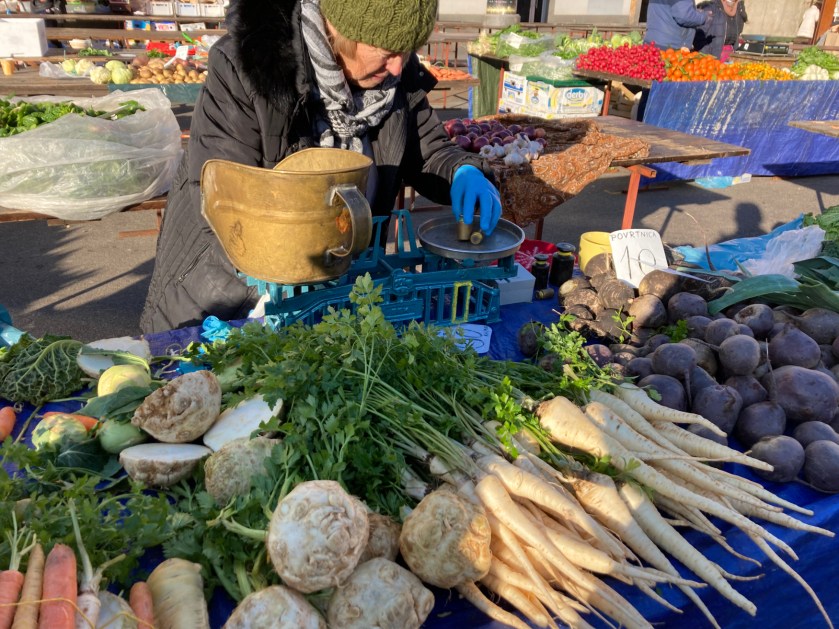
Note the extremely analog system for determine weight.
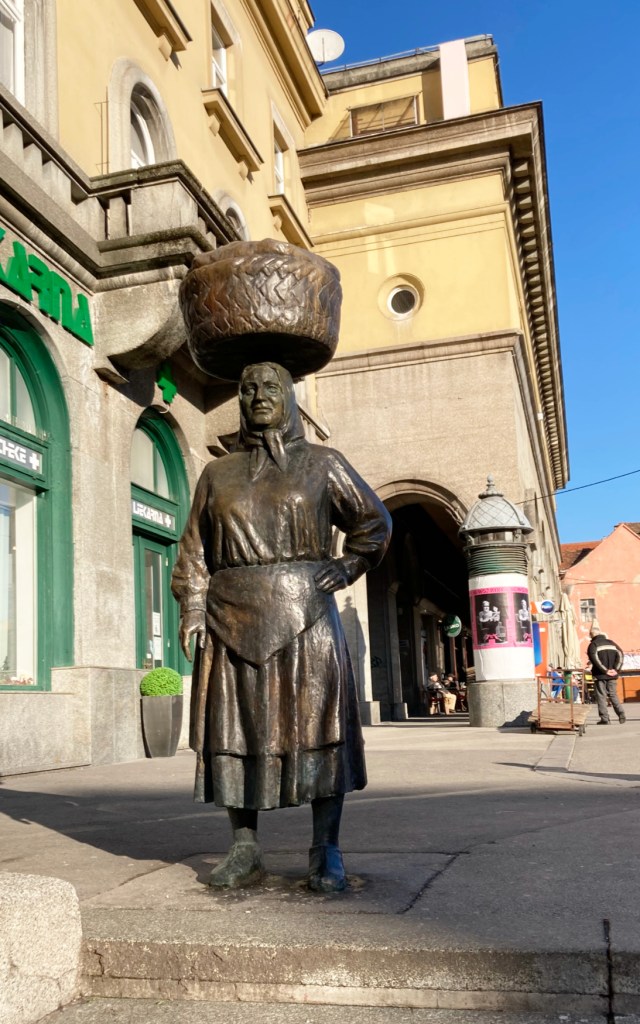
Kumica Barica. Statue in the Green Market honoring the peasant women who brought fruits and vegetables from their farms and gardens to sell at the Green Market.
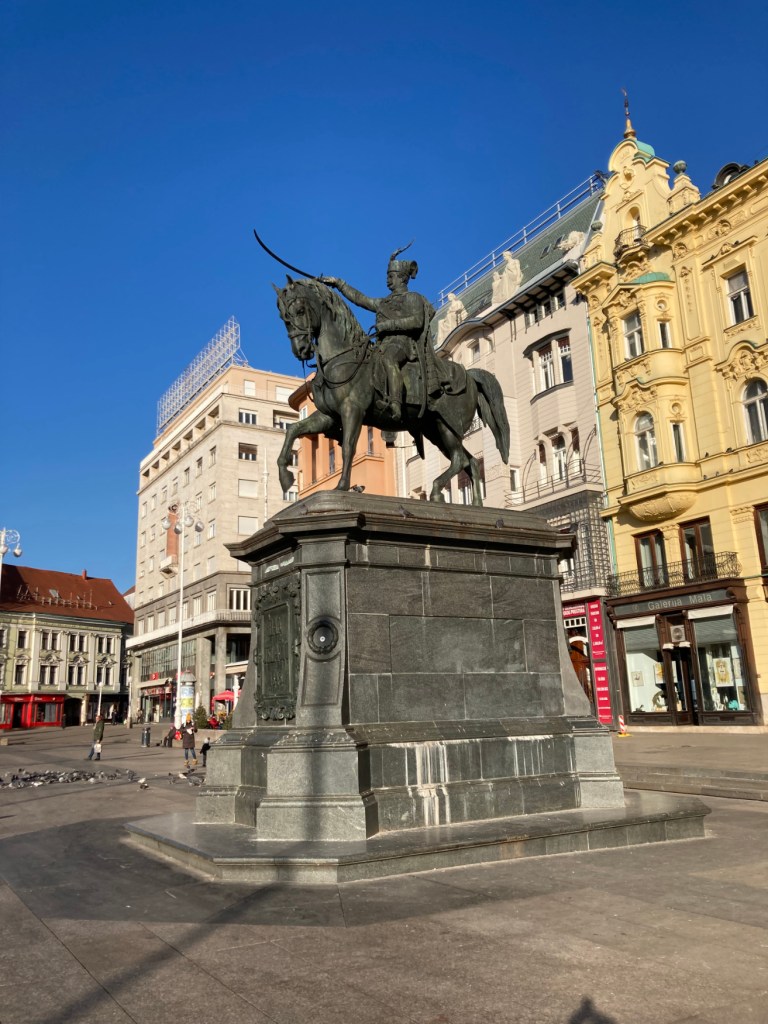
Ban Jelacic (Governor Jelacic). Under his leadership, laws were applied to everyone equally, regardless of title or wealth. He is very popular. Originally, he faced the opposite direction from where the Tartars would have come. When Croatia was part of Yugoslavia, the statue was taken apart and stored so it didn’t incite Croatian nationalism. After the Homeland War, the people of Zagreb reassembled it and pointed it toward Serbia.
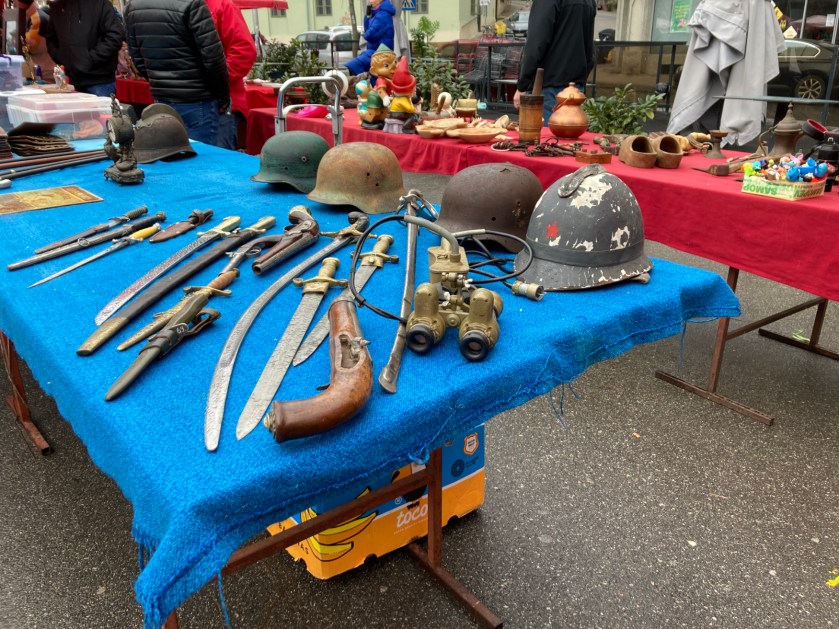
WWII, WWI, and older military memorabilia at a flea market.
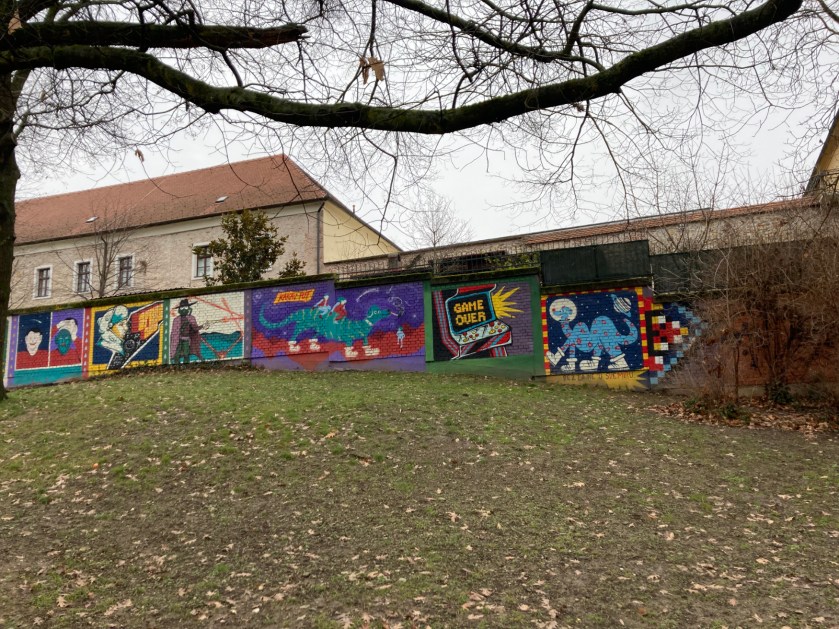
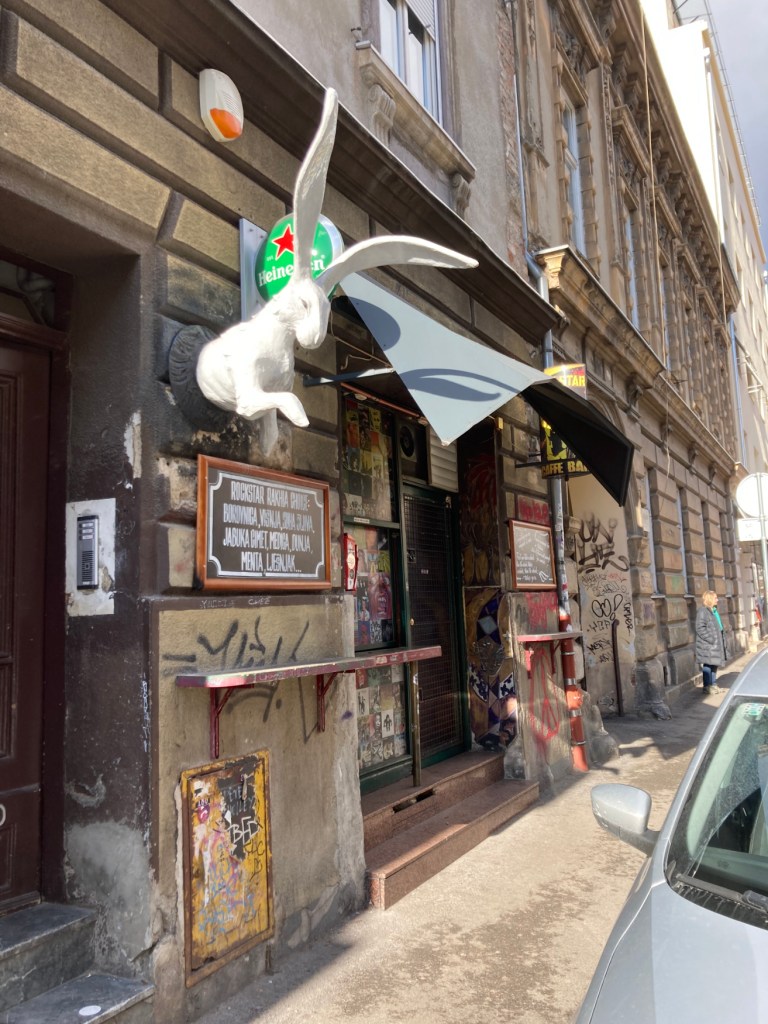
Don’t know why this bar chose the rabbit as its totem. Notice the shelf. The bar is very small, so sometimes you have to stand outside to enjoy your drink. The side walk was packed on nights in Dec. and Jan.
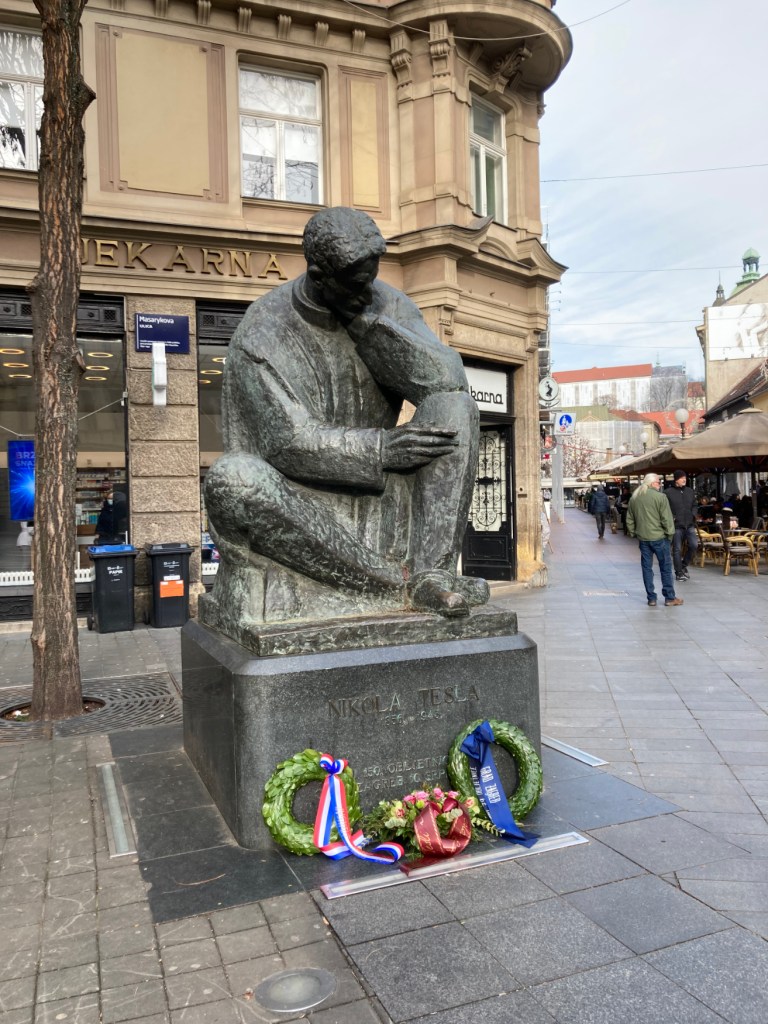
Nikola Tesla by Ivan Mestrovic. Tesla is a very-favorite son. of Croatia.
Zagreb has a ton of museums. All of them are well organized with most things explained in English. Many of them are regular, “normal” museums filled with art or historical artifacts or science exhibits. Many of them, however, are in a category that is usually denoted as “quirky.”. In total, the collection of museums makes Zagreb a worthwhile destination. Although some were closed because of earthquake damage, more than enough were open.
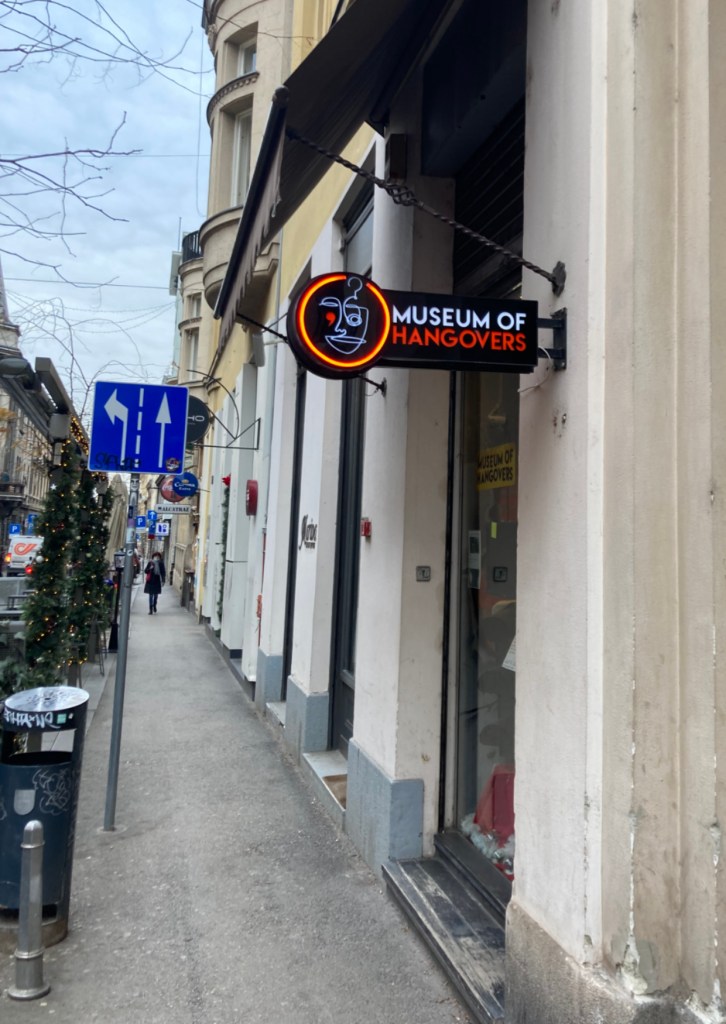
Museum of Hangovers. A collection of morning-after anecdotes and artifacts (e.g.. stolen sign).
Museum of Mushrooms.
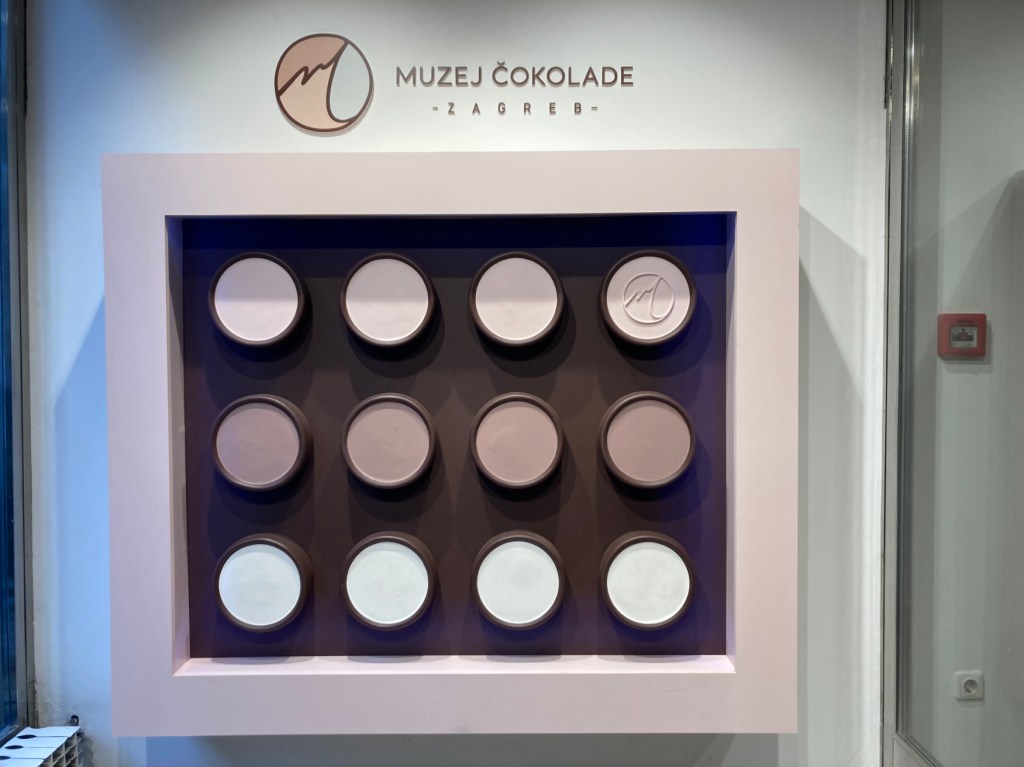
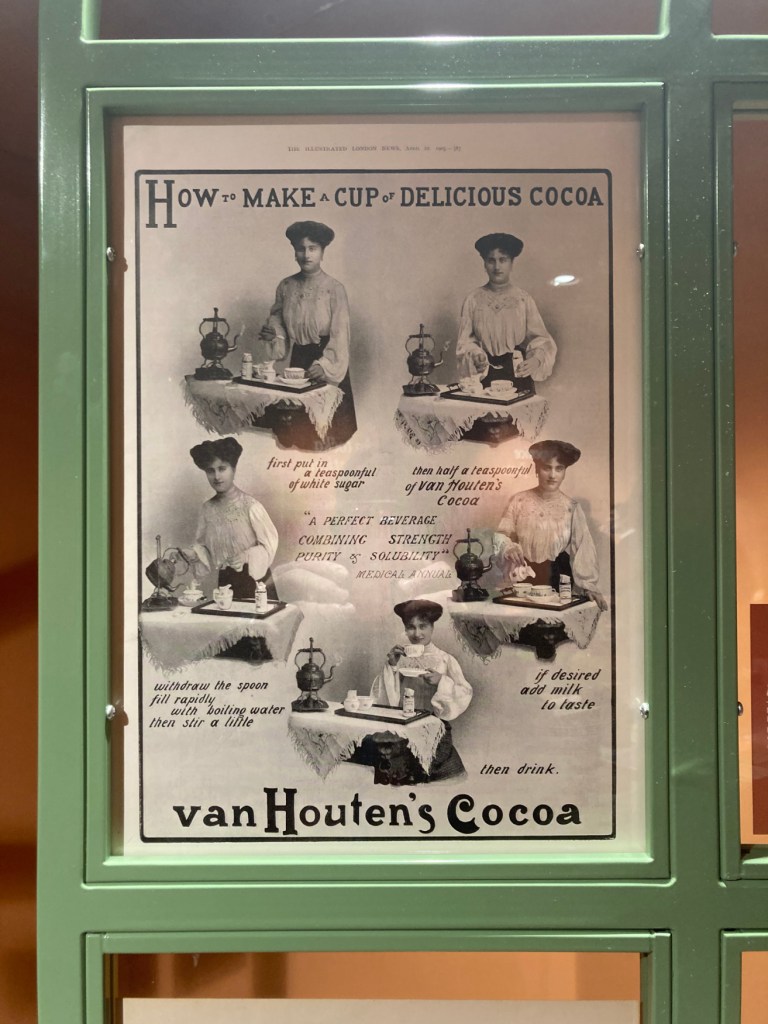
Museum of Chocolate.
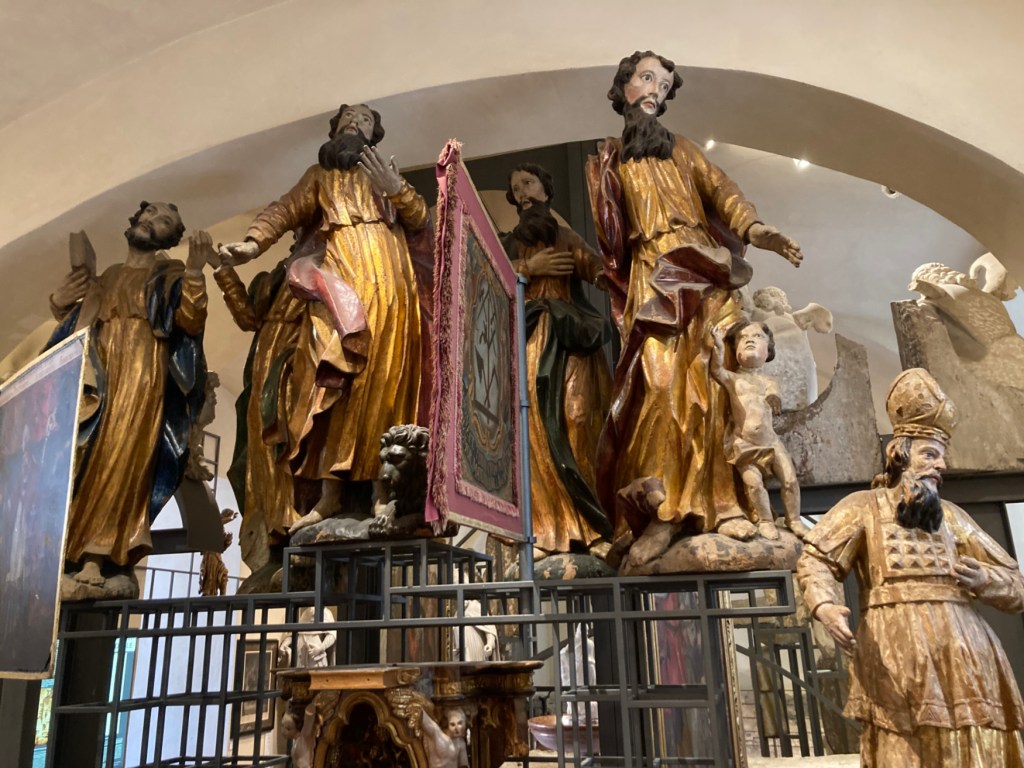
Zagreb City Museum.
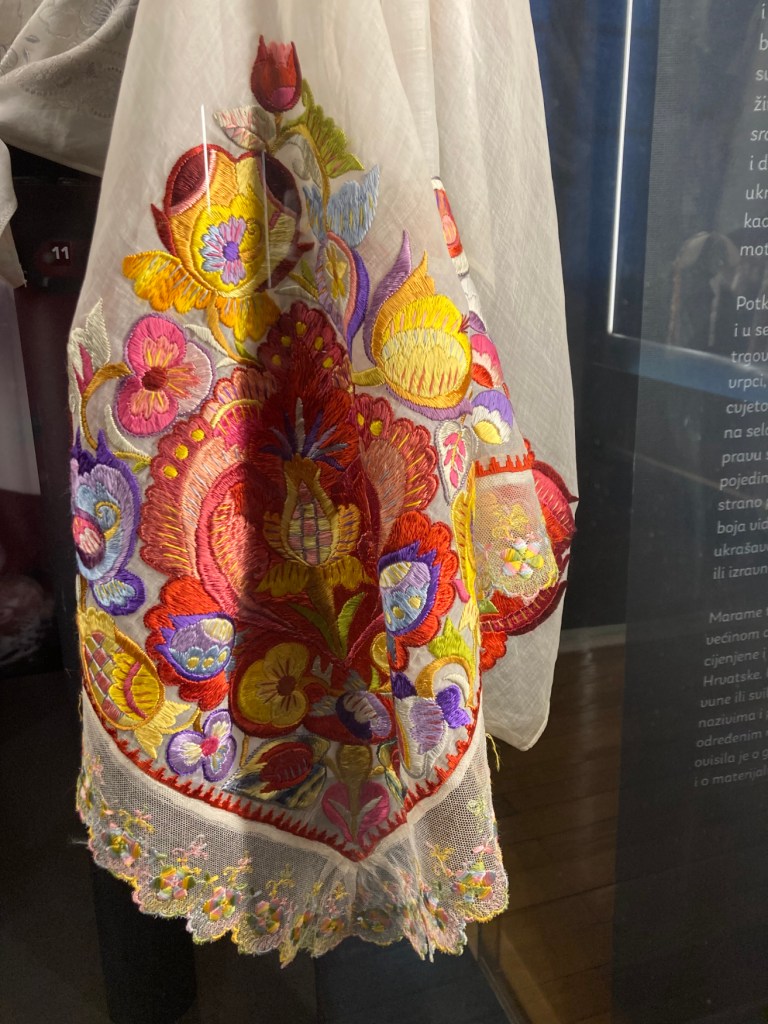
Ethnographic Museum of Zagreb.
Kloviceva Dvori Gallery.
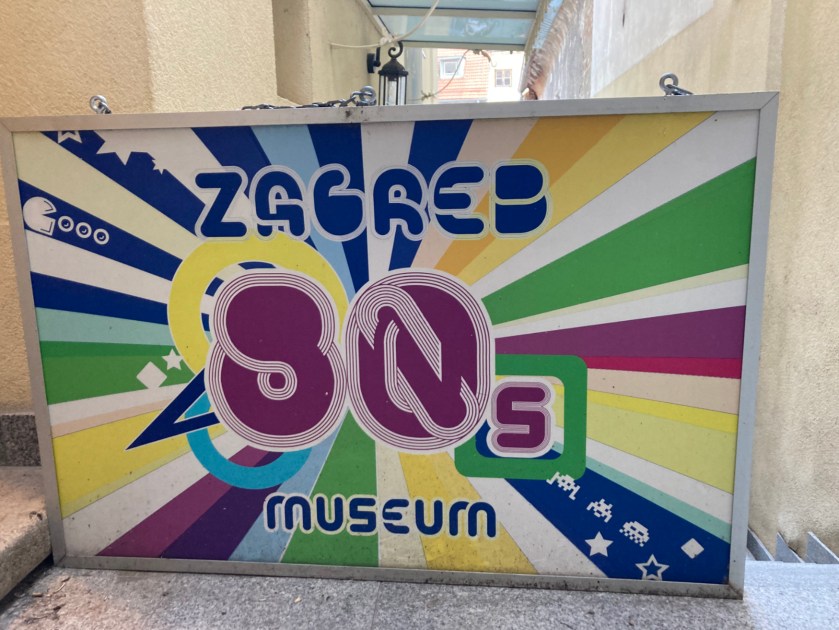
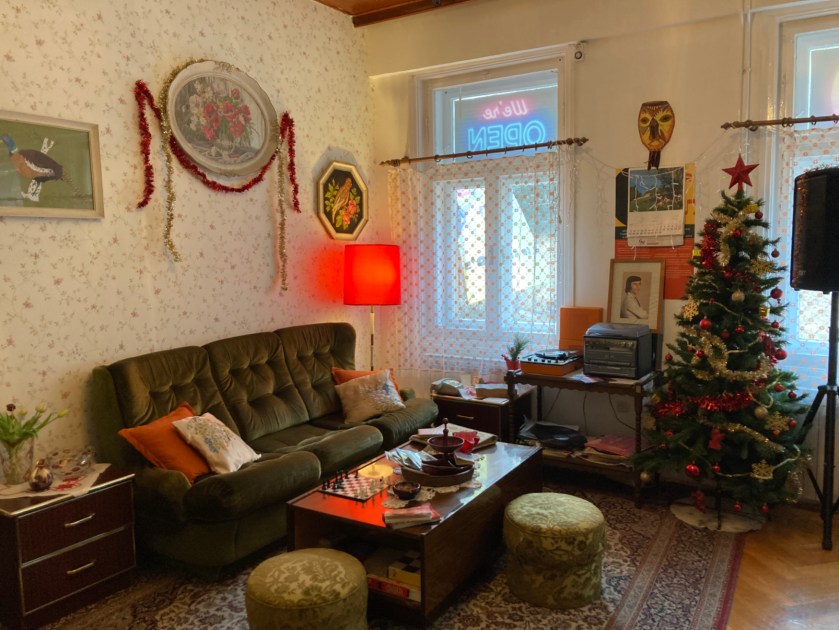
Zagreb 80s Museum. An apartment of a middle-class family as it would have been furnished shortly before the end of Communist Yugoslavia.
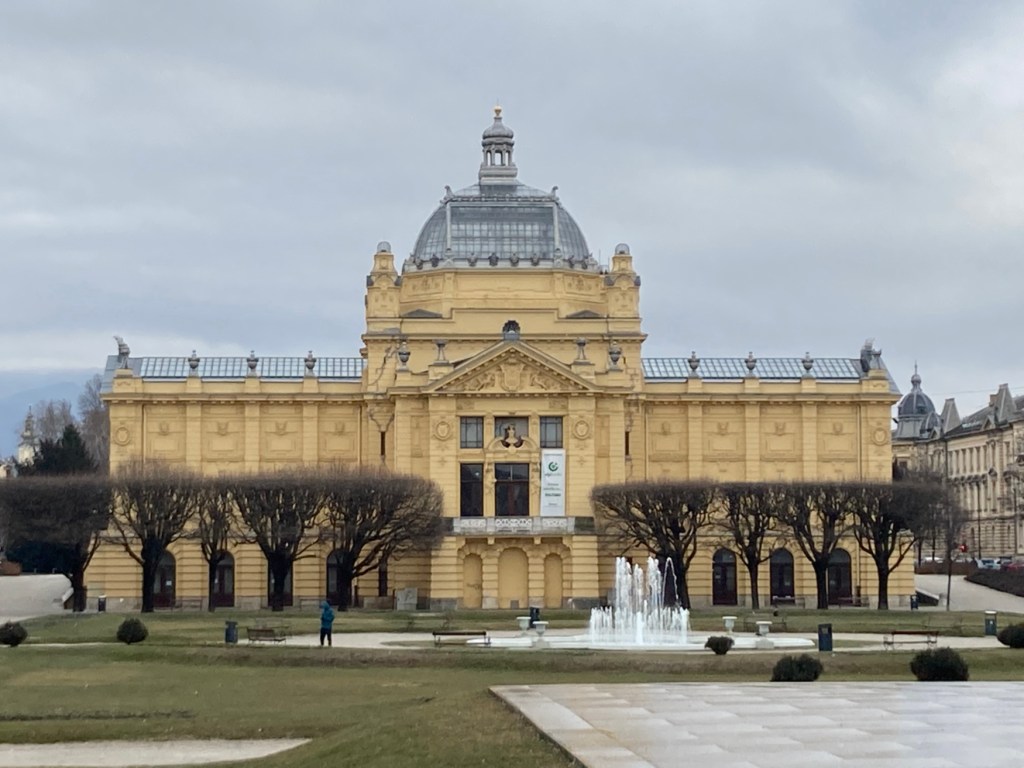
Croatian Society of Fine Arts. The building was designed by the Croatian sculptor Ivan Mestrovic. The exhibit was work by Slavko Kopac.
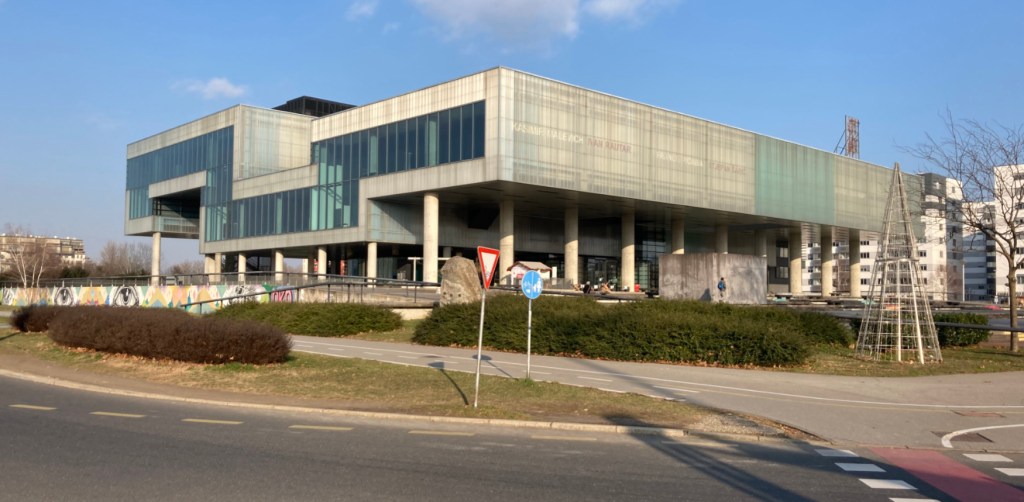
Museum of Contemporary Art. (Isn’t it obvious?)
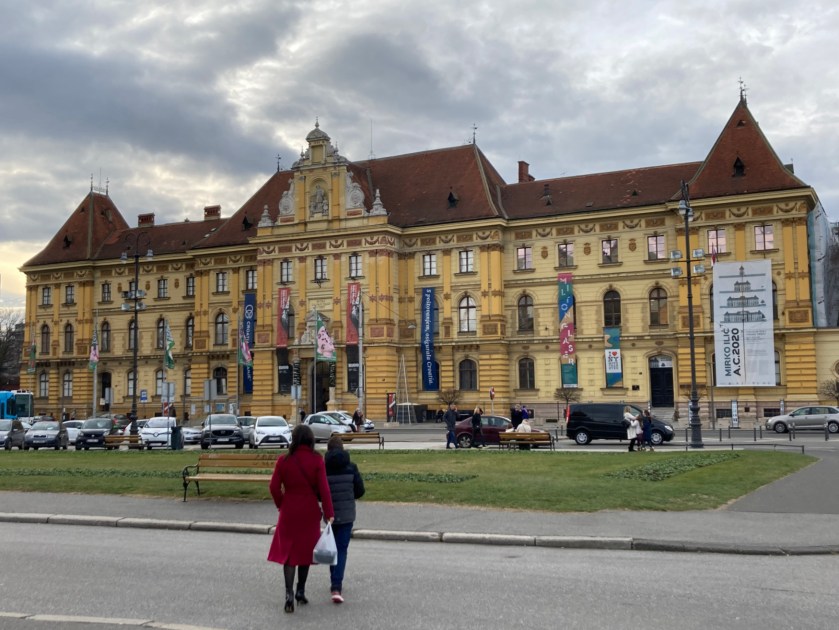
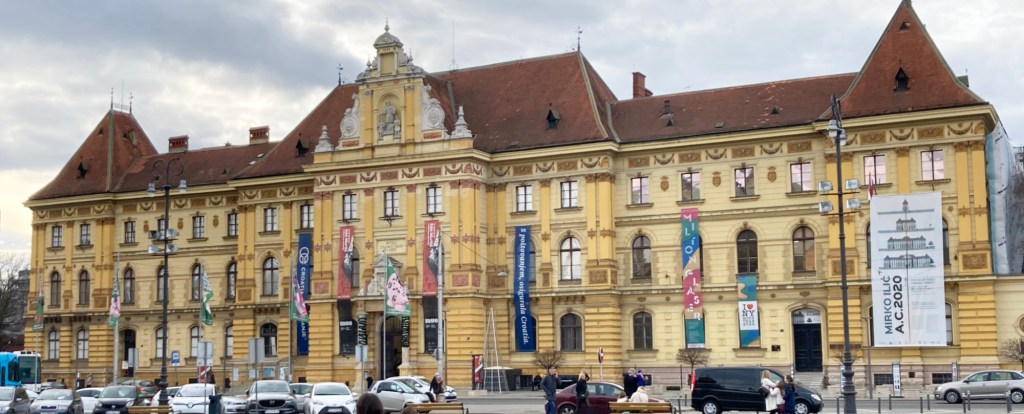
Museum of Arts and Crafts.
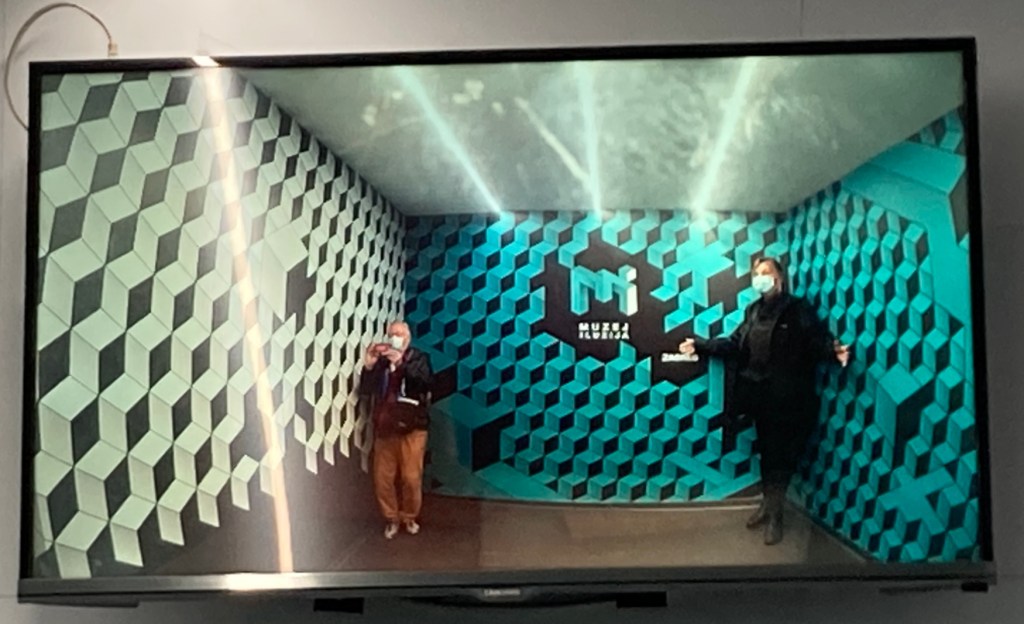
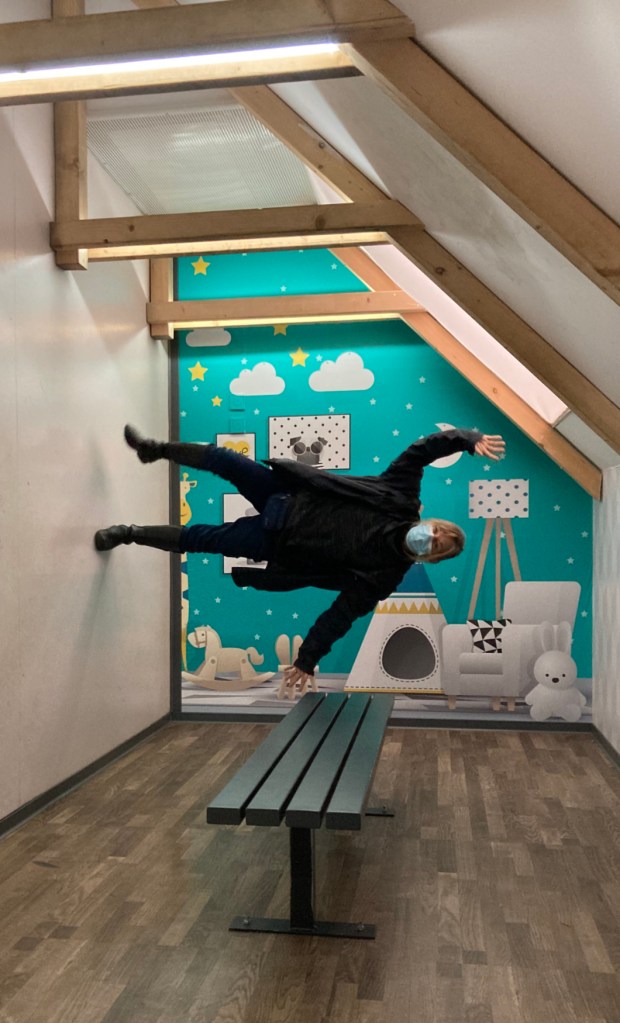
Museum of Illusions.
Nikola Tesla Technical Museum. This is one of the best science/technology museums I’ve ever visited.
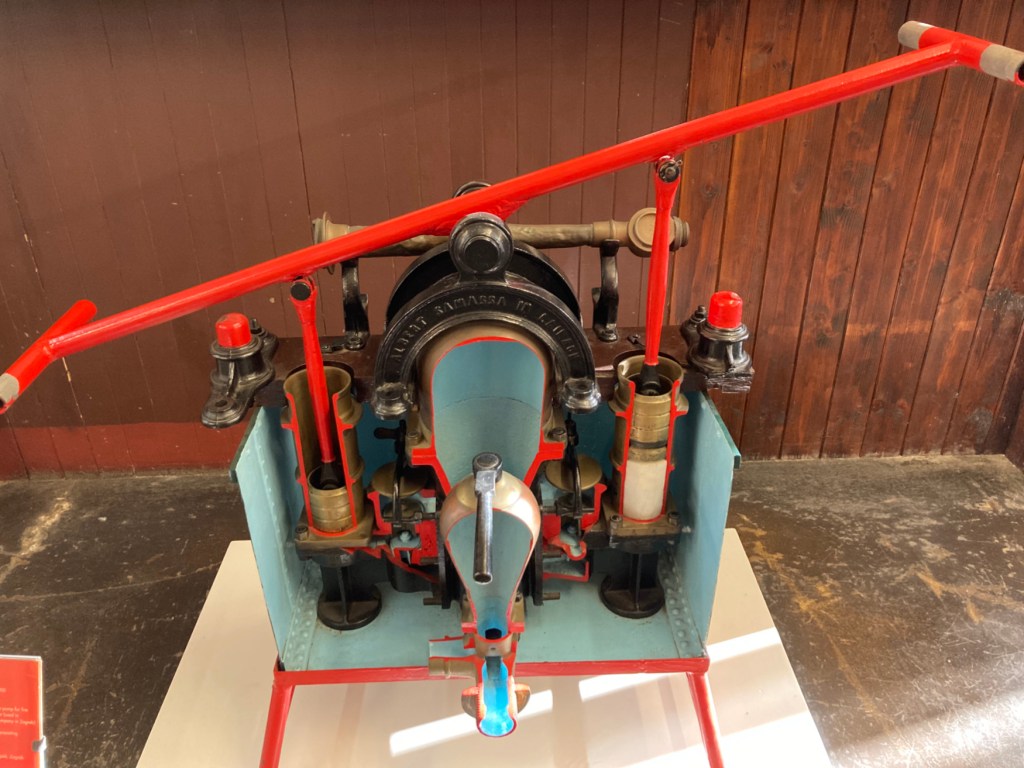
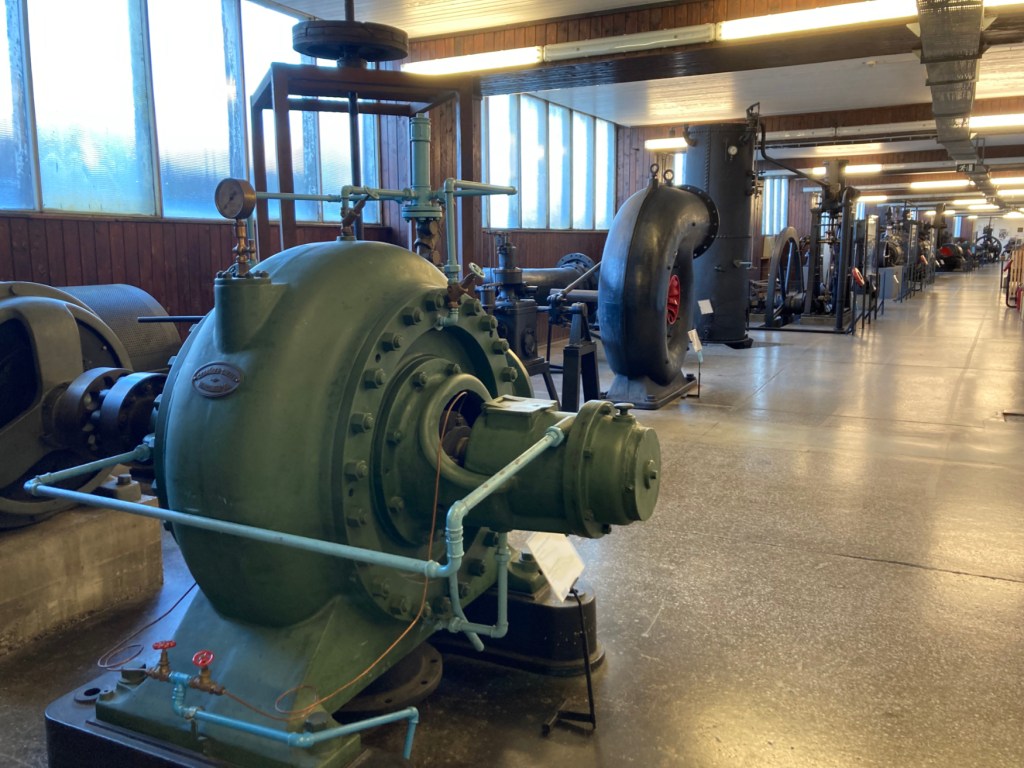
Cutaway of water pump.
Any STEM museum worth its salt should have a representative turbine display…
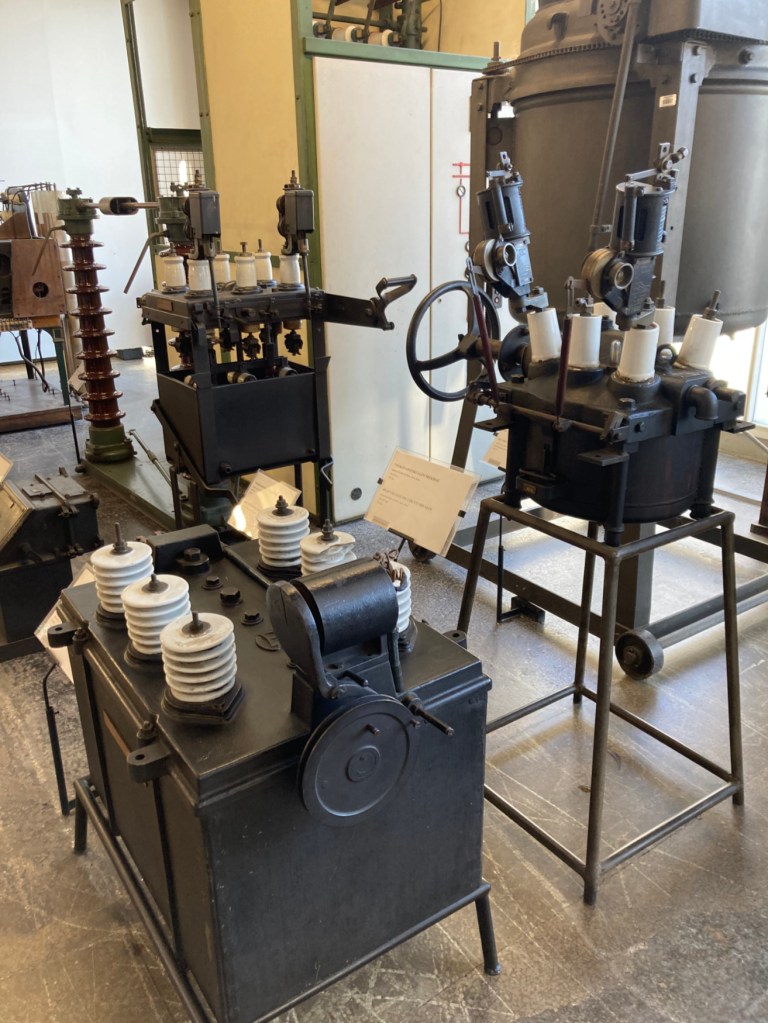
…as well as transformers
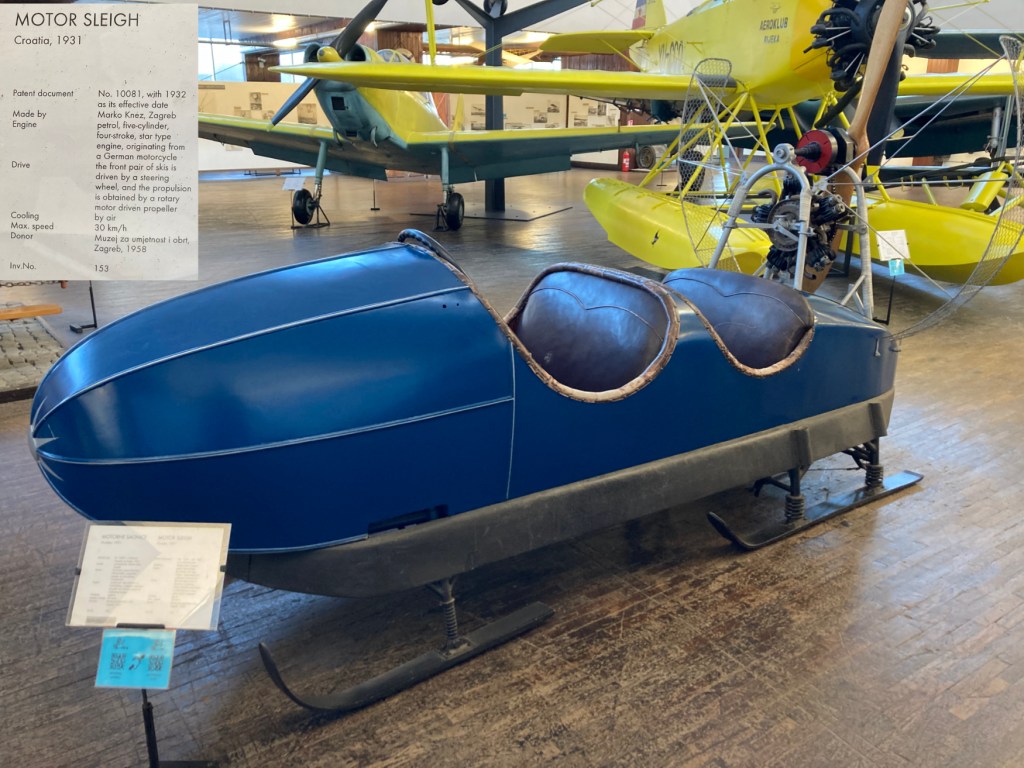
Fan-driven snow sled.
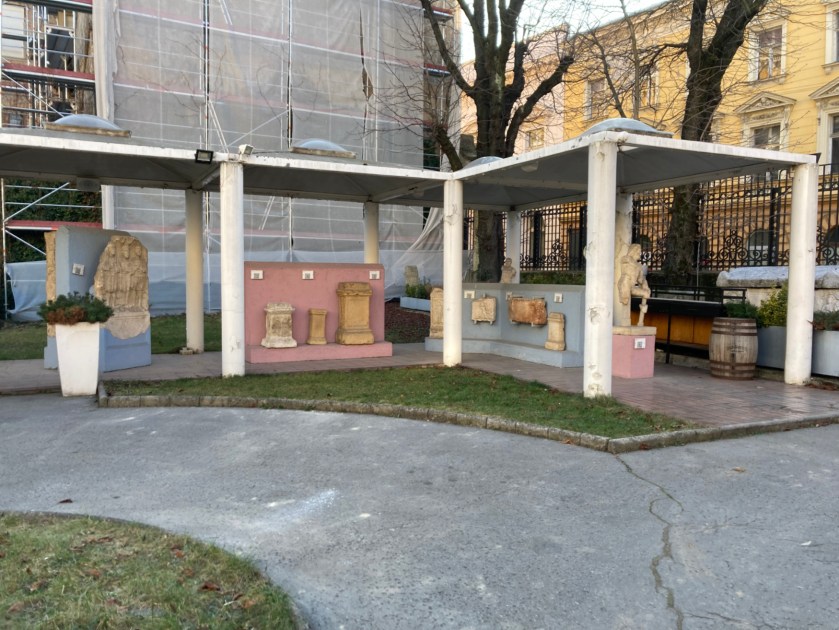
Museum of Archaeology.
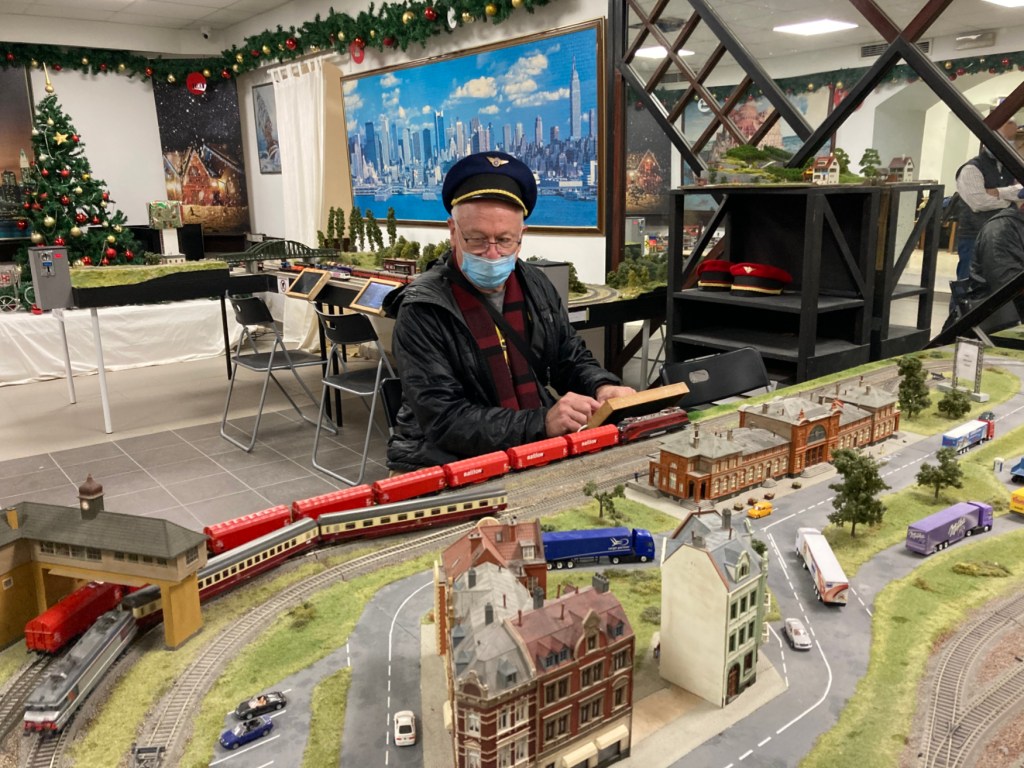
Backo Mini Express. This is not technically a museum. Just the lifelong hobby of some guy named Backo. His other hobby is shown behind me in the third picture- The Manhattan skyline is a 10-12,000 piece jigsaw puzzle; he does one a year.
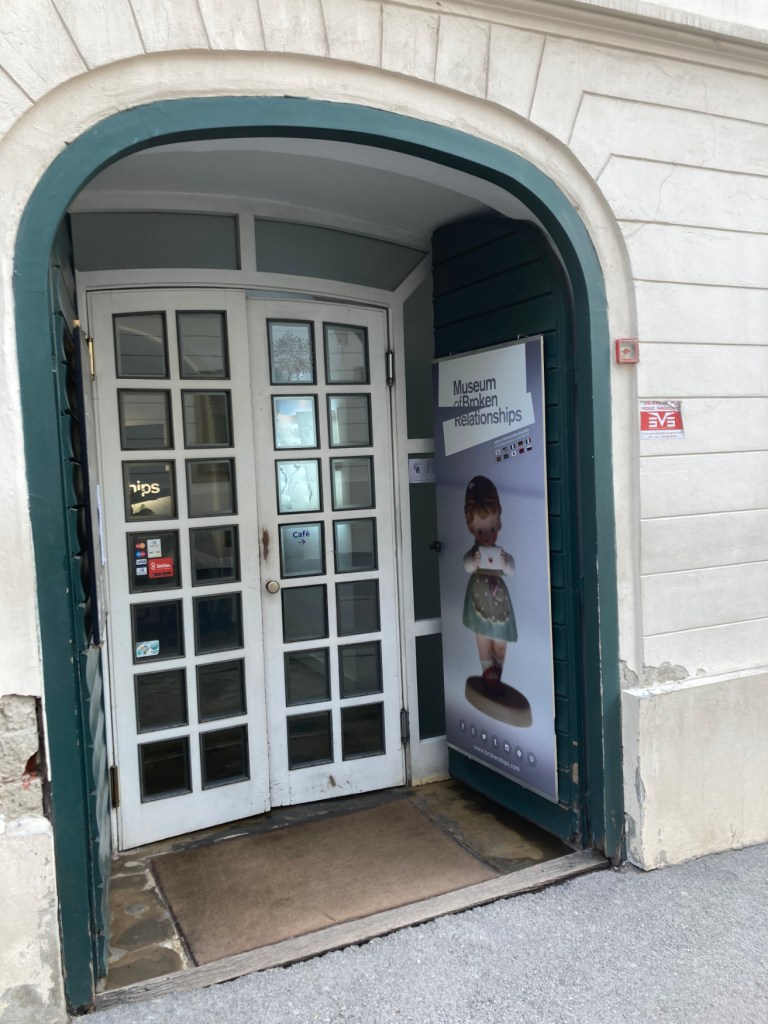
Museum of Broken Relationships. This is the best known of Zagreb’s “quirky” museums.
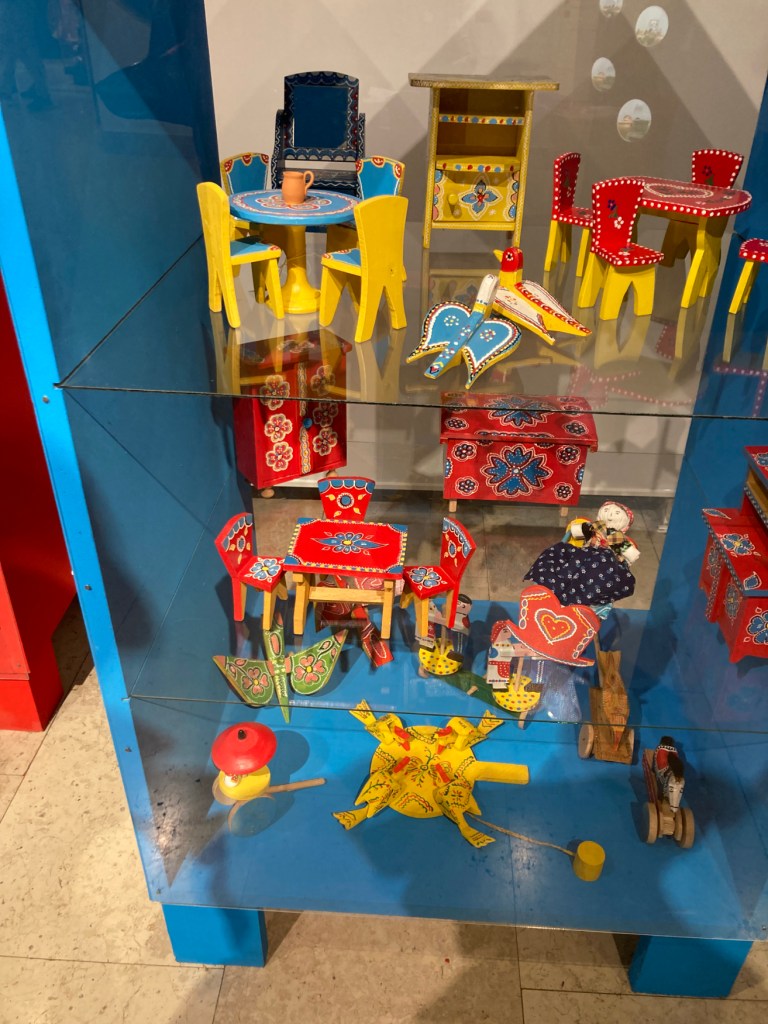
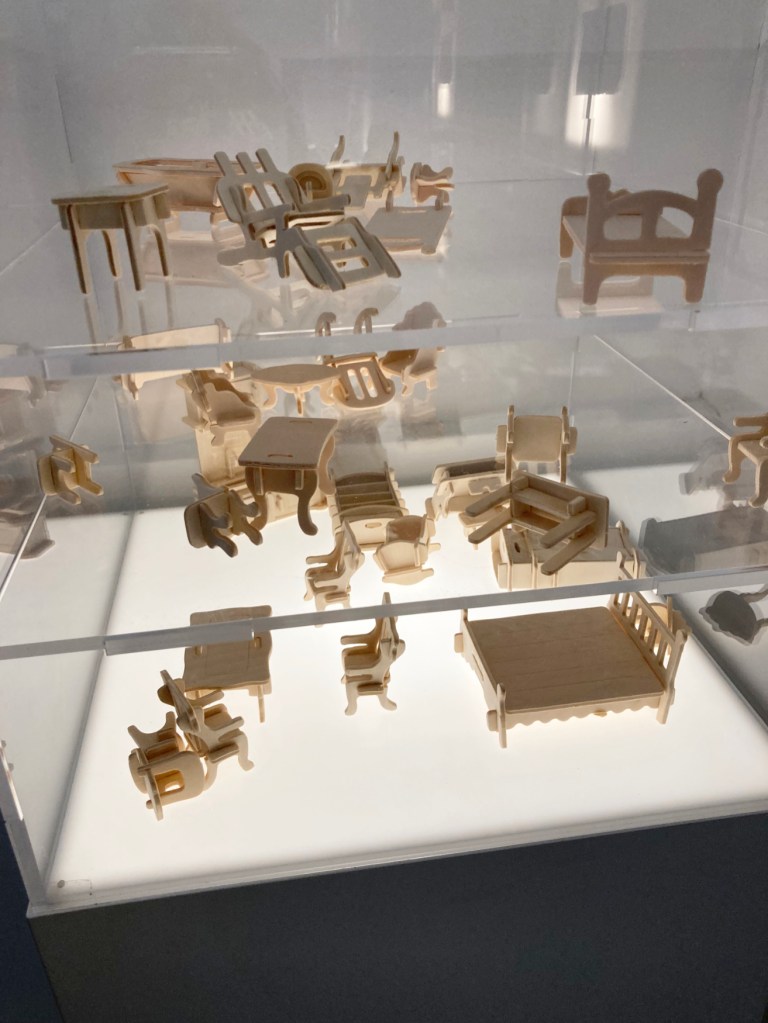
Before they broke up, this couple made tiny furniture to layout their “forever home.”
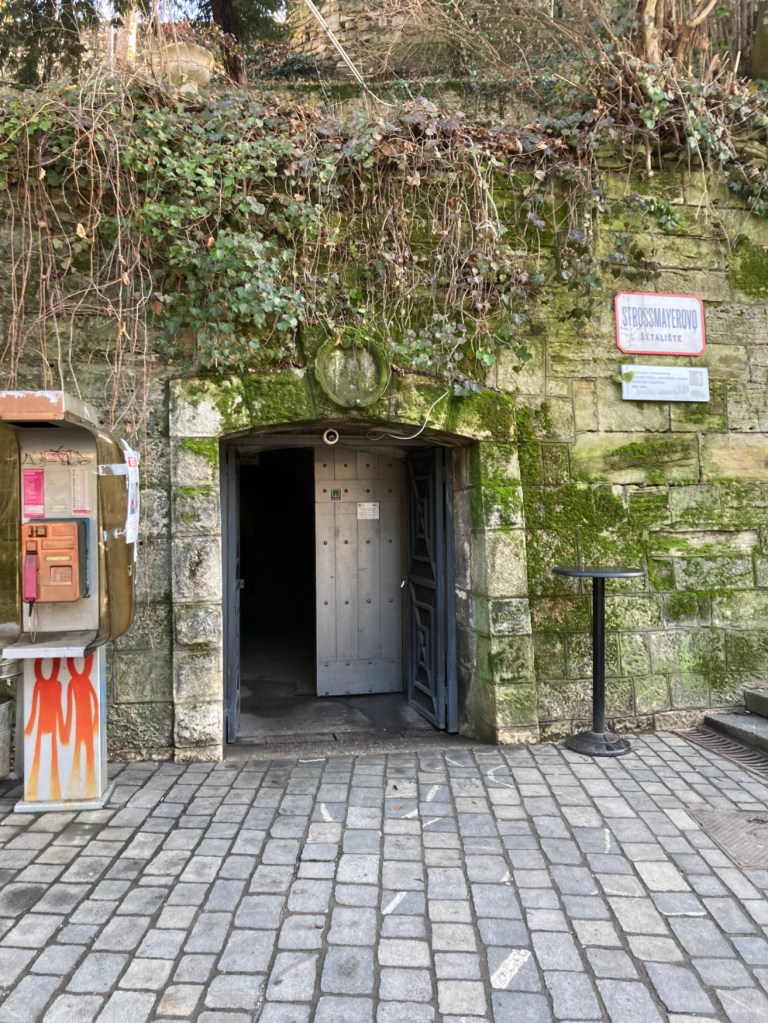
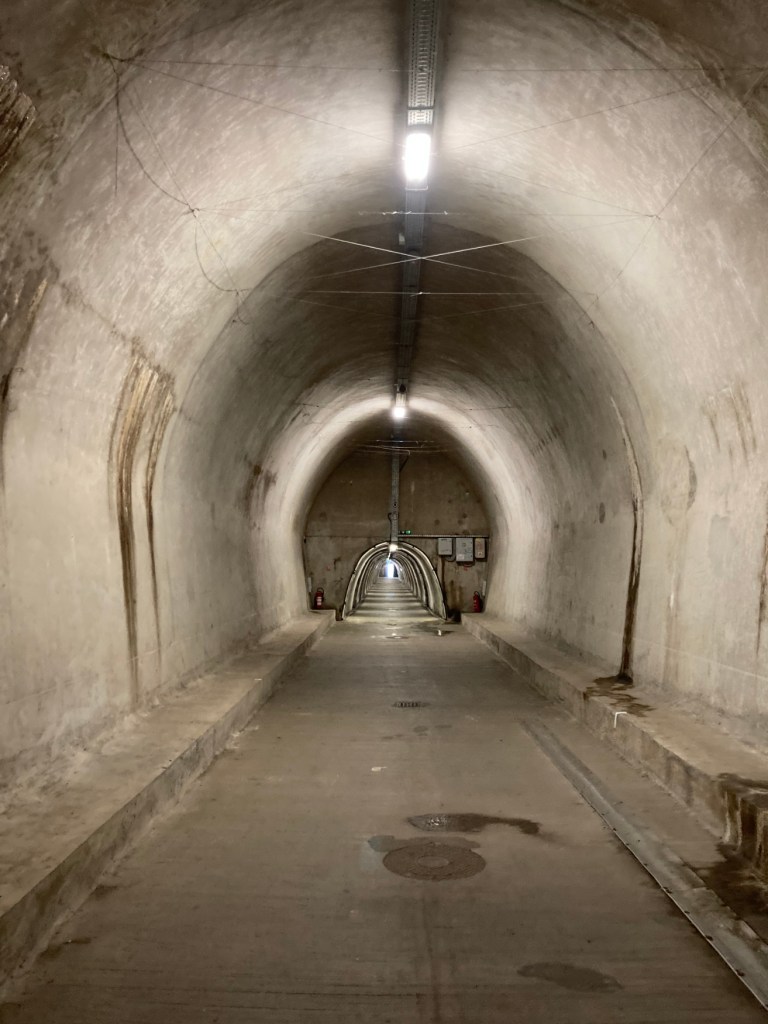
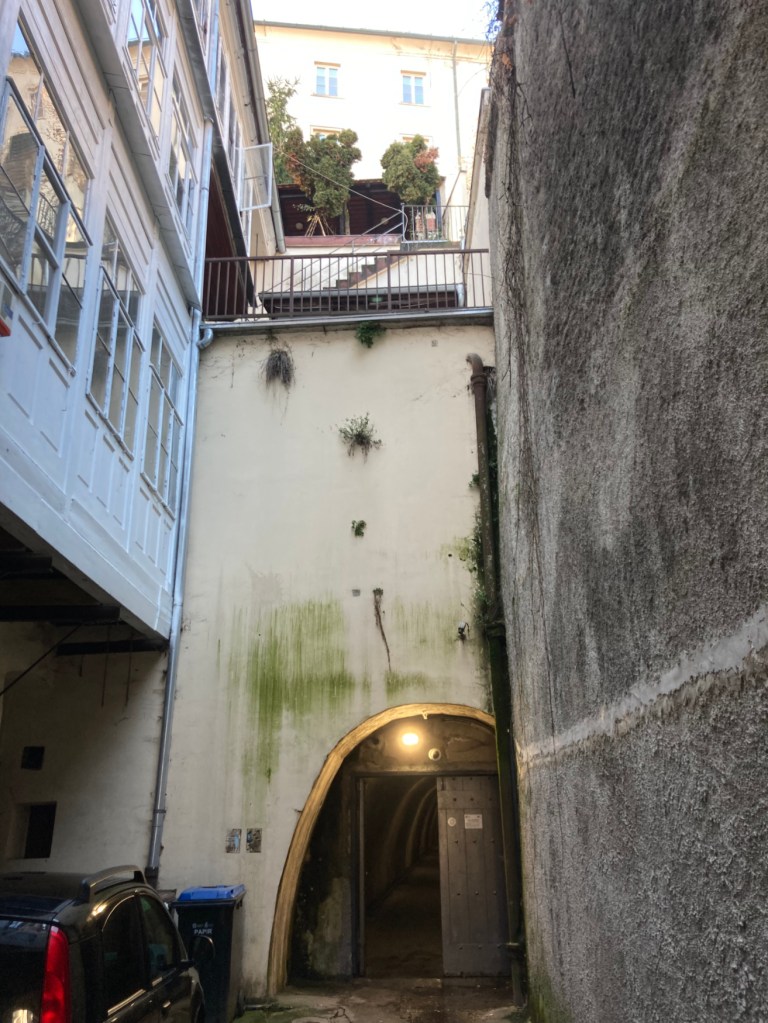
Gric Tunnel. This is also not a museum. It’s a bomb shelter built in WWII. It was used again during the Homeland War (1991-5). Now it’s primarily a shortcut between 2 Zagreb neighborhoods.
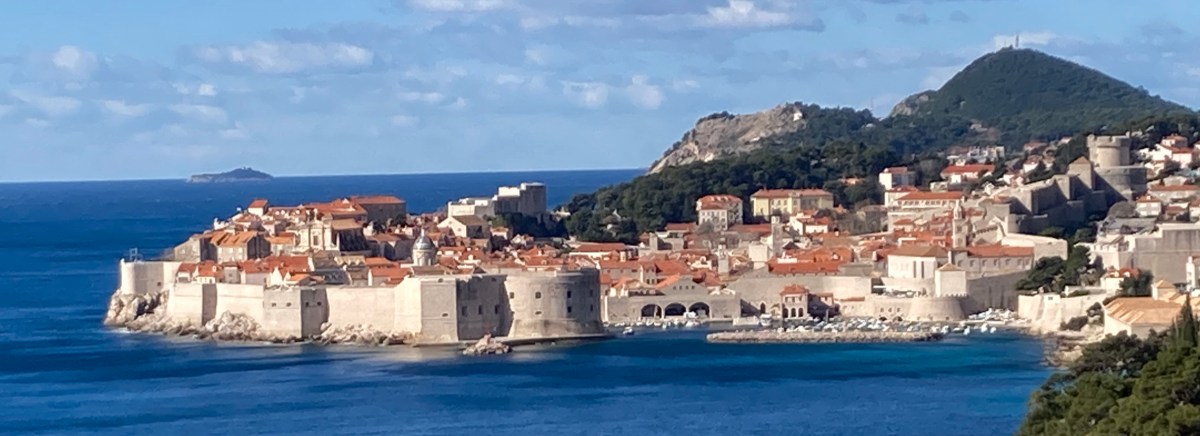
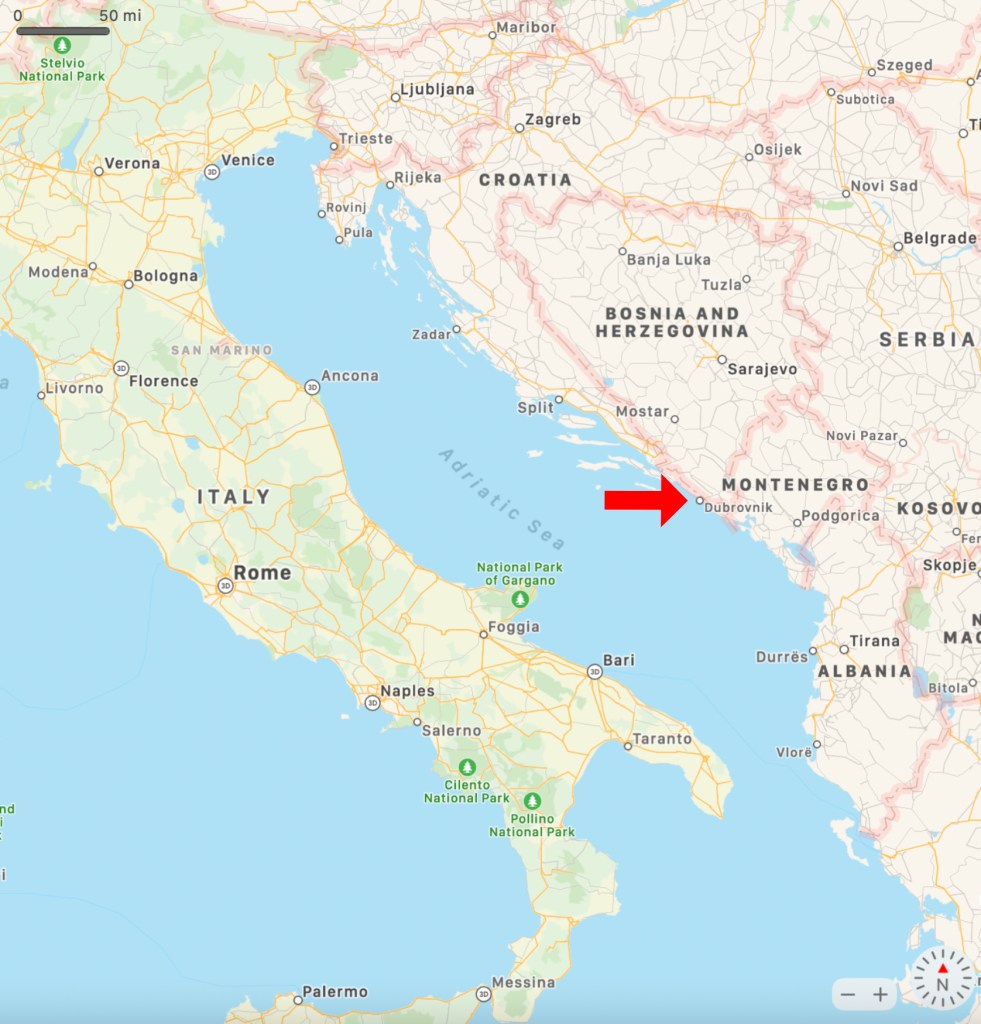
Dubrovnik was founded in the 7th cent. CE by refugees from a town a few miles south that was destroyed in a conflict between Slavs and Avars. For the next 650 years, Dubrovnik (also known as Ragusa from an earlier name) was in the middle of the shifting empires (Ostrogoth, Byzantine, Venice, Hungary, etc.) that attempted to fill the void created by the fall of the Roman Empire. Dubrovnik became semi-independent in 1358 and eventually a free state. Independence ended in 1808 when Napoleon entered the neighborhood. After Napoleon was evicted a few years later, Dubrovnik became part of the Austrian empire. After this, as a city of mostly Croatians, Dubrovniks political history became intertwined with Croatia’s political history. I think it’s interesting that the independent Republic of Dubrovnik (Ragusa) was the first foreign country to recognize the independence of the USA. Dubrovnik is a UNESCO heritage site primarily because of the “old town” section which is surrounded by impressive medieval walls.
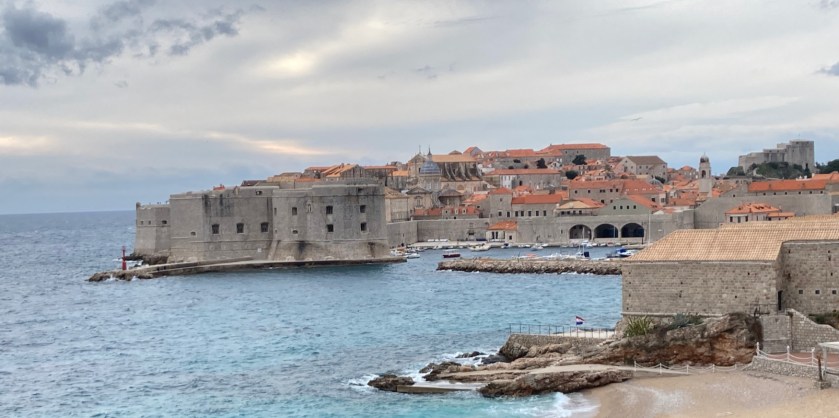
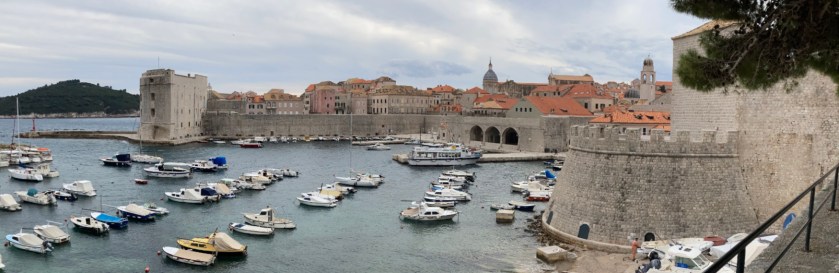
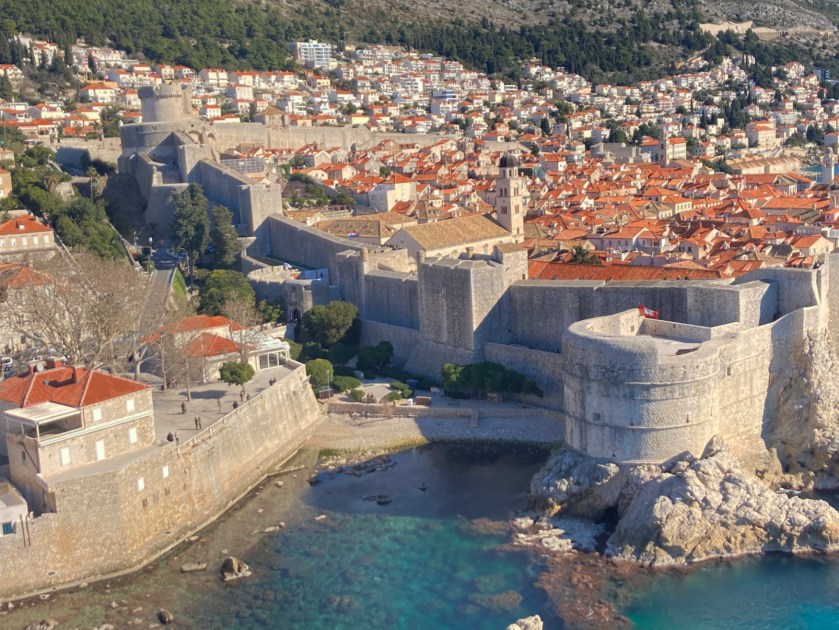
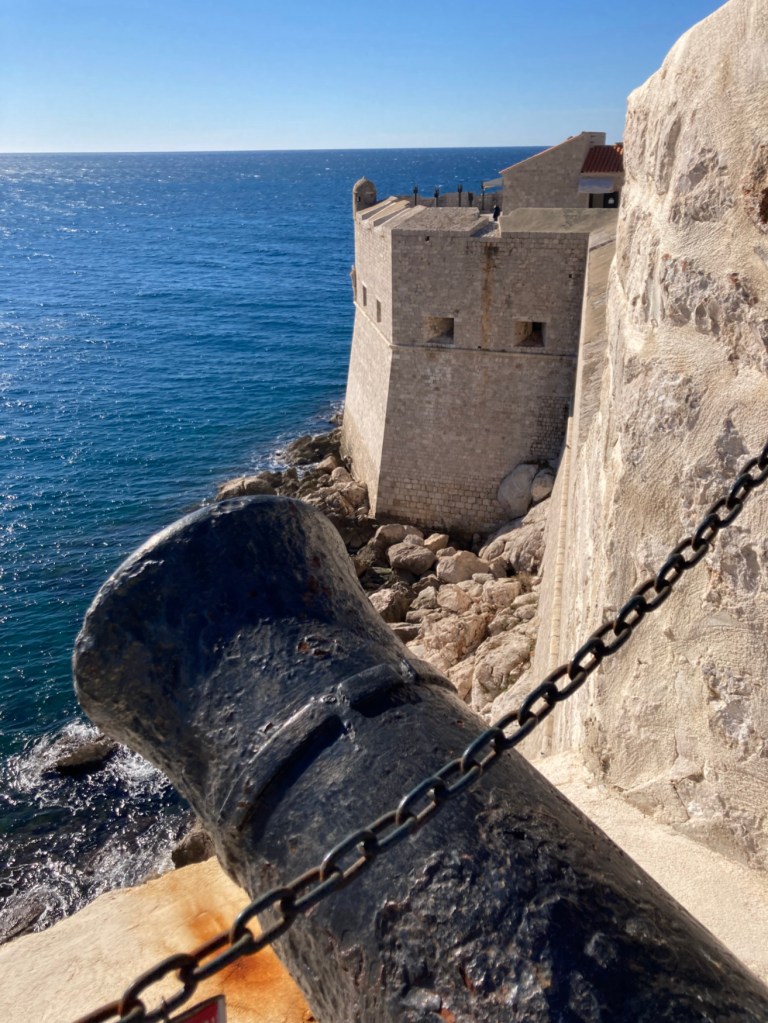
Dubrovnik (looking into old harbor).
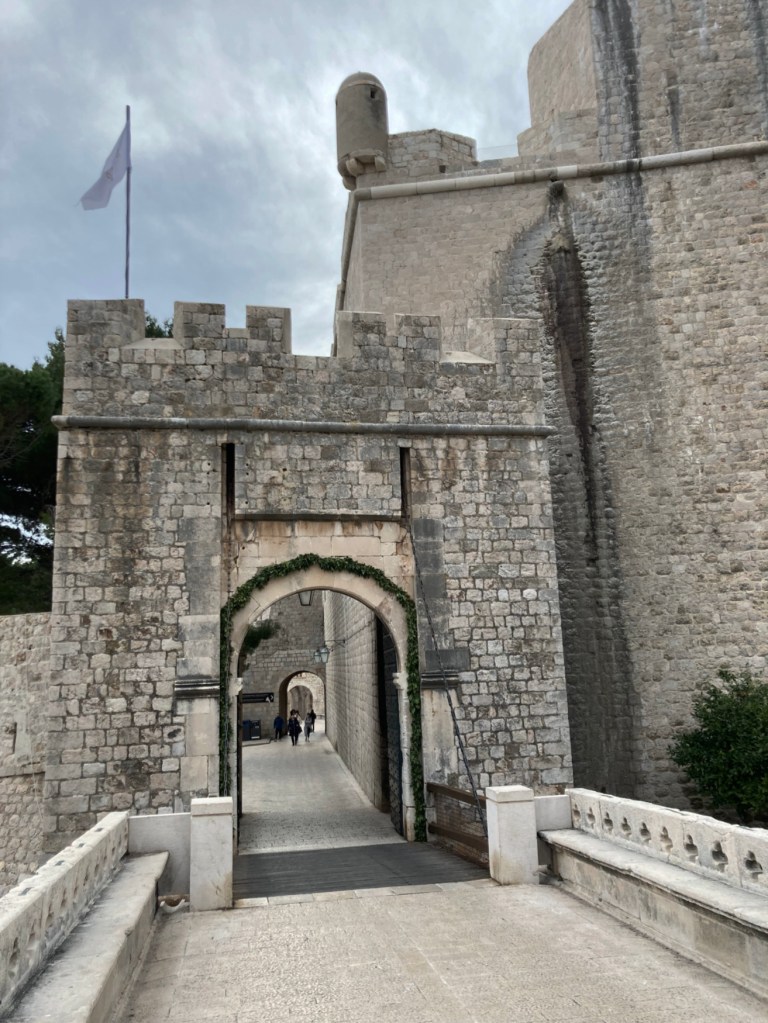
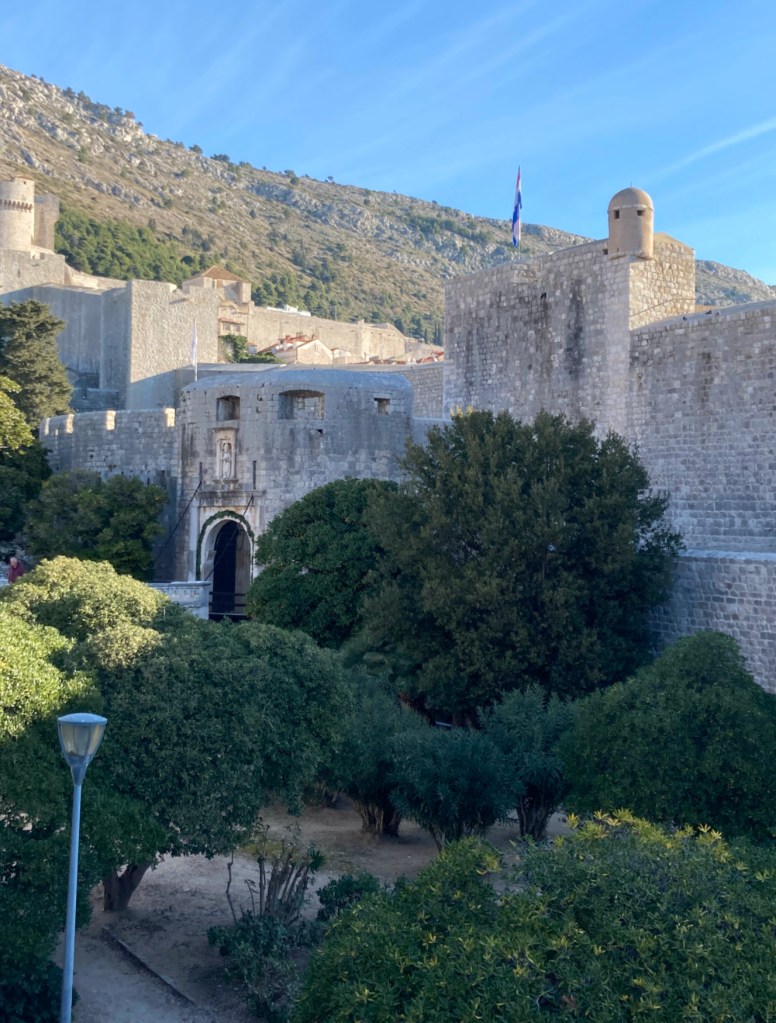
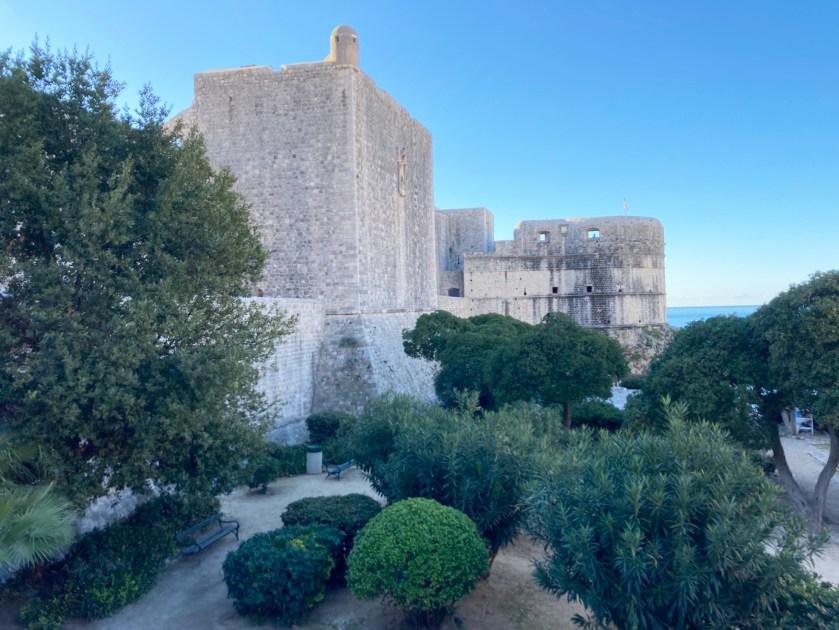
Ploce (plo-chay) Gate and Fort Asimon on the east side.
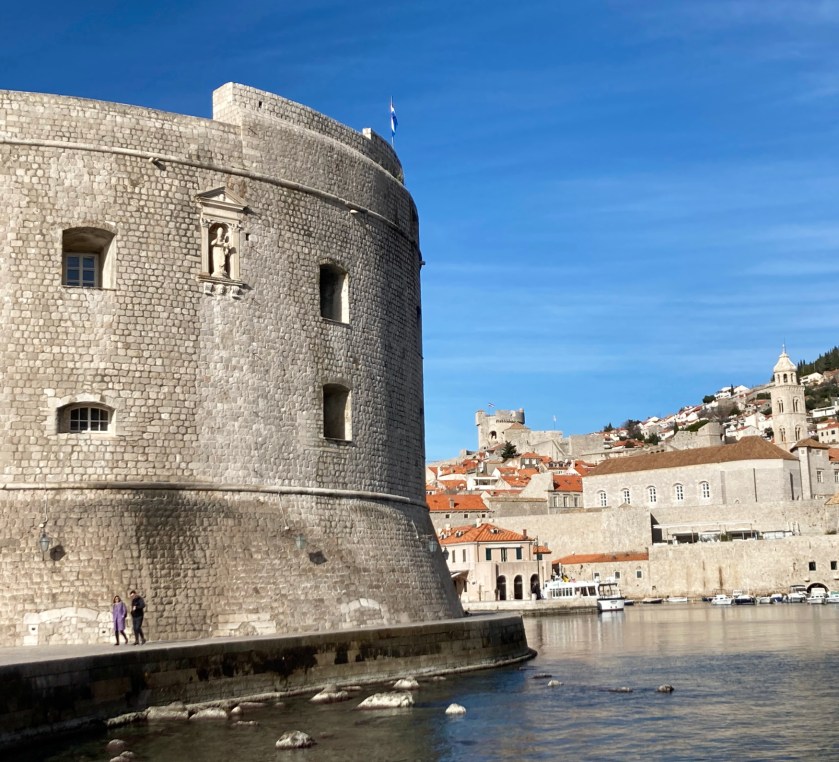
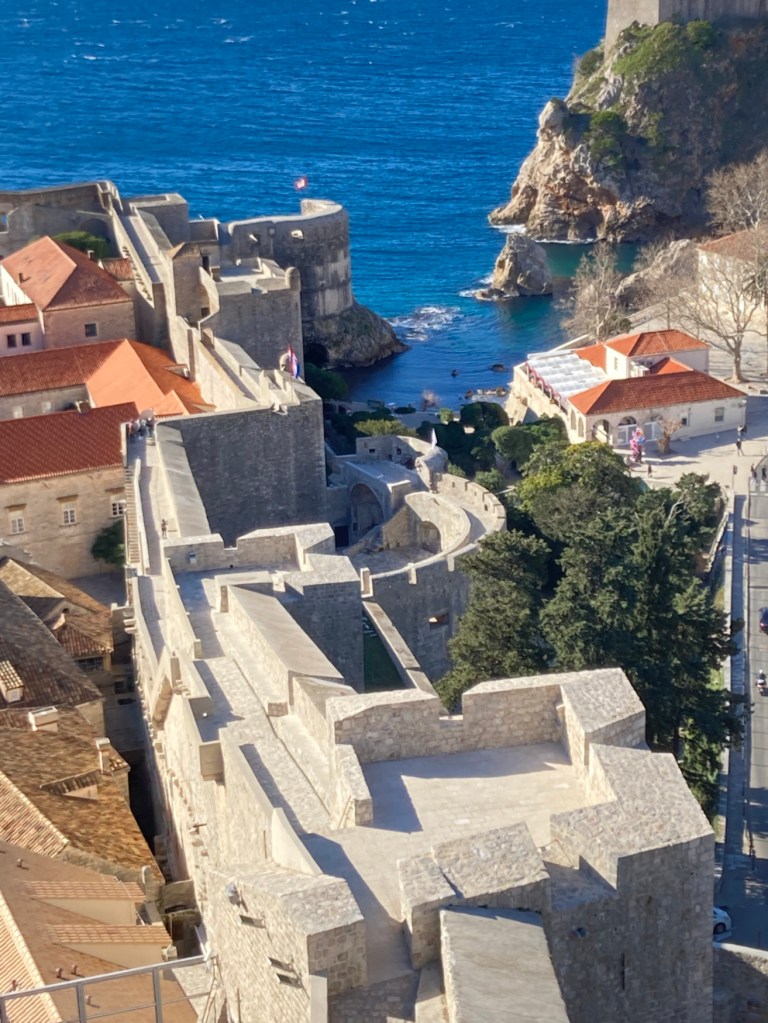
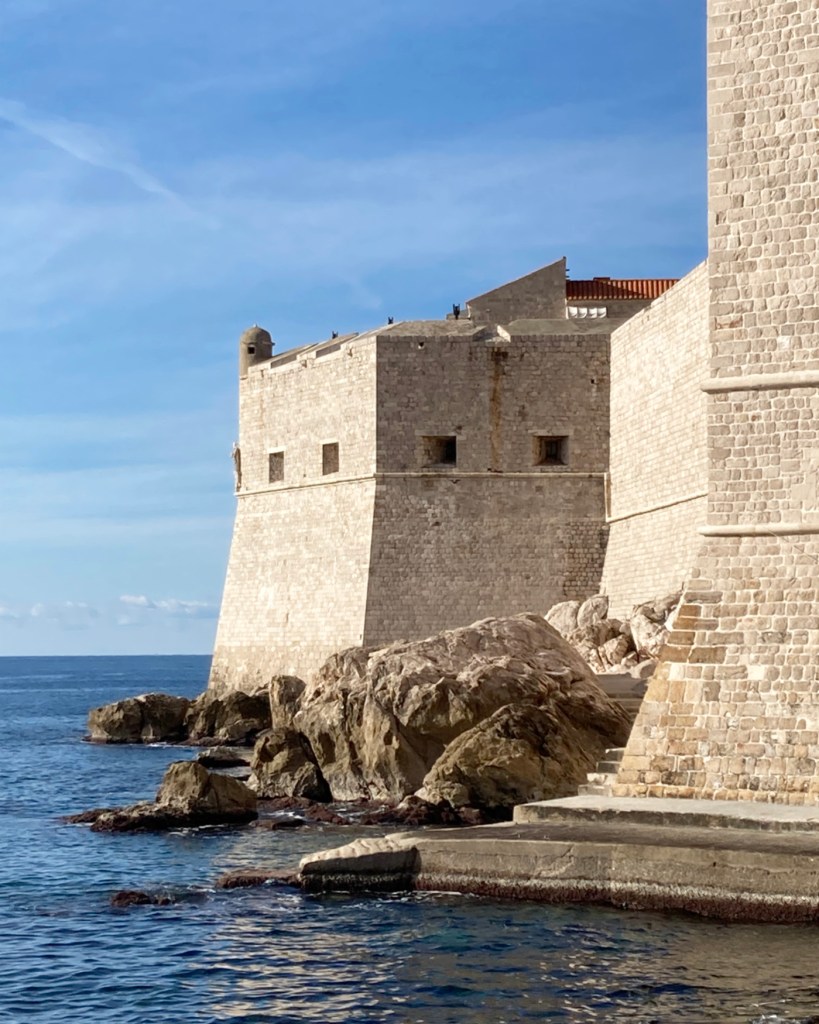
St. John’s Fort.
St. John’s Fort-old harbor.
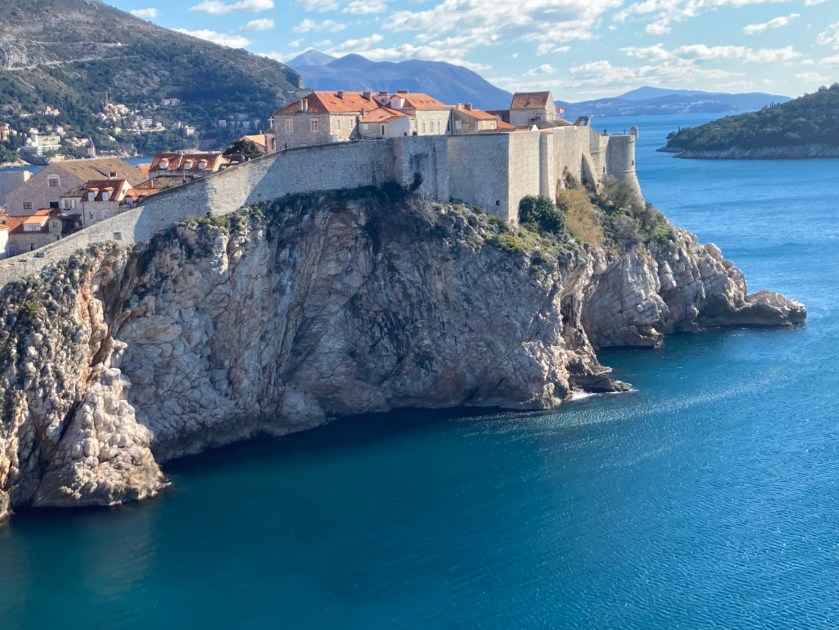
St. John’s Fort-old harbor-St. Luke’s Fort
North wall.
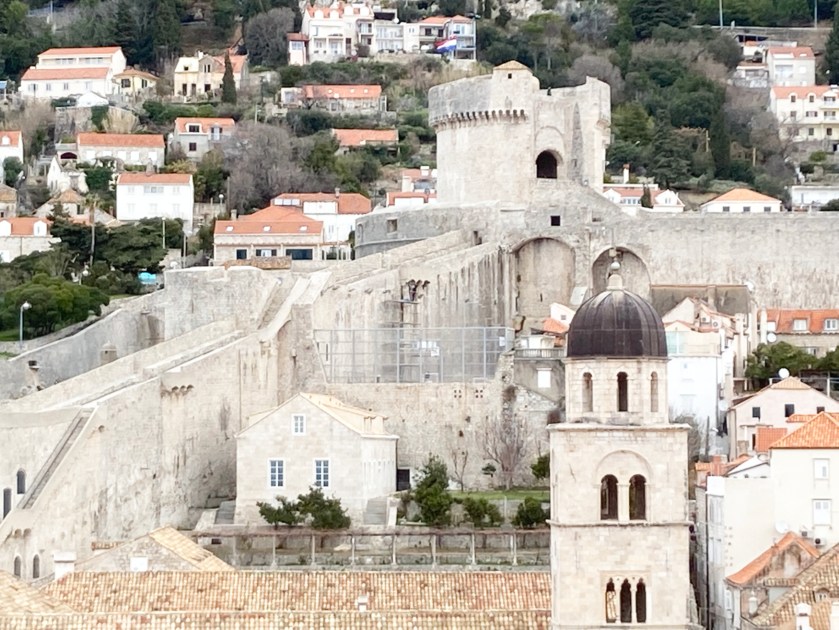
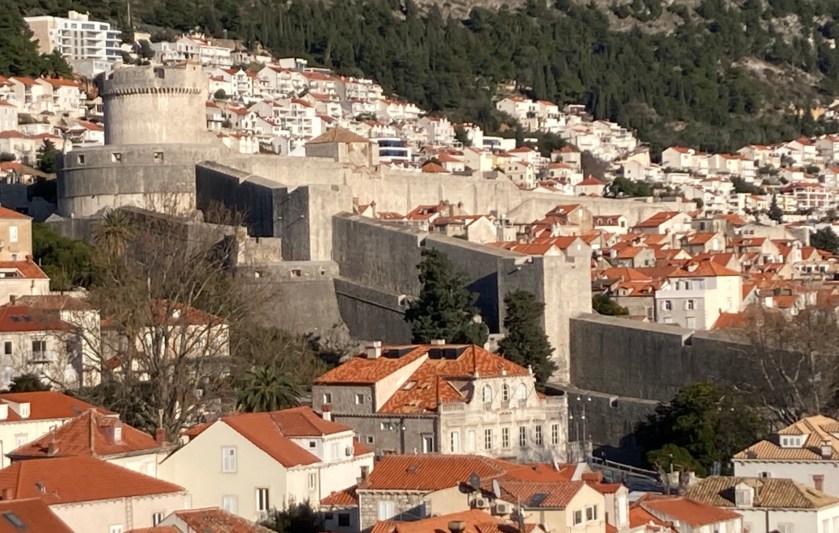
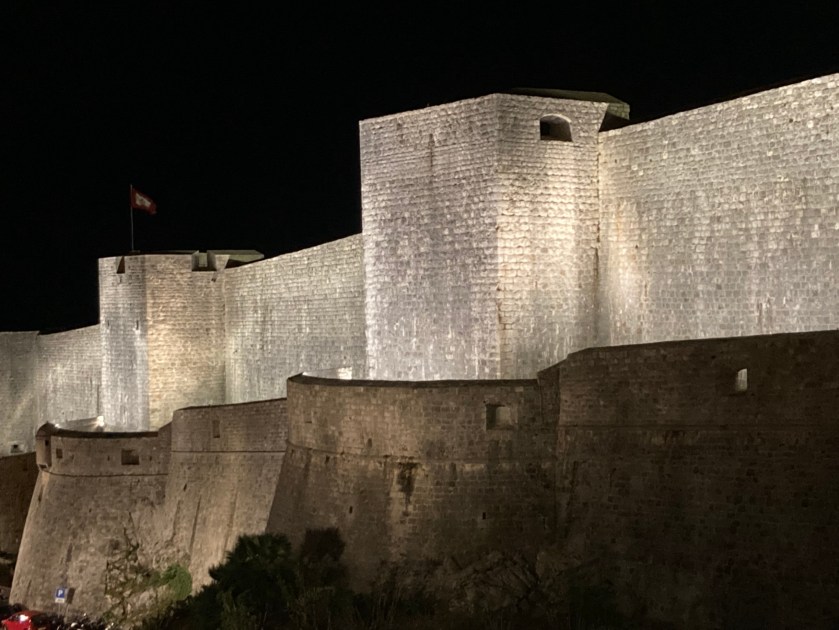
Fort St. Vid-Fort St. Lucia-Fort St. Barbara-Fortress Minceta
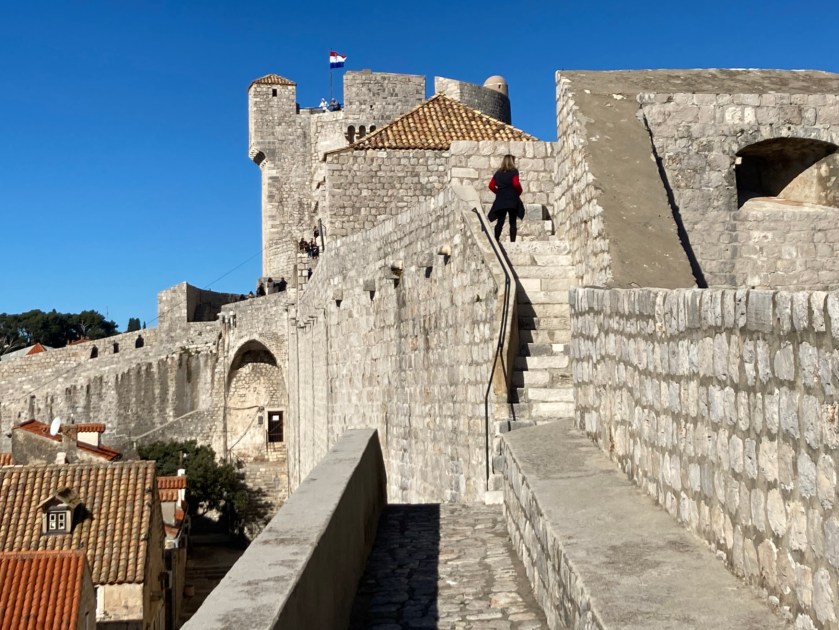
Northern wall heading toward Fortress Minceta.
Forts at northwest corner.
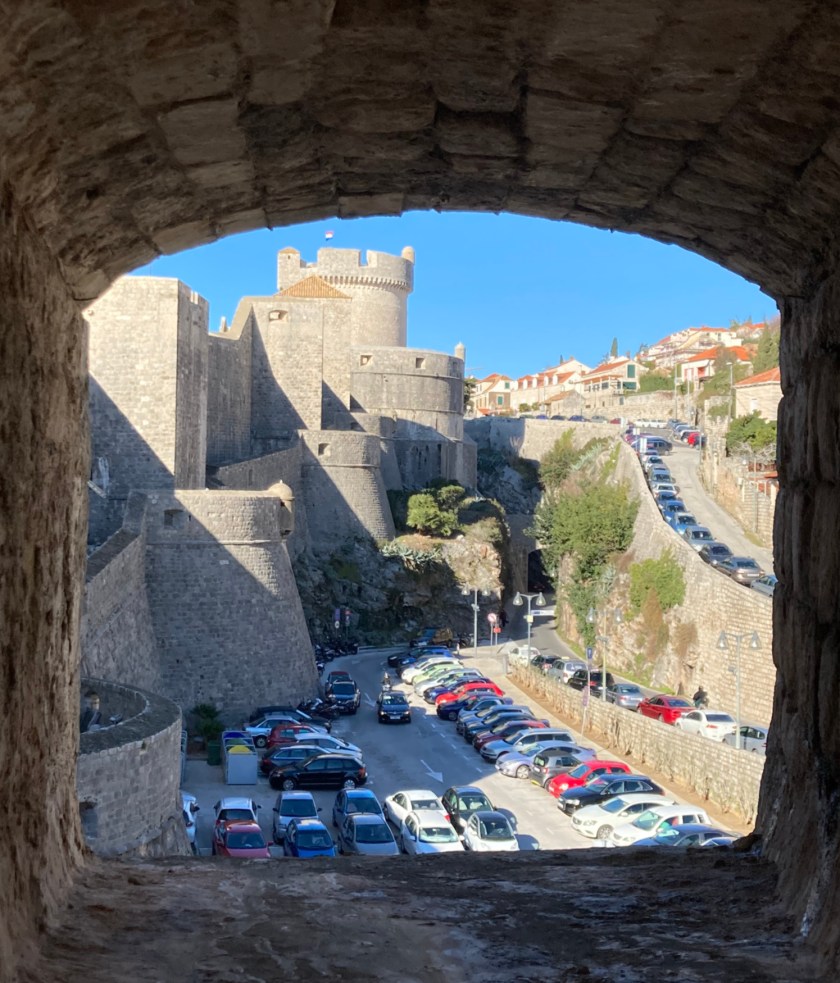
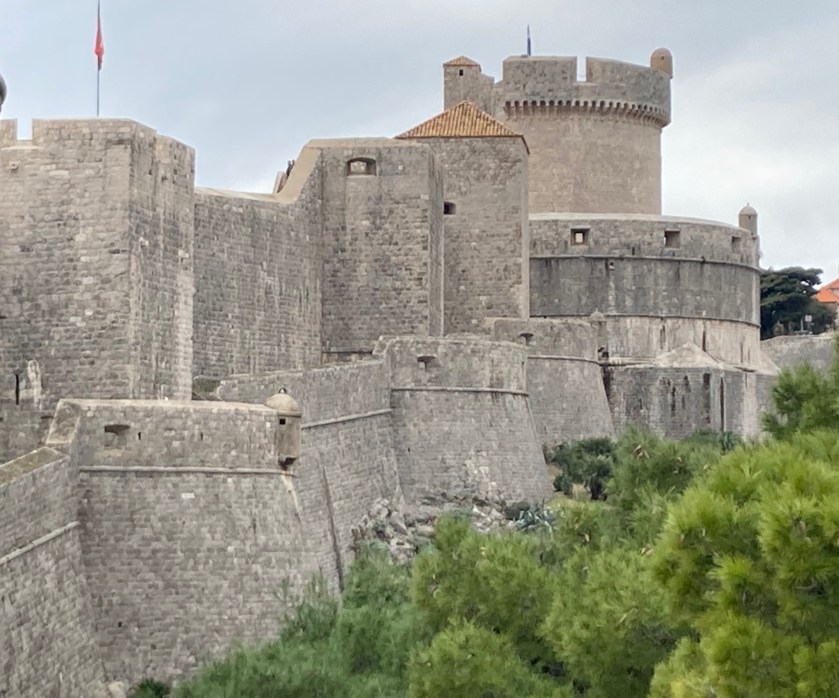
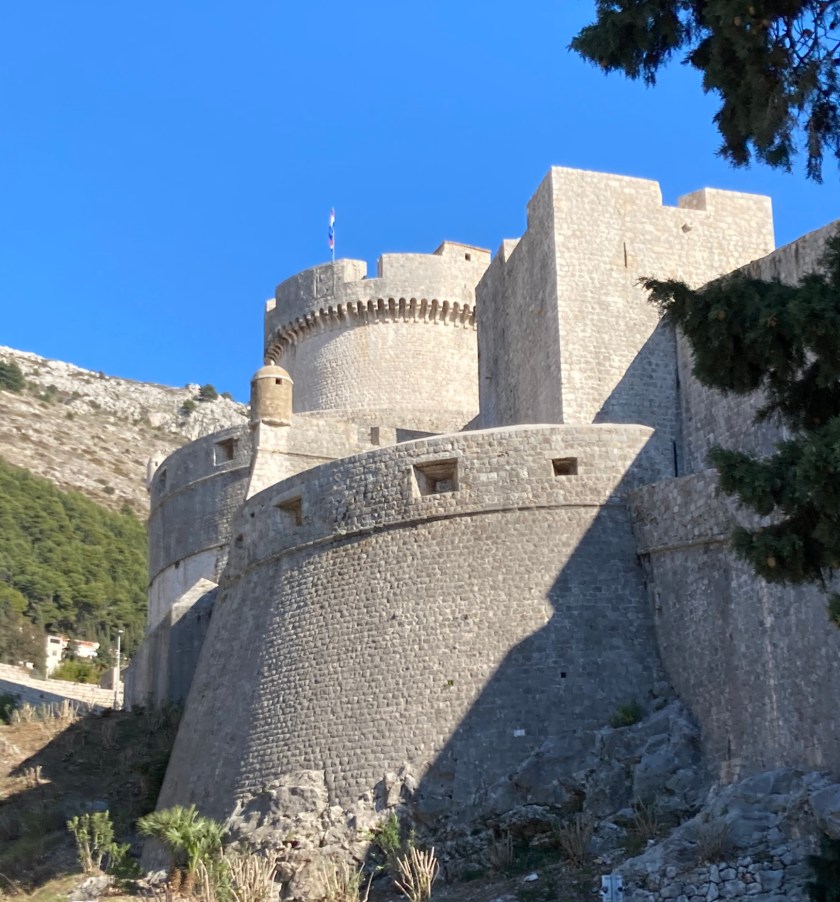
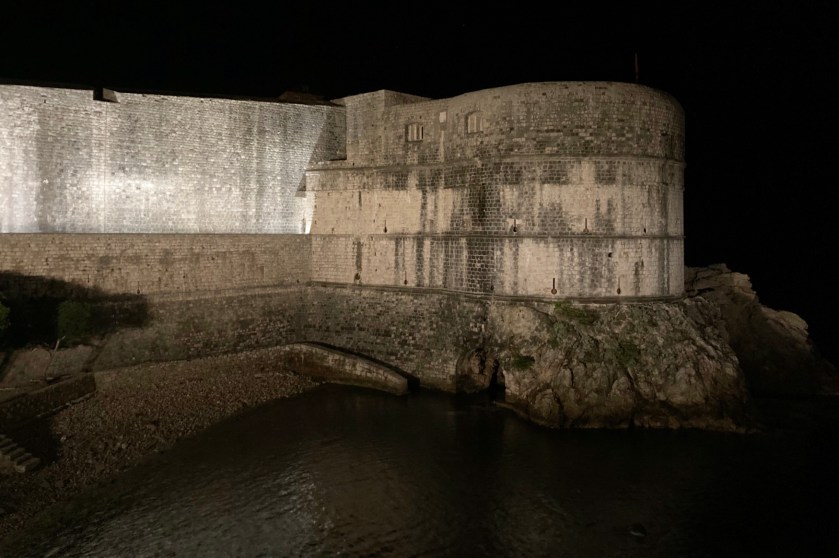
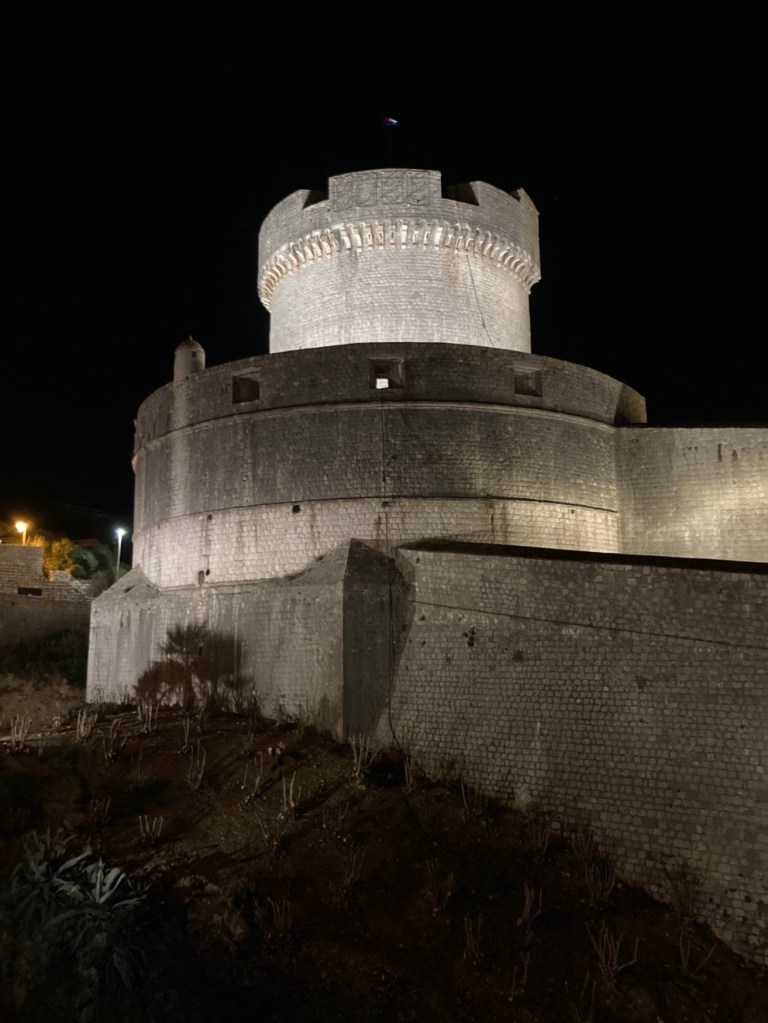
Fortress Minceta
West wall.
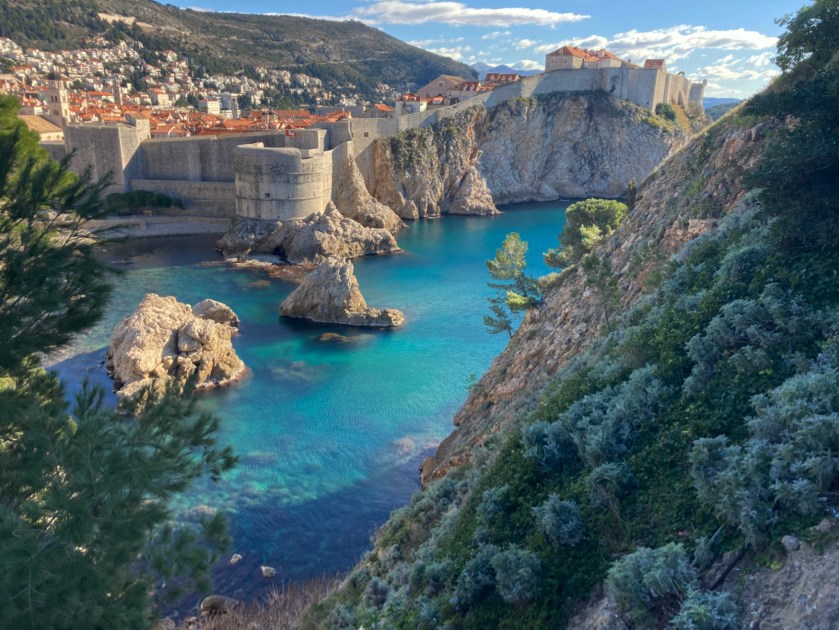
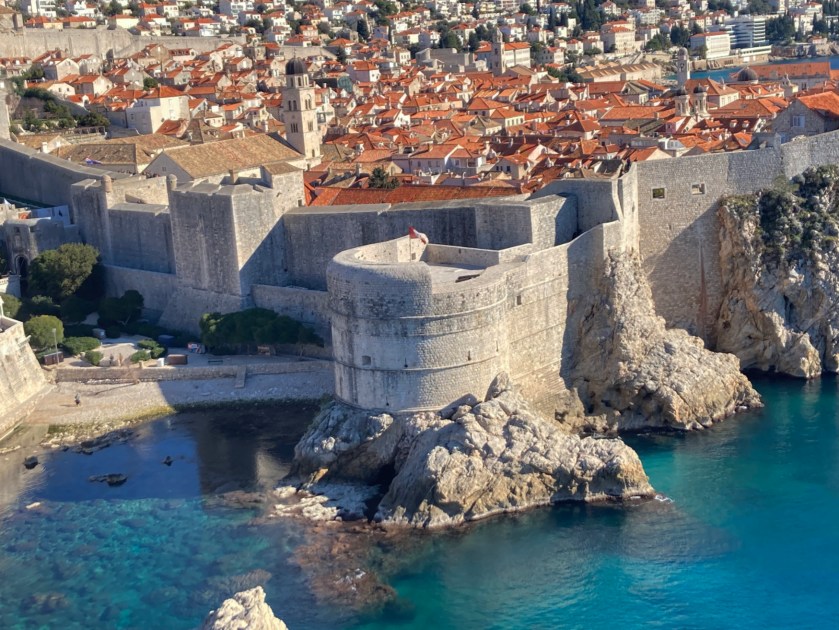
St. Francis Tower-Pile Gate–Fort Bokar (bottom to top)
West wall.
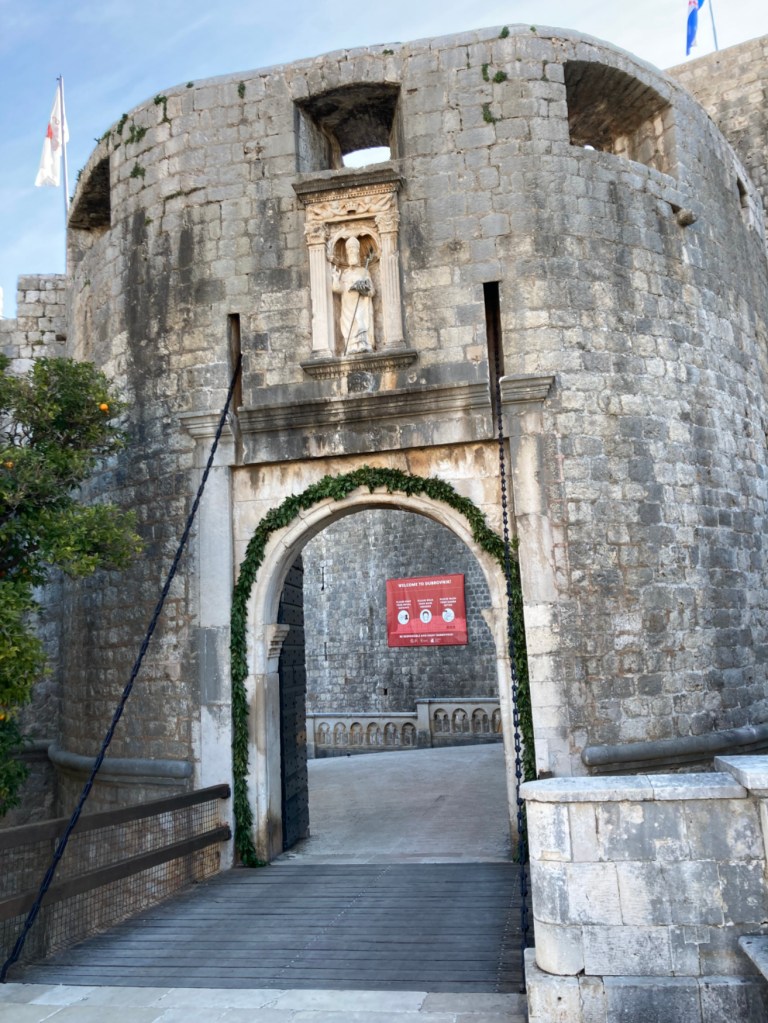
Pile Gate (pronounced Pee-lay) on the West side.
Pile Gate
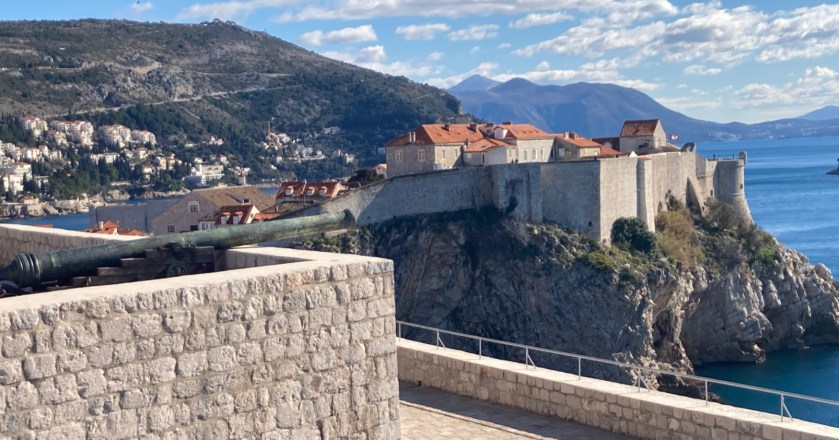
View from Fort Lovrijenac.
View from Fort Lovrijenac.
Fort St. Stephen
Fort St. Saviour
Southwest corner.
Fort Bokar
Southwest corner
South wall.
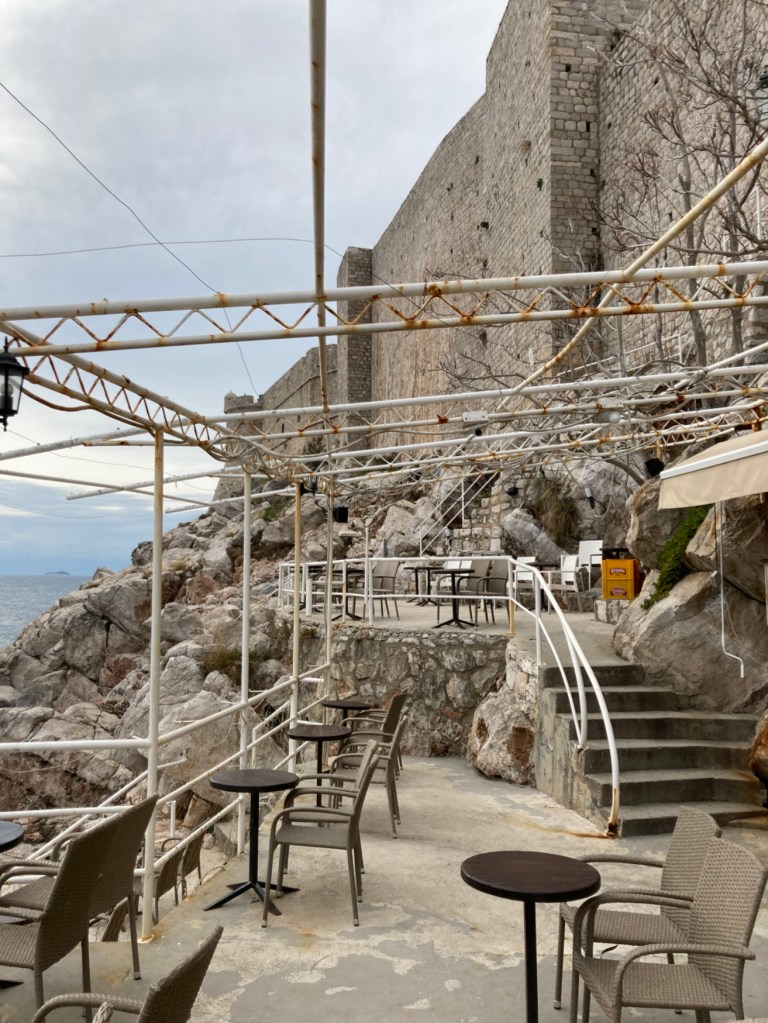
After a hot day walking the walls, go through a small doorway in the south wall and enjoy a refreshing malted beverage at Buza II Bar.
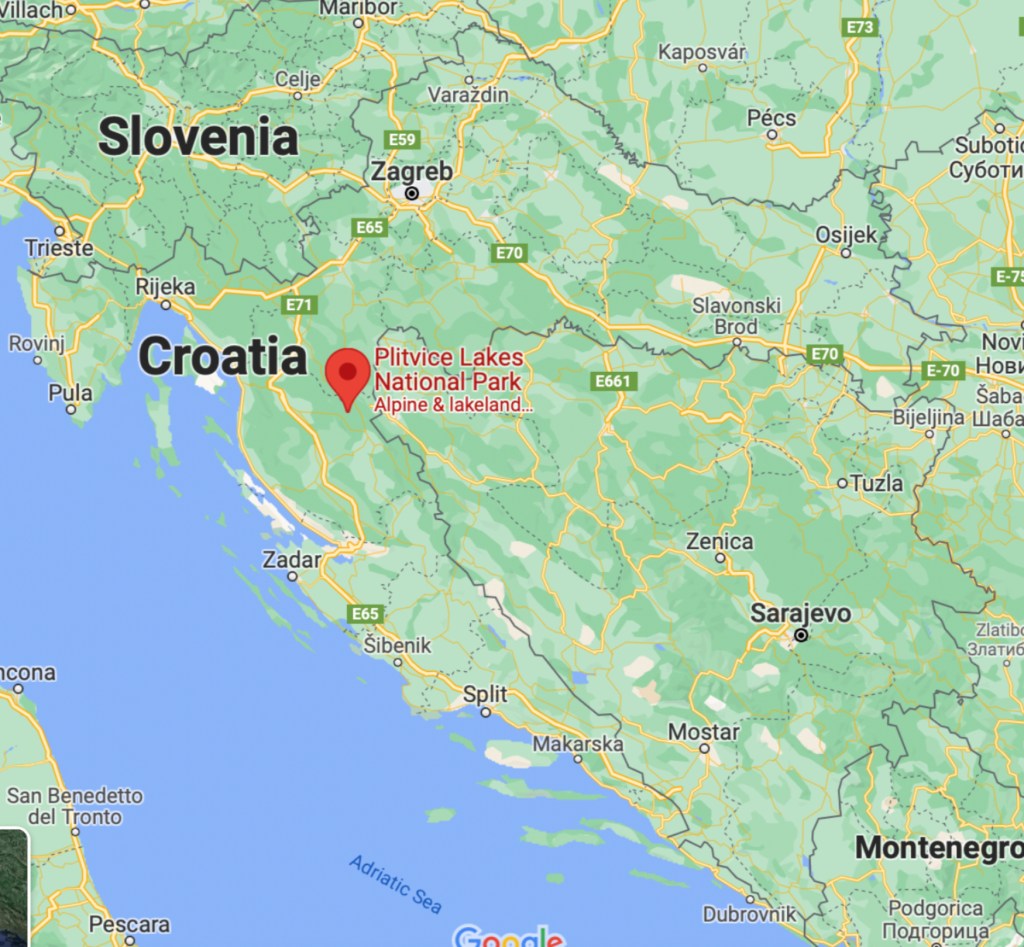
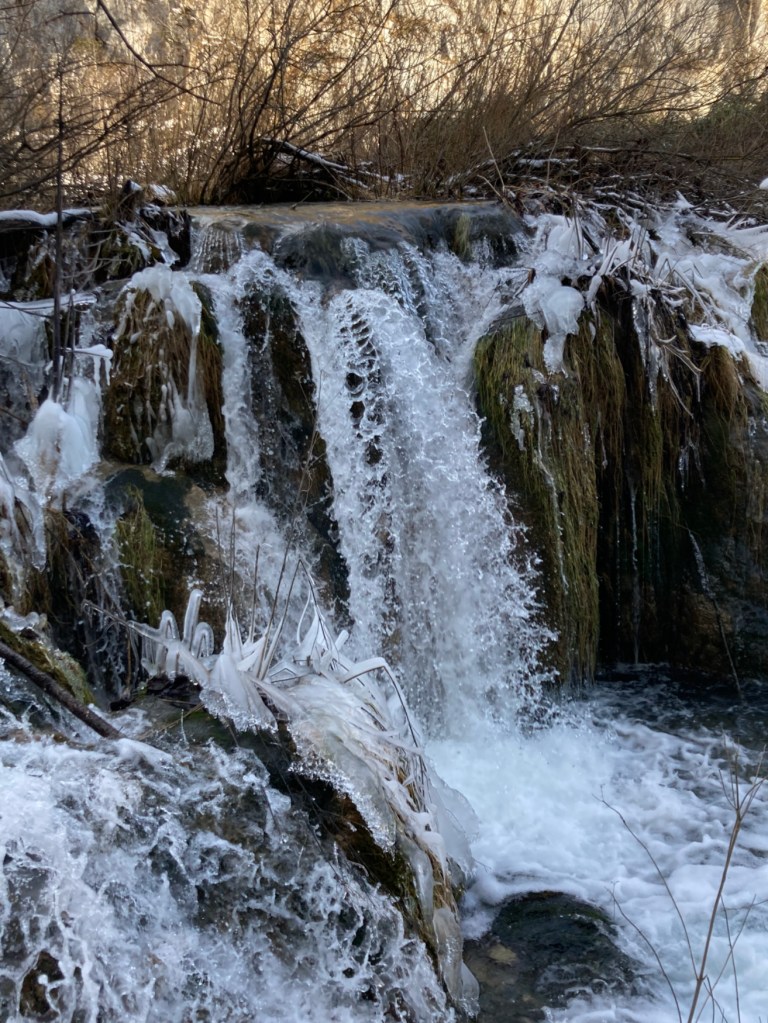
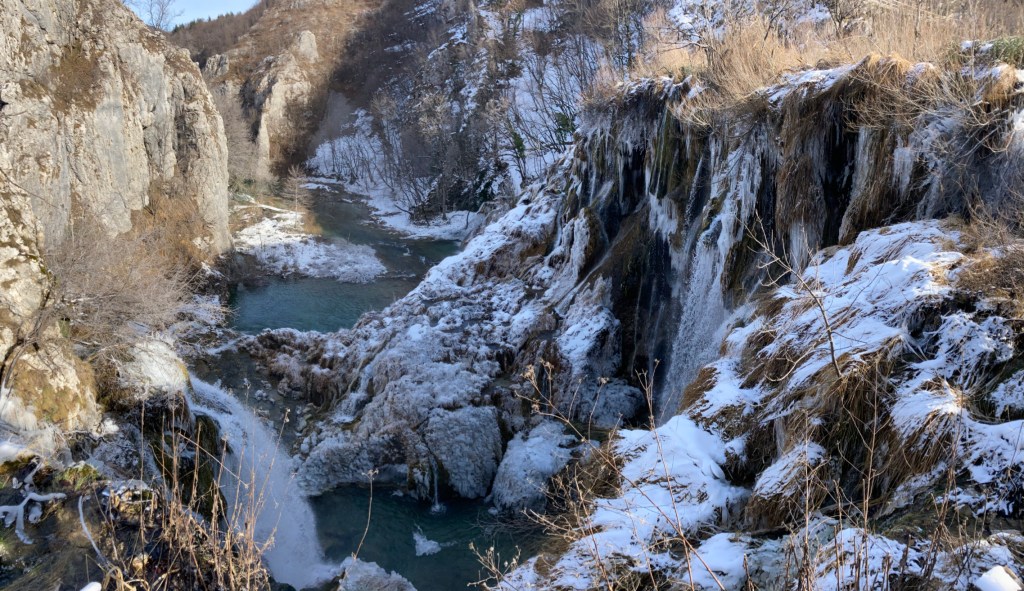
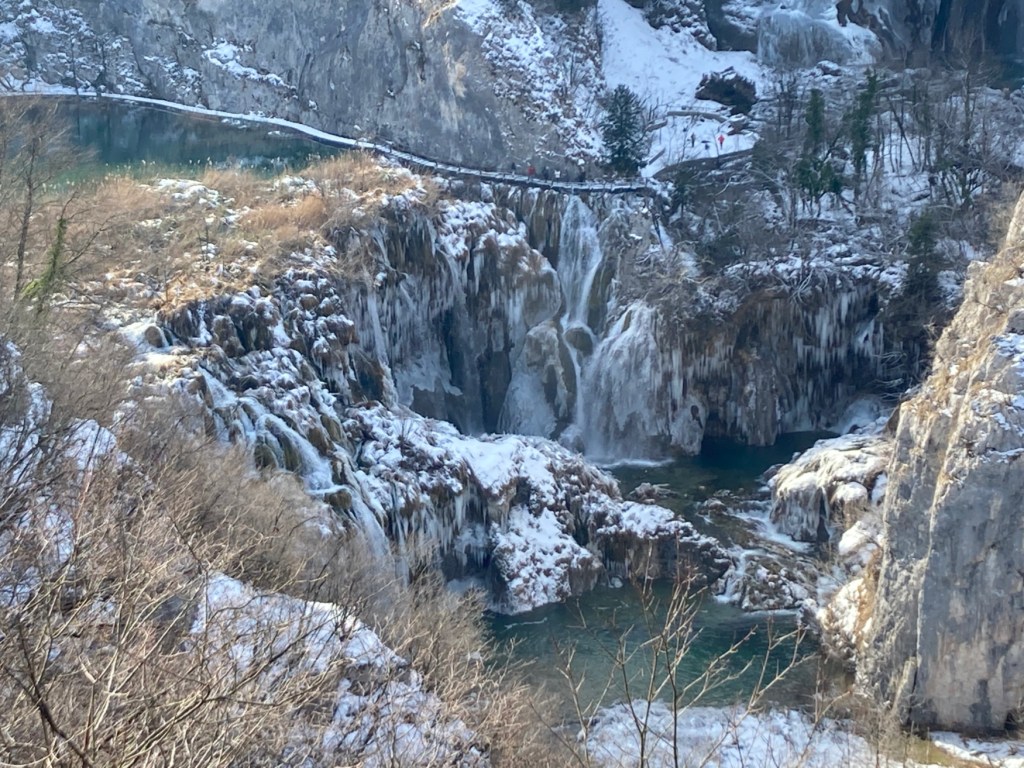
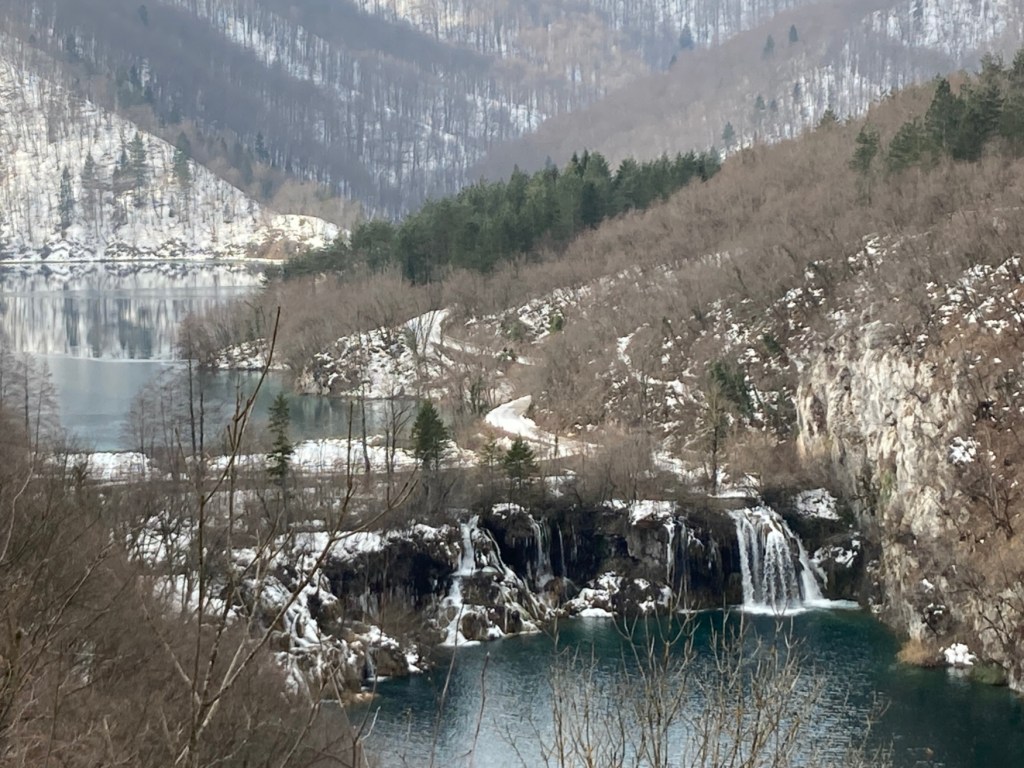
Plitvice Lakes are located in a Croatian National Park a couple hours drive south of Zagreb. This is where the first shots of the Croatian Homeland War were fired in March, 1991. The lakes have been forming over the last several thousand years by the deposition of calcium carbonate to create so-called tufa barriers or dams. The result is a series of 16 lakes with waterfalls of various sized in between them.
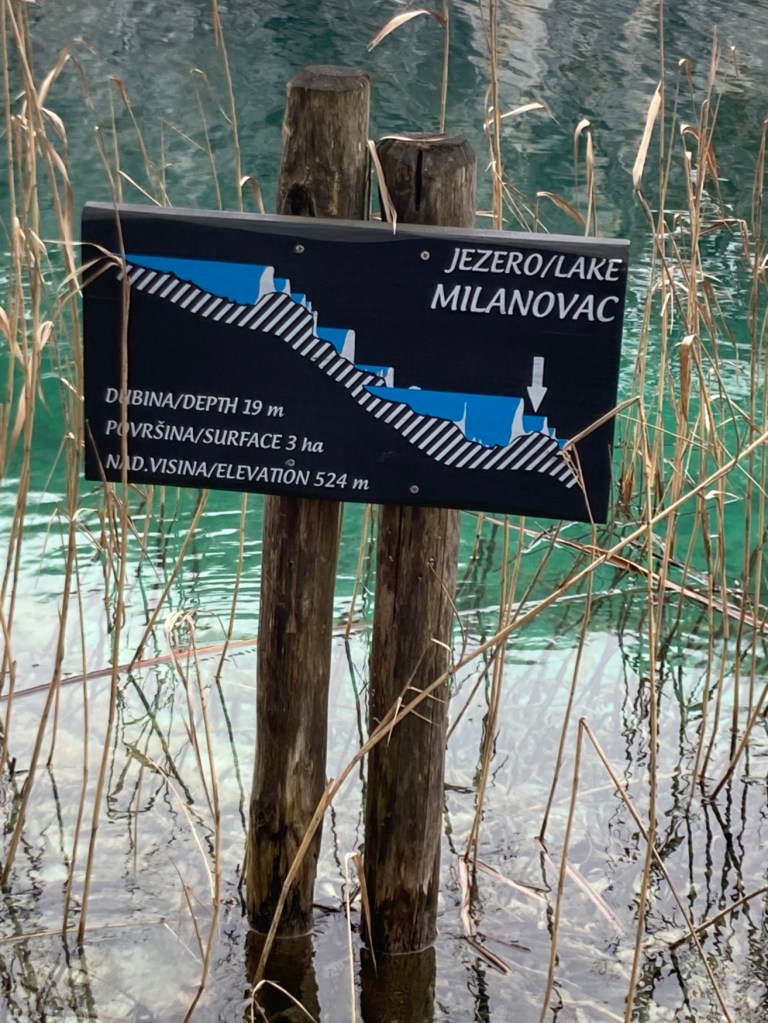
jezero (jez’-er-o)= lake
In this cross-section, the tufa barriers are shown in white.
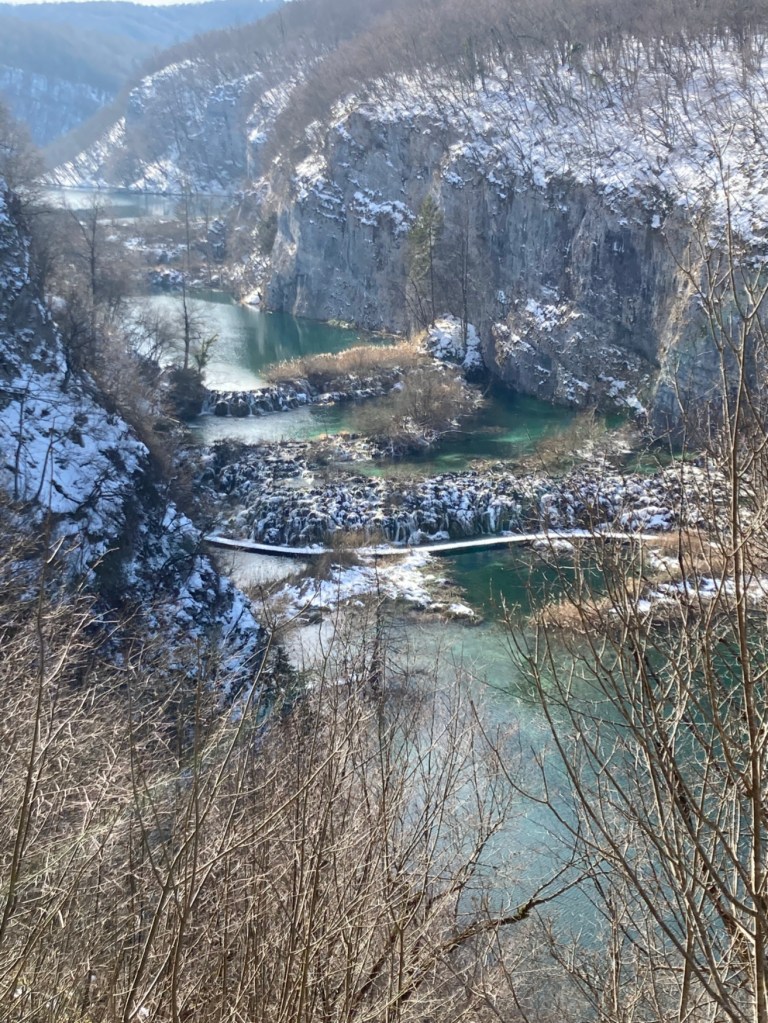
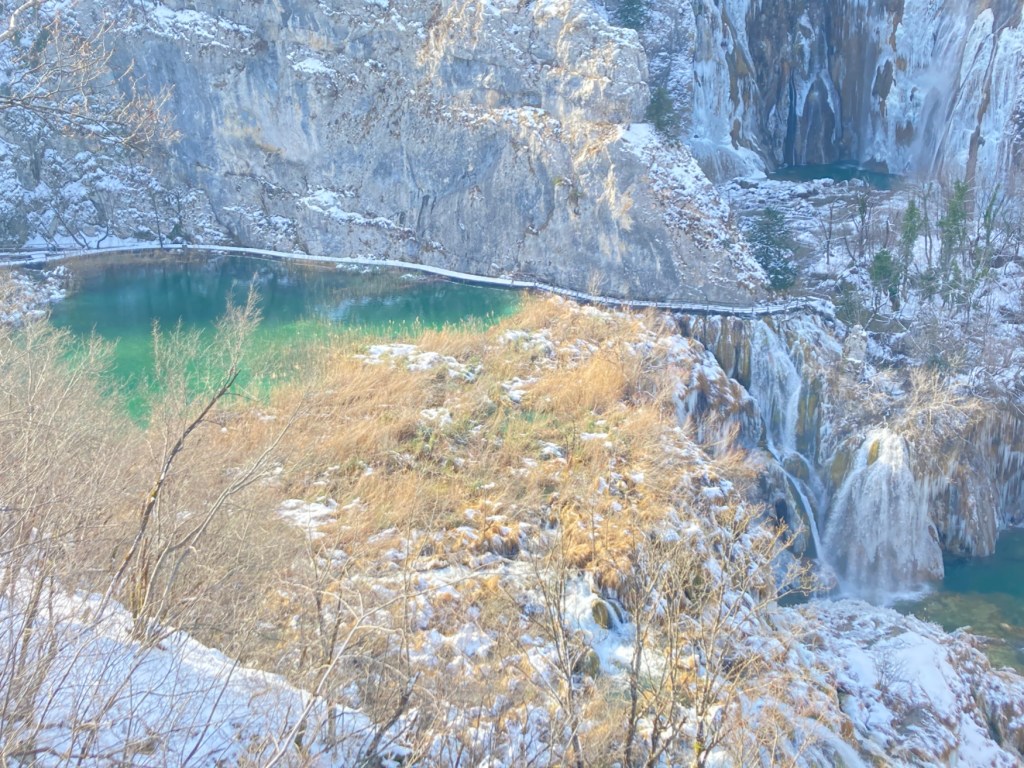
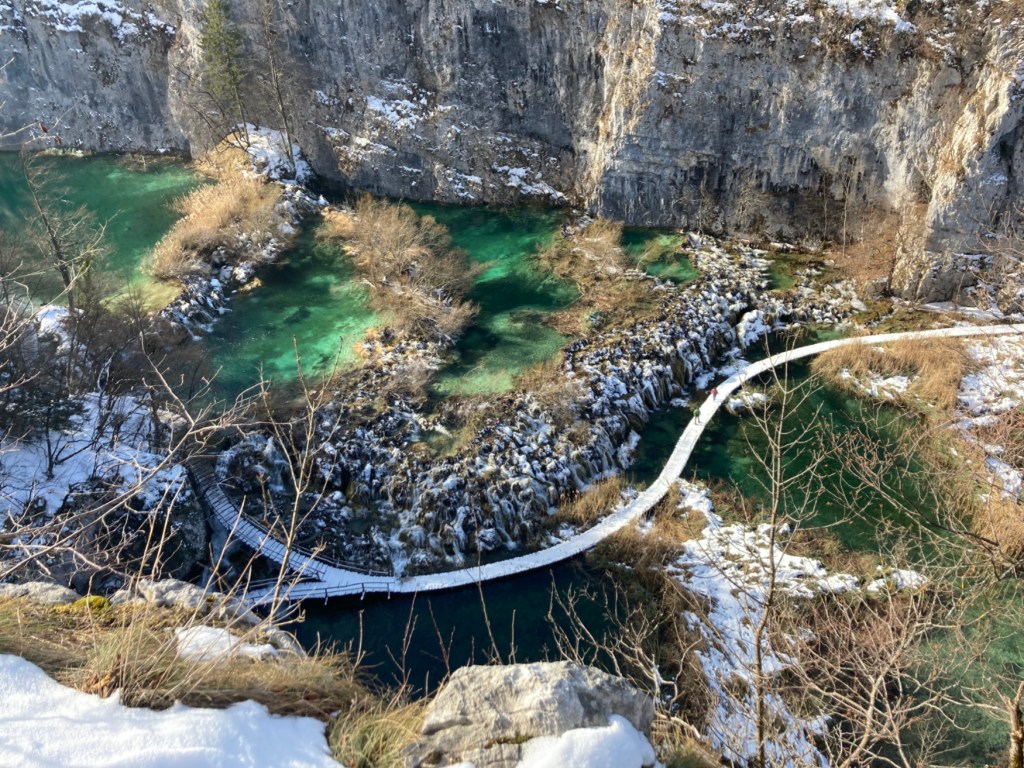
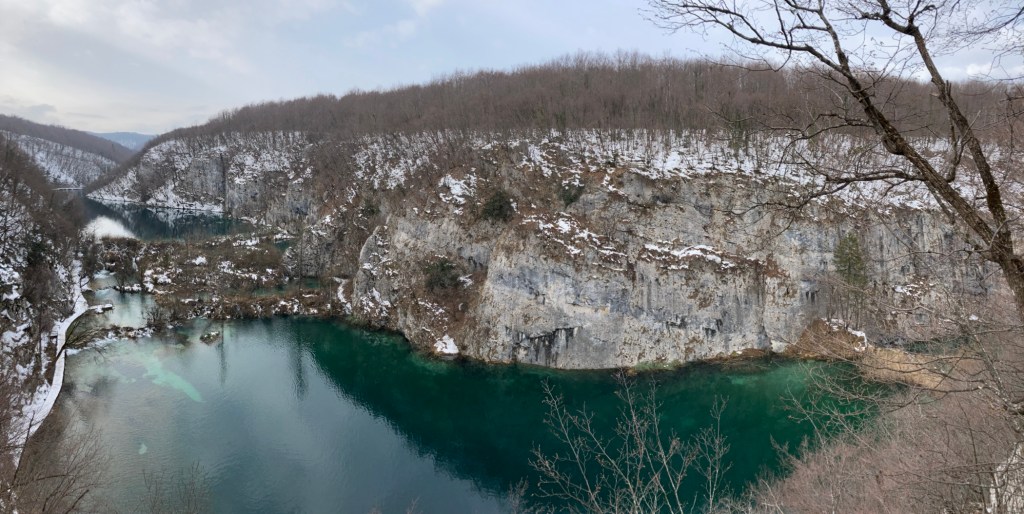
This give a sense of the Plitvice cascading lake system. Much of the trail system is a boardwalk that goes back and forth across the canyon, which you can see in the middle of the picture.
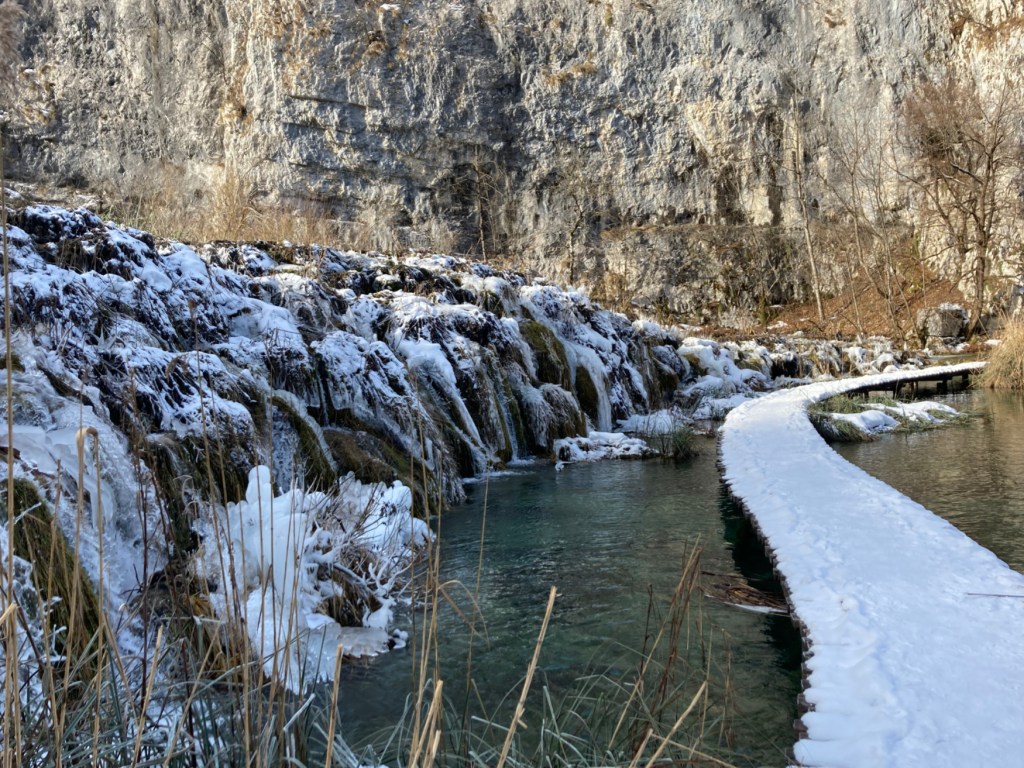
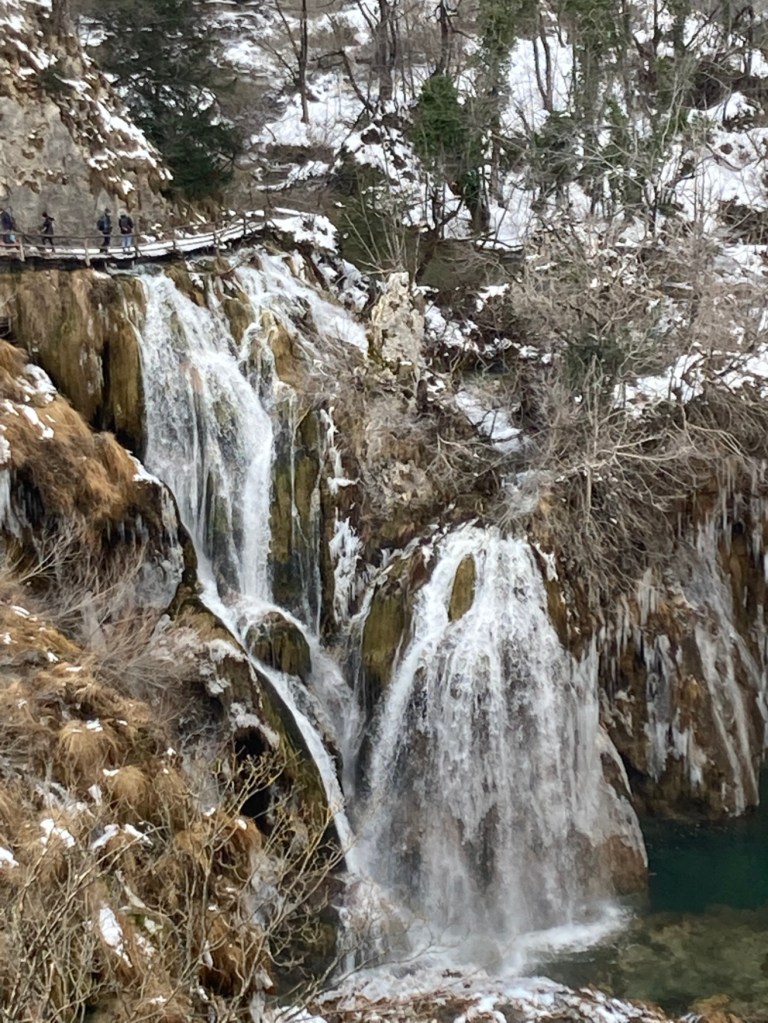
Falls and boardwalk. One of the advantages of traveling in winter is that there aren’t many tourists. I’ve been told that, in the summer, there are 2 lines of people, one going in each direction..and you dare not stop.
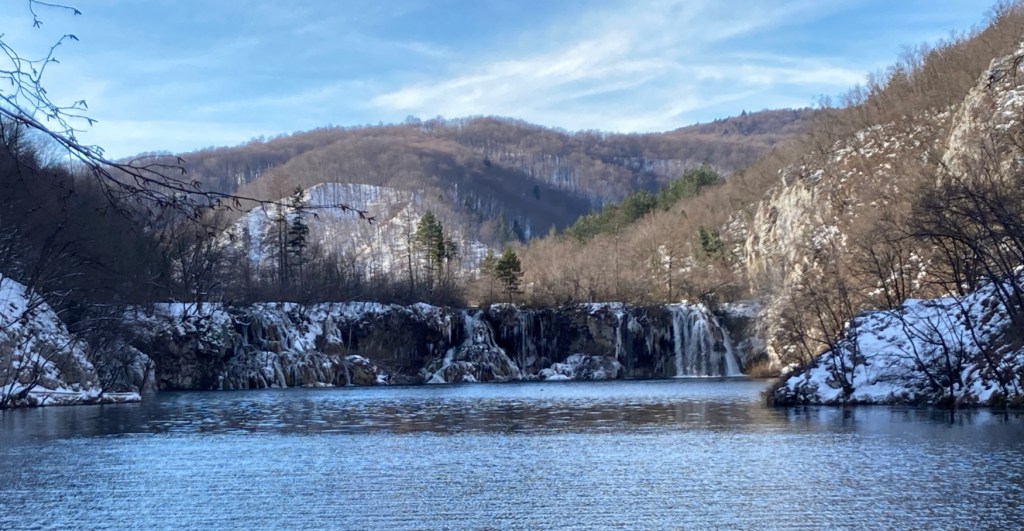
Falls going over one of the bigger tufa barriers.
You have 3 options for getting around. You can hike, take a boat, or take a bus. The boat and bus only allow access to some of the park. The downside of a winter visit to Plitvice is that the upstream half of the park is closed, even to hikers.
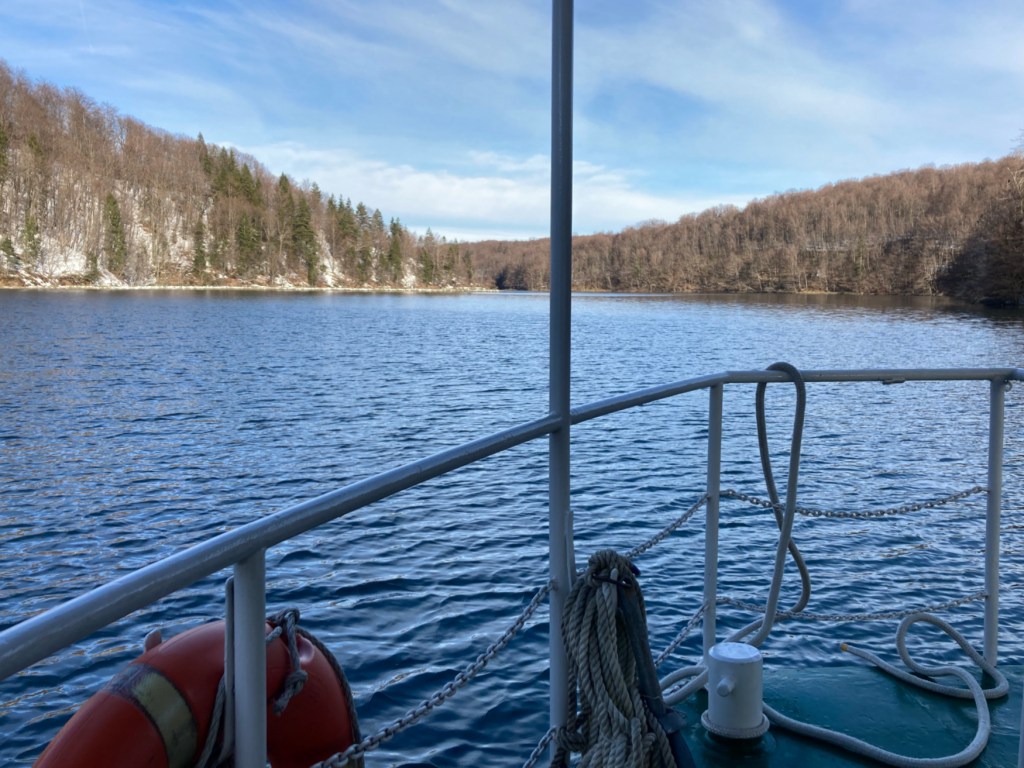
Heading down Jezero Kozjak, the longest lake in the park.
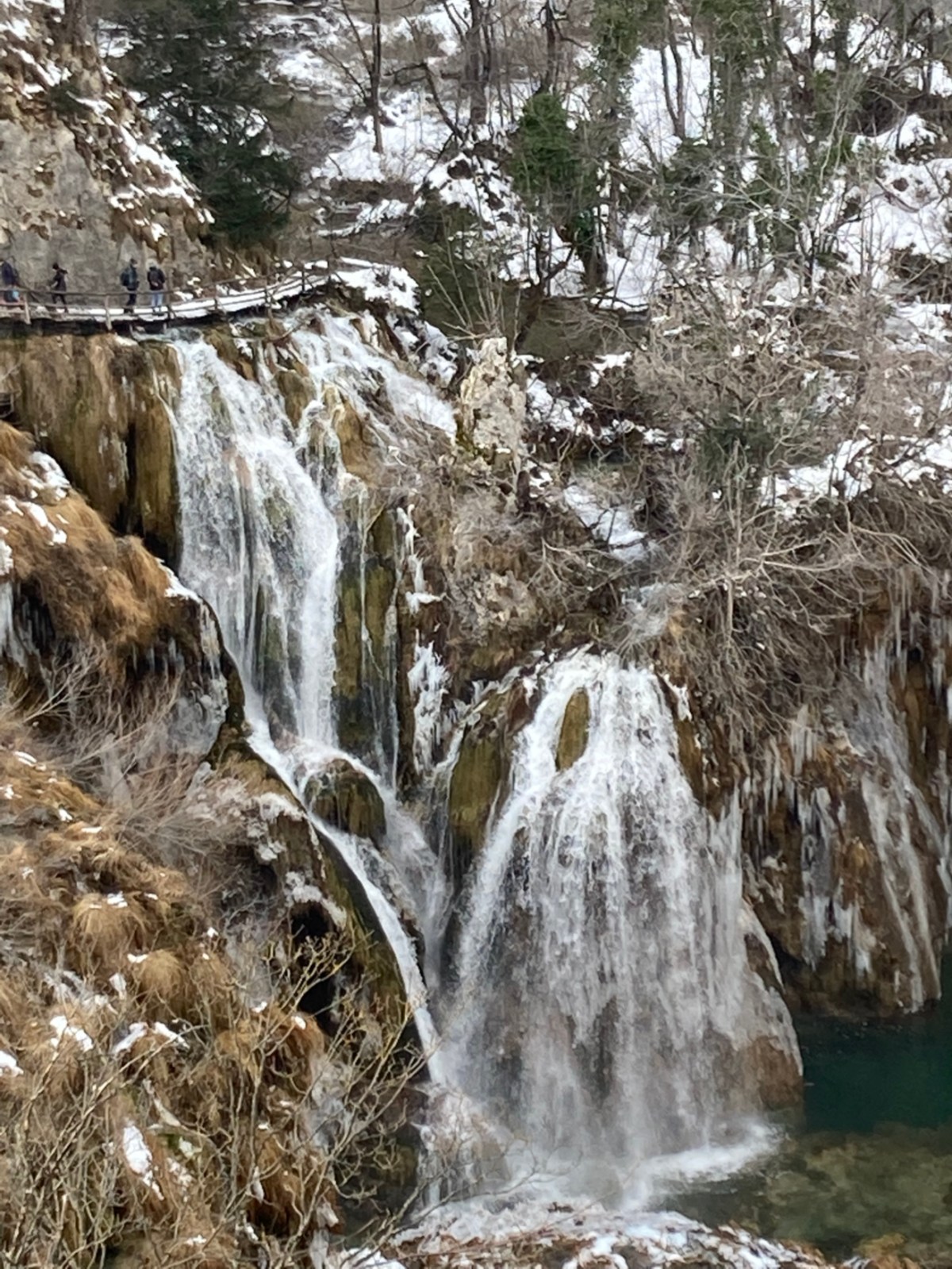
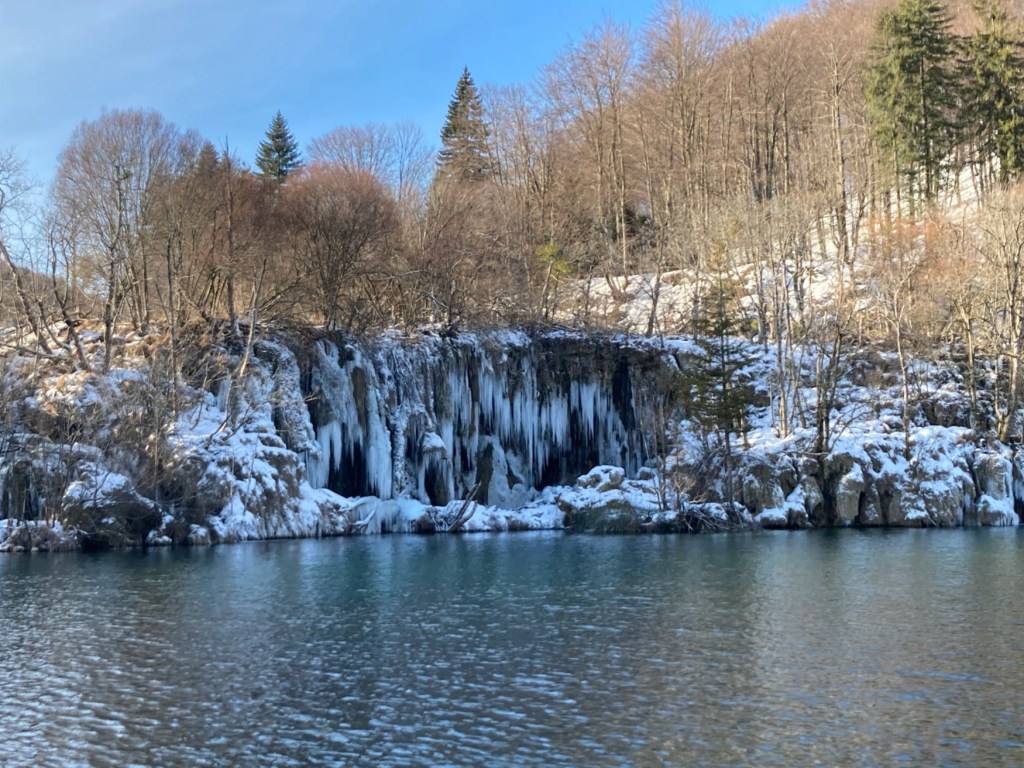
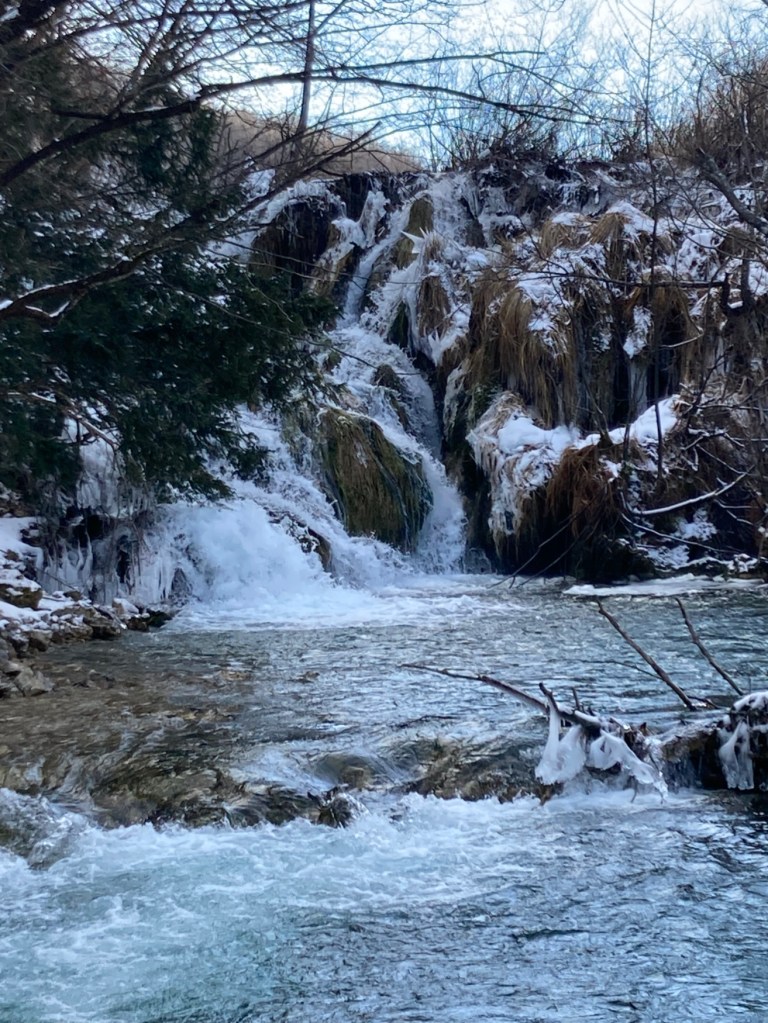
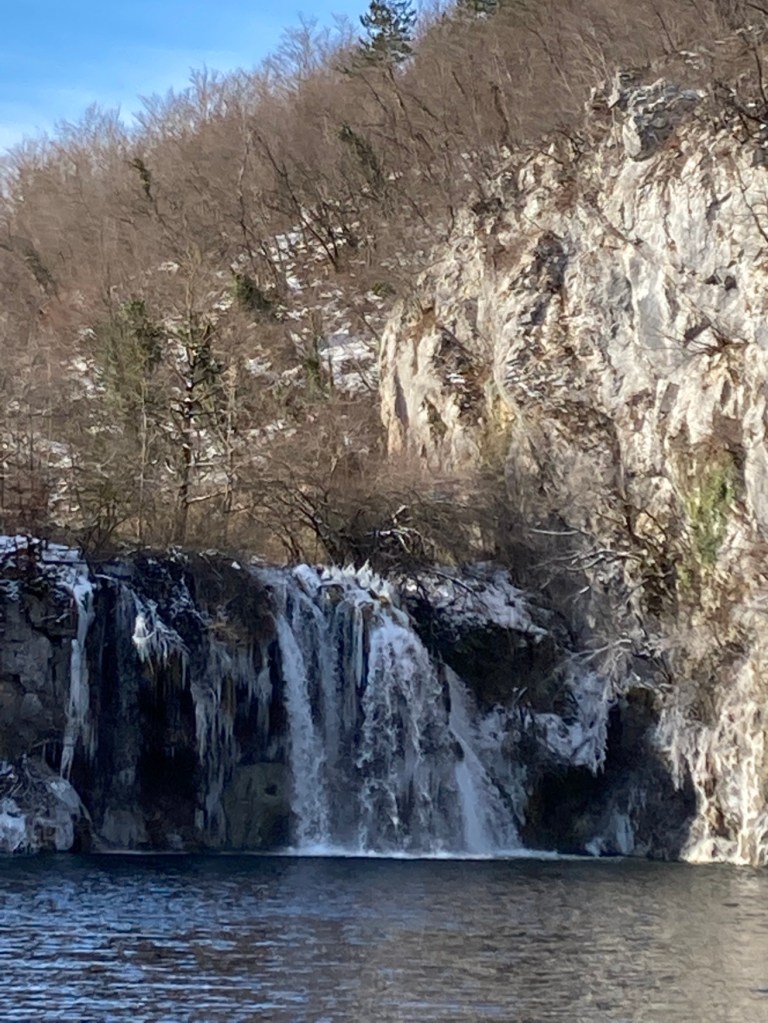
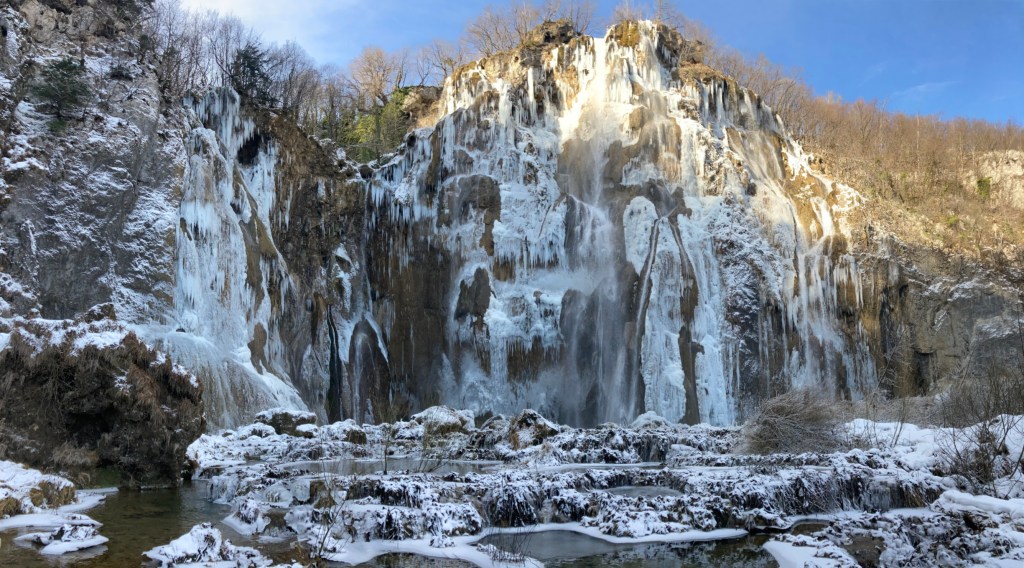
Frozen waterfall.
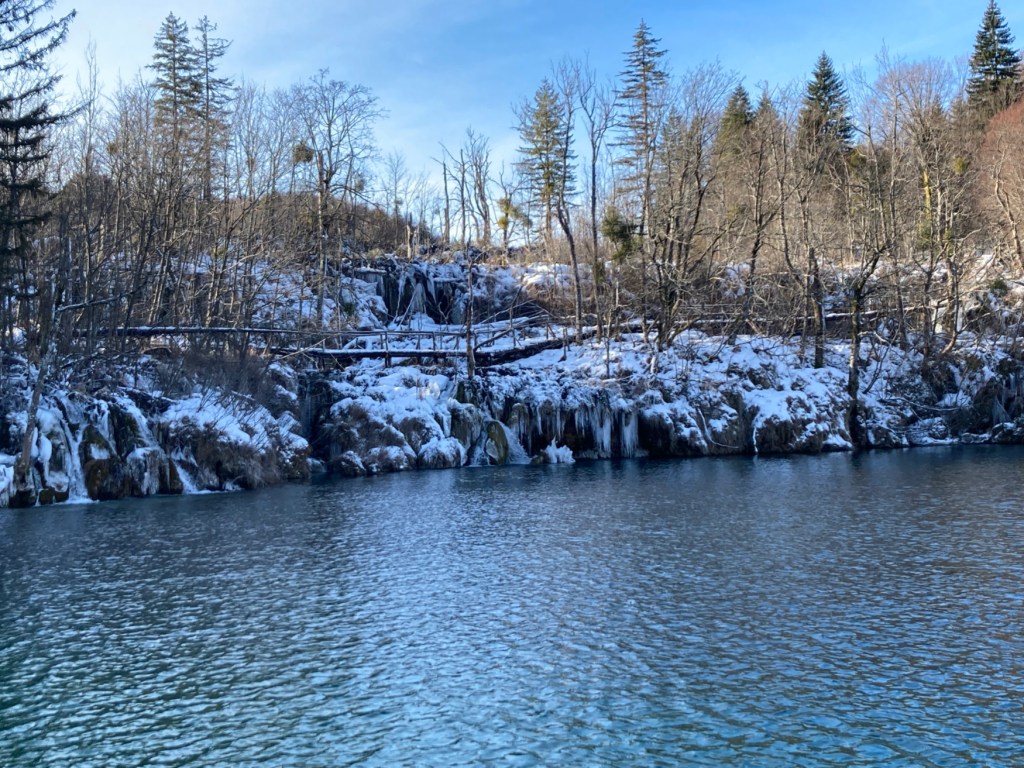
Closed trail.
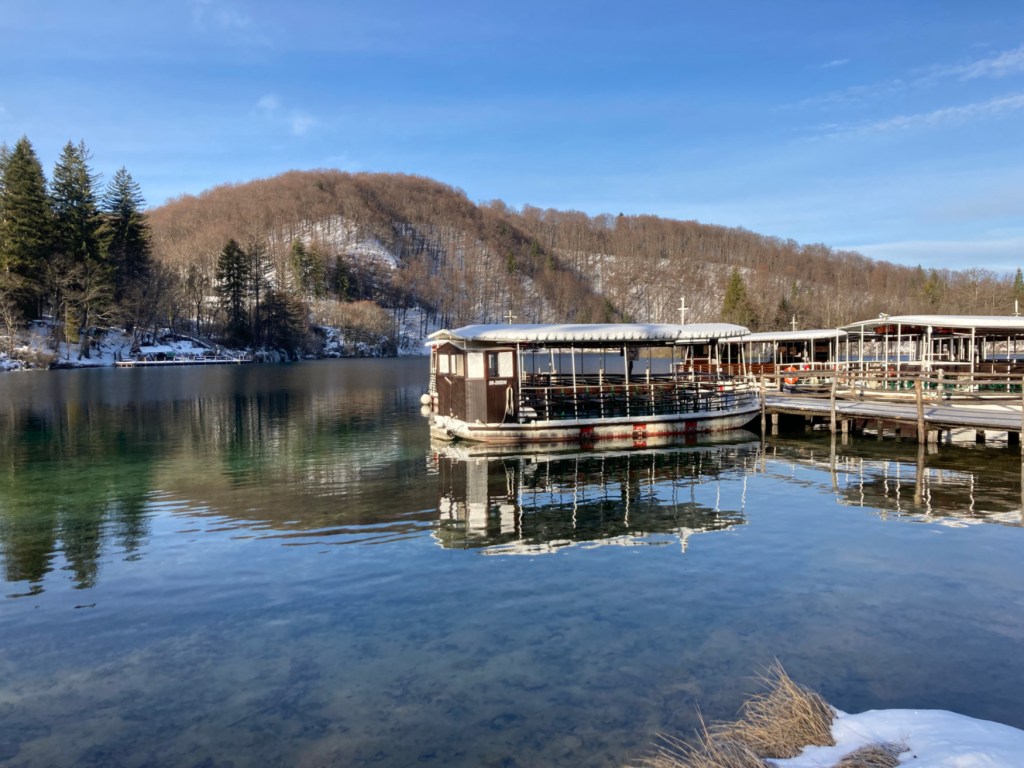
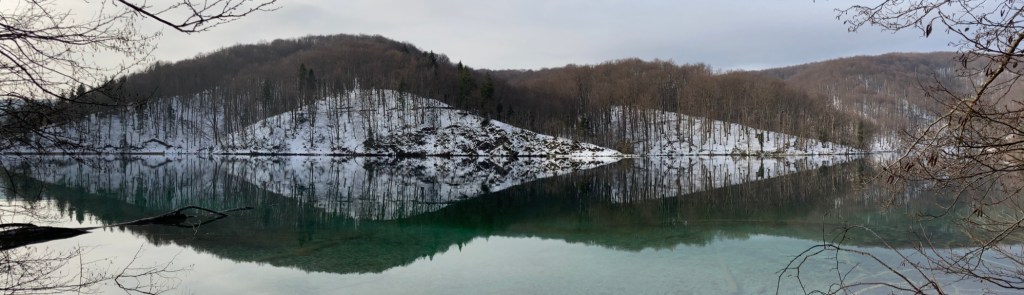
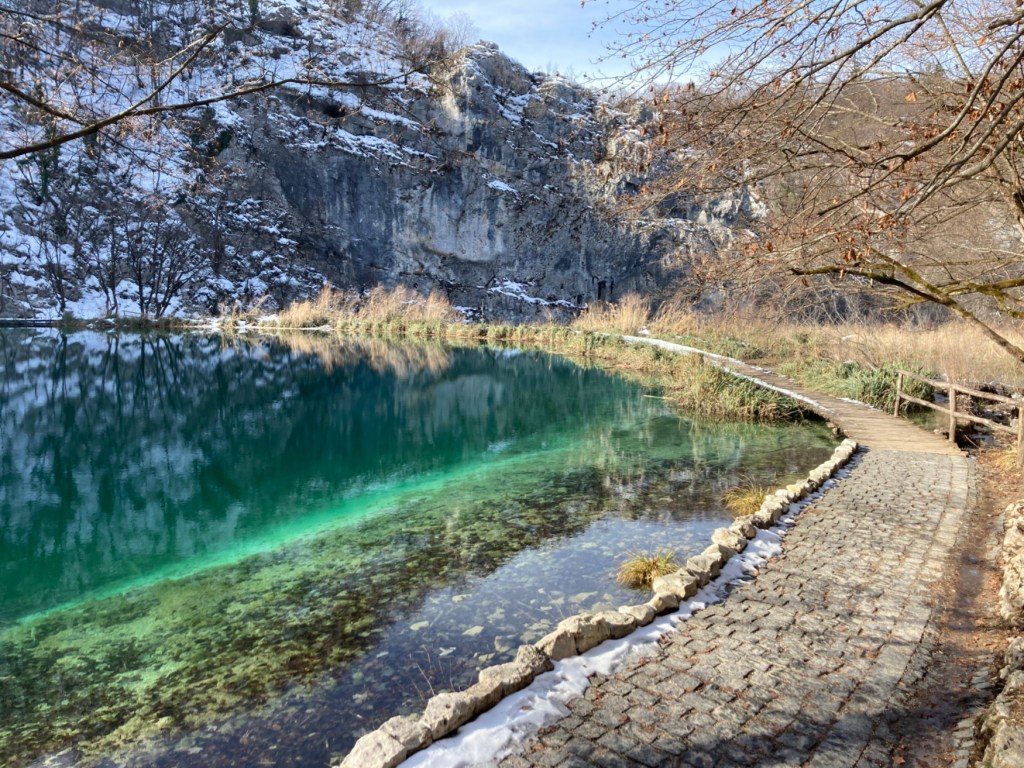
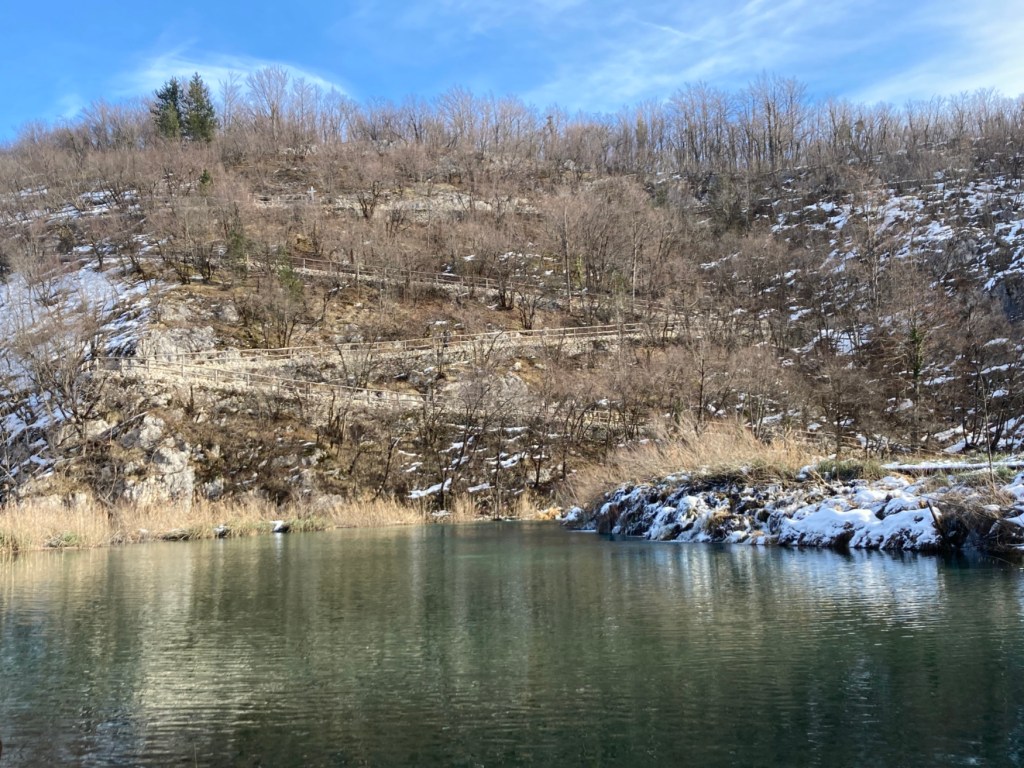
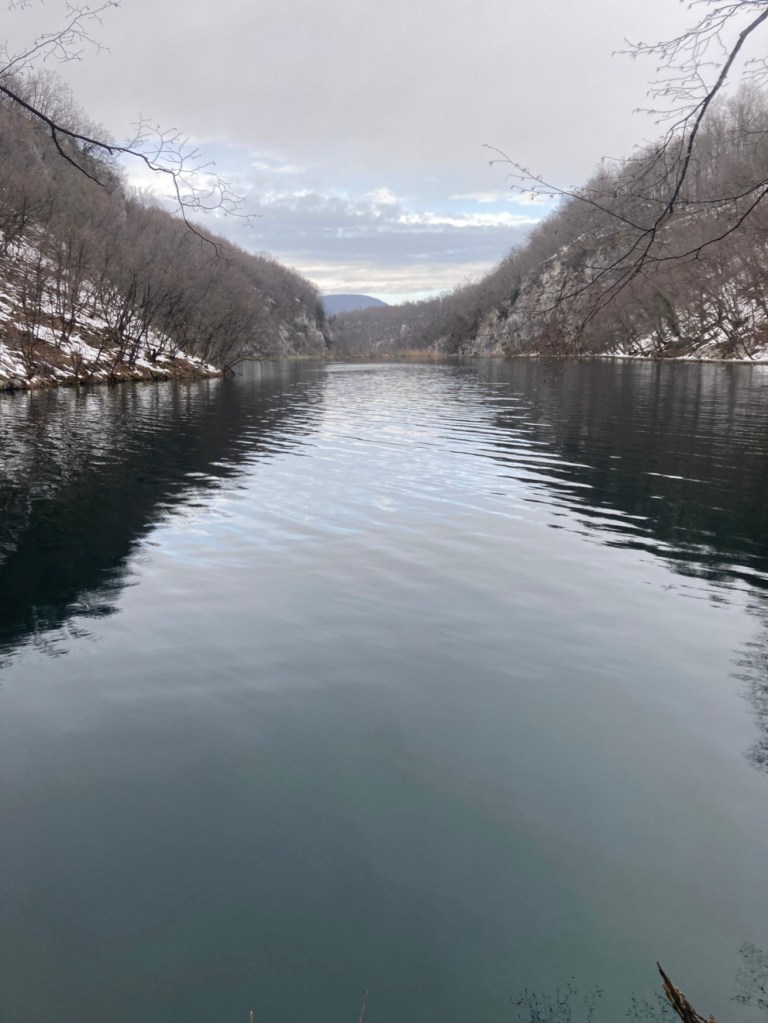
I have always wanted to take a picture of an alpine lake when the surface is flat calm- check!
We got off the boat and started our hike down the canyon.
Jezero Milanovac.
Falls along the way.
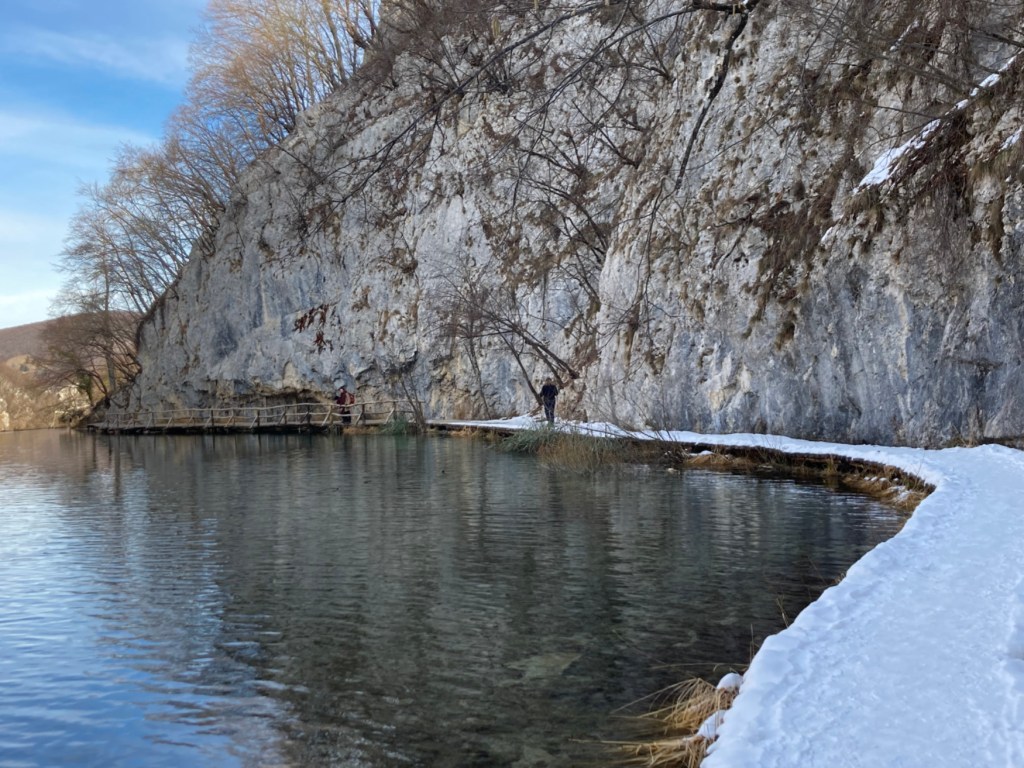
Boardwalk trail.
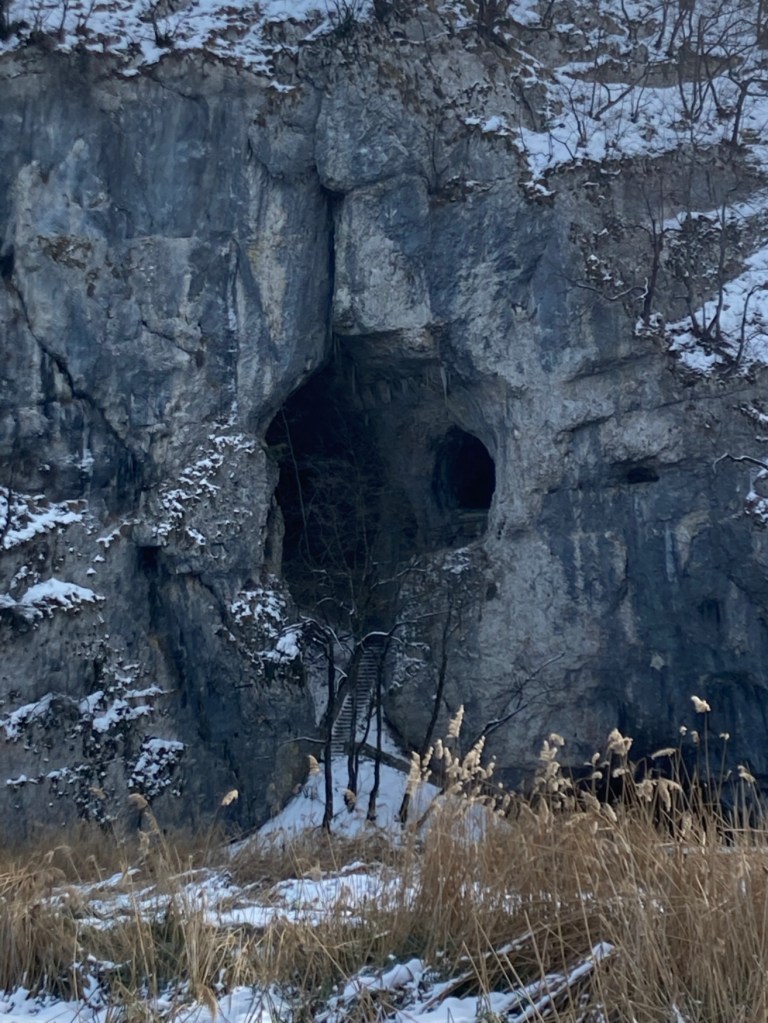
Limestone caves.
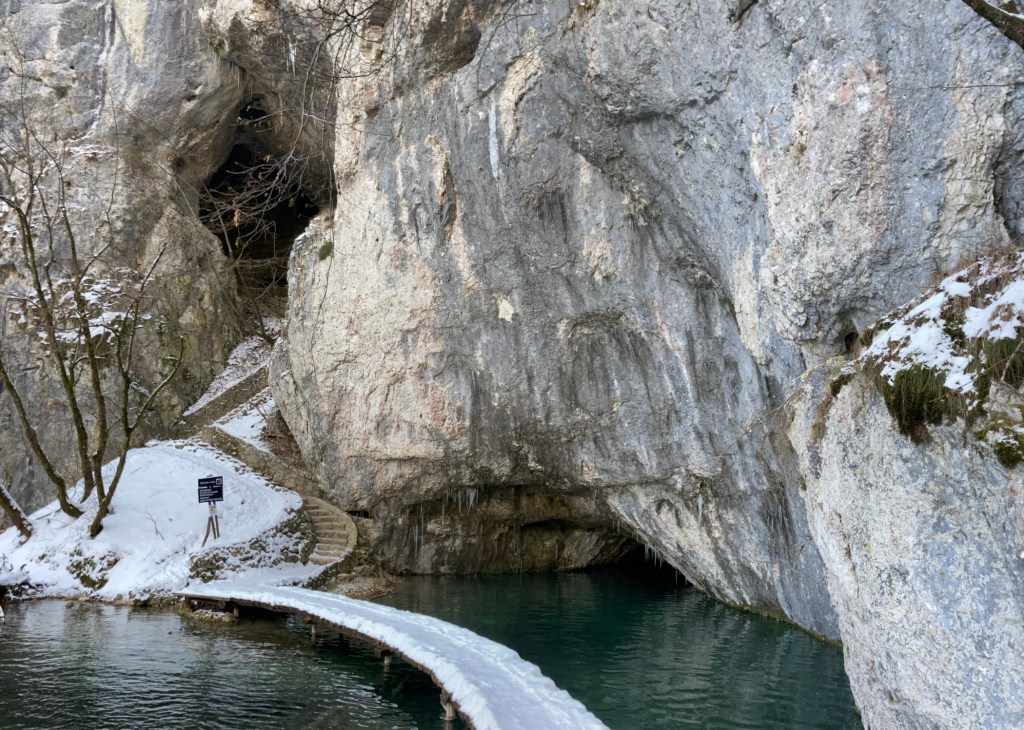
Entrance to a limestone cavern.
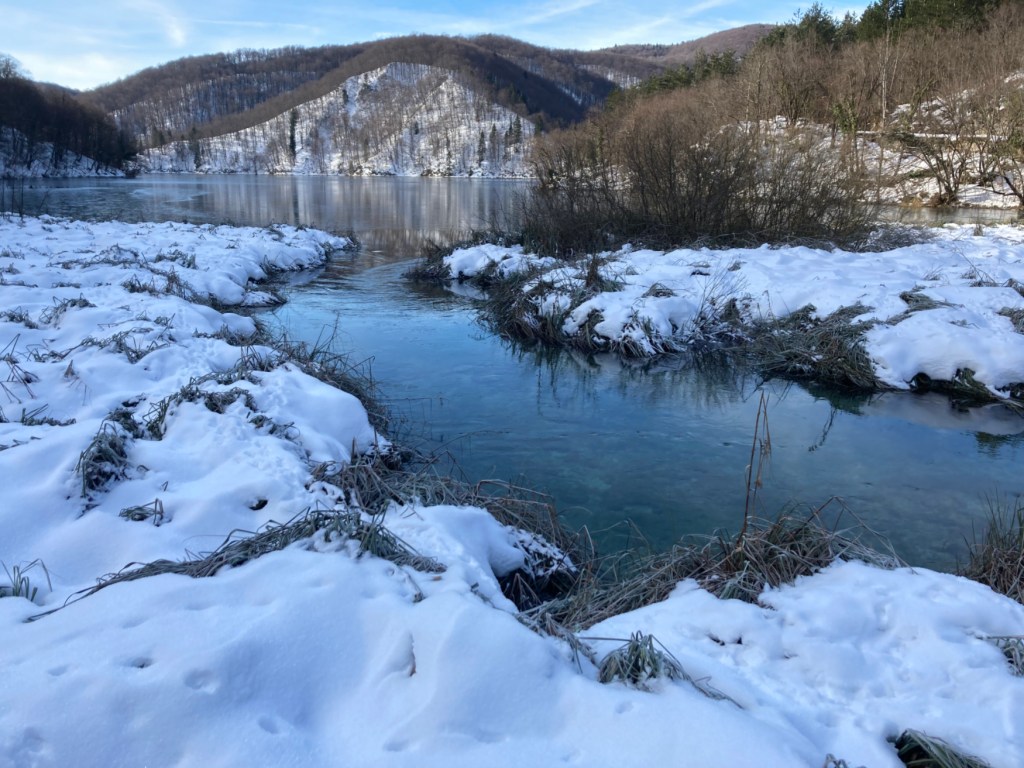
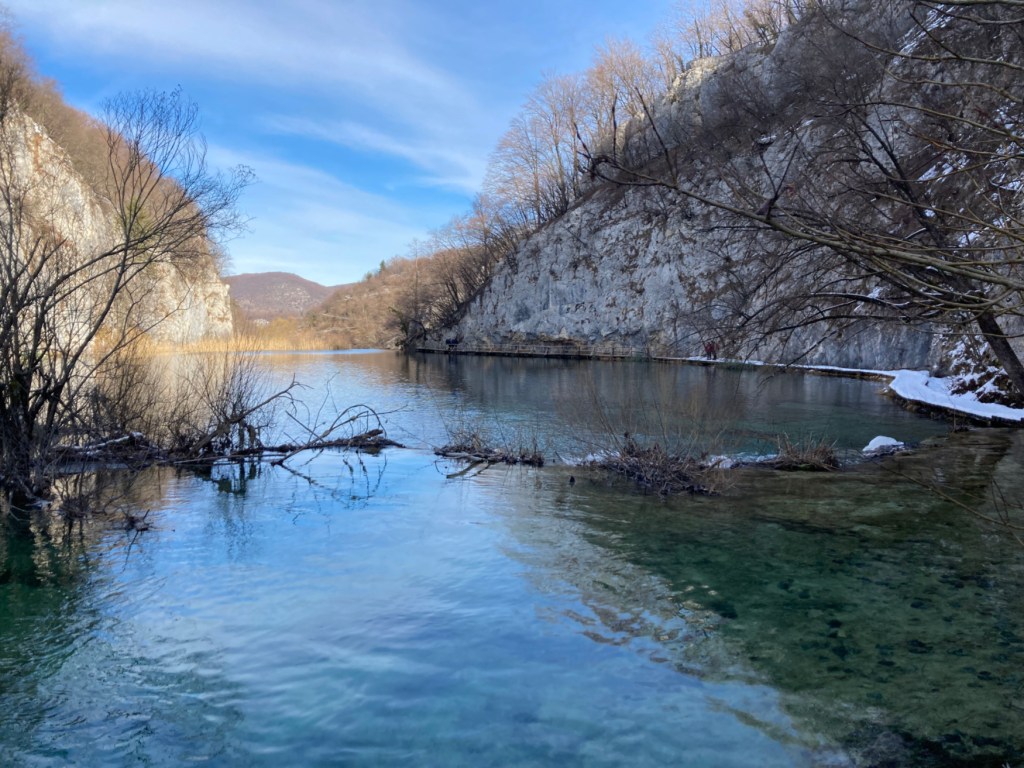
Yes, the water really is that color.
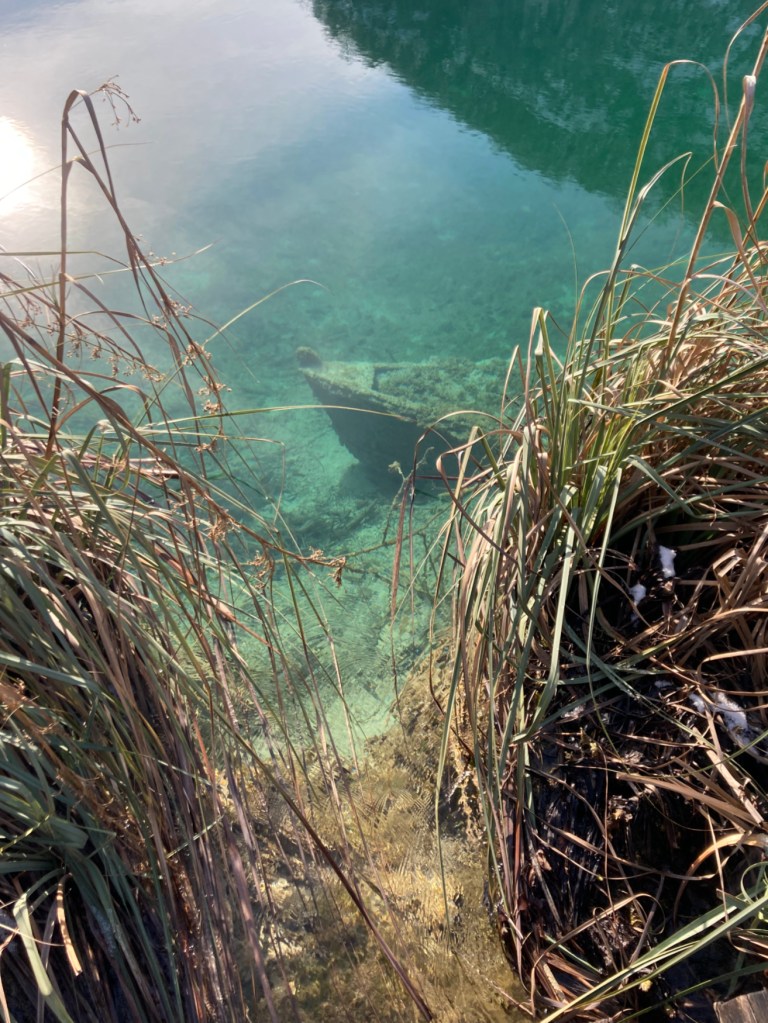
It doesn’t appear that everyone made it back from their boat ride.
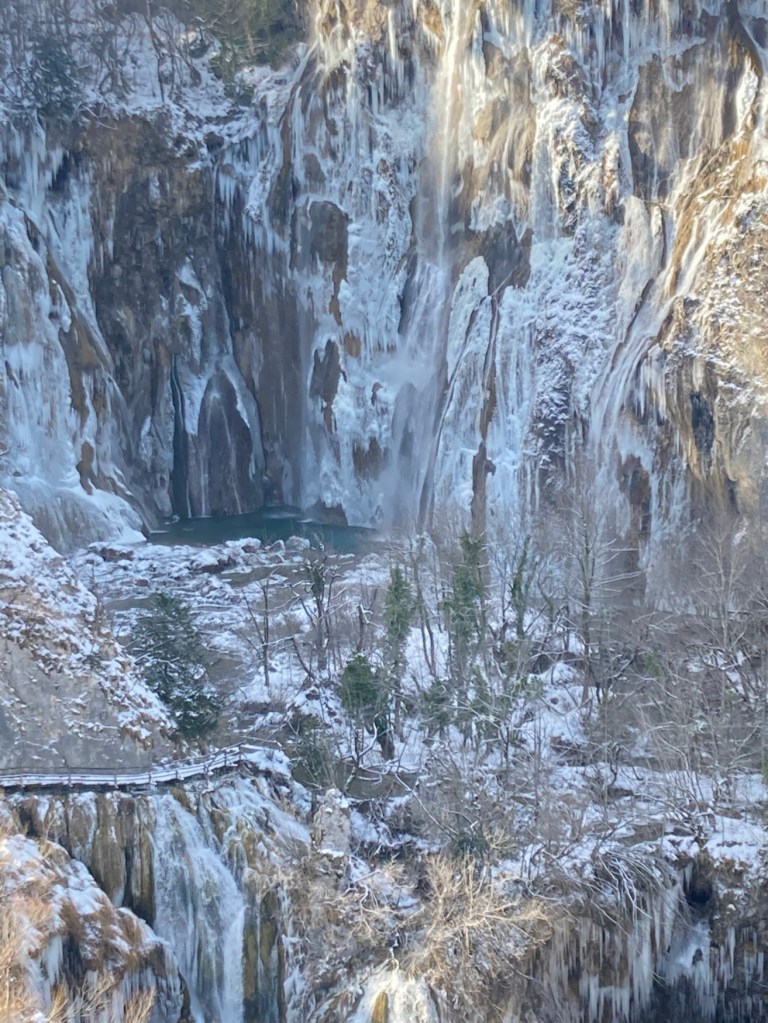
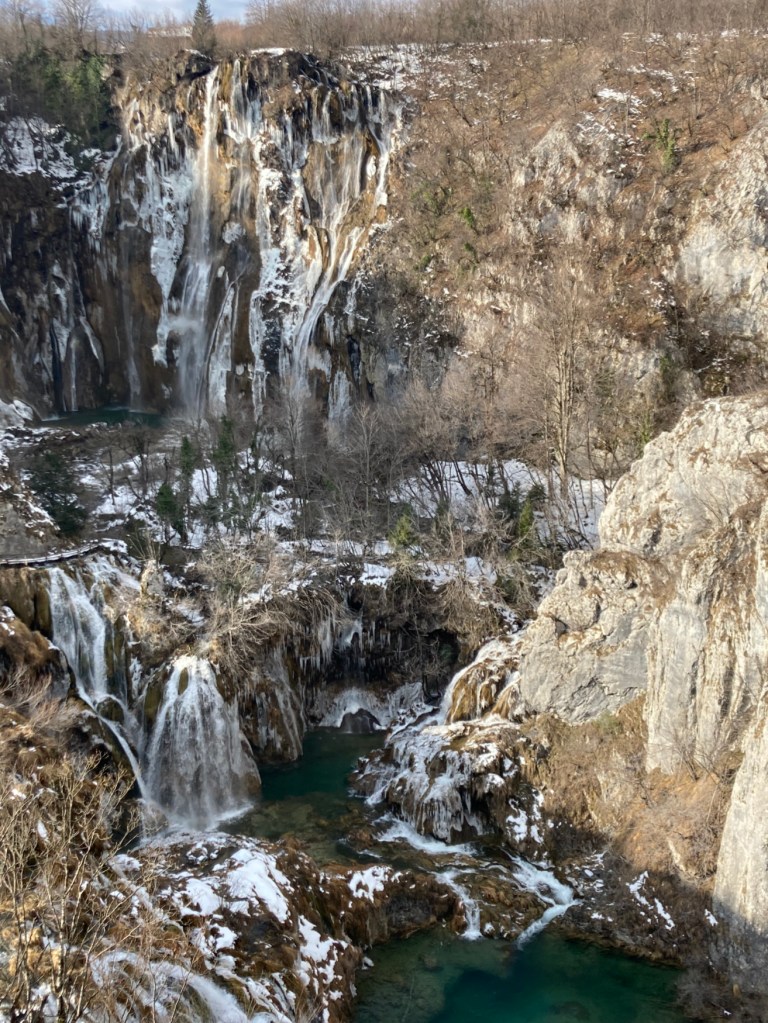
Before you leave the canyon you have to go see the cleverly named Veliki Slap (in English, Big Waterfalls). That’s about 230 feet to the top.
There’s another 60 feet of Veliki Slap below and a view down the canyon.
Trail switchbacks up the top for the every-vista-is better-than-the-last trail.
The view from the higher trail.
Just couldn’t stop taking pictures.
The bottom of Veliki Slap.
Just can’t get enough.
Small falls and board walk. The bottom of the”Y” goes to the caves shown above.
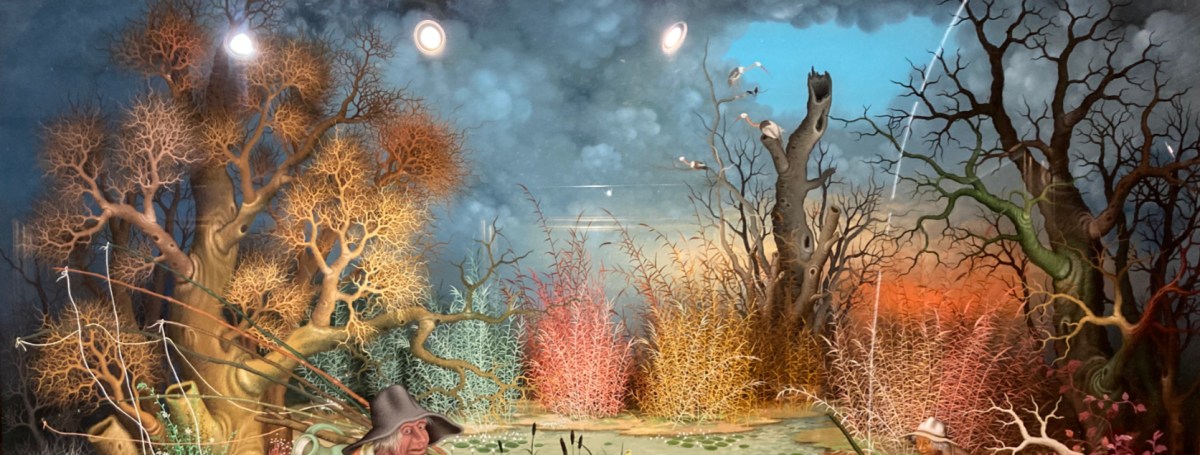
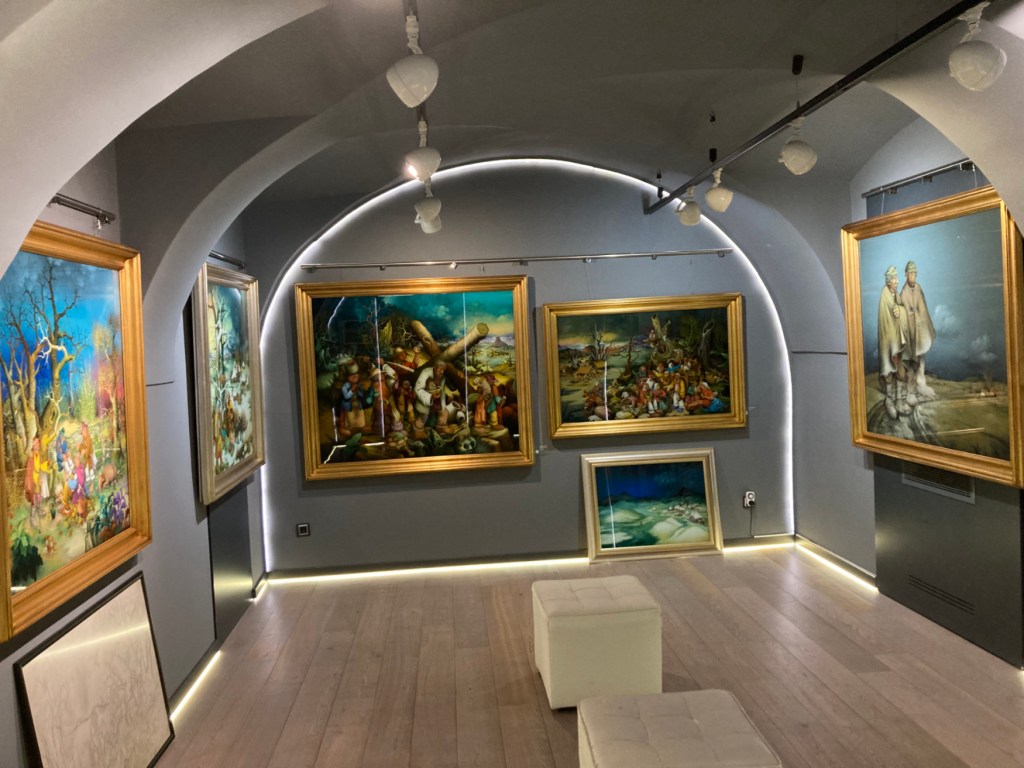
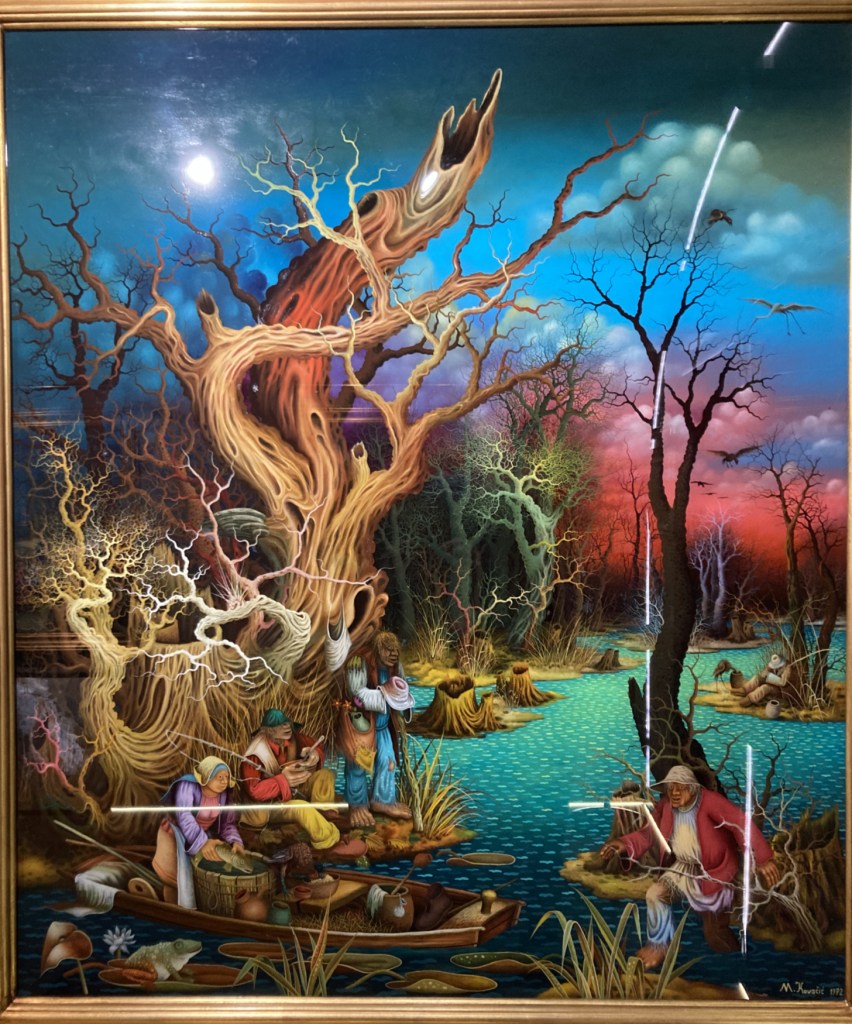
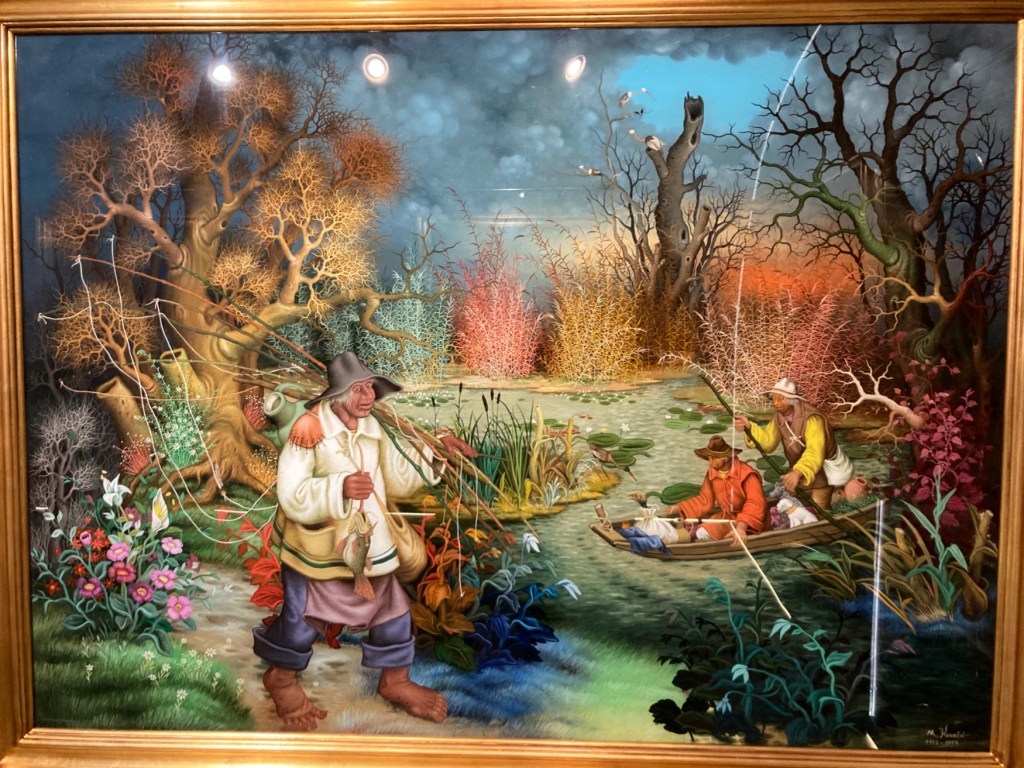
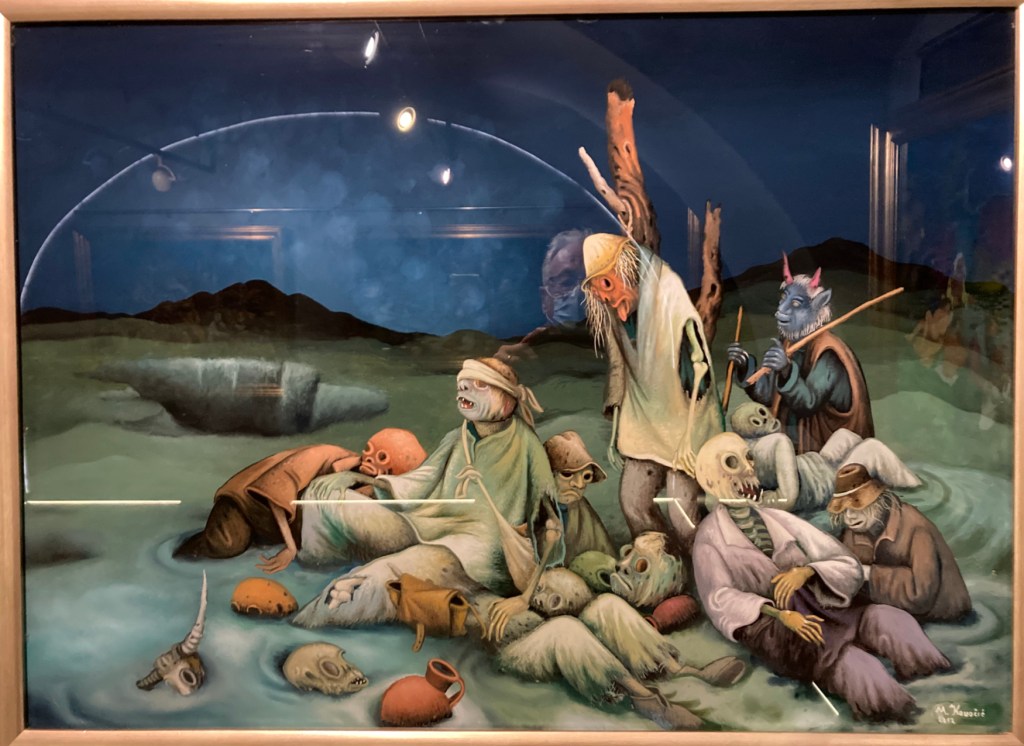
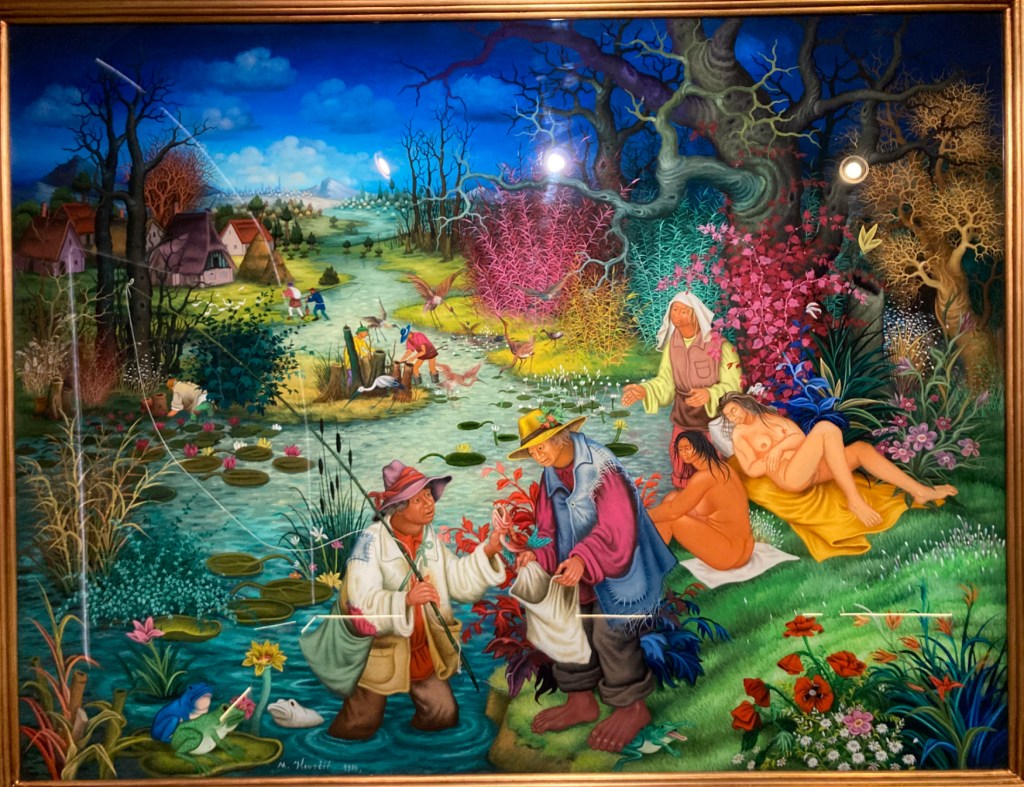
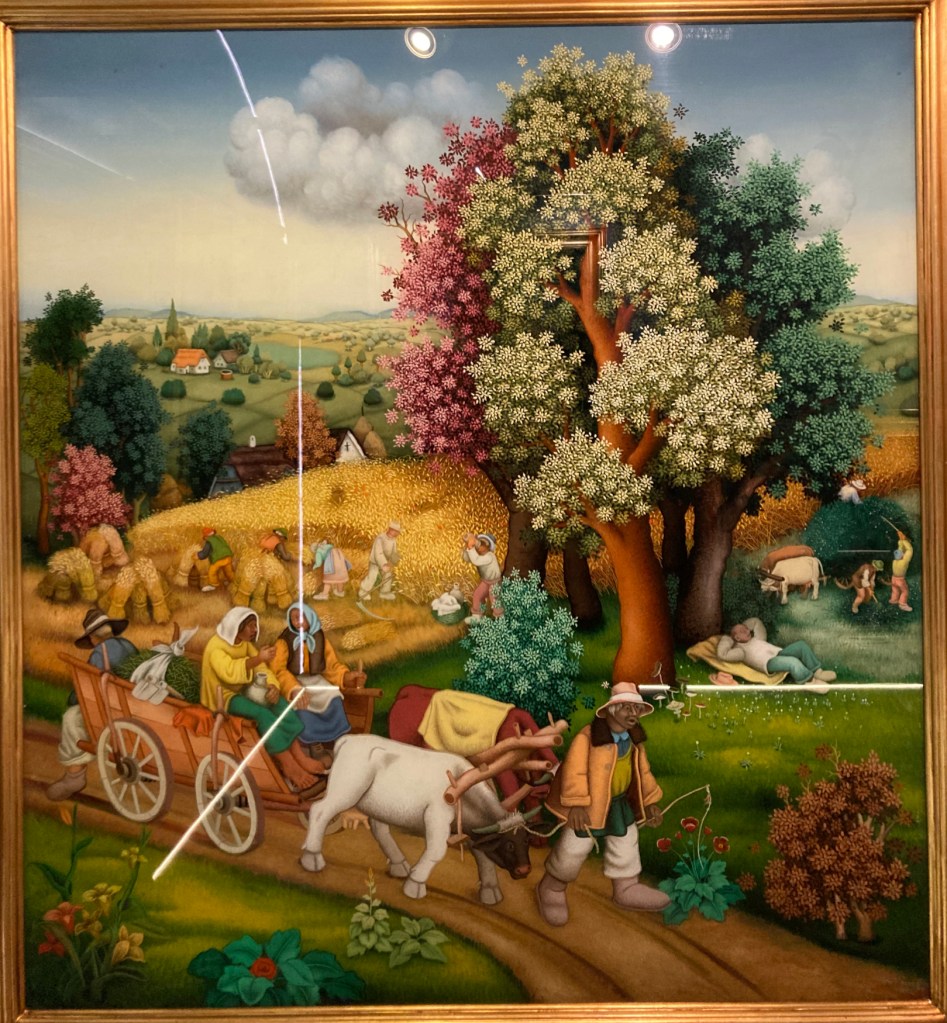
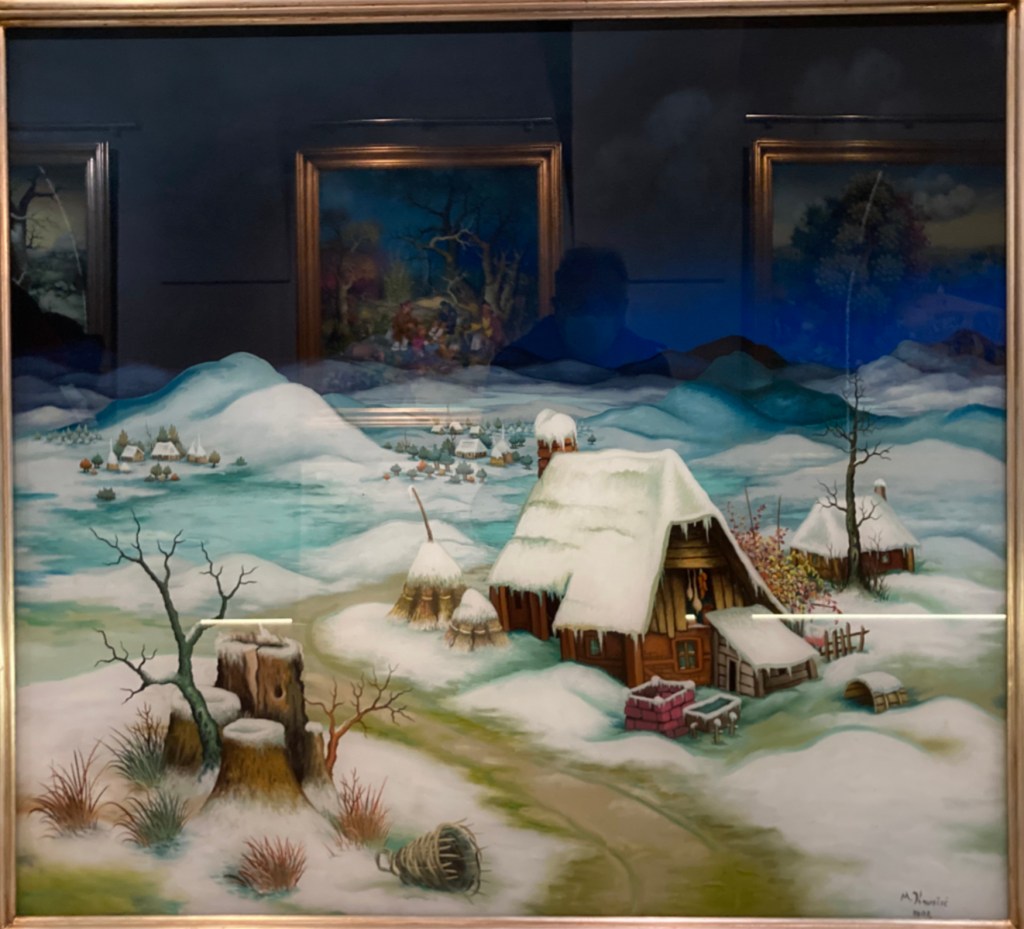
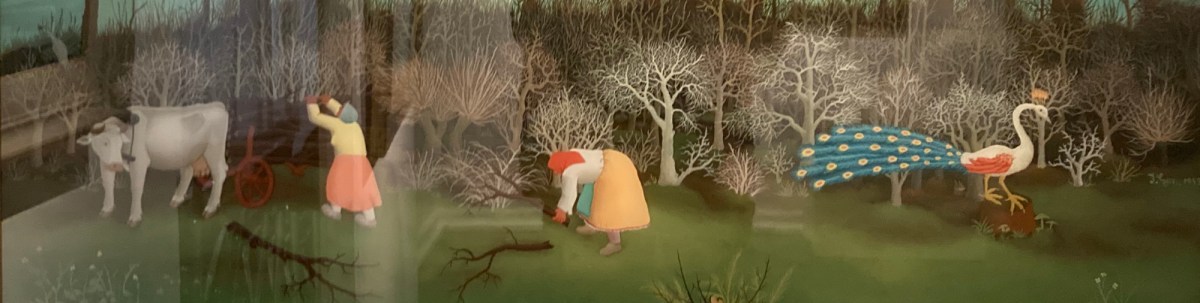
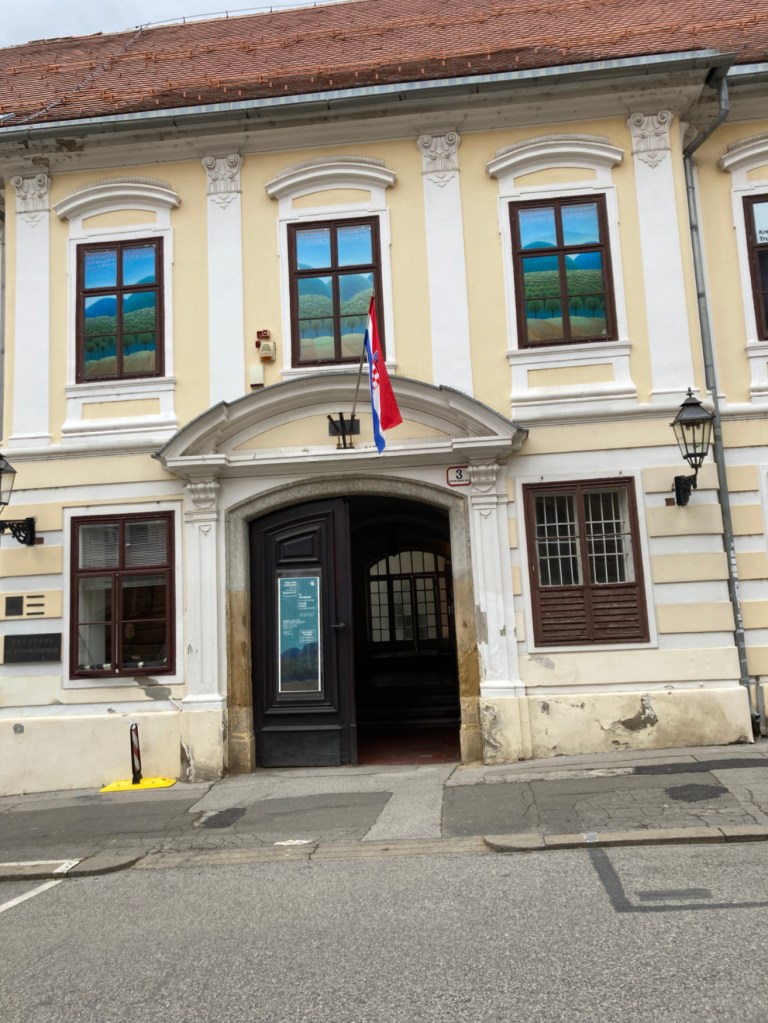
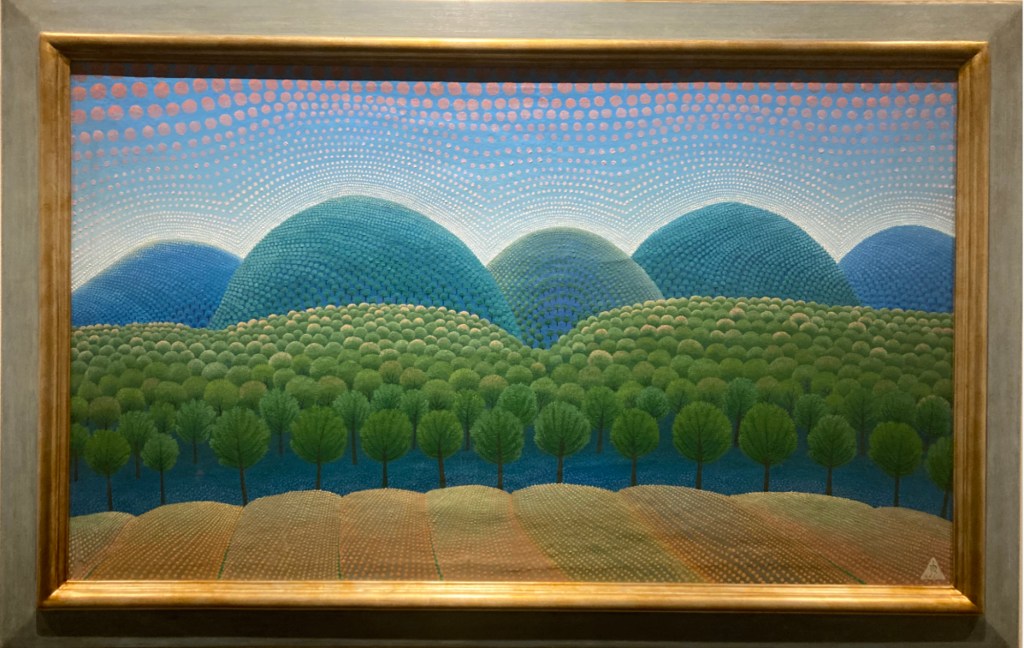
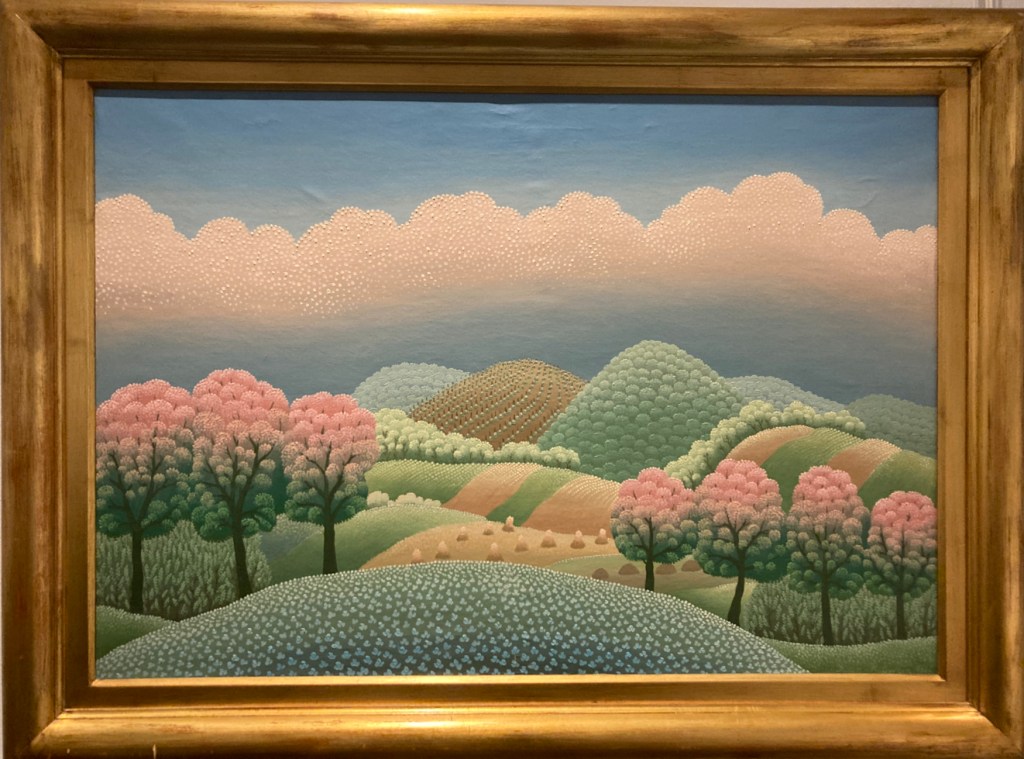
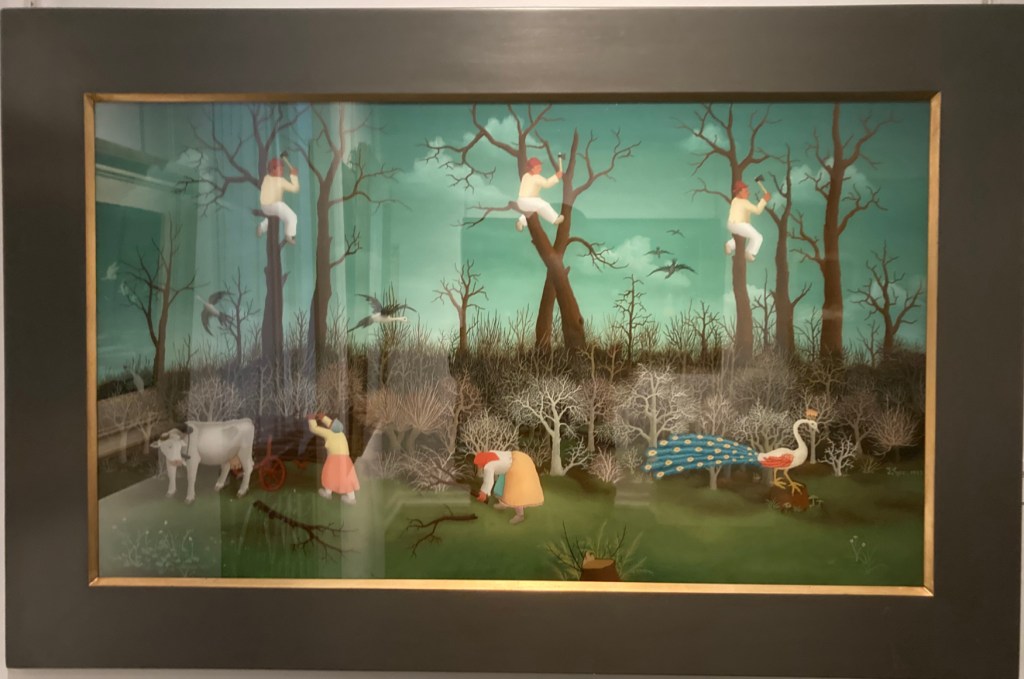
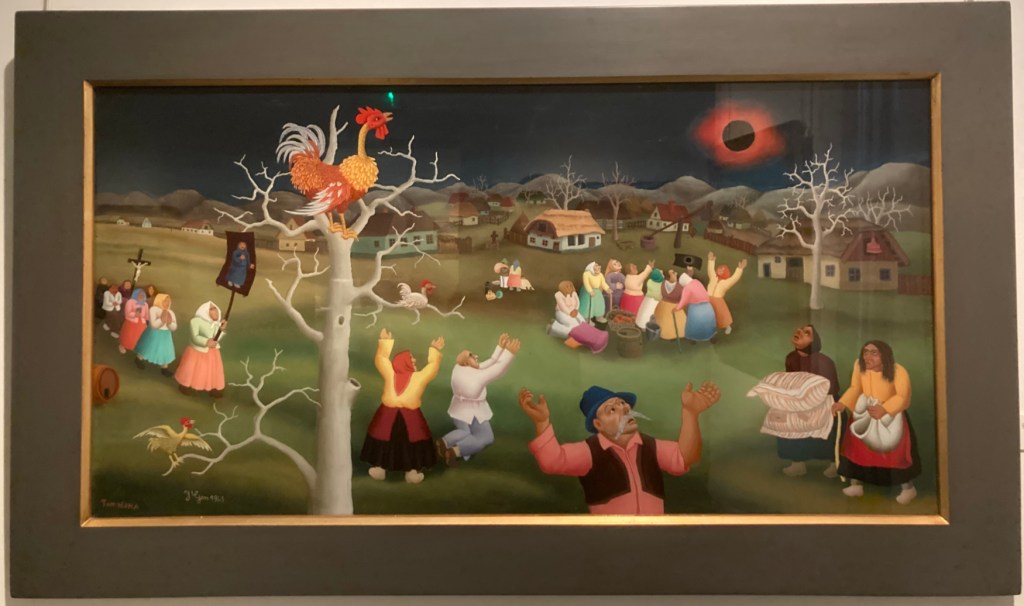
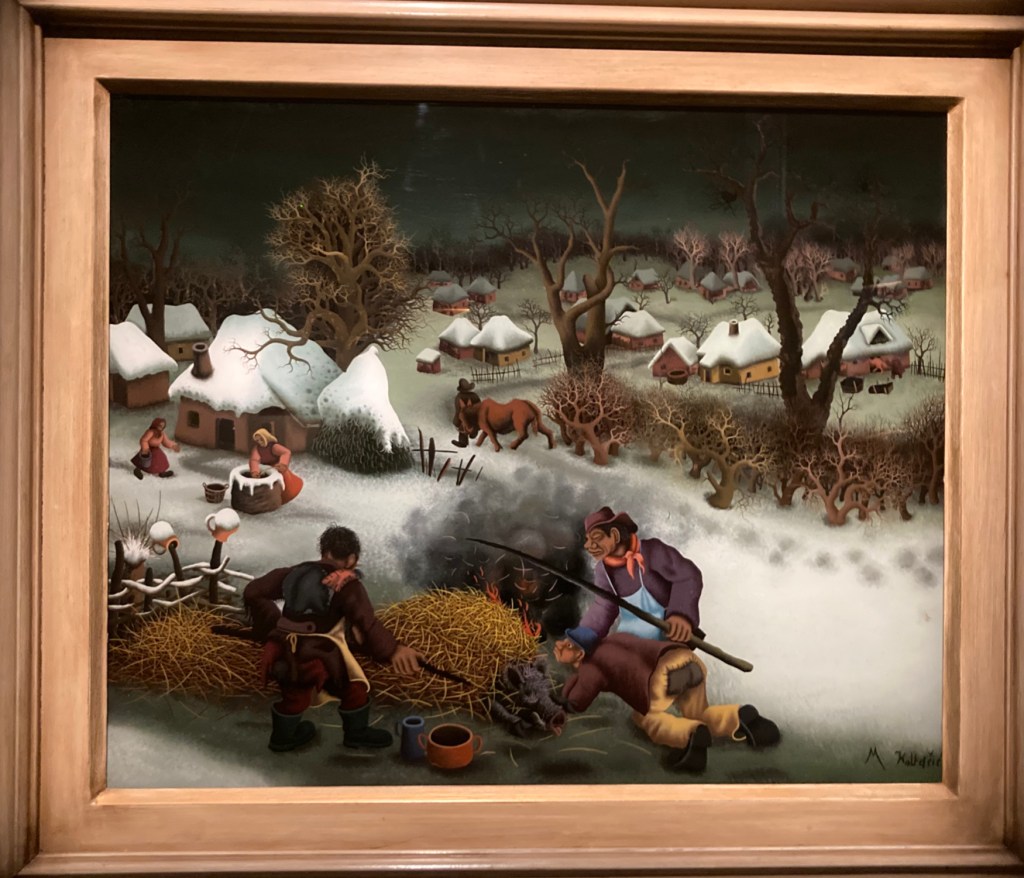
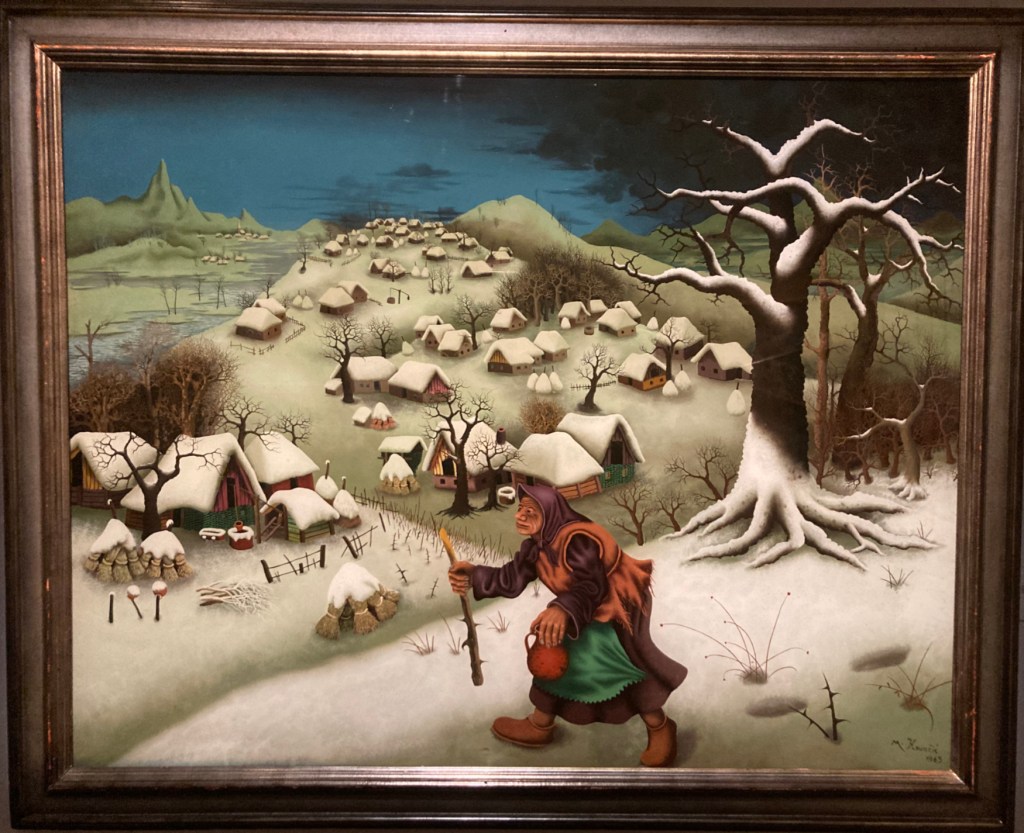
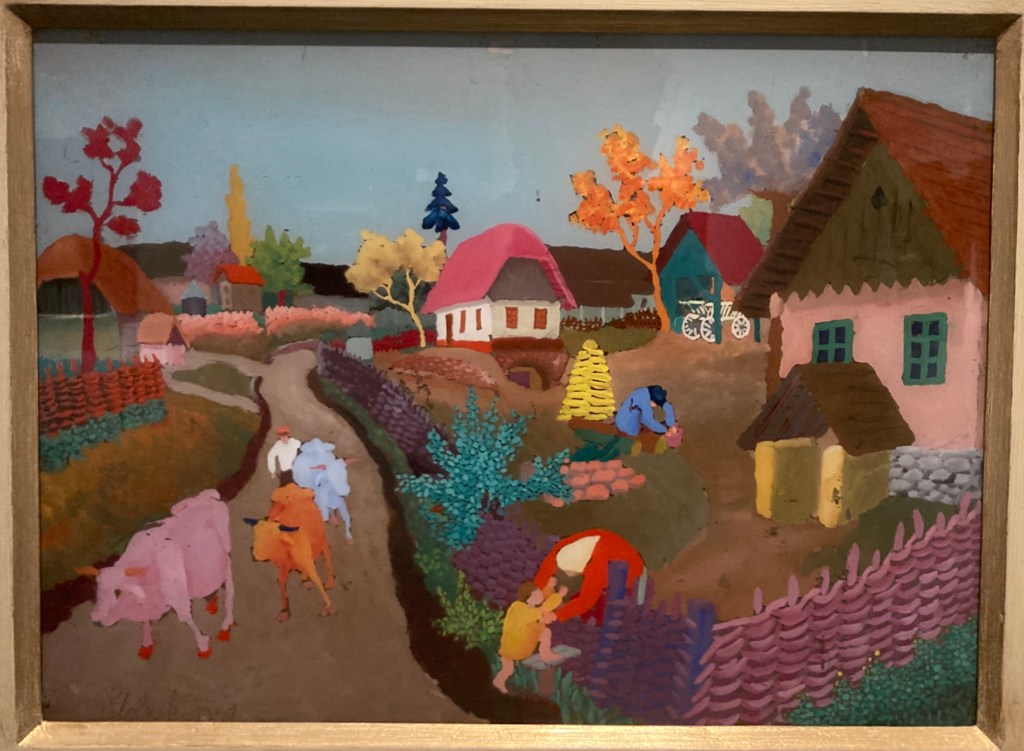
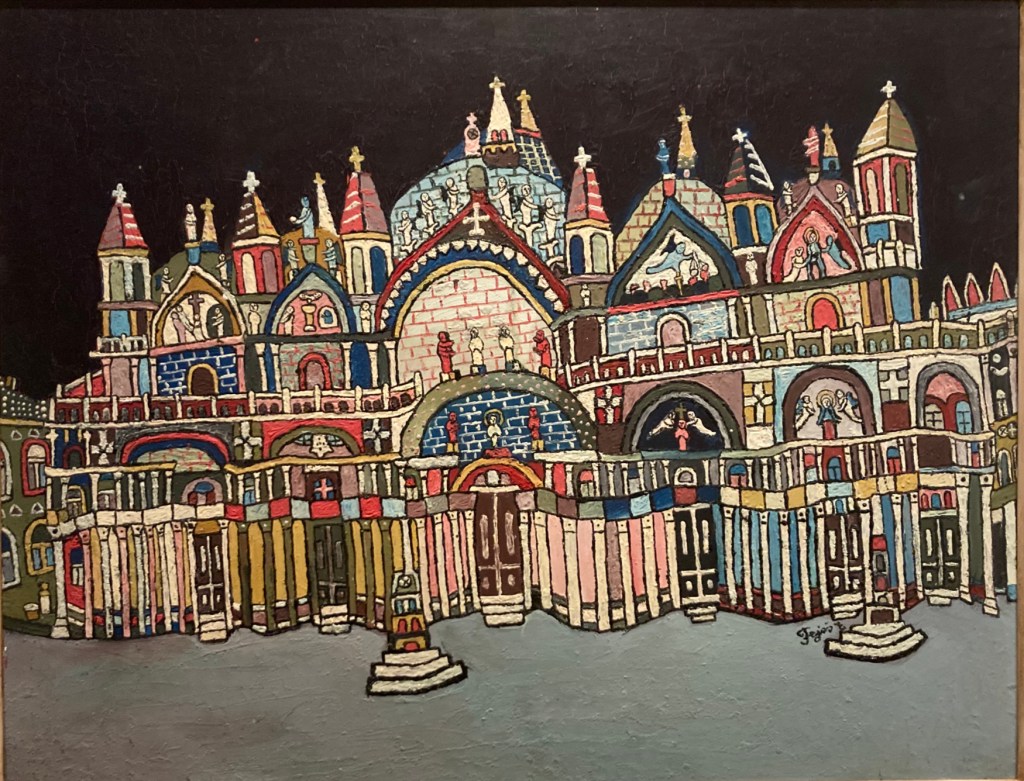
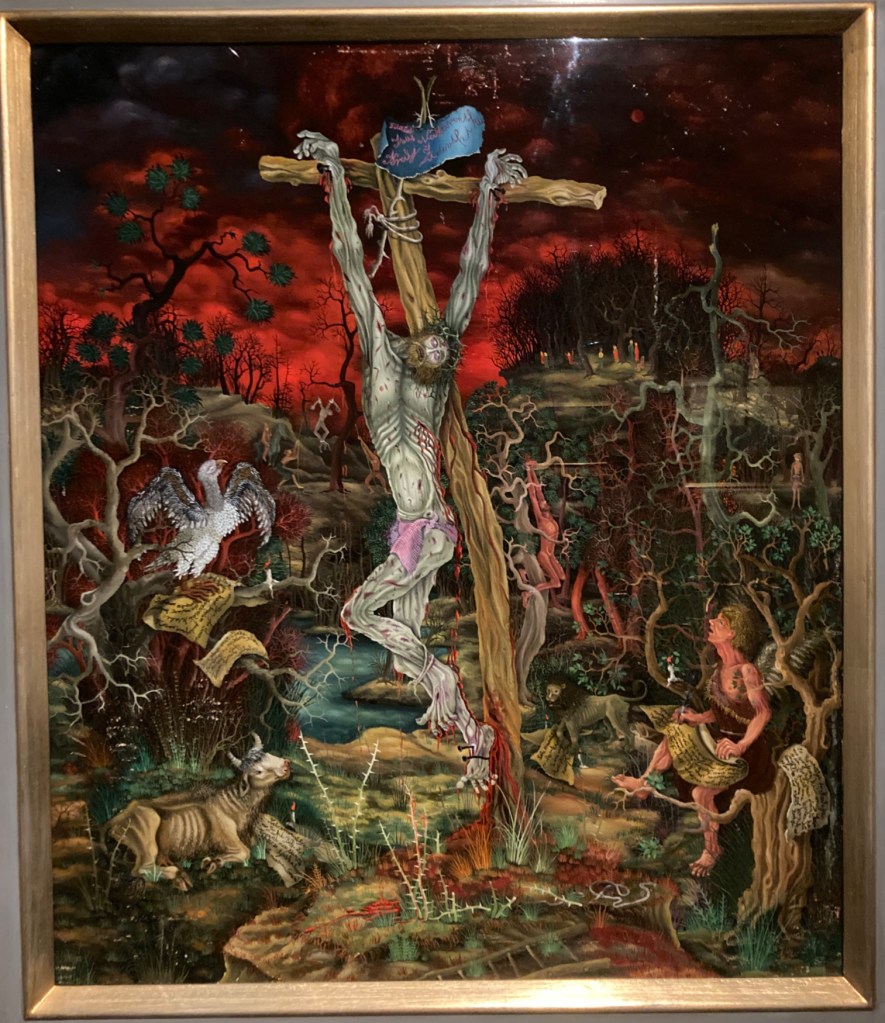
As I said, I can’t get enough of this Croatian Naive Art. Mijo Kovacic is one of the best and his foundation has a gallery in Zagreb of some of his classic work.. Keep in mind, these are reverse glass paintings (an amazing technique) so there’s a lot of reflection when you take an image. Note the arched light in the first shot of the gallery. I just couldn’t avoid it. As for the paintings, I love the intense color gradients in his skies. I love the trippy trees and bushes- like hallucinations. And I feel cold when I look at the winter scene in the last painting.
In terms of art, I’ve never been much of a sculpture person. The Croatian sculptor Ivan Mestrovic, however, has gotten me thinking. He became pretty well known and successful prior to WWI. After WWI, Mestrovic, had houses and workshops in both Zagreb and Split. His Zagreb workshop is now a small museum displaying some of his works. After WWII, he was invited to be an art professor at Syracuse University, then Notre Dame. He died in South Bend in 1962. See what you think.
Personally, I was pretty ignorant about Zagreb. Zagreb began has two adjacent small towns, one civil (Gradec), the other Catholic (Kaptol). Sometimes they got along, sometimes they didn’t. Eventually, as both grew, they merged into one. Now, after a long and complicated history involving Romans, Mongols, the Venetian empire, the Ottoman Empire, the Austro-Hungarian empire, world wars, Tito, and the dissolution of Yugoslavia (the Homeland War), Zagreb is the capital of Croatia. We think it’s a great city- many museums (some pretty quirky), 17th-18th century Hapsburg architecture (Rick Steve’s calls it “Zagreb Baroque”), and really good restaurants. Although much of the cuisine has what I would consider “comfort food” elements, i.e. gravy and starch, it is skewed heavily toward meat. One more thing…
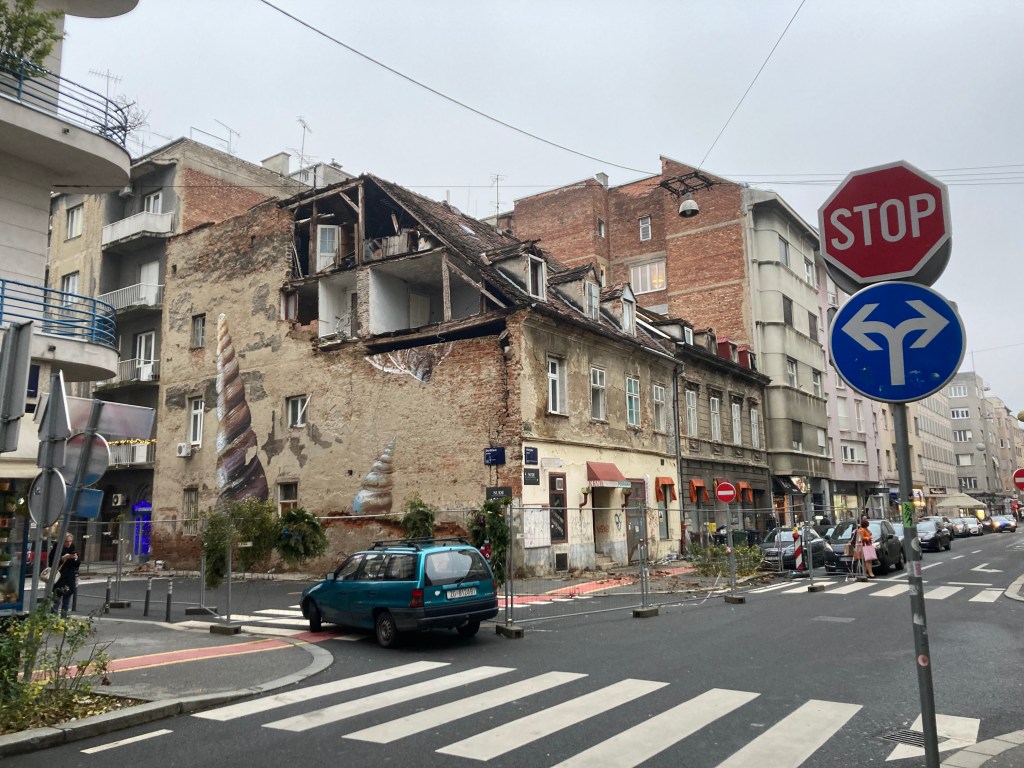
Earthquakes. According to Google, Zagreb is on the Adriatic plate, a small plate between the African and Eurasian plates. As the Adriatic plate goes north on its tectonic journey, occasionally, there are earthquakes. The Zagreb area had two significant earthquakes in 2020, one on March 22 and one one Dec. 29. Although, thankfully, few people were killed, a lot of buildings suffered significant damage. The Zagreb area is still recovering. The Cathedral is still not open. None of the major churches are open. Several museums are still not open. Zagreb, however, has so many museums and galleries, we have plenty to do.
Earthquake damage.
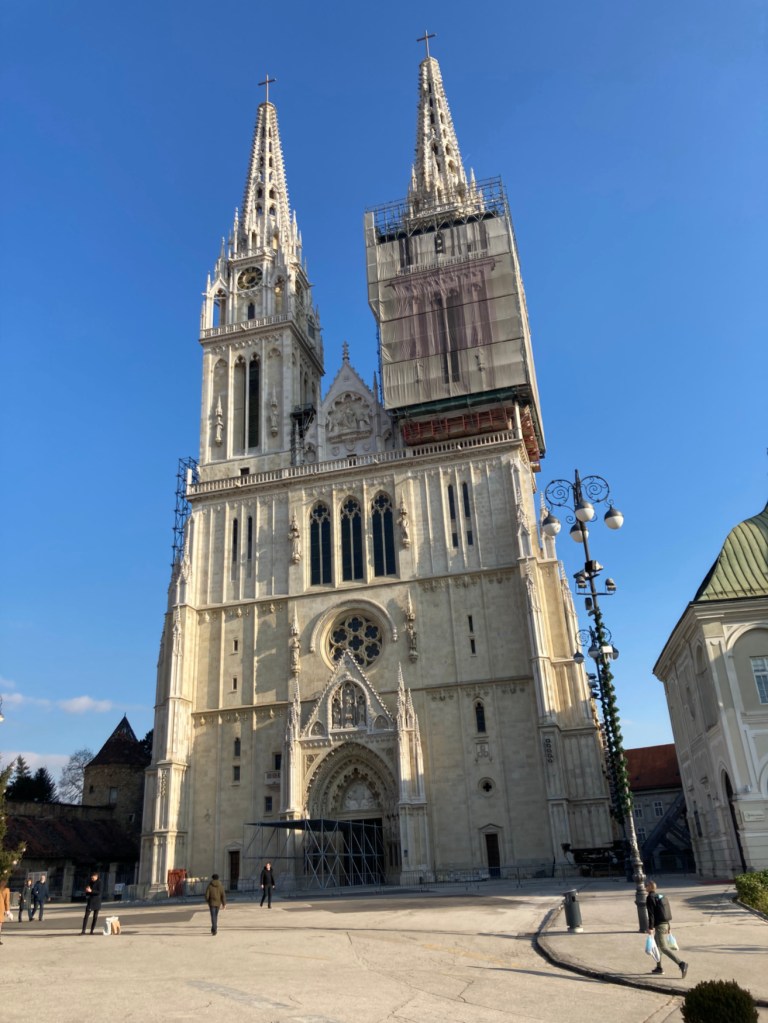
Zagreb is the biggest city we have visited. Lots of historical, tourist “stuff.” In this post I’ll show Zagreb’s most famous cathedral and church.
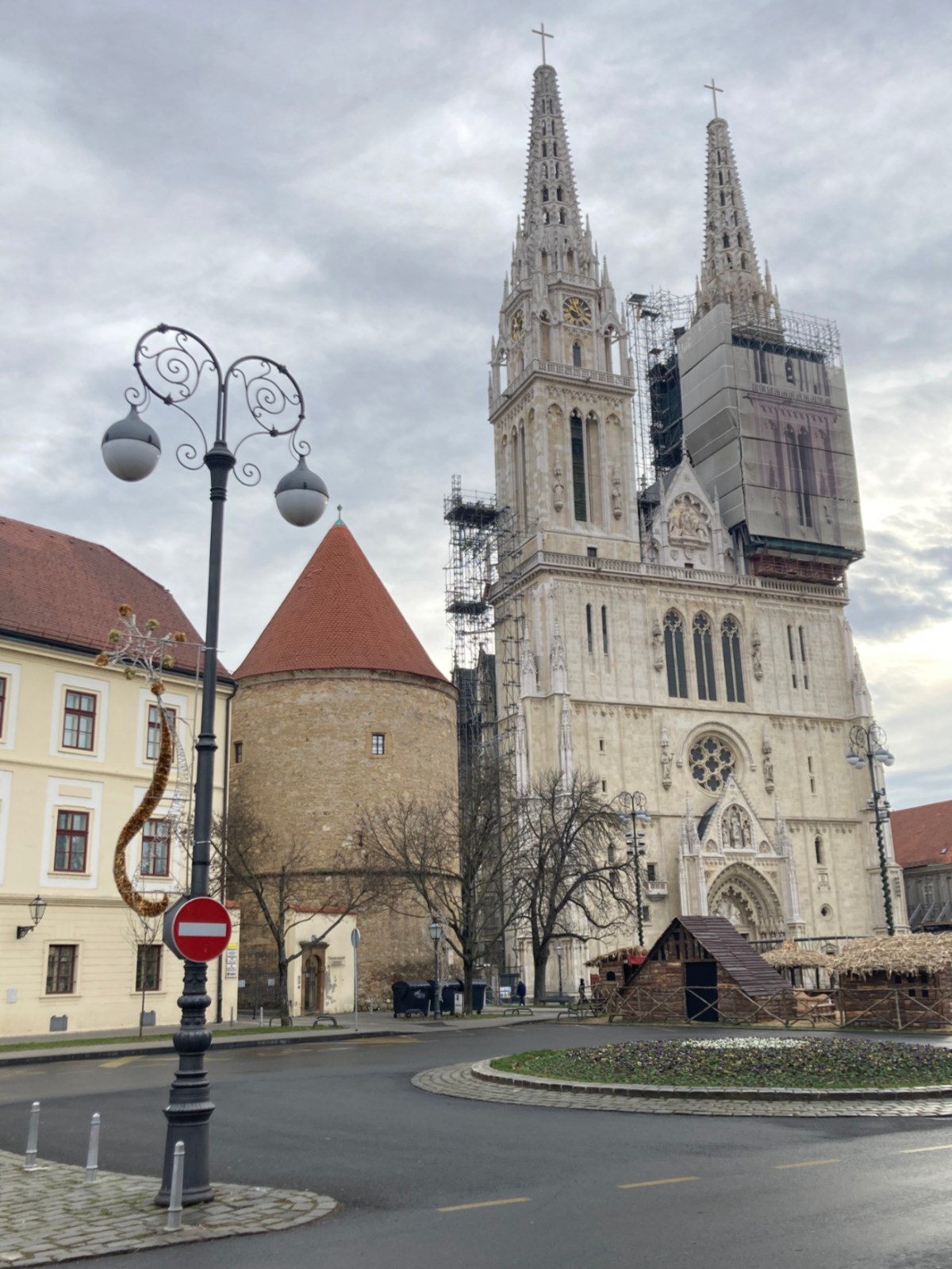
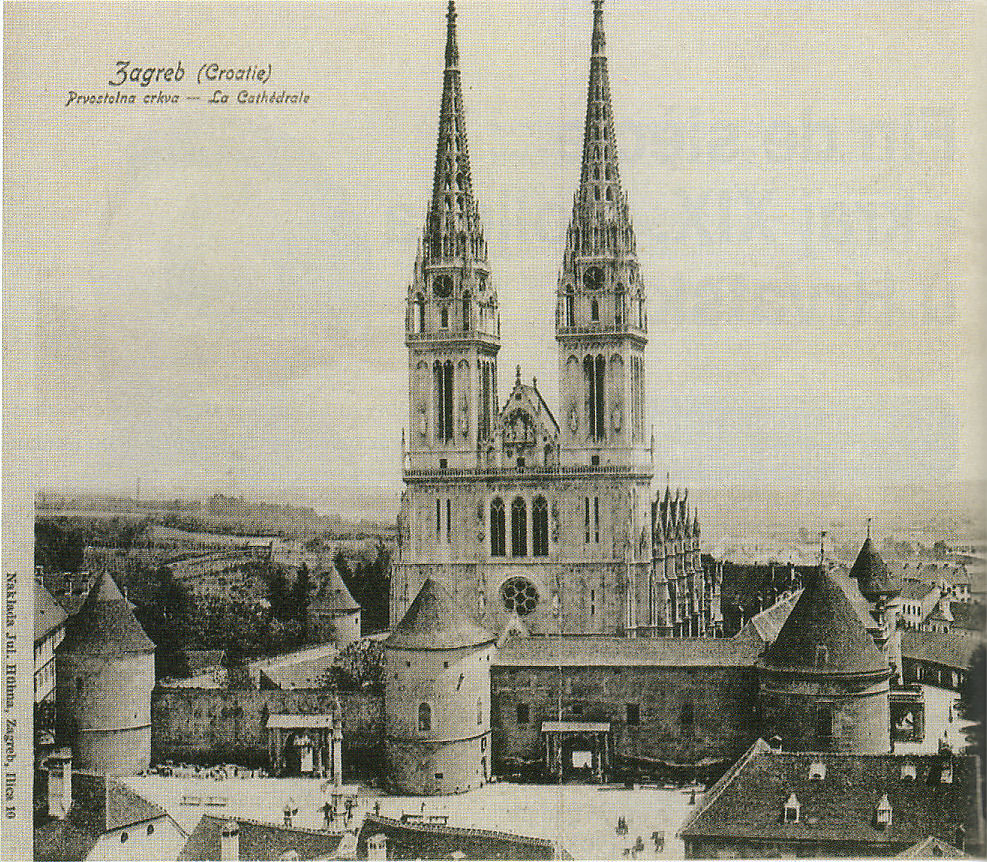
Cathedral of the Assumption of the Blessed Virgin Mary. There has been a cathedral on this site since the early 1200’s. The current iteration was built in the 1880’s after an earthquake pretty much demolished the previous one.
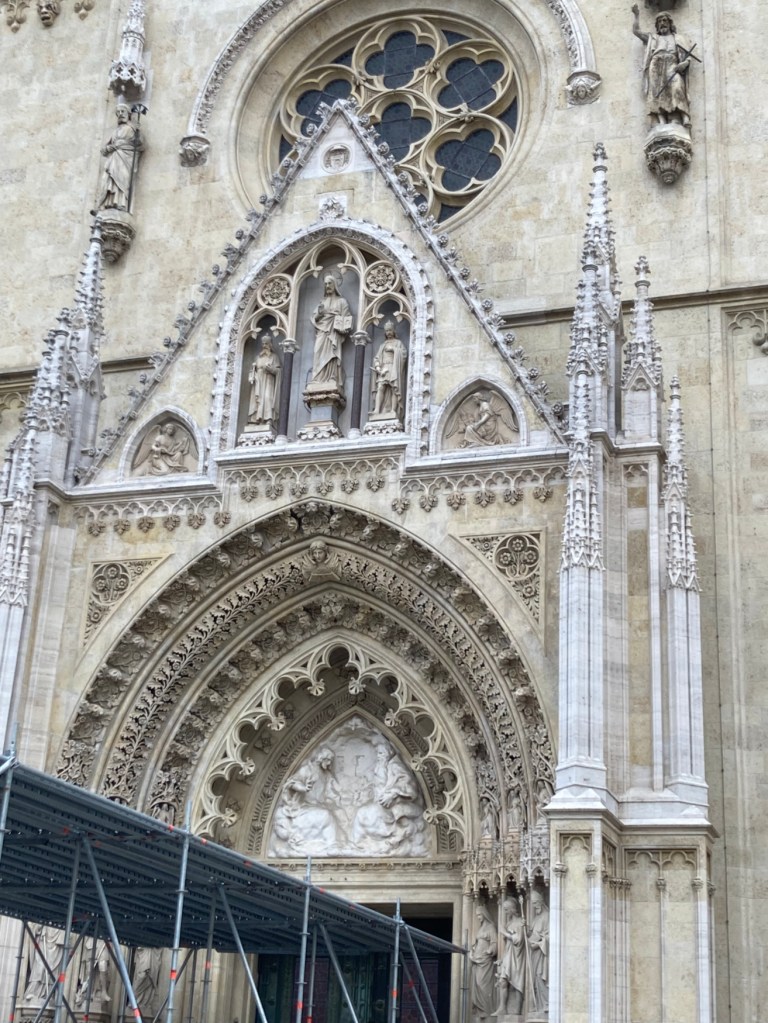
Cathedral entrance.
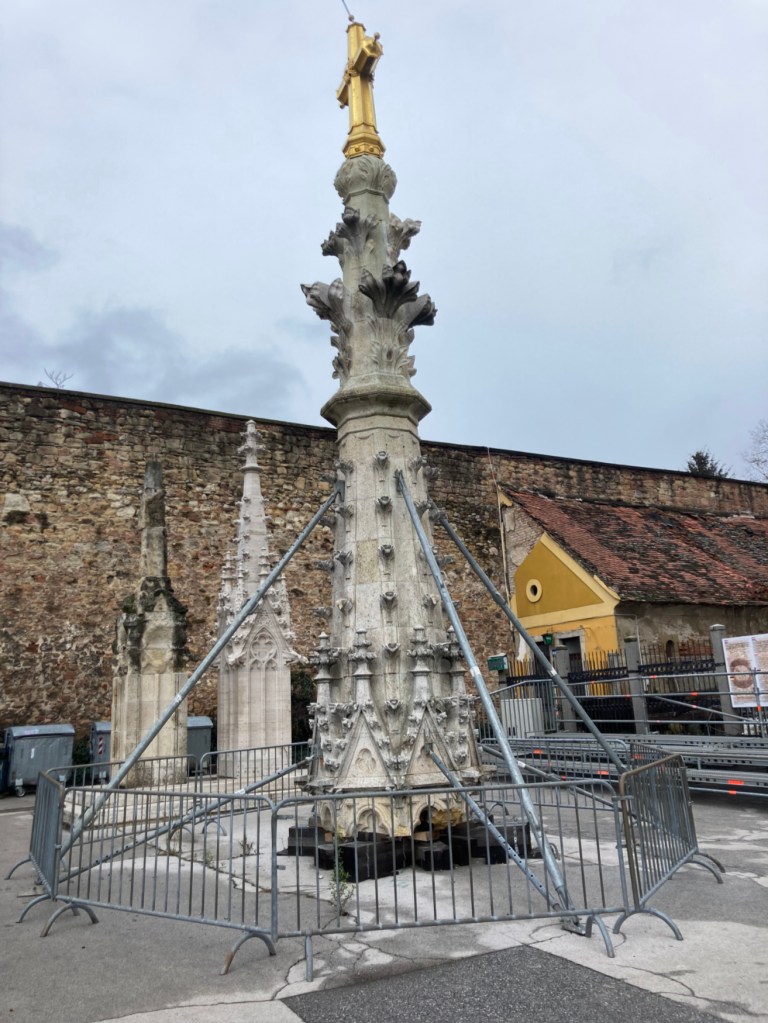
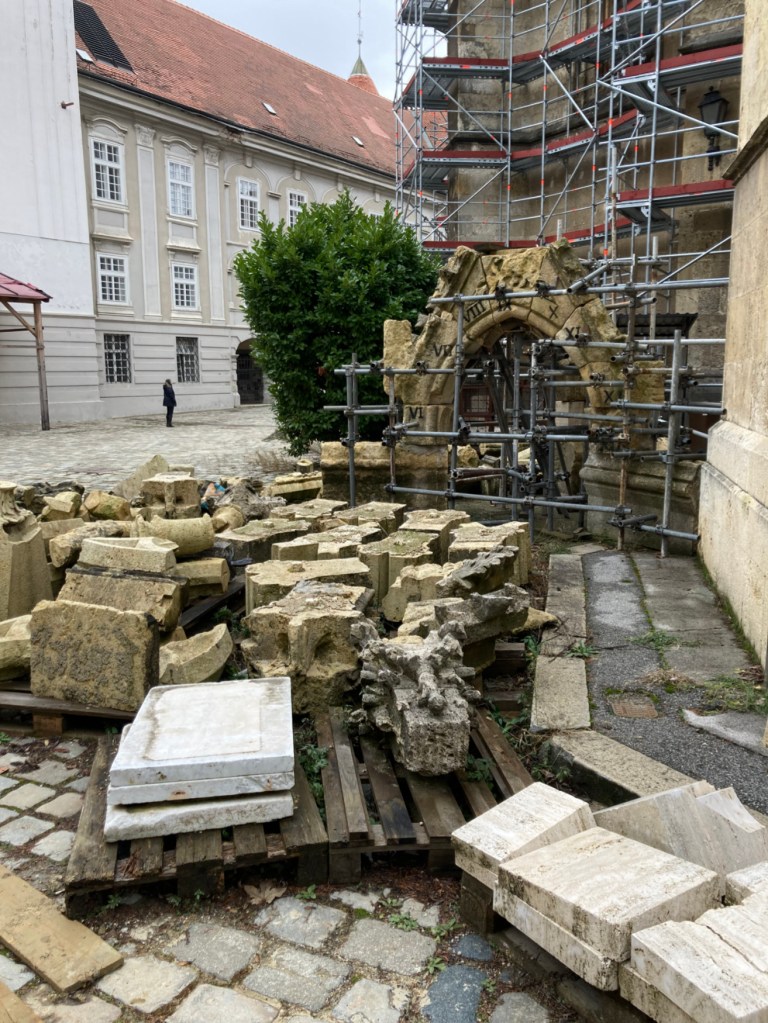
One of these spires topped each cathedral tower. During the March 22,2020, earthquake, one fell off and was destroyed. This one was removed until repairs are complete and it can be safely reinstalled.
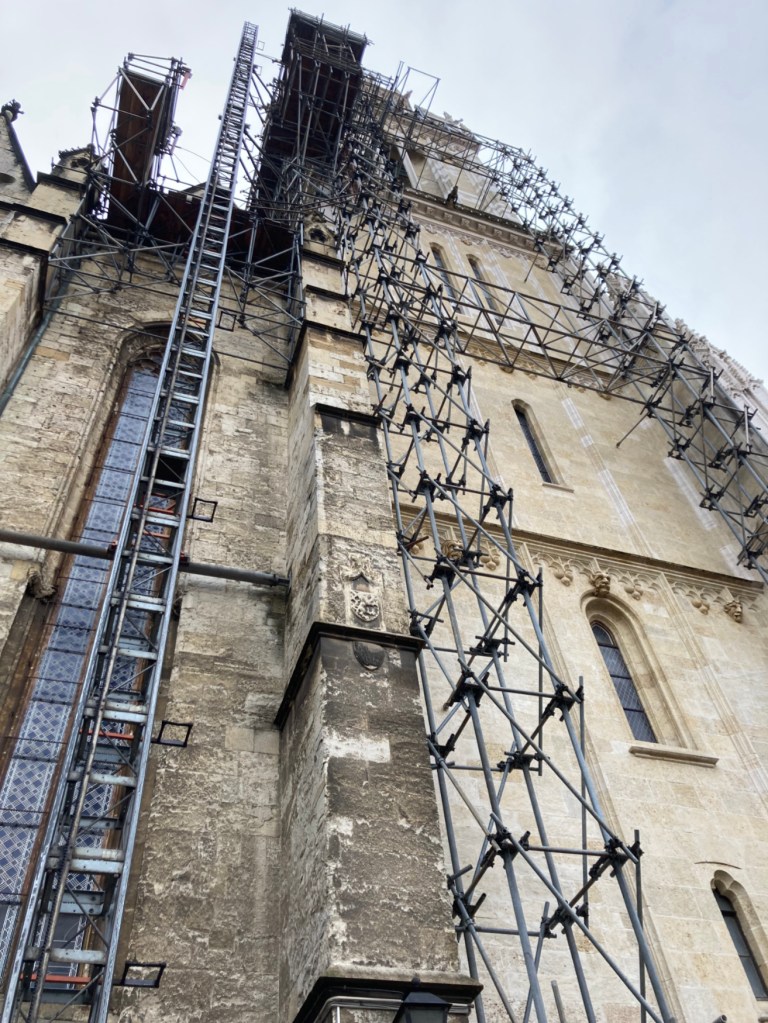
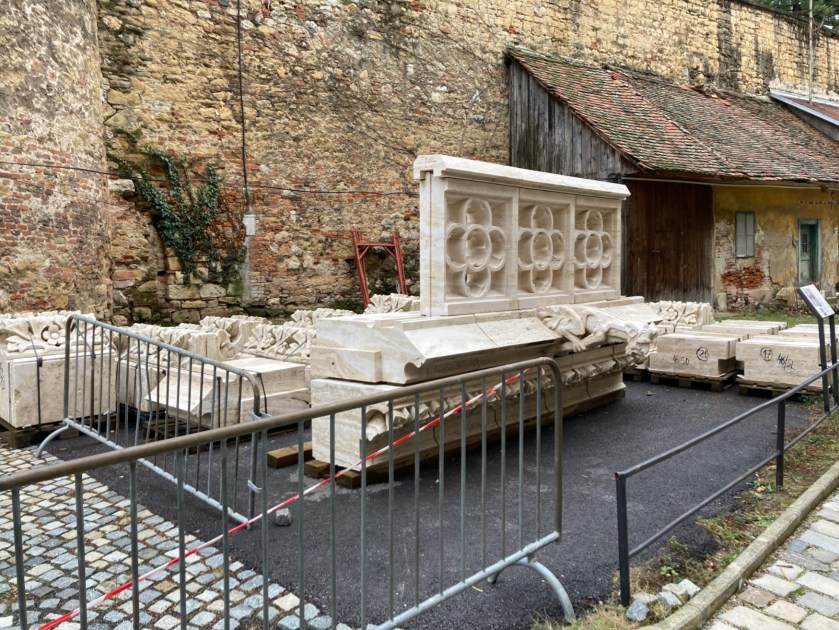
In addition to the earthquake damage, there is also a restoration project underway. The cathedral is being re-sheathed. I think the original limestone carvings and sculptural elements have eroded and are being replaced with identical pieces of travertine marble.
Pieces for restoration.
Restoration and earthquake damage.
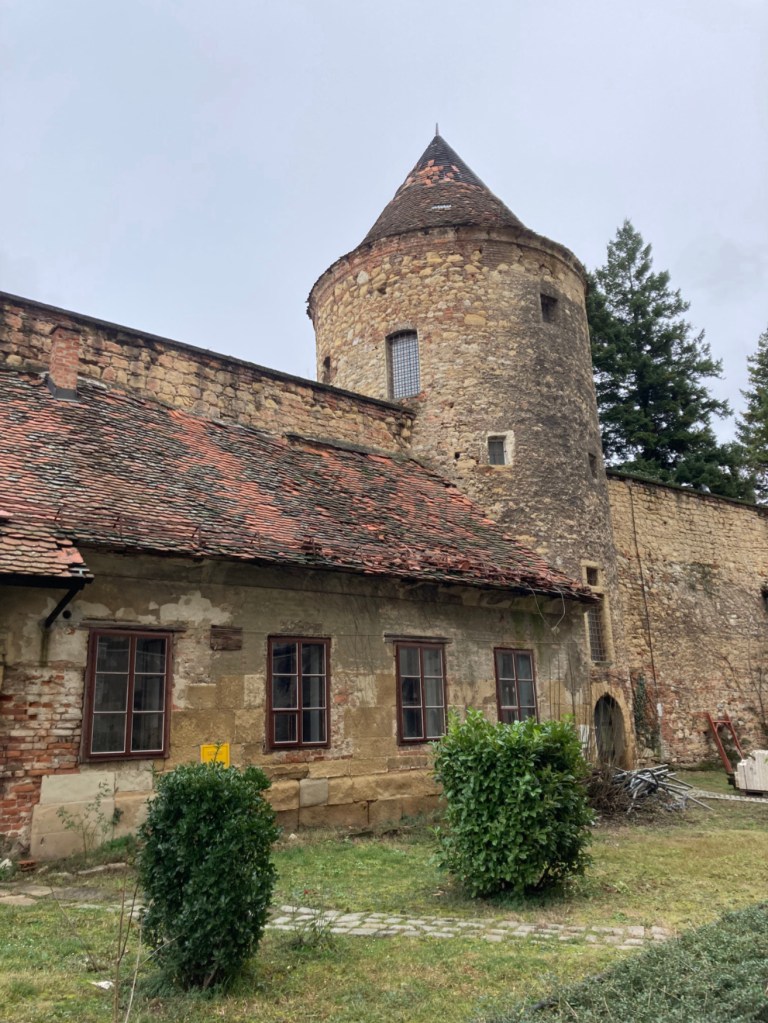
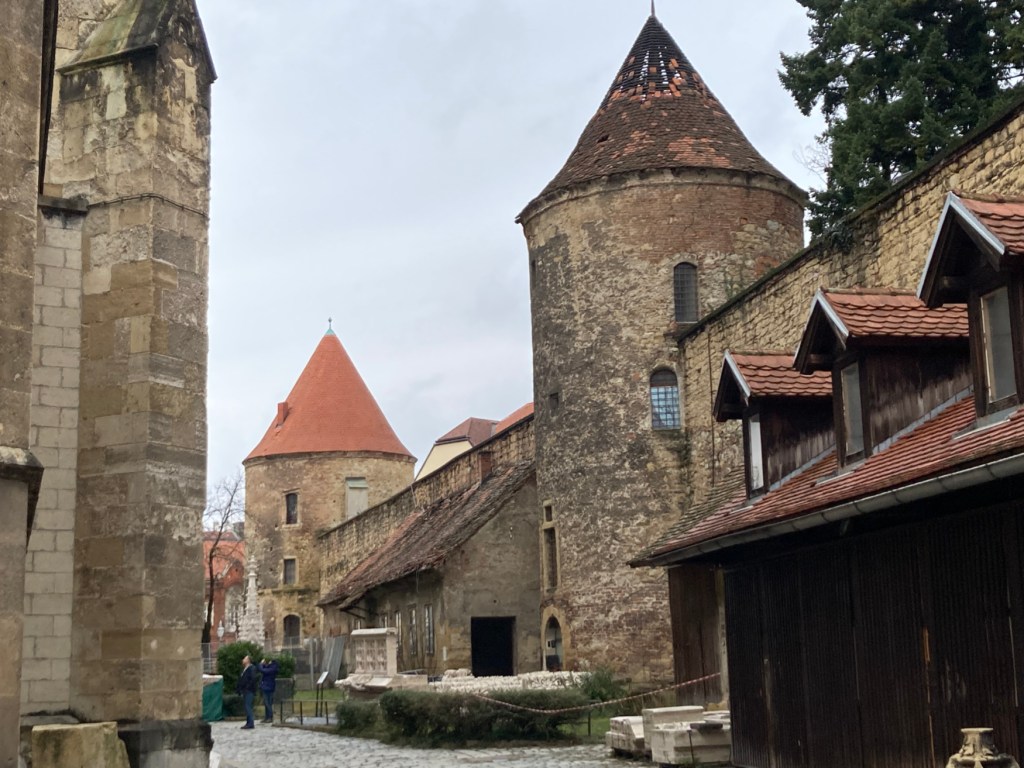
In the late 15th century, Croatia was invaded by the Ottoman Empire. The Zagreb bishop ordered defensive walls to be built around the cathedral just in case..
Note the earthquake damage- new roof on the far tower and hole in the roof of the near tower.
There, that ought to keep the Ottomans out.
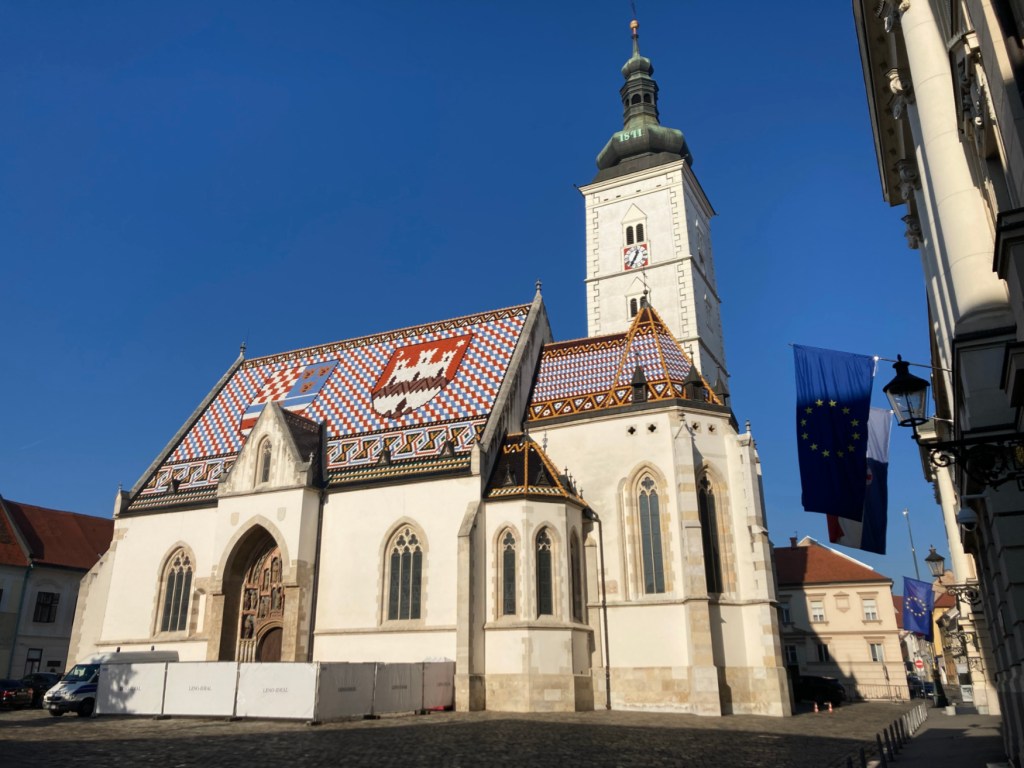
St. Mark’s Church (the “Lego church). Built in the 13th century. Renovated and rebuilt in the 14th century. The roof with colored tiles depicting coats of arms was done in the 1880’s. It seems to most people the colorful tiles evoke memories of Legos.
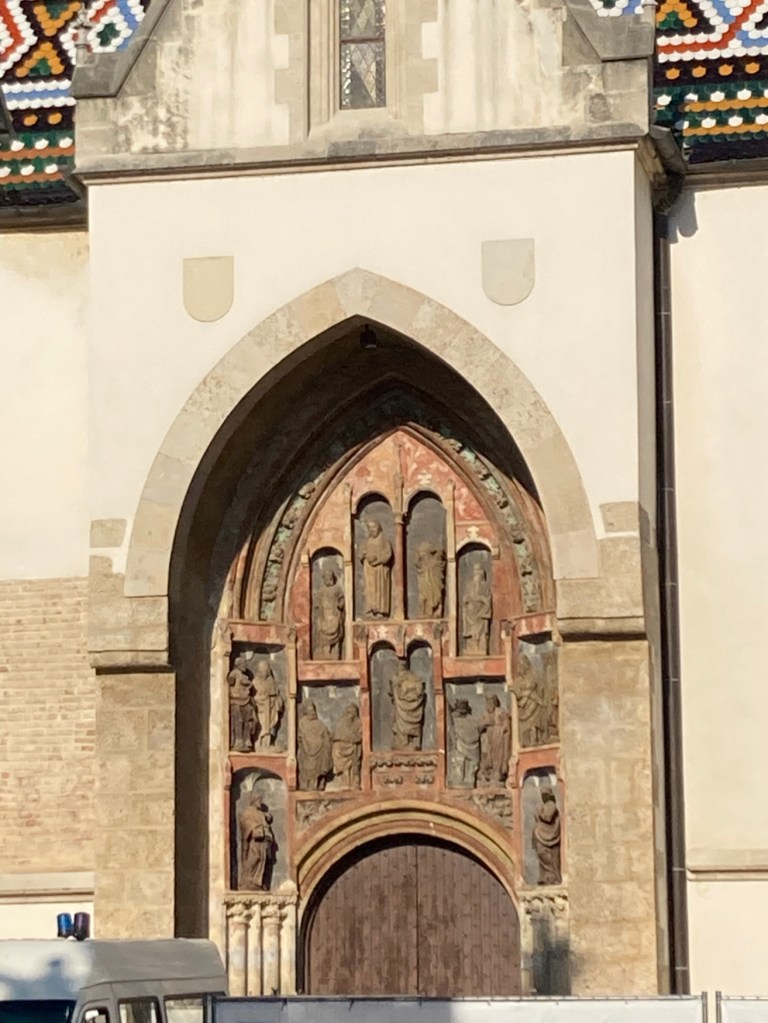
St. Mark’s Church- Gothic portal from the 14th century.
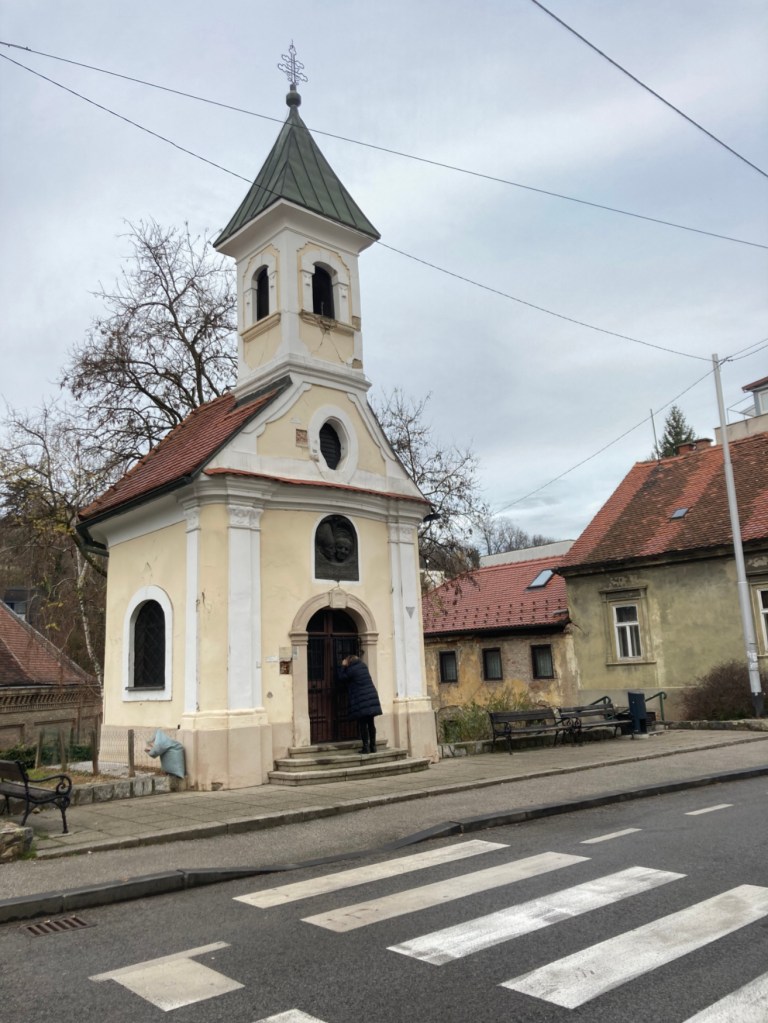
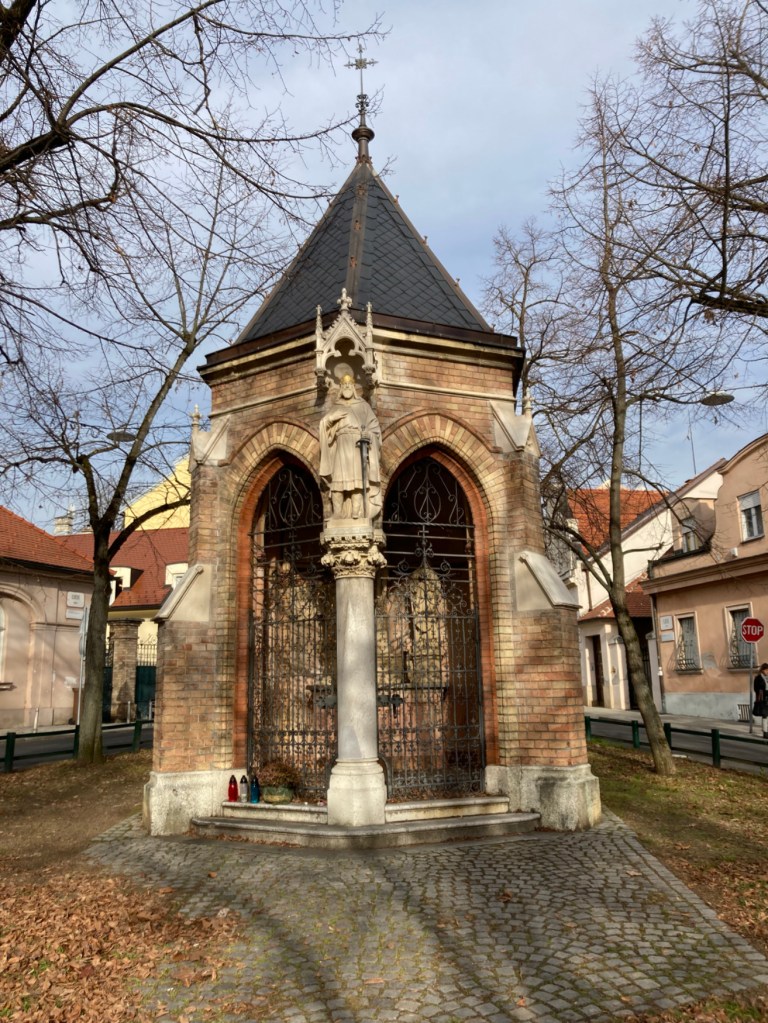
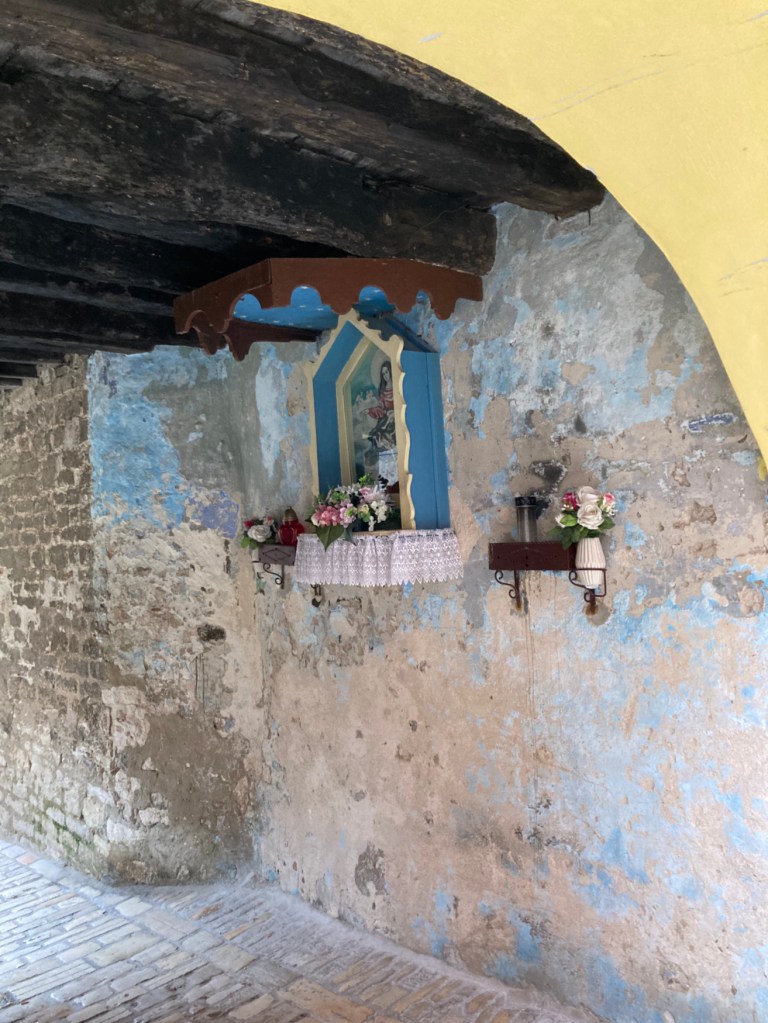
Small Chapels. Zagreb has a number of these small chapels and memorials. We saw a few of these small chapels in Rovinj as well. There must have been a “tiny church” movement at some point in Croatian history but Wikipedia is silent on this matter.
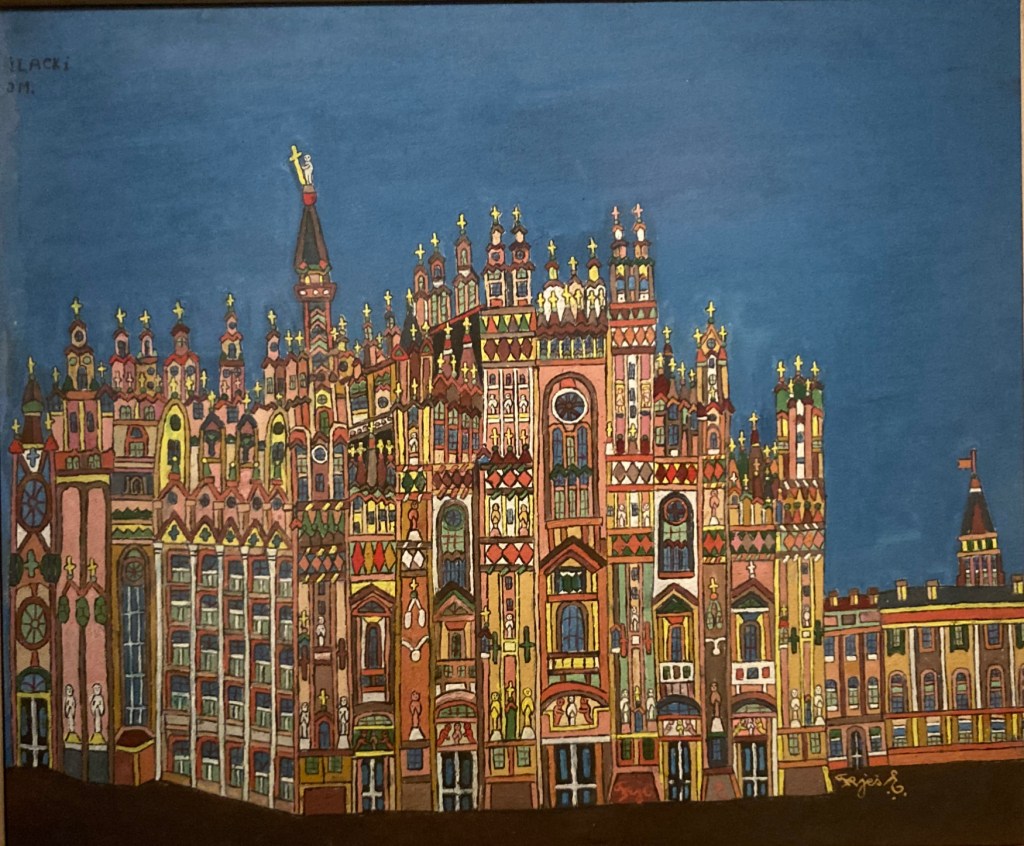
So far, this is probably my favorite art museum…maybe of all time. Although these artists are not formally trained, they seem to have a vision and, obviously, talent for representing their world. Many of the paintings were done on glass (apparently cheaper than canvas), which accounts for the glare on some of the images. NOTE that the paintings were done on the “back,” so you look through the glass plate to see the painting. The logistical considerations must be a nightmare. For example, the first thing you do is sign your name….backwards. Next, you have to figure out what parts of the painting are “on top” (i.e. closest to the viewer) and you paint those first. One more thing, the paint takes a week to dry before you can add the next layer. And how did they do 3D without knowing about linear perspective. Below are a few websites on the subject or just search for “Croatian Naive Art.”
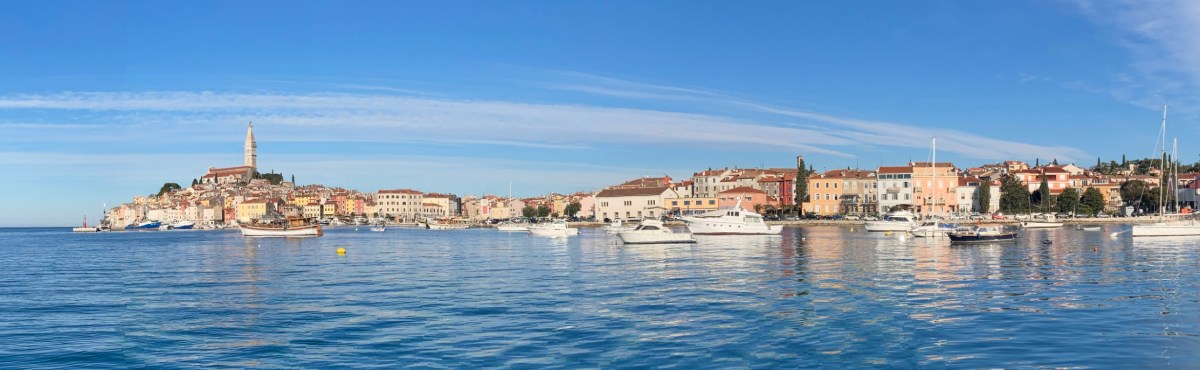
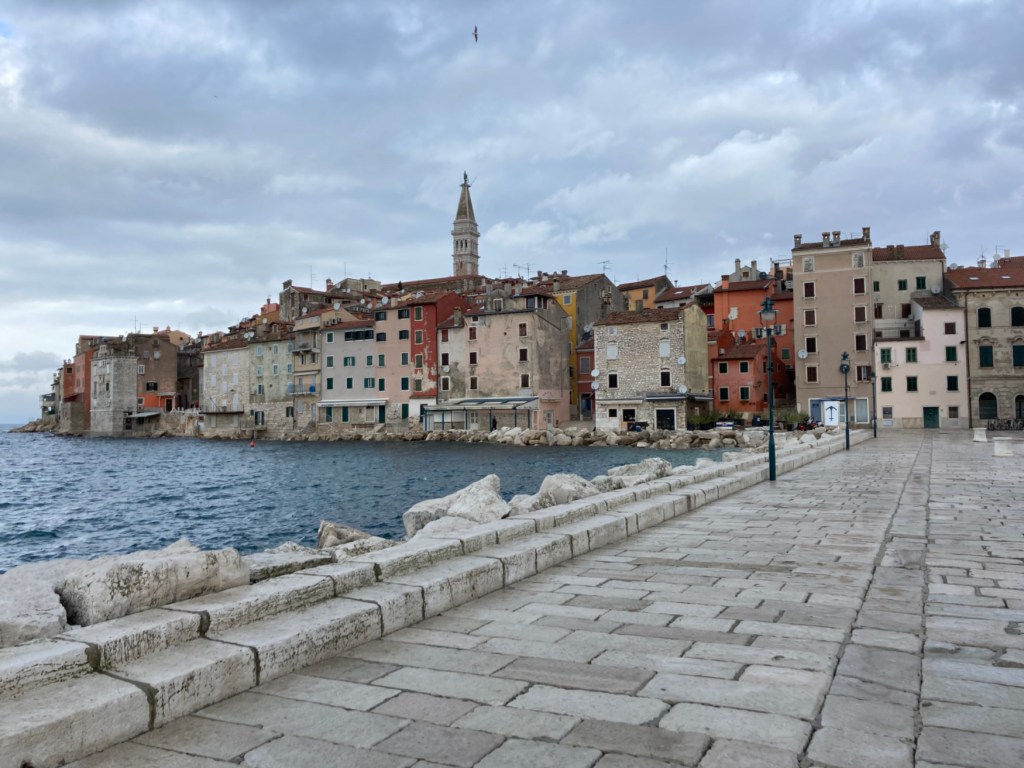
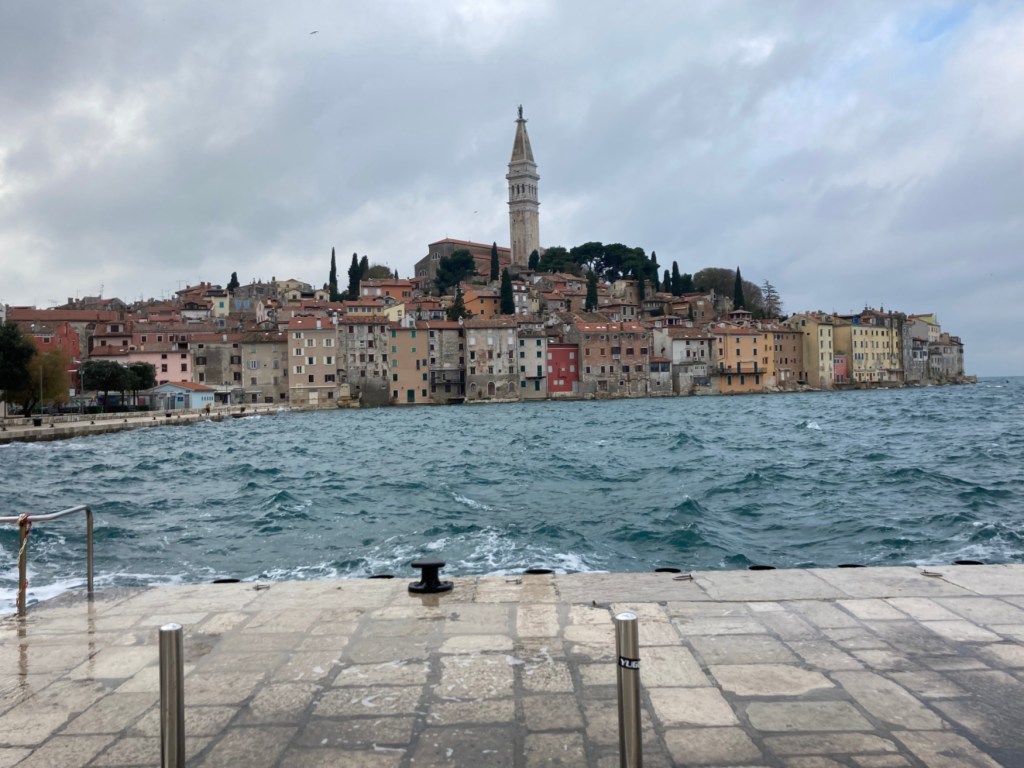
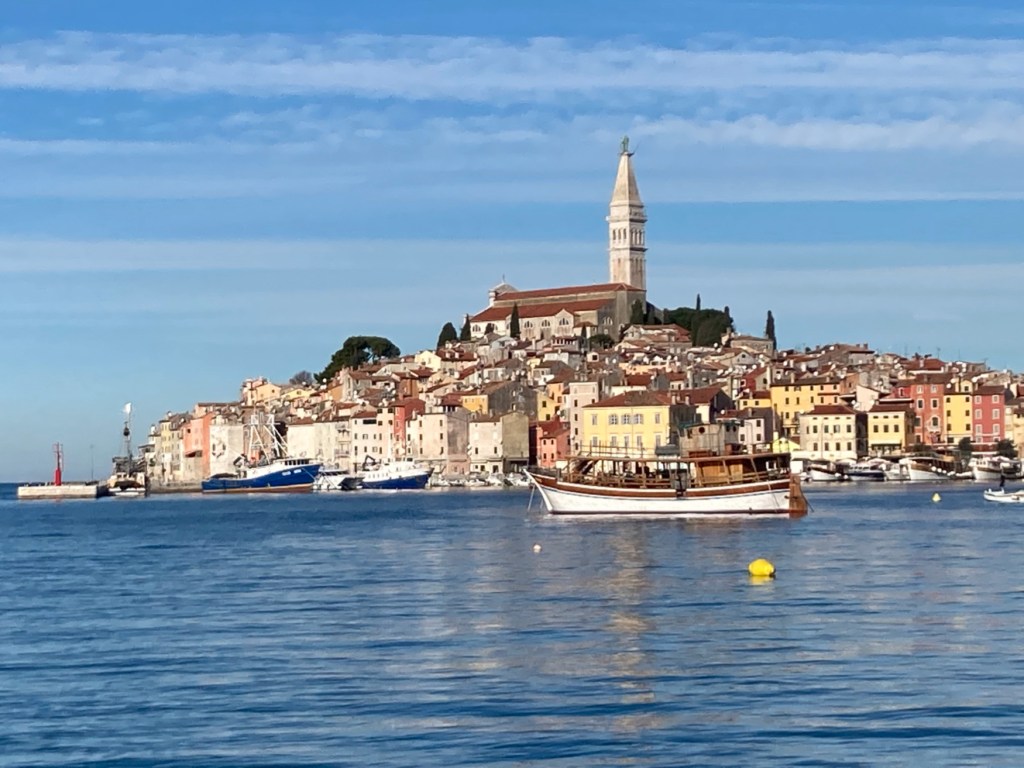
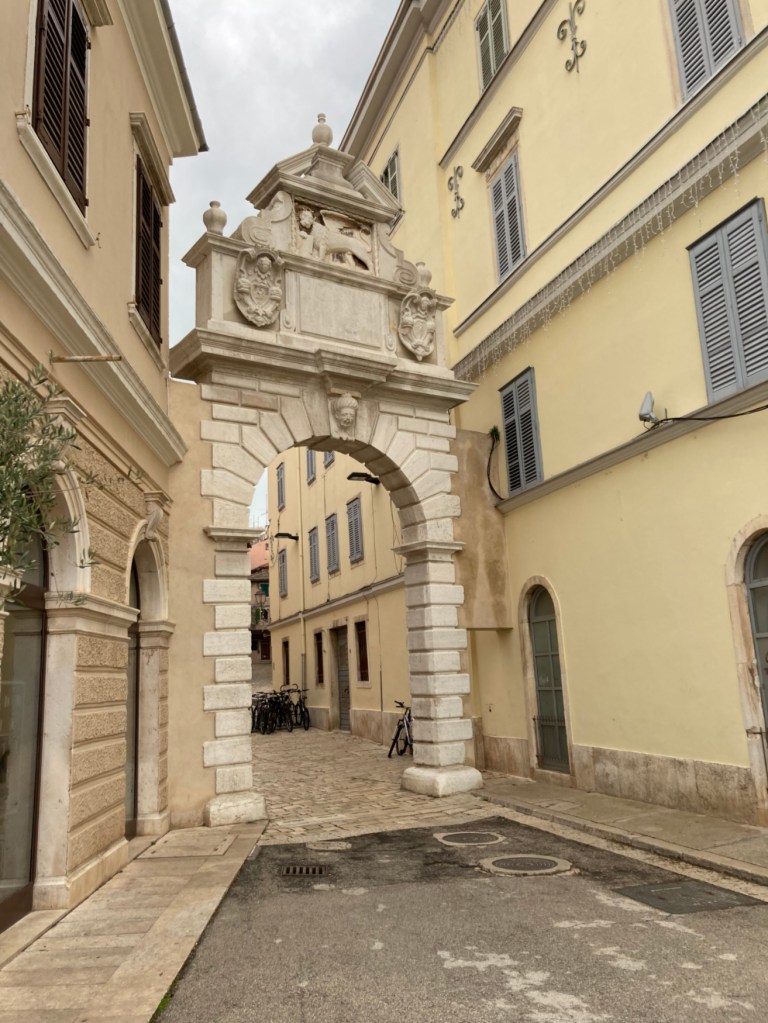
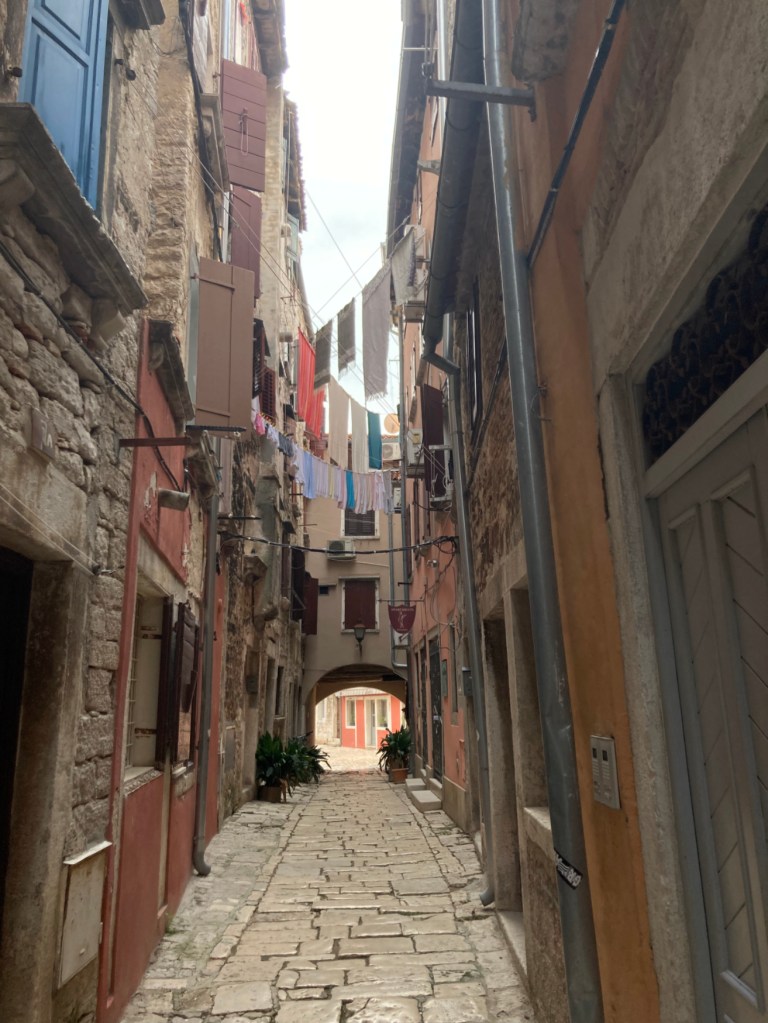
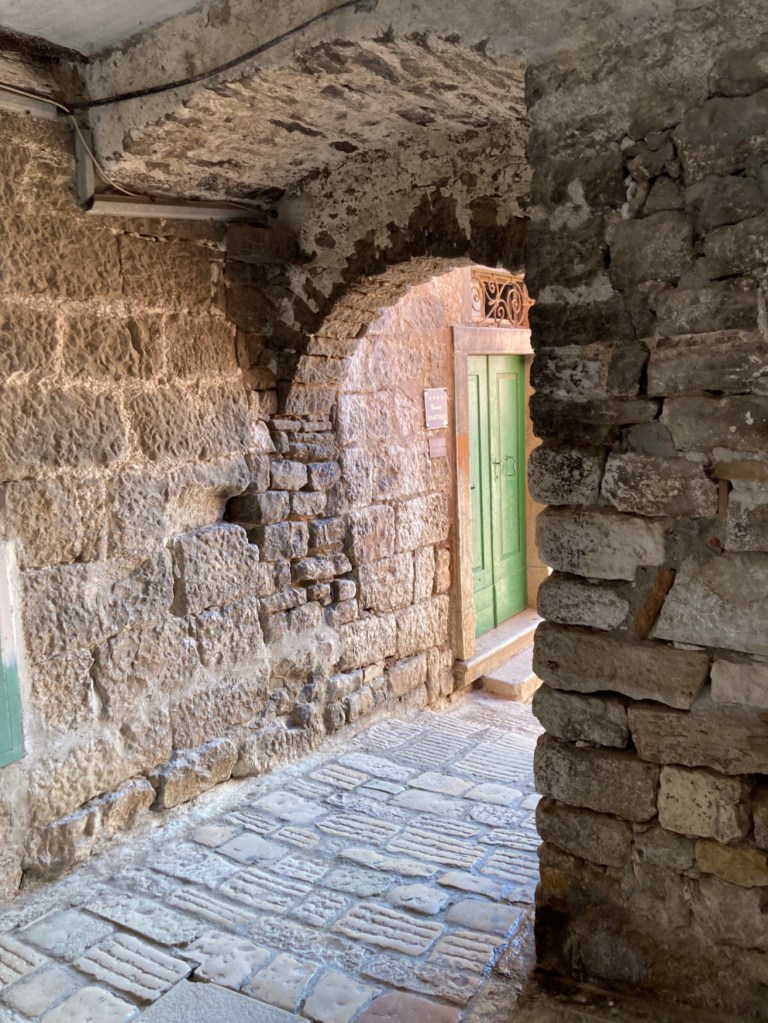
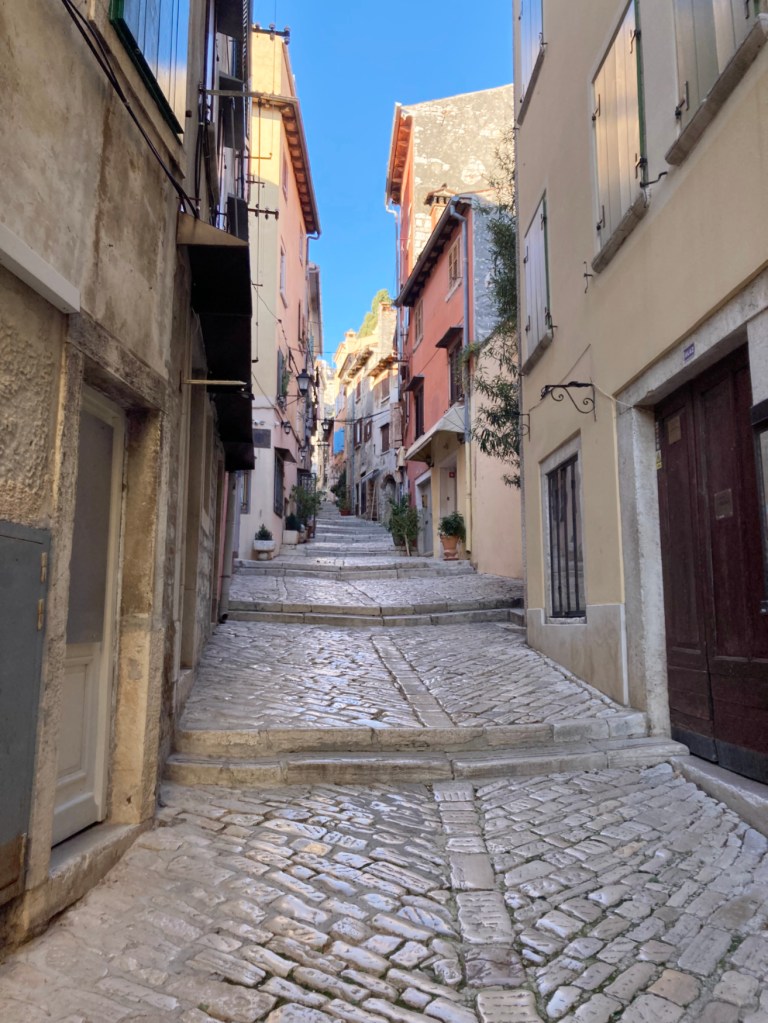
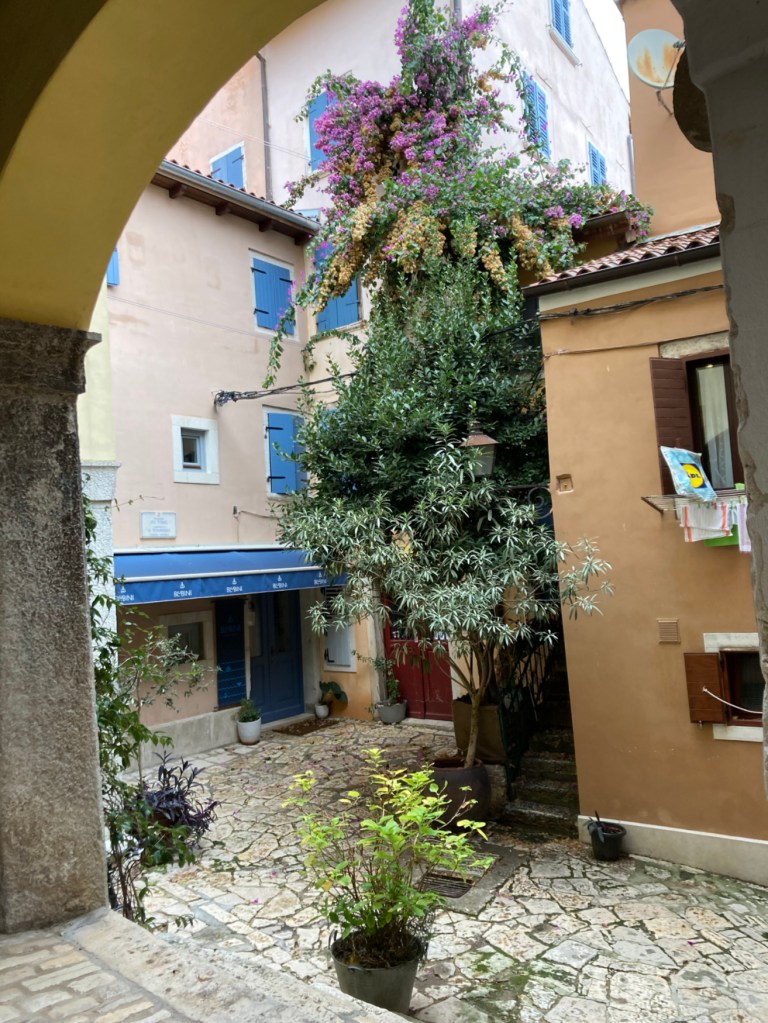
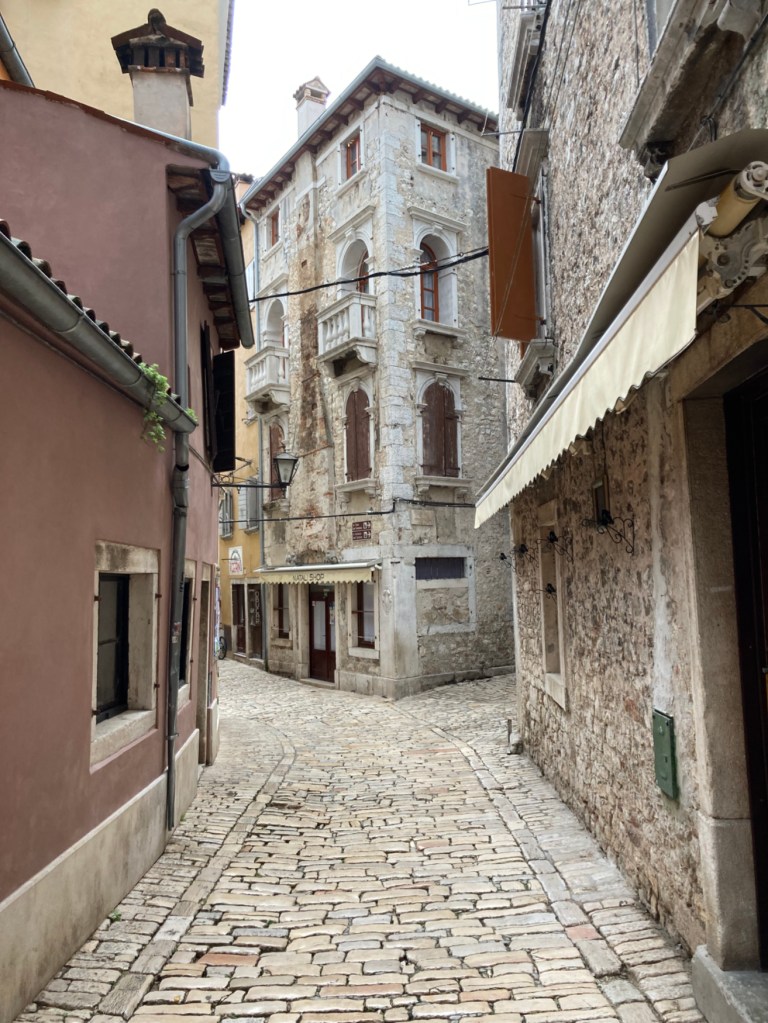
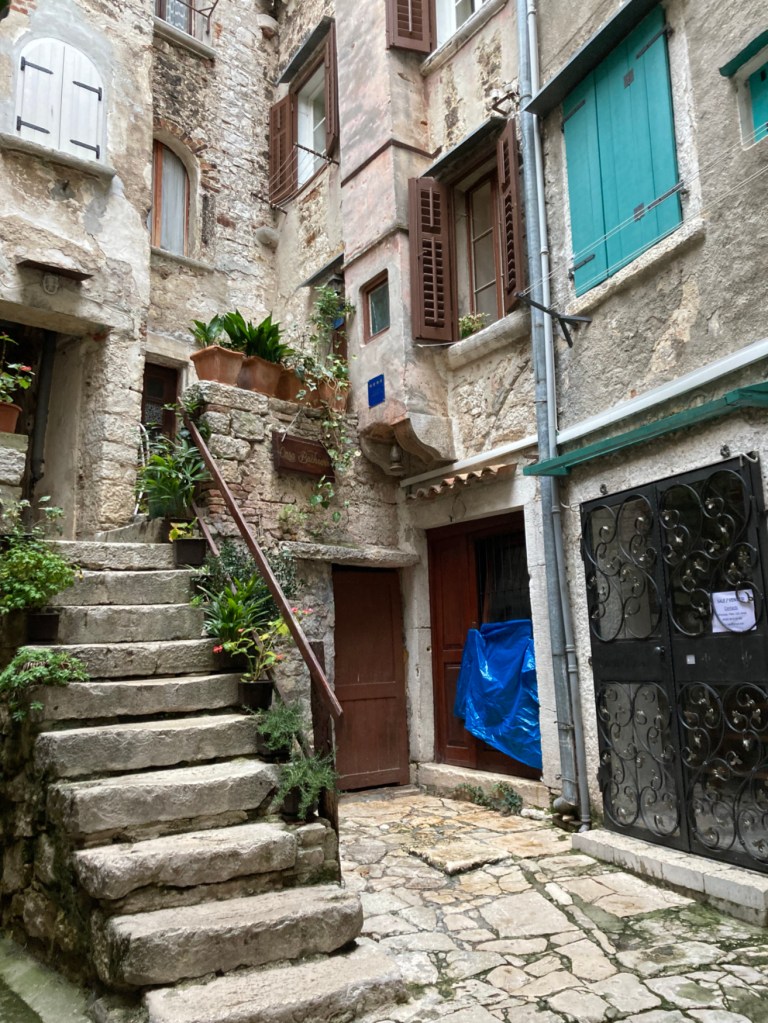
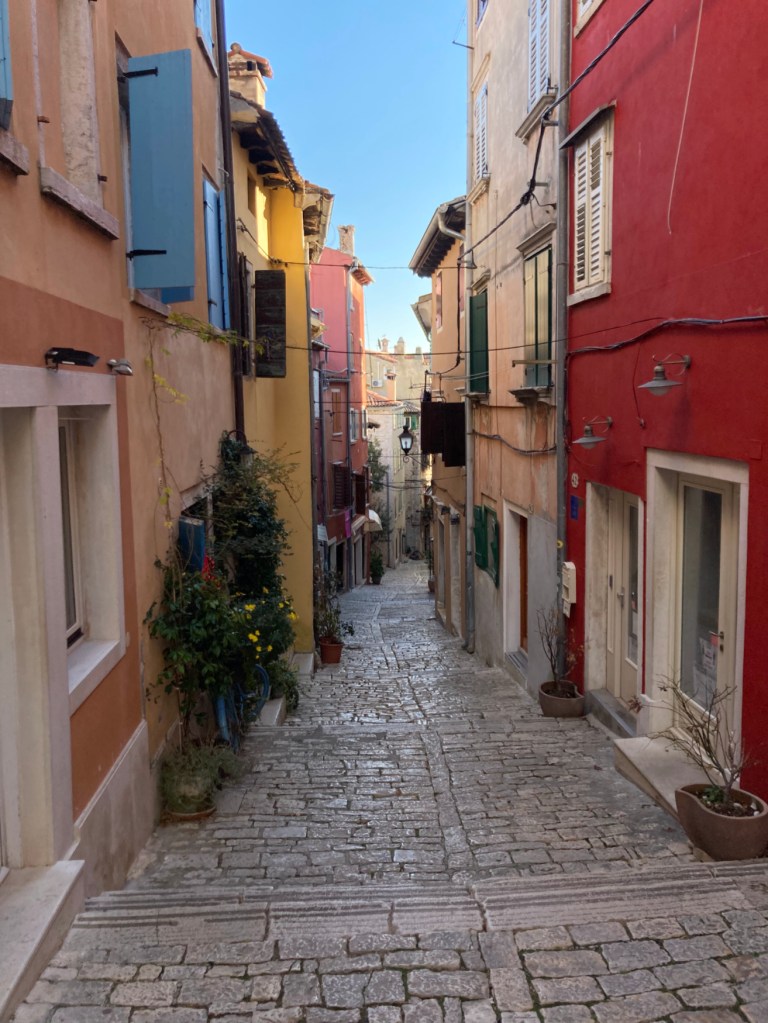
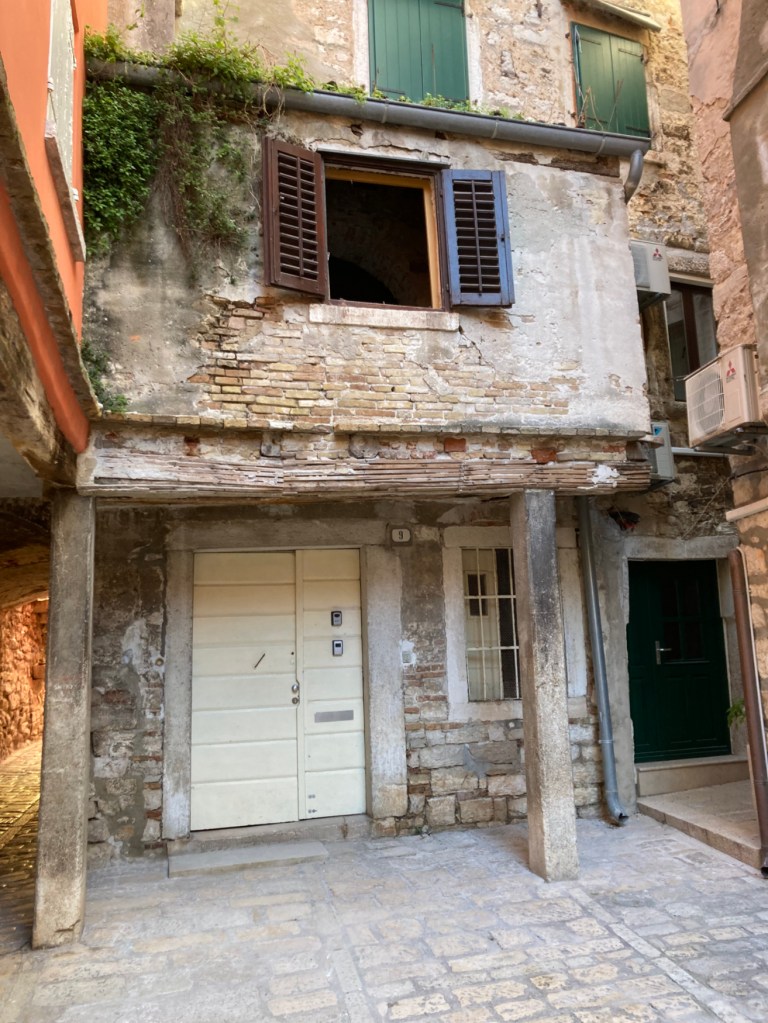
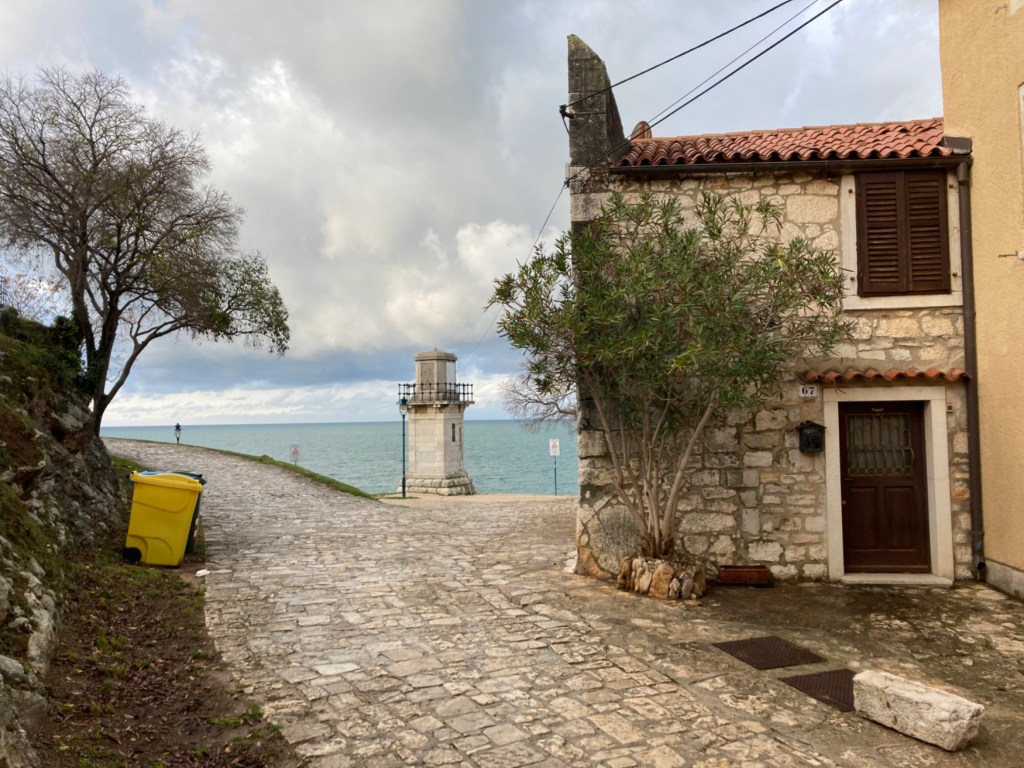
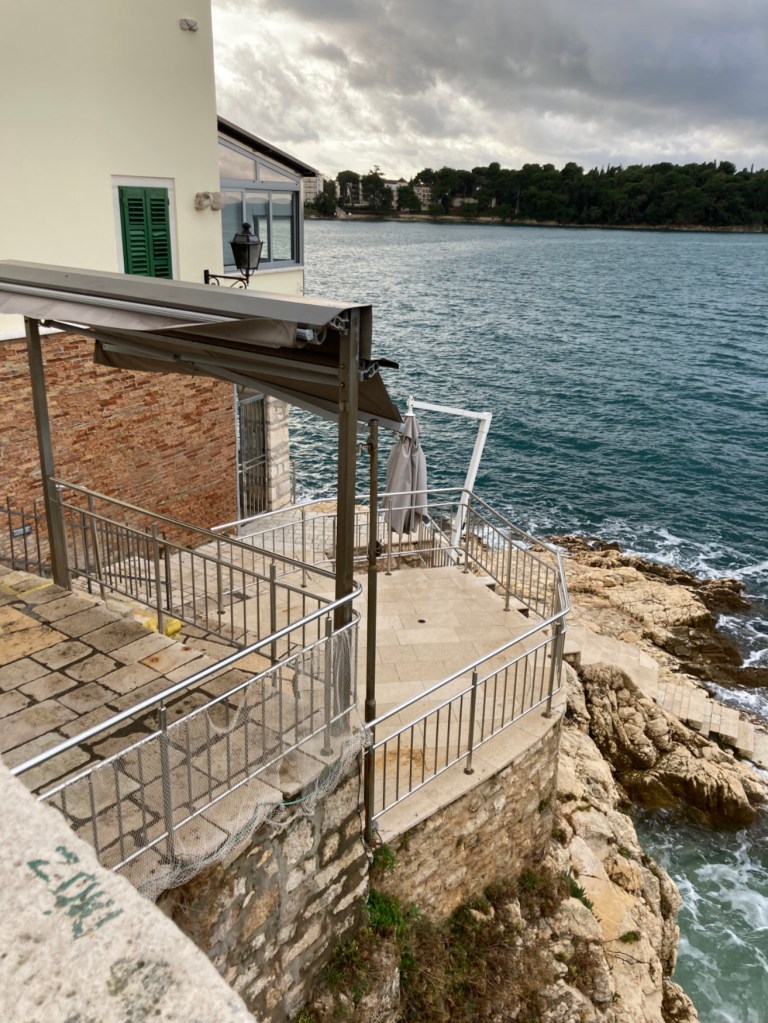
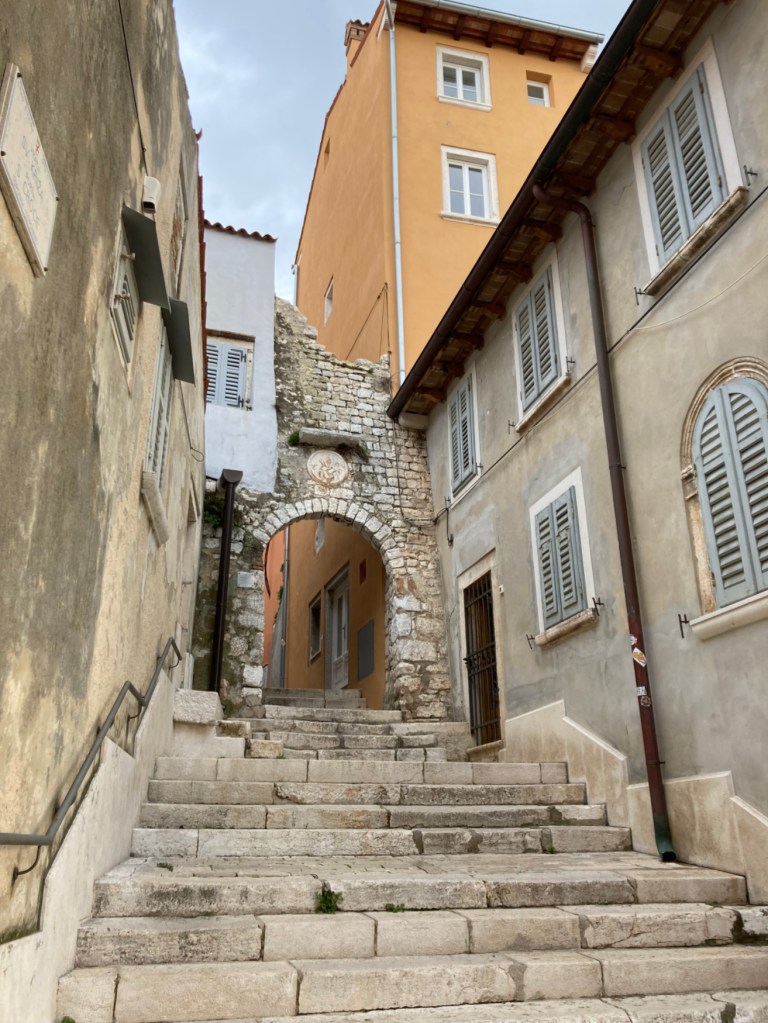
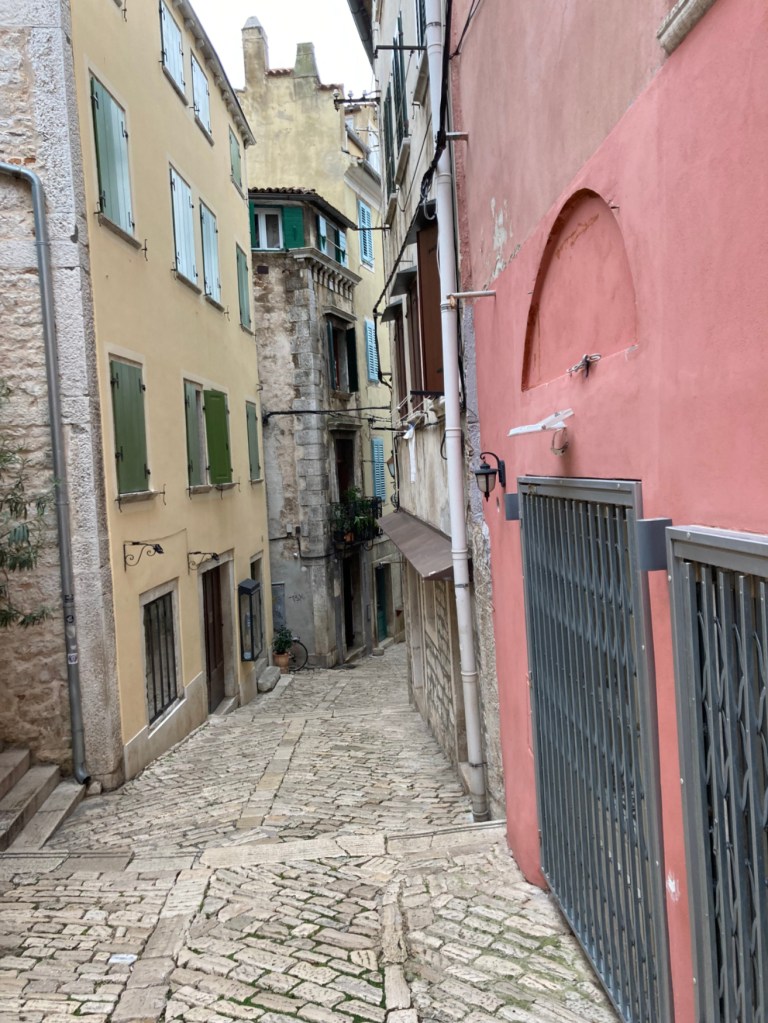
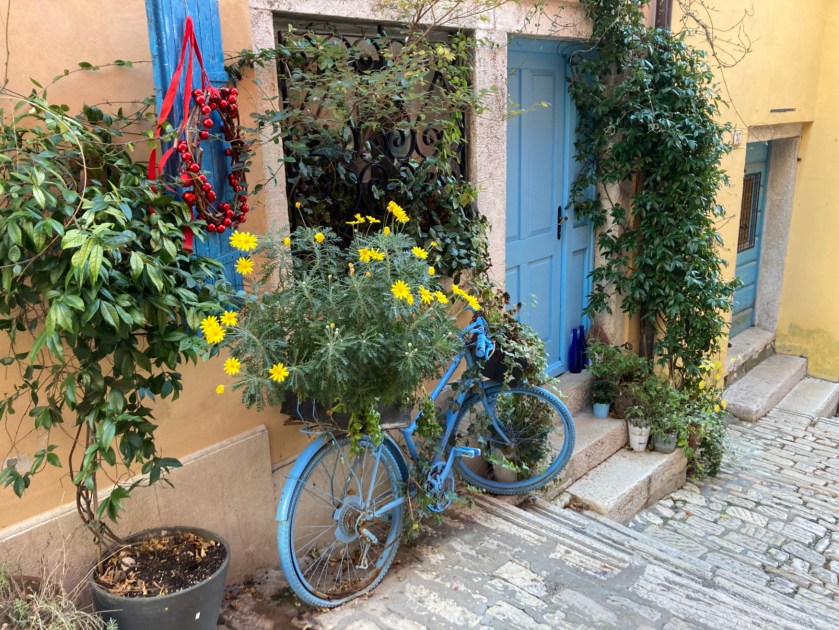
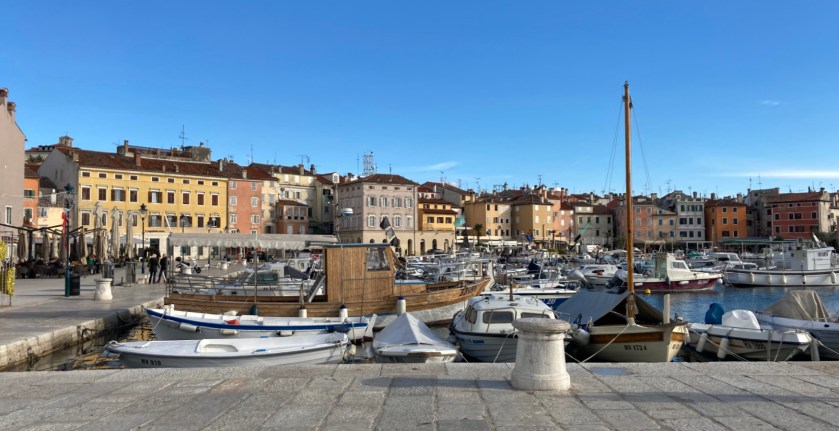
We’re in now in Rovinj, Croatia, a fishing village on the Istria peninsula. I still have some things from Italy, but I’ll have to get back to those later. Although there seems to be lots of fishing, the main economic driver here is tourism. We’ve been told it gets pretty crazy in the summer. We’re here in Dec. and most restaurants and bars are closed. The ones that are open, though, are excellent. It doesn’t matter, however, because Rovinj is endlessly beautiful.
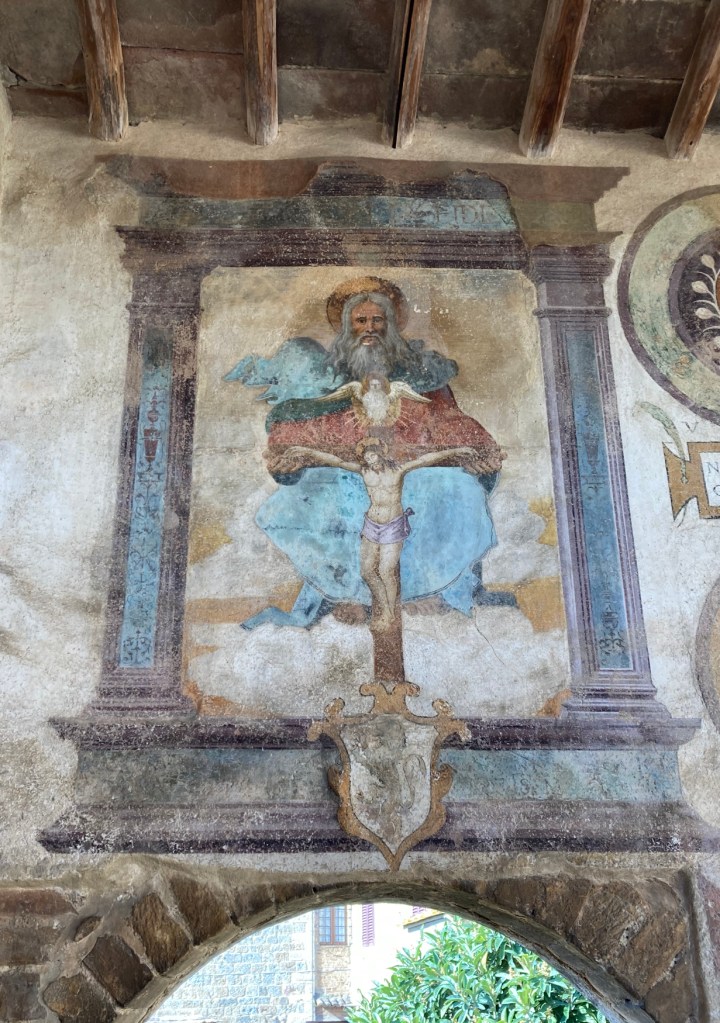
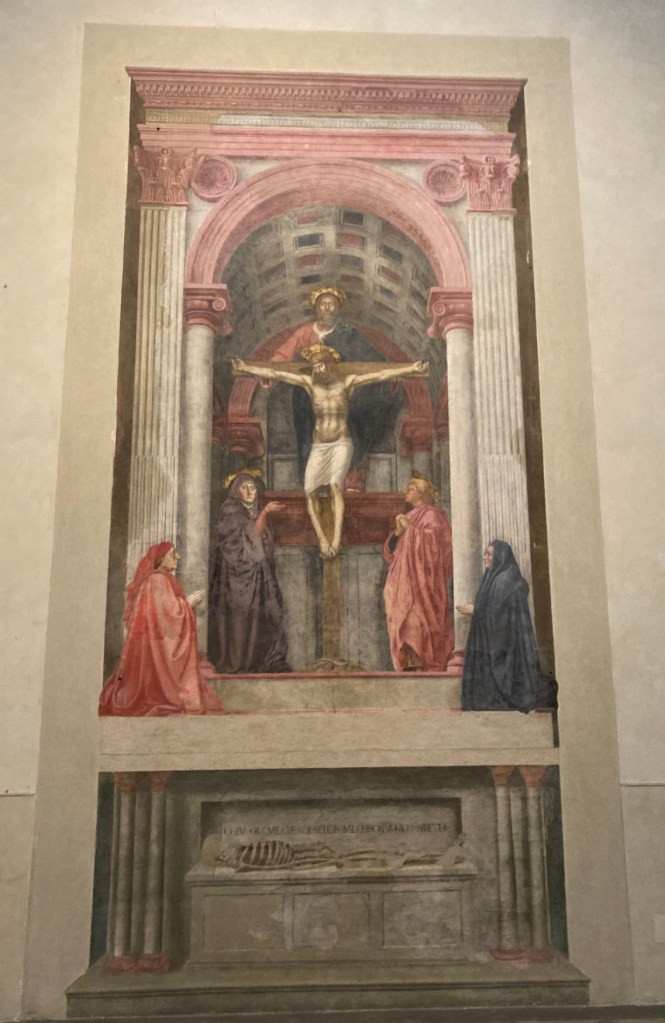
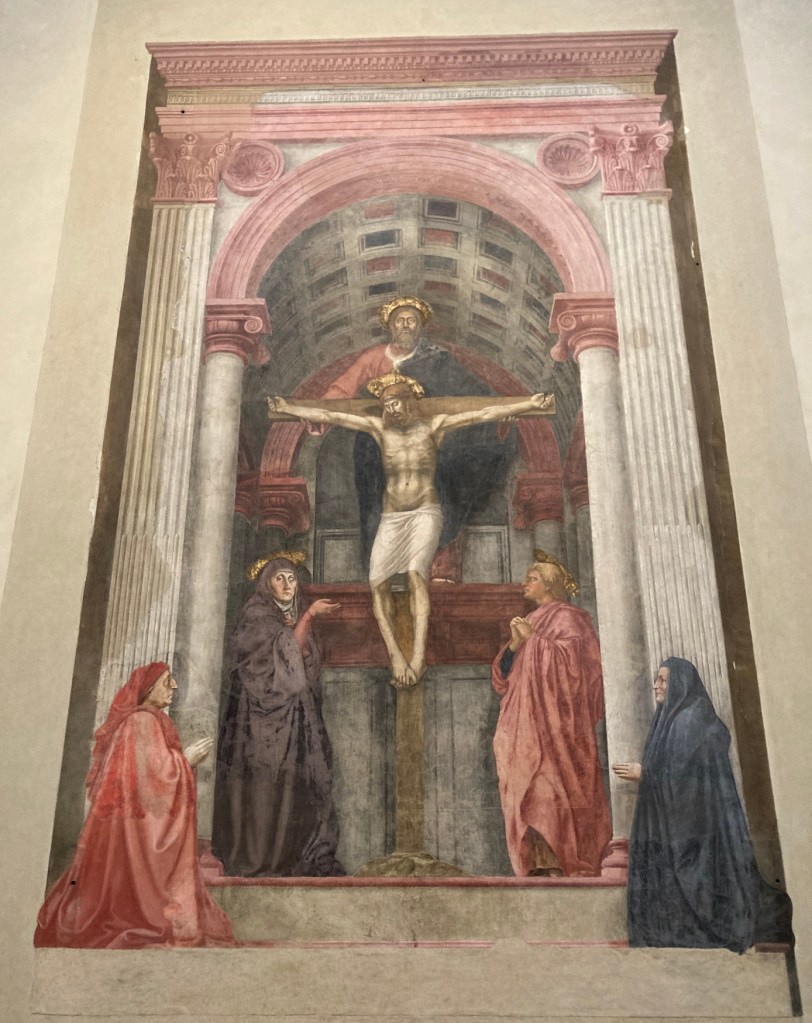
Forgive me if you already are familiar with this stuff. I think the coolest thing I’ve seen so far is Masaccio’s Holy Trinity, a fresco in the Basilica of Santa Maria Novella. In 1428 CE, it is the first time an artist used Brunelleschi’s concept of linear perspective to represent a 3-dimensional space in a 2-dimensional painting. In addition, the composition is a kind of a motif used in many paintings- Christ on the cross in front, God the Father behind (sometimes seated on a throne), and the Holy Spirit represented as a dove near Christ’s head (see the first two paintings below). In case you (like me) need some remedial art history, here are a couple of websites explaining how Brunelleschi developed the concept of linear perspective and how Masaccio used it in the Holy Trinity: https://smarthistory.org/masaccio-holy-trinity/ and https://www.khanacademy.org/humanities/renaissance-reformation/early-renaissance1/beginners-renaissance-florence/v/linear-perspective-brunelleschi-s-experiement
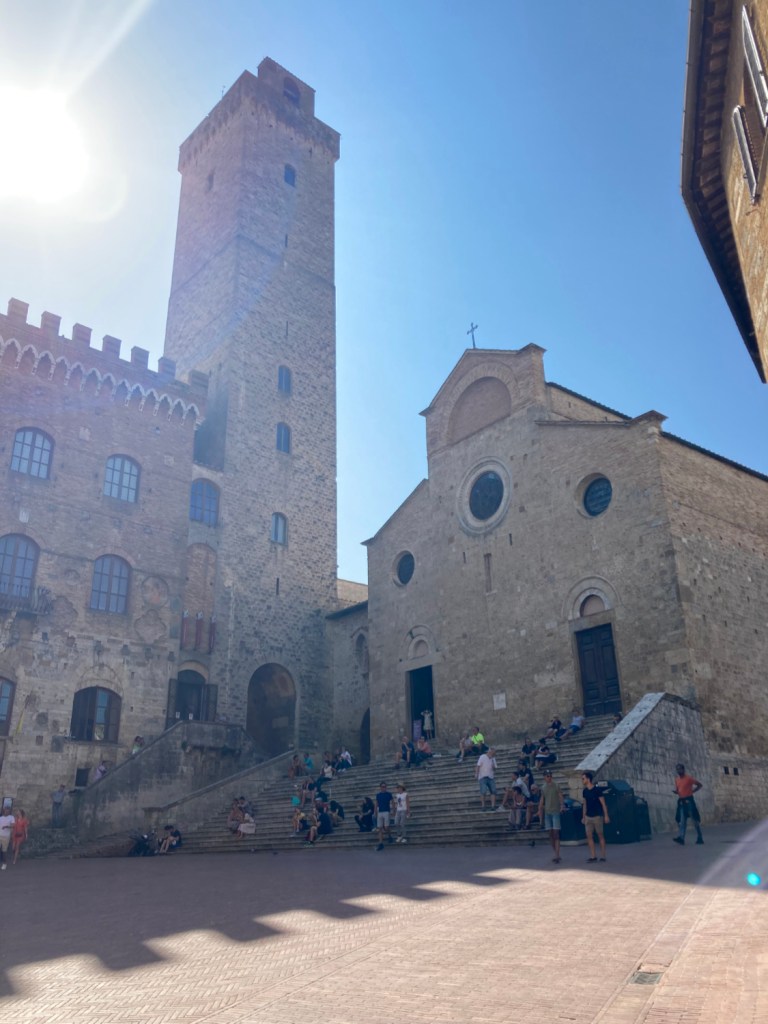
The Palazzo Comunale in San Gimignano.
Museum of Sacred Art- San Gimignano.
Masaccios’s Holy Trinity. The quote above the skeleton says something like “As you are now, I was. As I am now, you will be.” In other words, this life is your only chance, don’t waste it.
That’s Mary and St. John on either side of the Cross. The donors who commissioned this work are the man and woman kneeling in contemplation.
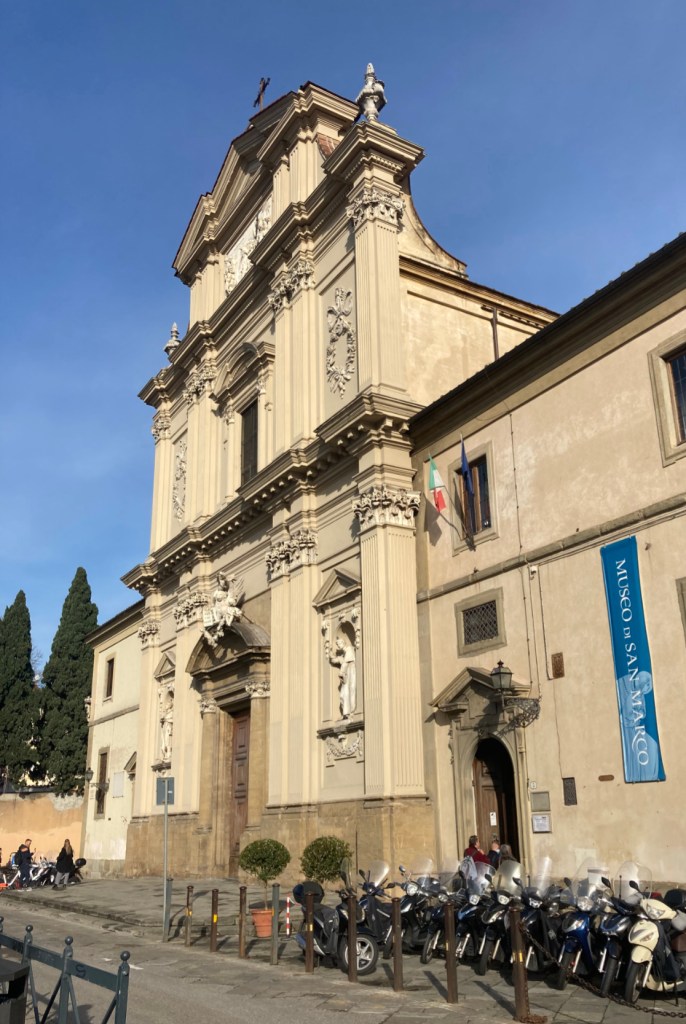
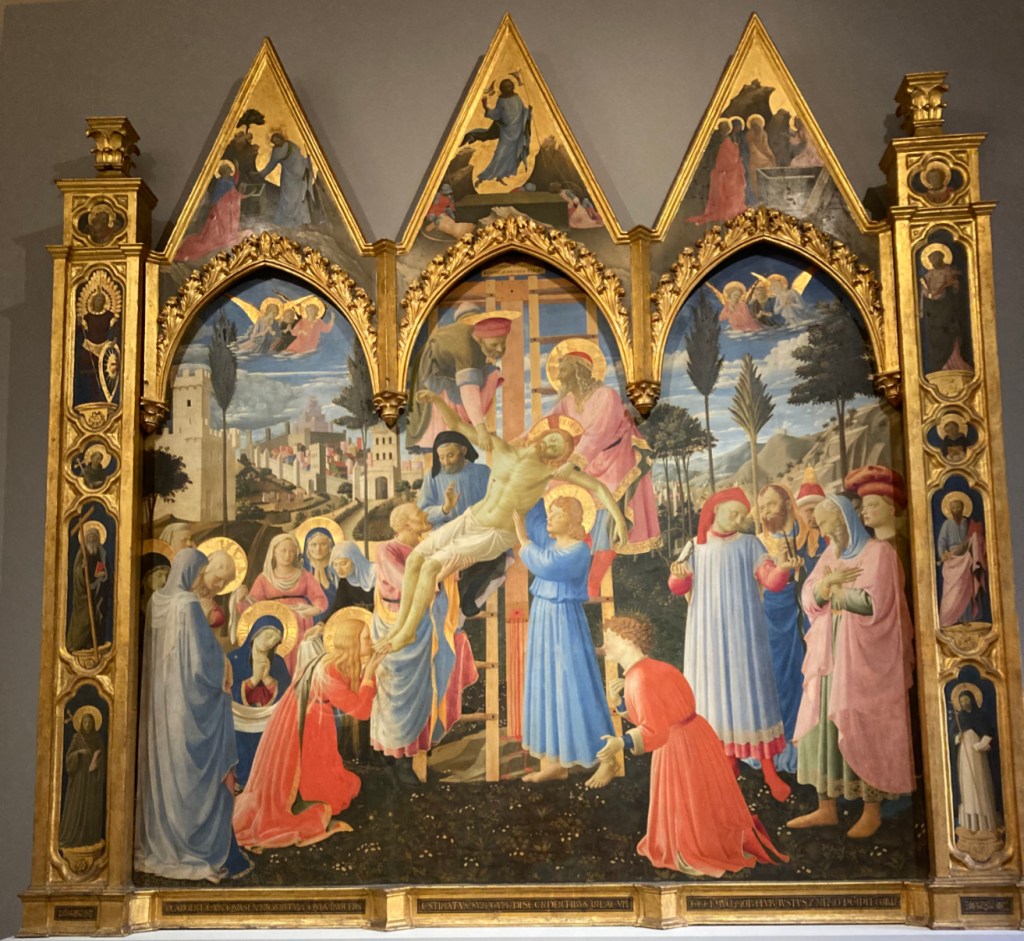
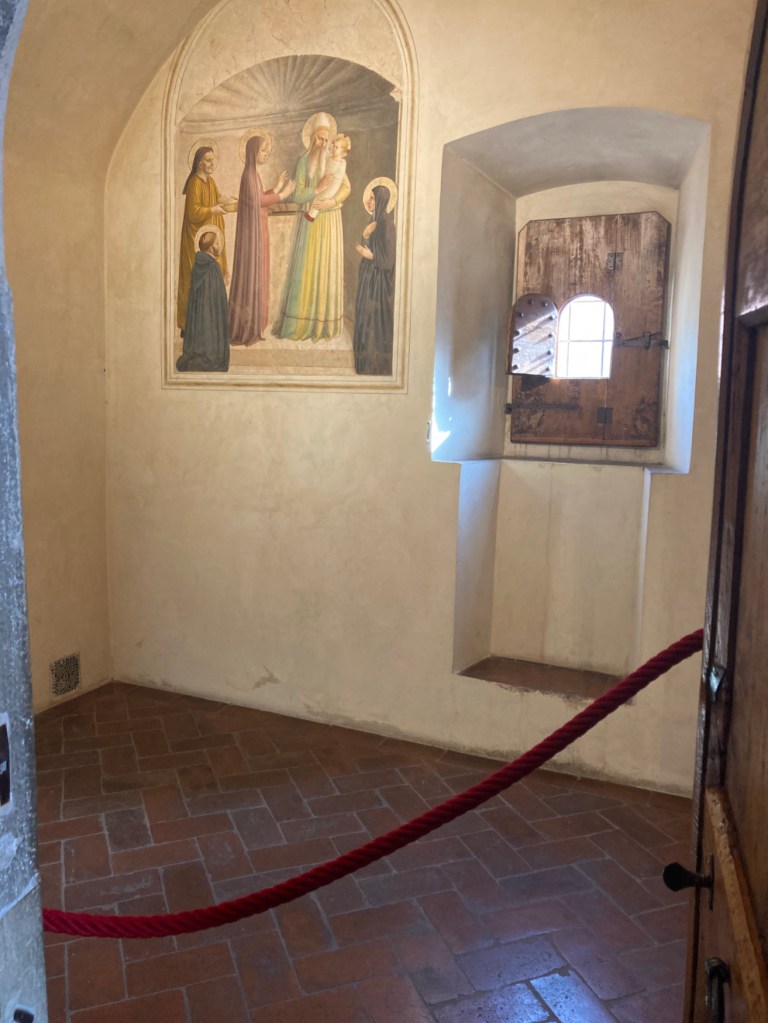
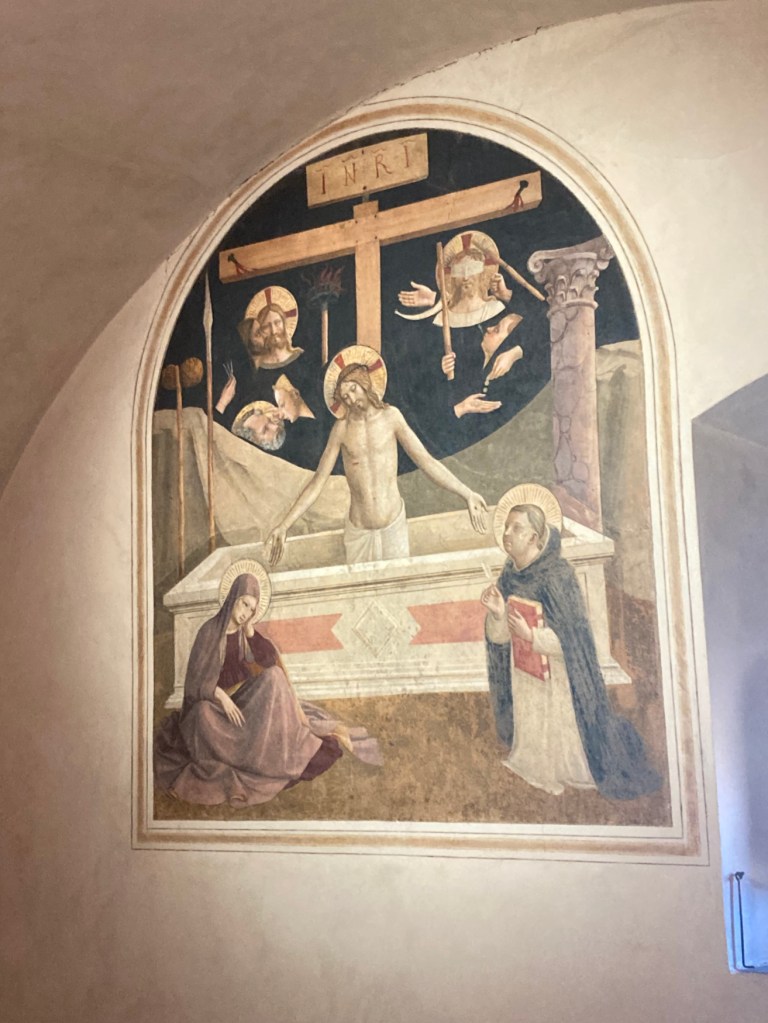
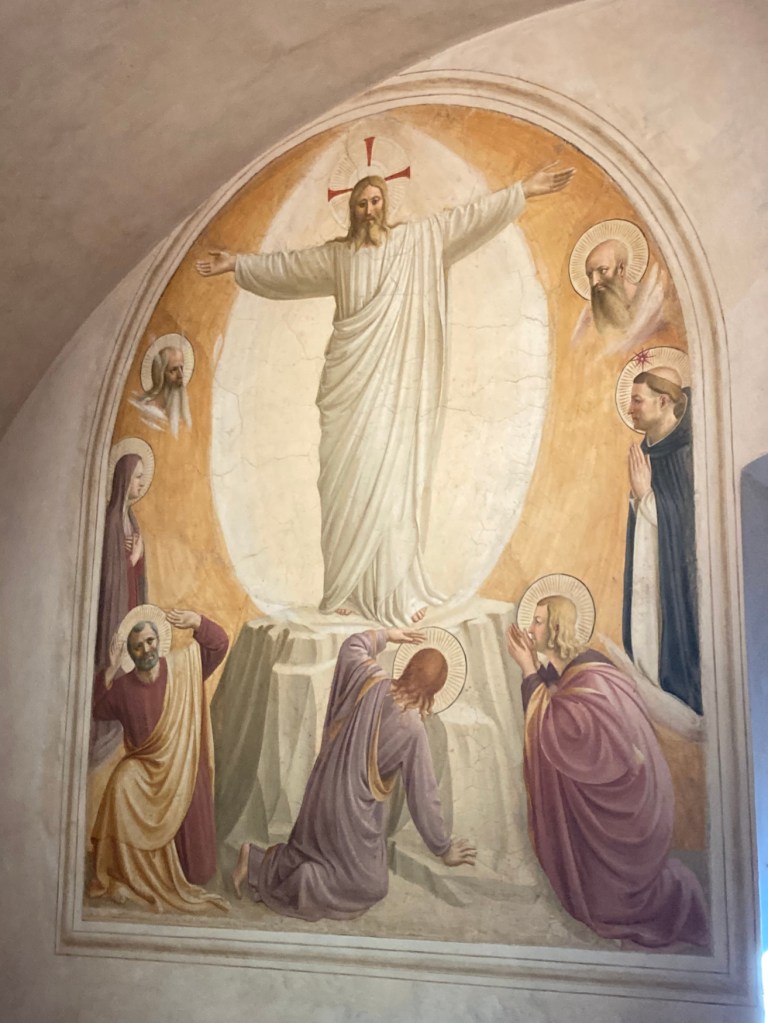
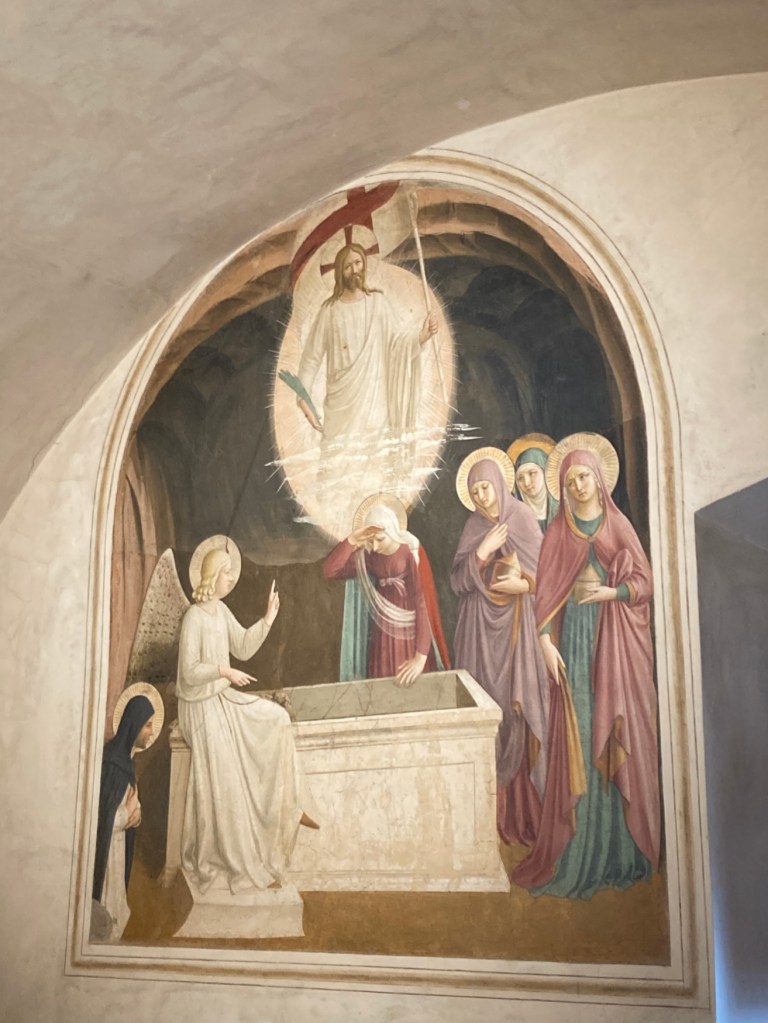
First, use of the term “convent” to refer strictly to a community of women devoting their lives to the Catholic Church is relatively new (19th century). Earlier, convent was also used for communities of men who wanted to “convene” with fellow mendicants in devotion to Christ. In the 1400’s, the Convento di San Marco in Florence was taken from a Benedictine order of friars and given to the Dominicans. The transfer was possibly orchestrated by Cosimo (the Elder) de Medici and he immediately poured in money to redesign and rebuild the convent. One of the Dominican friars who ended up at San Marco was the friar/painter Fra Angelico, arriving just as the Renaissance was heating up (realistic settings, linear perspective, 3D). Cosimo the Elder set Fra Angelico to decorating the church and convent, where he produced altarpieces and frescoes. At San Marco, he is most noted for the frescoes he painted in the brothers’ dormitory rooms. The fresco was to help the brother focus his meditation and prayer when alone in his cell.
San Marco church.
Deposition of Christ.
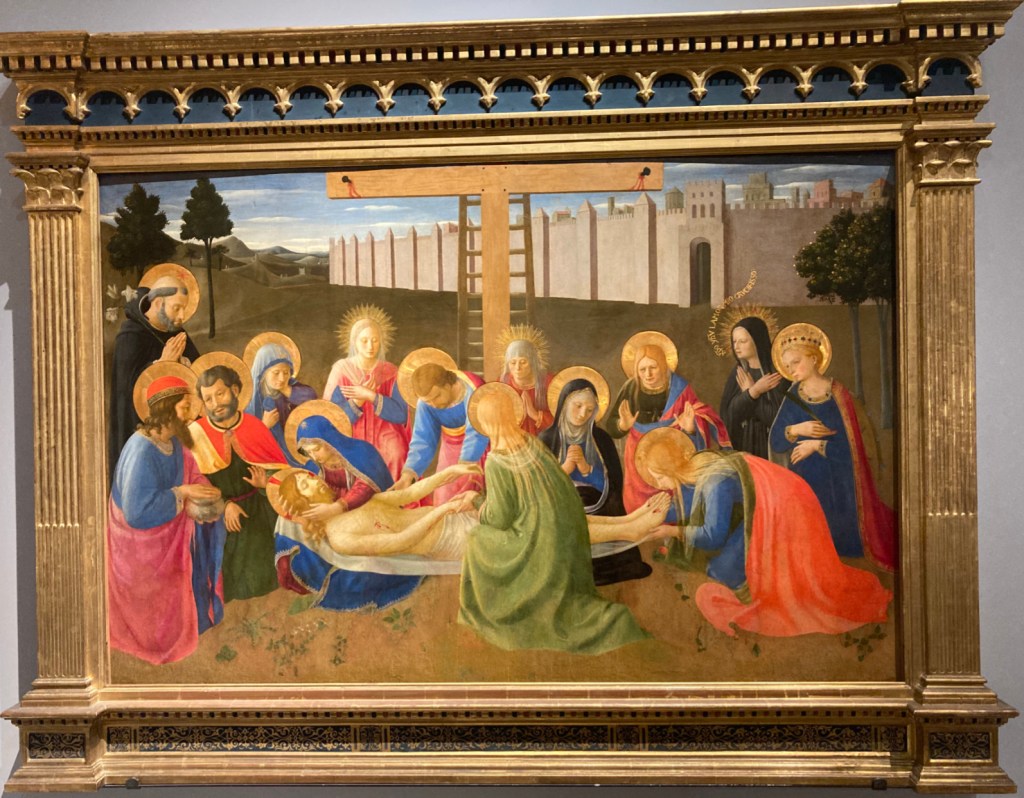
I don’t know why this one isn’t entitled the Levitation of Christ.
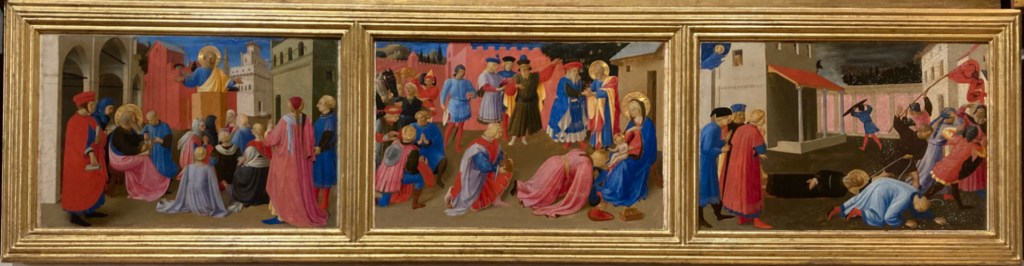
Predella (base) from an altarpiece.
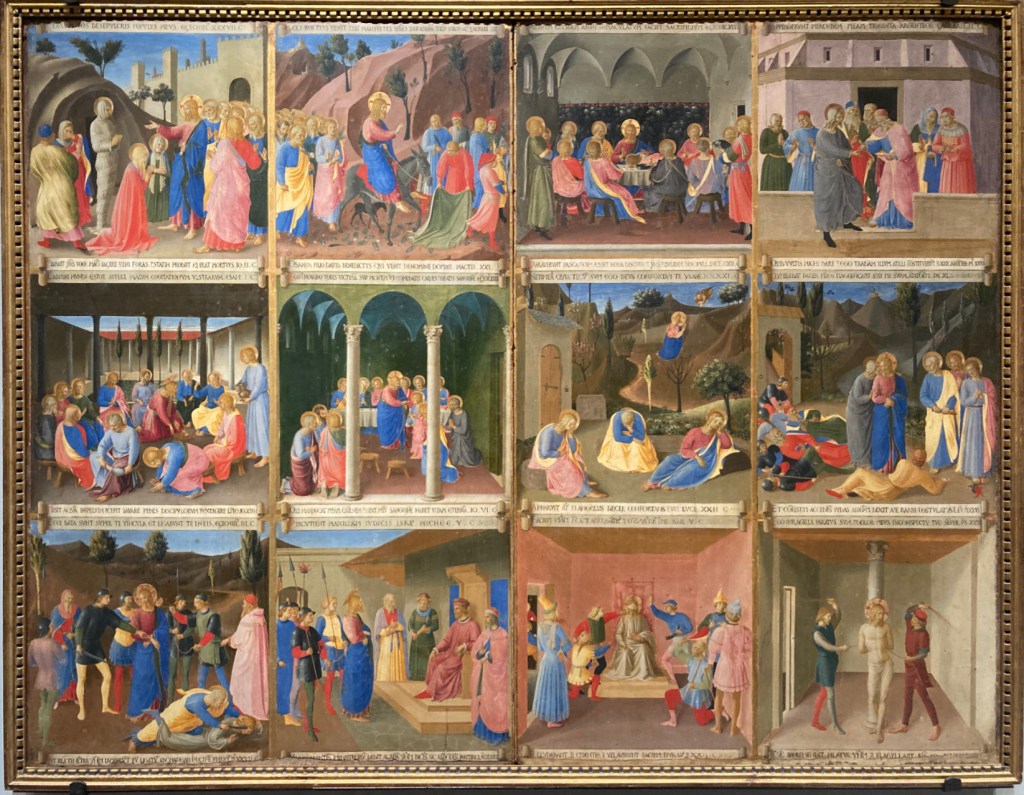
The side of a wooden chest.
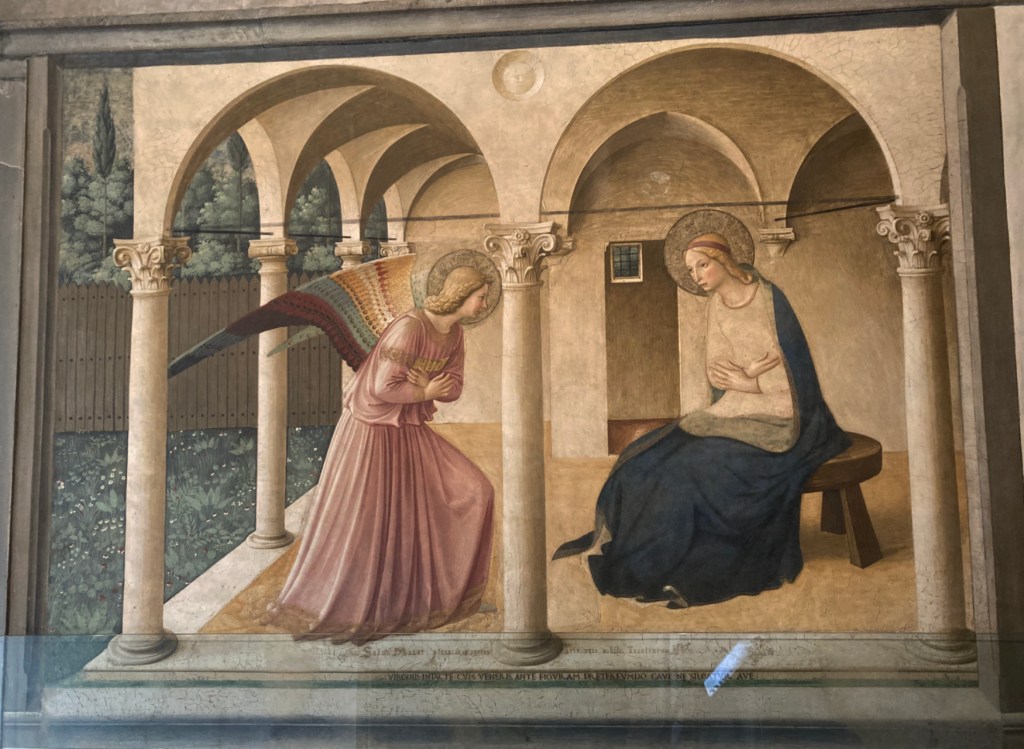
My favorite Annunciation at the entrance to the friars’ cells. Love the colors on the wings. I assume they were brighter in days past.
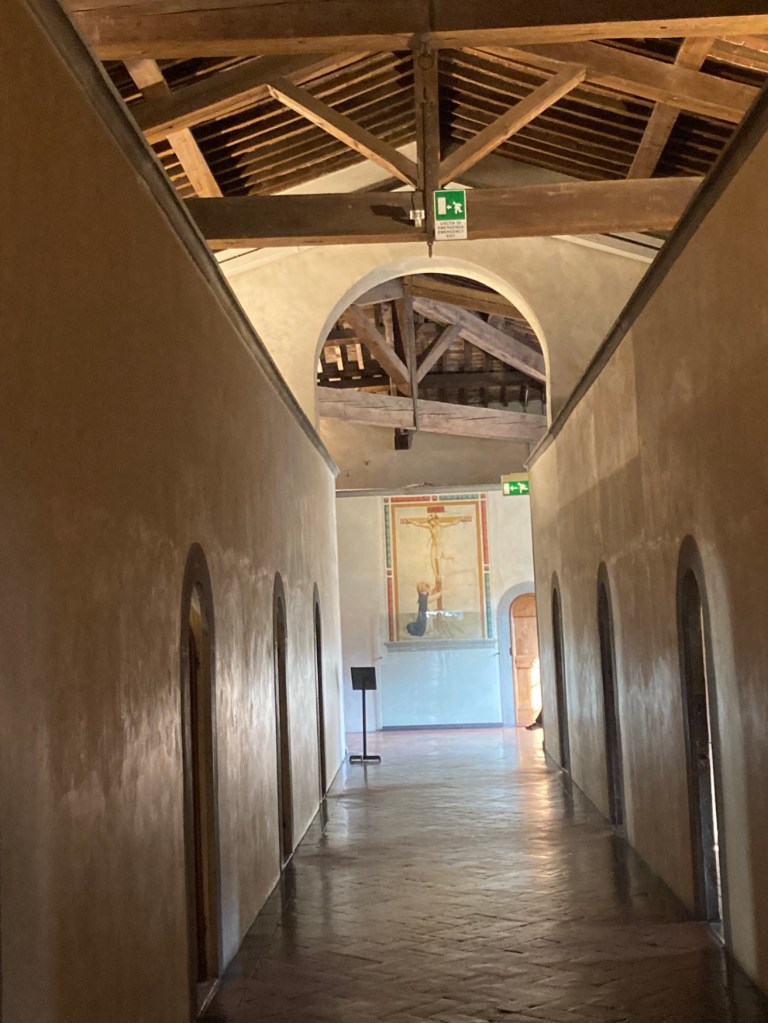
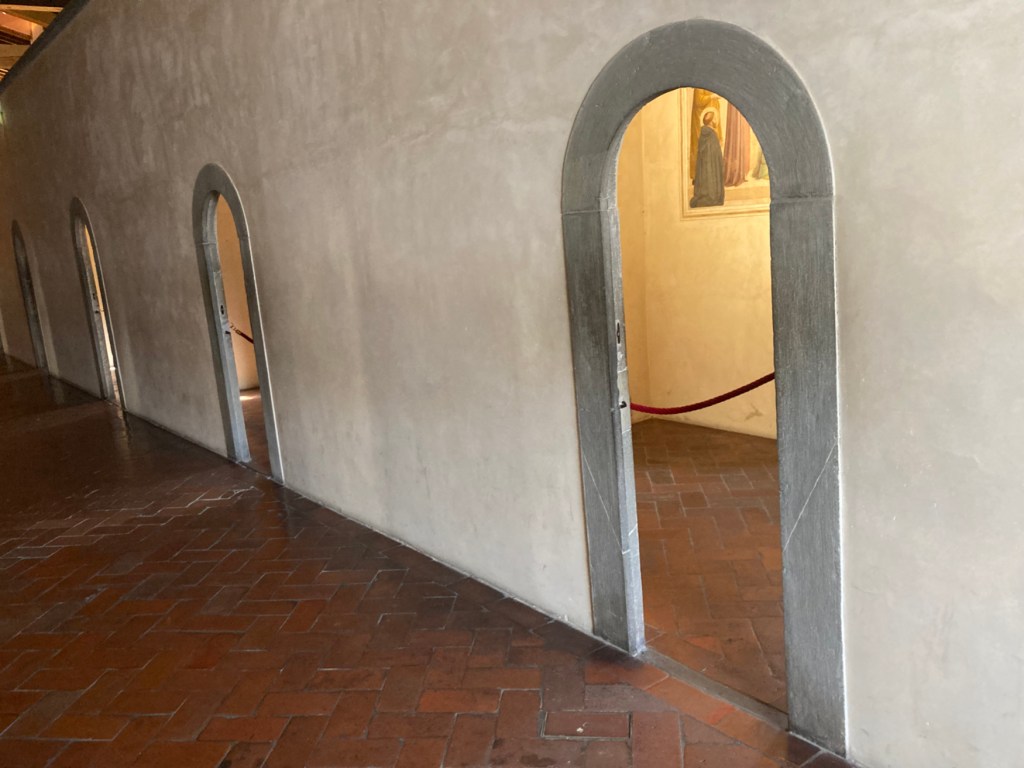
Dormitory for the Dominican friars.
Dormitory for the Dominican friars.
A friar’s cell.
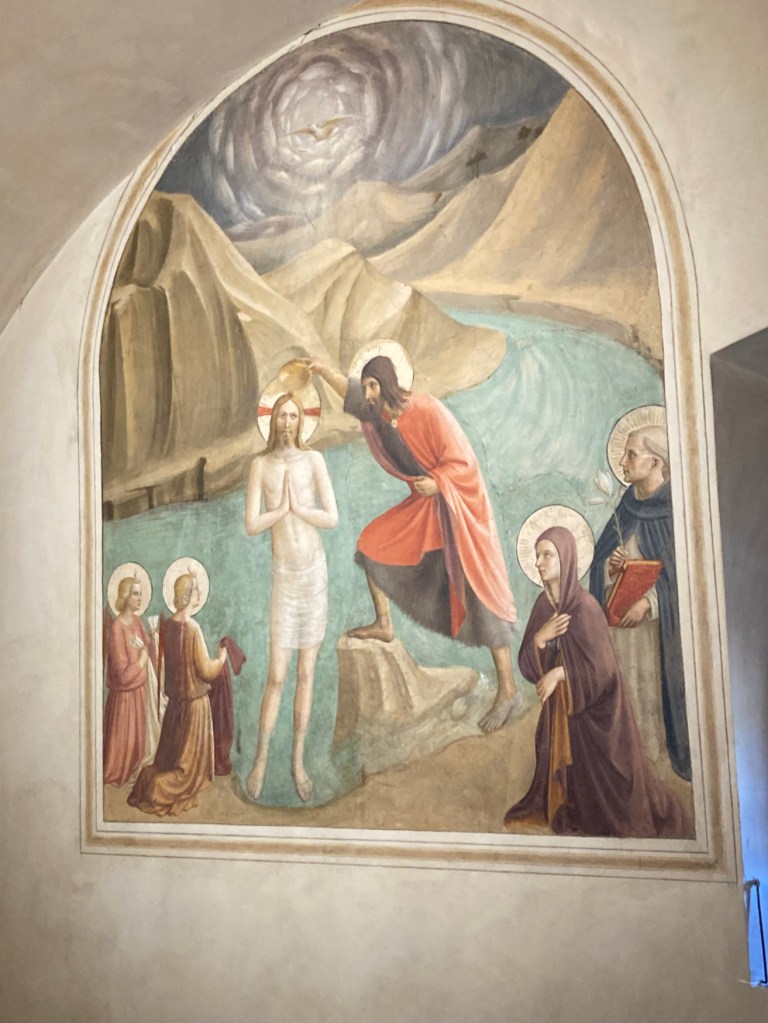
Baptism of Christ (friar’s cell).
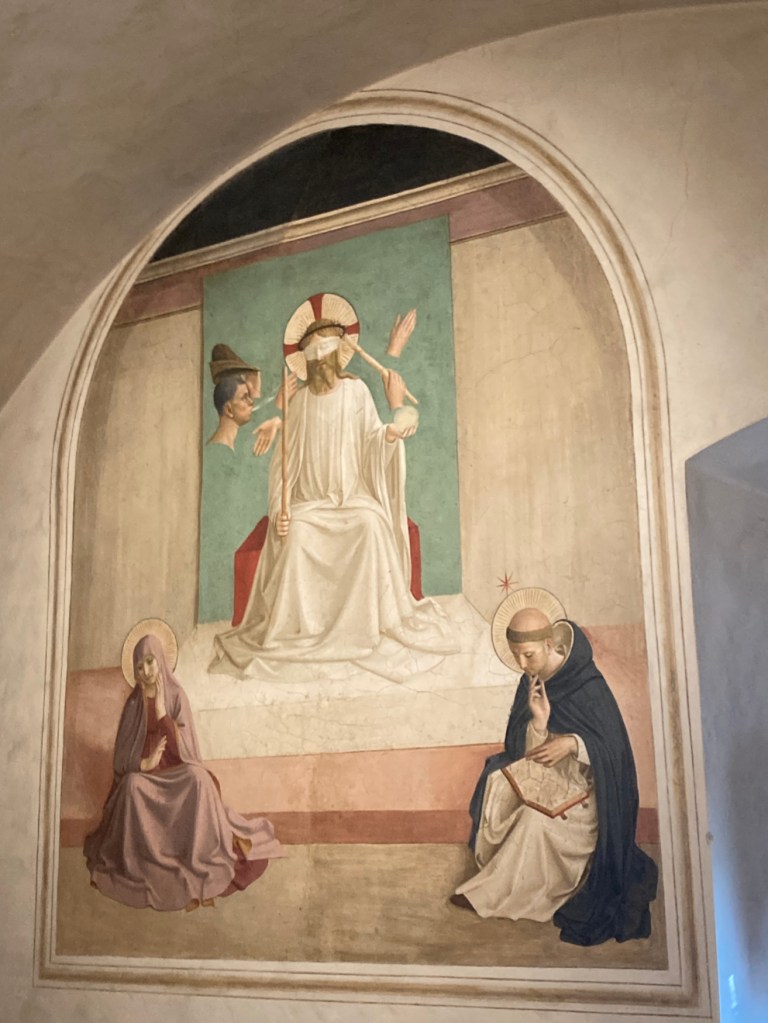
The Mocking of Christ. Kind of Salvador-Dali-like with the disembodied hands and head. Mary and St. Domenic are in front (friar’s cell).
Resurrection (friar’s cell). More Dali…wait, Fra Angelico lived before Dali.
Transfiguration (friar’s cell).
Resurrection and women at tomb (friar’s cell).
Crucifixion in the Convent of San Marco Chapter House.
Cosimo the Elder also had a cell in San Marco dormitory for when he needed downtime. Of course, his cell was much bigger with a bigger fresco (actually 2)- Adoration of the Magi and Christ, Man of Sorrows.
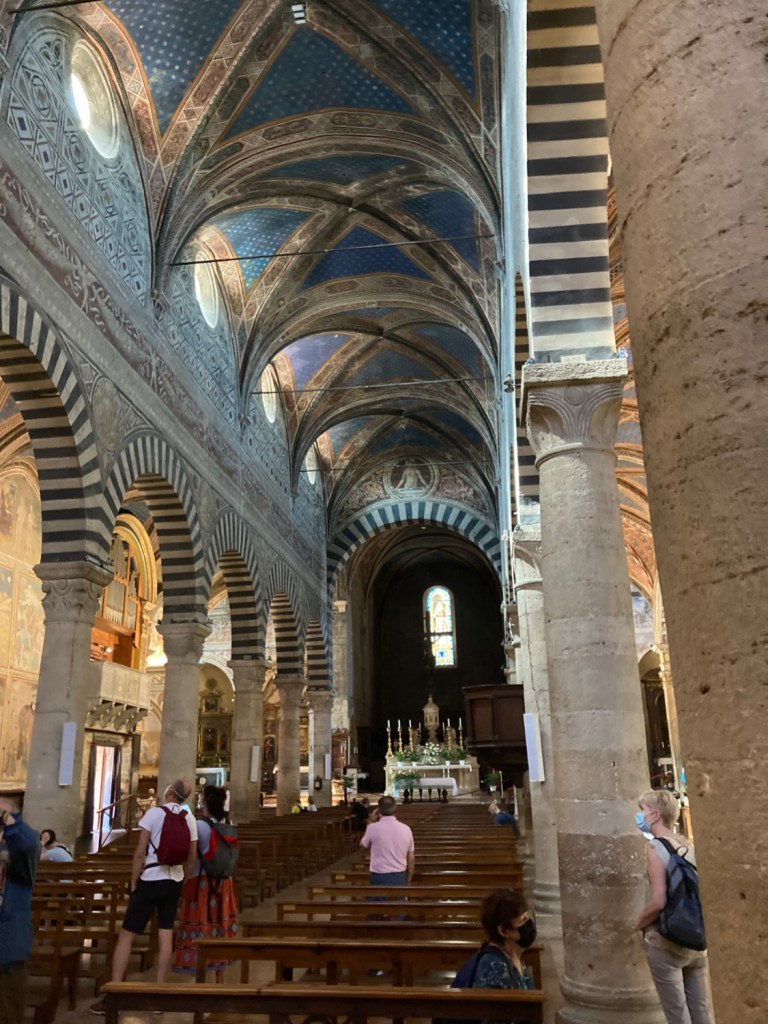
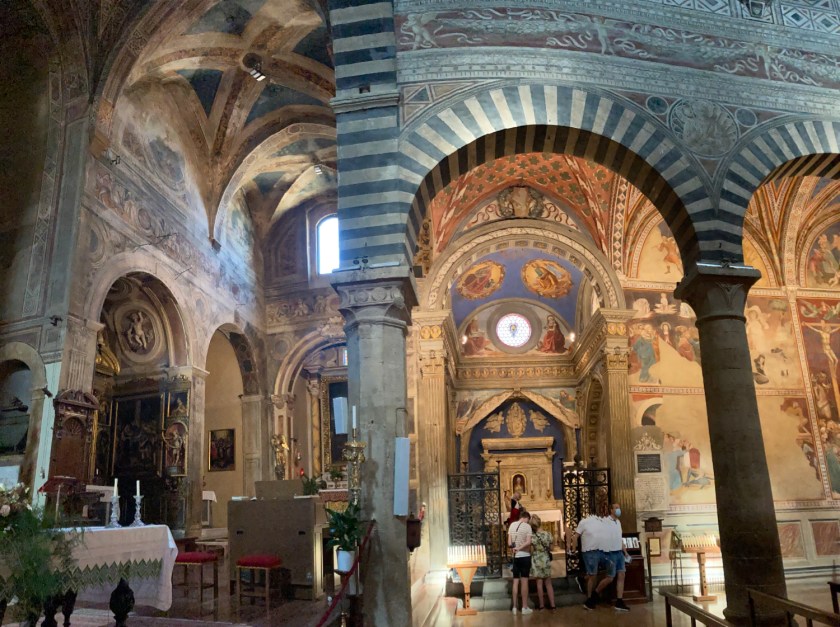
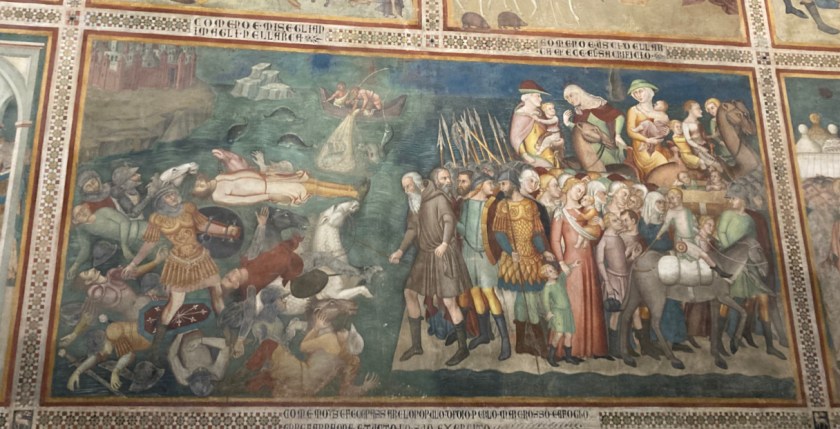
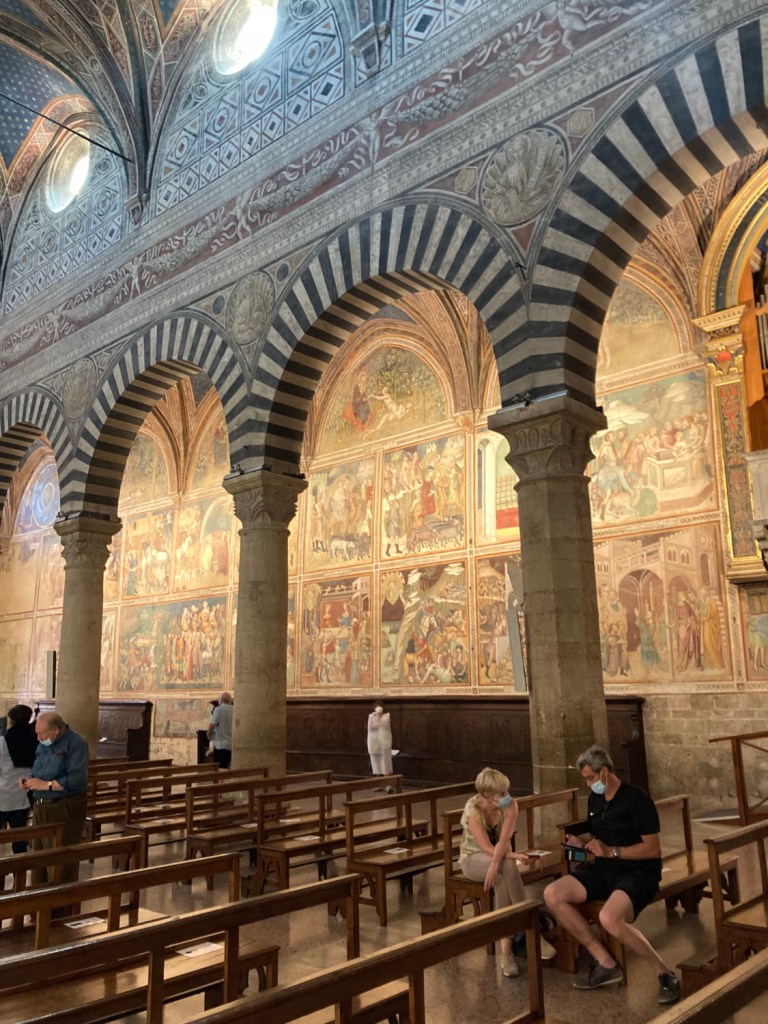
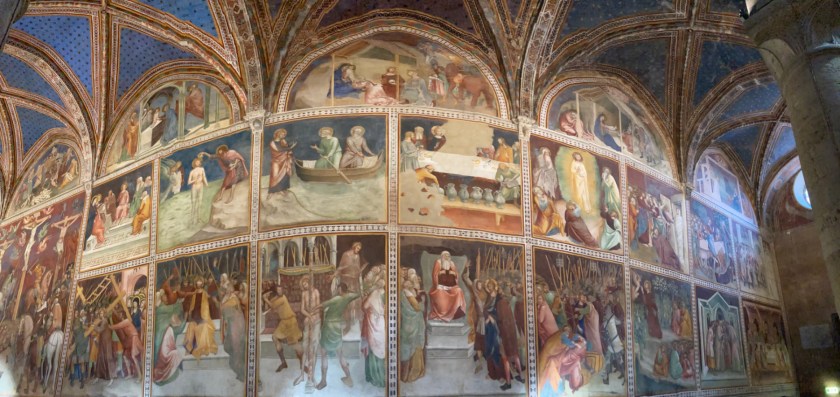
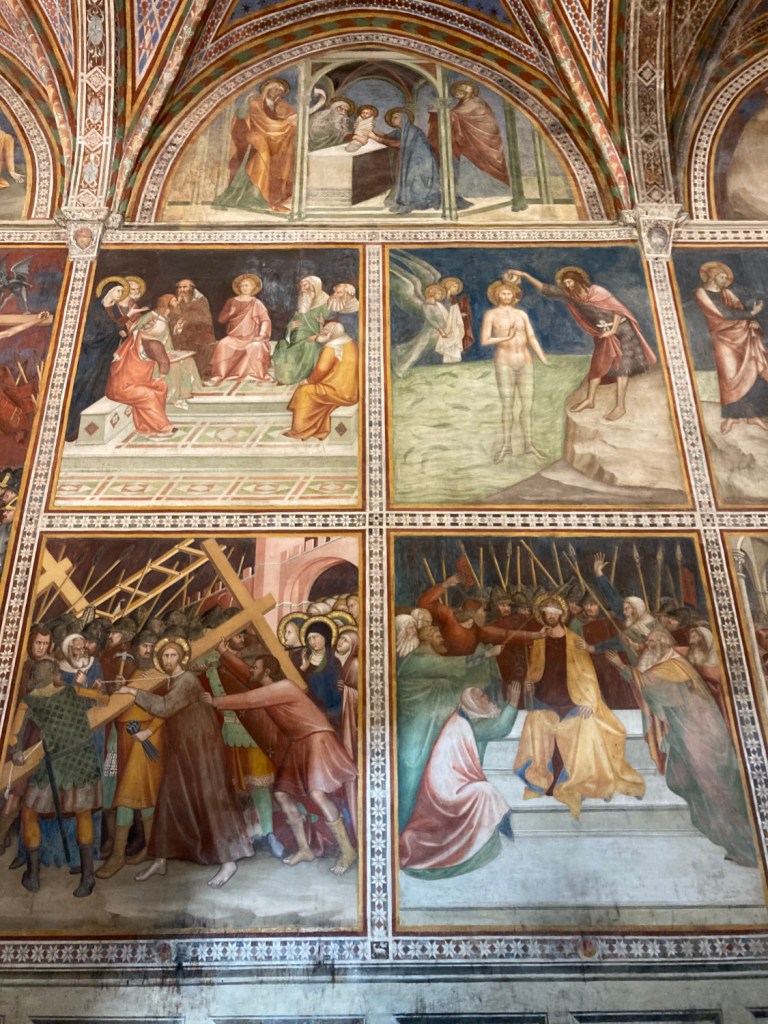
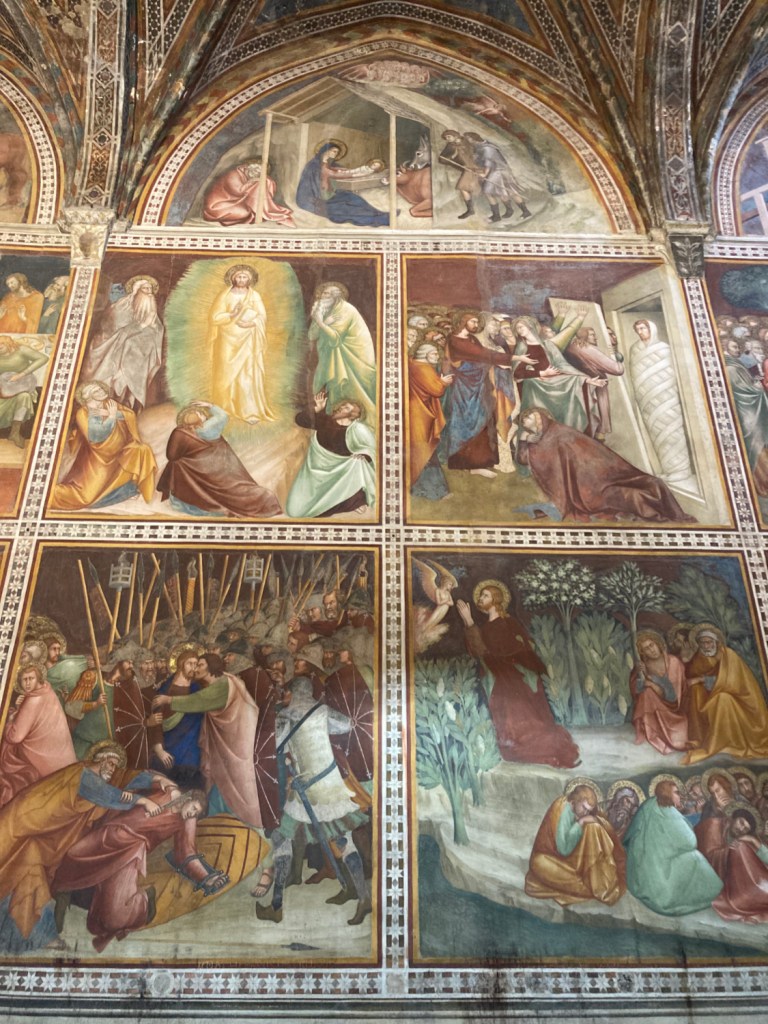
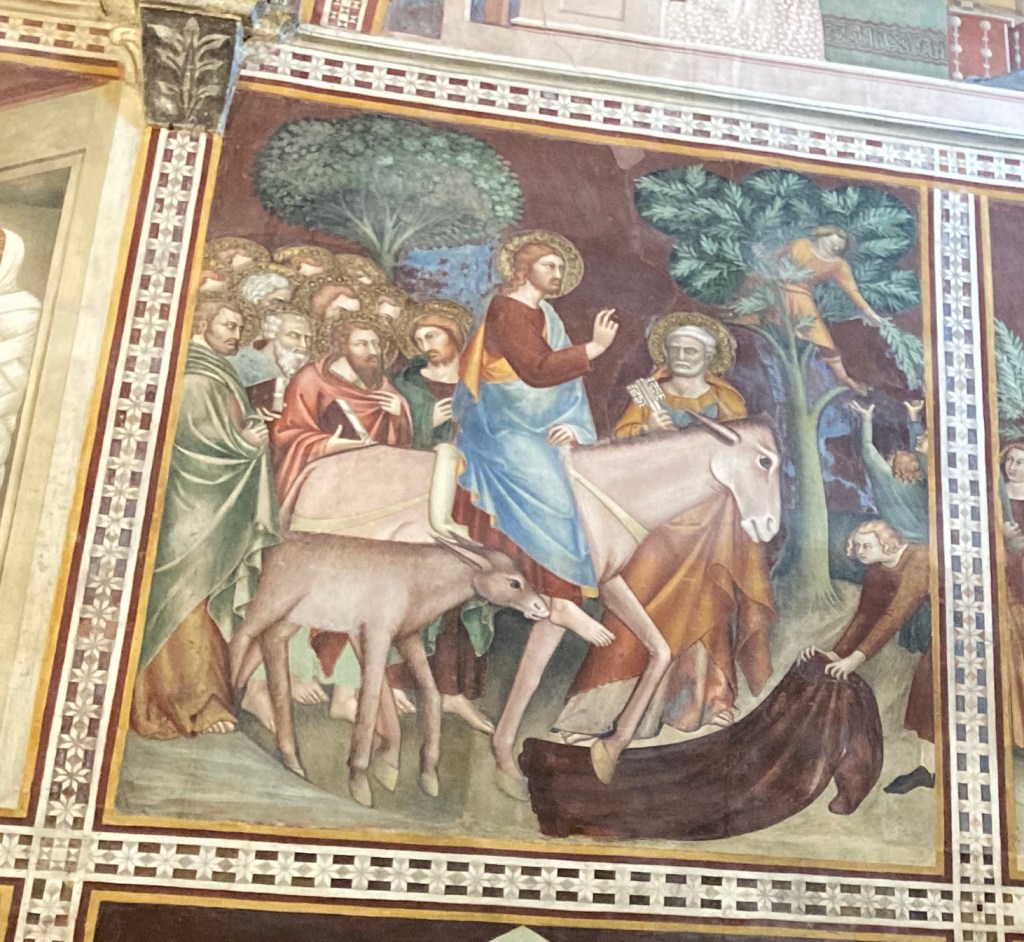
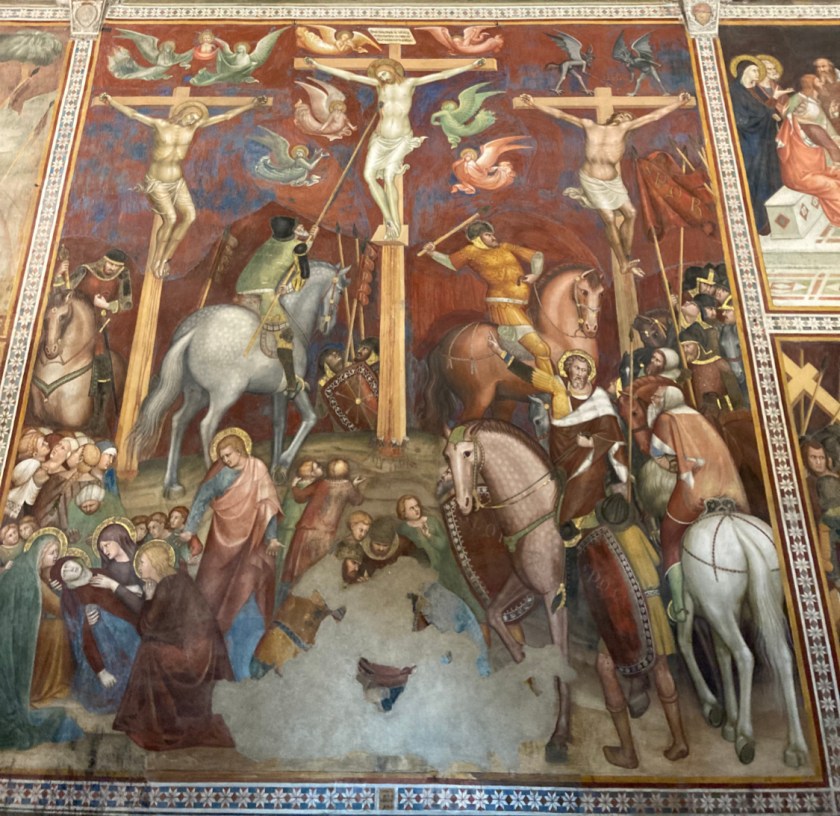
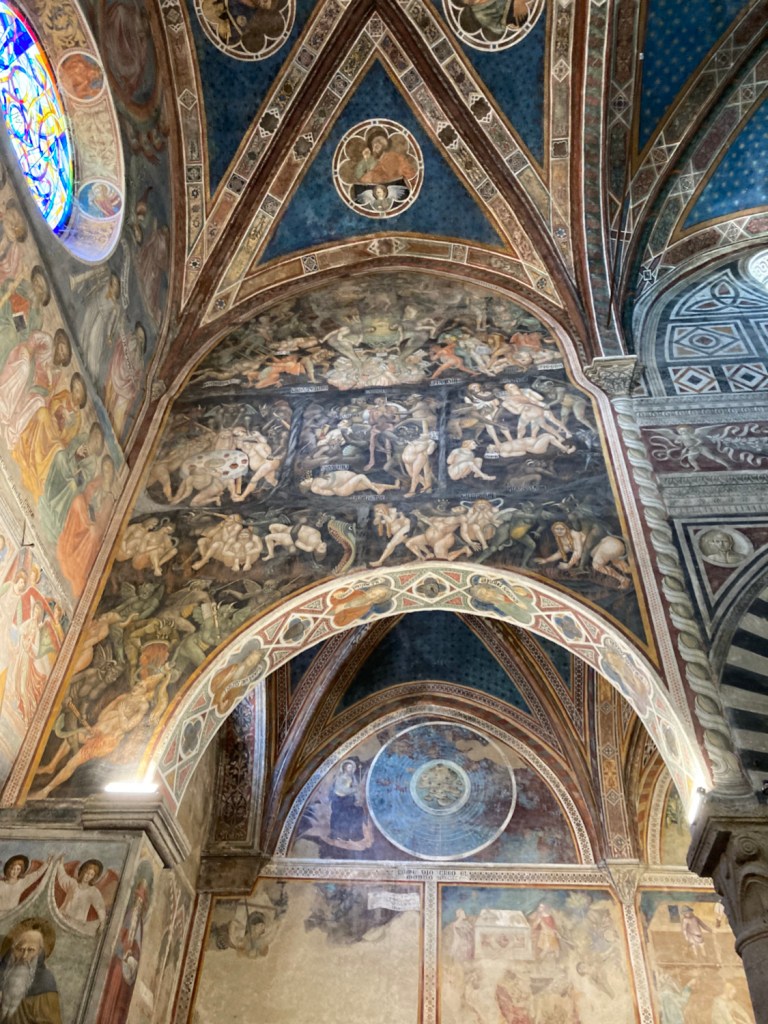
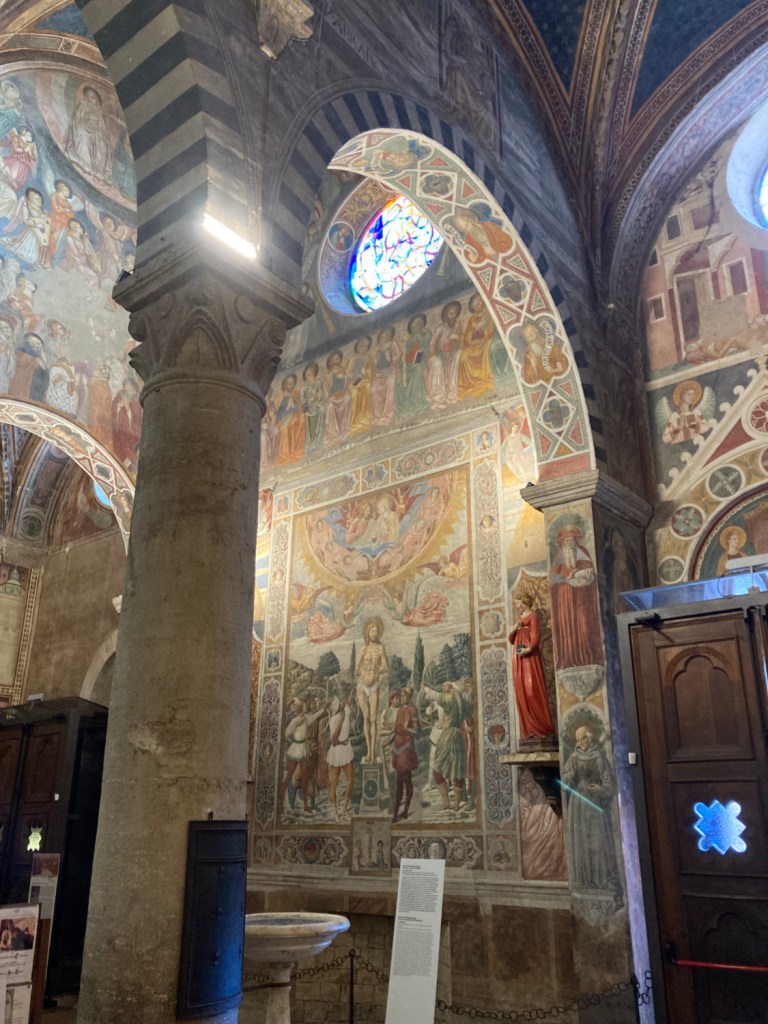
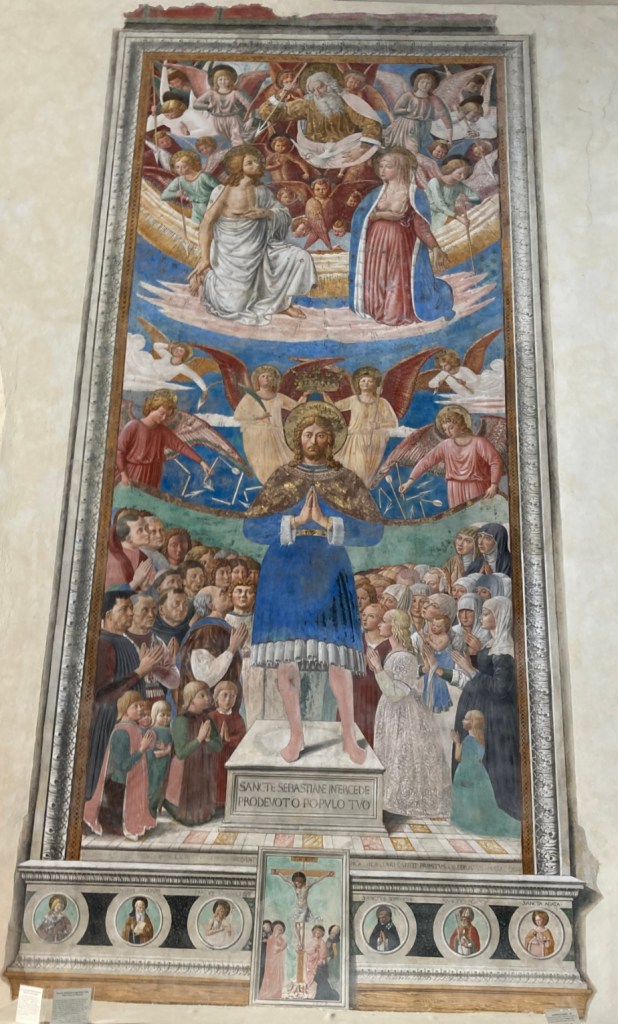
So far, this has been my favorite Catholic Church. I have developed a fascination with frescoes and this church is loaded. Frescoes are painted on damp plaster; after the plaster dries, they’re part of the building. As roofs tend to leak after a couple of hundred years and brick walls with plaster are notoriously difficult to move, the years usually take more of a toll on frescoes than paintings on canvas or sheets of wood. Fortunately, the roof of this church seems to have withstood the elements better than most and the frescoes, from entrance to altar, are in pretty good condition. There are four notable groups of frescoes. Scenes from the Old Testament decorate the left wall (when facing the altar). Scenes from the life of Christ are on the right. There is an incredible chapel dedicated to a local girl who became a saint (St. Fina or Serafina). Frescoes of St. Sebastian as well as Paradise and Hell are at the back of the church.
The Collegiate Church of the Assumption of Mary. Don’t judge this church by it’s plain facade.
Looking towards the altar. Old Testament scenes on left and New Testament scenes on right.
Frescoed from front to back and floor to ceiling.
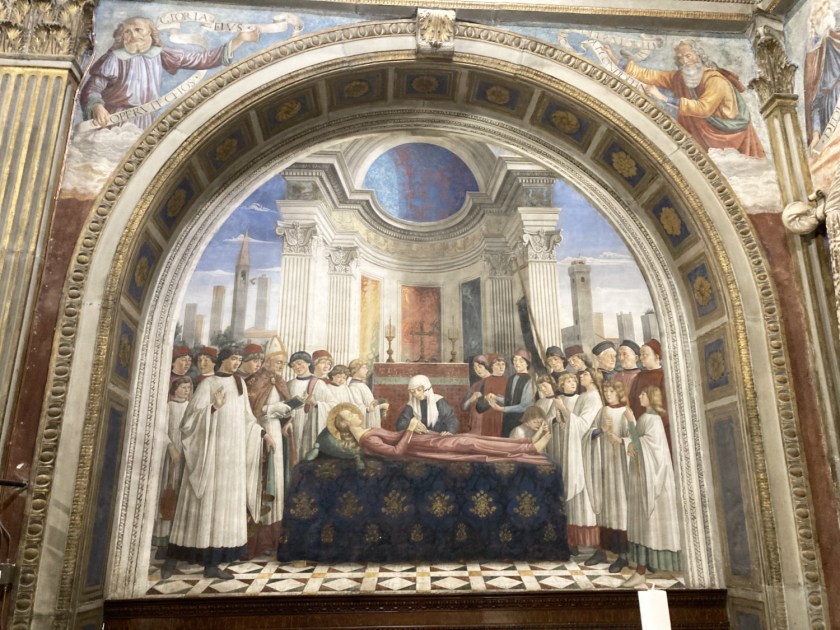
Chapel of St. Fina by Dominico Ghirlandaio
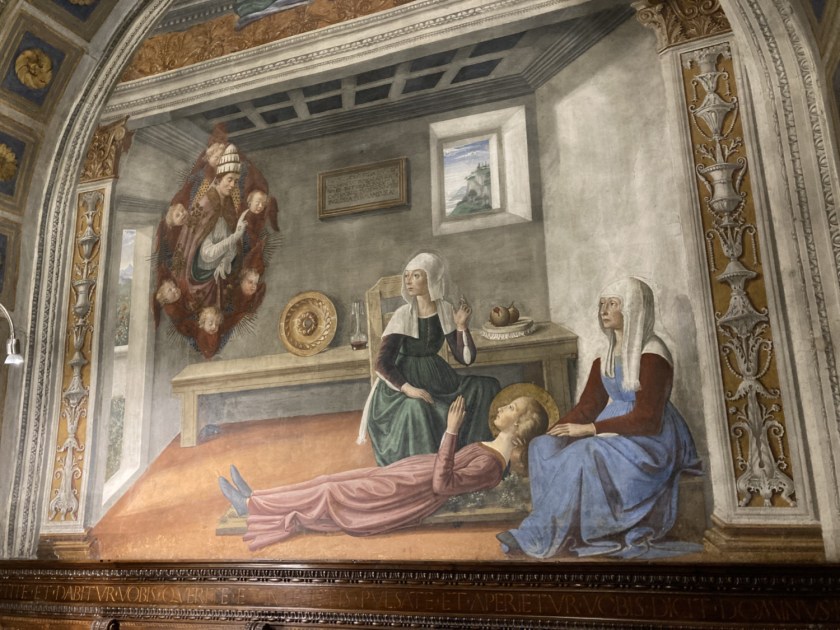
.Chapel of St. Fina (beyond the middle arch). St. Fina (1238-1253 CE) fell ill and became paralyzed at age 10. She bore her suffering and pain with grace and patience.
Ceiling of St. Fina’s chapel decorated with frescoes of Matthew, Mark, Luke, and John. The frescoes in this chapel are by Dominico Ghirlandaio and are his first major works. Ghirlandaio is also remembered for his school/workshop which is where Michelangelo received his first formal training.
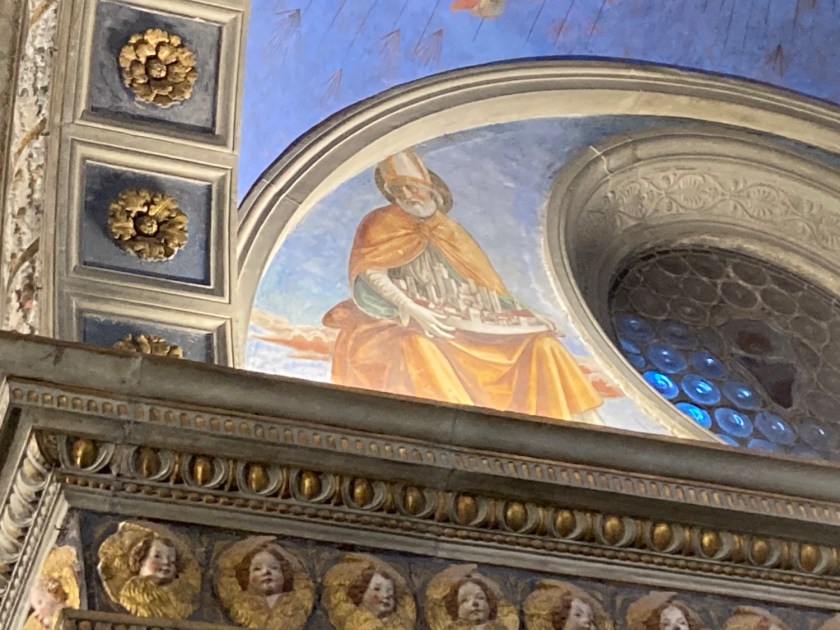
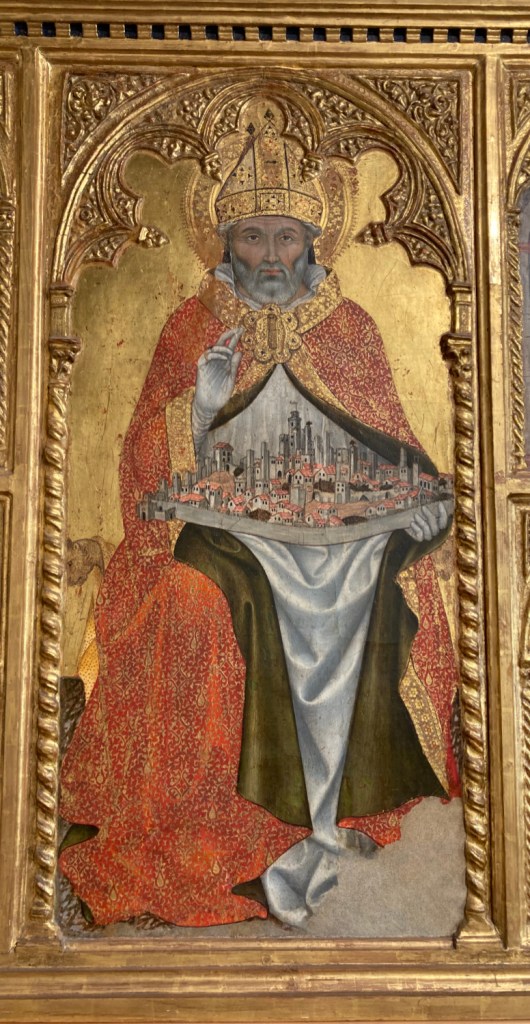
Another portrait of Sanctus Geminianus holding and protecting the town of San Gimignano.
St. Pope Gregory the Great (assisted by disembodied cherub heads) telling Serafina that she was being called to heaven. Note the attendant in red on the right supporting Fina’s head.
Fina became a saint because of her posthumous miracles. Two are shown here. First, the attendant noted above (here in the middle holding St. Fina’s hand) supported Fina’s head for so long that her hand became paralyzed. While sitting with the Fina’s body, the paralysis was cured. At St. Fina’s feet, a blind boy touches his eyes to her feet which restored his vision.
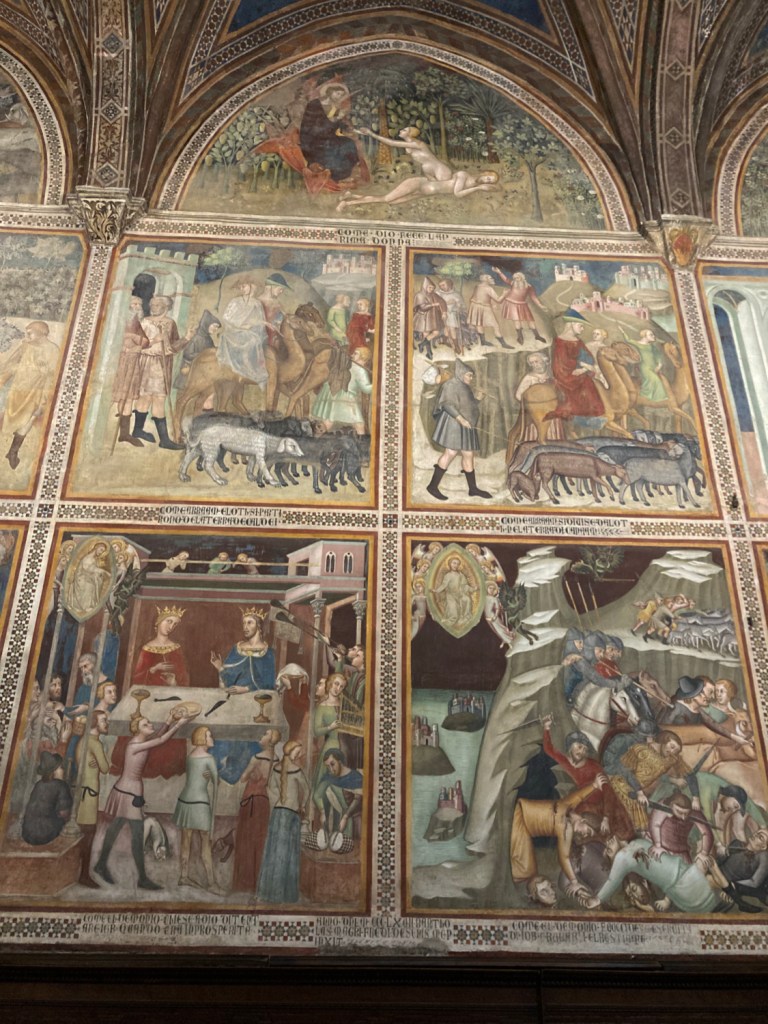
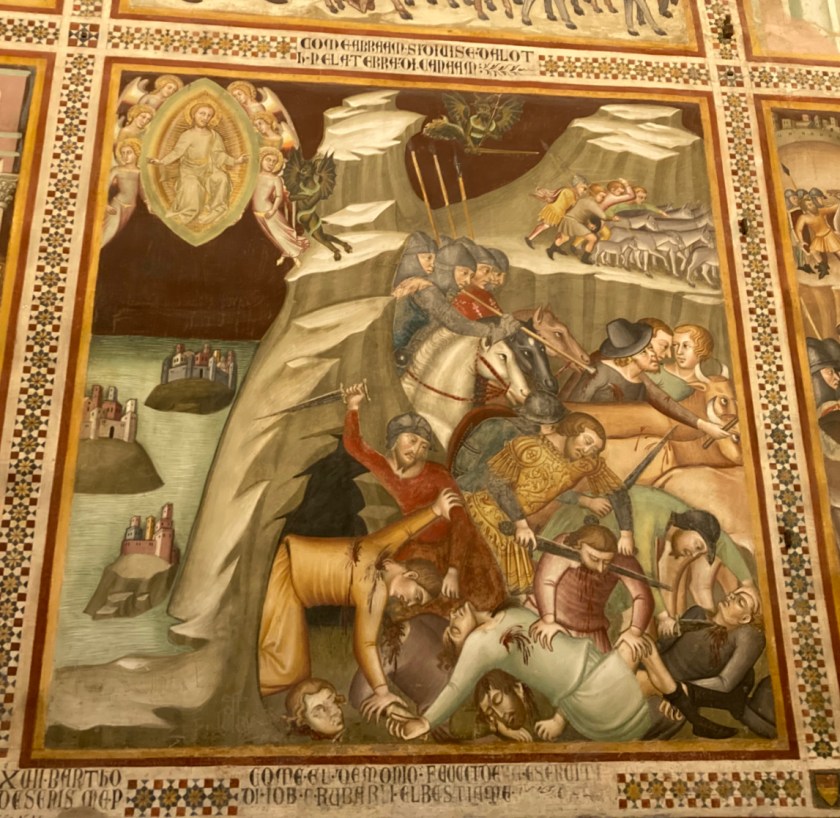
Old Testament Cycle (left aisle) by Bartolo di Fredi
Killing of Job’s servants and animals. I don’t really remember any minister or Sunday school teacher making a big deal out of this. I wouldn’t have predicted this to be a featured story from the Old Testament.
Life of Christ (right aisle) by Lippo Memmi…probably
Tortures of Hell by Taddeo di Bartolo
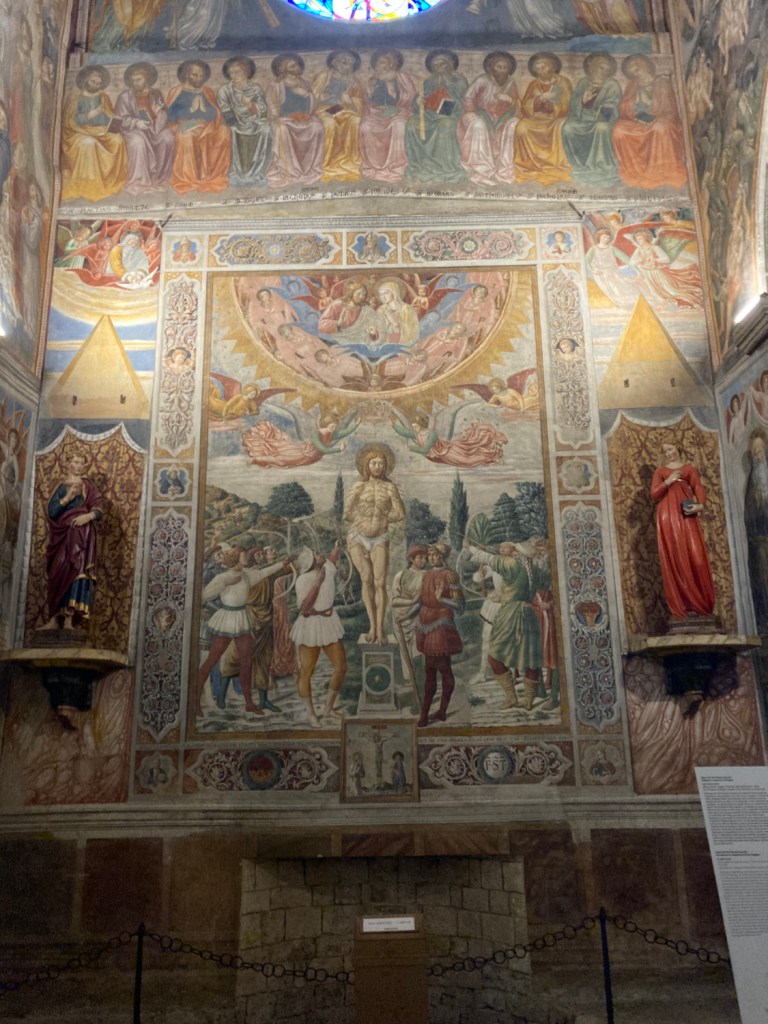
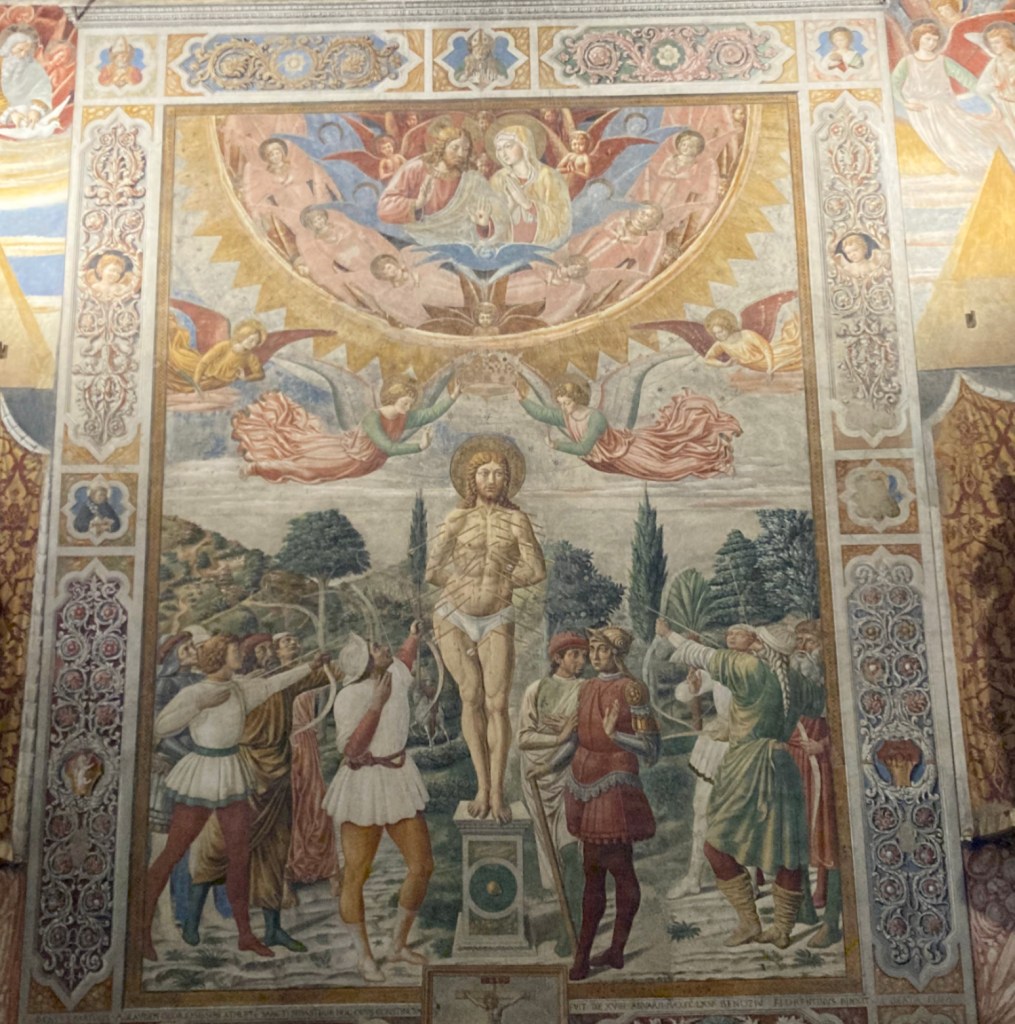
The Martyrdom of San Sebastian by Benozzo Gozzoli
I hate to be a stickler, but my reading of the World Wide Web is that Sebastian actually survived the arrows. Having recovered, he went to a parade where he heckled Roman Emperor Diocletian who had Sebastian arrested and beaten to death. So, this attempted execution by a crack team of archers is, at best, just the beginning of his journey to martyrdom.
This fresco by Gozzoli in the Chiesa Sant’Agostino (also in San Gimignano) illustrates San Sebastian’s Medieval association with protection from the plague. Angels spread his blue cape over the people of San Gimignano protecting them from the “Black Death,” represented by the arrows breaking on the outspread cape.
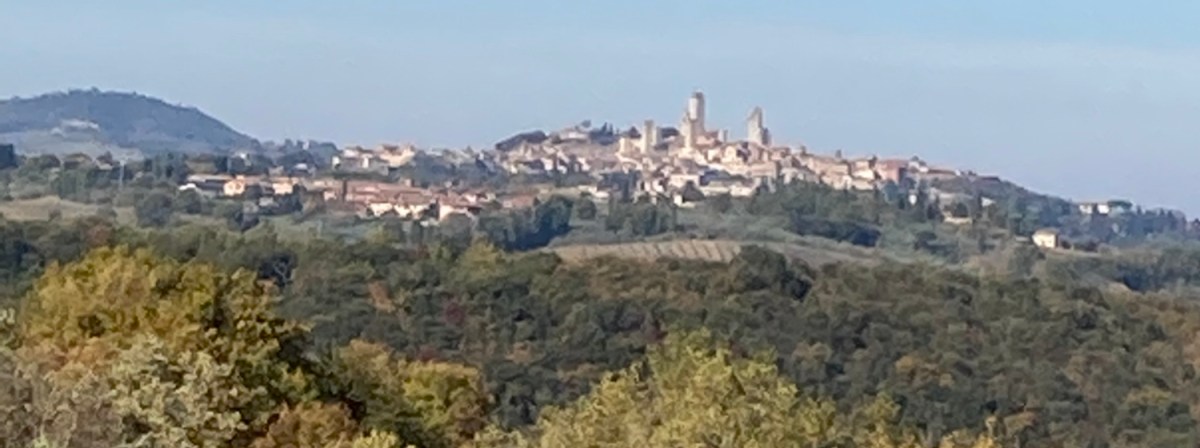
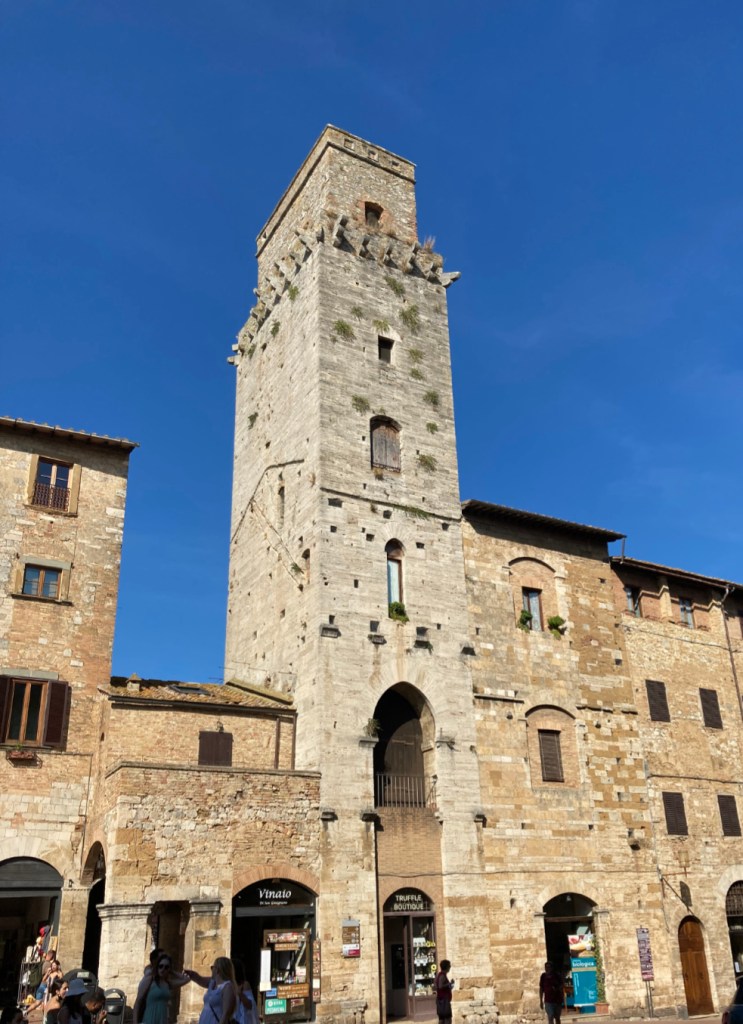
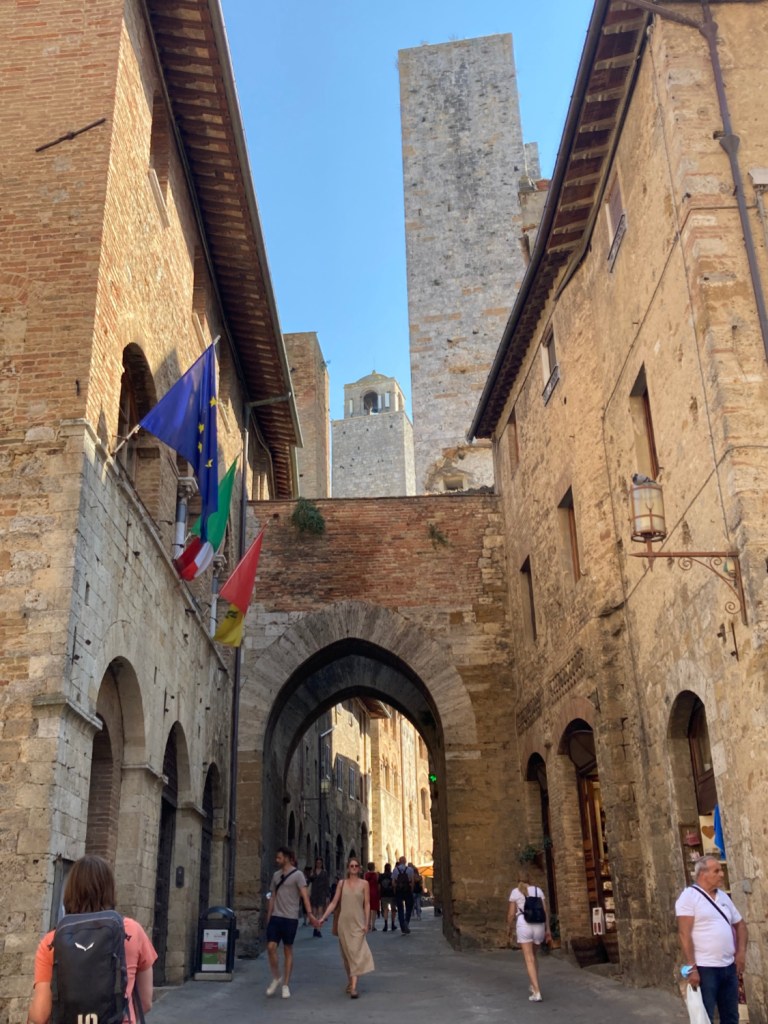
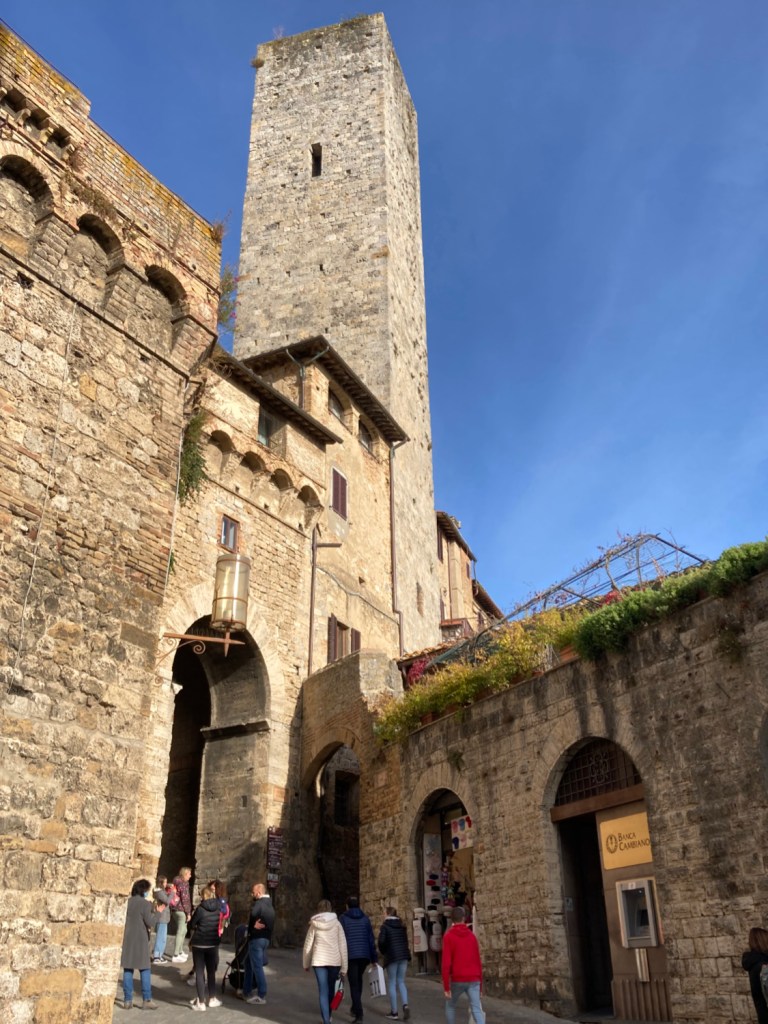
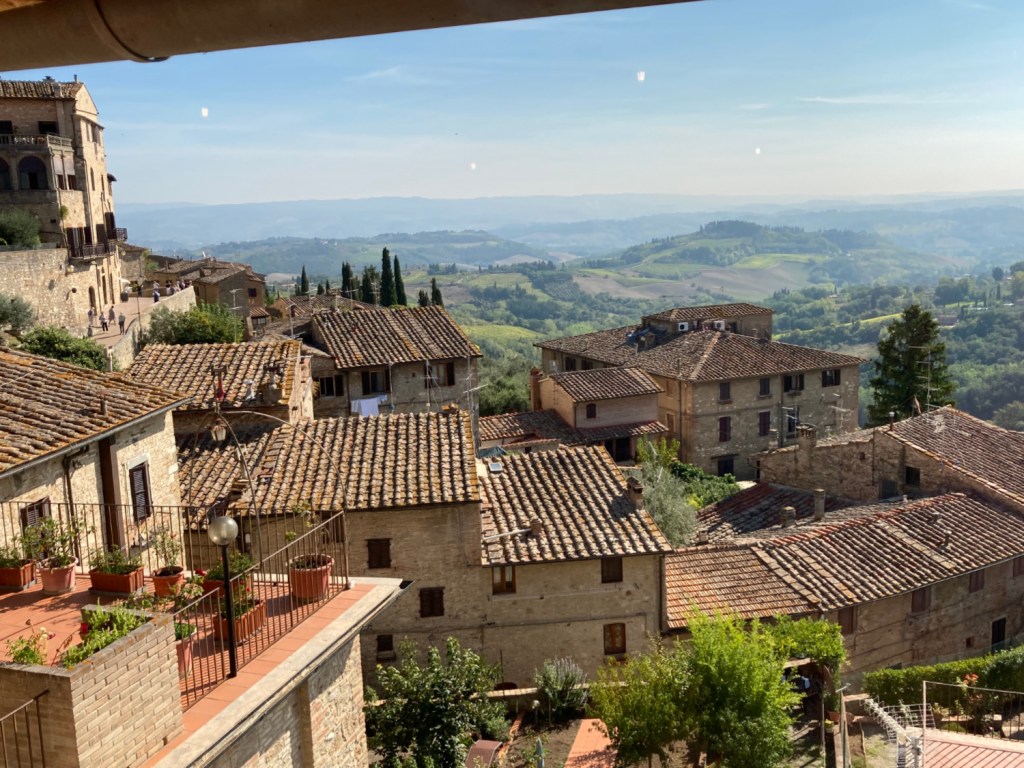
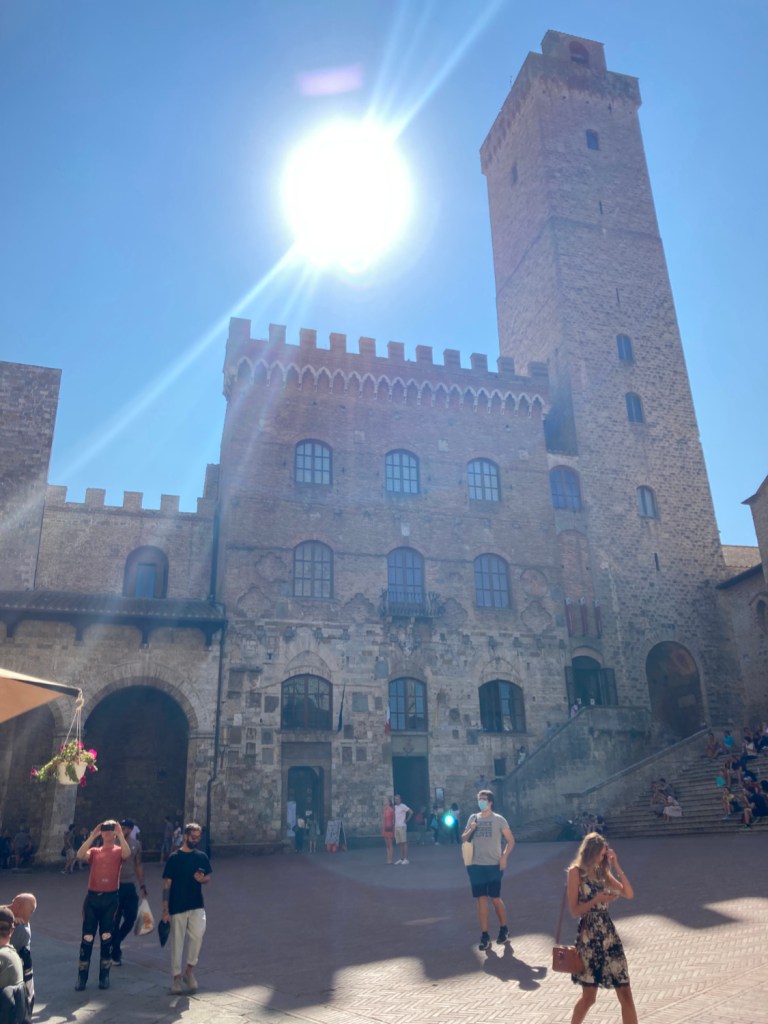
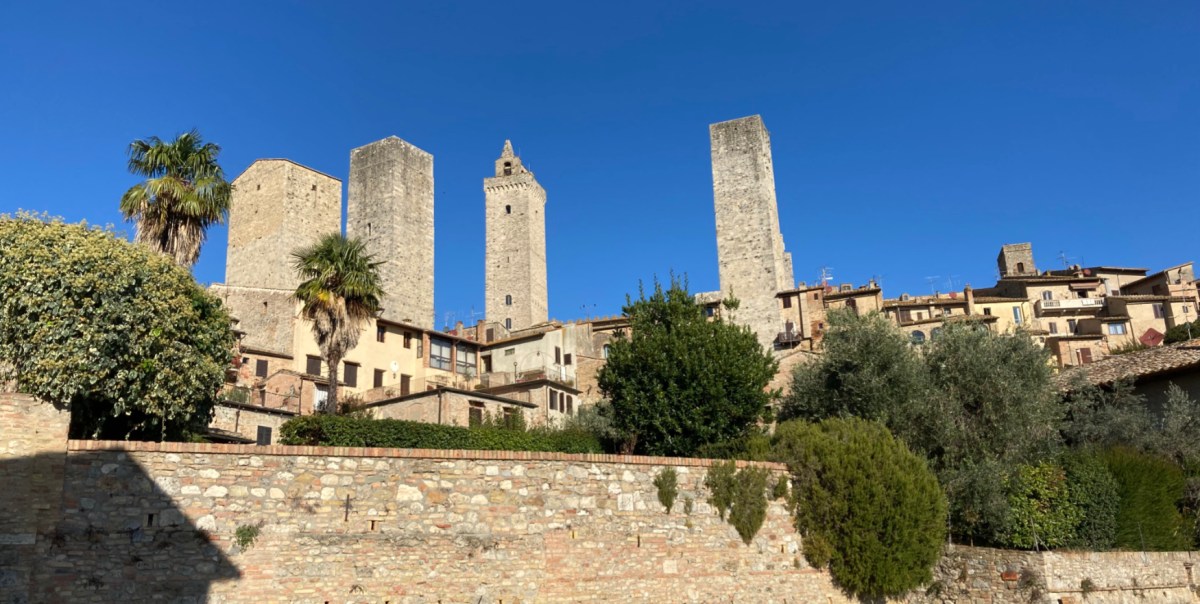
San Gimignano (san jim-in-yawn-o) began as an Etruscan town in the 3rd century BCE. In the 1st century BCE, it was know to the Romans as Silvia and became San Gimignano in 450 CE when Saint Geminianus posthumously intervened to protect it from Attila the Hun. Today, San Gimignano is famous for the number of surviving medieval towers that give it the skyline of a 20th century city. The web reports two explanations for the construction of these towers by medieval patrician families. First, the towers show wealth and power (‘my tower is taller than your tower’). Second, competition between these patrician families could be intense and the towers were potential refuges when a rivalry escalated to violence. Most Medieval towns had these dramatic skylines. For several reasons, San Gimignano has retained the most towers (14 out of the original 72). It is a spectacular Tuscan hill town.
Sept. 28, 2021– Tuscan countryside just outside the main gate.
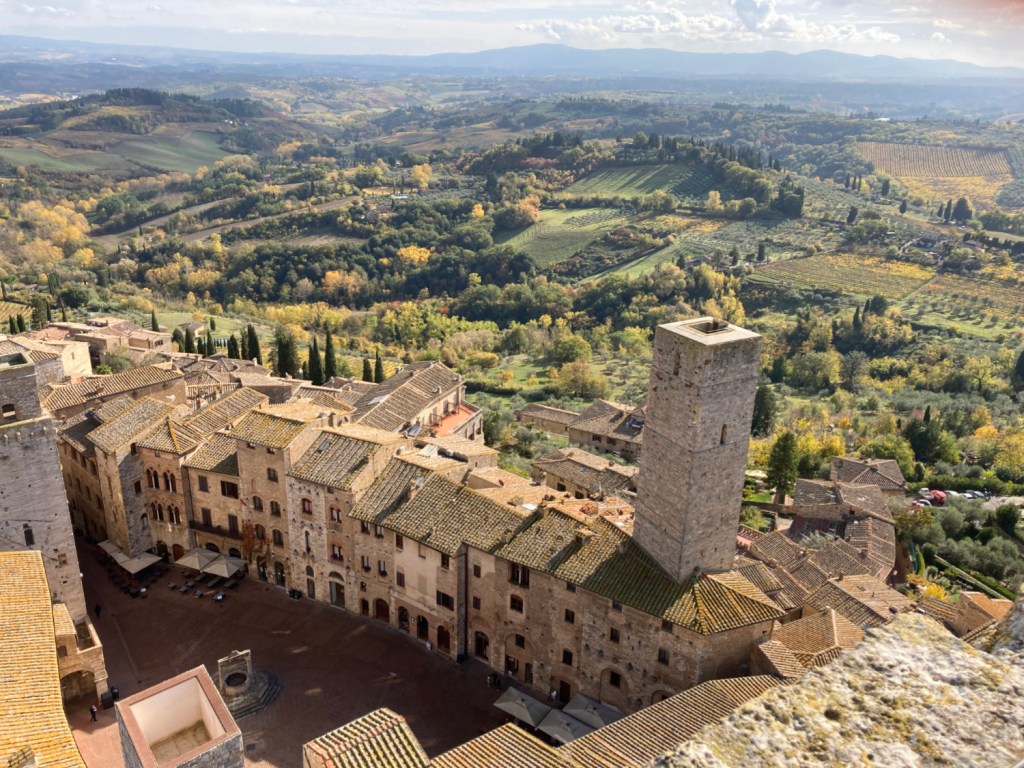
Oct. 28, 2021– the areas turning yellow are mostly vineyards.
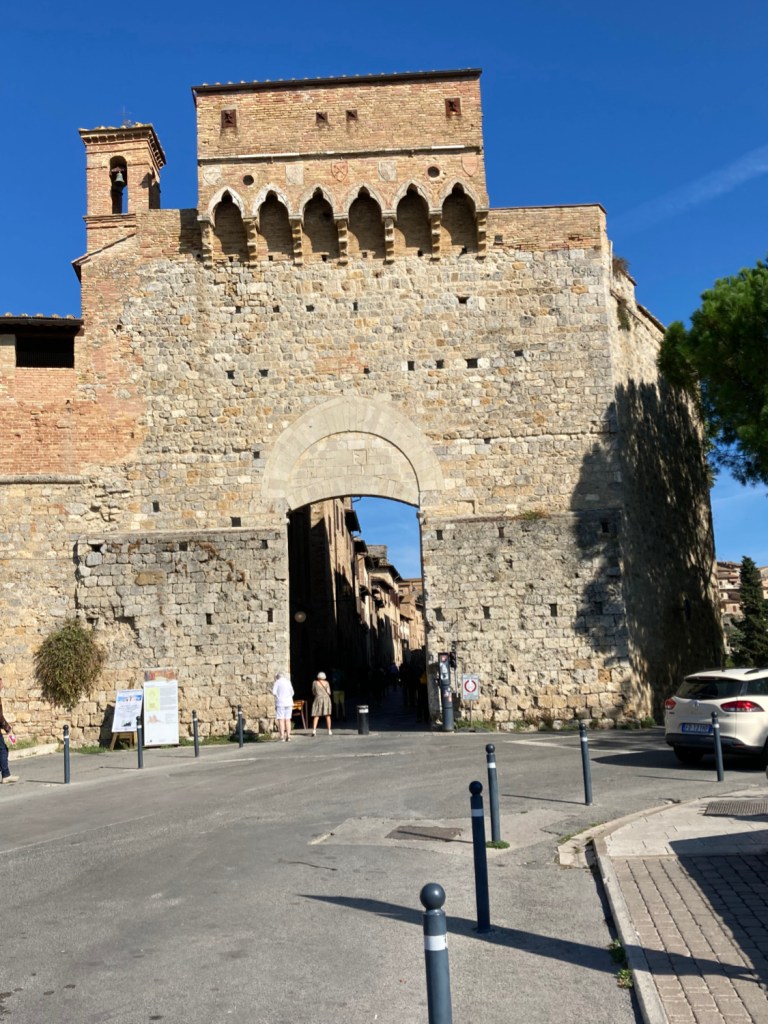
Porta San Giovanni
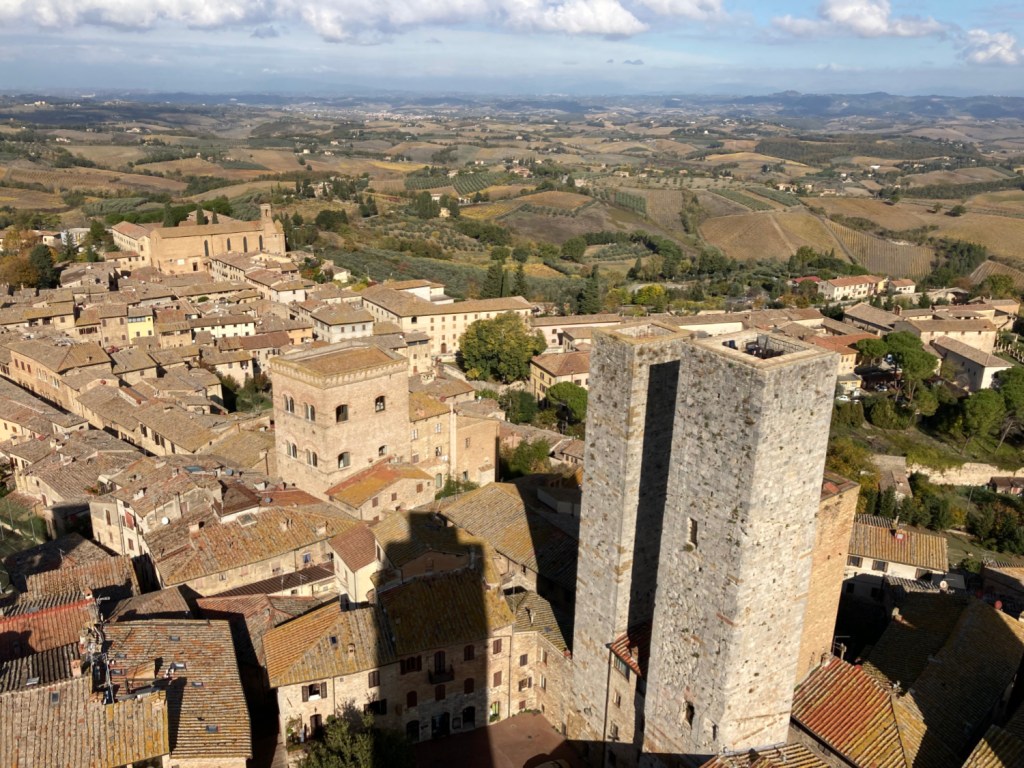
The towers are the stars of the show in San Gimignano.
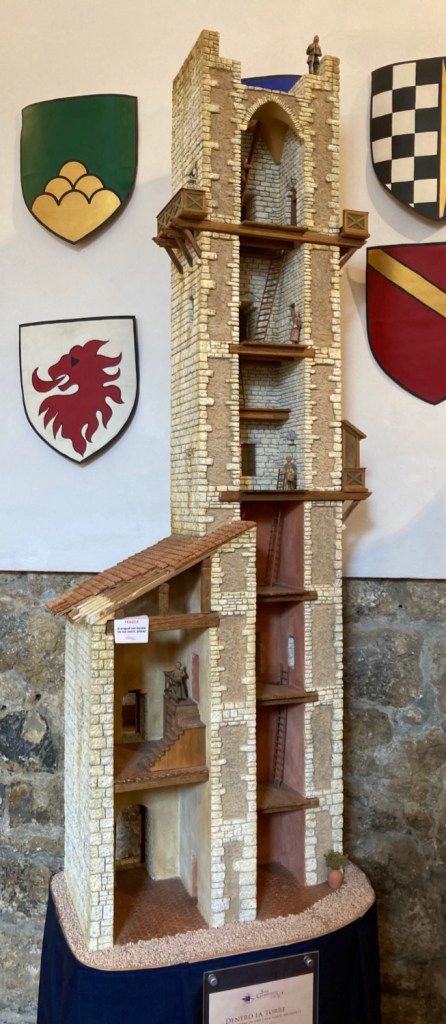
Notice the dark holes and what appear to be doors leading to nowhere in the upper floors of this tower. In 1300 CE, timbers extending from the holes would have supported cantilevered balconies or even entire rooms off the side of the tower.
A defensive wall was built around San Gimignano in 1207. By 1251, San Gimignano had grown beyond the existing wall and a new wall was built that encompassed the expanding city (1251-1262 CE). In some places inside the city, you can see remnants of the original wall. This is a gate from the 1207 wall.
Another gate in the first city wall.
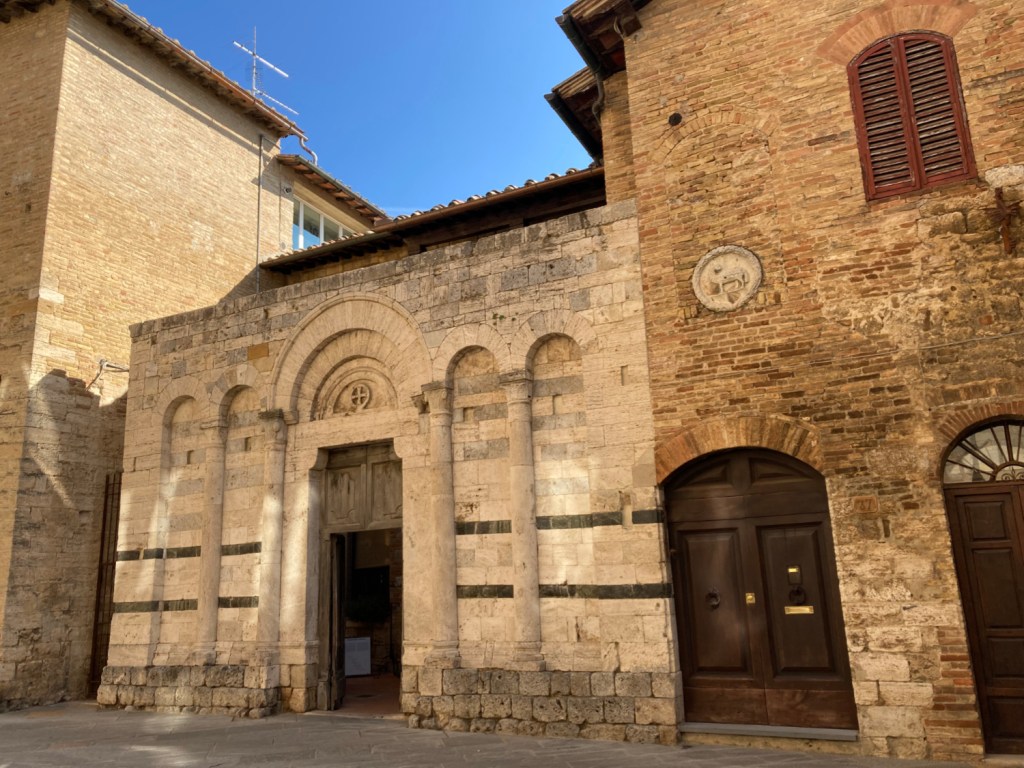
12th century CE pilgrim shelter run by the Knights of Malta. Only the facade remains.
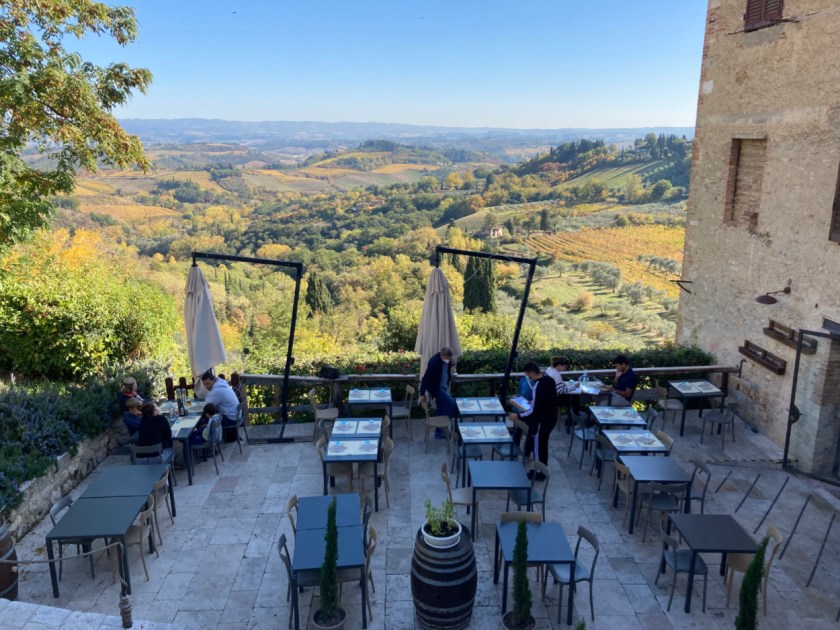
Panoramic viewpoint
Palazzo Comunale. This was “city hall.” Today, it has the only tower you can climb and see…
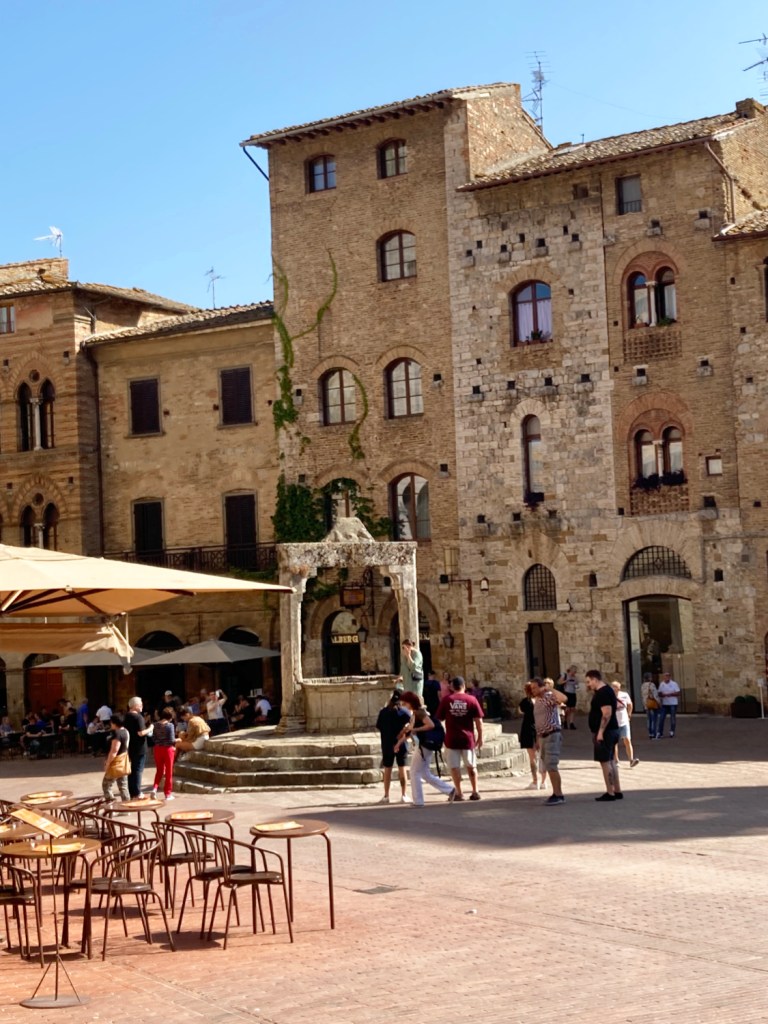
Piazza della Cisterna. A giant cistern is beneath the entire piazza. A system of pipes collects rainwater from nearby rooftops and deposits it in the cistern. The sides of the well are lined with grooves on the top, presumably from a few hundred hears of hauling up buckets filled with water.
Sanctus Geminianus holding and protecting the city of San Gimignano in his lap. This from an altarpiece done around 1391 by Taddio Barolo.
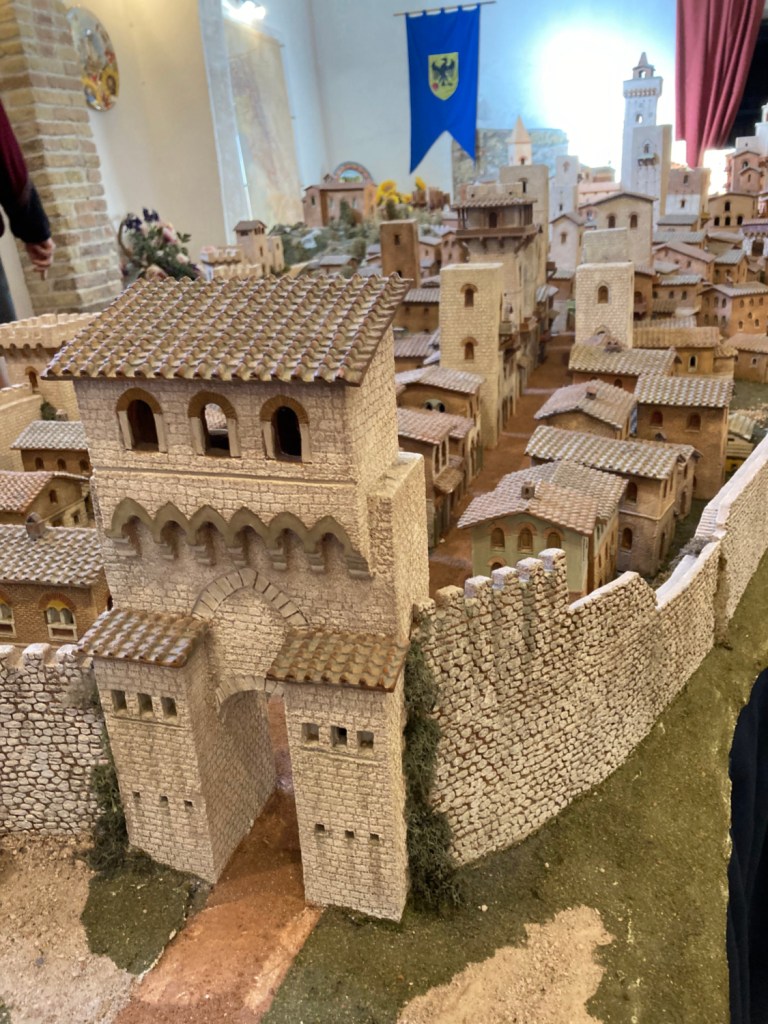
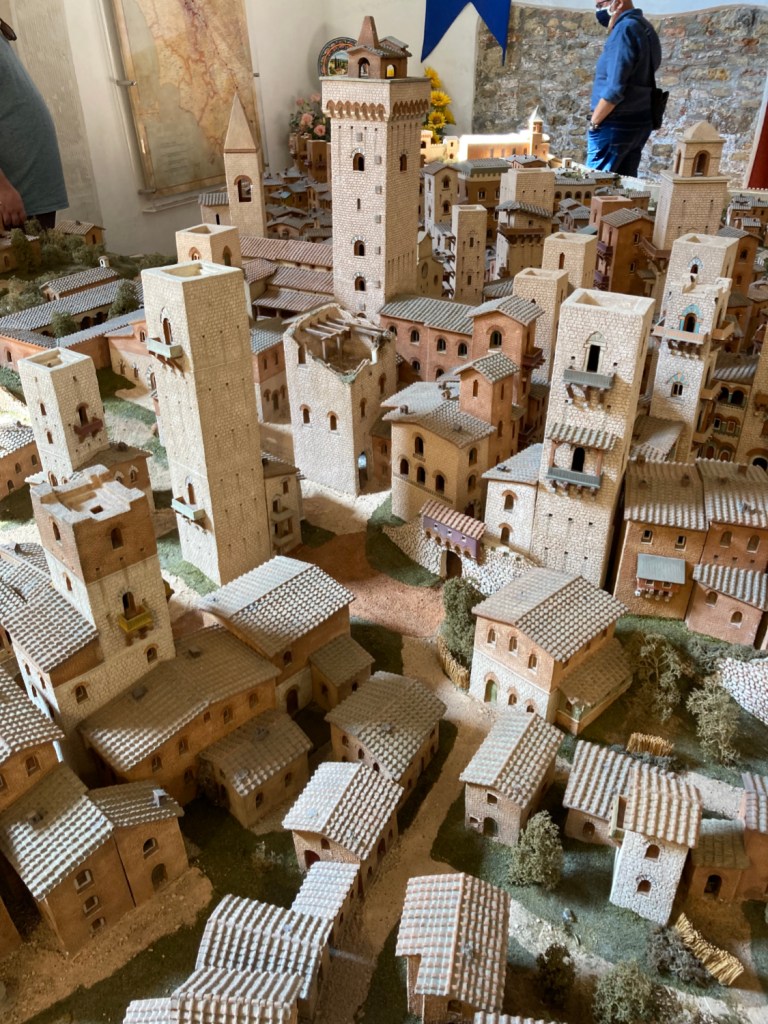
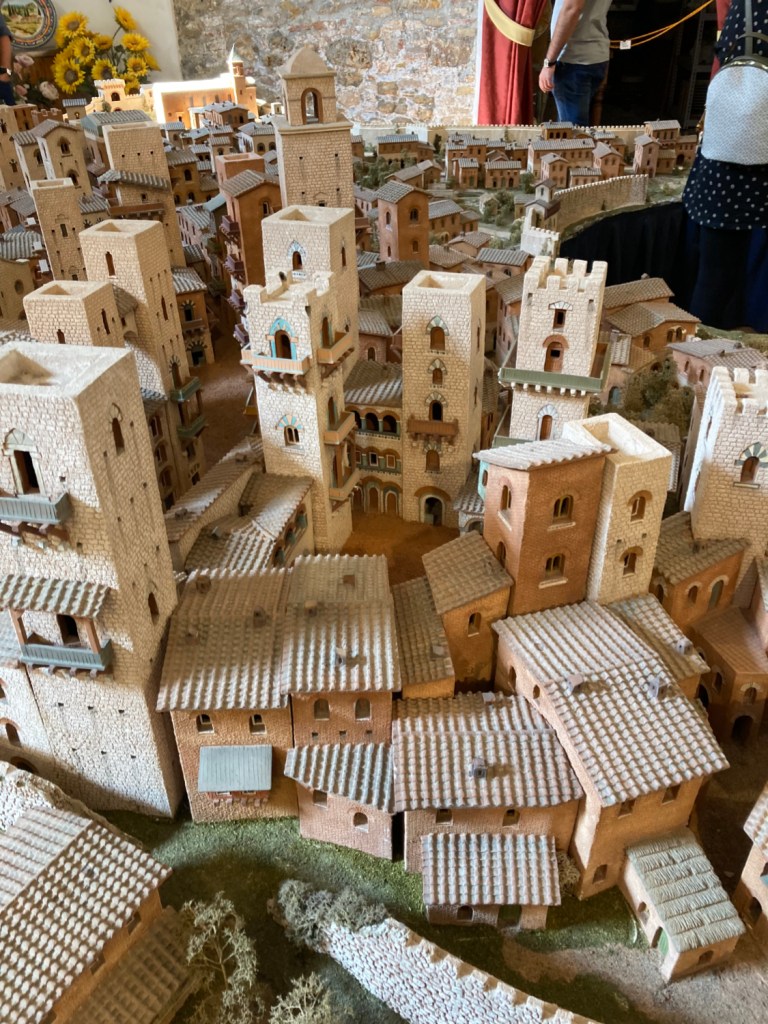
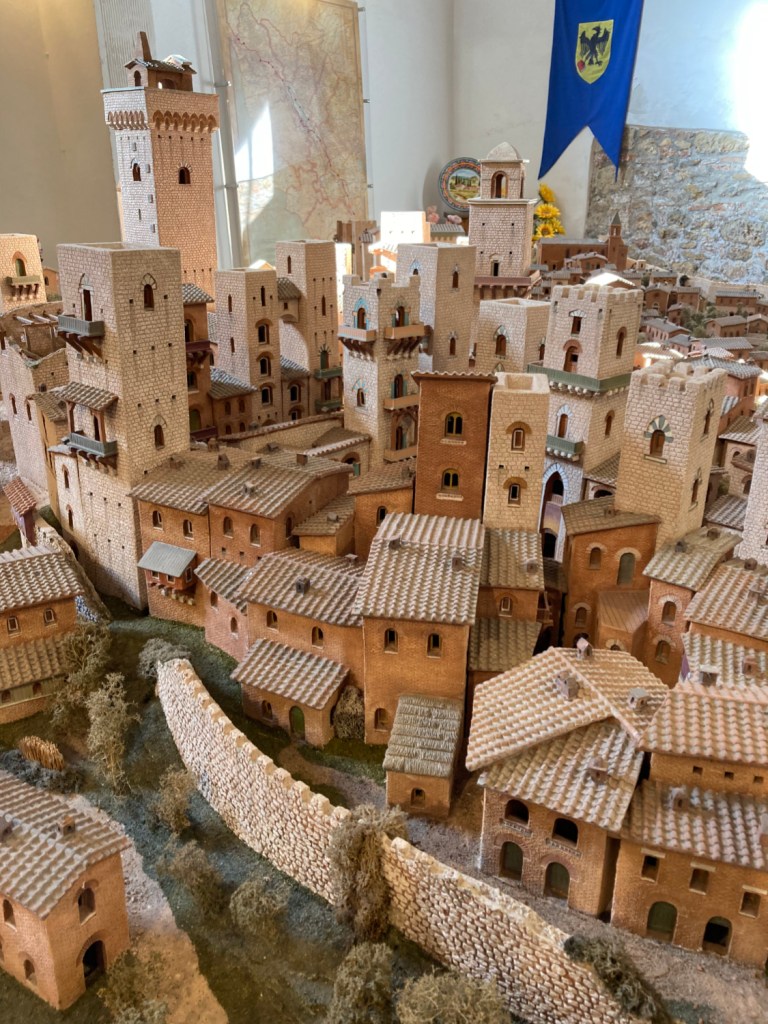
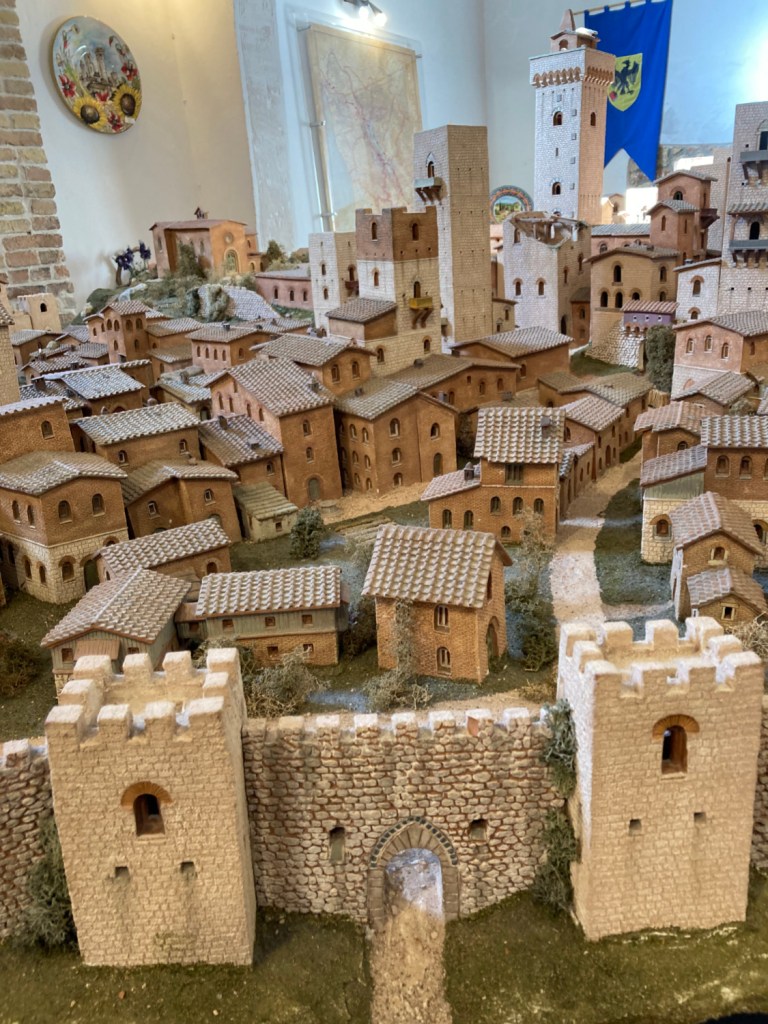
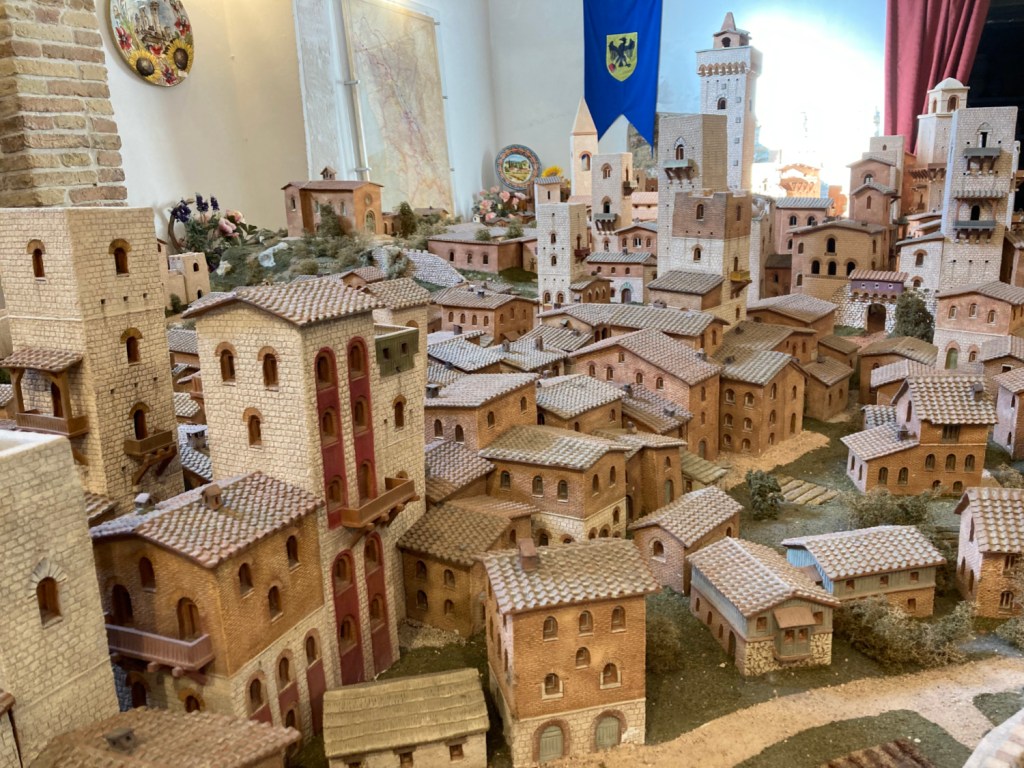
San Gimignano is one of the best hill towns in Tuscany. There’s a lot going on there so I’m going to break it into a couple of posts. We’ll start with 1300 San Gimignano. This is a 1:100 scale model (in clay) of the city as it was in 1300 CE. The model was built by Michelangelo and Raffaello Rubino (and assistants) over 3 years. It’s on display in the brothers’ art gallery in San Gimignano. Enjoy.
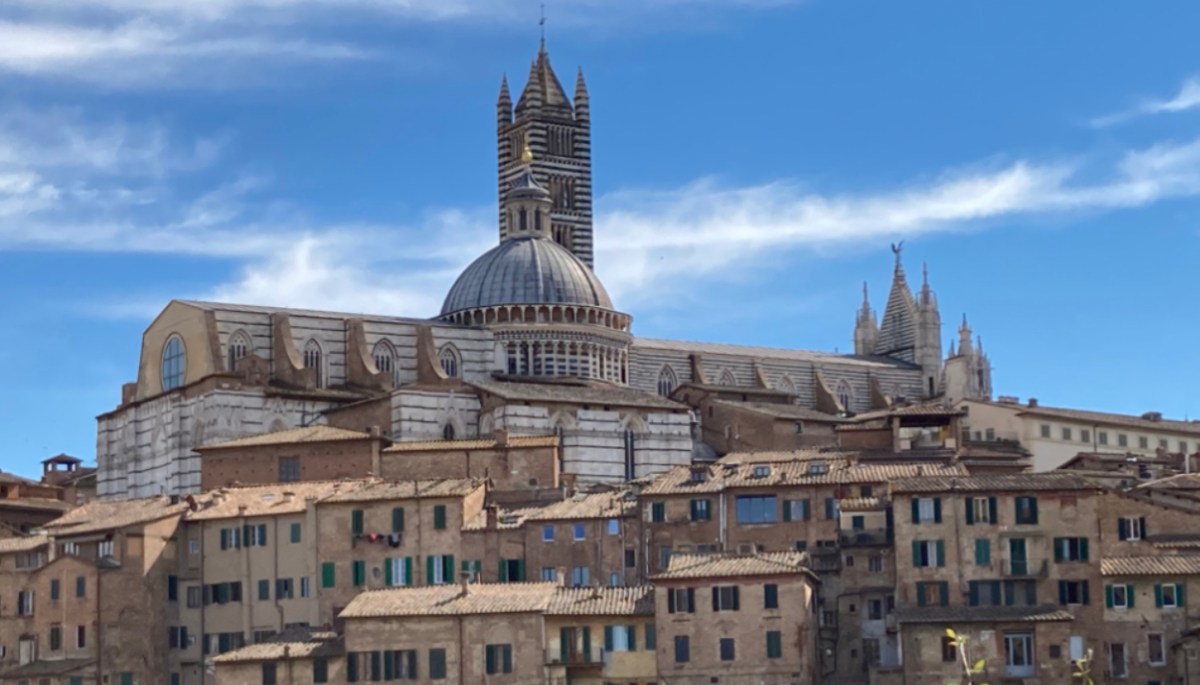
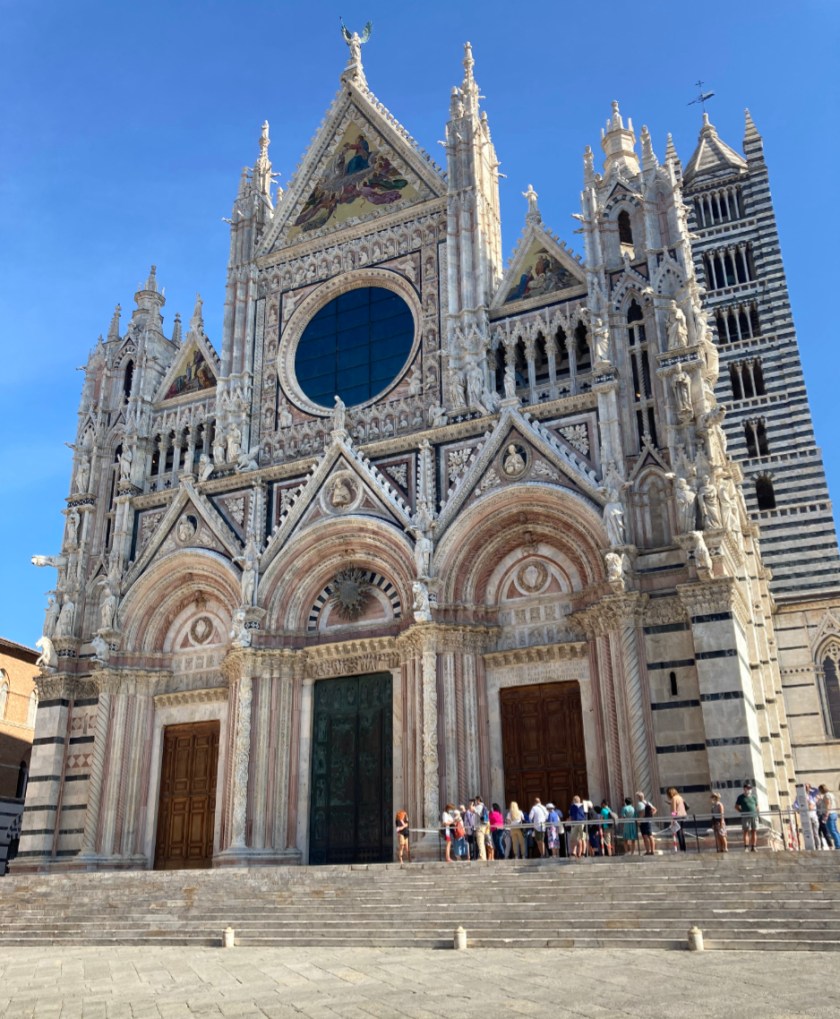
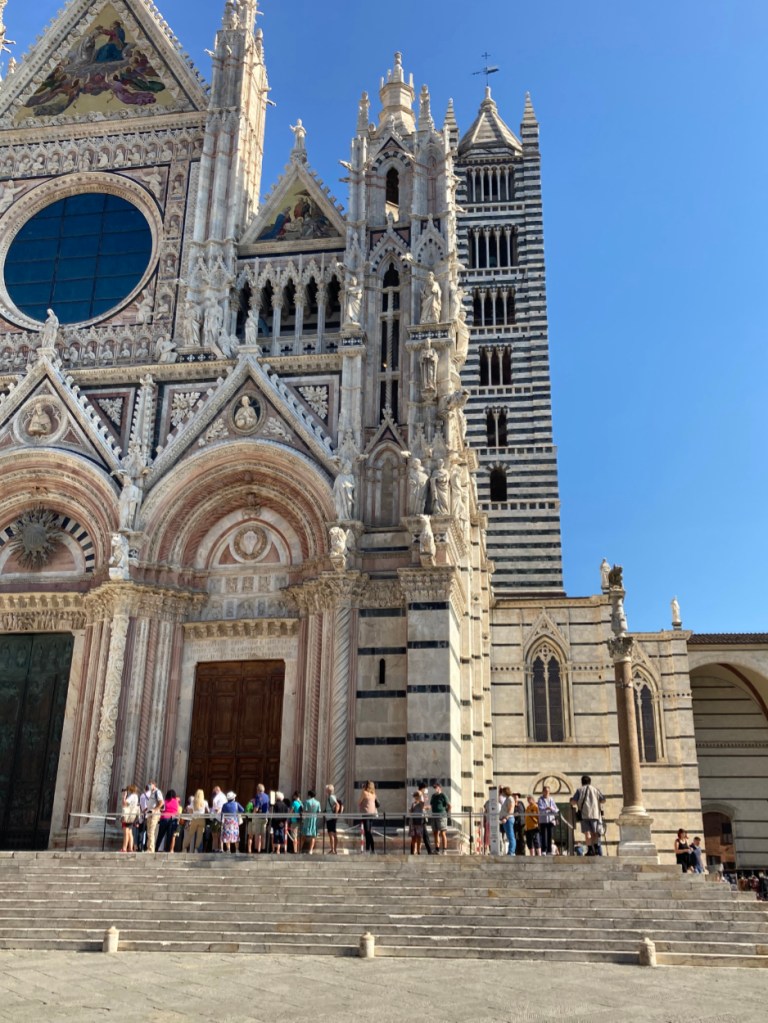
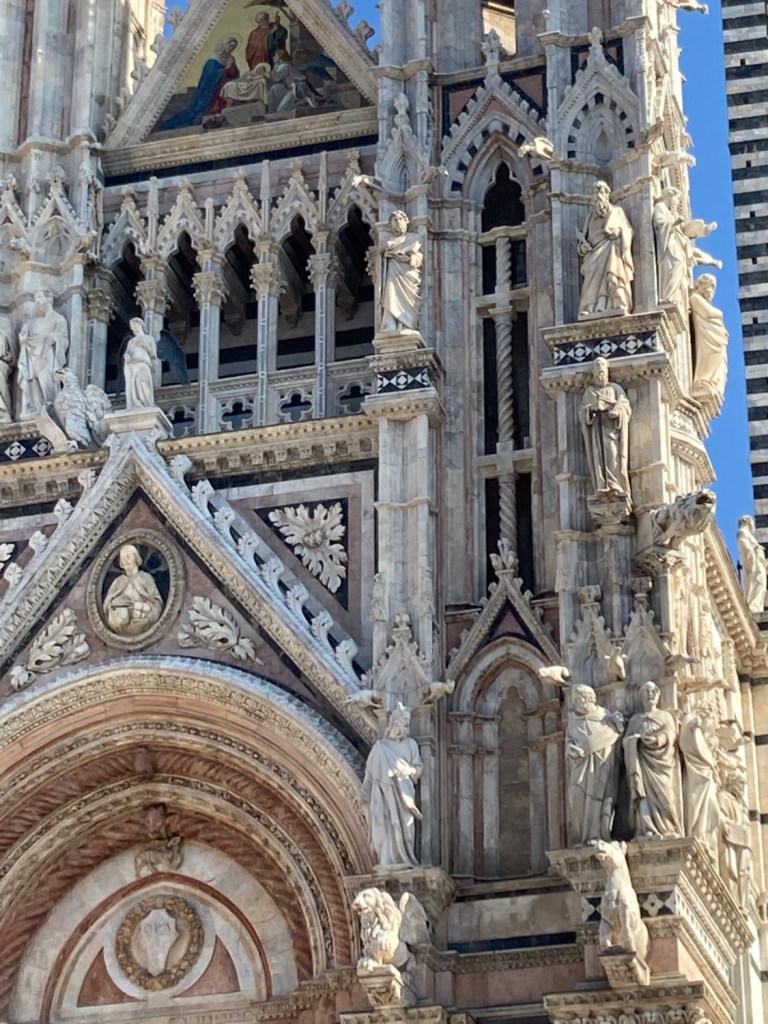
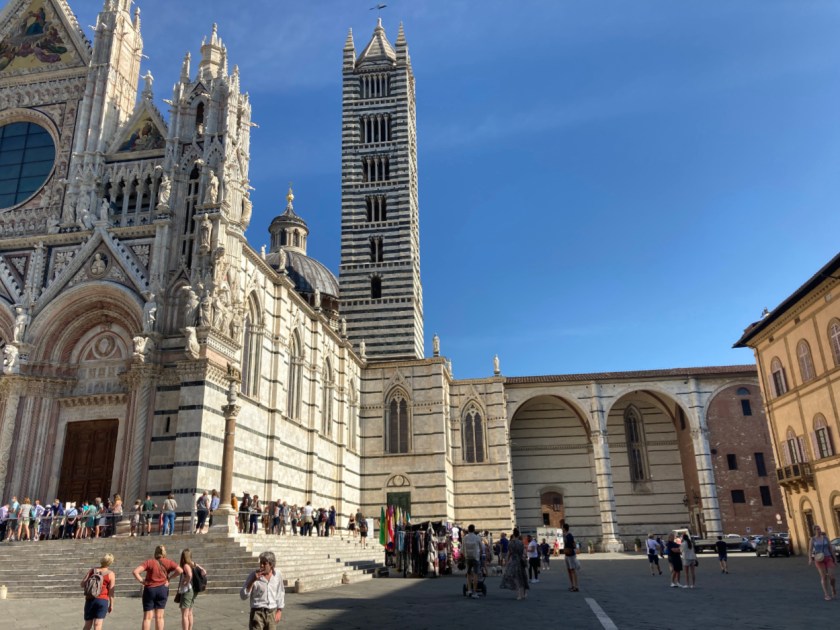
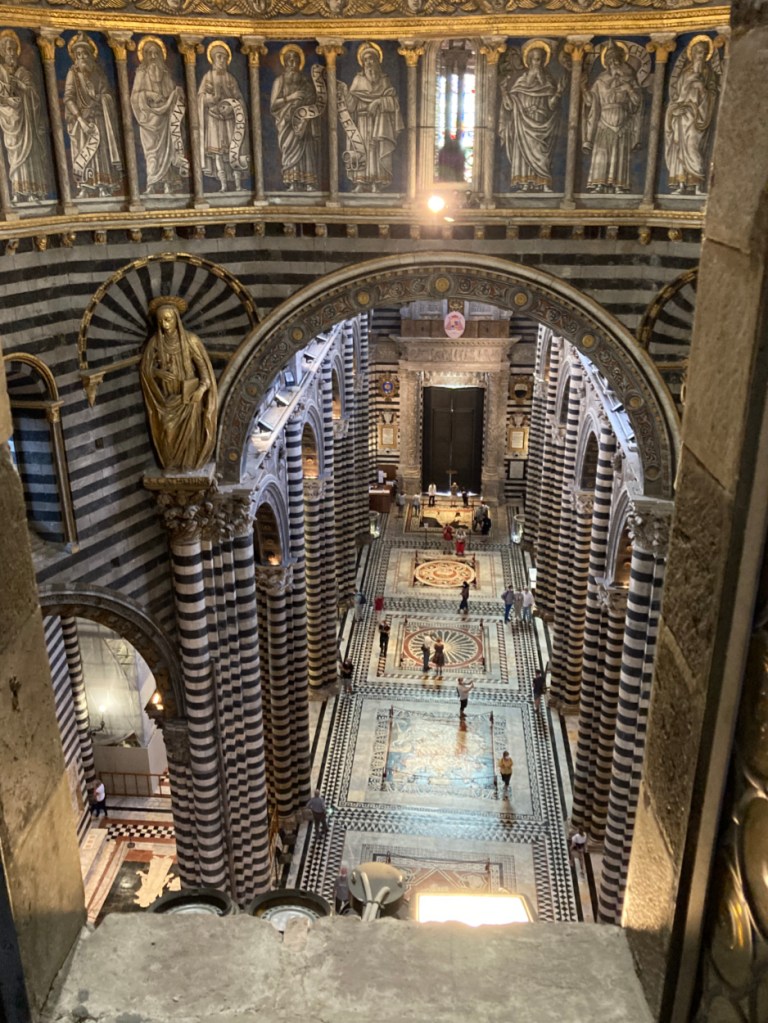
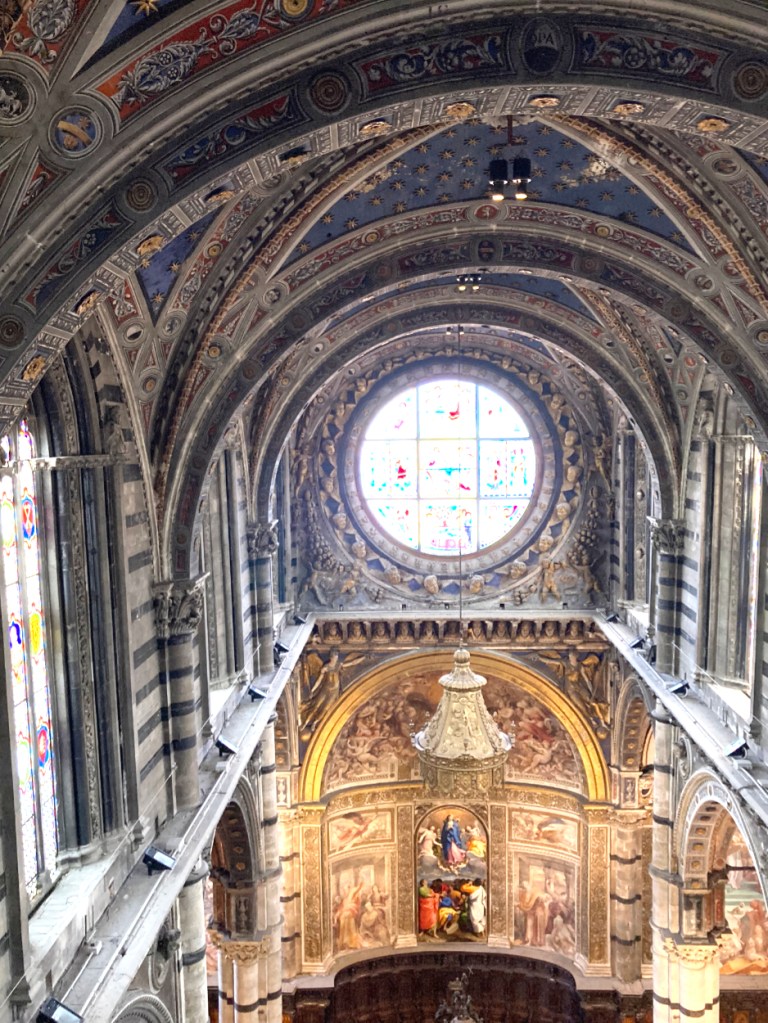
Duomo di Siena. You can always turn to the World Wide Web if you need more information. Here are some highlights. Design and construction began around 1220 CE. The dome was completed in 1346. The church is dedicated to the Assumption of Mary. Associating churches with Mary seems to pretty common in Tuscany. The church was built of brick, then sheathed in alternating stripes of white marble and green marble which has since oxidized to something closer to black. Several artists contributed to the facade which is covered in saints, prophets, patriarchs, gargoyles, oxen, beasts (lions with wings), and did I mention gargoyles.
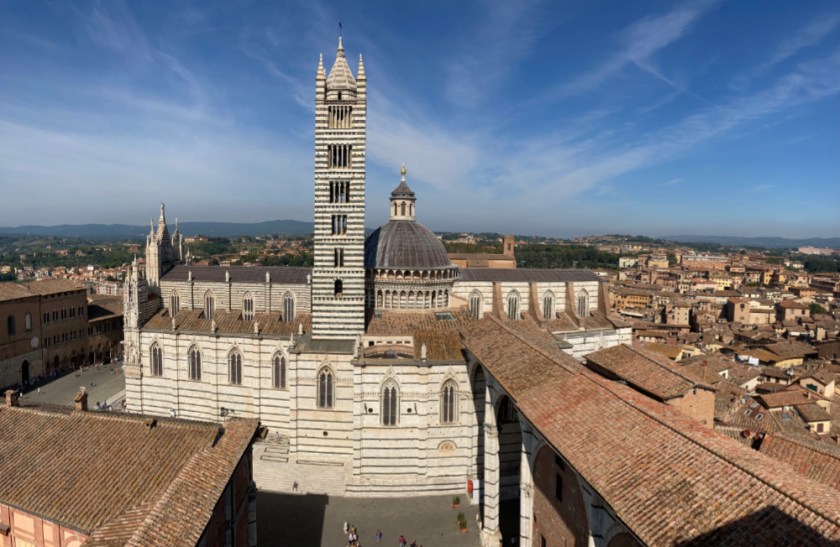
The Florence Duomo is bigger. In 1296, Florence began to build a duomo that would be bigger than the Siena Duomo. As a side note, the initial design of the Florence Duomo was by Arnolfo Cambio, who is a son of Colle di Val d’Elsa (the town where Susan and I have been staying). Anyhow, Siena could not allow Florence to have the biggest Duomo. So, in 1339, Siena planned to expand their Duomo. In the next few images, I’ll try to explain how.
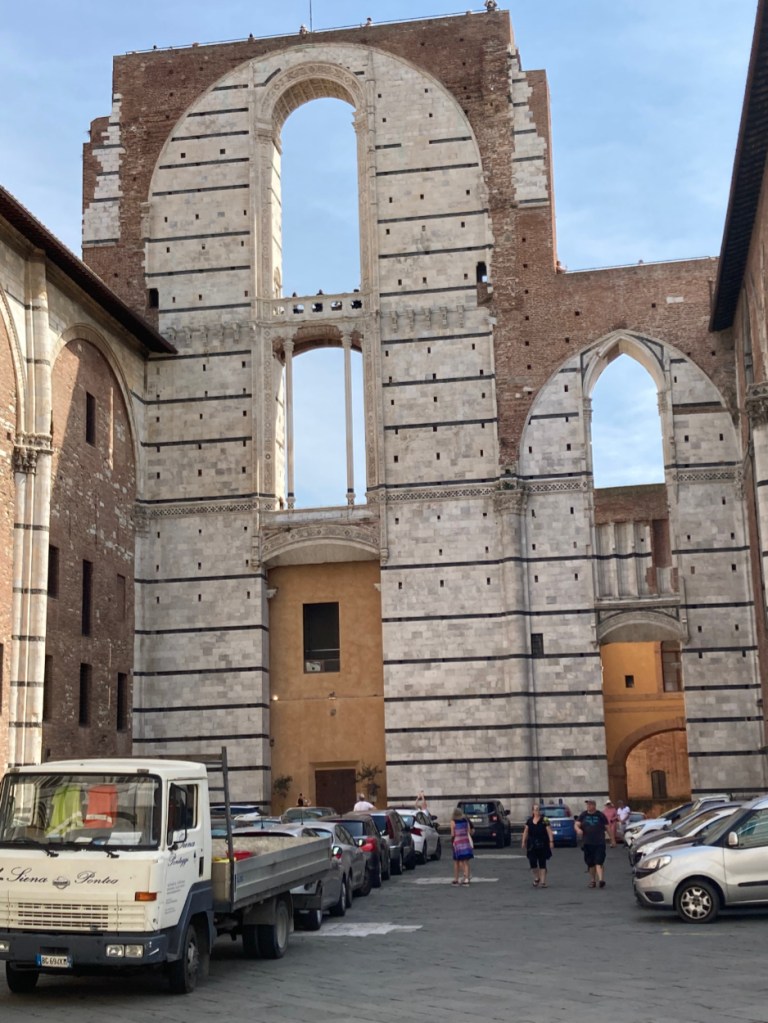
The plan was to build a central nave with an aisle on each side. This structure would be perpendicular to the existing duomo making the original church the transept of the new duomo. In the image above, the tall arches in the lower right indicate where the boundary between the central nave and right aisle would have been.
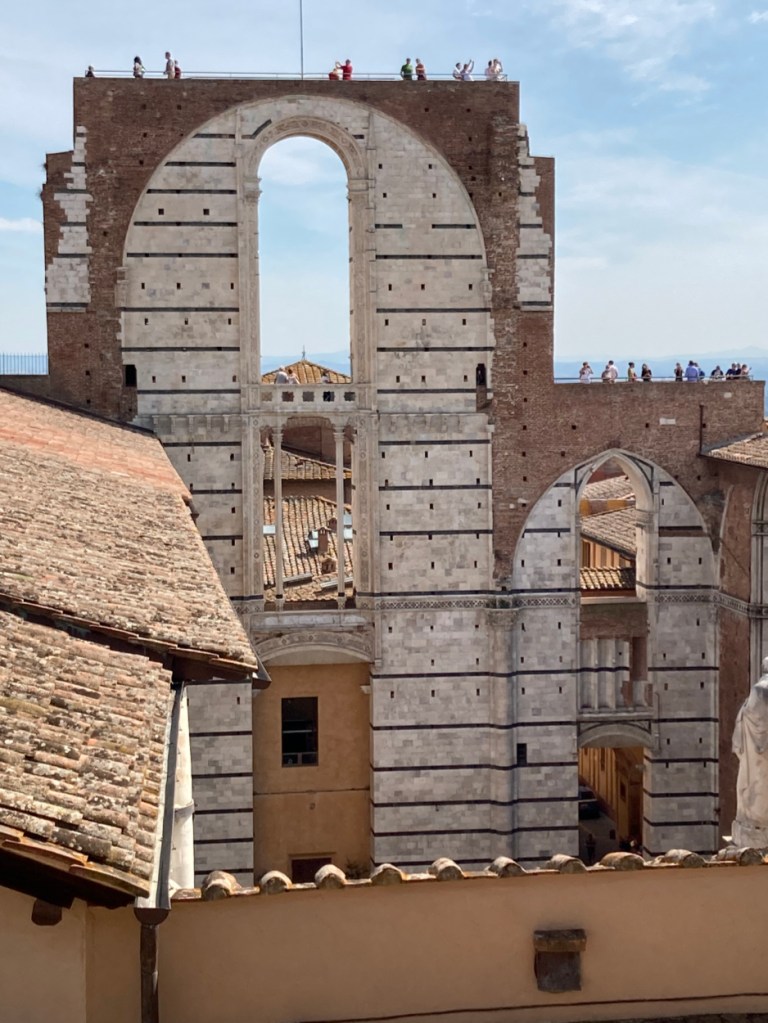
This view gives you an idea of the new duomo’s footprint and how it would dwarf the old one. Those arches in the image above are on the right under the roof. You can see that this aisle of the new duomo would have been almost as tall as the nave of the old duomo. The nave of the new duomo would have centered on the high altar beneath the dome and there would have been another aisle on the left.
This would have been the facade (entry) of the new duomo. On the left, the arches that would have been between the right aisle and the central nave have been filled in with brick.
This, again, would have been the new facade viewed from the Dome. You can see that this cathedral would have been much higher than the existing one. In addition, the central nave of the new duomo would have been 140 meters in length (the nave of the existing duomo is 80 meters). Nave-length was everything in the Middle Ages.
So, what happened? In 1348, the Black Death (bubonic plague) happened. At least 50% of the Siena population died. Around 1355, Siena tried to resume construction but never could marshal the resources to complete the project. But the duomo they have, ain’t too bad.
Alright, I’m impressed.
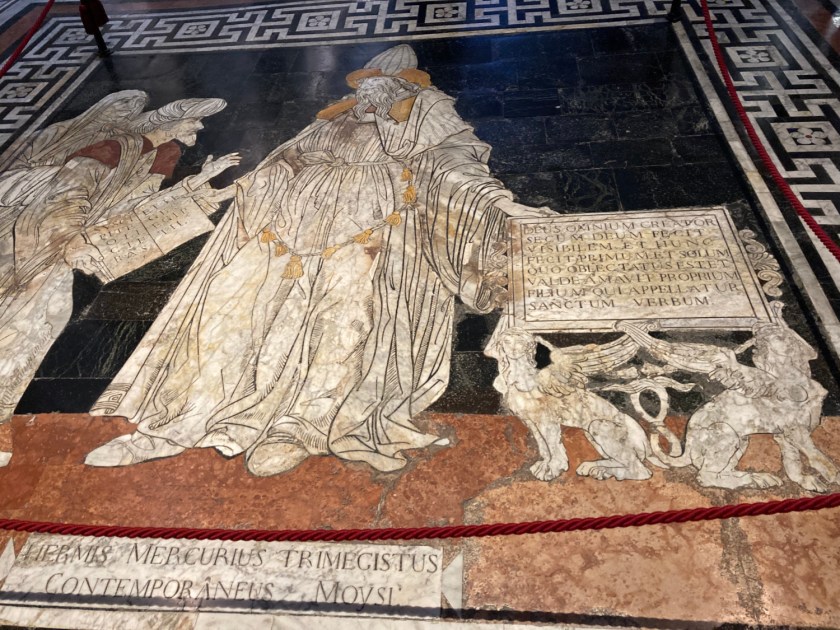
Amazing marble inlaid floors; maybe the most noteworthy art in the whole Duomo. To preserve them, you can’t walk on them and they are often covered with rugs. We were lucky but I ended up not paying much attention because my attention was continually drawn up (I think they planned it that way).
Michelangelo and Bernini.
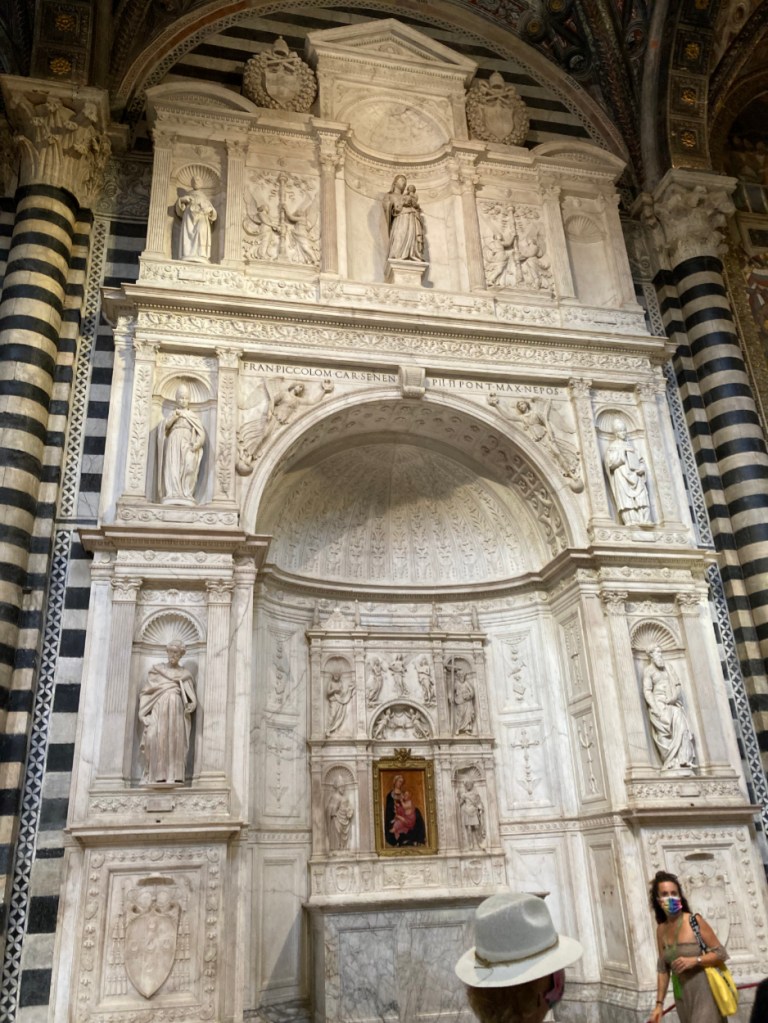
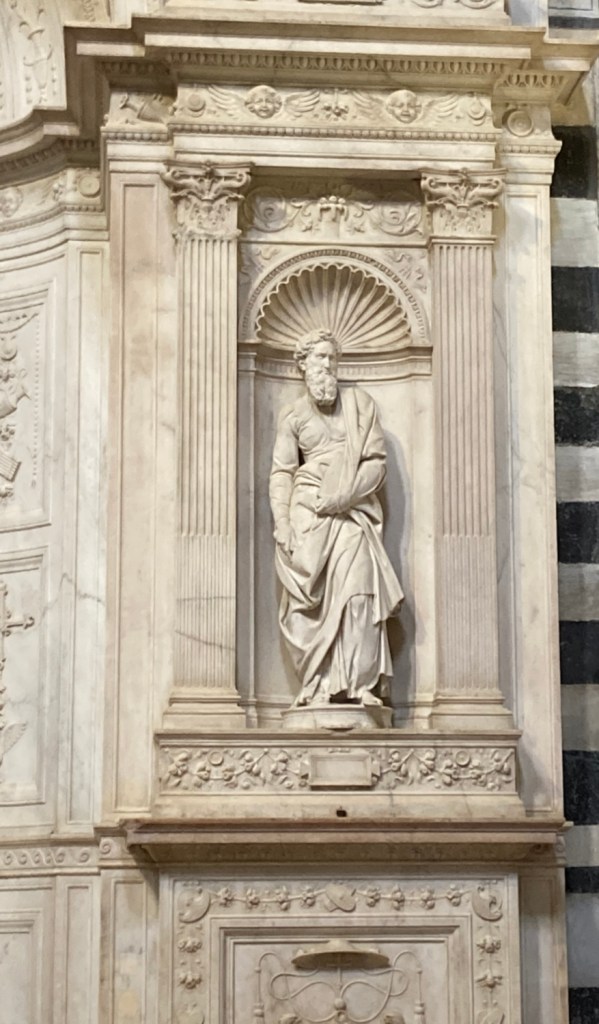
This marble altar was commissioned byFrancesco Todeschini Piccolomini who became Pope Pius III (died after 26 days as Pope). Michelangelo’s shop eventually got the contract to supply the 6 larger statues of family-favorite saints. They only supplied 5; by then, Pope Pius III had died, the family lost interest and the contract was voided.
St. Paul. Rick Steves says this is the only statue actually completed by Michelangelo. Students in his shop executed the other statues. Other references, however say he did 4 of the 5 (with some help) and one reference said this statue of St. Paul might be a self-portrait of Michelangelo.
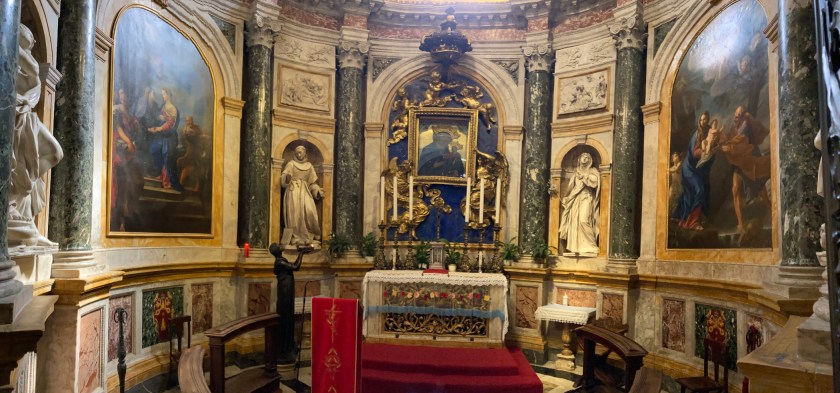
Bernini and the Chigi Chapel. Bernini (widely regarded as the greatest sculptor of the Baroque period) has 2 pieces (Mary Magdalene and St. Jerome) in the Duomo di Siena on either side of the entrance to the Chigi Chapel. Unfortunately, we weren’t allowed far enough into the Chigi Chapel to see them (one of them is partially visible on the left side). The 2 sculptures you can see are by artists’ from Bernin’s shop.
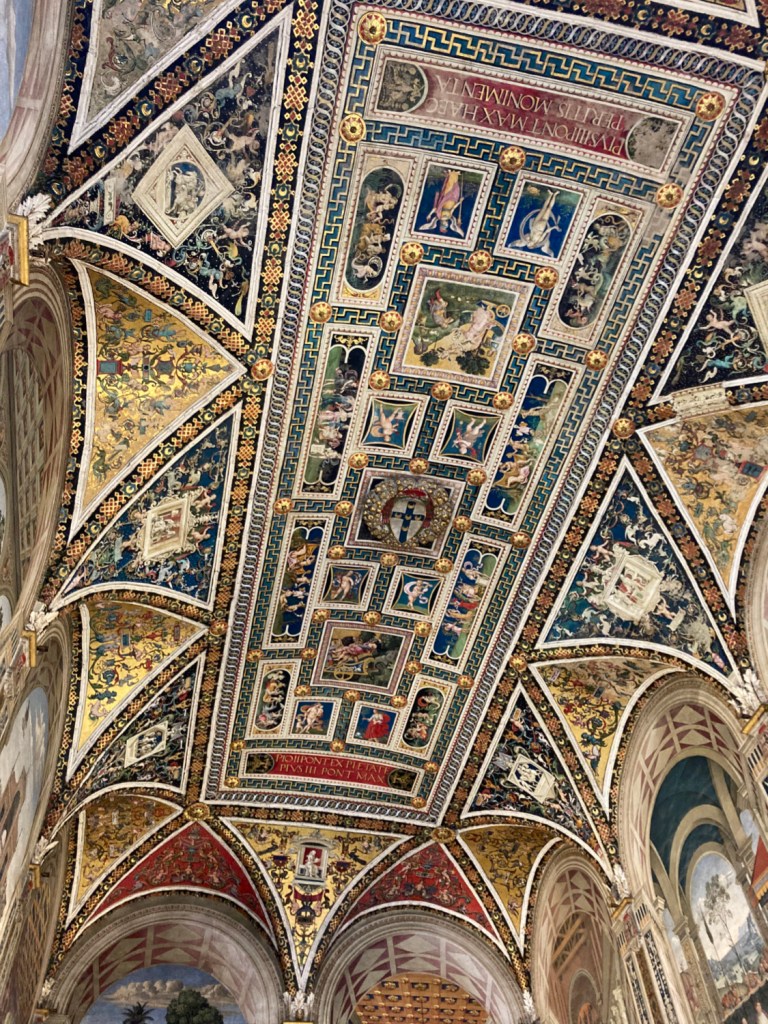
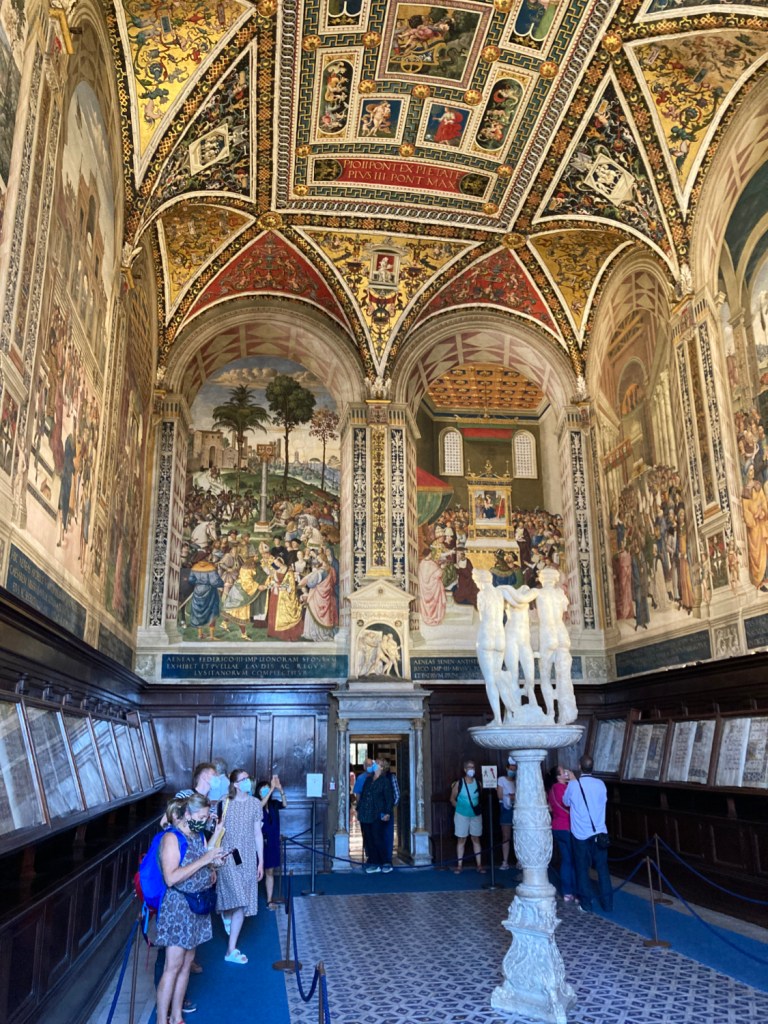
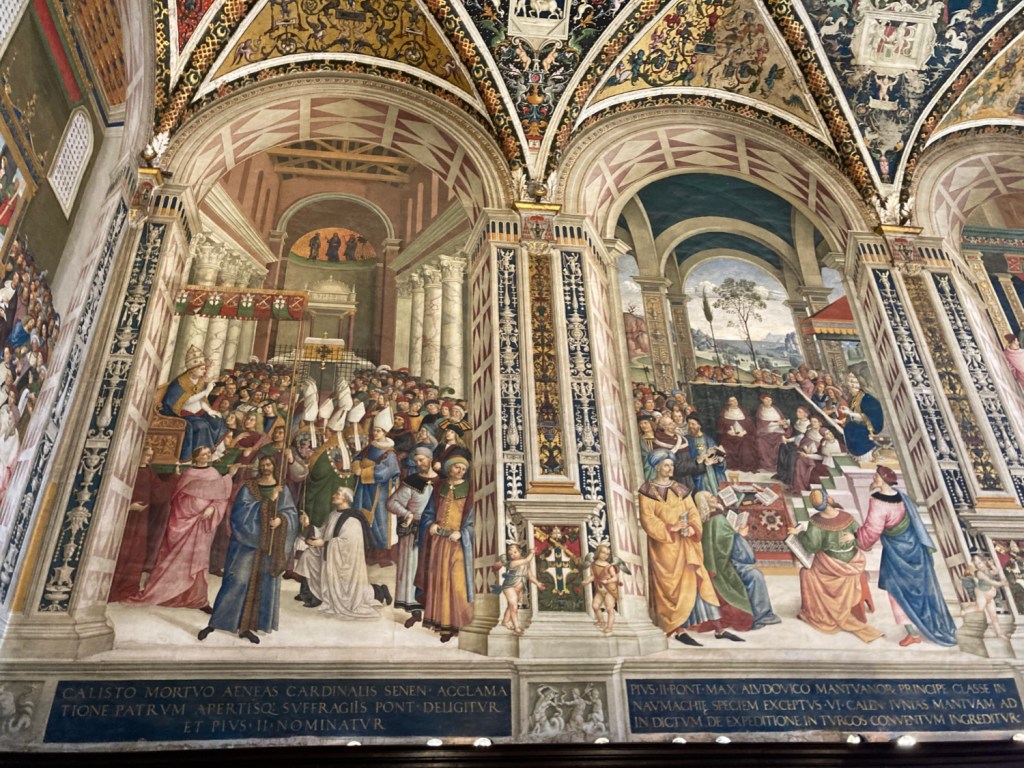
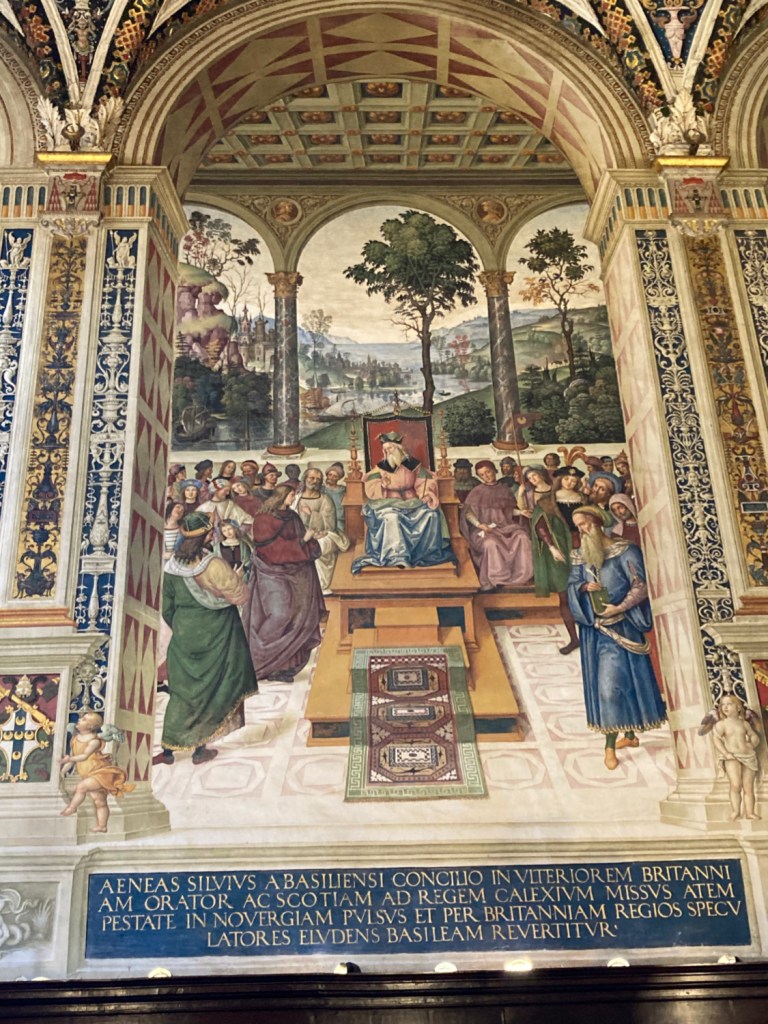
Piccolomini Library. Francesco Todeschini Piccolomini (Pope Pius III) endowed the construction of a library to honor his uncle, Enea Silvio Piccolimini (Pope Pius II). The library is off the nave and covered in frescoes that portray the accomplishments of and the offices held by E. S. Piccolomini. The frescoes are by Pinturicchio and his workshop which, at the time, included Raphael.
No words.
This room, the Piccolimini Library, is like a dessert for the eyes that’s just too rich.
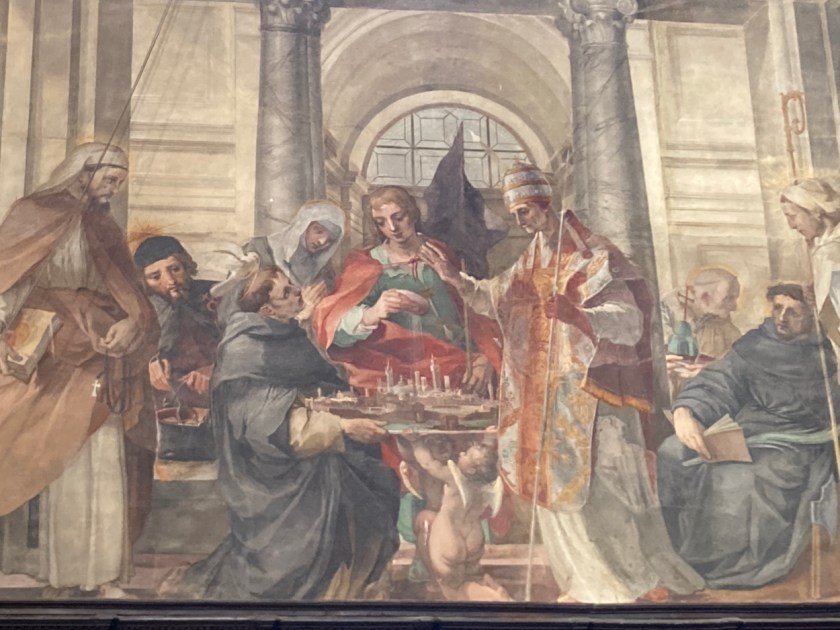
I don’t know who all the characters are but this is a common motif in Medieval Tuscan imagery- some holy person presenting their city (in this case, Siena) for protection by another Holy person or an even higher authority.
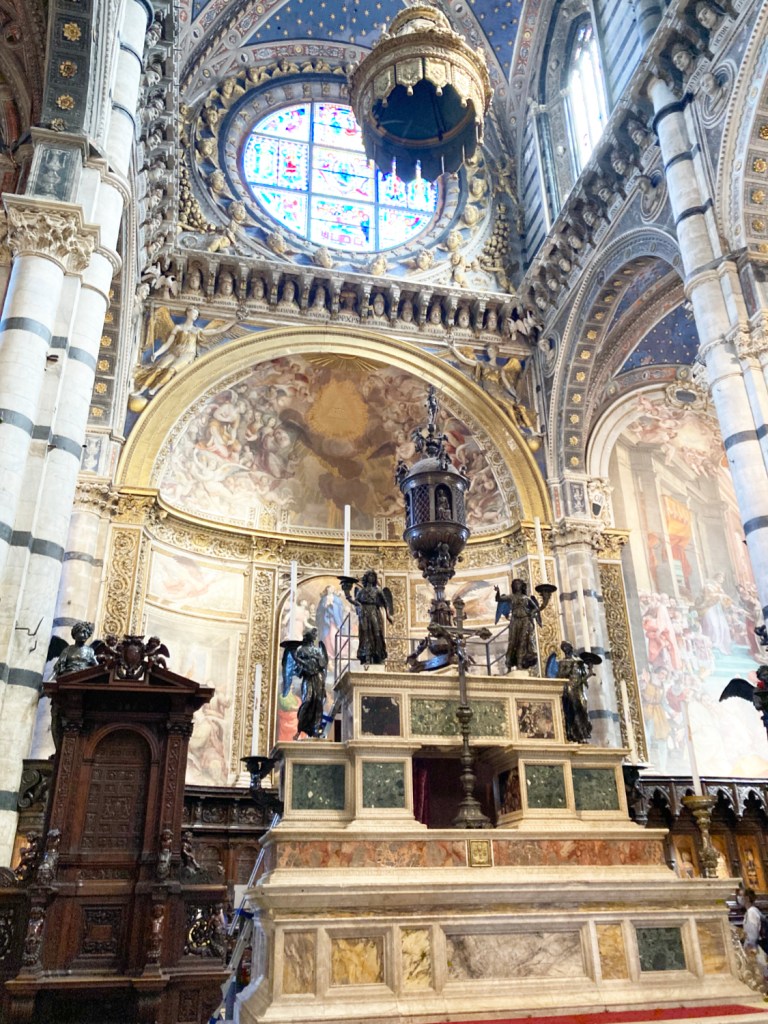
High altar.
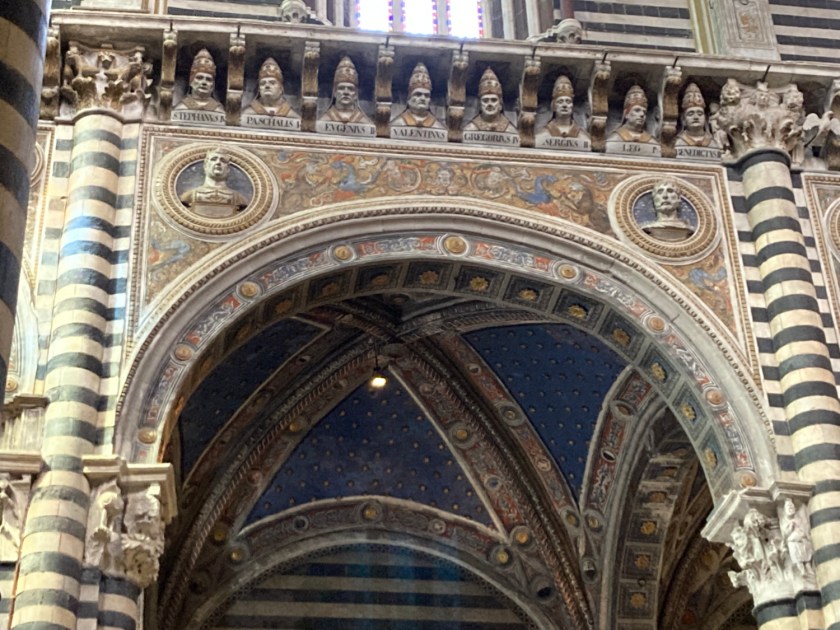
A few of my favorite popes.
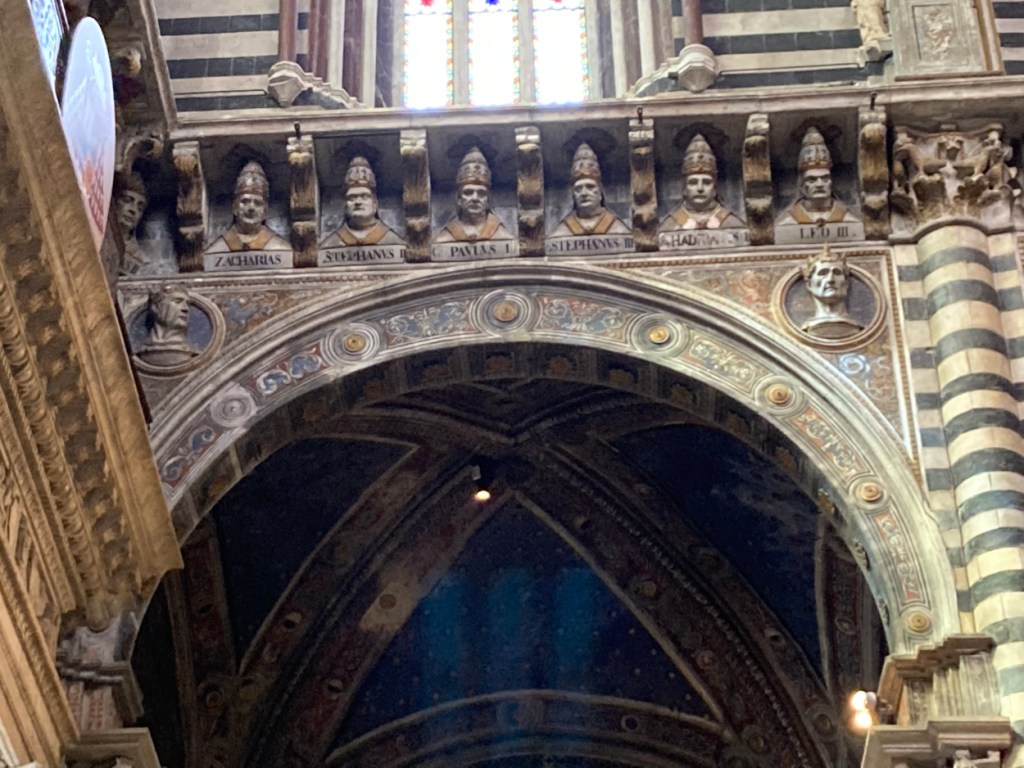
A few more of my favorite popes.
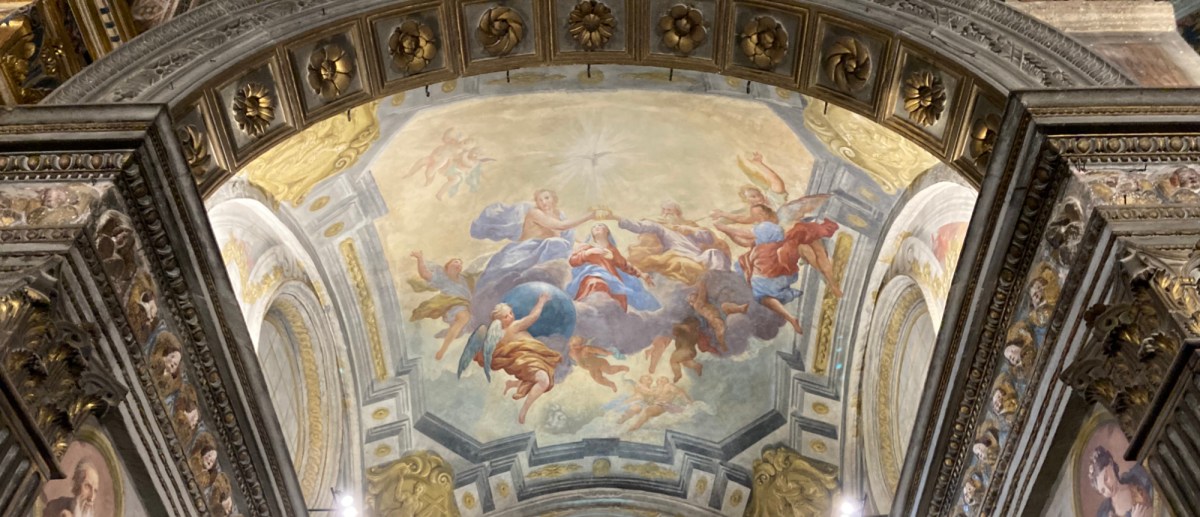
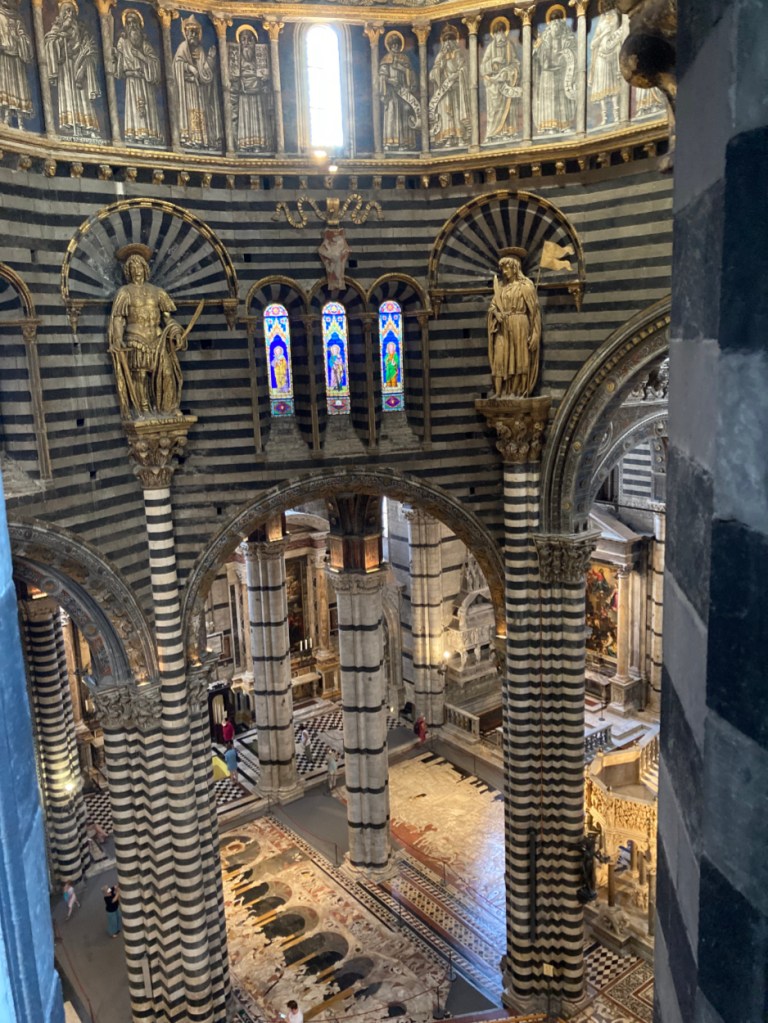
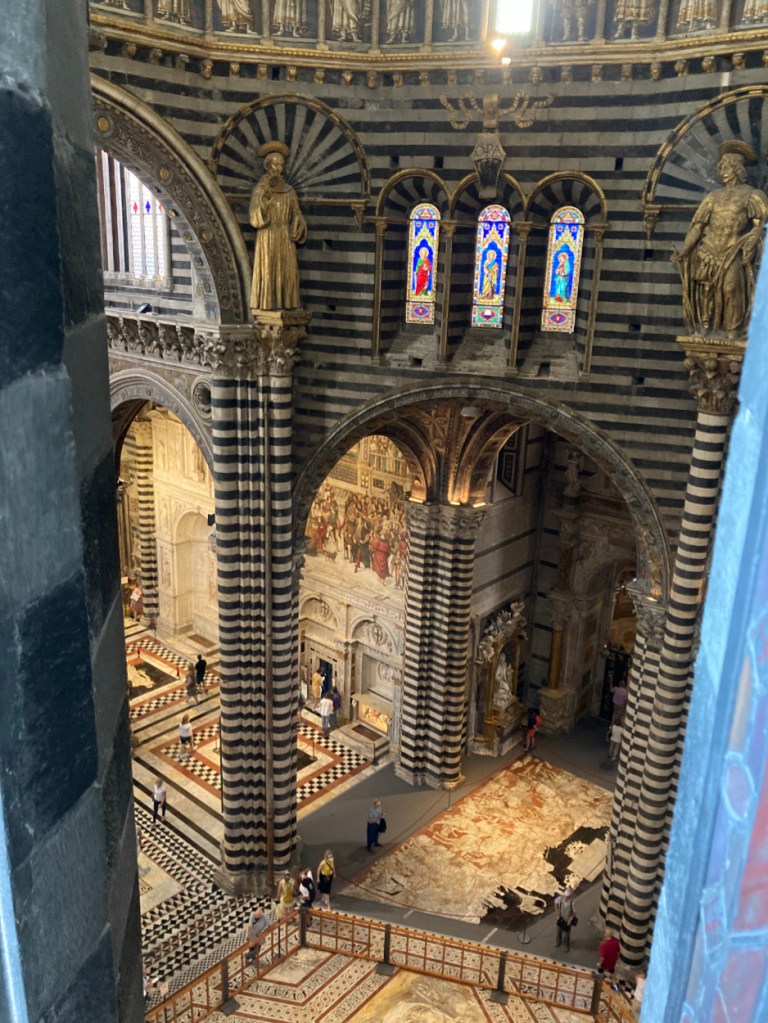
I’m not sure but I think that you can just see Heaven up above the popes.
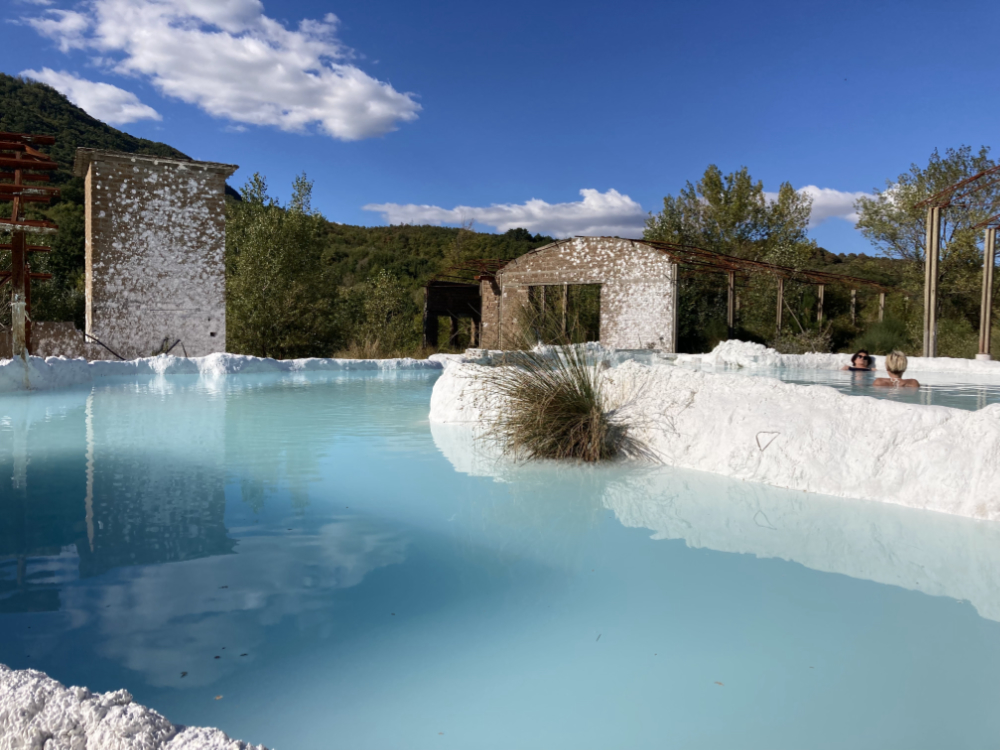
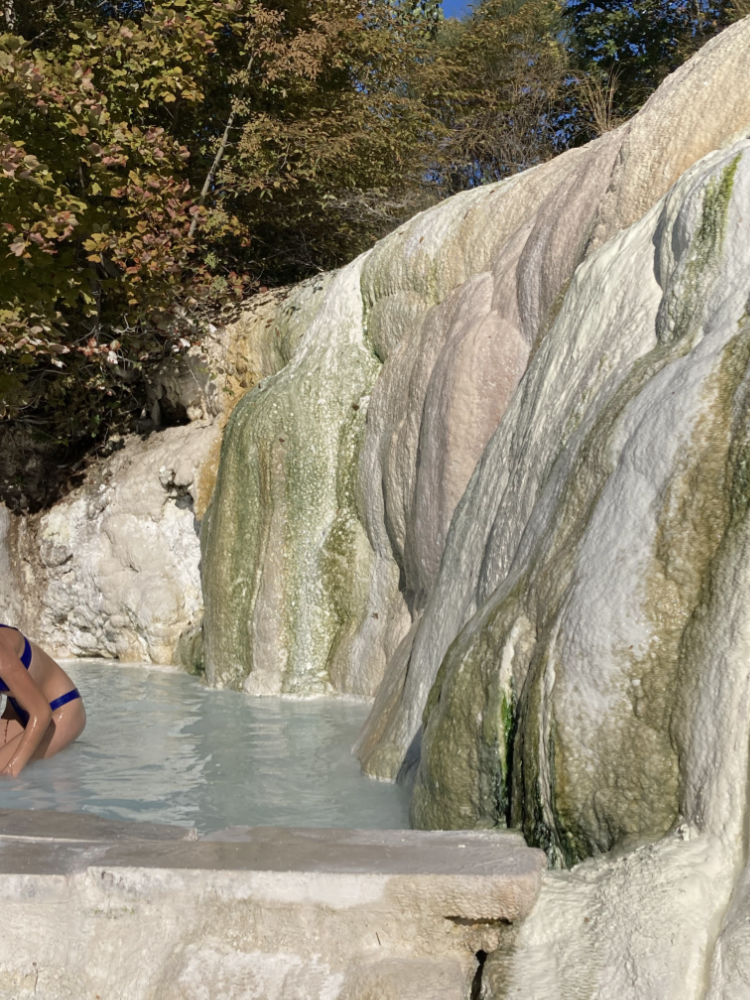
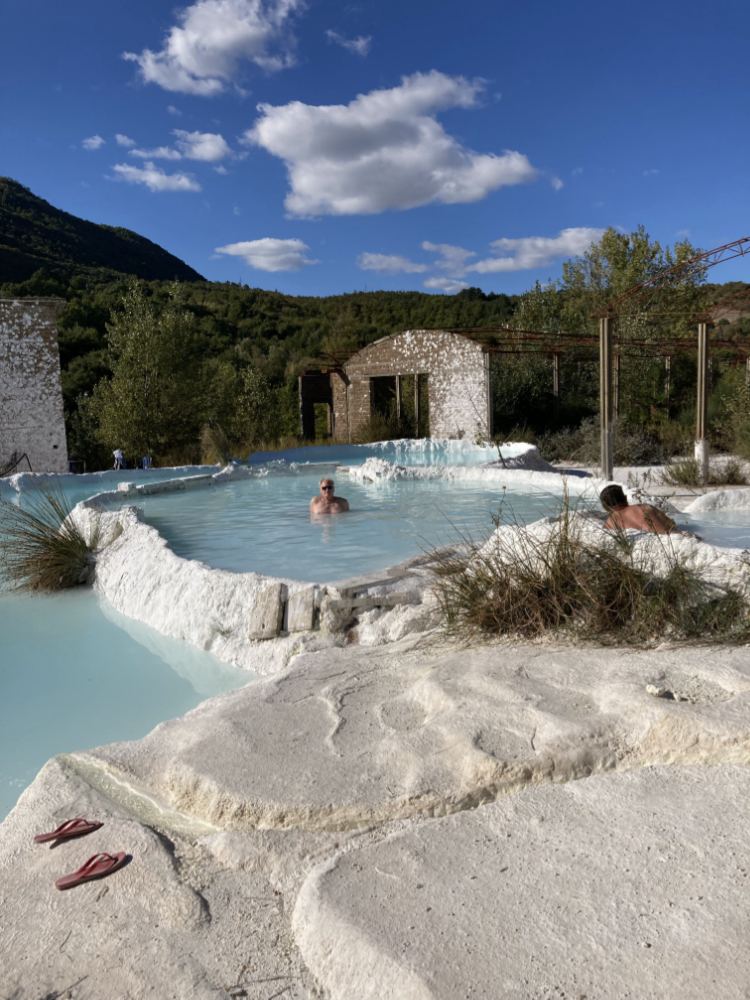
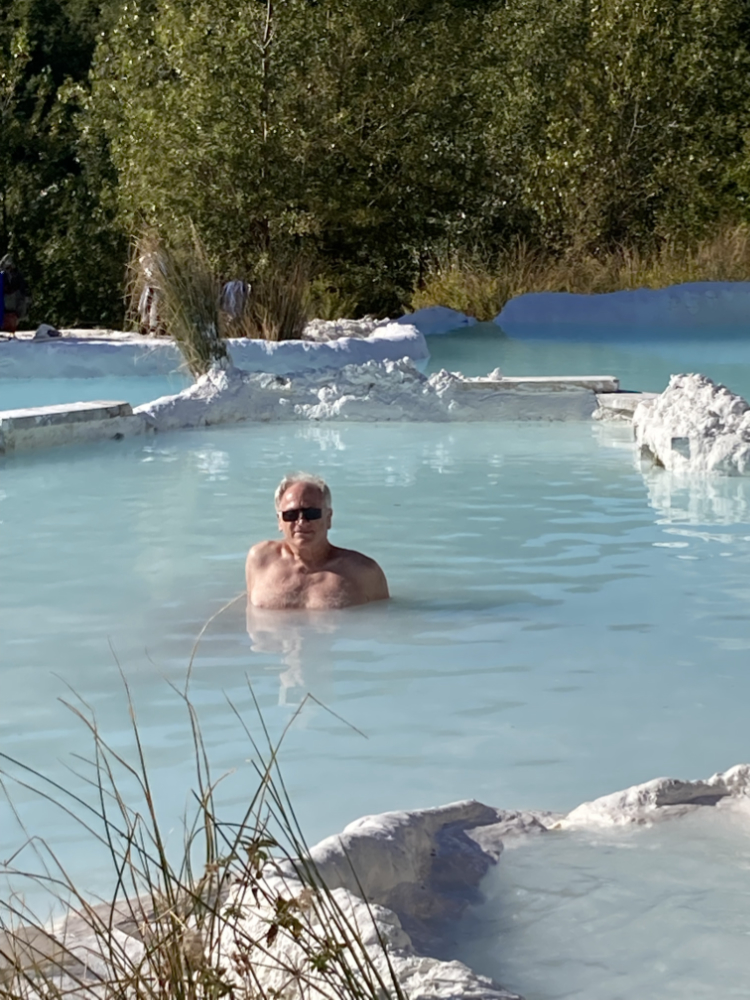
Susan and I went on a little road trip mostly in southern Tuscany. There is a lot of geothermal activity in this area creating many natural hot springs. Most of these sites have been turned into spas. We stopped at Bagni San Filippo where there are hot springs that haven’t been commercialized and you can just hop in. The white walls are built up with calcium carbonate that creates a sort of mud as it precipitates out of the water as it cools. The hot springs also release a little sulfur to keep your olfactory sense engaged.
Santa Maria Novella is between the train station and the bus station in Florence. It was the first church we visited on this trip to Tuscany. This church has a lot of great frescoes. We were visiting just a day after we arrived and were still pretty jet-lagged. So, we missed a lot. We hope to get back in a more lucid state. Turns out, I have a thing for frescoes. I knew it involved painting on wet plaster but I had no idea how complicated the whole process is. Google “fresco painting” and check out one of the videos.
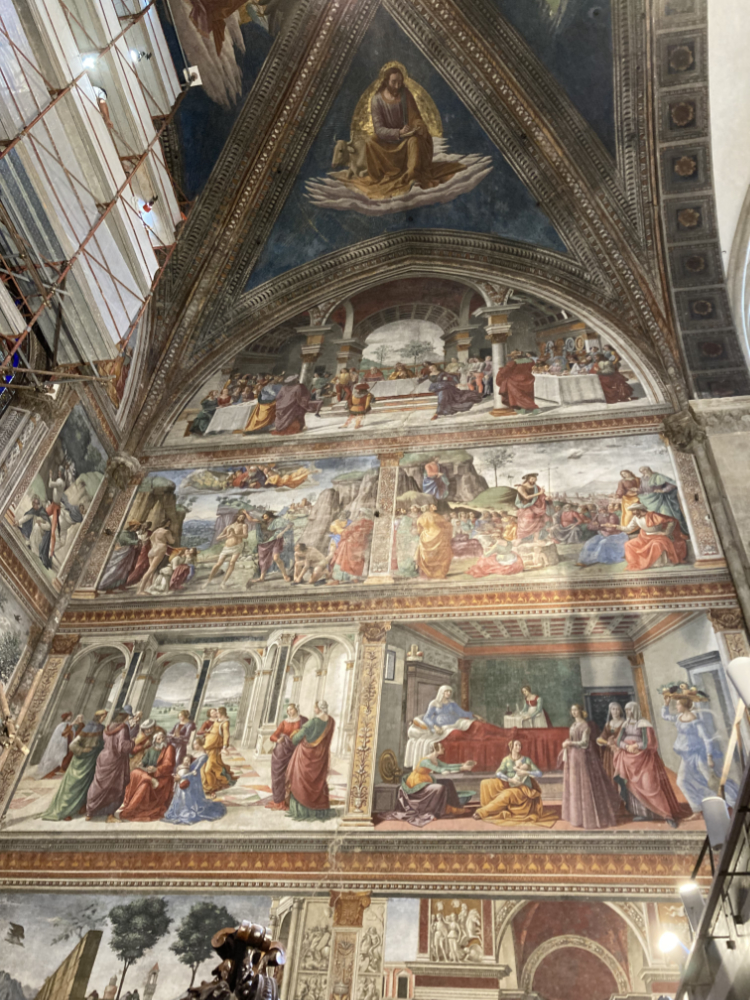
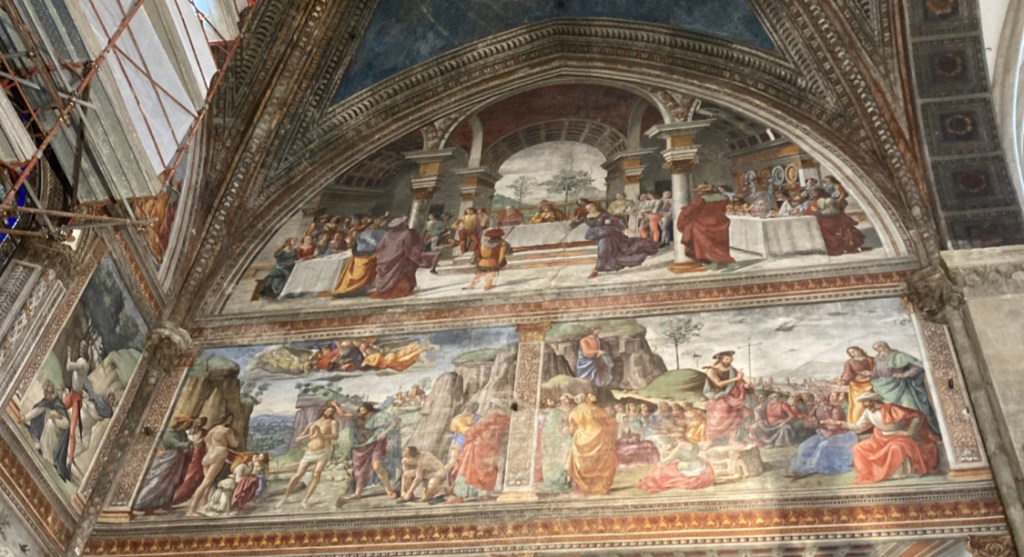
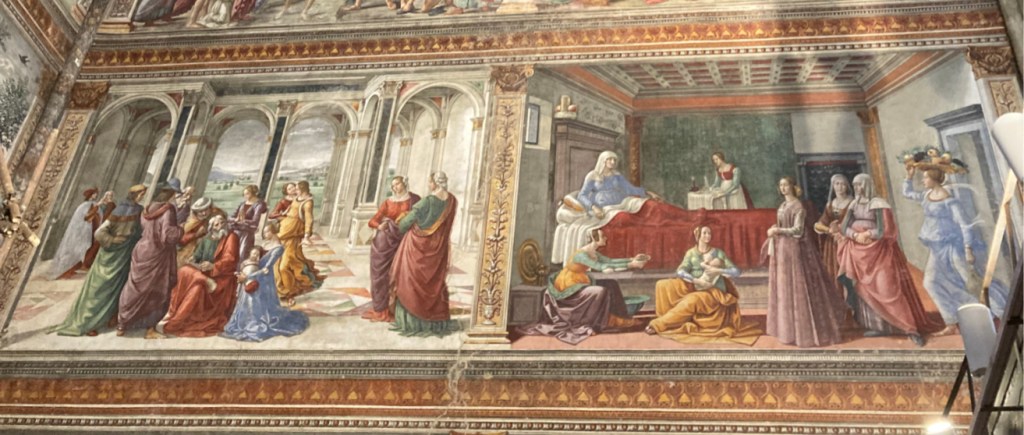
Tornabuoni Chapel (main chapel). The frescoes were done by Ghirlandaio (and his apprentices). One of his apprentices was Michelangelo (about 14 years old) but it’s not know if he worked on these frescoes. Scenes from the life of John the Baptist are his subject on this wall (some details below). That’s St. Luke at the top.
Top: Herod’s banquet. Bottom left: Baptism of Jesus. Bottom right: John the Baptist preaching.
Bottom left: John the Baptist’s father. Bottom right: John the Baptist’s birth.
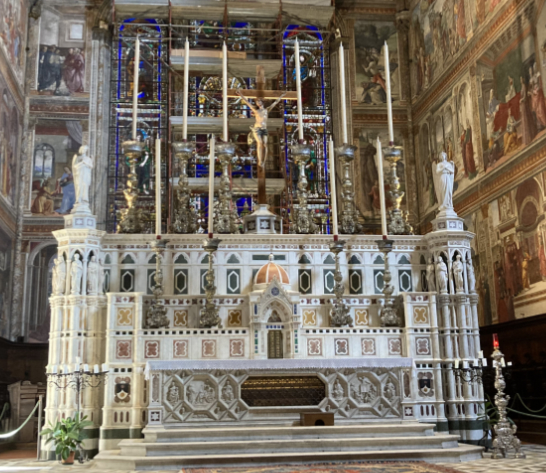
19th century Neo-Gothic altar in the Tornabuoni Chapel.
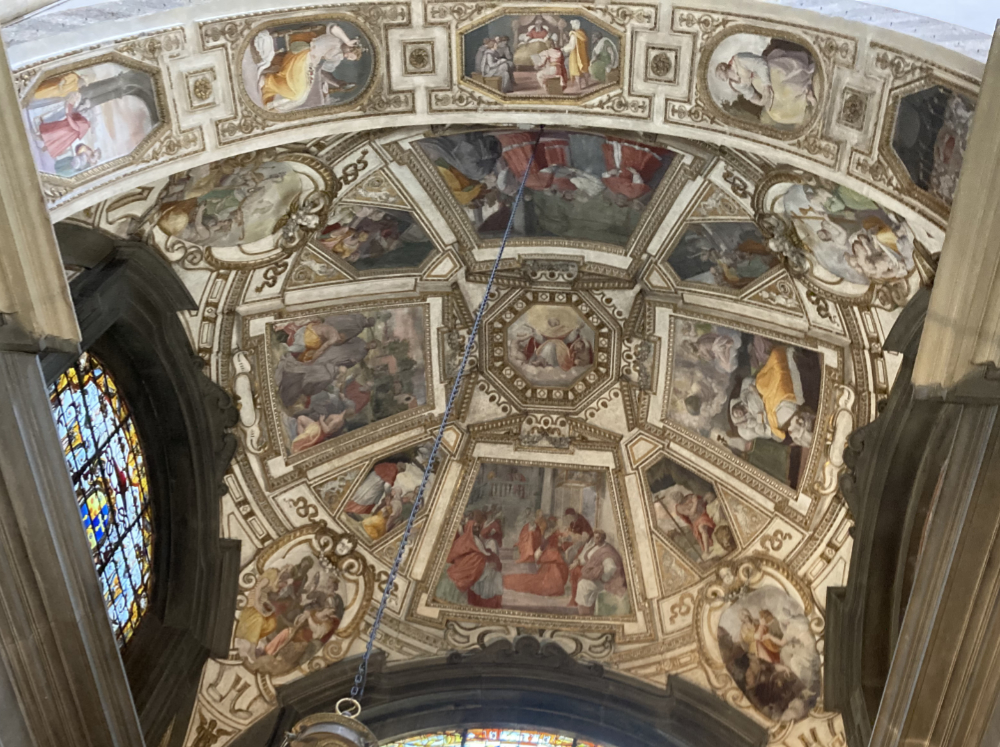
Not sure which chapel this ceiling is in.
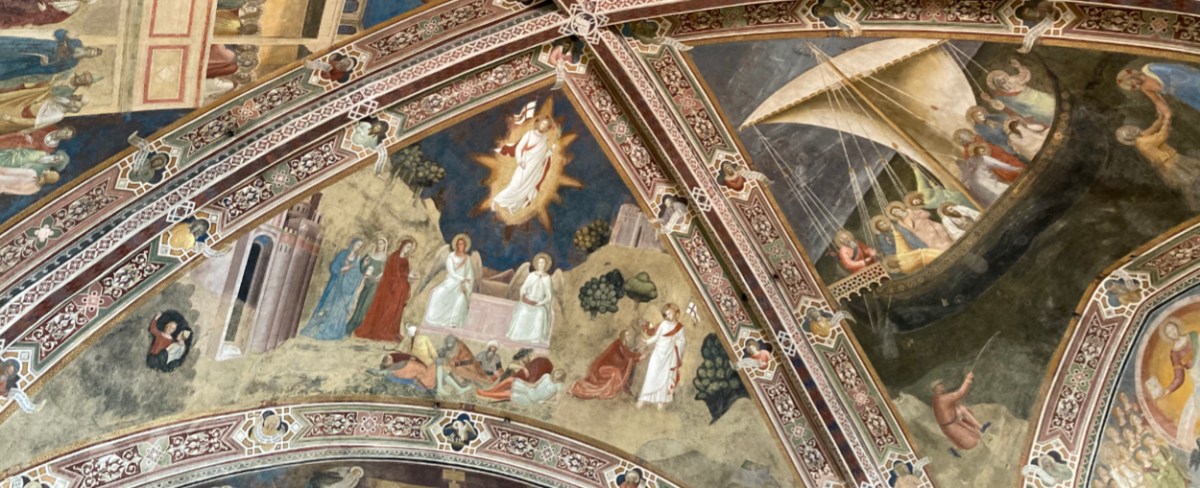
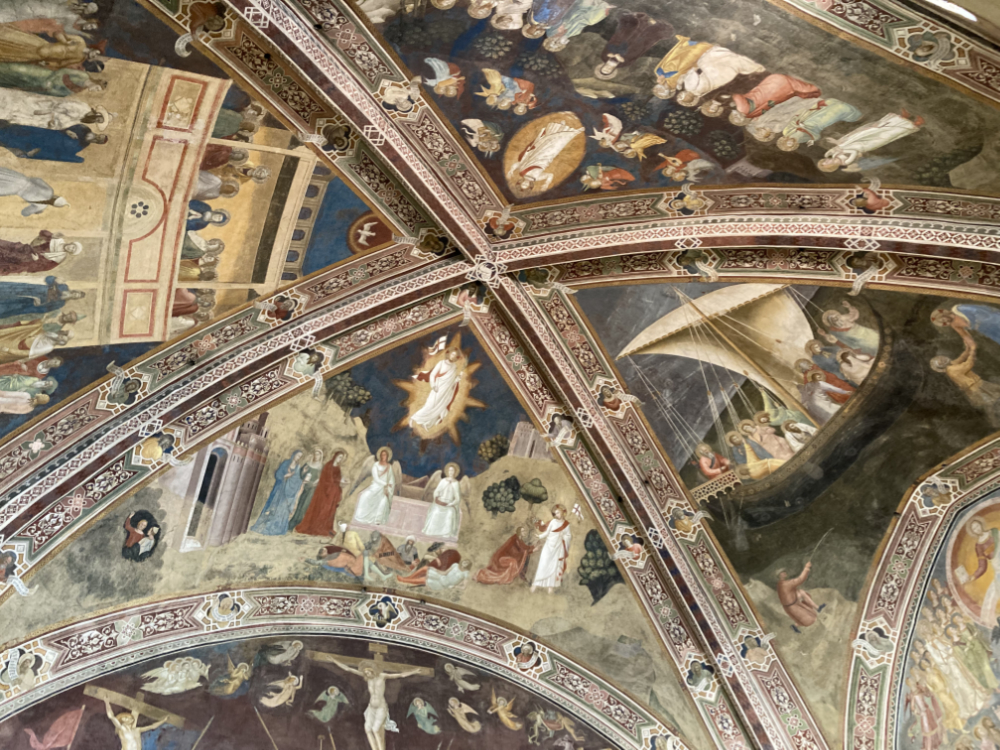
Ceiling of Spanish Chapel by Andrea di Bonaiuto (Andrea da Firenze). Scenes from the life of Christ.
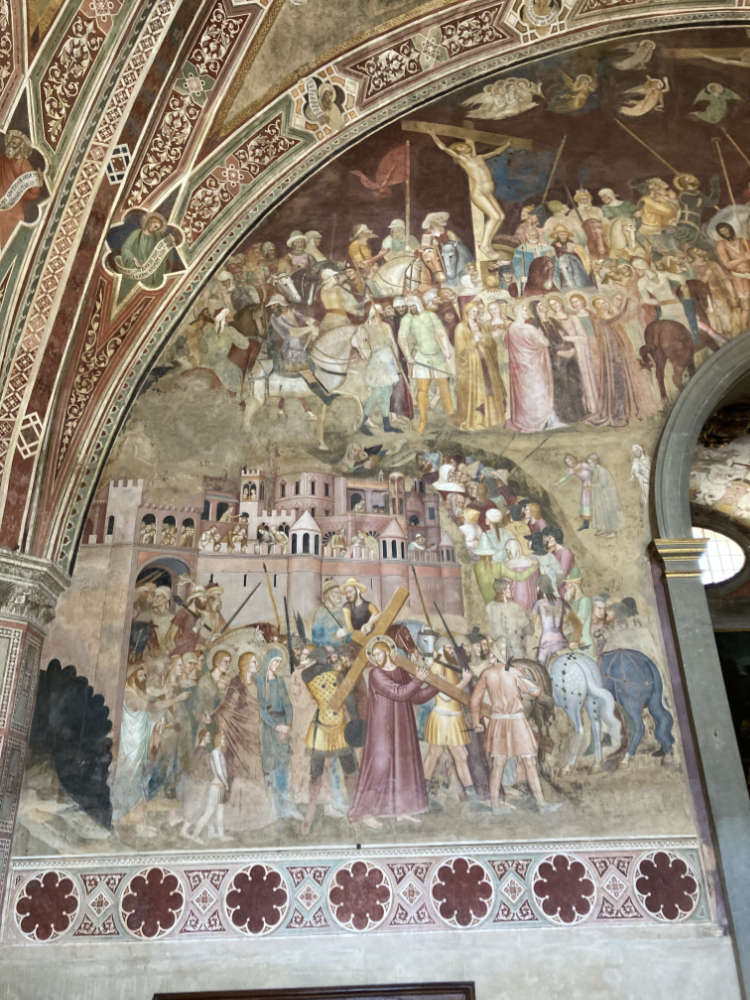
This is also by Andrea di Bonaiuto in the Spanish Chapel.
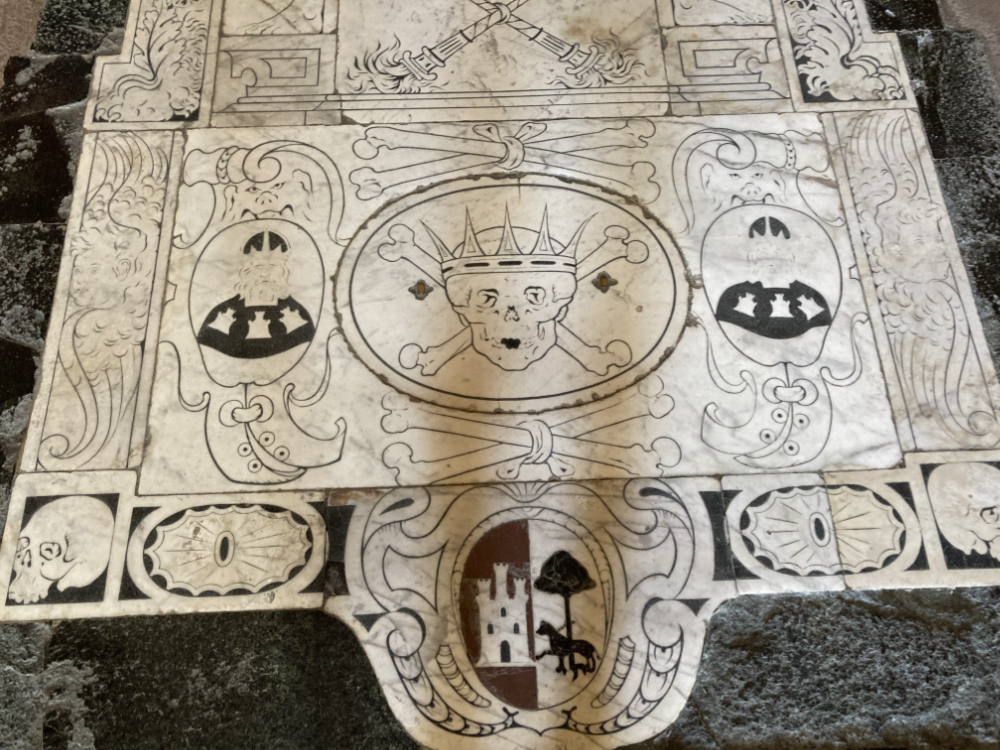
I don’t know who is buried here; I like the bones and skulls.
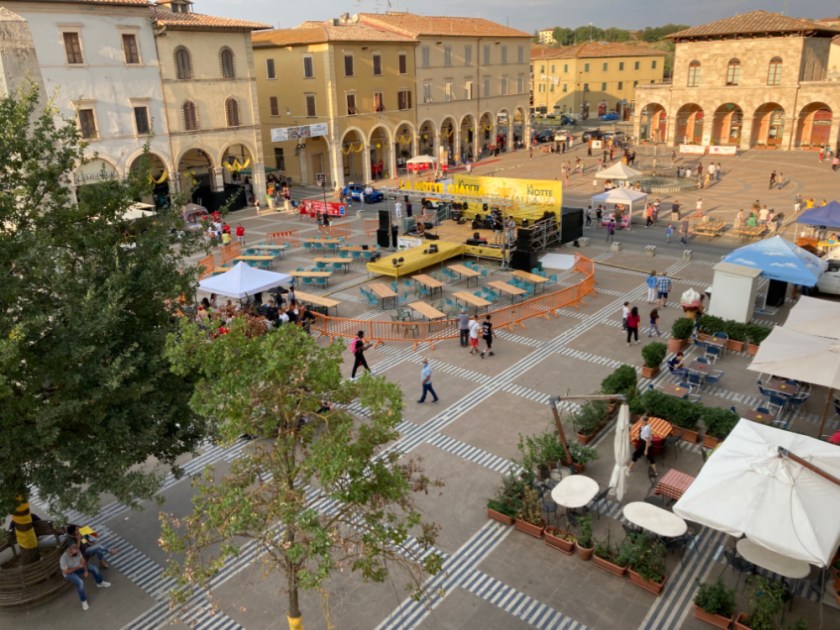
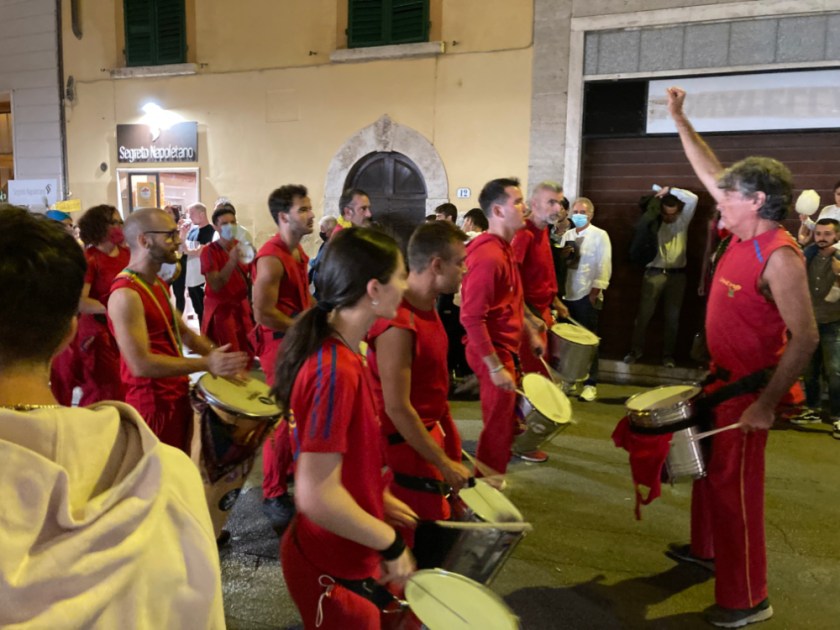
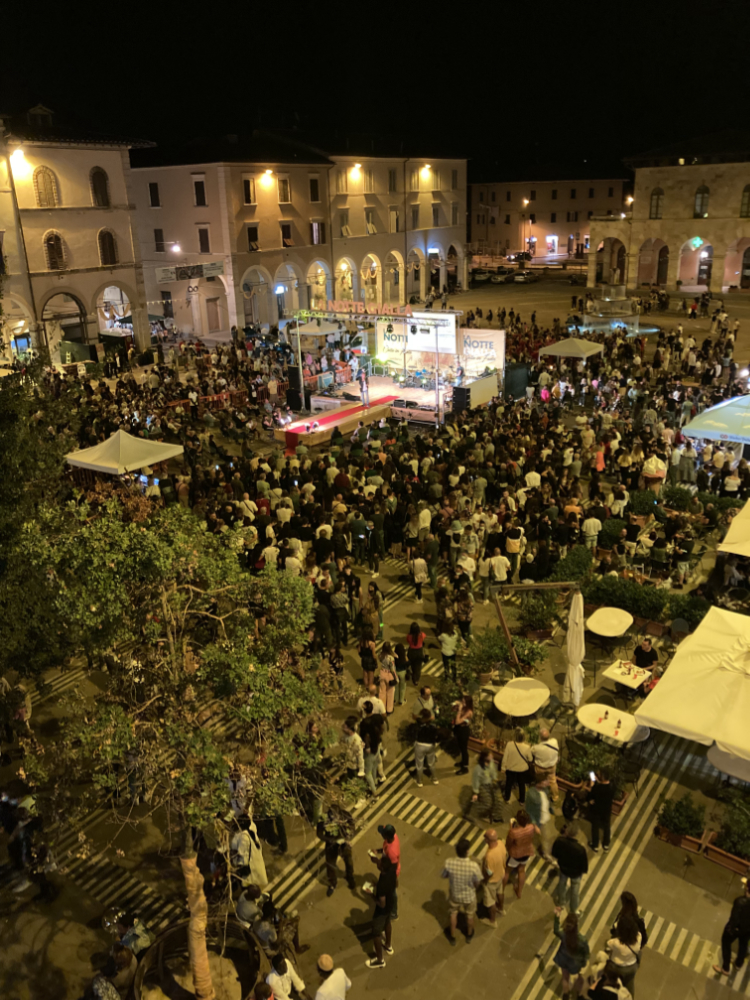
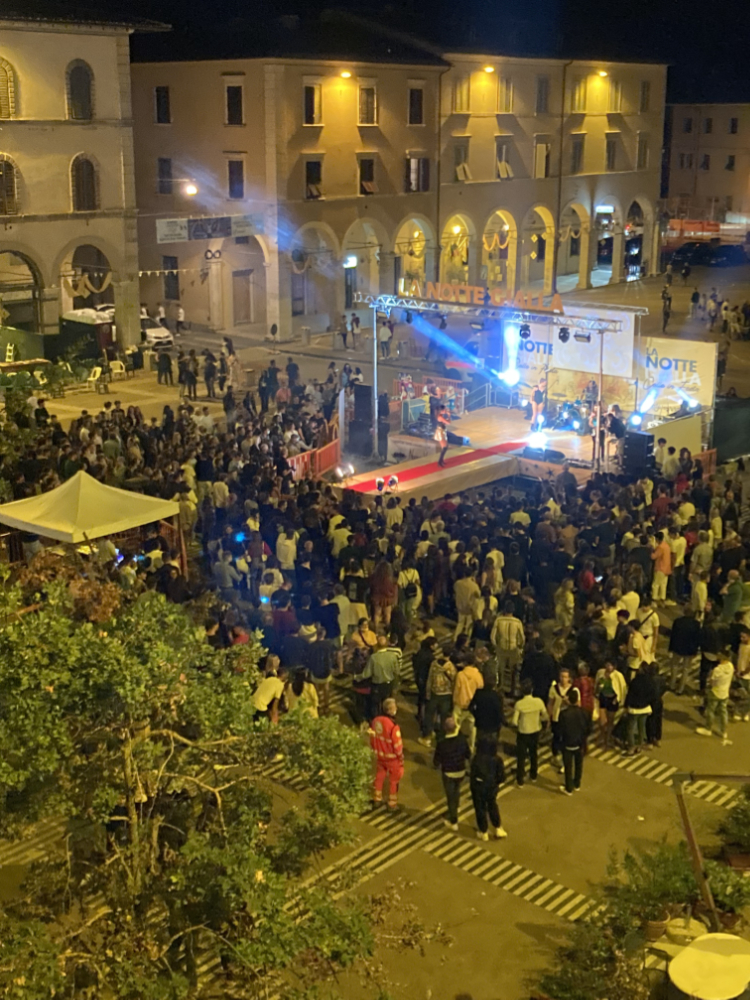
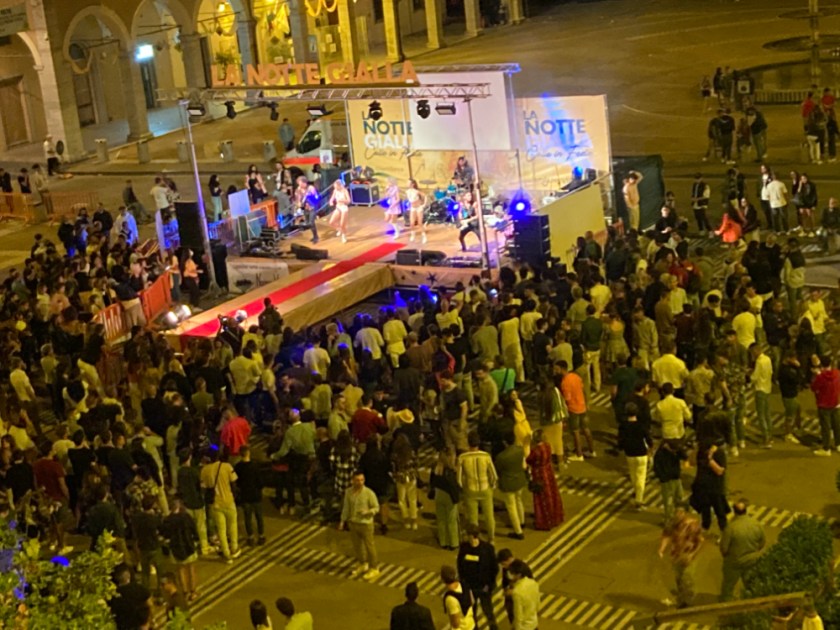
The first Saturday that we were in Colle there happened to be this music festival called La Notte Giallo (no one knew where the name came from). There were performers at several outdoor locations starting at about 4pm. The “headliners” were in Piazza Arnolfo outside our apartment.
Setting up.
This group paraded around town on their way to the stage.
This guy’s music was as self-indulgent as he appears.
A comedian performed right before the final act,…
a band with 3 women lead singers. They covered songs by Katy Perry, Madonna, Lady Gaga, Brittany Spears, etc. The band took the stage after midnight…
…and went to about 4 in the morning. Were they good? They were LOUD!
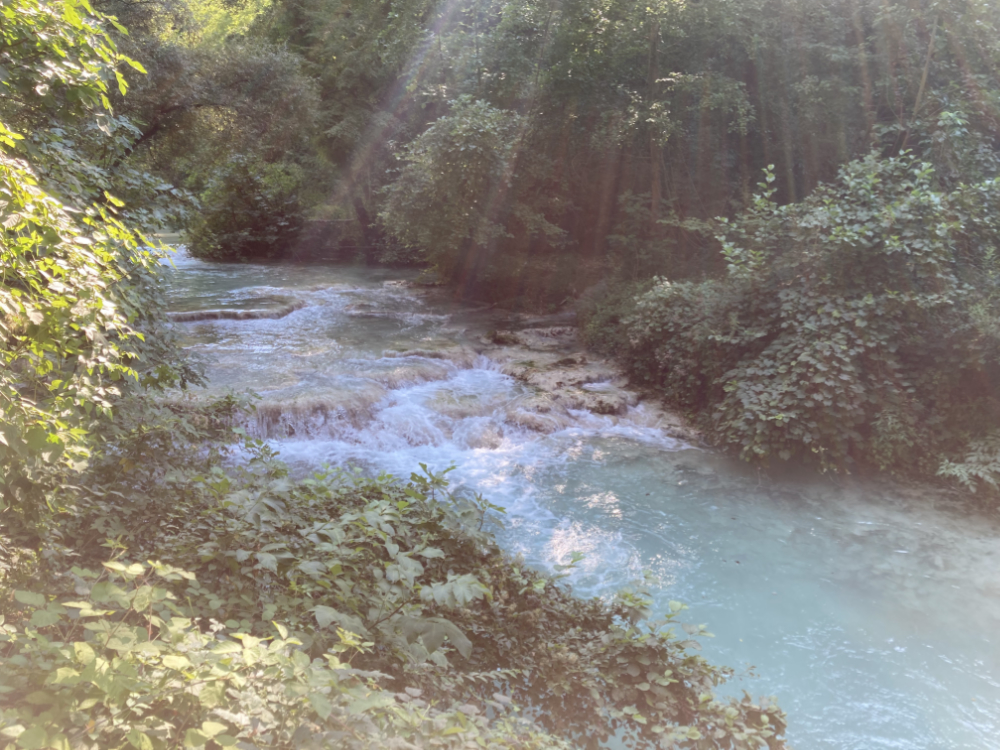
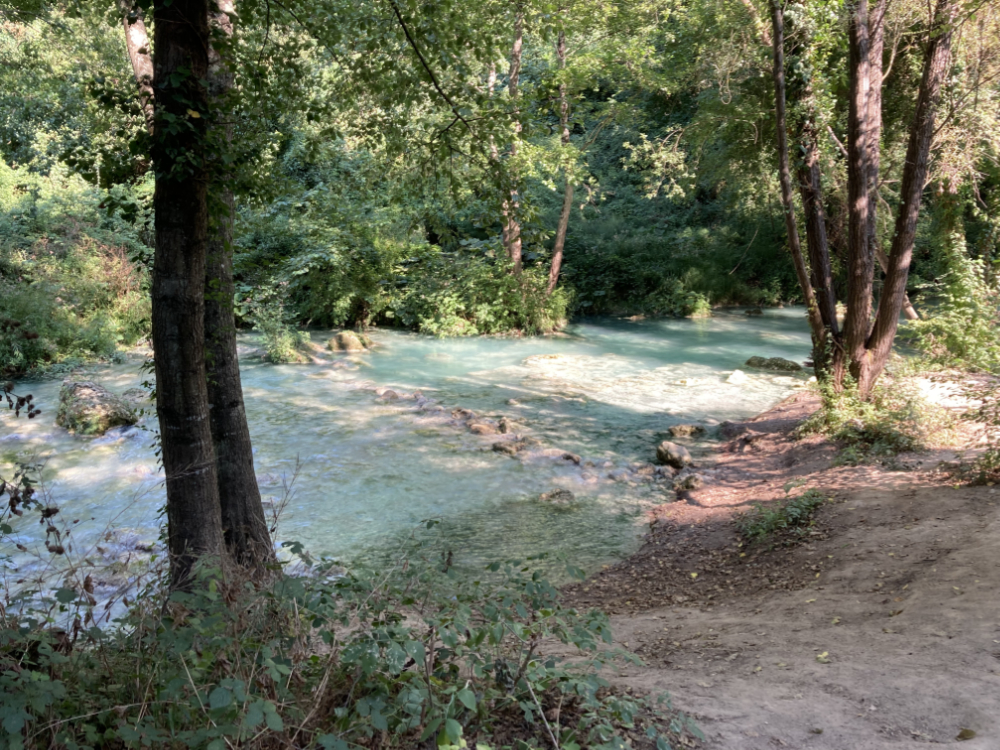
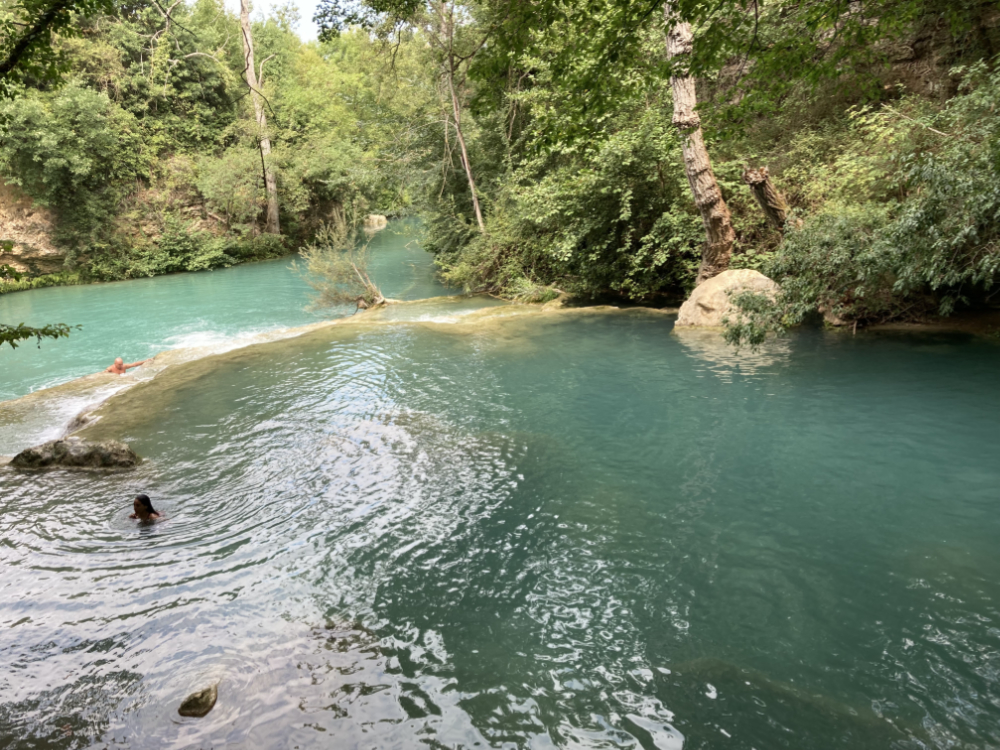
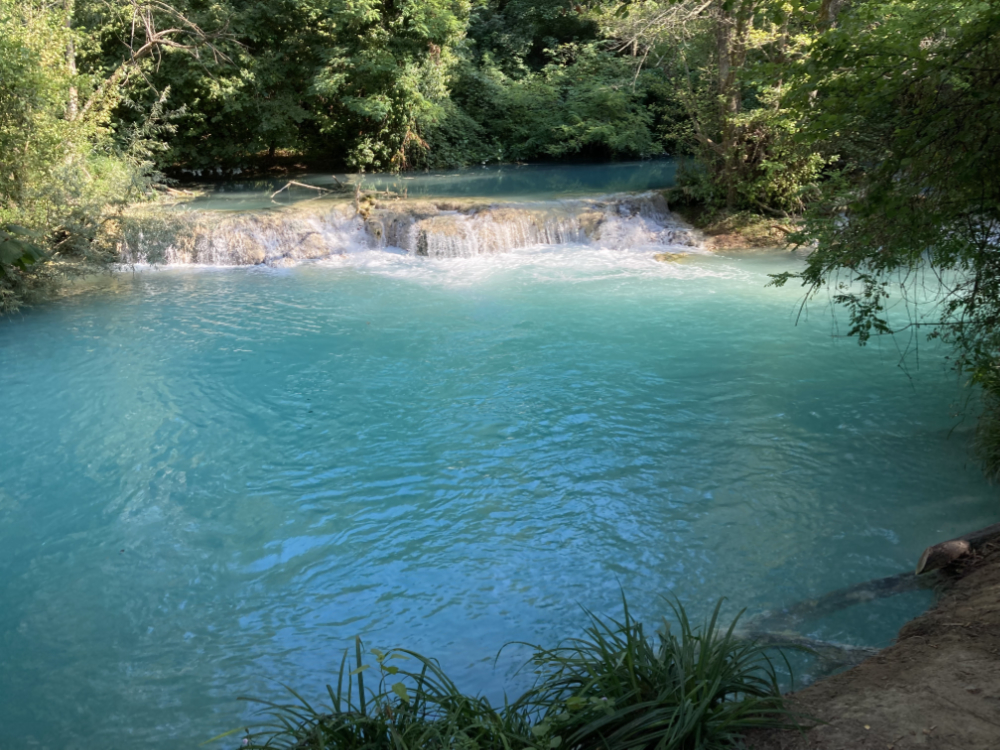
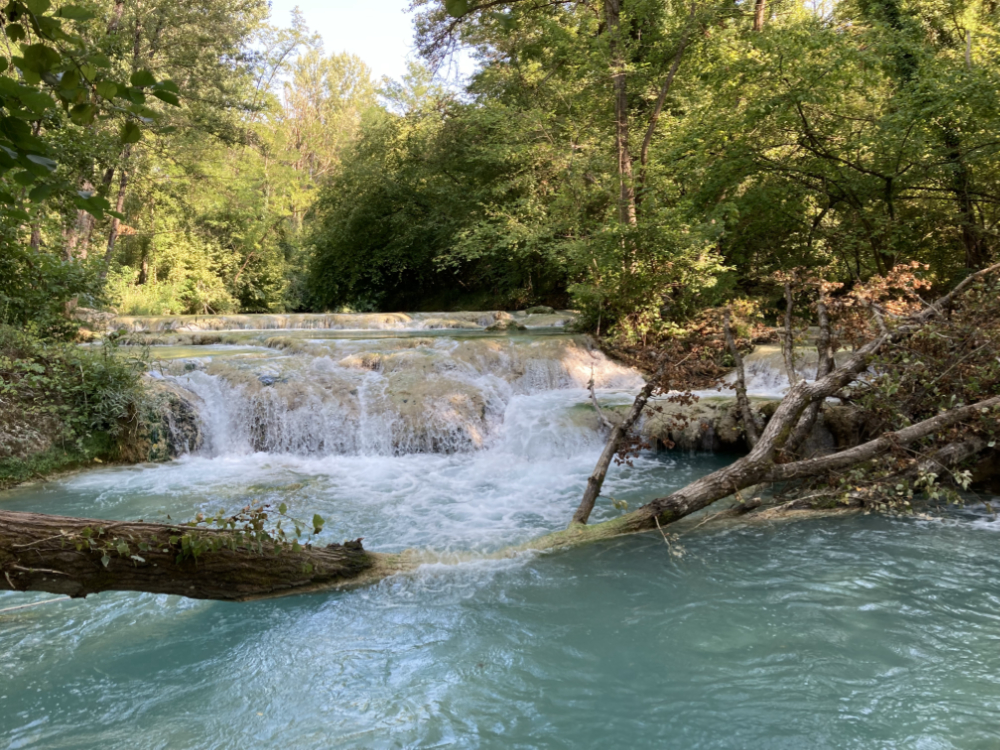
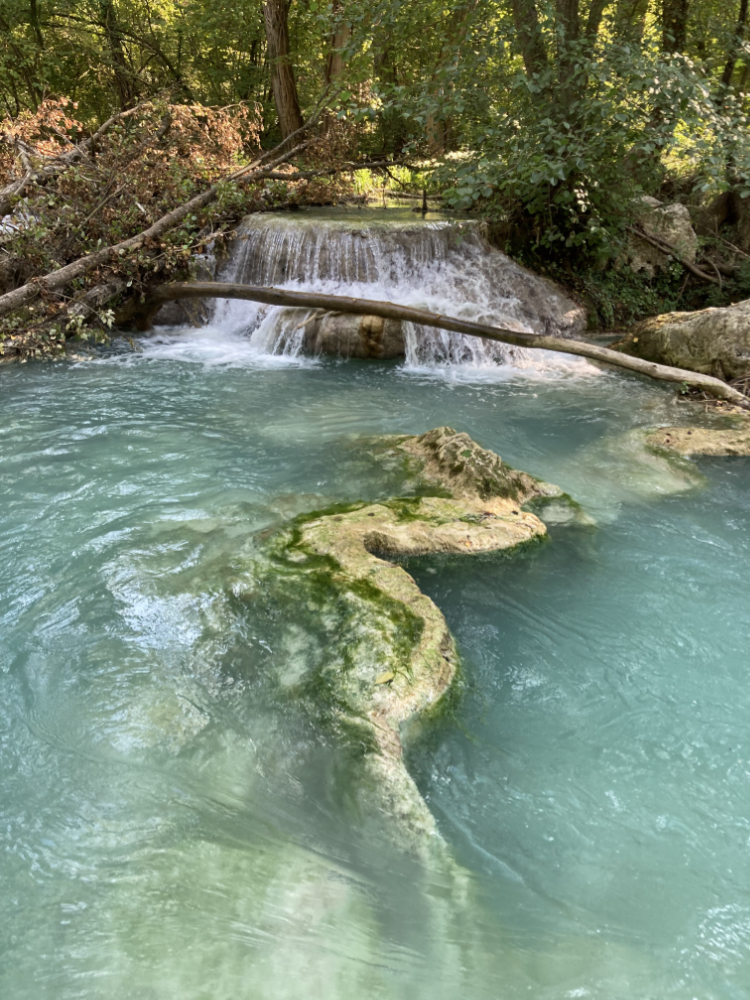
One of our favorite walks is along the Elsa River (about 4 miles round trip). The headwaters of the Elsa are near Siena. From there, it flows north through Colle di Val d’Elsa to the Arno (the river that runs east-west through Florence). The turquoise color of the river is due to the limestone river bed. The river erodes the limestone releasing microscopic crystals of calcium carbonate. These crystals reflect blue and green light creating the unusual color. Actually, satellite images of the ocean can have turquoise patches if there is a bloom of coccolithophorids, which have calcium carbonate in their cell walls…that’s probably enough of that.
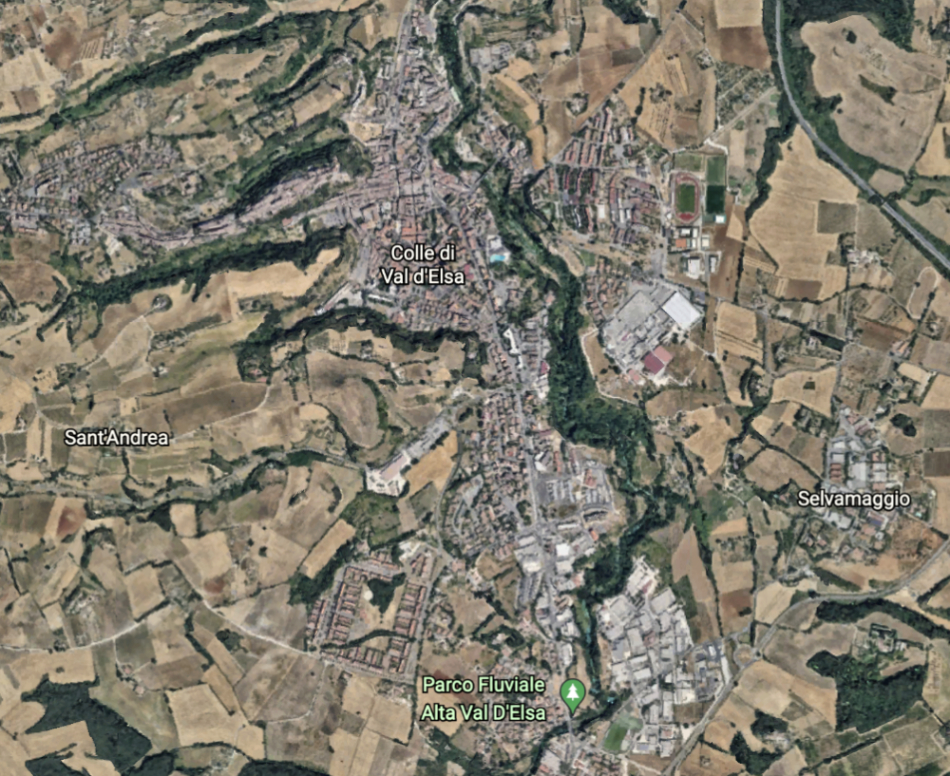
The Elsa is the green strip running up through the middle of the image.
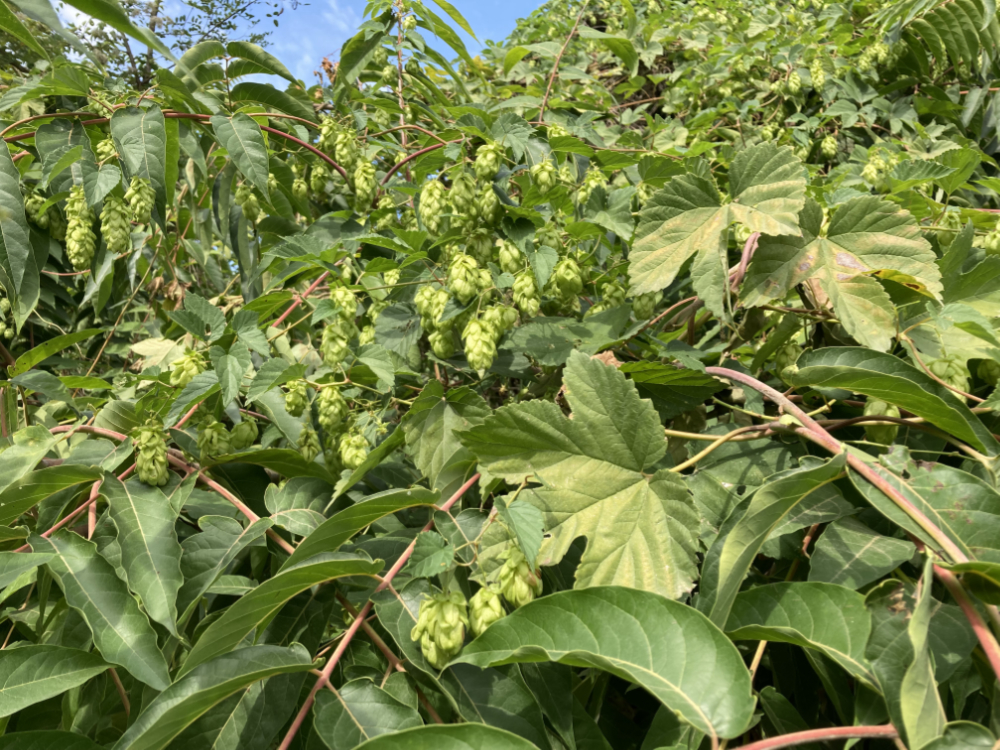
The light green “cones” are from a wild hops plant. It’s a vine growing through something else. The three-lobbed leaves on the left are the hops leaves.
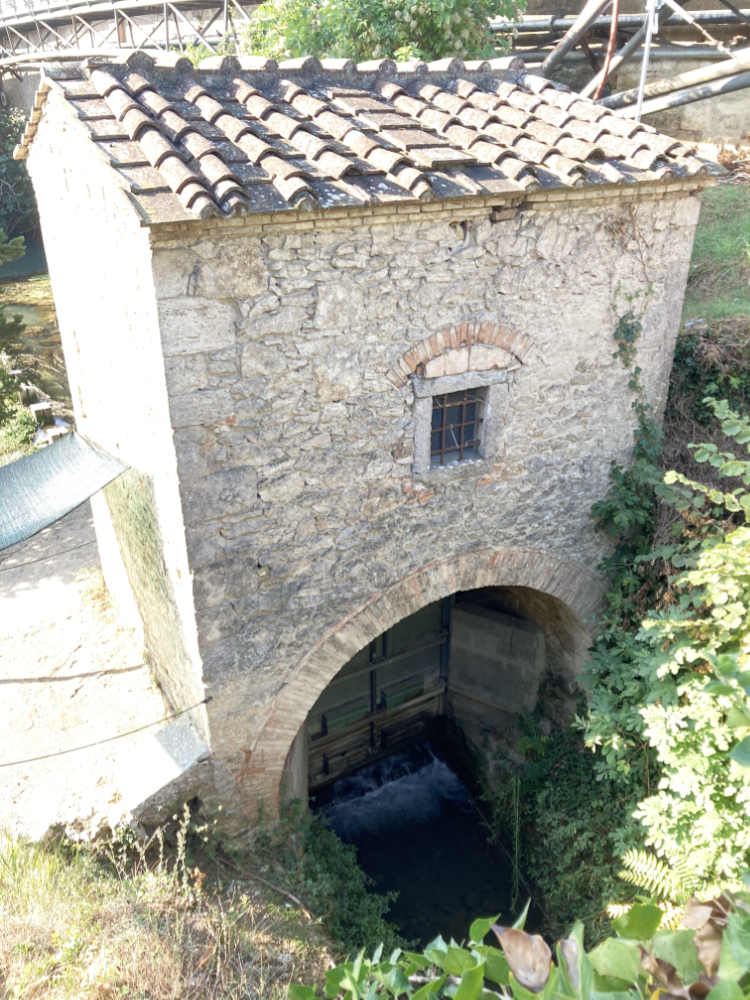
The Elsa has cut a bit of a canyon so the river is well below the level of the town. In the Middle Ages, they went upstream and dug a canal to bring water in at the level of the city. This is the gatehouse to regulate flow into the canal.












































 John and Susan's Excellent Adventure