Croatia’s second city, Split, began life as the retirement palace for the Roman emperor Diocletian. Diocletian was born and grew up in the Roman colony of Salona, just a few kilometers from where he built this palace. Diocletian joined the Roman army and rose through the ranks. Eventually, his troops installed him as the Emperor and he served from 284-305CE. After 20 years, along with severe health problems, Diocletian decided to give it up and became the first Roman emperor to abdicate the position voluntarily. He moved to his palace and lived there tending his vegetable garden until his death in 311CE. He was approximately 65 years old.
Orientation to Split and Diocletian’s Palace.
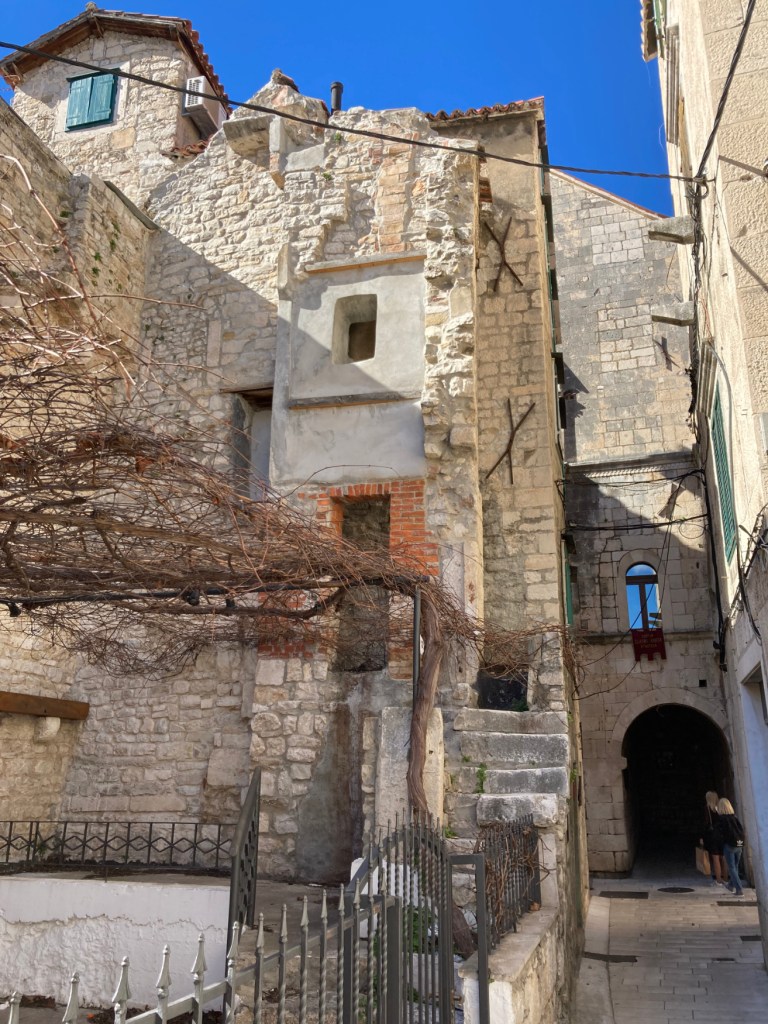
After Diocletian’s death, the palace became a possession of the Roman Empire. After the fall of the empire, it was abandoned. In the 7th century CE, the original Roman city of Salona was a victim of the tribal power struggles that filled the vacuum after the empire’s collapse. Some of the local population took up residence within the walls of the palace and began to modify it to suit their purposes. The transformation of the palace into an urban center has gone on ever since, incorporating, cannibalizing, tearing down and obscuring much of Diocletian’s original palace.
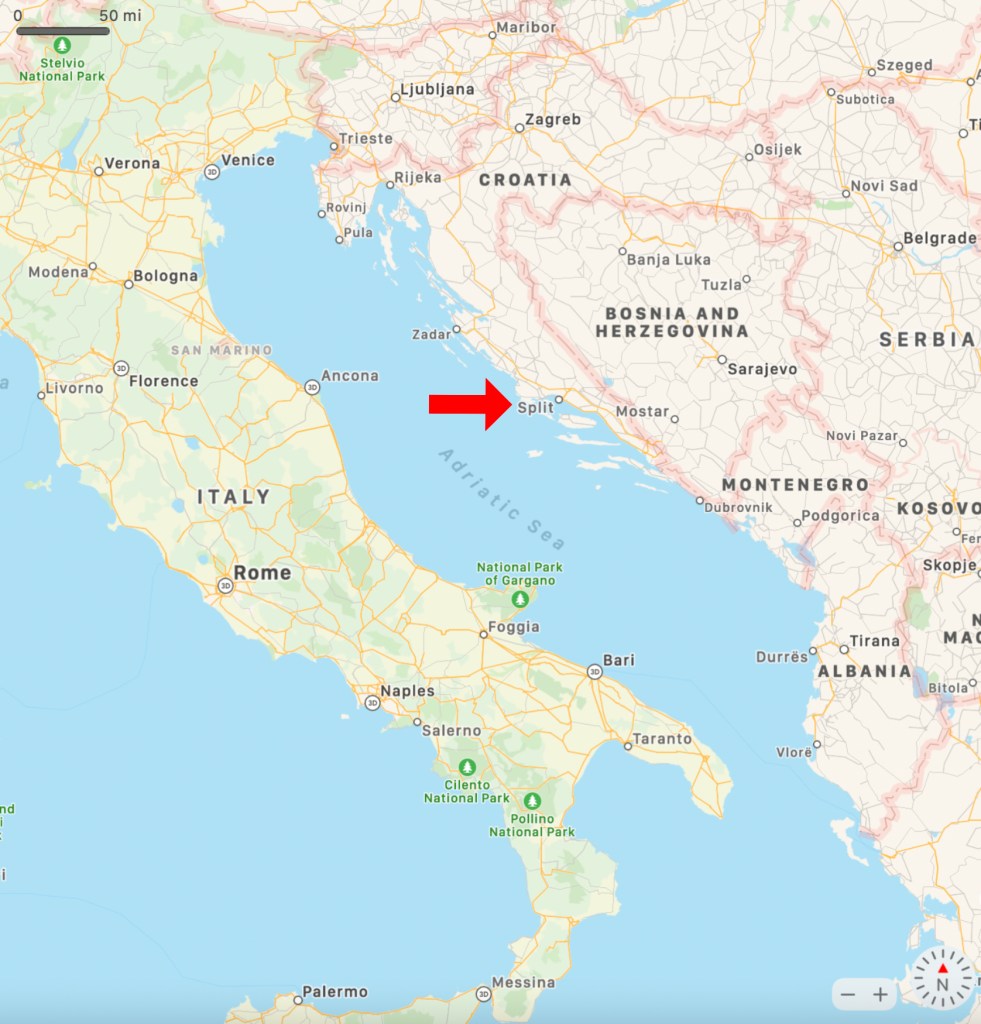
Location of Split.
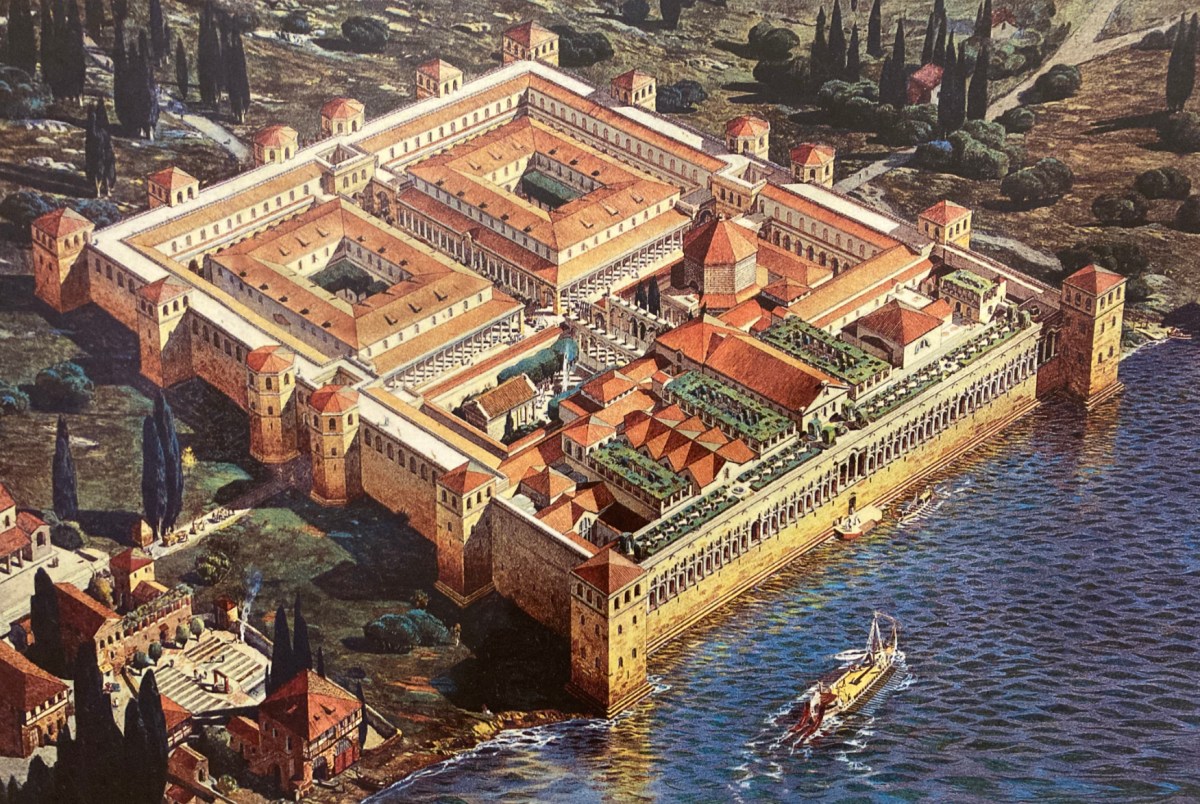
The palace was divided into 2 parts. His residence occupied the seaside half. It comprised a residential section, a temple section, and a mausoleum. The inland half contained barracks for his palace guard and offices for whatever administrative responsibilities are incumbent on a retired Roman emperor.
This is what the palace was thought to look like in 305CE. G= Gold Gate Fe= Iron Gate Br= Bronze Gate S= Silver Gate T= Temple Area P= Peristyle M= Mausoleum B= Basements
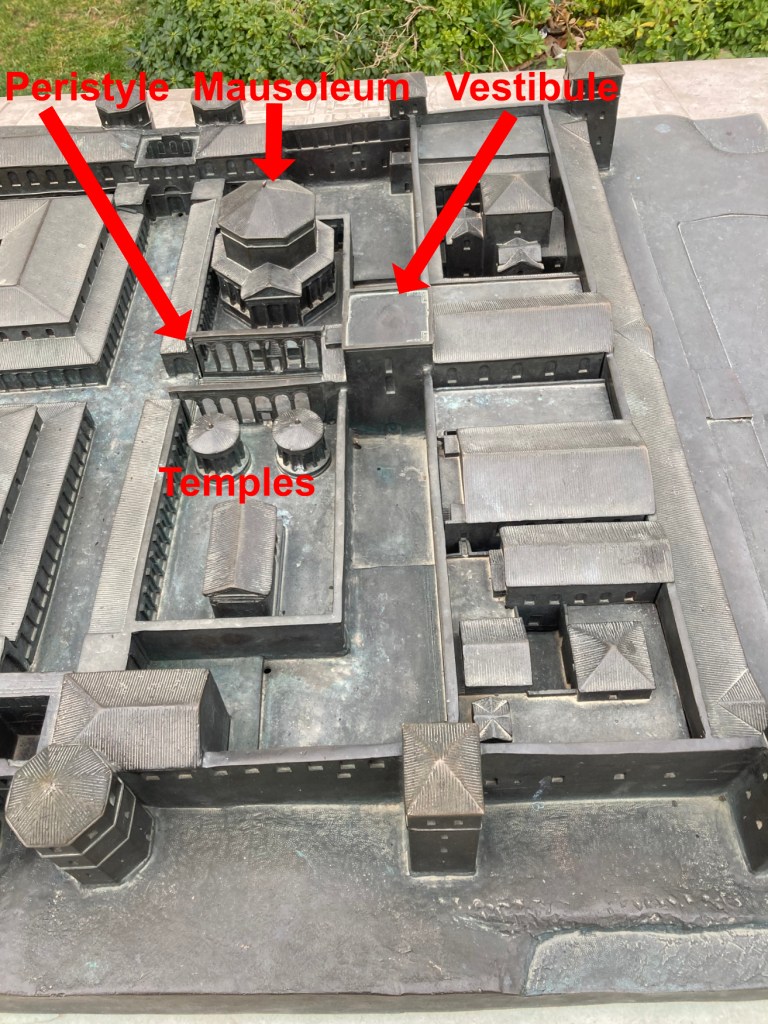
This nice bronze model of the palace is in the Riva (seaside promenade).
The Basements.
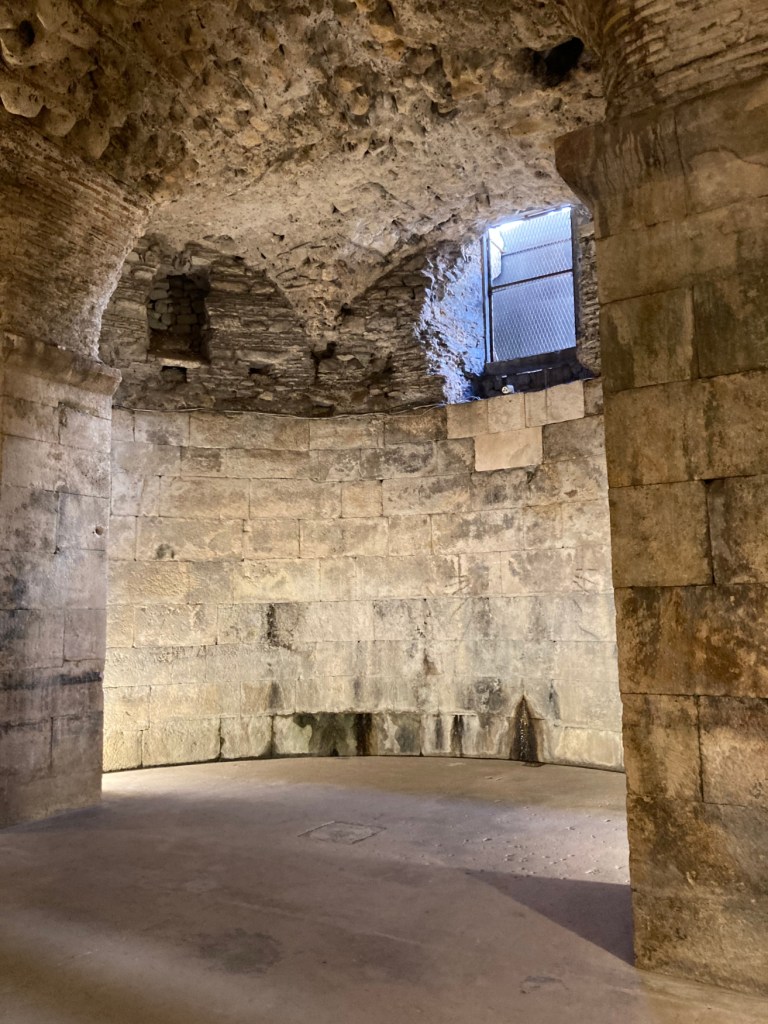
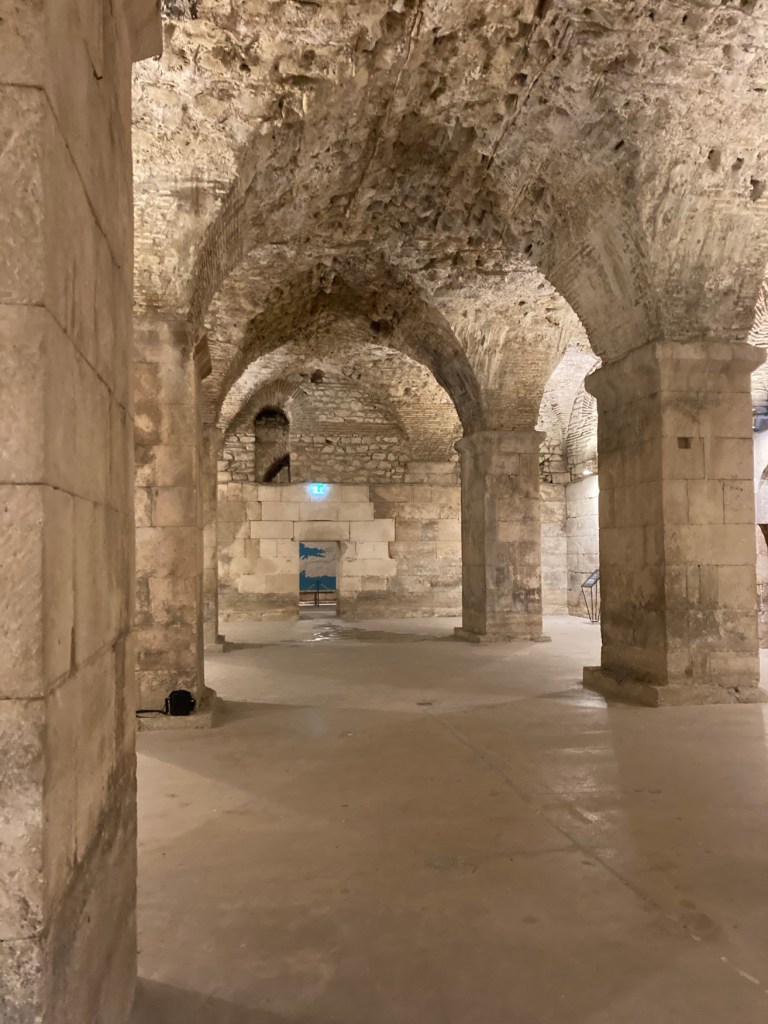
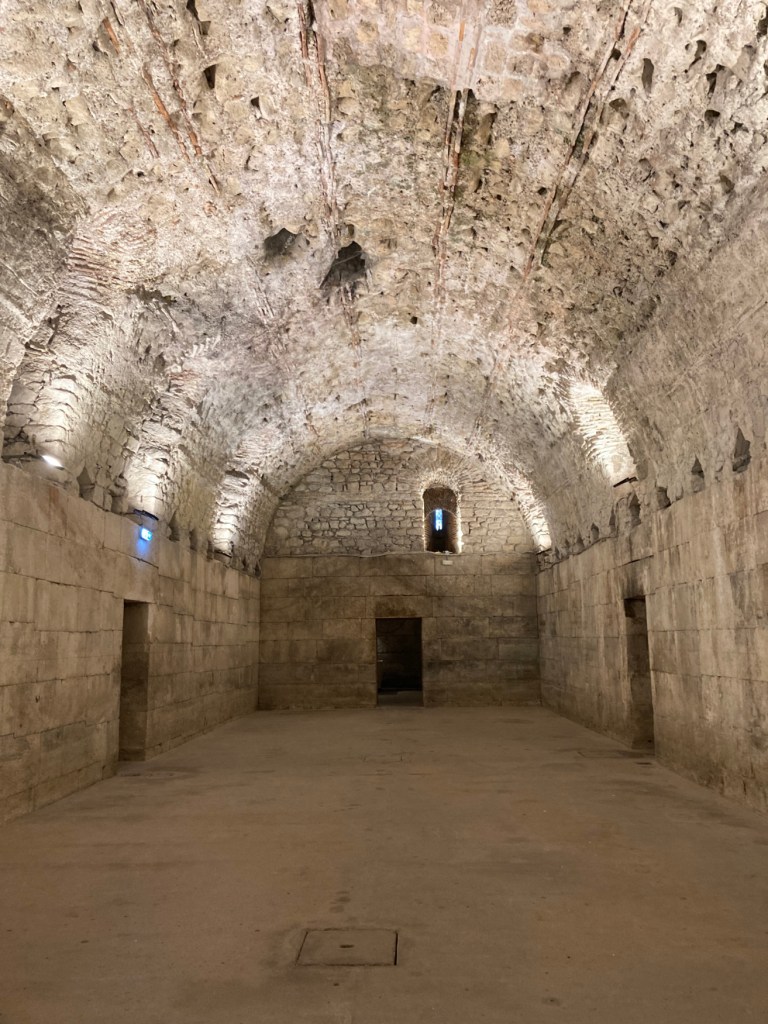
The property sloped down to the water. To keep the above ground part of the entire palace on the same elevation, the Romans had to build an elaborate and substantial “basement” to keep the residential section level with the administration section. These chambers were primarily used for storage. There might have been areas devoted to worship of the gods. There also might have been a dining room.
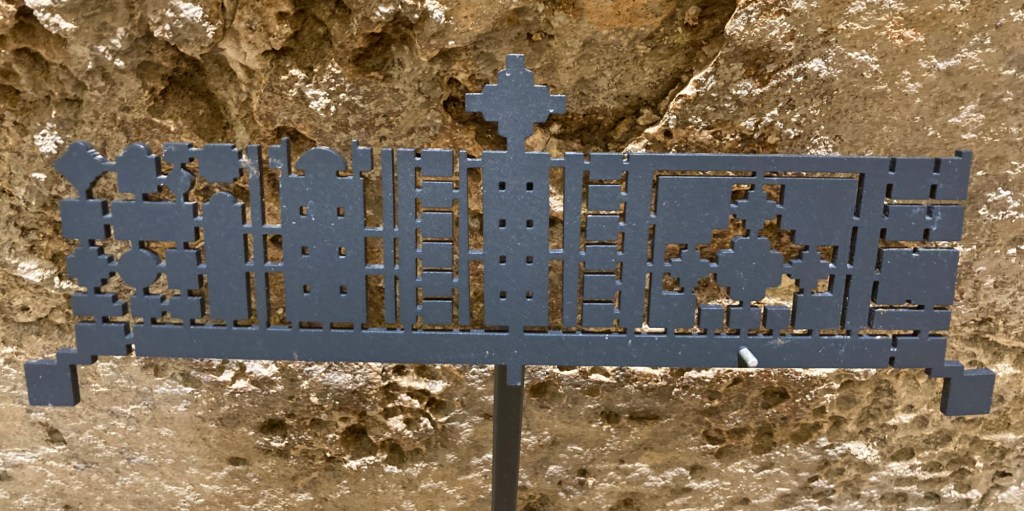
When you tour the basements, these “maps” of the basement chambers serve as guides. Your position in the hallway along the edge of the chambers is indicated by the white peg (lower right in this picture).
The scale is impressive. The chambers are 20-25 feet tall.
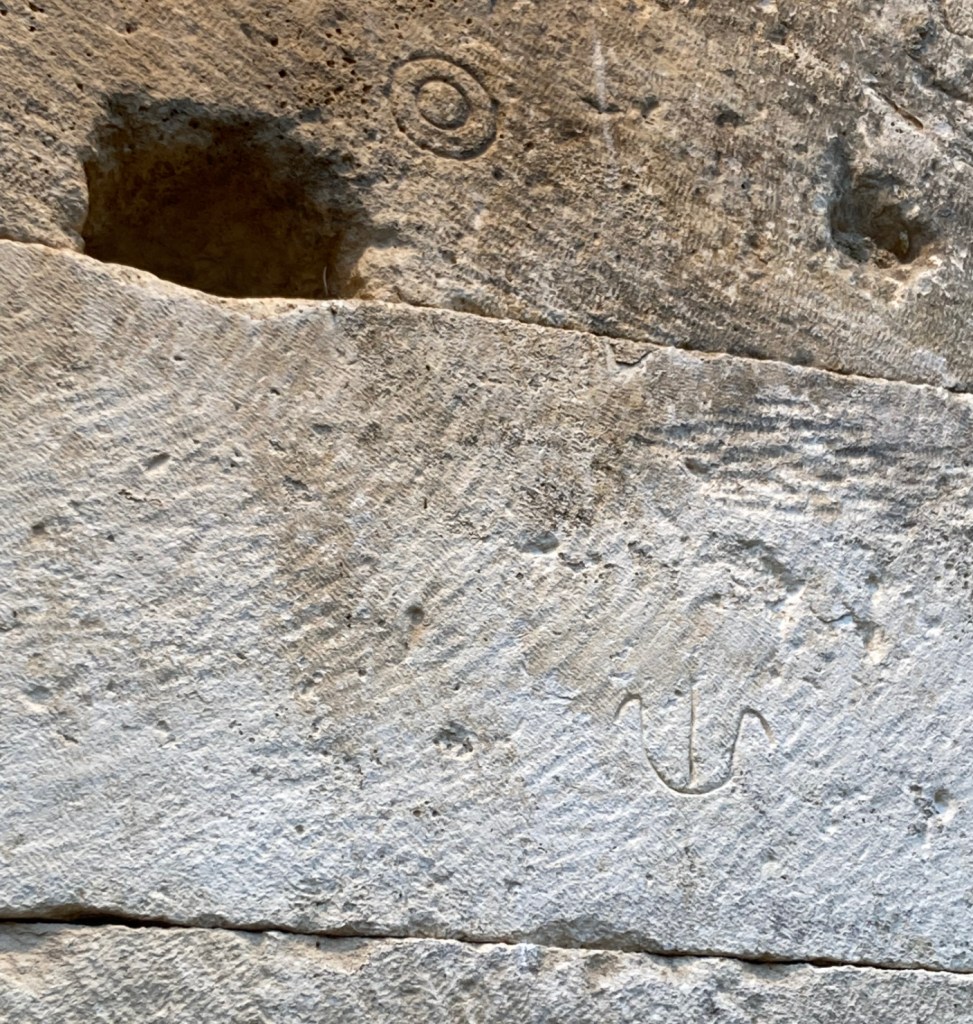
These inscriptions are thought to be notes or instructions for the masons working on the palace.
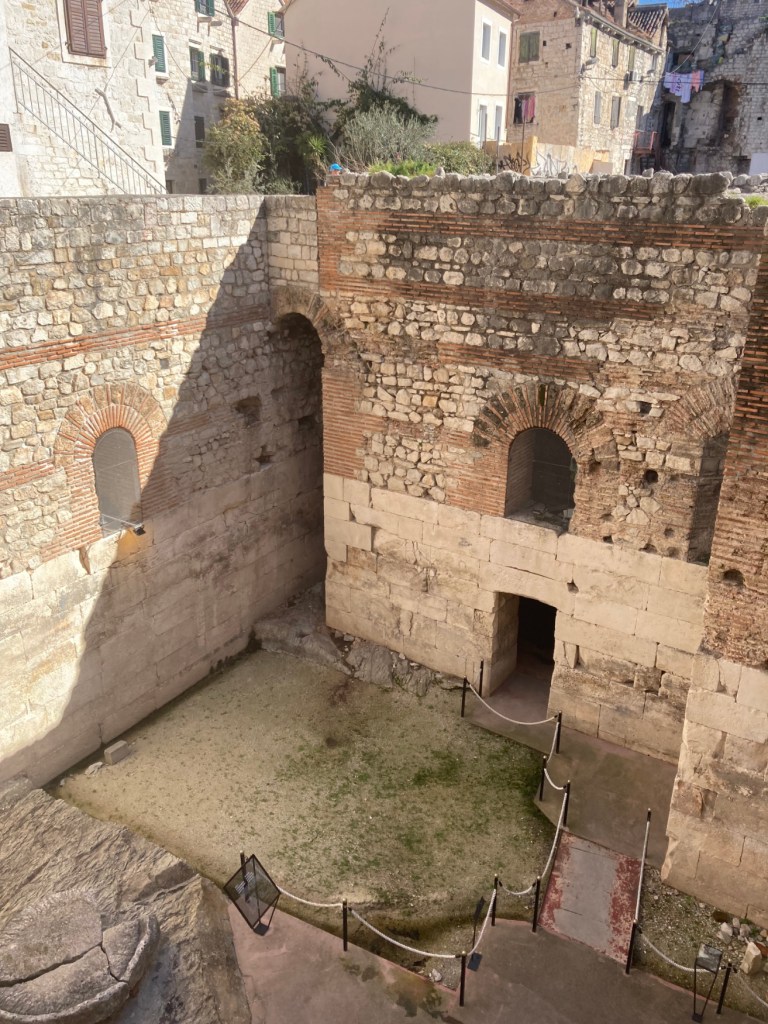
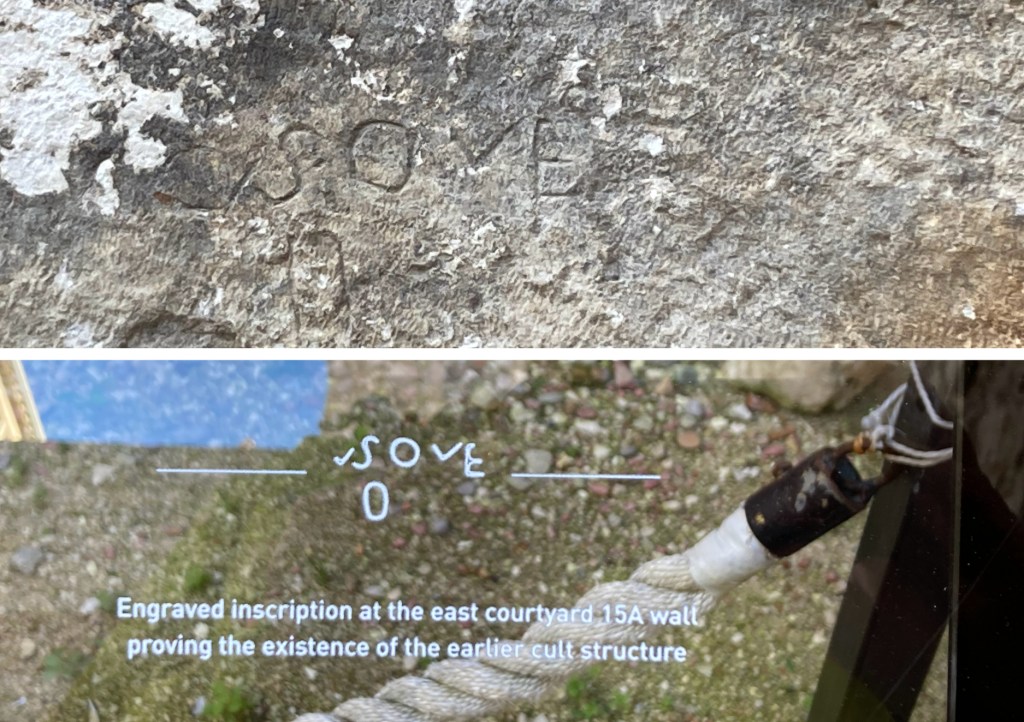
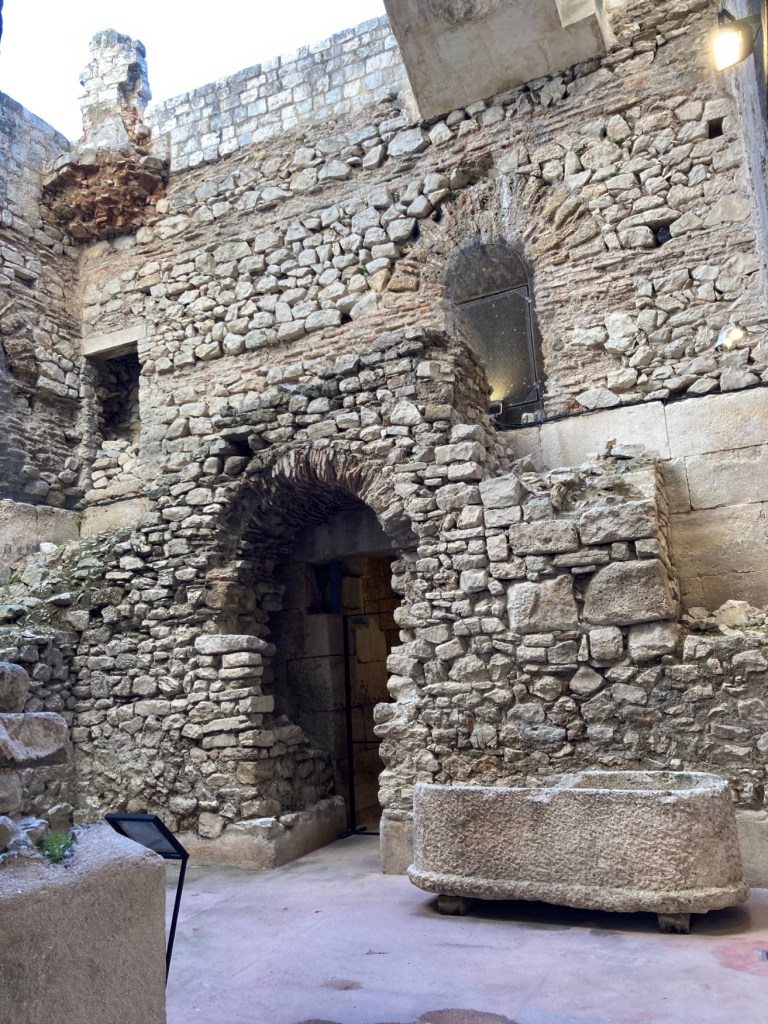
Here, the basement is exposed. An inscription on the wall to the left of the walkway suggests this room was used to make offerings in religious ceremonies.
Inscription suggesting this is where they made offerings to their deities. I don’t know why the sign says “cult.”
Exposed basement chamber.
In the Dark and Middle Ages, people living in the residential area cut holes in the floor to allow dumping garbage into the basement. Two of those holes can be seen in ceiling here. These basements eventually were filled with garbage..really, filled to the ceiling.
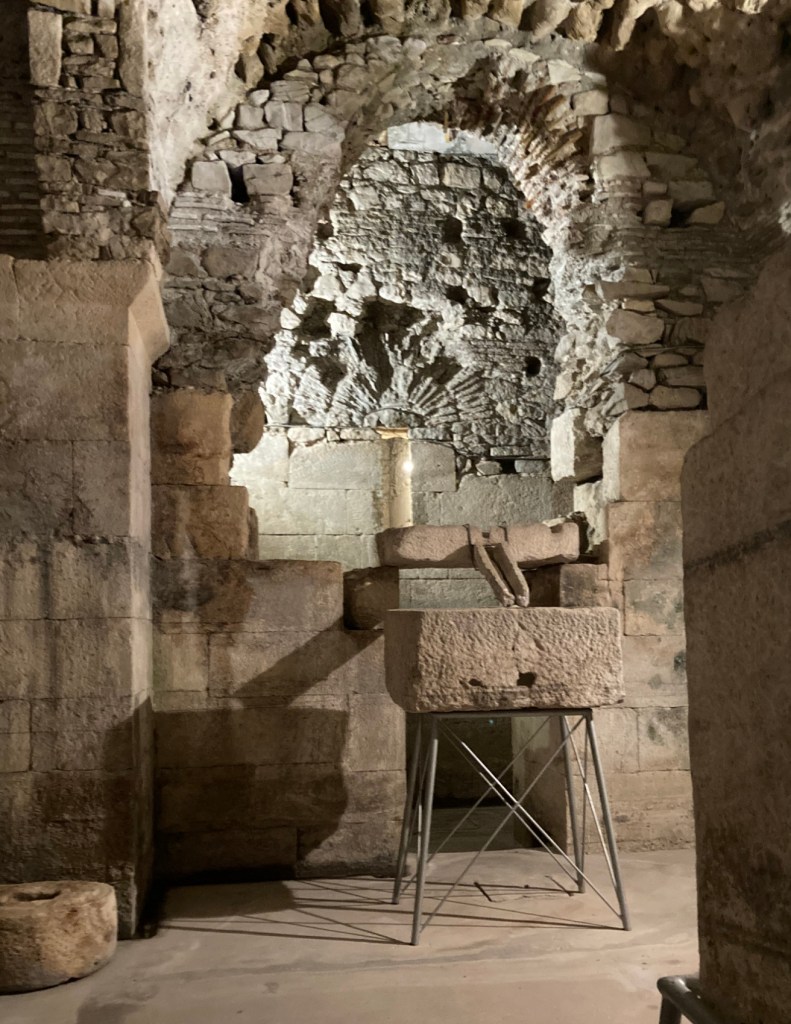
Another post-palace modification in the basements- system for pressing olive oil.
This gives you some idea of what a garbage-filled basement looks like.
Gates
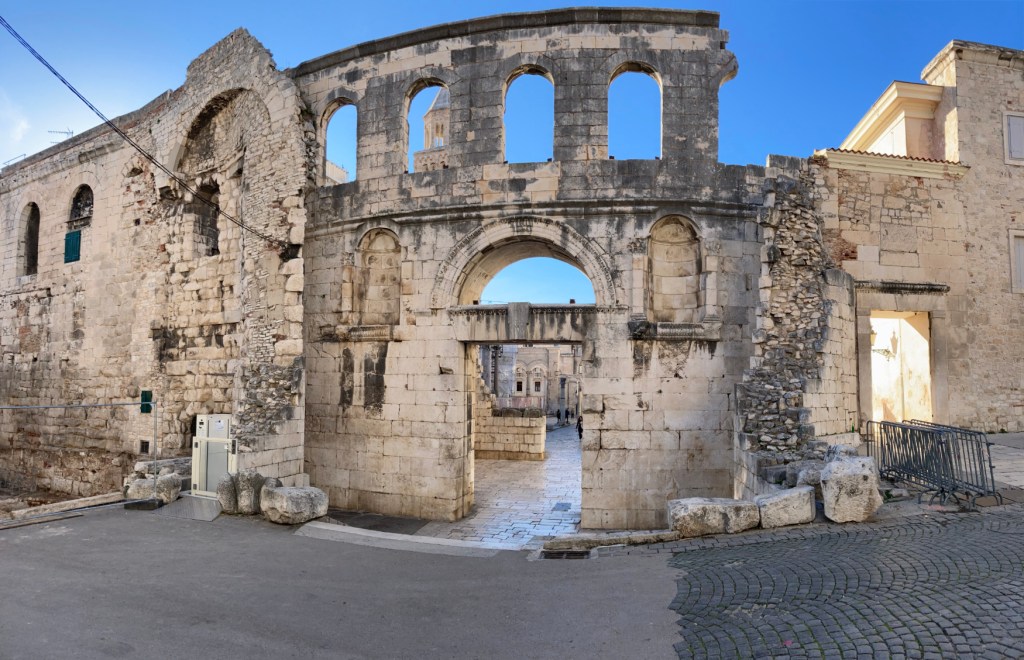
The four entrance gates each had a name. The Gold Gate was the main entrance on the land side. The Bronze Gate was the seaside gate. The Silver and Iron Gates were on the east and west sides, respectively. The Bronze and Iron gates have been pretty much obscured by 1600 years of renovation.
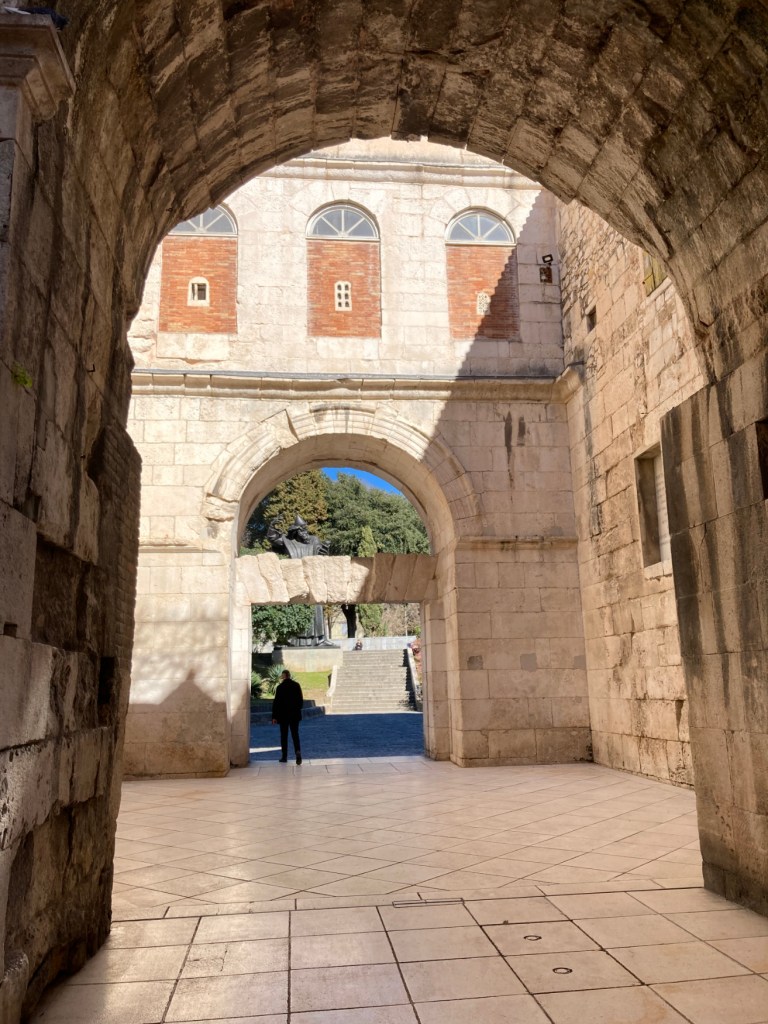
View of Gold Gate from inside the palace. This was a double gate.
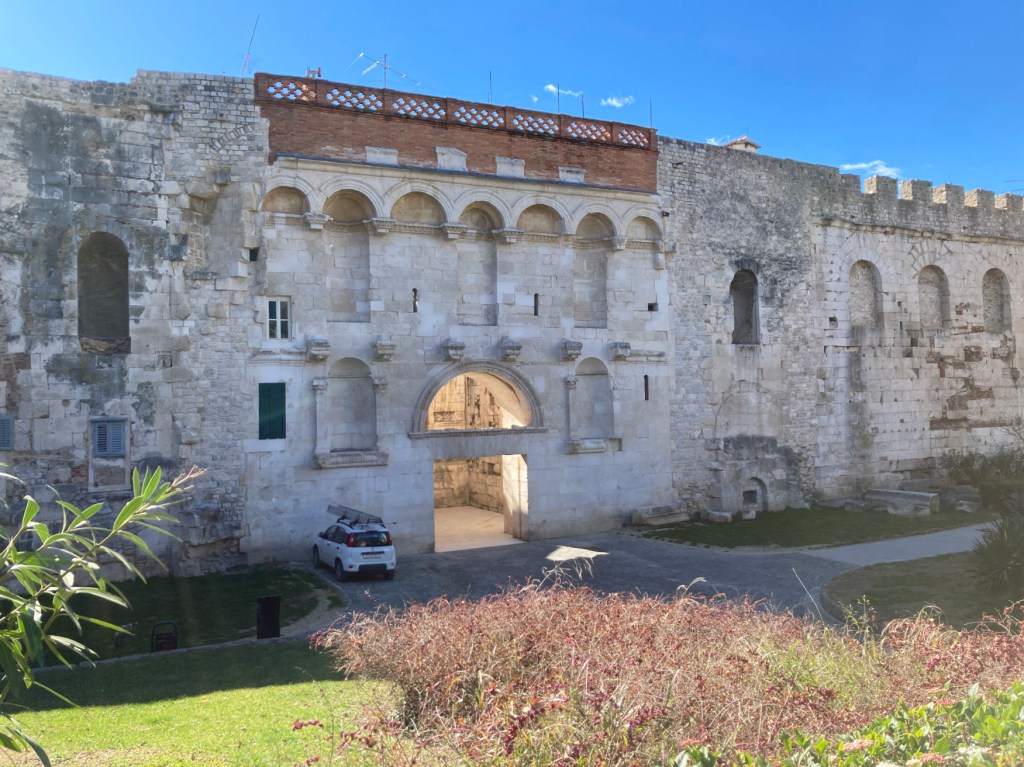
Gold Gate from the oustide. You will have to use your imagination to fill the niches with statues of Casesars, mythical heroes, and gods.
Silver Gate from inside.
Approaching the Silver Gate from inside the palace.
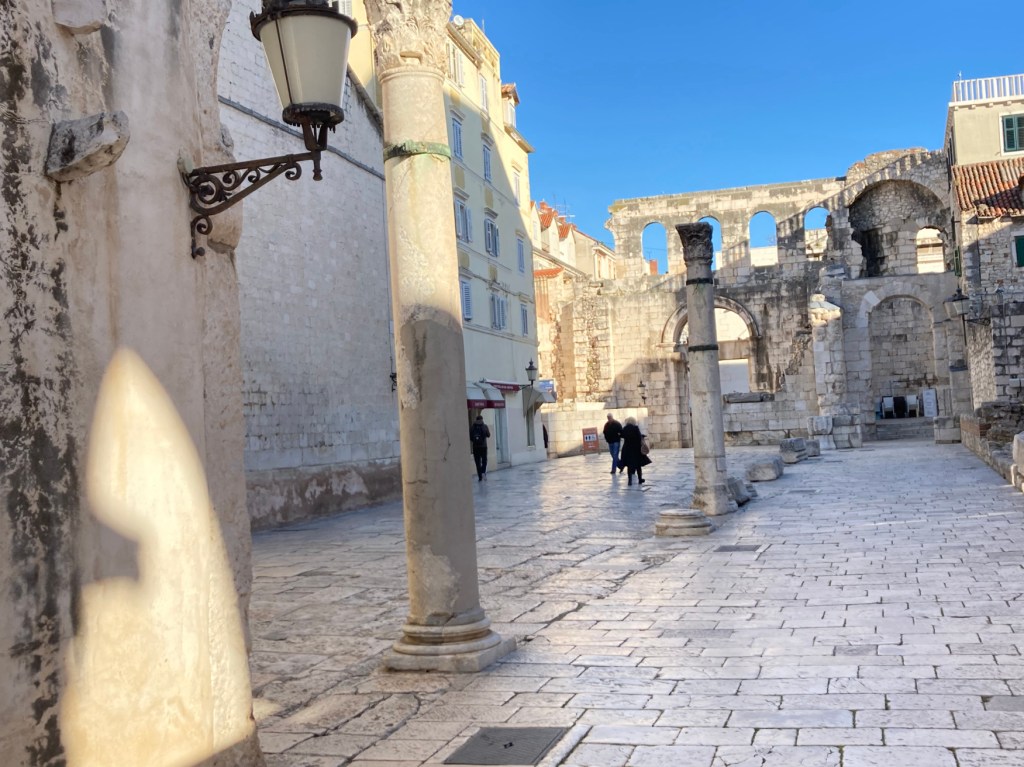
View of the Silver Gate from outside the palace. The large arch visible at the top of the wall to the left of the gate is the remnant (where it was attached to the wall) of one of the two towers that flanked the gate.
The Residence.
The residential side of the palace. The Adriatic would be lapping at the left wall.
The original seaside wall of the palace is visible in the upper half here. You have to imagine open arches between the columns where you could view the Adriatic as you strolled.
The Peristyle and Vestibule.
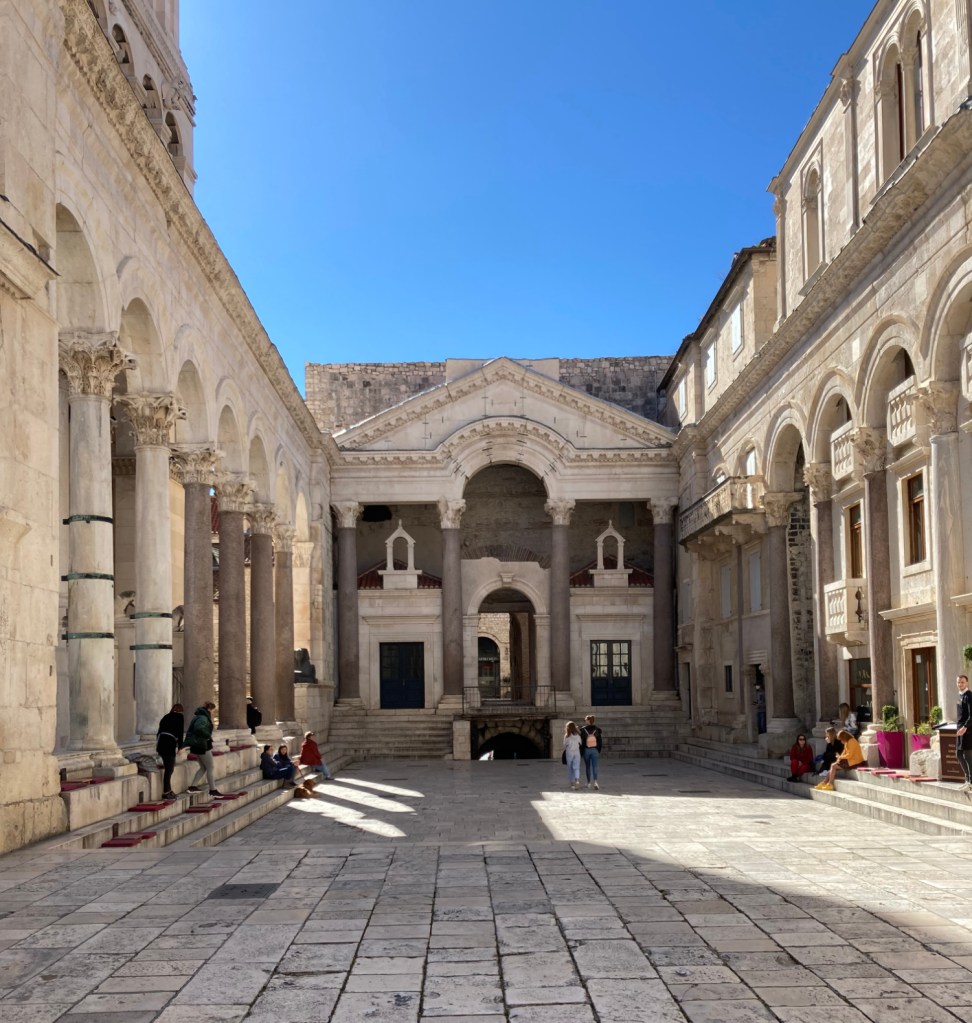
If you visited Diocletian, you would approach his residence by walking down the colonnaded Peristyle. The building at the end is the Vestibule.
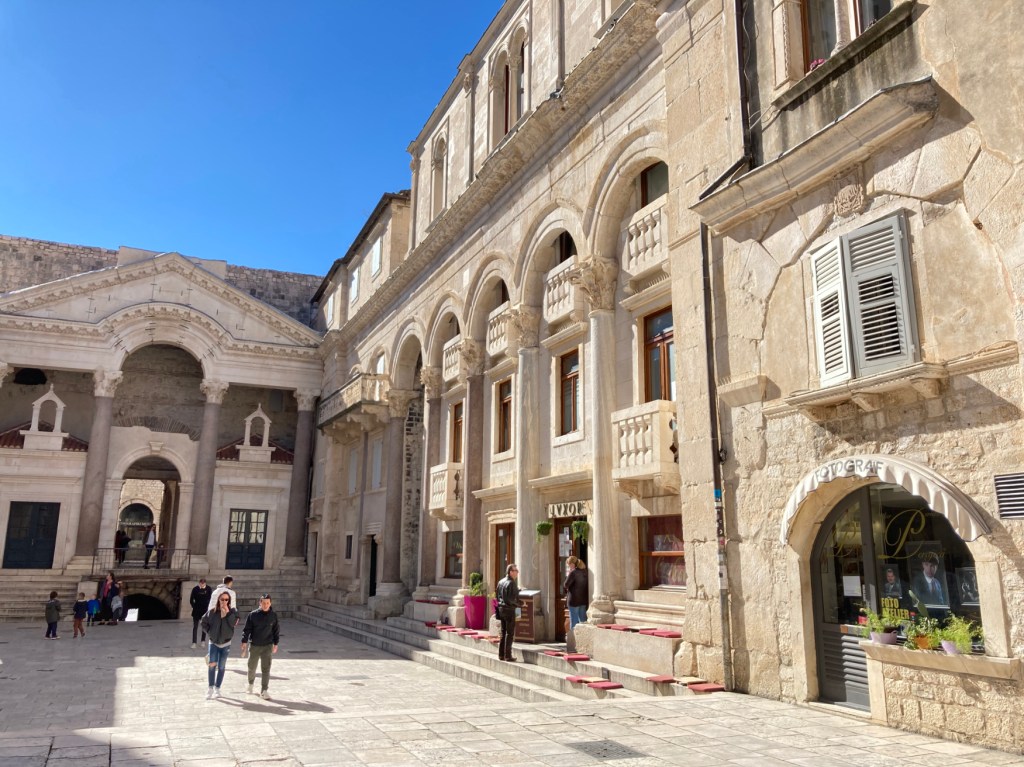
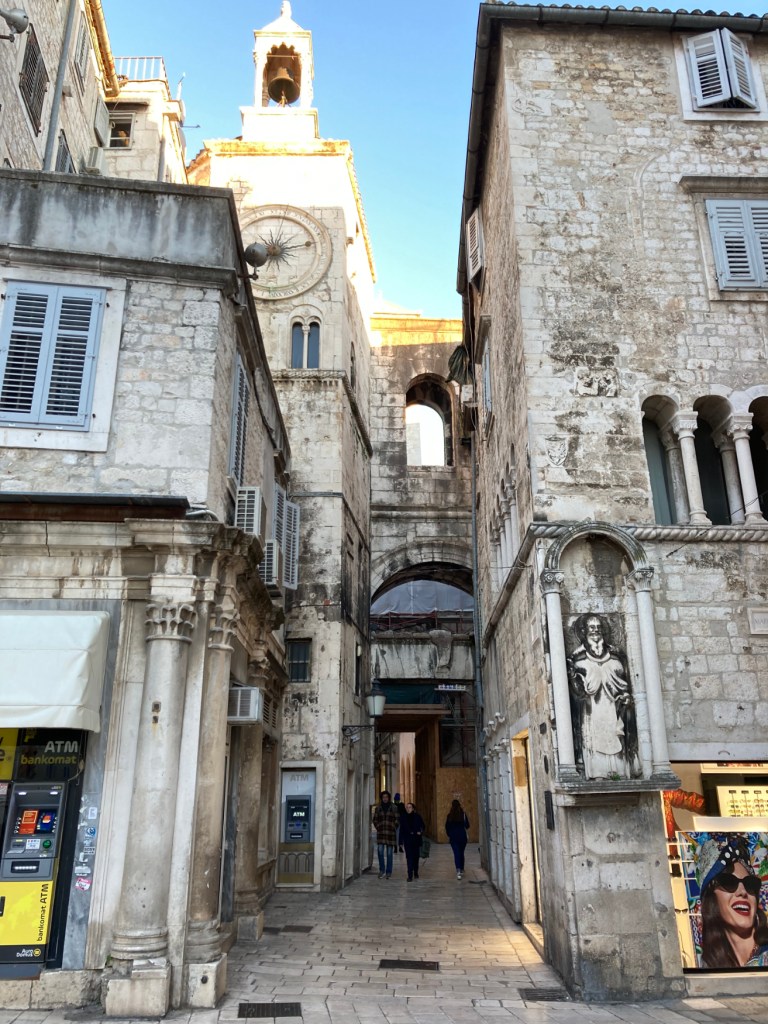
The columns on this side of the Peristyle have been incorporated into Medieval buildings.
The columns on this side look more like it’s still 305CE.
Numerous 3500 year old sphinxes were taken from Egypt. Only 3 survived to the present. This one is in the peristyle next to the vestibule.
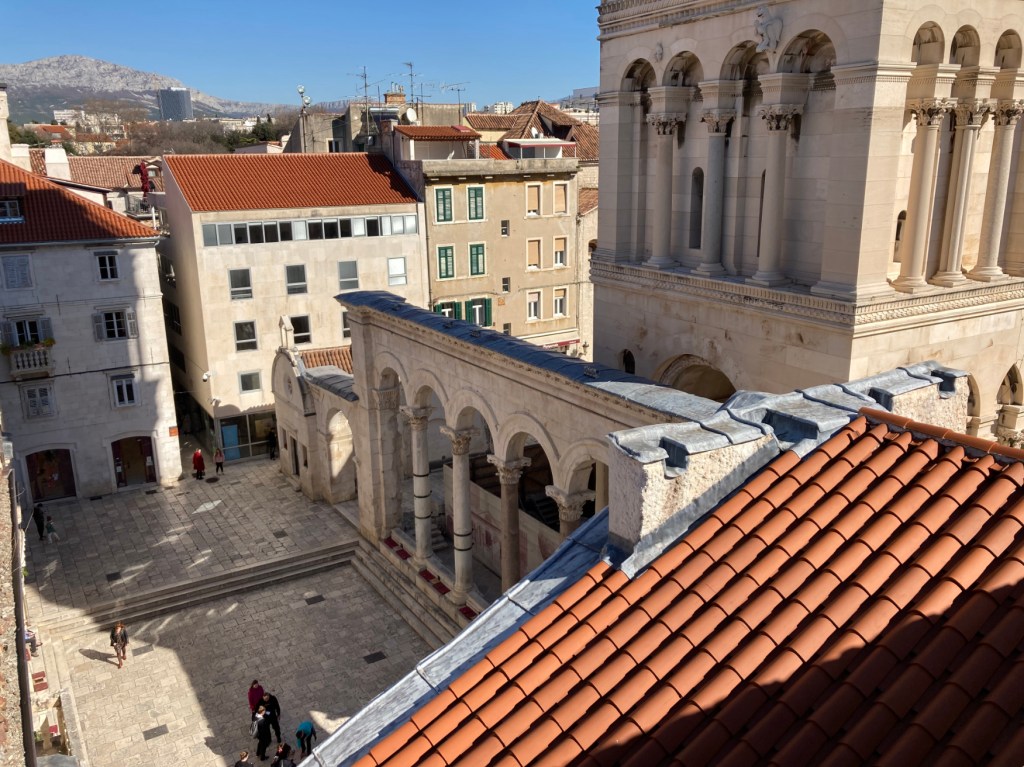
The Peristyle viewed from the roof of the Vestibule.
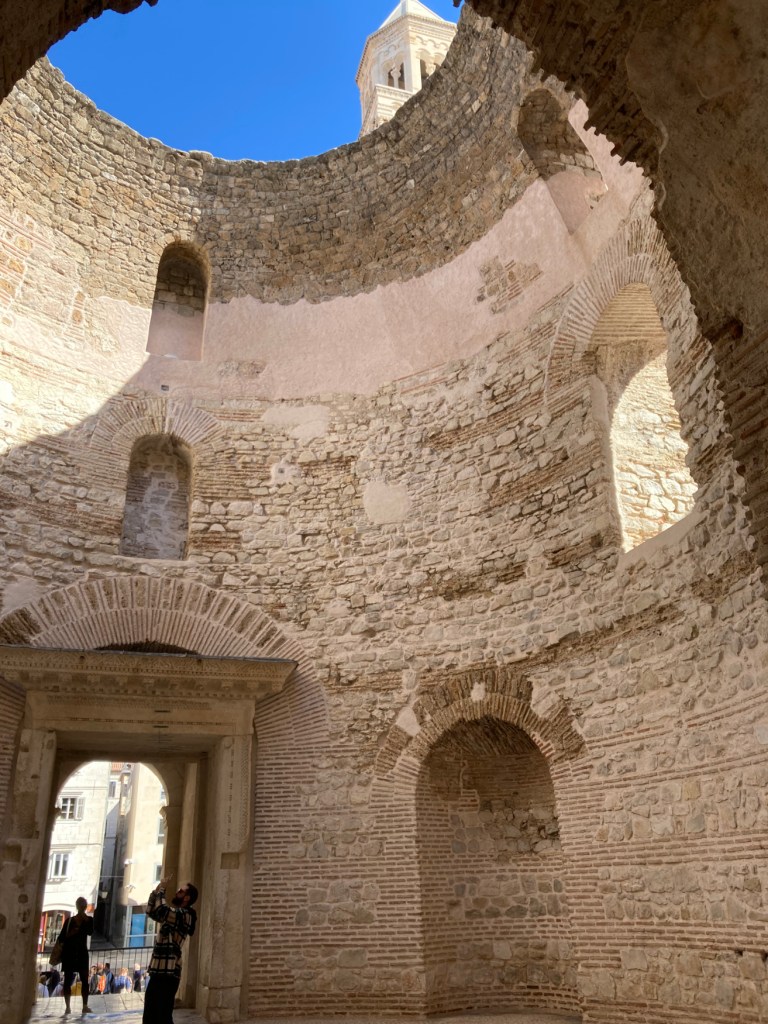
At the end of the Peristyle, you walk up the steps and Diocletian would greet you in the Vestibule where you would be impressed by the height of the domed ceiling. Again, imagine statues in the niches.
The Mausoleum.
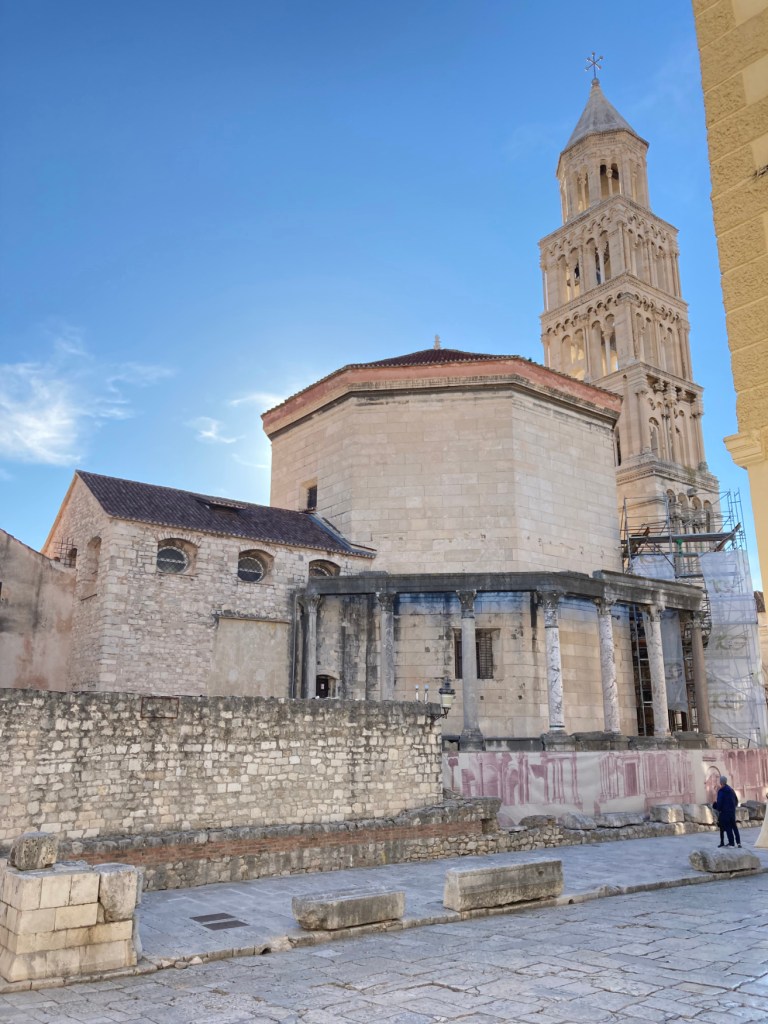
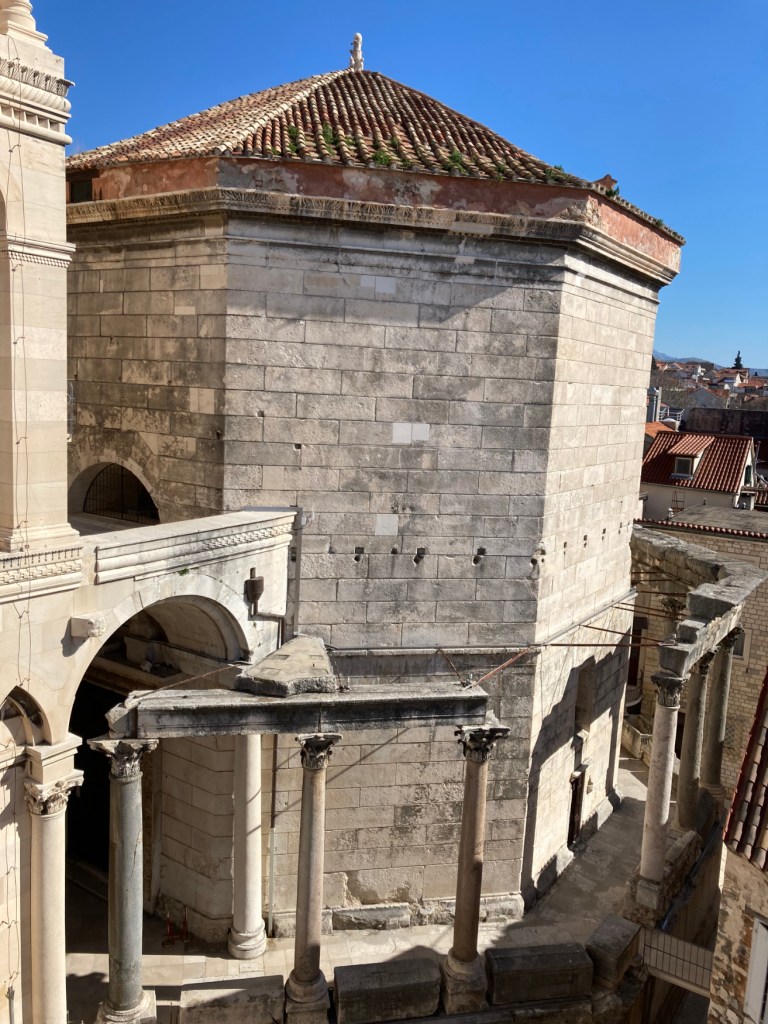
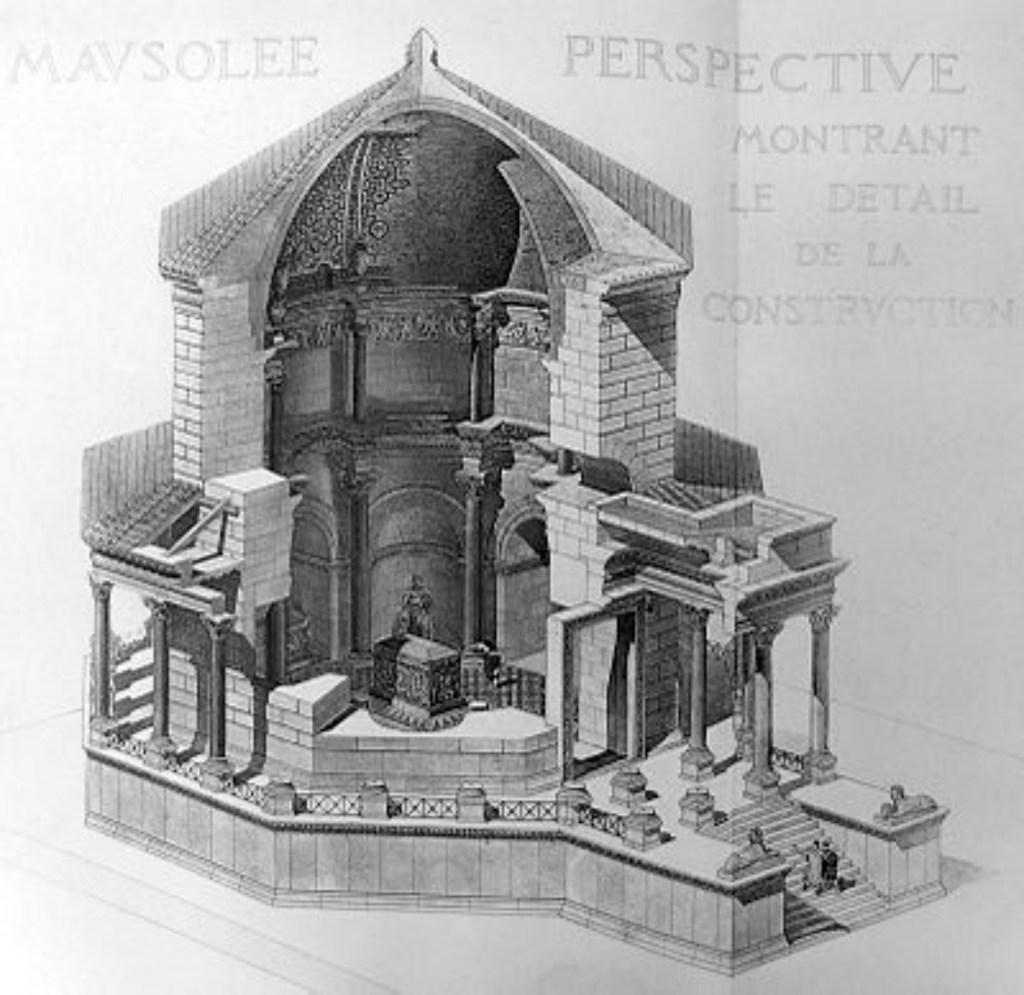
Diocletian had a 2-story, octagonal mausoleum built to house his remains. The locals who moved back in during the 7th century CE were mostly Christian. They decided the mausoleum would make a great, albeit small, cathedral and, so, they converted it.
The bell tower was added in 1101 and rebuilt in 1908
Probably violating a copyright but this is what it was thought to look like when it was Diocletian’s Mausoleum.
The columns are original and the frieze at the top depicts emperor-like activities- chariot racing, horseback riding, hunting, etc.
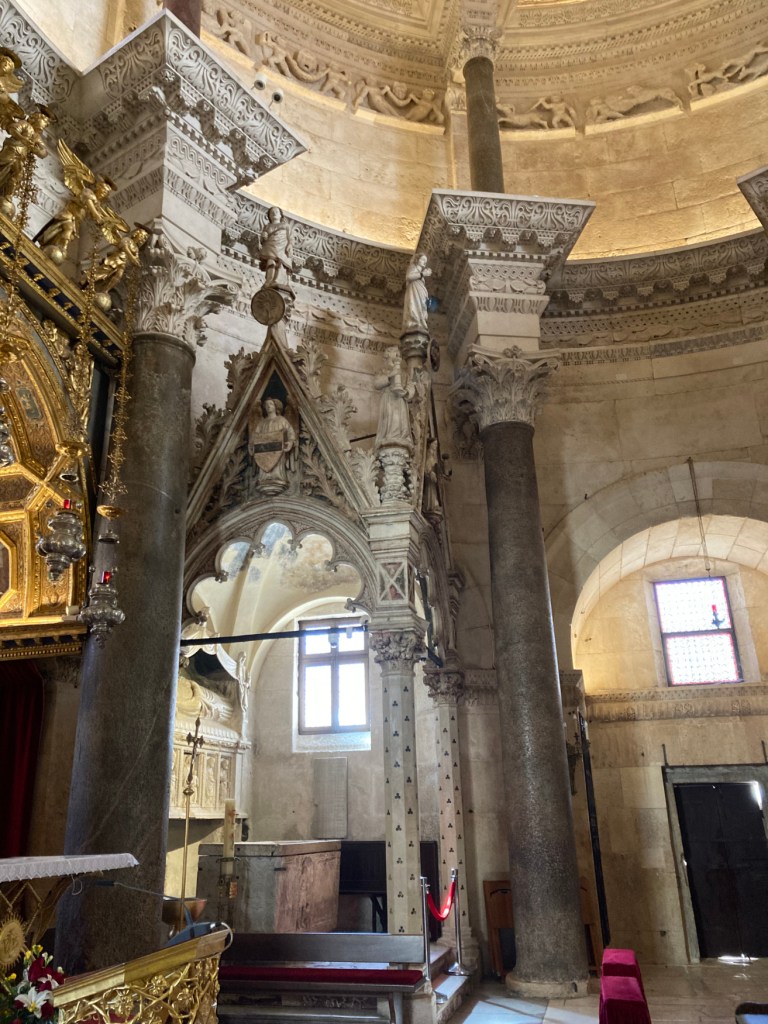
The large columns are also original to the mausoleum.
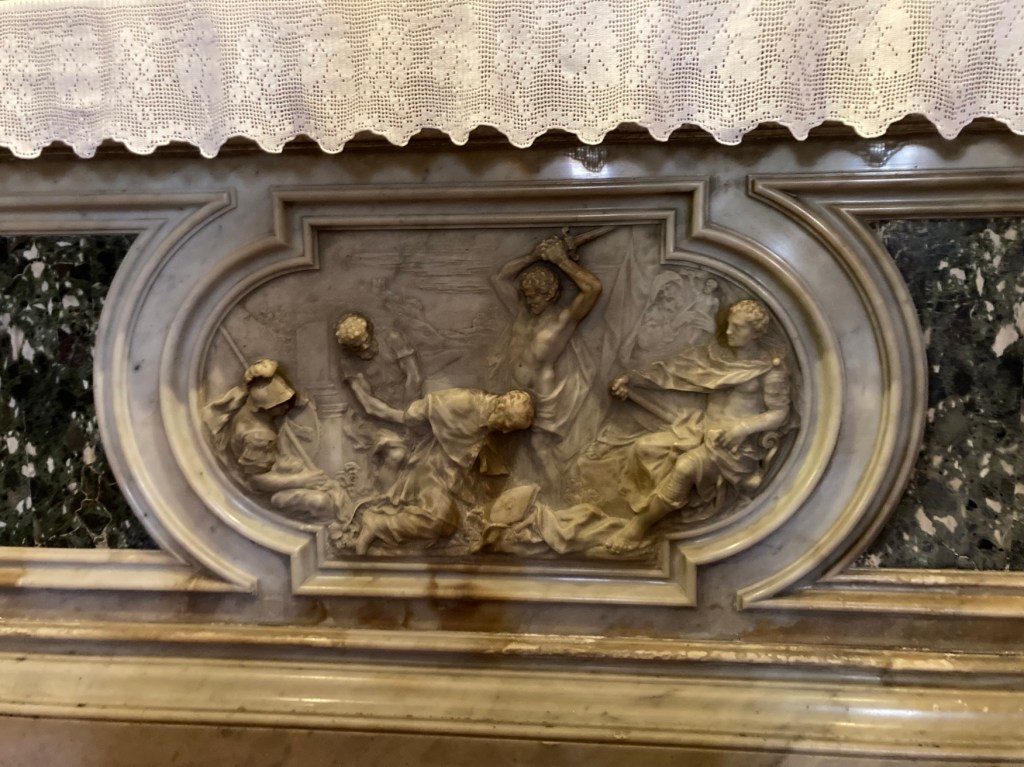
The church is the Cathedral of St. Dominus. Dominus was a 3rd cent. CE bishop whom Diocletian had beheaded (shown here).
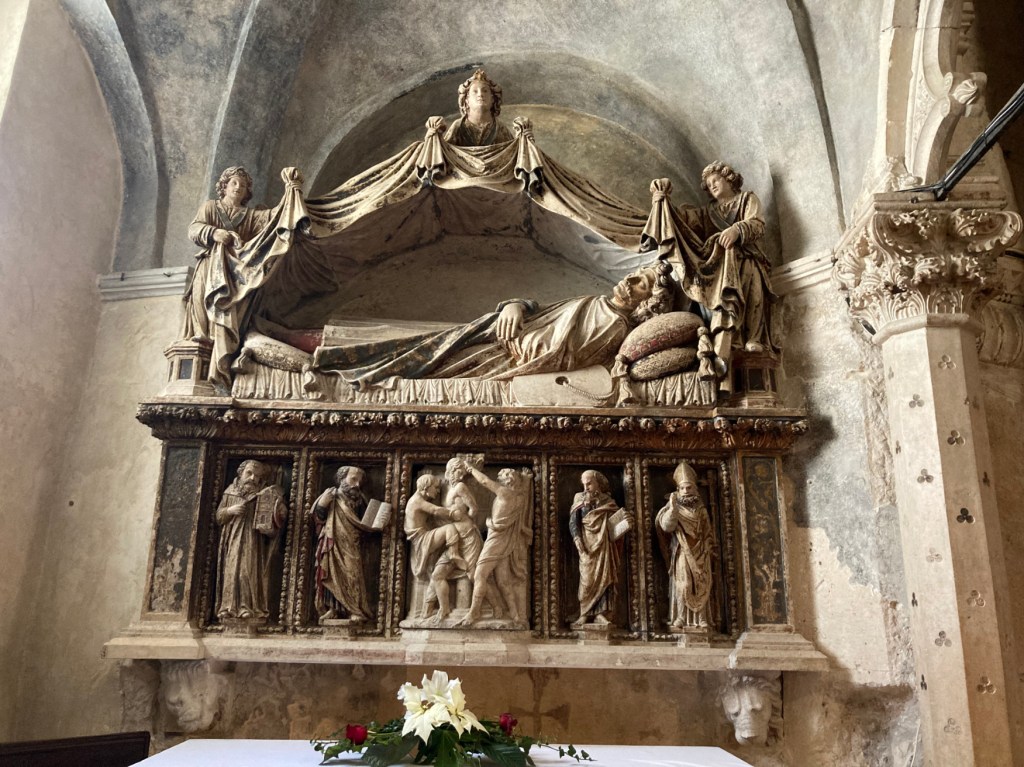
This is the tomb of Split’s second saint, St. Anastasius. He was tied to a millstone and dropped in a river. St. Anastasius lies in repose on top of that millstone with a rope passing through the hole in the middle.
Diocletian is known for all the Christian martyrs he created. Many have pointed out the irony that his remains are no longer in his mausoleum and it is now a cathedral that contains the remains of some of these martyrs.
The Temples
The two small temples are gone. The large temple to Jupiter is obscured by crowding, adjacent buildings. Jupiter’s temple was converted into a Baptistry.
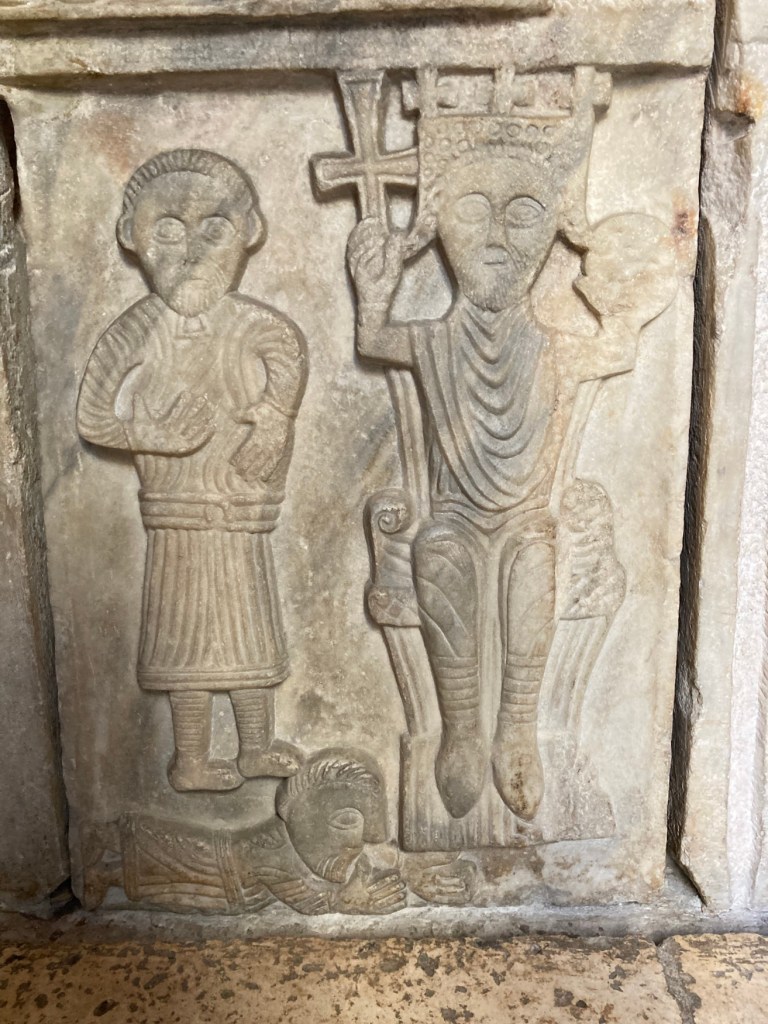
Stone panel in the Baptistry depicting life in the Middle Ages: the King sits on his throne. The priest stands along side. And both are on top of the peasant.
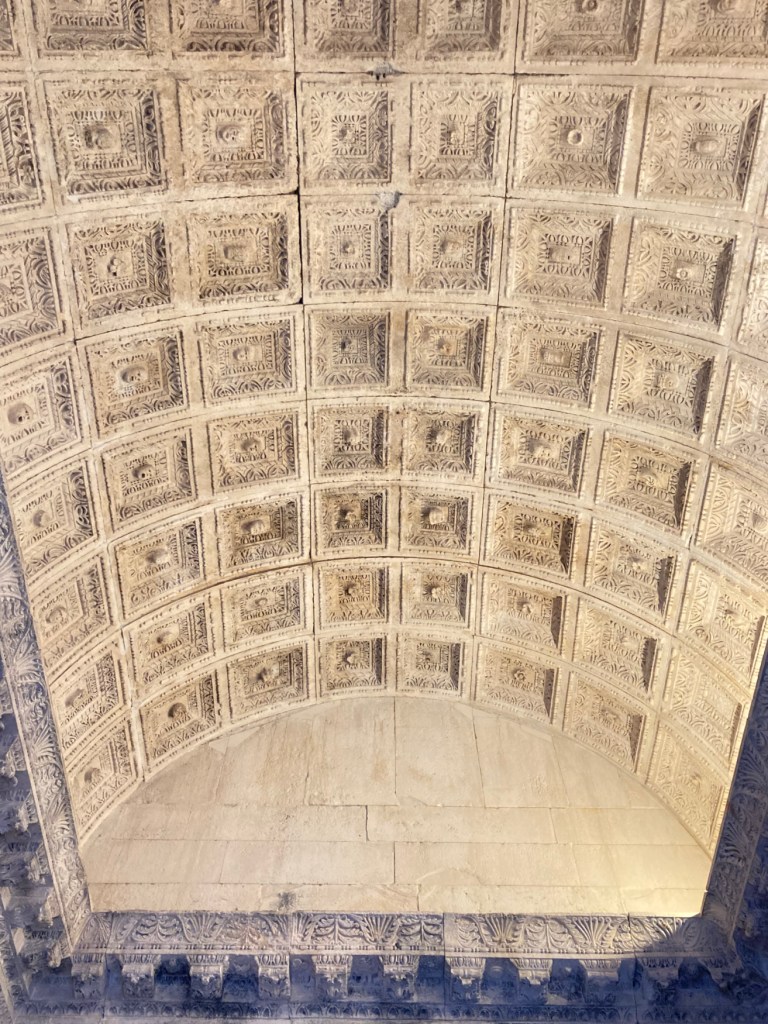
Original barrel-vault ceiling/roof from 311CE.
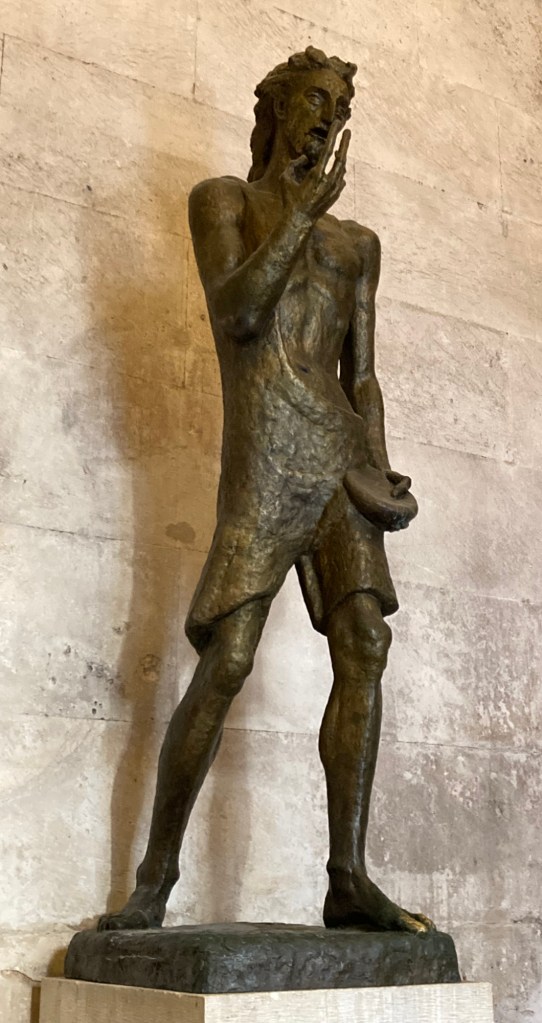
The statue of Jupiter is long gone. Eventually, Croatian sculptor Ivan Mestrovic made this bronze John-the-Baptist to signify the re=purposing of the temple.
Around the palace.
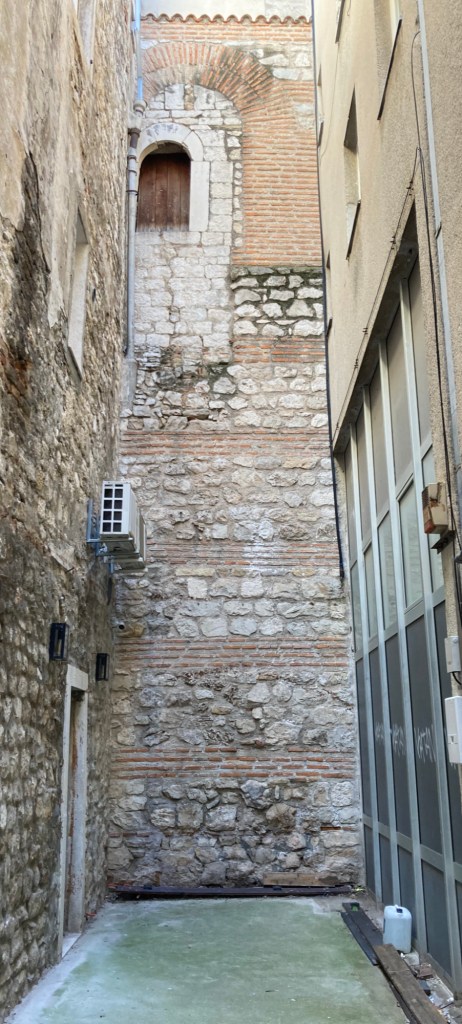
Roman Construction Techniques: Alternating layers of brick and rock were thought to improve seismic stability.
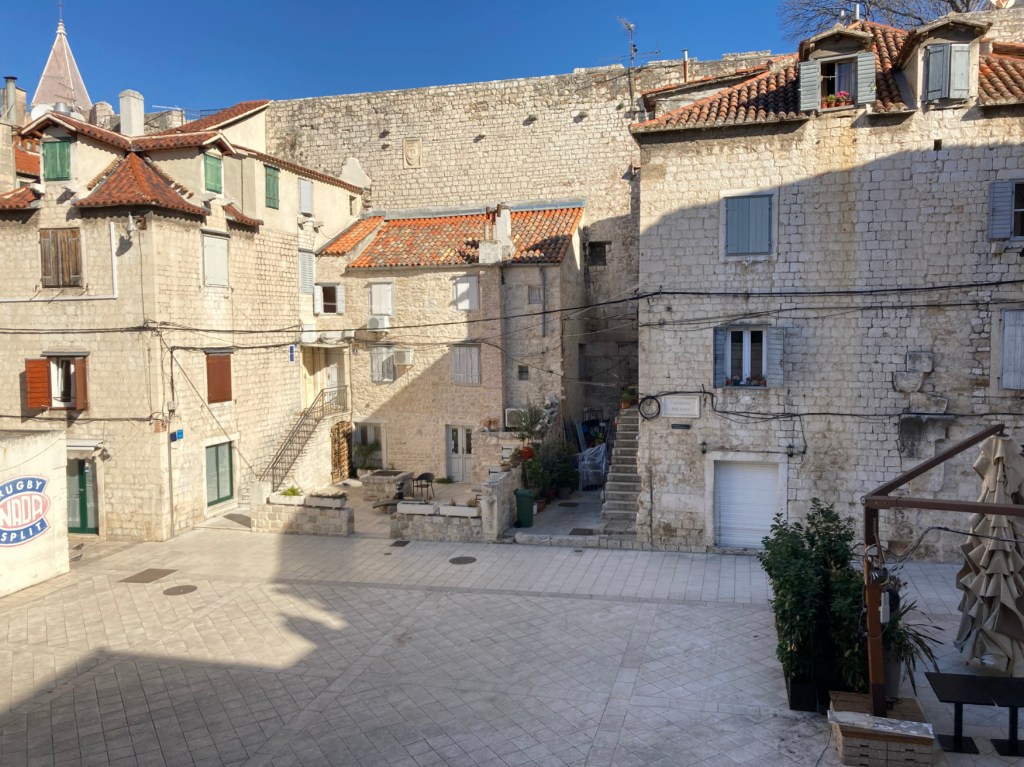
Buildings built against the North Wall (wall with Gold Gate) replaced the barracks and administrative buildings.









 John and Susan's Excellent Adventure