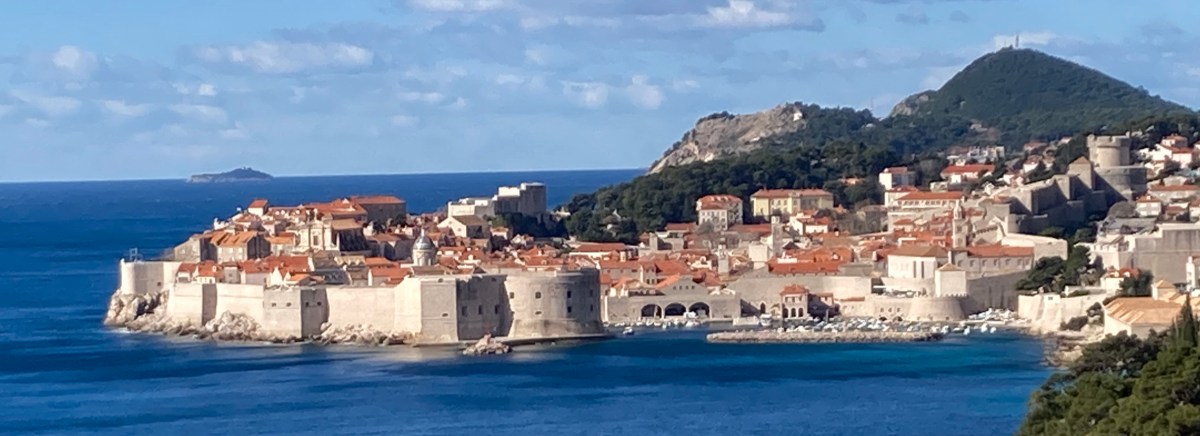
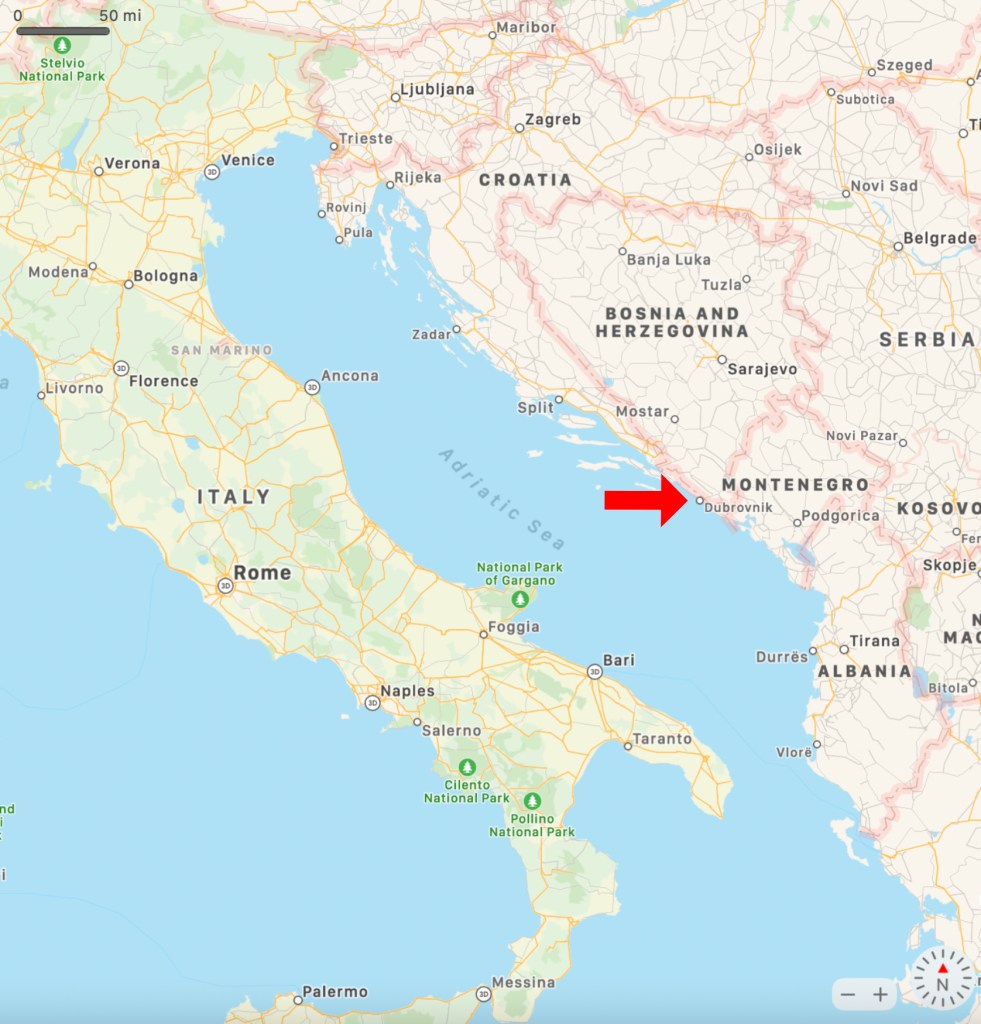
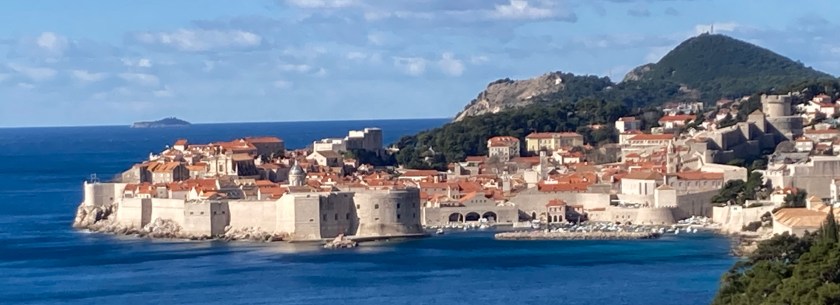
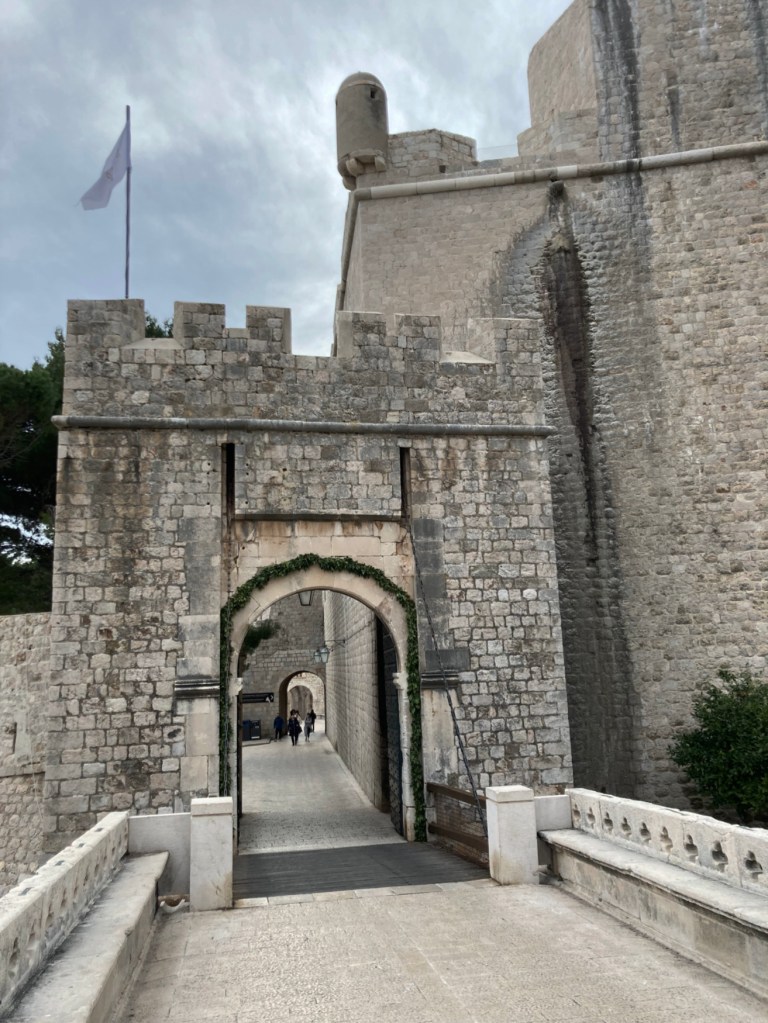
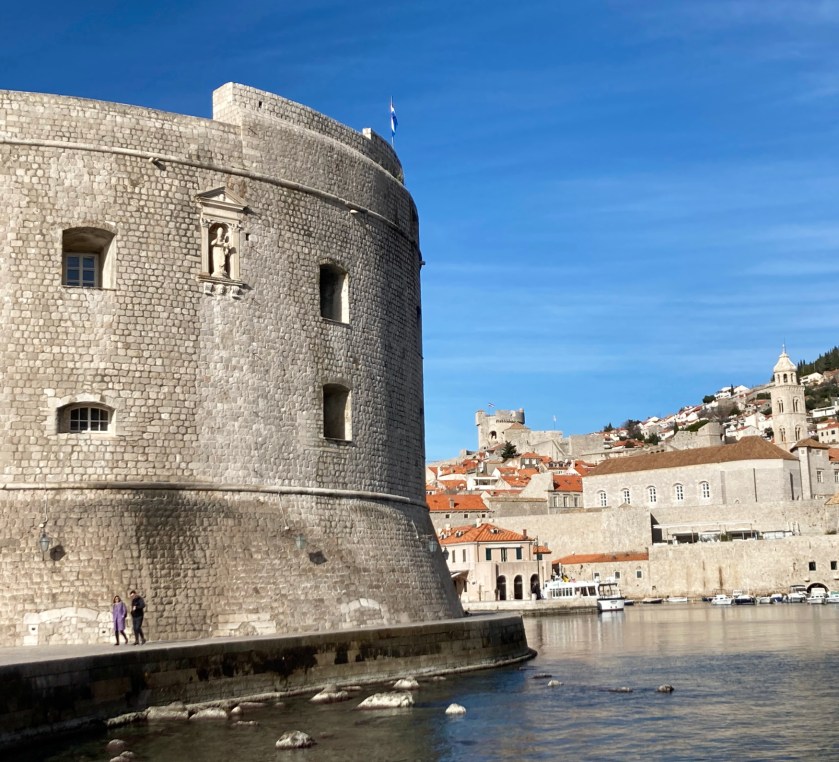
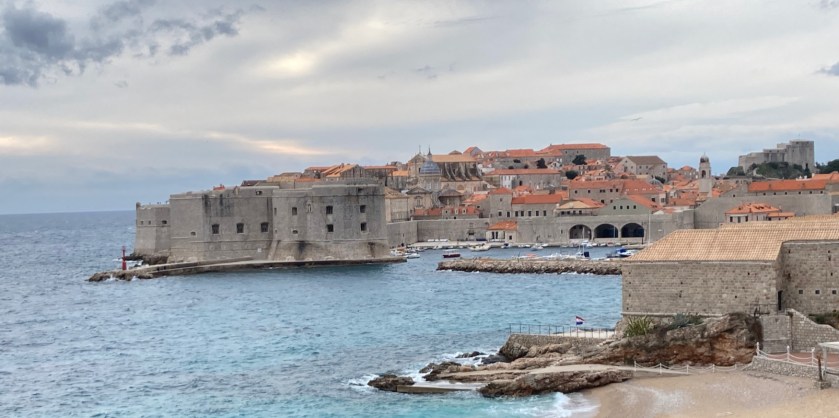
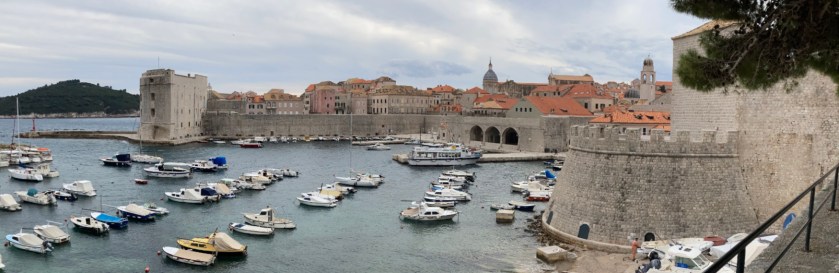
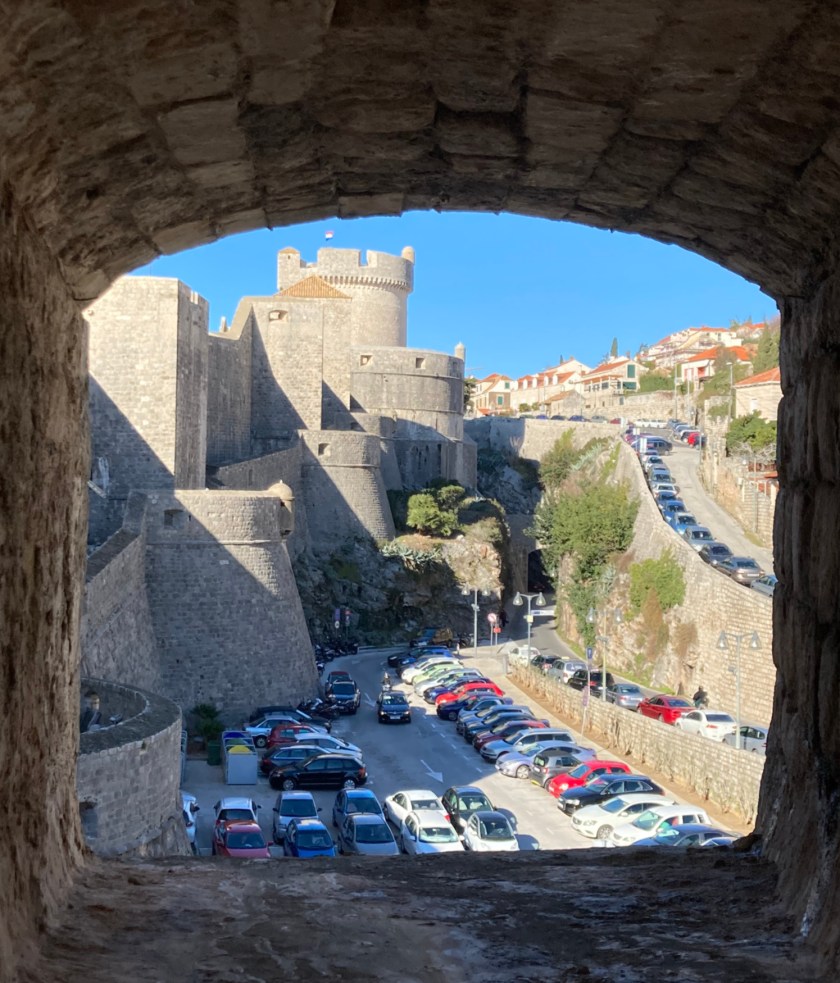
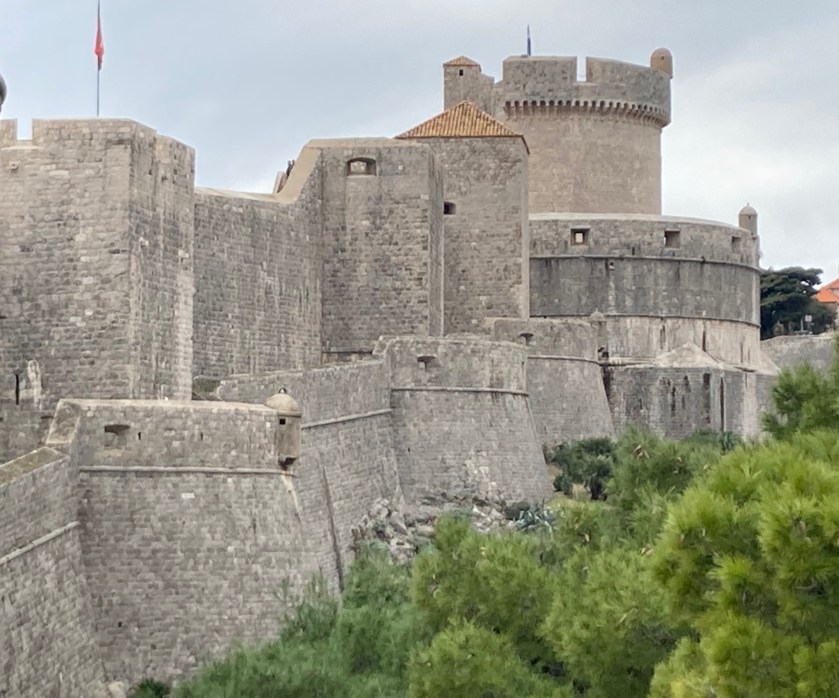
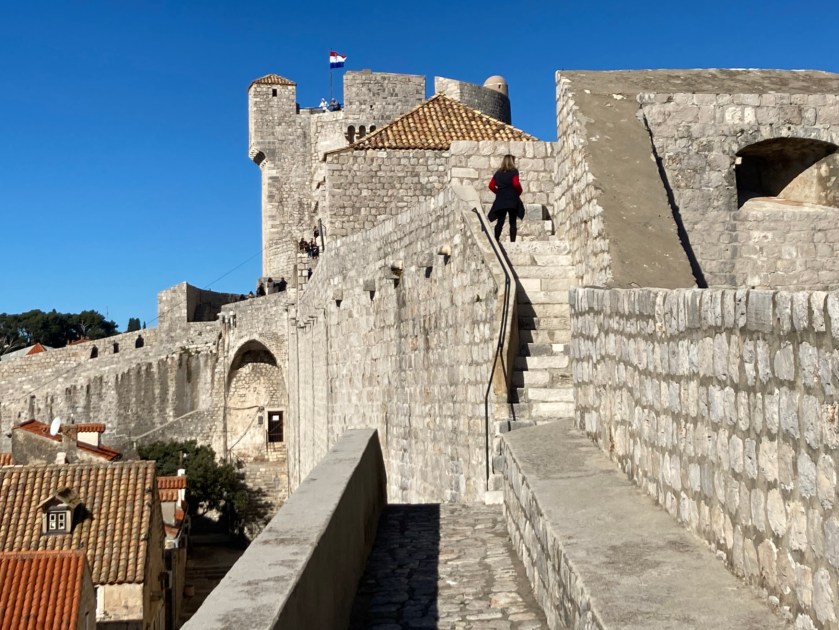
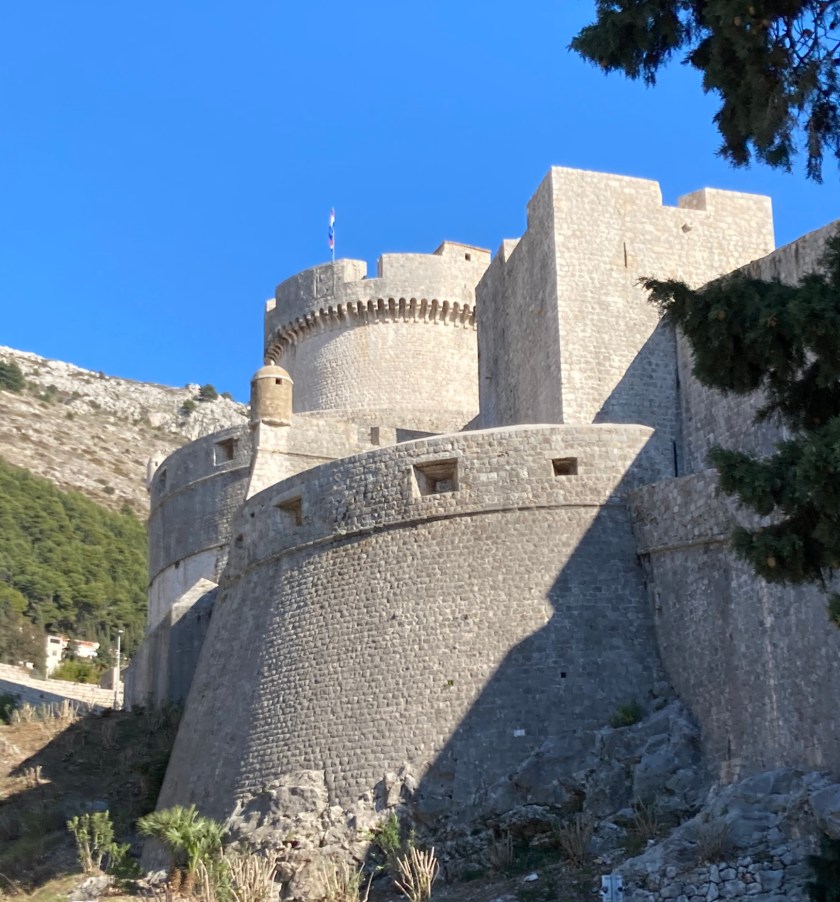
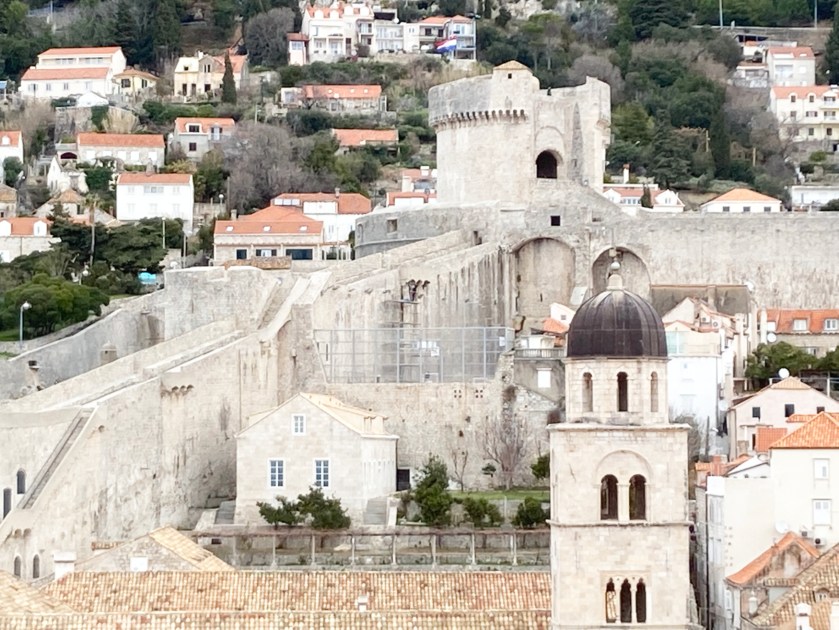
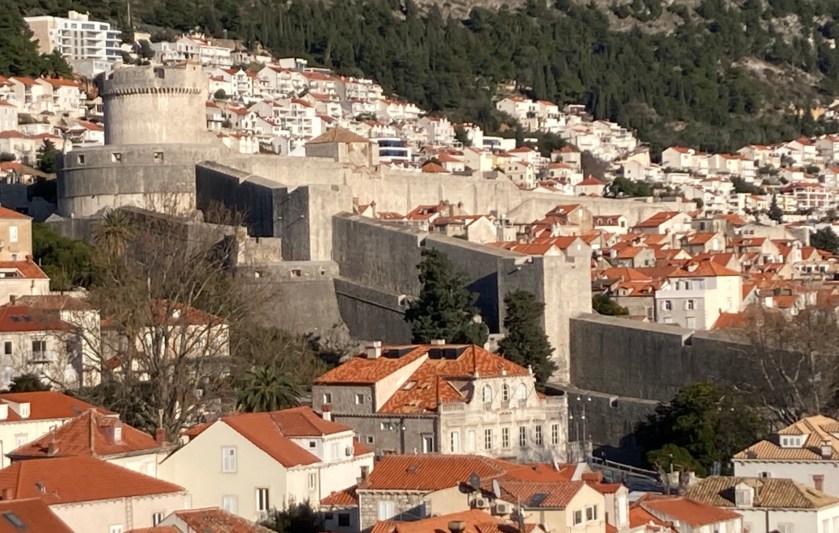
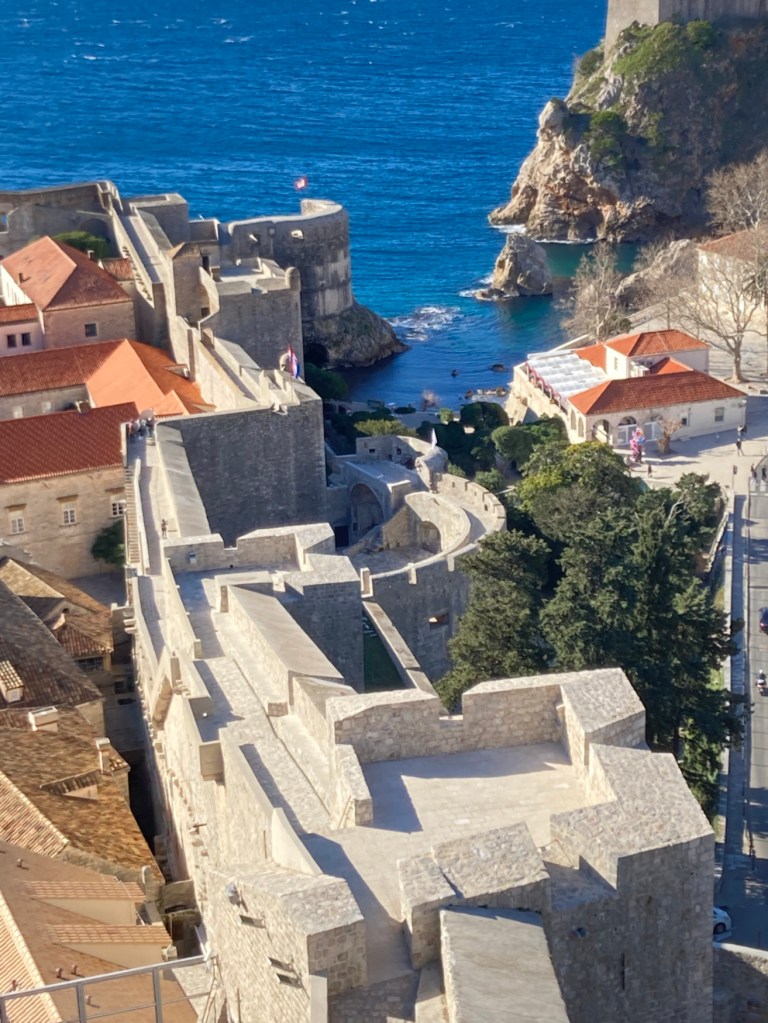
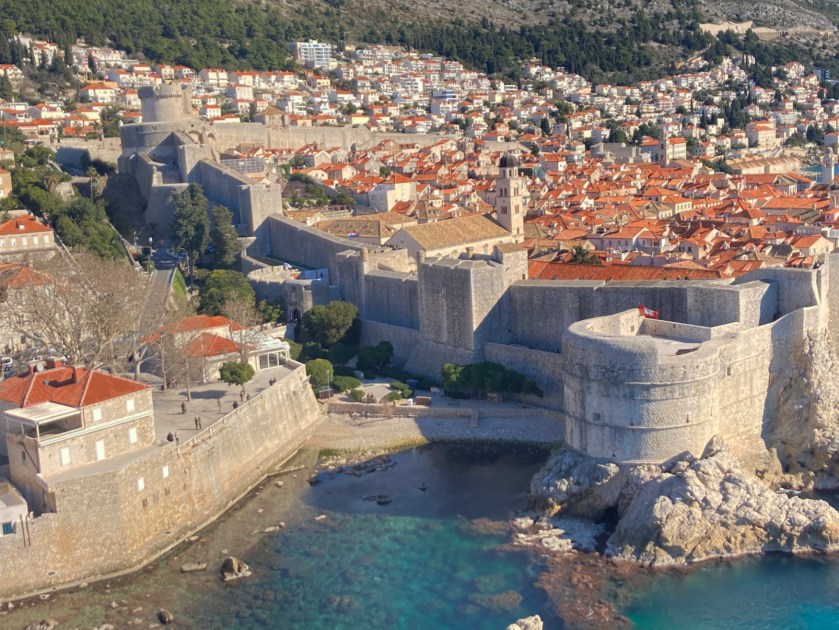
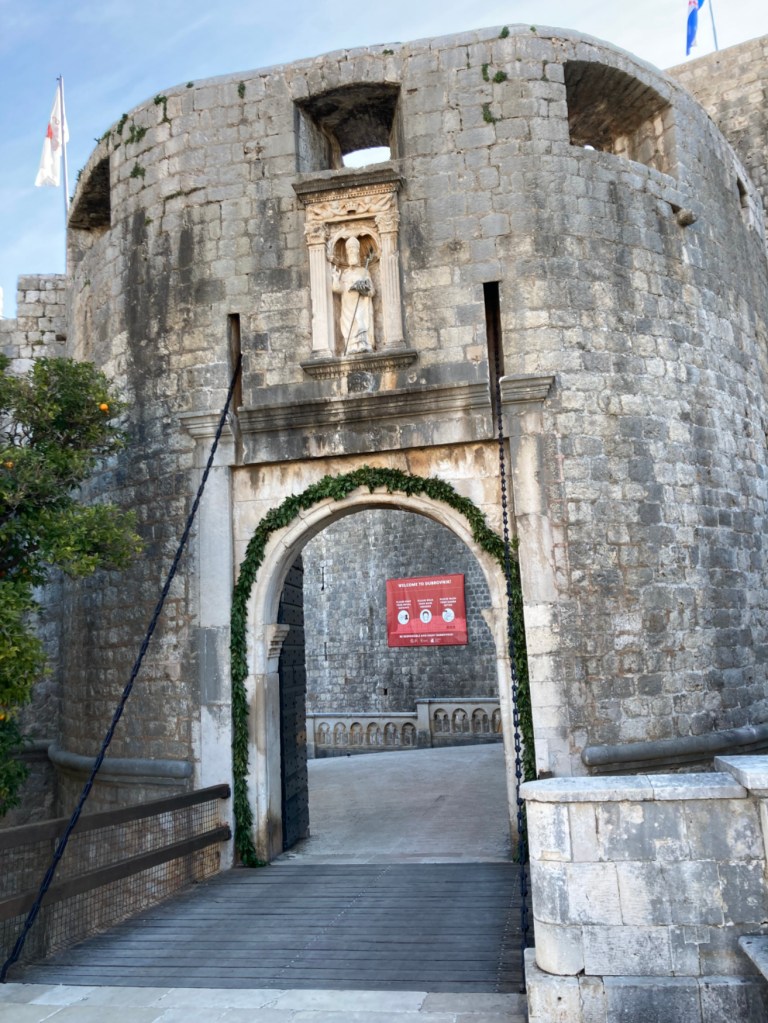
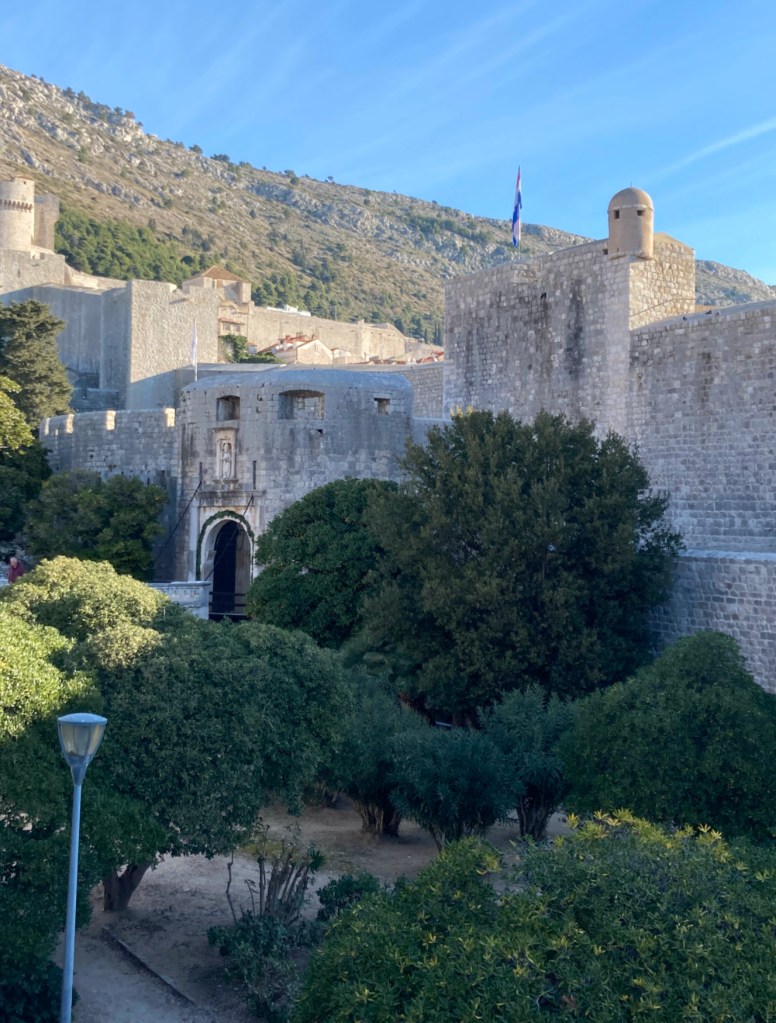
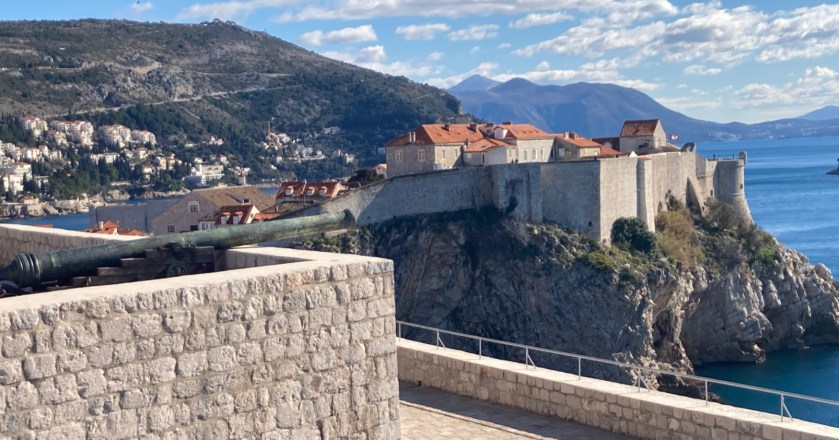
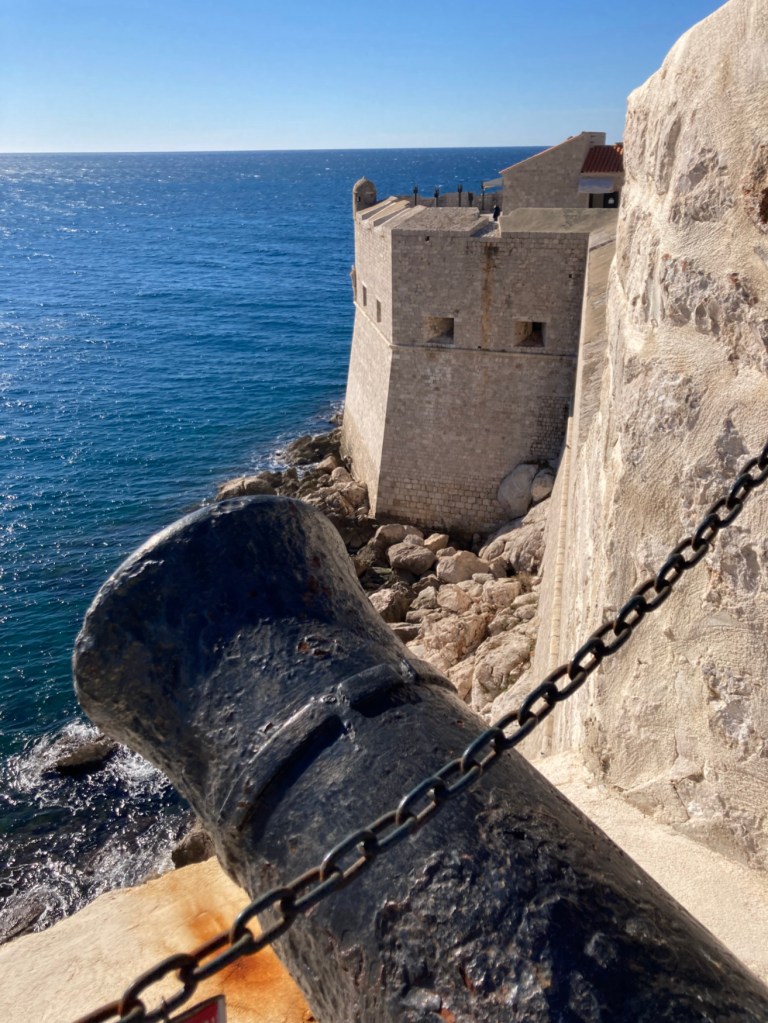
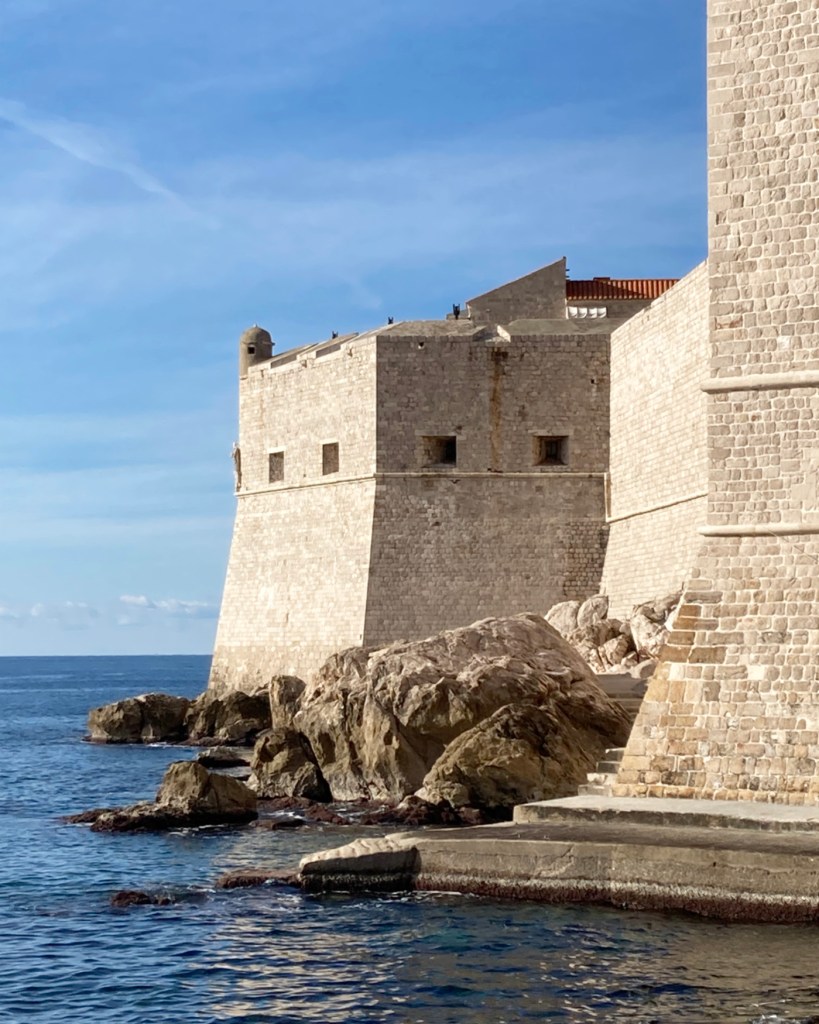
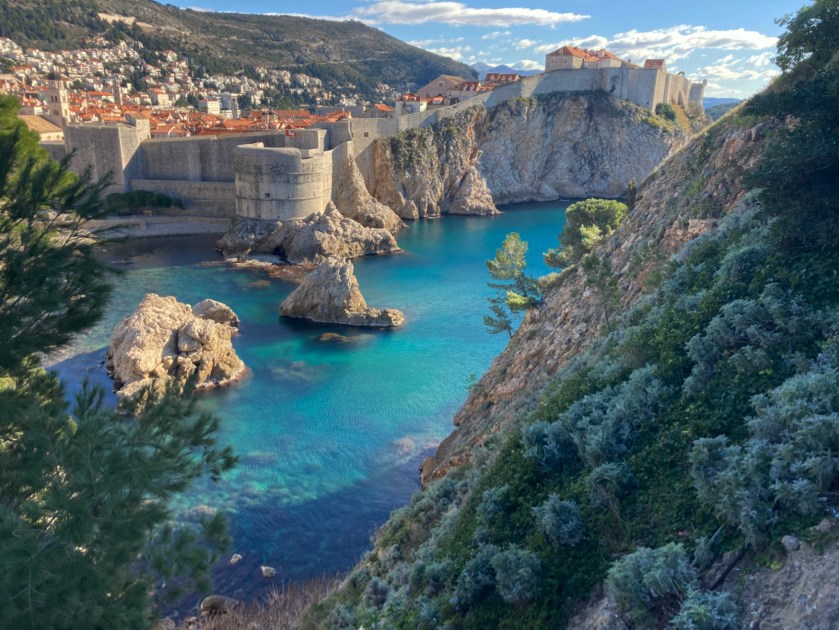
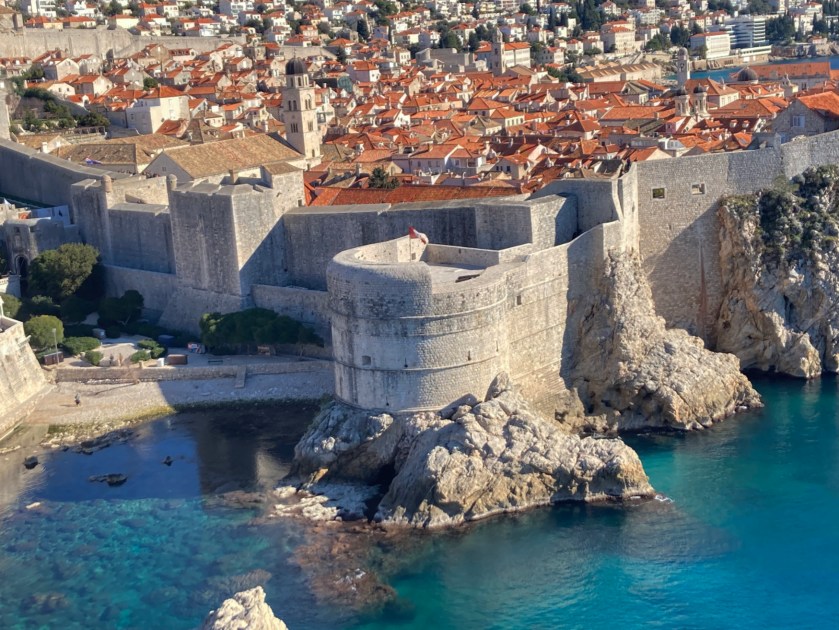
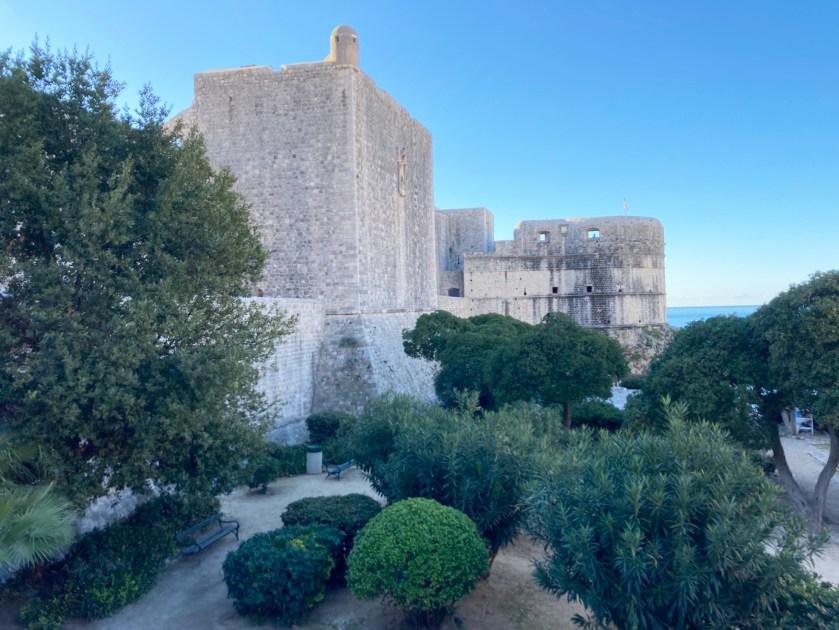
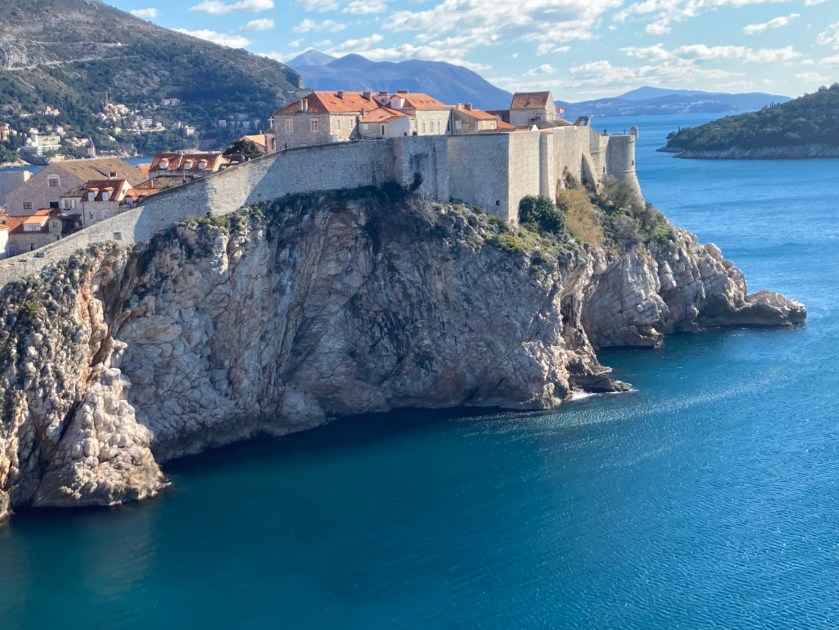
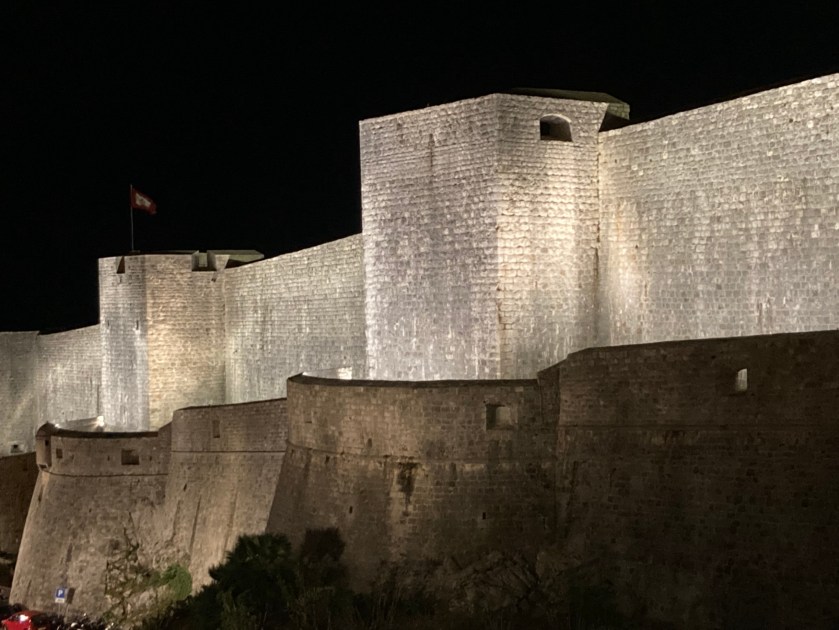
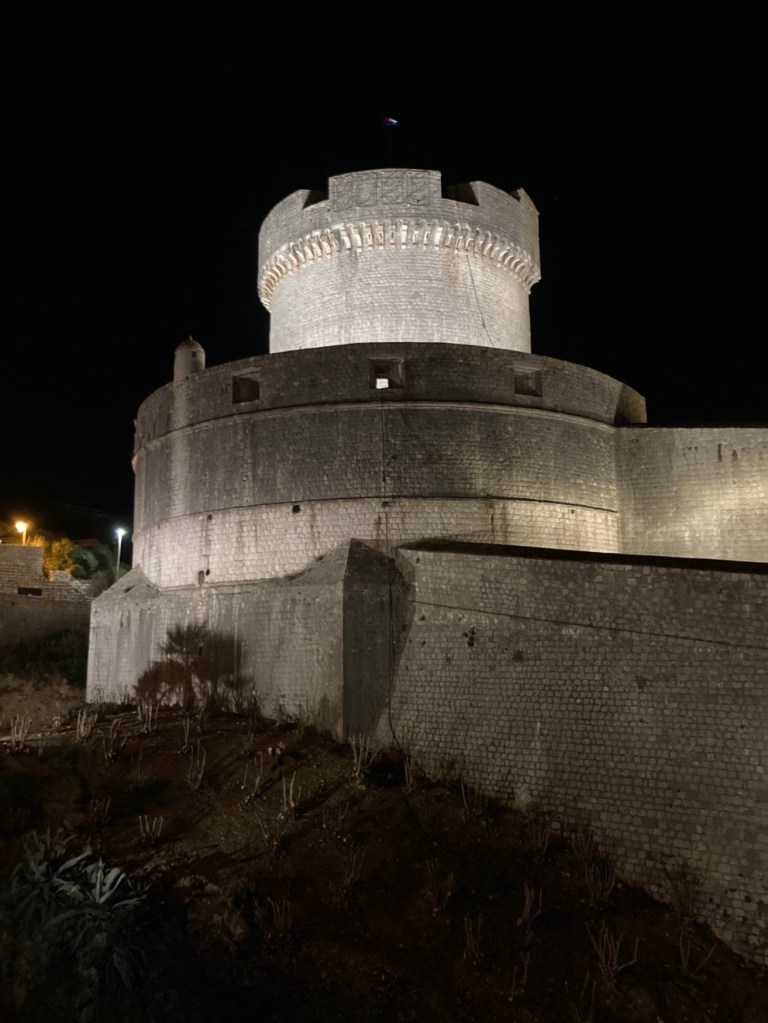
Dubrovnik was founded in the 7th cent. CE by refugees from a town a few miles south that was destroyed in a conflict between Slavs and Avars. For the next 650 years, Dubrovnik (also known as Ragusa from an earlier name) was in the middle of the shifting empires (Ostrogoth, Byzantine, Venice, Hungary, etc.) that attempted to fill the void created by the fall of the Roman Empire. Dubrovnik became semi-independent in 1358 and eventually a free state. Independence ended in 1808 when Napoleon entered the neighborhood. After Napoleon was evicted a few years later, Dubrovnik became part of the Austrian empire. After this, as a city of mostly Croatians, Dubrovniks political history became intertwined with Croatia’s political history. I think it’s interesting that the independent Republic of Dubrovnik (Ragusa) was the first foreign country to recognize the independence of the USA. Dubrovnik is a UNESCO heritage site primarily because of the “old town” section which is surrounded by impressive medieval walls.

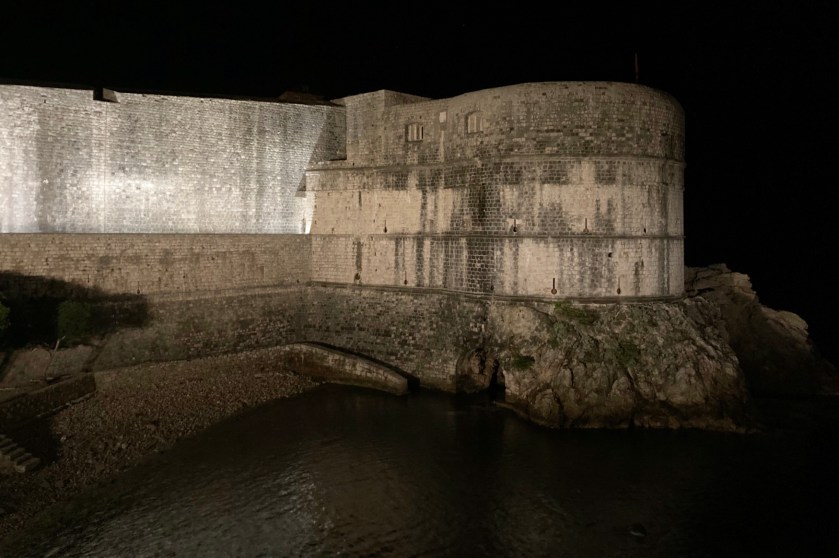
At night:
 John and Susan's Excellent Adventure