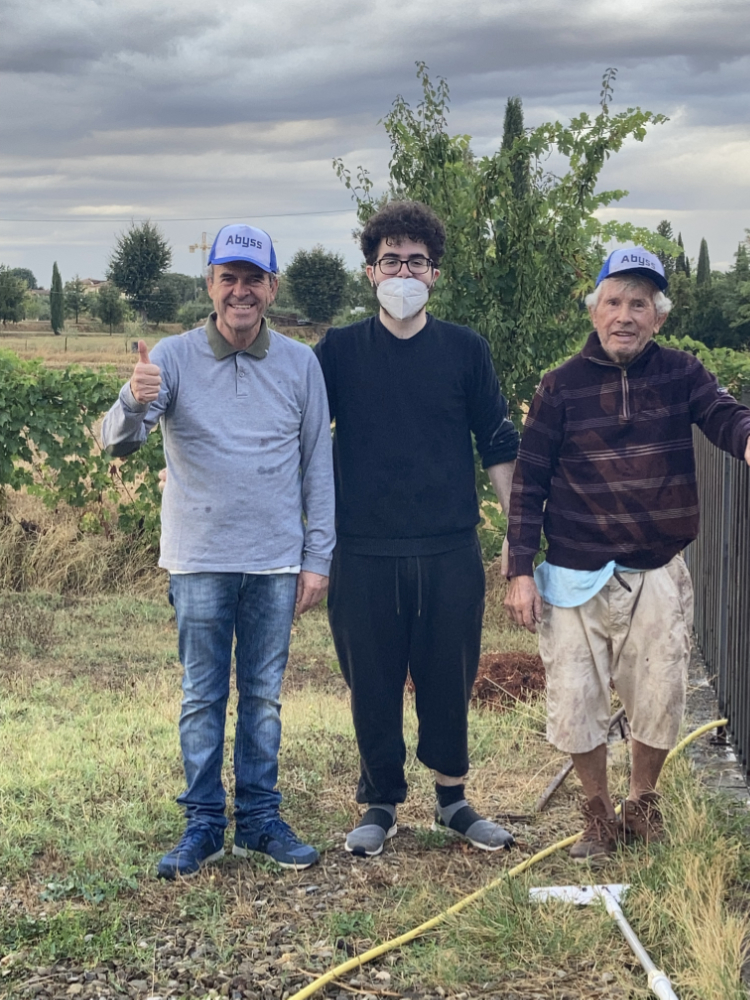
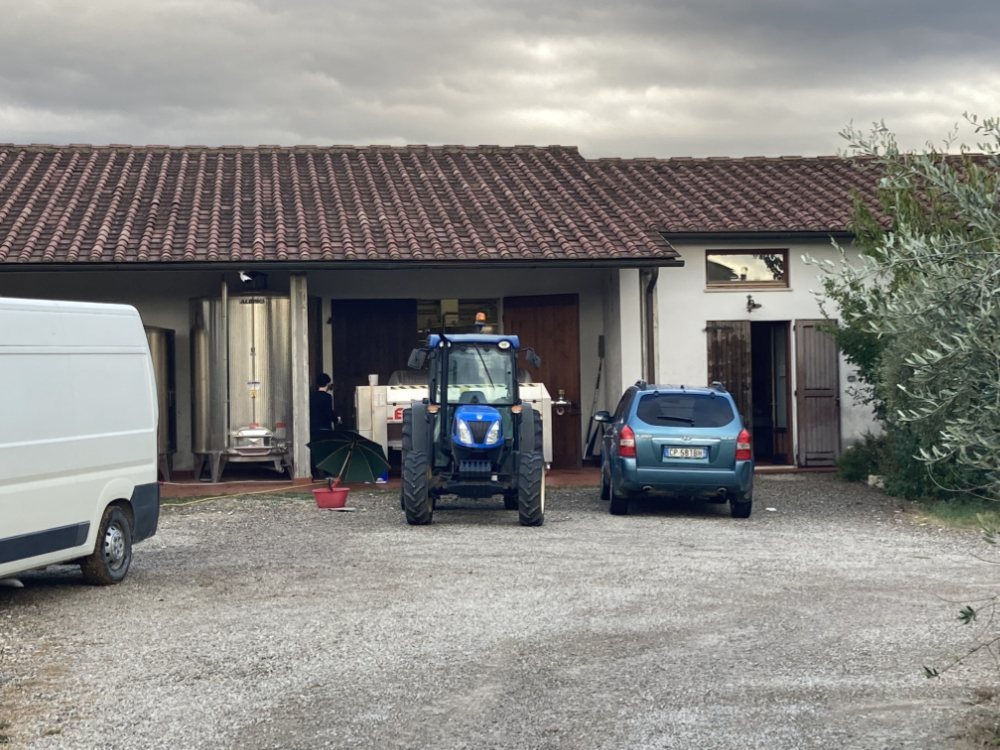
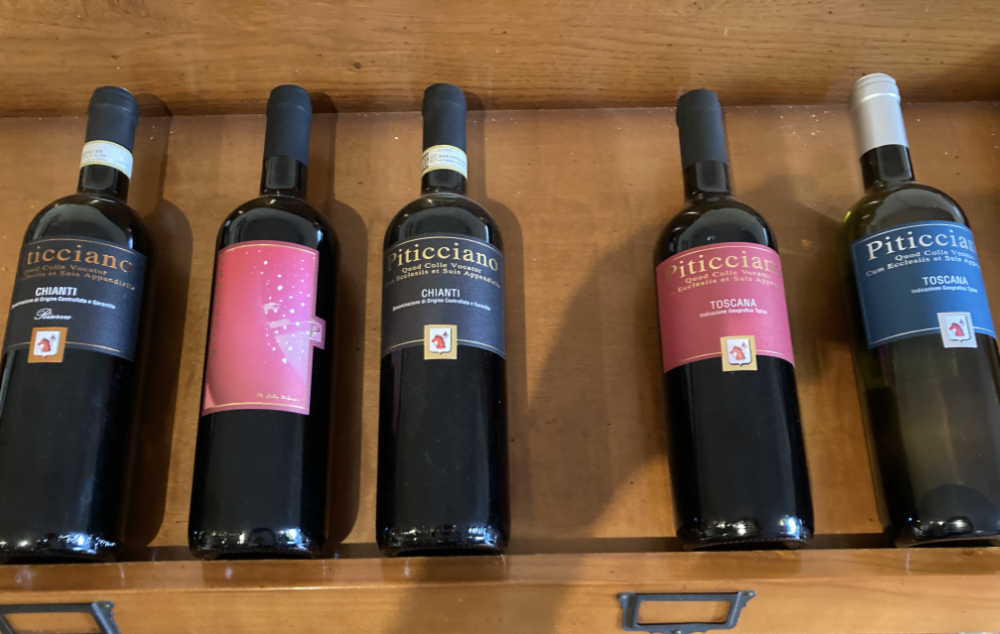
Wineries in Italy do not necessarily have showcase facilities with fancy tasting rooms. In fact, judging by Google Maps, they can be kind pretty far off the beaten track and hard to find. I guess this is because, in the USA, wineries are a relatively new thing and they had to recruit to create a market for wine. Italians, on the other hand have been drinking wine for over 4,000 years. So, a market for wine is already baked into the culture. After lots of Google searching, we found there is a winery about 2 miles from our apartment. It’s called Piticciano (pronounced petey-chi-ano). We walk out there, find a young man (old boy?) working and ask him if there’s tasting. He says sure, what do you want to taste. We say chianti. He says ok, pulls a bottle off the rack, opens it, and pours a couple of glasses. We taste it; it’s pretty good. Then we just look at each other for a few seconds. Susan and I begin to realize that he’s not going grab another bottle and give us his spiel on Piticciano wines. We then ask a bunch of questions and, fortunately, his English is good enough for us to get the gist of the Piticciano story. His name is Nico. His dad is Fabio. The property is Nico’s grandfather’s. 20 years ago, Fabio built some houses on the property, sold them, and used the proceeds to start Piticciano. The vineyards are certified organic and dry farmed. His flagship wine is a classic chianti which means the primary grape variety is Sangiovese. He blends in a small percentage of Colorino and Canaialo grapes. He also makes a white (Toscano Bianco) from a mix of Trebbiano and Malvasia grapes. The chianti sells for about 10 euro (~$12) and the white for 8 euro. We bought a 2015 Chianti and a 2019 Bianco. In our opinion, these were very much bargains.
We walk out there again about a week later to procure more wine. Nico comes into the tasting room and says, “Oh, you guys. I saw a couple of people walking up, didn’t recognize you, and thought that’s unusual. Visited by hikers twice in one week.”
 John and Susan's Excellent Adventure